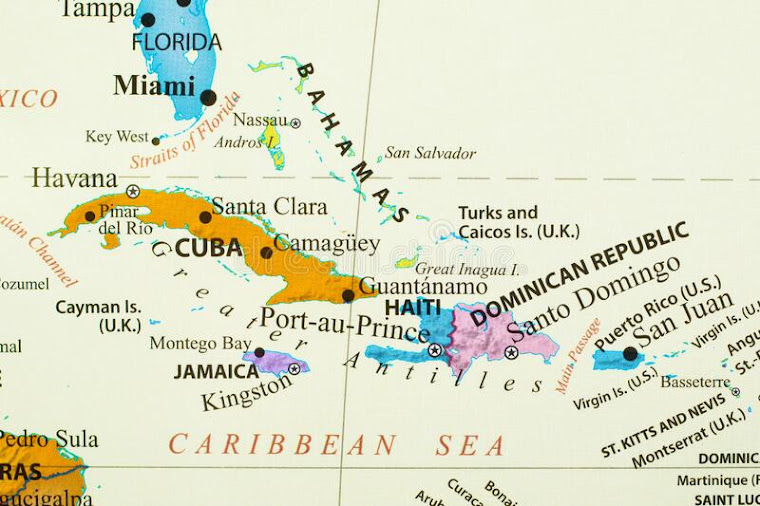
A political blog about Bahamian politics in The Bahamas, Bahamian Politicans - and the entire Bahamas political lot. Bahamian Blogger Dennis Dames keeps you updated on the political news and views throughout the islands of The Bahamas without fear or favor. Bahamian Politicians and the Bahamian Political Arena: Updates one Post at a time on Bahamas Politics and Bahamas Politicans; and their local, regional and international policies and perspectives.
Saturday, January 11, 2020
The Bahamas is in Need of Knowledge-Intensive Services... Education System has to Change
By
Kevin J. Alcena, Ph.D. (Developing Economics)
“Deo adjuvante, non timendum.”
“With God as My Helper, I have nothing to fear”
For the Bahamas to have a strategical paradigm shift of this economy, as that of a Silicon Valley, the entire educational system has to change. “Among the key strengths of the Singapore education system are the bilingual policy, emphasis on broad-based and holistic learning, focus on teacher quality and integration of Information and Communication Technologies (ICT) into the classroom. It is also believed that the schools should work closely with parents and the community.
In Singapore, they are constantly working to enrich and transform the learning environments of their students and to equip them with the critical competencies to succeed in a knowledge economy. A key thrust is the integration of ICT into lessons to enhance students’ learning. Additional funding and resources enable schools to seed innovative teaching methods. A group of ‘future schools’ are partnering industry players to use state-of-the-art technology to pilot new teaching and learning experiences.
Parents’ involvement in Singapore is valued, and support for school programmes actively encourage parents and the community to work together with schools to help the children learn better.”
“Education is the inculcation of the incomprehensible into the indifferent by the incompetent.” (John Maynard Keynes)
“No society can surely be flourishing and happy of which by far the greater part of the numbers are poor and miserable. ” (Adam Smith)
In an article “Comparing U.S. and Chinese Public School Systems” by the University of Michigan:
“Both U.S. and Chinese school systems have strengths and weaknesses. This website proposes that there are three core strengths of Chinese schools over American schools:
1.Teachers in China are given more respect than teachers in the U.S. [12]. For example, teachers do not [pay] taxes on their salary, and they receive their own national holiday, Teachers Day, on September 29th [12].
2. Chinese schools have a hard work ethic, resulting in student success.
3. Chinese schools do not segregate high achieving students from lower achieving students through tracking levels, like in the U.S. This is mostly due to the belief that all students can succeed if they put in the effort.”
The article further stated that “the U.S. education system has one core strength over the Chinese education system including U.S. institutions of higher learning. U.S. universities and colleges are the best in the world. Students from all over the world come to receive a high quality education in American universities.”
“The ideas of economists and political philosophers, both when they are right and when they are wrong, are more powerful than is commonly understood. Indeed the world is ruled by little else. Practical men, who believe themselves to be quite exempt from any intellectual influence, are usually the slaves of some defunct economist.” (John Maynard Keynes)
One can huff and puff to the ends of time but the most critical component in diversifying the Bahamian economy is not intellectualizing or articulating but literally having a systematic approach to innovative system-thinking in regards to education and eliminating the draconic system that we inherited since post-independence. It is not working and we need to change it by introducing innovation and creativity in our educational system in order to have the paradigm shift in our emerging economy.
Silicon Valley is a success story because of the surrounding universities, particularly Stanford University, that compliments the system-thinking phenomena known as the geek world. Therefore, we need a system in the Bahamas that compliments thinking out of the box. That is how Facebook, Nanotechnology, Google and many others were discovered. Basically, government does not create jobs, but innovation creates jobs. Governments compliments the environment; that is what China did and that is what the U.S is doing now.
In an article dated May 12, 2011, entitled “Irrational exuberance has returned to the internet world: Investors should beware”:
“Facebook and Twitter are not listed, but secondary-market trades value them at some $76 billion (more than Boeing or Ford) and $7.7 billion respectively. This week LinkedIn, a social network for professionals, said it hopes to be valued at up to $3.3 billion in an initial public offering (IPO). The next day Microsoft announced its purchase of Skype, an internet calling and video service, for a frothy-looking $8.5 billion—ten times its sales last year and 400 times its operating income. And those are all big-brand companies with customers around the world. Prices look even more excessive for fledgling firms in the private market (Color, a photo-sharing social network, was recently said to be worth $100m, even though it has an untested service) or for anything involving China. There has been a stampede for shares in Renren, hailed as “China’s Facebook”, and other Chinese web giants listed on American exchanges.”
An article written by Charles R. Geisst and published in The Washington Post noted that “Facebook’s Friday IPO, which opened with a staggering $104 billion valuation for the company...”
The Bahamas needs to adapt the New York State model. There must be a systematic process to growth. The same old will not do. The Government must be innovative enough to put together a think-tank group to come up with innovative ideas. There has to be a total paradigm shift in order to adapt this model. We have the brain power and know-how but we need the collective effort.
“Every man lives by exchanging.” (Adam Smith)
In an article by Sonia K. Guimares, entitled “International Entrepreneurship in an Emerging Economy” that was published on March 14, 2012 it is stated that:
“The economic development of a country depends today on qualified integration into the world economy. In the past, internationalization tended to be restricted to large companies. Today, small and medium enterprises (SMEs) have become involved in the global market in a variety of ways. The growing internationalization of the small and medium size firms has stimulated the creation of a field of studies aimed at understanding this new phenomenon, the so-called “international new ventures”, “born global”, “global start-ups” or “international entrepreneurship”. The internationalization of these firms is based on singular features: their operations and strategies are not the same as the large firms, as they are not the same as the firms that remain on the home market. Internationalization requires small and medium size firms to mobilize different kinds of resources (economic and social) that uniquely impose greater degrees of risks and indeterminacy. In the past, small and medium size firms tended to be seen as victims; at present, they are seen as ‘players in the game’ (Ruzzier et al., 2006).
Indeed, as a result of shifts in technology manufacturing and knowledge-intensive services, a worldwide restructuring is taking place. This can be demonstrated by comparing data on world trade for the periods spanning 1980-1993 and 1994-2008. Data show a significant increase in the annual average of global export – from 3.6 percent to 7.8 percent (International Monetary Fund, IMF, as cited in Nonnenberg, 2011) – as well as a change in the kind of goods and services exported: there has been expressive growth of high technological goods and knowledge intensive services while labor intensive goods have suffered a reduction (from 40 percent of the total, in 1980, to approximately 29 percent, in 2008). A shift in the flux of world trade can also be observed, with export of medium and high-tech goods and services increasing at higher rates in the emerging economies (resulting primarily from Chinese and Korean performances) than in the developed economies. The nature of international operations has also changed: in addition to export and/or commercial activities, these operations now include partnerships and contracts with other enterprises for manufacturing or assembling processes, for distribution, maintenance, after-sale support, and for brand transfer and franchises abroad.”
In another article by the New York State's High Tech Economy: Empire State Development, it is noted that “New York State has rapidly become a world class technology center that fosters innovative ideas and pioneers programs focused on bringing the most advanced cutting edge technological products to market.
New York State has pursued the following innovative initiatives to foster technology growth:
Invested $117 million in the development and commercialization of high-technology and biotechnology innovations;
Allocated $280 million to increase the availability of venture capital for emerging businesses;
Assigned $1.7 million to the newly created Empire State Technology Employment Incentive Program to help employers attract highly-trained technical workers;
Created financial incentives for businesses, such as the Qualified Emerging Technology Employment Credit and Qualified Emerging Technology Company Capital Tax Credit.”
“Wherever there is great property there is great inequality. For one very rich man there must be at least five hundred poor, and the affluence of the few supposes the indigence of the many. The affluence of the rich excites the indignation of the poor, who are often both driven by want, and prompted by envy, to invade his possessions.” (Adam Smith, The Wealth of Nations)
“All of the great leaders have had one characteristic in common: it was the willingness to confront unequivocally the major anxiety of their people in their time. This, and not much else, is the essence of leadership.” (John Kenneth Galbraith)
To be continued…
Source

Tuesday, July 2, 2019
The Plunder of Bank of Bahamas (BOB)
By Dennis Dames:
I am always saddened and angered when I think, hear, or talk about our beloved Bank of Bahamas (BOB). It has become the self-inflicted scorned legacy of the last three administrations; inclusive of the present regime – while the bank continues on life support.
It is a true reflection and revelation of the overt black misrule and political corruption in The Bahamas - in our lifetime. The Hubert Ingraham and Perry Christie governments of 2007 and 2012 respectively, are where the most damage was done to the looted Bahamian bank, and Bahamian pride.
The credit policy was simply reduced to plunder: Lend to our lovers, family and friends at all costs. The Bahamian people are now left holding the bag while the hemorrhaging of BOB continues.
Absent and prudent political and financial leadership on the part of Ingraham, and Christie have resulted in a Bank of Bahamas which shames us all today. The lost is too great to ignore.
A significant lot of the VAT money to date has gone into keeping the raped Bank of Bahamas afloat, and a great lot more will be used to purchase hundreds of millions of dollars of more toxic loans from the frail bank – by the Minnis leadership. To add insult to the ongoing injury, the present Prime Minister-Minnis, has offered his two predecessors national hero status and recognition.
Bank of Bahamas (BOB) continues to be gravely ill. All because of the tradition of inept black and arrogant political leadership in The Bahamas.
God help us.
I am always saddened and angered when I think, hear, or talk about our beloved Bank of Bahamas (BOB). It has become the self-inflicted scorned legacy of the last three administrations; inclusive of the present regime – while the bank continues on life support.
It is a true reflection and revelation of the overt black misrule and political corruption in The Bahamas - in our lifetime. The Hubert Ingraham and Perry Christie governments of 2007 and 2012 respectively, are where the most damage was done to the looted Bahamian bank, and Bahamian pride.
The credit policy was simply reduced to plunder: Lend to our lovers, family and friends at all costs. The Bahamian people are now left holding the bag while the hemorrhaging of BOB continues.
Absent and prudent political and financial leadership on the part of Ingraham, and Christie have resulted in a Bank of Bahamas which shames us all today. The lost is too great to ignore.
A significant lot of the VAT money to date has gone into keeping the raped Bank of Bahamas afloat, and a great lot more will be used to purchase hundreds of millions of dollars of more toxic loans from the frail bank – by the Minnis leadership. To add insult to the ongoing injury, the present Prime Minister-Minnis, has offered his two predecessors national hero status and recognition.
Bank of Bahamas (BOB) continues to be gravely ill. All because of the tradition of inept black and arrogant political leadership in The Bahamas.
God help us.
Tuesday, June 25, 2019
The Fusion Superplex Delusion
By Dennis Dames:
The Fusion Superplex complex complains about BPL and its power outages impact on their business. It's a 42 million dollars investment with no obvious thought about reliable power in light of BPL's ongoing power cuts.
I cannot sympathize with their plight, as I find it totally foolish and imprudent to construct a 42 million dollars entertainment complex without reliable backup power. The IMAX centered entertainment destination should be among the last places on New Providence Island to be victims of BPL load shedding – in my opinion.
I thought that a concept of the FUSION enterprise was to capitalized on power outages on New Providence Island, and offer a port in the storm to residents who are in search of an environment where they could forget about lights off, the agonizing heat and humidity. Instead they are simply another complaining consumer of BPL. What a shame!
What will FUSION do if a major hurricane hits the island and power if off for weeks? Complain like everyone else or prepare to take advantage of the opportunity? Get it right FUSION!
The Fusion Superplex complex complains about BPL and its power outages impact on their business. It's a 42 million dollars investment with no obvious thought about reliable power in light of BPL's ongoing power cuts.
I cannot sympathize with their plight, as I find it totally foolish and imprudent to construct a 42 million dollars entertainment complex without reliable backup power. The IMAX centered entertainment destination should be among the last places on New Providence Island to be victims of BPL load shedding – in my opinion.
I thought that a concept of the FUSION enterprise was to capitalized on power outages on New Providence Island, and offer a port in the storm to residents who are in search of an environment where they could forget about lights off, the agonizing heat and humidity. Instead they are simply another complaining consumer of BPL. What a shame!
What will FUSION do if a major hurricane hits the island and power if off for weeks? Complain like everyone else or prepare to take advantage of the opportunity? Get it right FUSION!
Wednesday, April 24, 2019
...part and parcel of developing a Green Economy in The Bahamas
The Bahamas must police its own waters
STATEMENT
By Frederick Smith, QC
• Cruise dumping highlights urgent need for Environmental Protection Act
• Penalties imposed on Carnival demonstrate way forward in maritime oversight
• Hefty fine shows potential to raise substantial funds for environmental protection
Revelations of the dumping of sewage and food waste by cruise ships within our maritime borders is a clear sign of the urgent need for the Bahamas to police its own waters. We can no longer leave it up to the United States or international bodies to ensure that our environment is protected. In order to do this, however, the government must immediately pass a comprehensive Environmental Protection Act applicable to all marine and terrestrial operations, ventures, developments etc. that take place within this jurisdiction. This was a promise made by the FNM while in opposition, which they seem to have conveniently forgotten in the two years since coming to office.
I again emphasize that under the Hawksbill Creek Agreement and under the Freeport Act, the Grand Bahama Port Authority has been begging the government to implement environmental bylaws for Freeport since the 1993 as they were required to do.
While I absolutely share the grave concerns of other environmentalists over the 2017 dumping incidents, I believe it is also important to highlight the appropriacy of the response by the US courts and the opportunity it reveals for the Bahamas in our own efforts to protect the marine environment from pollution and other major environmental pressures. The courts found that the dumping was the result of individual cases of human error, not any plan or policy on the part of Carnival, and imposed a $40 million, which the company has paid. The incidents came to light because in 2016, the courts had ordered that Carnival assign, at their own cost, environmental compliance officers to each and every ship who would report to the court on a regular basis.
Here, we have what I believe is a perfect model for our own legislative regime of cruise ship oversight – continuous monitoring with hefty fines and penalties. In fact, if the government had moved swiftly on its promise to pass an Environmental Protection Act, we could have already had our own environmental officers on each and every ship that passes through our waters, funded by the cruise companies, and the $40 million paid by Carnival to the US courts could have been collected into our own special fund for use in environmental protection initiatives.
This is part and parcel of developing a Green Economy. Just imagine how many jobs would be created for Bahamian environmental compliance regulators and officers. Indeed Carnival have emphasized repeatedly in their public meetings on the Carnival Grand Cruise Port Project that they have gone from “compliance“ to “commitment“ and intend to exceed regulatory standards. This event creates an ideal opportunity for the Bahamas to urgently develop respect and protection for our environmental resources.
If we respect ourselves, then all of our investment guests will also respect our home. We have huge land and sea projects that are on the table over the coming years in the Bahamas, and particularly in Freeport. It is time that the government brought into force, the environmental bylaws which the Grand Bahama Port Authority prepared nearly 20 years ago and has been begging the government to implement so that protecting the environment can have regulatory teeth within Freeport for all residents and licensees. The Bahamas must stop being “reactive” and become regulatory “proactive” on the environment and development.
We have had thousands of cruise ships plowing the Bahamian waters Over the years. Why must we wait until there is a maritime crisis and or an American court polices issue before we react.
We can no longer sit back and hope that cruise ships will police themselves or that some outside authority will act in our best interests. We must take hold of the reins when it comes to protecting our own natural resources, think outside the box, act boldly and remember that every crisis contains the seeds of an opportunity.
• I say the preceding in my capacity as an environmental advocate of long standing and not in any way as a spokesperson for Carnival Cruise Lines or Carnival Corporation. Though my firm does act for Carnival in other areas, we have not been asked to represent them in relation to the dumping matter or the government’s subsequent investigation.
source
STATEMENT
By Frederick Smith, QC
• Cruise dumping highlights urgent need for Environmental Protection Act
• Penalties imposed on Carnival demonstrate way forward in maritime oversight
• Hefty fine shows potential to raise substantial funds for environmental protection
Revelations of the dumping of sewage and food waste by cruise ships within our maritime borders is a clear sign of the urgent need for the Bahamas to police its own waters. We can no longer leave it up to the United States or international bodies to ensure that our environment is protected. In order to do this, however, the government must immediately pass a comprehensive Environmental Protection Act applicable to all marine and terrestrial operations, ventures, developments etc. that take place within this jurisdiction. This was a promise made by the FNM while in opposition, which they seem to have conveniently forgotten in the two years since coming to office.
I again emphasize that under the Hawksbill Creek Agreement and under the Freeport Act, the Grand Bahama Port Authority has been begging the government to implement environmental bylaws for Freeport since the 1993 as they were required to do.
While I absolutely share the grave concerns of other environmentalists over the 2017 dumping incidents, I believe it is also important to highlight the appropriacy of the response by the US courts and the opportunity it reveals for the Bahamas in our own efforts to protect the marine environment from pollution and other major environmental pressures. The courts found that the dumping was the result of individual cases of human error, not any plan or policy on the part of Carnival, and imposed a $40 million, which the company has paid. The incidents came to light because in 2016, the courts had ordered that Carnival assign, at their own cost, environmental compliance officers to each and every ship who would report to the court on a regular basis.
Here, we have what I believe is a perfect model for our own legislative regime of cruise ship oversight – continuous monitoring with hefty fines and penalties. In fact, if the government had moved swiftly on its promise to pass an Environmental Protection Act, we could have already had our own environmental officers on each and every ship that passes through our waters, funded by the cruise companies, and the $40 million paid by Carnival to the US courts could have been collected into our own special fund for use in environmental protection initiatives.
This is part and parcel of developing a Green Economy. Just imagine how many jobs would be created for Bahamian environmental compliance regulators and officers. Indeed Carnival have emphasized repeatedly in their public meetings on the Carnival Grand Cruise Port Project that they have gone from “compliance“ to “commitment“ and intend to exceed regulatory standards. This event creates an ideal opportunity for the Bahamas to urgently develop respect and protection for our environmental resources.
If we respect ourselves, then all of our investment guests will also respect our home. We have huge land and sea projects that are on the table over the coming years in the Bahamas, and particularly in Freeport. It is time that the government brought into force, the environmental bylaws which the Grand Bahama Port Authority prepared nearly 20 years ago and has been begging the government to implement so that protecting the environment can have regulatory teeth within Freeport for all residents and licensees. The Bahamas must stop being “reactive” and become regulatory “proactive” on the environment and development.
We have had thousands of cruise ships plowing the Bahamian waters Over the years. Why must we wait until there is a maritime crisis and or an American court polices issue before we react.
We can no longer sit back and hope that cruise ships will police themselves or that some outside authority will act in our best interests. We must take hold of the reins when it comes to protecting our own natural resources, think outside the box, act boldly and remember that every crisis contains the seeds of an opportunity.
• I say the preceding in my capacity as an environmental advocate of long standing and not in any way as a spokesperson for Carnival Cruise Lines or Carnival Corporation. Though my firm does act for Carnival in other areas, we have not been asked to represent them in relation to the dumping matter or the government’s subsequent investigation.
source
Thursday, April 4, 2019
Local Government Trends in The Bahamas
Senator Ranard Eric Henfield on Local Government
at a Freetown Constituency Meeting:
Thank you and Good Evening. I would like to take a moment to acknowledge the MP for Freetown and the organizers for this evening and express my gratitude for being invited to learn from and share with you on this issue of empowering residents in communities to be in a position to improve their quality of life. The mere fact that those of you present saw it fit to come out reaffirms my belief that there are persons in the various communities that have something to contribute to the development of our communities and island.
--- With that said, I wish to speak with you tonight on four topics that have formed the framework for the Advisory Committee’s proposal on a strong local government system.
But first, I’ll address why we are even considering local government, then the following:
1. Local Government Theories and Trends
2. Effects of the information revolution on Local Government
3. Characteristics of a well-functioning local government system
4. A new vision for local governance and empowering residents to make decisions and implement them.
One of the tests for great leaders is to see if they set out to continue to increase their followers or if they set out to inspire new leaders. We have national leaders that we elect every five years to address the bigger picture and not the community canvass.
When we travel to the US, we experience local government, state government and federal government – which are the different layers of government. Each has a purpose and function.
The president and his Cabinet are not focused on or bothered with the collection of garbage on 103rd Street MIAMI. They are not focused on or bothered with the issuance of traffic tickets in Richmond Heights or along Sunrise Boulevard. They are not focused on or bothered with repairing potholes, loud and obscene music after hours, groups of young men sitting on the blocks etc. They are not concerned with whether the parks have exercise programs, functioning toilets, if the lawn was cut on Sunday evening. WHY, BECAUSE THESE OFFICIALS ARE ELECTED OR APPOINTED TO ADDRESS NATIONAL & INTERNATIONAL ISSUES – NOT COMMUNITY ISSUES.
Local governments are elected to ensure that communities are clean, safe, prosperous, services are delivered pursuant to the needs of the residents by councils made up of the residents. In 1996, former Prime Minister, the Rt. Hon. Hubert Alexander Ingraham, introduced local government in the Family Islands.
The family island residents elect their MPs to come to Nassau and address National and International issues while the Local Government Council and the Family Island Administrators are concerned with community matters like garbage collection, upkeep of schools and clinics, parks, the weekly roadside landscaping, libraries etc.
Obviously, Family Island MPs get to focus on and debate national issues in Parliament and steer Ministries while their Local Governments address community issues that affect the day to day quality of life of the residents. WHY DO WE NEED LOCAL GOVERNMENT?
Because it creates an avenue for those of you that are community minded and passionate about your communities to get involved in the decision-making process and the implementation of the ideas you have rather than waiting for me in the Senate or Minister D’Aguilar to raise the community issue on the national stage.
Surely you don’t believe that the 55 parliamentarians are the only ones with ideas. Surely the thousands of you that live here, know your communities better than 55 of us.
Local Government also introduces community coordination and cooperation with a view to return us to the ‘village concept’ that worked so well. ---
Local Government Theories & Trends:
I would like to begin this topic by sharing the oath of office required of local government facilitators in the ancient city of Athens. “we will strive increasingly to quicken the public sense of public duty… we will transmit this city not only not less, but greater, better and more beautiful than it was transmitted to us”.
Local government is as ancient as King Hammer and Hatchet – AS IS the expected commitment to constantly improve local government. --- Several accepted theories provide a strong rational for decentralized decision making and a strong role for local governments on the grounds of efficiency, accountability, manageability and autonomy.
One theorist, Stigler 1957, proposed that the closer a representative government is to the people, the better it works. In essence, the decisions for a region or community should be made at the lowest level of government.
Another theorist, Oates 1972, pushed the Decentralization Theorem. According to Oates, local governments understand the concern of residents. It enhances interjurisdictional competition and innovation.
Another theorist, a Pope actually, as far back as 1891, addressed the subsidiarity principle. According to this view, taxing, spending and regulating functions should be exercised by the lower levels of government unless a convincing case can be made for assigning them to higher levels of government. ---
Let’s turn to the Local Government Trends Firstly, legal the basis of local governments:
In many jurisdictions, Local Governments have been entrenched in the national constitution – as in France, Italy, Denmark, Japan, Sweden and India. I would point out here that Jamaica’s advisory Committee has proposed that Jamaica’s parliament entrench local government in their constitution.
In other jurisdictions, its merely in an Act of Parliament with its full capabilities limited by the government of the day. Rather than unleashing the residents to address their vexing community issues.
In other jurisdictions, it’s in a state’s or province’s constitution – like the US and Australia [New South Wales has an impressive model for LG which the AC placed a lot of emphasis on].
SUBSTANTIVE MINISTRY:
In most jurisdictions, Local Government is itself, a substantive ministry which enjoys constant attention of the Cabinet and respect from the citizenry. In other jurisdictions, its barely hitched on to passing Ministries as governments of the day change and their lack of appreciation for your sacrifice and passion is passed around.
SUSTAINABILITY:
In most jurisdictions, it raises and retains a percentage of revenue thus increasing central government’s collection of revenue as many citizens would pay their fair share of taxes and fees if they could see where their hard-earned dollars are being spent to improve/develop their communities.
In other jurisdictions, Local Governments are still waiting for an allowance that’s already allocated before it even arrives. Central government already allocates money for garbage collection, parks, road repairs, social services etc. Those funds can be re-allocated to the local government level to administer.
We can do more and spend less because when service providers know that request for proposals is coming from central government the price goes up. If the contract for maintaining the parks ‘must go to a resident of the community’ the price will be less and the park will be cleaner – consistently. ---
ELECTION OF QUALITY CANDIDATES:
In many jurisdictions, emphasis has been placed on electing quality practitioners, educating the residents on community development and ensuring that candidates have a passion for communities, an ability to inspire and bring people together and a track record of resolving local issues or at least being innovative in community organization.
These jurisdictions have campaign finance reform, recall systems and debates leading up to elections. In other jurisdictions, candidates tom, dick and harry just want the title of Local Government practitioner - and they are able to spend as much money as they want to secure that title. ---
THAT BRINGS ME TO - KNOWLEDGEABLE STAKEHOLDERS:
In many jurisdictions, all stakeholders are well-versed in the Local Government Act or their Constitution as it relates to Local Government. The stakeholders are following the best practices from around the world. They are attending capacity building workshops and conferences abroad [Canada, New South Wales, UK, Trinidad and Jamaica.
In other jurisdictions, the stakeholders are left to fend for themselves or to phone a friend.
Effects of the information revolution:
I invite you now, to consider the effect of the information revolution.
An ever-growing number of our citizenry have begun travelling since 1996 not to mention utilizing the internet. They have travelled to Canada, the US, Europe, throughout the Caribbean and the Latin Americas and they’re experiencing cities and communities with high-performing Local Governments.
Thriving economies, clean, orderly, safe and innovative cities. They are experiencing the results of how high-performance local governments work. They see the:
- commitment and passion of local government practitioners in other jurisdictions
- citizen-centered governance approach by the local governments
- that the central governments respect this second layer and has gladly assigned responsibility to it for any number of things.
- How local governments have embraced partnerships with the private sector, MPs, Ministers and CSOs.
Some of these Bahamians that have been exposed to other local governments are practitioners and government officials and they, actually we, share the view that our 1996 system needs some serious attention and strengthening. As such, some are agitating for a reevaluation of the roles and structure of various levels of government.
Characteristics of a well-functioning local government system:
Some of the characteristics of well-functioning local government systems are:
- A system with clearly defined roles [for not only Councilors, but Administrators and Members of Parliament]
- A system where stakeholders are familiar with or well-versed in public administration and their governing Act and procedures
- A system with checks and balances at every level for all stakeholders
- A system that embraces technology to ascertain the needs, wishes and recommendations of the residents
- A system that has the authority to raise, collect, retain and spend revenue pursuant to its budgetary priorities which are consistent with its residents’ needs
- A system that adheres to the principle of subsidiarity [decisions on taxation and spending are made by the people to be affected by those decisions]
- A system with a focus on service delivery that is consistent with citizen preferences
- A system that promotes responsive governance [works to provide a better quality of life for residents] - Has libraries and internet access [like our committee saw in North Eleuthera] - Has park and recreational programs - Has noise-free and preserved environments
- A system that promotes responsible governance [works better and costs less] follows due process fiscally prudent innovative earns trust [professional stakeholders, integrity of staff, participatory budgeting
- A system that promotes accountable governance [service above self] budgetary proposals and quarterly reports posted online and/or printed open information [to show value for money] all decisions posted online and/or printed if necessary provisions for popular initiatives and recall of public officials
All of these lend to the citizen-centered governance model according to ANDREWS & SHAH 2005 – which is, in my humble opinion, the future of democracy!
A new vision of local governance:
Finally, the way forward. As I’ve eluded to in the three previous topics, good local government systems have at the core:
- innovation, productivity and accountability clearly defined roles
- an emphasis on quality candidates wide citizen participation/engagement
- is responsive
– improves quality of life
- is responsible
– works better with less wastage
- is comprised of accountable practitioners at all levels
– who put service above self
- has constant or mandatory capacity building opportunities
- consists of practitioners who exude commitment and passion for communities.
Ranard Eric Henfield
at a Freetown Constituency Meeting:
Thank you and Good Evening. I would like to take a moment to acknowledge the MP for Freetown and the organizers for this evening and express my gratitude for being invited to learn from and share with you on this issue of empowering residents in communities to be in a position to improve their quality of life. The mere fact that those of you present saw it fit to come out reaffirms my belief that there are persons in the various communities that have something to contribute to the development of our communities and island.
--- With that said, I wish to speak with you tonight on four topics that have formed the framework for the Advisory Committee’s proposal on a strong local government system.
But first, I’ll address why we are even considering local government, then the following:
1. Local Government Theories and Trends
2. Effects of the information revolution on Local Government
3. Characteristics of a well-functioning local government system
4. A new vision for local governance and empowering residents to make decisions and implement them.
One of the tests for great leaders is to see if they set out to continue to increase their followers or if they set out to inspire new leaders. We have national leaders that we elect every five years to address the bigger picture and not the community canvass.
When we travel to the US, we experience local government, state government and federal government – which are the different layers of government. Each has a purpose and function.
The president and his Cabinet are not focused on or bothered with the collection of garbage on 103rd Street MIAMI. They are not focused on or bothered with the issuance of traffic tickets in Richmond Heights or along Sunrise Boulevard. They are not focused on or bothered with repairing potholes, loud and obscene music after hours, groups of young men sitting on the blocks etc. They are not concerned with whether the parks have exercise programs, functioning toilets, if the lawn was cut on Sunday evening. WHY, BECAUSE THESE OFFICIALS ARE ELECTED OR APPOINTED TO ADDRESS NATIONAL & INTERNATIONAL ISSUES – NOT COMMUNITY ISSUES.
Local governments are elected to ensure that communities are clean, safe, prosperous, services are delivered pursuant to the needs of the residents by councils made up of the residents. In 1996, former Prime Minister, the Rt. Hon. Hubert Alexander Ingraham, introduced local government in the Family Islands.
The family island residents elect their MPs to come to Nassau and address National and International issues while the Local Government Council and the Family Island Administrators are concerned with community matters like garbage collection, upkeep of schools and clinics, parks, the weekly roadside landscaping, libraries etc.
Obviously, Family Island MPs get to focus on and debate national issues in Parliament and steer Ministries while their Local Governments address community issues that affect the day to day quality of life of the residents. WHY DO WE NEED LOCAL GOVERNMENT?
Because it creates an avenue for those of you that are community minded and passionate about your communities to get involved in the decision-making process and the implementation of the ideas you have rather than waiting for me in the Senate or Minister D’Aguilar to raise the community issue on the national stage.
Surely you don’t believe that the 55 parliamentarians are the only ones with ideas. Surely the thousands of you that live here, know your communities better than 55 of us.
Local Government also introduces community coordination and cooperation with a view to return us to the ‘village concept’ that worked so well. ---
Local Government Theories & Trends:
I would like to begin this topic by sharing the oath of office required of local government facilitators in the ancient city of Athens. “we will strive increasingly to quicken the public sense of public duty… we will transmit this city not only not less, but greater, better and more beautiful than it was transmitted to us”.
Local government is as ancient as King Hammer and Hatchet – AS IS the expected commitment to constantly improve local government. --- Several accepted theories provide a strong rational for decentralized decision making and a strong role for local governments on the grounds of efficiency, accountability, manageability and autonomy.
One theorist, Stigler 1957, proposed that the closer a representative government is to the people, the better it works. In essence, the decisions for a region or community should be made at the lowest level of government.
Another theorist, Oates 1972, pushed the Decentralization Theorem. According to Oates, local governments understand the concern of residents. It enhances interjurisdictional competition and innovation.
Another theorist, a Pope actually, as far back as 1891, addressed the subsidiarity principle. According to this view, taxing, spending and regulating functions should be exercised by the lower levels of government unless a convincing case can be made for assigning them to higher levels of government. ---
Let’s turn to the Local Government Trends Firstly, legal the basis of local governments:
In many jurisdictions, Local Governments have been entrenched in the national constitution – as in France, Italy, Denmark, Japan, Sweden and India. I would point out here that Jamaica’s advisory Committee has proposed that Jamaica’s parliament entrench local government in their constitution.
In other jurisdictions, its merely in an Act of Parliament with its full capabilities limited by the government of the day. Rather than unleashing the residents to address their vexing community issues.
In other jurisdictions, it’s in a state’s or province’s constitution – like the US and Australia [New South Wales has an impressive model for LG which the AC placed a lot of emphasis on].
SUBSTANTIVE MINISTRY:
In most jurisdictions, Local Government is itself, a substantive ministry which enjoys constant attention of the Cabinet and respect from the citizenry. In other jurisdictions, its barely hitched on to passing Ministries as governments of the day change and their lack of appreciation for your sacrifice and passion is passed around.
SUSTAINABILITY:
In most jurisdictions, it raises and retains a percentage of revenue thus increasing central government’s collection of revenue as many citizens would pay their fair share of taxes and fees if they could see where their hard-earned dollars are being spent to improve/develop their communities.
In other jurisdictions, Local Governments are still waiting for an allowance that’s already allocated before it even arrives. Central government already allocates money for garbage collection, parks, road repairs, social services etc. Those funds can be re-allocated to the local government level to administer.
We can do more and spend less because when service providers know that request for proposals is coming from central government the price goes up. If the contract for maintaining the parks ‘must go to a resident of the community’ the price will be less and the park will be cleaner – consistently. ---
ELECTION OF QUALITY CANDIDATES:
In many jurisdictions, emphasis has been placed on electing quality practitioners, educating the residents on community development and ensuring that candidates have a passion for communities, an ability to inspire and bring people together and a track record of resolving local issues or at least being innovative in community organization.
These jurisdictions have campaign finance reform, recall systems and debates leading up to elections. In other jurisdictions, candidates tom, dick and harry just want the title of Local Government practitioner - and they are able to spend as much money as they want to secure that title. ---
THAT BRINGS ME TO - KNOWLEDGEABLE STAKEHOLDERS:
In many jurisdictions, all stakeholders are well-versed in the Local Government Act or their Constitution as it relates to Local Government. The stakeholders are following the best practices from around the world. They are attending capacity building workshops and conferences abroad [Canada, New South Wales, UK, Trinidad and Jamaica.
In other jurisdictions, the stakeholders are left to fend for themselves or to phone a friend.
Effects of the information revolution:
I invite you now, to consider the effect of the information revolution.
An ever-growing number of our citizenry have begun travelling since 1996 not to mention utilizing the internet. They have travelled to Canada, the US, Europe, throughout the Caribbean and the Latin Americas and they’re experiencing cities and communities with high-performing Local Governments.
Thriving economies, clean, orderly, safe and innovative cities. They are experiencing the results of how high-performance local governments work. They see the:
- commitment and passion of local government practitioners in other jurisdictions
- citizen-centered governance approach by the local governments
- that the central governments respect this second layer and has gladly assigned responsibility to it for any number of things.
- How local governments have embraced partnerships with the private sector, MPs, Ministers and CSOs.
Some of these Bahamians that have been exposed to other local governments are practitioners and government officials and they, actually we, share the view that our 1996 system needs some serious attention and strengthening. As such, some are agitating for a reevaluation of the roles and structure of various levels of government.
Characteristics of a well-functioning local government system:
Some of the characteristics of well-functioning local government systems are:
- A system with clearly defined roles [for not only Councilors, but Administrators and Members of Parliament]
- A system where stakeholders are familiar with or well-versed in public administration and their governing Act and procedures
- A system with checks and balances at every level for all stakeholders
- A system that embraces technology to ascertain the needs, wishes and recommendations of the residents
- A system that has the authority to raise, collect, retain and spend revenue pursuant to its budgetary priorities which are consistent with its residents’ needs
- A system that adheres to the principle of subsidiarity [decisions on taxation and spending are made by the people to be affected by those decisions]
- A system with a focus on service delivery that is consistent with citizen preferences
- A system that promotes responsive governance [works to provide a better quality of life for residents] - Has libraries and internet access [like our committee saw in North Eleuthera] - Has park and recreational programs - Has noise-free and preserved environments
- A system that promotes responsible governance [works better and costs less] follows due process fiscally prudent innovative earns trust [professional stakeholders, integrity of staff, participatory budgeting
- A system that promotes accountable governance [service above self] budgetary proposals and quarterly reports posted online and/or printed open information [to show value for money] all decisions posted online and/or printed if necessary provisions for popular initiatives and recall of public officials
All of these lend to the citizen-centered governance model according to ANDREWS & SHAH 2005 – which is, in my humble opinion, the future of democracy!
A new vision of local governance:
Finally, the way forward. As I’ve eluded to in the three previous topics, good local government systems have at the core:
- innovation, productivity and accountability clearly defined roles
- an emphasis on quality candidates wide citizen participation/engagement
- is responsive
– improves quality of life
- is responsible
– works better with less wastage
- is comprised of accountable practitioners at all levels
– who put service above self
- has constant or mandatory capacity building opportunities
- consists of practitioners who exude commitment and passion for communities.
Ranard Eric Henfield
Tuesday, February 26, 2019
The political corruption of Philip Brave Davis - PLP Leader
The PLP politically corrupt leader, Brave Davis looks like a real clown these days. He was in full support of his disgracefully reckless and corrupt colleague, Jerome Fitzgerald – who solicited an investor for multi-million dollars in business for his family enterprise - while a member of the last PLP cabinet.
Mr. Davis apparently had no problems with the nomination of Mr. Fitzgerald for reelection in the Marathon constituency in the 2017 general election.
Yes, Mr. Brave Davis supported his absolutely corrupt and shitty colleague to the end; while seeing no need for his resignation as a result of his profoundly corrupt deeds. He could open his big mouth now and call for the resignation of FNM cabinet ministers for what he views as misdeeds on their behalf. Mr. Davis’ tongue must be bitten right up. How shameless could a political leader be?
Brave Davis should resign right away as he is clearly willing to let PLPs slide in the face of corruption while they rule us with arrogance and disrespect. There is a divine saying: He who goes to equity, must come with clean hands. Brave Davis should stop, and turn around with his dirty and filthy hands.
Mr. Davis apparently had no problems with the nomination of Mr. Fitzgerald for reelection in the Marathon constituency in the 2017 general election.
Yes, Mr. Brave Davis supported his absolutely corrupt and shitty colleague to the end; while seeing no need for his resignation as a result of his profoundly corrupt deeds. He could open his big mouth now and call for the resignation of FNM cabinet ministers for what he views as misdeeds on their behalf. Mr. Davis’ tongue must be bitten right up. How shameless could a political leader be?
Brave Davis should resign right away as he is clearly willing to let PLPs slide in the face of corruption while they rule us with arrogance and disrespect. There is a divine saying: He who goes to equity, must come with clean hands. Brave Davis should stop, and turn around with his dirty and filthy hands.
Friday, January 25, 2019
The death penalty in The Bahamas is dead
By Dennis Dames:
Let’s face it. When one is sentenced to death in The Bahamas, these days it really means life in prison. The condemned prisoner knows that all he has to do is appeal and wait on the commutation call, or total freedom in some cases.
The death penalty in the Americas has been corrupted for centuries and used as a brutal tool of racism; especially against the black man and other minority groups. After the advent of DNA, the death penalty was found guilty of the murder or false imprisonment of countless innocent victims – and new ones are added almost daily – after further review.
Only heaven knows the millions of convicted and innocent death penalty victims throughout the ages – whose names will never be vindicated, as there is no available DNA evidence to clear them accordingly.
The death penalty will always be corrupt because innocent people are also victims of it. The death penalty is simply a legal bully in The Bahamas because it is truly shameful and scandalous to have such a deadly thing hanging over one’s head. Maybe that’s why hanging is still on our law books.
In the meantime, the death penalty in The Bahamas is enjoying the publicity, knowing full well that it will die on the unemployment line.
Let’s face it. When one is sentenced to death in The Bahamas, these days it really means life in prison. The condemned prisoner knows that all he has to do is appeal and wait on the commutation call, or total freedom in some cases.
The death penalty in the Americas has been corrupted for centuries and used as a brutal tool of racism; especially against the black man and other minority groups. After the advent of DNA, the death penalty was found guilty of the murder or false imprisonment of countless innocent victims – and new ones are added almost daily – after further review.
Only heaven knows the millions of convicted and innocent death penalty victims throughout the ages – whose names will never be vindicated, as there is no available DNA evidence to clear them accordingly.
The death penalty will always be corrupt because innocent people are also victims of it. The death penalty is simply a legal bully in The Bahamas because it is truly shameful and scandalous to have such a deadly thing hanging over one’s head. Maybe that’s why hanging is still on our law books.
In the meantime, the death penalty in The Bahamas is enjoying the publicity, knowing full well that it will die on the unemployment line.
Saturday, June 24, 2017
Bahamians want to know more about the Aragonite resources in The Bahamas
By Lynden R. Nairn with Romi Ferreira and 2 others

Ministers: A significant number of Bahamians believe the following:
1. A small group of persons have been awarded rights to mine Aragonite in The Bahamas.
2. It is not widely known who those persons are.
3. The Bahamas government receives minimal taxes from their operations.
4. The private company enjoys significant revenues.
5. No other individual or company may enter the business at this time.
6. The government should exploit this resource directly for the benefit of Bahamians.
7. The uses of this resource are well known.
8. The uses of this raw material to make other products could take place in The Bahamas.
Additionally, they believe:
1. As much as 5 billion tons of sand are produced every year in The Bahamas valued at one hundred billion dollars.
2. The said sand is lost to the floor of the ocean due to oceanic waves and current movement.
3. A senior Cabinet Minister is now exploiting or is seeking to exploit this resource.
4. These issues are well known, but have not been addressed because past and present government officials are benefiting from the sale of this resource.
5. Even if the conspiracies are untrue, the government should consider how these resources might be exploited for the benefit of all Bahamians.
Frankly, I don’t know whether much of this is true, but given the loud calls by Bahamians for action and the value that is being speculated, I believe the government is obliged to address this issue as a priority. I hope you will agree with me in that regard.
Lynden R. Nairn - Facebook
Ministers: A significant number of Bahamians believe the following:
1. A small group of persons have been awarded rights to mine Aragonite in The Bahamas.
2. It is not widely known who those persons are.
3. The Bahamas government receives minimal taxes from their operations.
4. The private company enjoys significant revenues.
5. No other individual or company may enter the business at this time.
6. The government should exploit this resource directly for the benefit of Bahamians.
7. The uses of this resource are well known.
8. The uses of this raw material to make other products could take place in The Bahamas.
Additionally, they believe:
1. As much as 5 billion tons of sand are produced every year in The Bahamas valued at one hundred billion dollars.
2. The said sand is lost to the floor of the ocean due to oceanic waves and current movement.
3. A senior Cabinet Minister is now exploiting or is seeking to exploit this resource.
4. These issues are well known, but have not been addressed because past and present government officials are benefiting from the sale of this resource.
5. Even if the conspiracies are untrue, the government should consider how these resources might be exploited for the benefit of all Bahamians.
Frankly, I don’t know whether much of this is true, but given the loud calls by Bahamians for action and the value that is being speculated, I believe the government is obliged to address this issue as a priority. I hope you will agree with me in that regard.
Lynden R. Nairn - Facebook
Wednesday, May 17, 2017
Chester Cooper says: Indeed Bahamians of all races and ethnic backgrounds - are welcome in the Progressive Liberal Party (PLP)
PERSONAL STATEMENT BY I. CHESTER COOPER
MP-Elect, Exuma & Ragged Island Constituency
May 16, 2017

While there will be much to discuss and probe in the wake of the PLP’s loss, I want to make clear that I, Chester Cooper, in no way support those sentiments or think them a fitting and proper analysis of the PLP’s loss.
The PLP is an organization that is supported by Bahamians of every racial makeup. The thread that binds us is that we are all Bahamians.
Many white Bahamians voted for me, and fought a hard battle in Exuma and Ragged Island to keep that constituency in the PLP’s column in what appears to be a wave election.
I thank ALL Bahamians for their support and dedication to the PLP and to The Bahamas.
This country, like so many others, has a deep and complex racial history, and though we still bear the scars of the deep wounds of the past, we move forward together to build this country that we all love. This is the time for healing. Indeed Bahamians of all races and ethnic backgrounds - are welcome in the Progressive Liberal Party.
We are interested in building this nation for all.
This has been clearly demonstrated in Prime Minister Christie having supported many white Bahamian candidates in the past and the white PLPs who served in the Senate and Parliament.
We will need all hands on deck to steer the PLP back to its progressive roots and work to empower all Bahamians, regardless of race or ethnicity.
I would like to express my thanks for the faith that the former Prime Minister, the National General Council and the good people of Exuma & Ragged Island reposed in me as a candidate, and promise to give excellent representation and to hold the current administration accountable in the House of Assembly.
Source
Thursday, April 13, 2017
Omar Archer files challenge to legality of criminal libel laws


This is the second challenge of its kind in recent months. Maria Daxon, a former police constable and vocal defender for the rights of police officers, filed a similar motion in March after being charged with intentional libel concerning alleged statements written about Commissioner of Police Ellison Greenslade and Assistant Commissioner of Police Leon Bethell.
Archer has also been charged in connection with comments made about the Commissioner.
His motion, filed on April 11, seeks a declaration from the court that the charge, prosecution, trial, liability to conviction and sentence to a fine and or imprisonment of up to two years for the offense of Intentional Libel, are “void, illegal and of no effect” as they breach Archer constitutional right to freedom of Expression guaranteed by Article 23(1) of the Constitution, the country’s supreme law.
It further asks Magistrate Derence Rolle-Davis to dismiss or quash the proceedings against Archer and declare that the Section 315 (2) of the Penal Code which provides for the offense of Criminal Intentional Libel is unconstitutional. This would effectively remove the offense from the country’s law books.
The motion also requests an order that the Commissioner pay damages to Archer for having unconstitutionally subjected him to criminal proceedings in the first place.
In recent years, criminal libel laws have come under serious challenge around the world, with a number of countries declaring them unconstitutional. Over the past two decades alone, several fellow Commonwealth countries have abolished these laws, including: Britain, Jamaica, Grenada, New Zealand, Kenya, Uganda, Ghana and Sri Lanka.
In 2009, the African Court on Human and Peoples’ Rights ruled that such laws violate international treaties on freedom of expression.
Criminal libel has been criticized by virtually every international authority on freedom of expression, including the UN Special Rapporteur on Freedom of Expression, the OSCE Representative on Freedom of the Media, and the OAS Special Rapporteur on Freedom of Expression, the European Court of Human Rights and the International Press Institute.
Human Rights Bahamas - Facebook
Sunday, March 26, 2017
Who is Oswald Brown?
RESPONSE TO A PROLIFIC FACEBOOK TROUBLEMAKER
COMMENTARY BY OSWALD T. BROWN:

Firstly, for the record, as a journalist of more than 55 years I have never been afraid to speak my mind (in writing) when I considered something to be wrong, especially if it affected the well-being of the Bahamian people. That’s the kind of journalistic training I received in my early years at The Tribune from Sir Arthur Foulkes and, believe it or not, the late Sir Etienne Dupuch, the then Publisher and Editor of The Tribune. For example, Sir Etienne took such a personal interest in my development as a journalist that he made arrangements for me to take private English lessons two mornings a week for about six months from Father Frederick Fry, the then Prior of St. Augustine’s College, and he allowed me to use a Tribune van to be sure that I was on time for the early morning sessions.
Although I started at The Tribune in May of 1960 as a Sports Reporter, my development was considered advanced enough to assist Nicki Kelly in covering the House of Assembly by 1962, which actually was my introduction to politics, and in August of 1962 I was sent by The Tribune along with Pierre Dupuch to cover Jamaica’s independence. Because I was a sports reporter I stayed in Jamaica for an additional two weeks to cover the Commonwealth Games, which was held in Jamaica that year as part of its independence celebrations.
For the record, one of the mistakes that I made in my life that I shall always regret was my constant attack on Sir Etienne in my OSWALD BROWN WRITES column that I wrote when I worked for Bahamian Times, after leaving The Tribune in 1965. Those were the years when I was an avowed BLACK POWER advocate as a result of the vicious, dehumanizing and degrading racist policies of the United Bahamian Party government and I considered Sir Etienne, the man who was very instrumental in my early training as a journalist, to be a UBP. I can tell you some stories about personal racist actions against me as a young black journalist in The Bahamas that would make your blood curdle.
As far as the reference to me leaving The Bahamas for 20 years being predicated on a dispute I had with Sir Lynden, the then Prime Minister, that’s only a minor part of the reason why I made the decision to relocate to the United States in December of 1974. It is well known among those involved in the struggle for Majority Rule that Sir Lynden, although he was and still is one of my personal heroes, had to ask Arthur Foulkes, whom I still love and respect with a passion, to speak to me about my outspoken BLACK POWER pronouncements and behavior.
Nonetheless, it was Sir Lynden who arranged for me to go to London after the PLP won the historic January 10, 1967 general election for one year’s advanced training in journalism on the staff of the London Evening Standard, one of Britain’s leading newspapers. When I returned from London in November of 1969, Sir Lynden only a month or so earlier had fired Sir Arthur as Minister of Tourism and when I asked him why Sir Arthur was fired, I did not believe the reason he gave me and I flat-out called him a liar, preceded by one of my favourite profanity at the time.
Of course, I nonetheless became Editor of Bahamian Times, but I subsequently was fired after I supported the Dissident Eight in their dispute with Sir Linden. When the Dissident Eight left the PLP and became the nucleus for the founding of the FNM along with still politically active members of the disbanded UBP, I also became a founding member of the FNM and the founding Editor of its newspaper The Torch.
In the meantime, I met a wonderful American lady, Camille Brannum, who at the time was a teacher in Brooklyn, New York, and we were married in June of 1973. Camille moved to Nassau and within a week, my good friend the late Livingstone Coakley, who was the then PLP Minister of Education, arranged for her to get a teaching position at C. C. Sweeting High School. Camille, who actually was from Washington, D.C., did not like living in The Bahamas and sometime nearing the end of 1974, she suggested that we move to D.C. I vividly remember what she said when she made the suggestion, “Our marriage is not working in your country, so let’s try it in mine.”
I loved my first wife very much, so it was not hard for me to make the decision to move to D.C. Unfortunately, the marriage fell apart and we were divorced in 1978. I would have returned home at that time but I had a very good job as Publications Editor with the Institute for Services to Education (ISE), which was established by the late President Lynden Johnson ostensibly to upgrade the standard of education in Historically Black Colleges and Universities (HBCUs.) So it is wrong to say that Sir Lynden was the reason why I left The Bahamas in 1974.
In fact, after the late President Ronald Reagan stopped funding for ISE in 1981, I became News Editor of The Washington Informer in 1982, a position I held until the FNM became the Government in 1992 and the new Prime Minister Hubert Ingraham and my first cousin Alphonso “Bugalloo” Elliott, who accompanied him on a trip to Washington, encouraged me to return home with the promise that I would return to Washington in some capacity at the Embassy to allow me time to straighten out my personal affairs that I had accumulated from living in D.C. at the time for 18 years.
Once back in Nassau, however, Mr. Ingraham and I had a strong disagreement over what I referred to at the time as his “witch hunt” against Sir Lynden with the Commission of Inquiry he launched. As a former BLACK POWER advocate I was bitterly opposed to the FNM, no doubt at the urging of the UBP faction of that party, tearing down and destroying the reputation of arguably the most notable black politician in this country’s history.
PERSONAL NOTE TO C. a. NEWRY: I hope that this brief account of my early life and involvement in politics assist you and my other detractors in formulating a better understanding of who is Oswald Brown and his values in life. No doubt, you will glean from it that I had a penchant for burning bridges behind me, but I have always been prepared to suffer the consequences of whatever decisions I made in my life. With regard to the “old story” you reposted from bahamasuncensored.com, the opinions expressed by the author of that website was in response to ongoing criticism of my Editorials and Columns when I was Editor of the Nassau Guardian, which leaders of the PLP felt were biased towards the FNM. I am so, so happy that I did not totally burn all the bridges to my past as a did-hard PLP; otherwise I would not as proud as a peacock to be back home once again as a die-hard PLP.
Oswald Brown - Facebook
Wednesday, March 22, 2017
Brazil beef ban in The Bahamas
The Bahamas bans Brazil beef
By XIAN SMITH
Guardian Business Reporter
xian@nasguard.com
Consumers in The Bahamas are being warned not to eat any meat products imported from Brazil.
A precautionary ban has been placed on meat products, which include corned beef, being imported into the country from Brazil, effective immediately, according to Minister of Agriculture and Marine Resources V. Alfred Gray.
Speaking with Guardian Business yesterday Gray said, “We are asking those people who are purchasing corned beef and other beef products that have already gotten into our food system, to discard those products immediately until further notice.”
Shortly after Gray was contacted by Guardian Business, the Ministry of Agriculture and Marine Resources sent out a statement on the matter.
Parts of the statement read:
“The Ministry of Agriculture and Marine Resources is aware of the meat scandal unfolding in Brazil relative to food inspectors taking bribes to allow sales of rotten and salmonella-tainted meats. Blairo Maggi, Brazil's agriculture minister, advised that the government of Brazil has suspended exports from 21 meat-processing units.
“Until further notice, no permits for the importation of processed meat products from Brazil will be issued. This includes corned beef as well as other beef products and beef by-products.
“The Ministry of Agriculture and Marine Resources will continue to monitor this issue over the next 60 days and, should we be satisfied that imports from Brazil be resumed, it would be with the following proviso:
“Beef must be slaughtered and processed at an approved government abattoir and processing facility; a sanitary certificate should accompany all imports from Brazil; inspection of all batch containers must be done at the port of entry; an import permit must be sought by all importers from the relevant government agency; and a registry must be compiled of all importers of beef and beef products from Brazil.”
Regional neighbor Jamaica also announced yesterday an immediate import ban on corned beef from Brazil.
According to recent news reports, police investigations into Brazil’s meat industry led to the conclusion that companies BRF SA and JBS SA, along with dozens of smaller companies, were involved in a scandal that permitted the overlooking of condemned practices.
JBS is the world’s largest meat producer and BRF is the biggest poultry exporter. The companies have denied the allegations.
China reportedly suspended imports of all meat products from Brazil as a precautionary measure and the European Union suspended imports from four Brazilian meat-processing facilities.
March 22, 2017
Thursday, March 9, 2017
Dame Joan Sawyer concerns about the government statements on the general election and Baha Mar
Dear Editor,
Please forgive me if I have misunderstood two recent stories which appeared in your respective newspapers.
The first is that the prime minister is reported to have said that he was not going to call the general election “any time soon”. I am not sure on what that statement was based, because article 66(3) of the constitution is quite specific about the duration of any Parliament following a general election. That paragraph reads: “(3) Subject to the provisions of paragraph (4) of this article, Parliament, unless sooner dissolved, shall continue for five years from the date of its first sitting after any dissolution and shall then stand dissolved.”
If my memory is correct, I think the present Parliament first sat on May 23, 2012. That would mean that unless the prime minister advises the governor general to dissolve Parliament before that date, the present Parliament will “stand dissolved” on May 23, 2017, with the result that there would be no legitimate government to advise the governor general and there would not be a Senate because, according to article 43(1)(a), each Senate seat “becomes vacant upon the next dissolution of Parliament after he has been appointed”.
In such an event, it is doubtful that even the powers which the constitution gives to the Cabinet under articles 29, 66(4) and (5), in a situation where war or a state of emergency has been declared, can be exercised at all or by whom, since in these circumstances there would not be a declared state of emergency or war.
I am aware that in 1987 the Parliament did not actually hold its first sitting following the general election that year until some three months later, and that it was for that reason that the date of the general election for 1992 was some three months after five years would have expired from the holding of the 1987 general election. Clearly that is not the situation now.
Article 66(4), which is referred to in article 66(3), would only apply if The Bahamas is at war or under a declared state of emergency under article 29; as far as I am aware there has been no declaration that The Bahamas is at war or that a state of emergency exists, so that could not be the basis for extending the life of the present Parliament.
I am also aware that article 67(1) provides that: “(67) – (1) After every dissolution of Parliament the governor general shall issue writs for a general election of members of the House of Assembly returnable within ninety days from that dissolution.”
That provision seems to contemplate a situation where the Parliament is dissolved well before its session is due to end and the 90 days is the outside limit for the writs of election to be issued and returned. After all, in the very words of that paragraph, the governor general could only issue writs after Parliament is dissolved. In addition, regard will have to be taken of section 32 of the Parliamentary Elections Act (Ch. 7), as well as the fact that the present budget will expire on June 30, 2017; and one cannot help but wonder how they will then deal with the preparation, presentation and passage of the necessary bills for the budget for the upcoming fiscal year which starts on July 1.
Section 32 of the Parliamentary Elections Act provides for writs of election to issue and to be returnable within not less than 21 days nor more than 30 days – both of those time frames are within the 90 days contemplated by article 67 (1) of the constitution. The time line is now quite short unless it is intended to ignore the above mentioned constitutional and statutory provisions.
The second issue that arises from the stories in the newspapers is that there is a great deal of confusion in the minds of some members of the general public about whether in truth, and in fact, Baha Mar has been sold and to whom. Is it in fact true that the assets of Baha Mar have in fact become the property of the Export-Import Bank of China by virtue of a foreclosure under a debenture to that entity? If so, clearly the debenture should have been registered in the Registry of Records, which would then make it open to inspection by members of the public.
There is also confusion as to how the judgement in a publicly heard civil case (the Baha Mar compulsory liquidation case) could be so “sealed” that no one, other than perhaps the learned justice who heard it, as well as the learned attorney general (whose daughters and husband have business interests housed in the building) and maybe the lawyers for other parties to the case would be aware of what was in fact decided.
It must be remembered that article 20 paragraphs (8), (9) and (10) of the constitution apply to that case as they do to all other civil cases heard in the Supreme Court or any other court of competent jurisdiction of The Bahamas. Those paragraphs read: “(8) Any court or other adjudicating authority prescribed by law for the determination of the existence or extent of any civil right or obligation shall be established by law and shall be independent and impartial; and where proceedings for such a determination are instituted by any person before such a court or other adjudicating authority, the case shall be given a fair hearing within a reasonable time.
“(9) All proceedings instituted in any court for the determination of the existence or extent of any civil right or obligation, including the announcement of the decision of the court, shall be held in public.
“(10) Nothing in paragraph (9) of this article shall prevent the court from excluding from the proceedings persons other than the parties thereto and their legal representatives to such extent as the court –
“(a) may be empowered by law so to do and may consider necessary or expedient in circumstances where publicity would prejudice the interests of justice, or in interlocutory proceedings or in the interests of public morality, the welfare of persons under the age of eighteen years or the protection of the private lives of persons concerned in the proceedings;
“(b) may be empowered or required by law to do so in the interests of defense, public safety or public order; or
“(c) may be empowered or required to do so by the rules of court and practice existing immediately before 10 July 1973 or by any law made subsequently to the extent that it makes provision substantially to the same effect as provision contained in any such rules.”
Clearly there was no matter of defense or public safety or public order to cause the decision not to be made public. On the other hand, it may be argued that because Crown land and money from the Consolidated Fund was used to pay employees of Baha Mar (money that was said to be owed to China Construction company for the construction of the new road from the airport) that the interests of justice required the decision and the reasons for it to be made public, especially when it appears to reasonable persons that there may have been a conflict of interest on the part of the government’s main adviser, the learned attorney general, who has subsequently reported that there was a sale to a Hong Kong entity and then that the sale is not complete.
These were also not interlocutory proceedings nor were they proceedings concerning the welfare of persons under the age of 18 years, nor for the protection of the private lives of persons concerned in the proceedings.
Furthermore, in The Nassau Guardian of Monday, January 30, 2017, pages A25 and A27, there were notices of voluntary winding up by 15 companies with the words “Baha Mar” in their names. The notices were apparently issued by Edmund L. Rahming. If those 15 companies are subsidiaries of Baha Mar, it raises serious questions about the whole saga of the winding-up proceedings of Baha Mar because voluntary liquidation is normally only appropriate where the company is solvent, and the compulsory winding up of Baha Mar would only be justified if that company was insolvent. Are we to accept that those 15 subsidiaries are solvent while the parent company (if it is the parent company) is insolvent?
It was also reported that the prime minister has said that he has instructed the attorney general to make public the contents of the judgment of the court in the Baha Mar case. There are two issues which arise from that. Firstly, if the attorney general, as attorney general, can say when a judgment by a justice of the Supreme Court is to be made public, that raises the very thorny question as to whether the attorney general is controlling the courts.
Secondly, it raises the question as to whether the prime minister, through the agency of the attorney general, is controlling the courts.
Neither of those possibilities would be consistent with the constitutional requirement for the courts to be “independent and impartial”.
I sincerely hope and pray that the information in the newspapers to which I have referred above is not quite correct, for if it is, then the concept of the rule of law would be otiose in The Bahamas.
– Joan A. Sawyer
Thursday, March 2, 2017
The Hawksbill Creek Agreement (HCA) is the finest Development Agreement in the world
STATEMENT ON FREEPORT
by: PROFESSOR GILBERT NMO MORRIS

The Hawksbill Creek Agreement (HCA) is the finest Development Agreement in the world. I know the force of this statement, since I grew up under this agreement; wrote nearly all my undergraduate law papers on this agreement and wrote my first economics paper - again - on the HCA.
I understand that the government wants to facilitate economic growth in Freeport, and I believe this is their true noble desire.
However, the GB (Port Area) Incentive Act is absolutely the wrong way to go:
THERE ARE THREE MAJOR PROBLEMS, AMONGST OTHERS:
A. It is wrong in Constitutional terms as the devolution of Sovereign concessions under the Hawksbill Creek Agreement was not a benefit to or intended for the Port Authority. Rather, it was to enable and empower the Port to deliver benefits to the Licensees.
Everything about this Act offends that.
Moreover, given the constitutional prohibition on discrimination, (on the one hand), no minister of governments of The Bahamas can be empowered, constitutionally, to give a tax benefit to one citizen, which is denied to any other under the same or similar circumstances. On the other hand, for any minister of government's of The Bahamas to make a distinction between Licensee applicants for the tax benefits, would require so much bureaucratic engagement, not to mention time, as to destroy any possible or conceivable actual incentive.
B. It is inconsistent with both the letter and spirit of the agreement itself, because - again - all benefits - in the central thesis and core purpose of the Agreement - were to accrue to the Licensees.
This is crucial because under our Constitution, no government of The Bahamas is empowered to alienate or pass on the assets of the Bahamian people to others without "value for money".
The cardinal - value for money - prospect and concept in the HCA remains: TO BENEFIT THE LICENSEES!
Therefore ANY action that places the Licensees at ANY disadvantage offends the Agreement and is unconstitutional.
C. The Incentive Act is anti-Incentive. Everywhere in the world where economies are growing, governments are eliminating red-tape.
In this case, the very people who are disadvantaged by the economic doldrums in Freeport, are hit again by a regressive, over-burdening anti-competitive approach - even if well-meaning - infused with many confusions, thus limiting options for operations and investments for existing Licensee businesses.
It is critical to note that entities like the Grand Bahama Port Authority and it's companies under the Hawksbill Creek Agreement carry no market-to-market value as an entity.
Given the loss of the deep seabed advantages or the likely more aggressive approaches to trade by the Trump administration, now more than ever, the Port's net present value or "intrinsic value" is ONLY as is defined in the Hawksbill Creek Agreement. There is no other means to give Freeport a value beyond a low grade benchmark pricing of its component parts.
The effect of this initiative therefore also makes investing in the Port area LESS ATTRACTIVE and worse reduces the value of the Port's assets at a time when other jurisdictions are investing in port facilities.
I appeal to the government to withdrawal this initiative absolutely and completely.
Source
Saturday, February 11, 2017
Freetowns In The Bahamas

A Brief History of the 'Freetowns' in New Providence and in Grand Bahama, The Bahamas.
PREFACE - When you said something that was DUMB, my 9th Grade teacher at Eastern Senior School would say: "Don't let your IGNORANCE predominate where your INTELLIGENCE should assist". This pronouncement related to some of the DUMB comments I have seen posted here on Facebook, as they relate to the new FREETOWN Constituency. Personally to me, this sad because there are those Bahamians, who just do not know their history, or those that do not appreciate the value of the very rich history our Bahamaland. Hence my decision to share the facts about the Freetowns in The Bahamas.
Why I stated: ‘Freetowns In the Bahamas’, well, just for the record, Freetowns are not unique to The Bahamas, as there are 17 places in the world that are named ‘Freetown’. Freetown In Africa, there is a place (the original) named Freetown, Sierra Leone. There are 3 places named Freetown in Liberia. There is one place named Freetown in Nigeria. The original Freetown, Sierra Leone was founded in 1787, by Great Britain as a settlement for ‘freed slaves’ who sided with the British during the American Revolutionary War and that arrived in the city from 1787.
Freetowns In the Americas (those mainly North America, Central America and The Caribbean ) - There are 7 places named Freetown in America. There is one place named Freetown in Jamaica. There is one place named Freetown in Belize. There is one place named Freetown in Antigua and Barbuda. There are 2 places named Freetown in Bahamas. All of the places called ‘Freetown’ in the Americas, they are believed to be historical communities that were established after their emancipation in August 1834, for 'freed slaves' when all slaves in the British Empire were emancipated. They were probably given the name by the British Colonials, after the original original Freetown, Sierra Leone.
Freetown In Bahamas. Now that I have established the historical factors behind the name FREETOWN, I now will address and contribute to the history of Freetowns in The Bahamas. So, appears that the FNM and UBP Parties is not a 'nationalist' parties... country first. They seem to be not really concerned with preservation of our Bahamaland history, as the UBP first named the Killanery constituency - after the lake, The PLP Party saw it fit rename Killarney constituency after the historical 'Gambier' township; that which just like the well-established 'Foxhill' constituency, ‘Bain & Grants Towns’ constituency, ‘Carmichael’ and 'Adelaide', all that are an integral part of our rich Bahamian history. Let me interject here; that in cases where possible that it is tradition that constituencies be names after ‘places of history’, for example historical churches in New Providence - St Barnabas, Mt Moriah, St Cecelia, and once others, as were, St Thomas More and St Agnes. Also edifice like the historical forts: Ft Montgua and Ft Charlotte in New Providence.
Now back to the history of Freetown in The Bahamas. These communities named above, all of which are historical townships that 'freed slaves' established after their emancipation in August 1834, when all slaves in the British Empire were emancipated. Including those 'freed slaves' living in The Bahamas, and those that escaped from 'Slavery in America'. Most 'black Bahamians' are direct descendants of these former African slaves. As noted above, in addition to 'Adelaide', 'Gambier', 'Foxhill', ‘Bain & Grants Towns’ there are also two known historical ‘Freetowns’, in The Bahamas.
However, my research discovered that there are also two small settlements called 'Freetown', one in Eleuthera, this area is located on the southern (east-west) Deep Creek and one south in The Bight, Cat Island very little in known of these towns history. Let's focus on the historical ‘Freetowns’ in New Providence and Grand Bahama Islands respectively.
FREETOWN, NEW PROVIDENCE - The area between Mackey Street and Kemp Road, called 'Freetown' is also a part of this rich history of New Providence Island. For The Record, FREETOWN, New Providence, extended beyond Kemp Road, to John Evans Road just to the East of the new Shell Gas Station on Shirley Street. Freetown Lane - located between Lyon Road and John Evans Road - is still on the map. In fact, the Church of God of Prophecy on East Shirley Street; still gives its address location as Freetown. In addition to this, many prominent Bahamian Families originate out of the Freetown / Kemp Road Community.
The facts are, the Freetown Constituency was FIRST established in 1968 by the PLP Government a year later after being elected in January 1967. The Freetown constituency that grouped the ‘Out East’ black communities all together. The Anns Town / Freetown Community being bounded between Shirlea (west) John Evans Road / Kemp Road Area (east), Bar 20 Corner / White Road (south) and Bay Street (North), Mr. Simeon Bowe was the PLP MHA for Freetown in the 1968 election and he won the seat. Today, this ‘renaming’ is now only the reestablishment of the old Freetown Constituency.
Contrary to reports on Facebook, Freetown was never a part of the Montagu community, as Freetown did not extend beyond (John Evans Road) that is the Western boundary walls of Montagu Heights and Queens College west boundary. In the 1968 General Elections, there was both a Freetown constituency and there was a Montagu constituency. But for the last 3 general elections, the Freetown / Kemp Road communities were integrated into the Montagu constituency by The FNM Party, in this case, this will now be reversed for the 2012.
FREETOWN, GRAND BAHAMA - Just like New Providence, there was also a Freetown established in Grand Bahama. But this Freetown has nothing to do with ‘politics’. In 1836 the population of the entire island of Grand Bahama was recorded as 370; most of those people are presumed to have lived around West End. By 1861 the population had grown to 858, and was probably spread between West End, Eight Mile Rock and Freetown.
Records from West End, the oldest city on Grand Bahama Island, show that the population in 1836 was only about 370, many of whom abandoned the island for greater opportunities in Nassau. However, in 1861 people flocked to Grand Bahama because of an unexpected economic opportunity — the American Civil War.
At the outbreak of the war, with the Confederacy of Southern States under a strict Union embargo, smugglers operating out of West End were able to command hefty prices from the South for goods such as cotton, sugar, and weapons. As soon as the war ended, the economic boom ended as well, but it established strong ties between The Bahamas and the United States that still exist today.
So there is the history of the 'Freetowns' in Nassau and in Grand Bahama. As the saying goes: ‘If you don't know where you came from, you surely don't know where you are headed'.
Written and Published by Monte A. Pratt - M.A.Pratt & Associates - Consulting Partners - Copyrights (C) 2017
Source: Bahamas Historical Society and Wikipedia.com - Photos: oldbahams.com Facebook (copyrights)
Saturday, November 19, 2016
An economic and social review of The Bahamas
by Dr Kevin Alcena
As citizens of a democracy, we are often called upon to make on complex
public issues. We express our decision indirectly by for leader who
represent or support certain policies. Sometimes, Though less
frequently, we express our directly by participating in two public
referendum.
Historically, in a democracy the people choose the policies that govern them, or at least the representatives who formulate these policies. When this choice is absent, democracy dose not exist. A despotism, however benevolent, is not democracy.
Public finance, even more than any other branch of the Bahamas economic; suggests the idea of a purposive conduct of economic affairs. In public finance in the Bahamas it is particularly tempting to postulate a single subject and a coherent and objective set of values which guide economic activity.
Moreover, Public finance represents economic 'planning ',I. e. positive intervention, and not just an automatic mechanism as in the abstract economic in the Bahamas of harmony. Therefore the contradictions inherent in fiction of a single collective of and demand for taxation occasionally, regressive taxation we need in the Bahamas 'tax benefit. '
Reduce debt principal and hence interest payments; Provide an extended and flexible reschedule of interest payments; Provide new credit to finance department with precedence over existing loans.
Any one of these would modify the annual flows of real resources from debtors to creditors, flows that are too large and too inflexible. A solution to the debt issues in the must be reduce.we be forced to increase our reserves against the US dollars loans.
There is one important assumption of the principal of ability which is the key to an understanding of later developments.
Like the principal of interest it presupposes a correct distribution of income and property upon which the correct tax system for the Bahamas is imposed. Whether one arrive at recommendation of proportional or of progressive taxation, the tax determined in relation to VAT and property, which are accepted as given.
The general attitude which VAT is not good to increase it be big mistake.
In short, it is estimated that the government collected a substantial amount of money from VAT, while the Bahamian public is actually waiting on a report on the expenditure. We must be cognizant of the fact that we all have a contract with the government, and we have to ask ourselves the question, have they delivered on the contract.
Transparency and accountability is an inherited expectation that we are entitled to in the contract. The Bahamian people have zero tolerance for any form of unfettered power that is displayed without impunity.
Nevertheless, we must safeguard our sovereignty, and embrace solidarity in the global arena with one common goal in mind. Realizing that the Trump administration can possibly derail the true spirit of economic growth in the economic community. Realizing the neocon racist agenda that can effectively impact the Caribbean region.
We must be mindful of the fact that Obama made a comment that he is skeptically optimistic of Trump administration, so we should be equally suspicious of the process in this volatile global community.
We Bahamians, PLP, FNM and DNA must all come together in these uncertain times to protect our fragile industry from the new neocon global economic agenda.
From Dr. Kevin Alcena
Historically, in a democracy the people choose the policies that govern them, or at least the representatives who formulate these policies. When this choice is absent, democracy dose not exist. A despotism, however benevolent, is not democracy.
Public finance, even more than any other branch of the Bahamas economic; suggests the idea of a purposive conduct of economic affairs. In public finance in the Bahamas it is particularly tempting to postulate a single subject and a coherent and objective set of values which guide economic activity.
Moreover, Public finance represents economic 'planning ',I. e. positive intervention, and not just an automatic mechanism as in the abstract economic in the Bahamas of harmony. Therefore the contradictions inherent in fiction of a single collective of and demand for taxation occasionally, regressive taxation we need in the Bahamas 'tax benefit. '
Reduce debt principal and hence interest payments; Provide an extended and flexible reschedule of interest payments; Provide new credit to finance department with precedence over existing loans.
Any one of these would modify the annual flows of real resources from debtors to creditors, flows that are too large and too inflexible. A solution to the debt issues in the must be reduce.we be forced to increase our reserves against the US dollars loans.
There is one important assumption of the principal of ability which is the key to an understanding of later developments.
Like the principal of interest it presupposes a correct distribution of income and property upon which the correct tax system for the Bahamas is imposed. Whether one arrive at recommendation of proportional or of progressive taxation, the tax determined in relation to VAT and property, which are accepted as given.
The general attitude which VAT is not good to increase it be big mistake.
In short, it is estimated that the government collected a substantial amount of money from VAT, while the Bahamian public is actually waiting on a report on the expenditure. We must be cognizant of the fact that we all have a contract with the government, and we have to ask ourselves the question, have they delivered on the contract.
Transparency and accountability is an inherited expectation that we are entitled to in the contract. The Bahamian people have zero tolerance for any form of unfettered power that is displayed without impunity.
Nevertheless, we must safeguard our sovereignty, and embrace solidarity in the global arena with one common goal in mind. Realizing that the Trump administration can possibly derail the true spirit of economic growth in the economic community. Realizing the neocon racist agenda that can effectively impact the Caribbean region.
We must be mindful of the fact that Obama made a comment that he is skeptically optimistic of Trump administration, so we should be equally suspicious of the process in this volatile global community.
We Bahamians, PLP, FNM and DNA must all come together in these uncertain times to protect our fragile industry from the new neocon global economic agenda.
From Dr. Kevin Alcena
Wednesday, November 16, 2016
There is no unity to return to ...Trump ran on dividing not uniting America

THE AGE OF TRUMP: I SEEM TO SEE TROUBLE THIS WAY COMES!
By Gilbert Morris -
In May of 2008, I warned anyone who would listen that as wonderfully gracious and intelligent as beautiful a soul as President Barack Obama was, he lacked a "killer instinct", which I find is an essential trait in any leader. I warned at each stage: when he visited the GOP 16 days after being in office BEFORE visiting his Democratic colleagues; the second stimulus; failure to slaughter the banks or prosecute Bush/Cheney/Rumsfeld/Powell/Rice.
When he gave the healthcare bill to Reed and Pelosi, I warned of "strategic cynicism". When the White House health conference was held, I explained it as an exhibition of the failure of power; even worse after he lost Ted Kennedy's seat and so his absolute Senate majority because he refused to go and campaign (as he did for Hilary), and on and on. I won't speak of my warnings about Obama's foreign policy team - Susan Rice and others, foolishly interfering with Putin!
For these warnings, many of my good friends - on these pages - gave me "down-the-road".
I WARN NOW AGAIN: Trump/Giuliani/Gingrich/Palin - for Jesus sake-/etc. cannot discipline Mexico or China or Europe. It's not that kind of world anymore. Trade is NOT the key issue for joblessness. America now has a "Crossroads economy", a sharing economy (because of technology) and a "gig" economy (again because of technology. It is the "Silk Road" of the global economy. Therefore GET THIS NOW: it's almost impossible for America to act in its economic interests alone. It's impact on the world is integrated. As such, promising people their jobs back is bollocks!
Also, more ominously, today, the threat of belligerence can produce a global crisis in which a tiny nation or a single person can bring a superpower to its knees. The bug used to unlock AMERICAN electronic systems by Russia was first secretly used against Iran by the Americans and got away from the Americans into Russian hands.
Also, treacherously, there is a reactionary religious element - just as there was a reactionary progressive element for Obama - that sails on a lunatic fringe in their views that will get many people killed in stupid conflicts based on yet stupider irrationales. The main characters of Trumps inner circle have no record of broad sustained success. They are all hucksters and hustlers; which is fine for oneself. But superpowers can't hustle.
These protests you see now are neither a good nor a benign thing. Mr Trump has made statements which suggests that now that he has the levers of power, he would use it to avenge his thin skinned feelings. There is a danger here so great as not to be overstated and Trump supporters are foolish to pretend otherwise.
I do not think that race is as big a factor as some have made it. Trump's segment of the white vote was almost even with Romney and he lost. So that means Blacks and Hispanics did not turn out; who can blame them as Trump spent his life abusing them and the campaign vilifying them and Hillary? She took them for granted, TWICE!
But just because the majority of Trump supporters are NOT racist does not mean he did not run a racist campaign. He did.
And that is why NOW, someone with wisdom and an eye for social history must create the basis of social accommodation in America - for "e pluribus unum" - because many fools have been inspired by Trump's foolish statements. And nations do not bear up well under "us versus them" scenarios. Word to the wise!
The problem is - and here is the rub - there is no unity to return to and Trump ran on dividing not uniting America.
From Gilbert Morris - Facebook
Subscribe to:
Posts (Atom)