The political silly season
thenassauguardian editorial
It appears that the political ‘silly season’ has already begun. A general election must be called by May 2012, which is well over a year away, but in political campaign terms the election might as well be right around the corner.
Last week, the Progressive Liberal Party held an anniversary victory rally in the Elizabeth constituency — no doubt a teaser to the larger, more extravagant shows that in recent years have become synonymous with Bahamian elections.
The PLP also welcomed former National Development Party candidate Dr. Andre Rollins back into its fold with great pronouncement.
And the PLP, the Free National Movement and the National Development Party continued to trade insults and accusations over the sale of 51 percent of the Bahamas Telecommunications Company to Cable and Wireless.
The major parties seem to have already kicked into high gear, releasing a plethora of statements almost on a daily basis; the PLP has started ratifying candidates; and local politicians are using the internet in increasing numbers.
So far, the political landscape is showing all the usual trappings of an election campaign.
The politics of personal destruction reigns supreme in this political culture. And while it did not start yesterday and is not particular to The Bahamas, it’s a culture that a maturing electorate is growing tired of.
There are myriad issues facing our country, and the Bahamian people deserve to hear how each party plans to address these issues.
We saw a record-breaking murder count last year; our public education students continue to perform poorly; our healthcare system is stretched; and the illegal immigration problem is still largely out of control.
There is also the pressing issues of job creation to mop up the high unemployment rate.
It should not be good enough for a political party to reveal its strategy for the country in a ‘manifesto’ or ‘plan’ released days before the election.
Voters should have the opportunity to carefully consider what positions the different political parties take on substantive issues, within a reasonable time, before marking their X.
There is the obvious politicking that takes place over the course of the campaign, but local politicians need to spend less time on personal attacks and more time addressing the real issues.
It is time for a new type of politics, one that focuses on urgent national priorities rather than narrow interests, and one that helps to hold our elected officials more accountable for the many promises made from the rally podium.
Voters want politicians with ideas and energy, who have thought deeply about the issues and are committed to making a change for the better, even if it means making tough, unpopular decisions.
2/22/2011
thenassauguardian editorial
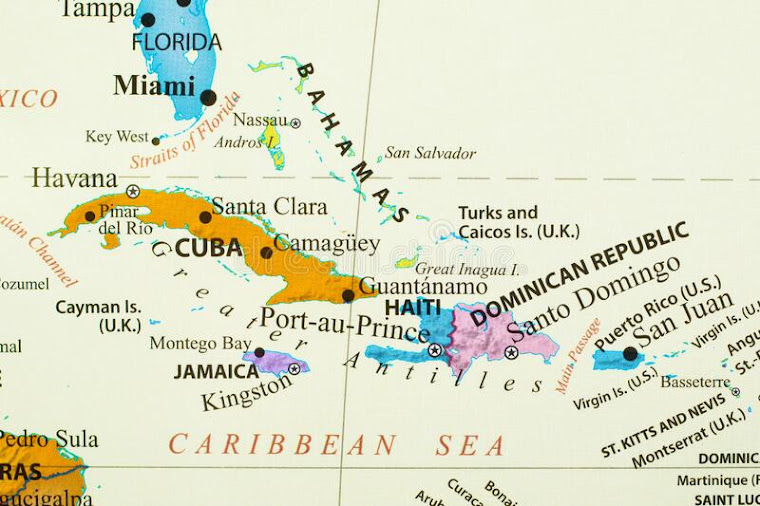
A political blog about Bahamian politics in The Bahamas, Bahamian Politicans - and the entire Bahamas political lot. Bahamian Blogger Dennis Dames keeps you updated on the political news and views throughout the islands of The Bahamas without fear or favor. Bahamian Politicians and the Bahamian Political Arena: Updates one Post at a time on Bahamas Politics and Bahamas Politicans; and their local, regional and international policies and perspectives.
Tuesday, February 22, 2011
Monday, February 21, 2011
A lot of what Mr. Errington Watkins had to say in defence of Mr. Branville McCartney makes sense
Mr. Errington Watkins on Mr. Branville McCartney
By Rick Lowe
A lot of what Mr. Errington Watkins had to say in this Letter to the Editor in defence of Mr. Branville McCartney makes sense.
For example, he rightly claims; (a) it's Mr. McCartney's Constitutional right to seek to be Prime Minister of The Bahamas, (b) a politicians generosity with other peoples money should concern us all, (c) Mr. Hubert Ingraham is an astute politician, and (d) every FNM has a right to attempt to become head of that party.
Where Mr. Watkins, a self described floater, gets it wrong is when he suggests that a member of a political party should take on his colleagues in the court of public opinion.
Mr. McCartney is no doubt intelligent, ambitious, likeable and more, but that does not matter when you might have publicly offended the very ones you hope will help you achieve your goal within the political organisation you're aligned with.
Many PLP's are no longer in its ranks, and many FNM's are no longer welcome there as a result of taking their colleagues on in the press rather than winning them over quietly within their ranks. There is also the obvious point that one needs to be aligned with a major political party to become the country's Prime Minister. But of course Mr. McCartney has the right to leave the FNM, join the PLP or another party or remain a legitimate independent (i.e. not an independent that relies on a major political party not fielding a candidate against them).
In the final, maybe Mr. McCartney has every right to berate his colleagues in public, but as P.J. O'Rourke once said; "There is only one basic human right, the right to do as you damn well please. And with it comes the only basic human duty, the duty to take the consequences."
February 19, 2011
weblogbahamas
By Rick Lowe
A lot of what Mr. Errington Watkins had to say in this Letter to the Editor in defence of Mr. Branville McCartney makes sense.
For example, he rightly claims; (a) it's Mr. McCartney's Constitutional right to seek to be Prime Minister of The Bahamas, (b) a politicians generosity with other peoples money should concern us all, (c) Mr. Hubert Ingraham is an astute politician, and (d) every FNM has a right to attempt to become head of that party.
Where Mr. Watkins, a self described floater, gets it wrong is when he suggests that a member of a political party should take on his colleagues in the court of public opinion.
Mr. McCartney is no doubt intelligent, ambitious, likeable and more, but that does not matter when you might have publicly offended the very ones you hope will help you achieve your goal within the political organisation you're aligned with.
Many PLP's are no longer in its ranks, and many FNM's are no longer welcome there as a result of taking their colleagues on in the press rather than winning them over quietly within their ranks. There is also the obvious point that one needs to be aligned with a major political party to become the country's Prime Minister. But of course Mr. McCartney has the right to leave the FNM, join the PLP or another party or remain a legitimate independent (i.e. not an independent that relies on a major political party not fielding a candidate against them).
In the final, maybe Mr. McCartney has every right to berate his colleagues in public, but as P.J. O'Rourke once said; "There is only one basic human right, the right to do as you damn well please. And with it comes the only basic human duty, the duty to take the consequences."
February 19, 2011
weblogbahamas

Sunday, February 20, 2011
Defining the Concept of National Youth Service (NYS) in The Bahamas
National youth service
thenassauguardian editorial
There are some ideas many claim to understand but which few actually do, such as national youth service (NYS), which the country should better define before moving ahead with any new initiatives that bear the name, but have little resemblance to more authentic models of NYS.
In defining an idea, it’s clarifying to acknowledge what it isn’t. Efforts to rehabilitate non-violent juvenile offenders or provide alternative programs for school-age youth the public education system is unable “to handle” have been wrongly defined and mislabeled as national youth service.
Military and penal oriented programs are not examples of NYS. The former Youth Empowerment and Skills Training Institute (YEAST), for all its merits and problems, is similarly not a form of NYS. Despite criticisms, those who initiated, built and supported YEAST deserve our gratitude.
While successive governments have spoken eloquently of the importance of NYS, they have failed to define the concept. But, despite this lack of clarity, there has been an enduring effort to provide our young people with opportunities to contribute to the common good through community service.
This spirit has produced fine programs such as the Girl Guides, Kiwanis’ Key Clubs and an impressive list of private efforts to develop character and promote active citizenship among our youth.
But these laudable programs are also not NYS. National youth service by its definition is more broad-based, involving significant numbers of young people.
Whether we realize it or not, the country has already developed a form of NYS, namely, the mandatory community service program in our public and most of our private secondary schools.
This is an example of having a good thing and not recognizing its goodness, especially with regards to the thousands of hours of service thousands of Bahamian youth have already given to the nation.
But this good idea, yet underdeveloped program, is quite flawed in terms of its mission, direction, oversight and effectiveness. We have to make this good thing even better by holding these school-based programs to a higher standard and providing them with clearer guidelines and better management and accountability.
While there are other forms of NYS that can be geared towards college and post-college young people, and should be thought through, the country already has a national youth service infrastructure, namely, our junior and secondary schools filled with all of the nation’s youth, to whom we can provide myriad citizenship building and community service-learning experiences.
Our national challenge is not to launch new programs that check-off some box called national youth service, but to take what we already have and dramatically revise it so that the promise of NYS, already realized in some form, can more accurately fulfill the idea and ideals of a national youth service of which we have long dreamed.
2/19/2011
thenassauguardian editorial
thenassauguardian editorial
There are some ideas many claim to understand but which few actually do, such as national youth service (NYS), which the country should better define before moving ahead with any new initiatives that bear the name, but have little resemblance to more authentic models of NYS.
In defining an idea, it’s clarifying to acknowledge what it isn’t. Efforts to rehabilitate non-violent juvenile offenders or provide alternative programs for school-age youth the public education system is unable “to handle” have been wrongly defined and mislabeled as national youth service.
Military and penal oriented programs are not examples of NYS. The former Youth Empowerment and Skills Training Institute (YEAST), for all its merits and problems, is similarly not a form of NYS. Despite criticisms, those who initiated, built and supported YEAST deserve our gratitude.
While successive governments have spoken eloquently of the importance of NYS, they have failed to define the concept. But, despite this lack of clarity, there has been an enduring effort to provide our young people with opportunities to contribute to the common good through community service.
This spirit has produced fine programs such as the Girl Guides, Kiwanis’ Key Clubs and an impressive list of private efforts to develop character and promote active citizenship among our youth.
But these laudable programs are also not NYS. National youth service by its definition is more broad-based, involving significant numbers of young people.
Whether we realize it or not, the country has already developed a form of NYS, namely, the mandatory community service program in our public and most of our private secondary schools.
This is an example of having a good thing and not recognizing its goodness, especially with regards to the thousands of hours of service thousands of Bahamian youth have already given to the nation.
But this good idea, yet underdeveloped program, is quite flawed in terms of its mission, direction, oversight and effectiveness. We have to make this good thing even better by holding these school-based programs to a higher standard and providing them with clearer guidelines and better management and accountability.
While there are other forms of NYS that can be geared towards college and post-college young people, and should be thought through, the country already has a national youth service infrastructure, namely, our junior and secondary schools filled with all of the nation’s youth, to whom we can provide myriad citizenship building and community service-learning experiences.
Our national challenge is not to launch new programs that check-off some box called national youth service, but to take what we already have and dramatically revise it so that the promise of NYS, already realized in some form, can more accurately fulfill the idea and ideals of a national youth service of which we have long dreamed.
2/19/2011
thenassauguardian editorial
Friday, February 18, 2011
In every way and in every segment of life the Bahamian's value system has certainly changed
The Bahamas' changing value system
tribune242 editorial
WE HAVE had several calls about our editorial of February 11, which for the first time revealed the name of an anonymous letter writer, whose identity excited political circles in 1962, but for 49 years remained a mystery. Today, few people would be interested in our mystery man, but in the political turmoil of the sixties, a British editor was threatened with prison for refusing to reveal his identity.
However, with the death of Paul Bower on January 24, memories of those few days in the Magistrate's Court in October, 1963 came flooding back. For several years speculation continued about the letter writer. Today, when it no longer matters, and few would care, we realised that we were now the last living person who knows the letter's author. For the sake of history we revealed it in this column on February 11.
The calls that we have received as a result of that column, were not about the mystery writer, now unmasked, but about the fate of Paul Bower when he refused to give the court the writer's name. No, he did not go to prison as threatened by Magistrate John Bailey, who when off the bench was one of his best friends.
The case ended suddenly when the Guardian owners decided to pay the plaintiffs' damages, and rescue their man from the edge of the cliff. Magistrate Bailey had refused the Guardian leave to appeal his decision of name or prison.
Mr Bower, who was Guardian editor from 1958 to August 1962 (two months before the case came to court in October), asked the magistrate: "What would happen should I refuse (to reveal the writer's name)?"
"You would be in contempt," the Irish magistrate replied.
"What would be the consequences?" Mr Bower pressed. "A fine or a prison sentence," the magistrate shot back.
"Ten days in Her Majesty's prison!" LB Johnson, one of the six PLP plaintiffs, demanded loudly. This exchange was followed by a luncheon adjournment. By the afternoon the case was over, Mr Bower had missed the arrow, the plaintiffs had their damages, and letter writer Bert Cambridge was still a mystery man.
Guardian lawyer James Liddell had argued that not only was the plaintiffs' complaints vexatious, but that what was being complained of before the court was the letter and its content, not the identity of the writer. But the plaintiffs were not buying that argument, nor was the magistrate. In a few weeks time there would be a general election, which the PLP were confident of winning - in fact they lost. Racism was a heavy card being played at the time, and the six PLP plaintiffs -- all lawyers - wanted to know which white man would dare question their integrity in an anonymous letter. What they did not know was that the writer was, like themselves, a black man, a former politician, whose character Mr Bower had described in glowing terms in court. Several of the plaintiffs were Bert Cambridge's friends. In fact he had given music lessons to one of them. Bert Cambridge's Orchestra was the hottest band in town in the twenties and thirties, and music was his career.
But what we find most interesting is the change over the years in public values. In those days it was seldom that one sued a newspaper for defamation, and anything over £100 in damages was certainly unheard of. And so for "An Open Letter to Mr Paul Adderley," published in The Guardian on August 21, 1962 the six lawyers -- Paul Adderley, Loftus Roker, Lynden Pindling, AD Hanna, LB Johnson and Orville Turnquest -- each asked for £100 for the damage perceived to have been done to their reputations, plus costs, which in those days would have been minimal.
However, thanks to the influence over the years of America's legal system where it almost pays to do oneself an injury in a public place and walk away with millions awarded by the courts, Bahamians have adjusted their opinion of their own worth.
In 1962, Orville Turnquest who became the Bahamas' Governor General, was not bloated up with his own importance. He obviously felt well compensated with £100 for the slight he had felt was committed against him. If he had known that it was his old piano teacher, he probably would have slapped him on the back, had a good laugh and they would have gone off to make music together.
However, today we see some of these complaints, many of them vexatious, and the value -- starting in the thousands --that persons put on their own worth and we wonder where they are coming from.
In every way and in every segment of life the Bahamian's value system has certainly changed.
February 18, 2011
tribune242 editorial
tribune242 editorial
WE HAVE had several calls about our editorial of February 11, which for the first time revealed the name of an anonymous letter writer, whose identity excited political circles in 1962, but for 49 years remained a mystery. Today, few people would be interested in our mystery man, but in the political turmoil of the sixties, a British editor was threatened with prison for refusing to reveal his identity.
However, with the death of Paul Bower on January 24, memories of those few days in the Magistrate's Court in October, 1963 came flooding back. For several years speculation continued about the letter writer. Today, when it no longer matters, and few would care, we realised that we were now the last living person who knows the letter's author. For the sake of history we revealed it in this column on February 11.
The calls that we have received as a result of that column, were not about the mystery writer, now unmasked, but about the fate of Paul Bower when he refused to give the court the writer's name. No, he did not go to prison as threatened by Magistrate John Bailey, who when off the bench was one of his best friends.
The case ended suddenly when the Guardian owners decided to pay the plaintiffs' damages, and rescue their man from the edge of the cliff. Magistrate Bailey had refused the Guardian leave to appeal his decision of name or prison.
Mr Bower, who was Guardian editor from 1958 to August 1962 (two months before the case came to court in October), asked the magistrate: "What would happen should I refuse (to reveal the writer's name)?"
"You would be in contempt," the Irish magistrate replied.
"What would be the consequences?" Mr Bower pressed. "A fine or a prison sentence," the magistrate shot back.
"Ten days in Her Majesty's prison!" LB Johnson, one of the six PLP plaintiffs, demanded loudly. This exchange was followed by a luncheon adjournment. By the afternoon the case was over, Mr Bower had missed the arrow, the plaintiffs had their damages, and letter writer Bert Cambridge was still a mystery man.
Guardian lawyer James Liddell had argued that not only was the plaintiffs' complaints vexatious, but that what was being complained of before the court was the letter and its content, not the identity of the writer. But the plaintiffs were not buying that argument, nor was the magistrate. In a few weeks time there would be a general election, which the PLP were confident of winning - in fact they lost. Racism was a heavy card being played at the time, and the six PLP plaintiffs -- all lawyers - wanted to know which white man would dare question their integrity in an anonymous letter. What they did not know was that the writer was, like themselves, a black man, a former politician, whose character Mr Bower had described in glowing terms in court. Several of the plaintiffs were Bert Cambridge's friends. In fact he had given music lessons to one of them. Bert Cambridge's Orchestra was the hottest band in town in the twenties and thirties, and music was his career.
But what we find most interesting is the change over the years in public values. In those days it was seldom that one sued a newspaper for defamation, and anything over £100 in damages was certainly unheard of. And so for "An Open Letter to Mr Paul Adderley," published in The Guardian on August 21, 1962 the six lawyers -- Paul Adderley, Loftus Roker, Lynden Pindling, AD Hanna, LB Johnson and Orville Turnquest -- each asked for £100 for the damage perceived to have been done to their reputations, plus costs, which in those days would have been minimal.
However, thanks to the influence over the years of America's legal system where it almost pays to do oneself an injury in a public place and walk away with millions awarded by the courts, Bahamians have adjusted their opinion of their own worth.
In 1962, Orville Turnquest who became the Bahamas' Governor General, was not bloated up with his own importance. He obviously felt well compensated with £100 for the slight he had felt was committed against him. If he had known that it was his old piano teacher, he probably would have slapped him on the back, had a good laugh and they would have gone off to make music together.
However, today we see some of these complaints, many of them vexatious, and the value -- starting in the thousands --that persons put on their own worth and we wonder where they are coming from.
In every way and in every segment of life the Bahamian's value system has certainly changed.
February 18, 2011
tribune242 editorial
Thursday, February 17, 2011
Dr. Andre Rollins: I have decided to act now to follow my convictions and to proudly join the Progressive Liberal Party (PLP)
Former NDP chief Andre Rollins joins the PLP
By LAMECH JOHNSON:

ORTHODONTIST and would-be parliamentarian Andre Rollins has joined the Progressive Liberal Party after tendering his resignation to the National Development Party.
The former NDP chairman said it was his belief that Bahamians wanted to see a change in the nation's politics, however the expectation had been placed on the already established political parties as opposed to political newcomers.
Dr Rollins said: "It is my strong conviction that it is neither wise, nor practical, to continue pursuing the development of a new political party in an environment of scarce resources and weak public demand, where prospects for success are long-term at best and with so much at stake in our nation's immediate future."
Dr Rollins said while he shared the idealism of many concerning the imperfections of the major parties, he appreciated the importance of pragmatism in strategically solving national problems.
Dr Rollins added: "It is still my belief that Bahamians want to see change in our nation's politics, because they realise the critical role that government must play in correcting the now regressive course of our national development."
Last year, Dr Rollins was one of five candidates fighting to represent Elizabeth Estates, securing 49 votes.
Shortly after the by-election, Dr Rollins was courted by Prime Minister Hubert Ingraham and former PLP first lady Dame Marguerite Pindling, who invited him to join their parties.
In July, Fox Hill MP Fred Mitchell expressed his desire to see Dr Rollins cross over to the PLP after his performance in the country's first political debate, a week prior to the by-election.
At that time, the orthodontist maintained his membership in the NDP.
In yesterday's statement, Dr Rollins encouraged the leadership of the NDP to consider the viability of merging with the PLP.
He said: "Just as I believe in our nation's potential for greatness, despite our present shortcomings, I am also confident that notwithstanding the PLP's imperfections, this groundbreaking party still possesses the capacity for change."
Dr Rollins added: "Whatever the party's ultimate decision, they know that I shall respect their right to proceed as they deem best, yet hold out hope that we will be of one accord; but I have decided to act now to follow my convictions and to proudly join the PLP."
February 17, 2011
tribune242
February 17, 2011
tribune242
Wednesday, February 16, 2011
The opposition Progressive Liberal Party (PLP) cries shame on The Bahamas government for accepting an offer that is clearly below market value for the Bahamas Telecommunications Company (BTC)
BTC political row worsens
By CANDIA DAMES
The Nassau Guardian News Editor
candia@nasguard.com
Parties hit out over $210M deal
The sparring over the government’s decision to sell 51 percent of the Bahamas Telecommunications Company (BTC) to Cable and Wireless Communications (CWC) has intensified, with the two major political parties arguing over whether the majority of Bahamians support the deal.
The Progressive Liberal Party (PLP) said yesterday that its parliamentary caucus has embarked on a thorough and comprehensive review of the BTC and CWC transaction, and will be releasing regular positions on each component of the transaction.
“The PLP has clear and unequivocal objections to the commercial terms of this transaction, and more specifically the purchase price and consideration the government, and the Bahamian people, will realize from the sale of this prized national asset,” the party said in a statement.
The government has agreed to sell 51 percent of the shares of BTC to CWC for $210 million plus taxes.
“However, when one looks more closely at the terms of the transaction as set out in the share purchase agreement, it is clear The Bahamas government is receiving far less than $210 million, and it is equally clear that whatever the government eventually receives is far less than the value of 51 percent of BTC,” the PLP claimed.
“The Bahamas government is obligated to leave at least $15 million in cash in the company. Furthermore, The Bahamas government is obligated to fund pension liabilities in the amount of $39 million. Taking into account these obligations of the Bahamian government, the most the government will receive is $156 million for 51 percent of BTC.
“The PLP objects to this and cries shame on the government for accepting an offer that is clearly below market value for BTC. In fact, the Financial Times pointed out that the $210 million purchase price was below the industry average; certainly $156 million is significantly below market price for 51 percent of BTC.”
Meanwhile, an argument has intensified over the level of support the government has on the privatization issue.
An earlier statement released by Elizabeth MP Ryan Pinder on behalf of the PLP said the party takes exception to the Free National Movement’s practice of “misleading the Bahamian public on the support for the BTC sale to Cable and Wireless.”
“The PLP proposes that the majority of Bahamians are against this specific sale of BTC. The PLP has committed itself to a series of statements and position pieces that will clearly note our objections to the BTC sale, focused on different objections,” Pinder said.
“The PLP is also committed in these releases to educating Bahamians as to the shortfalls of this proposed sale of BTC. The PLP demands that the FNM be honest and straightforward with the Bahamian people on this give away of the people's asset, BTC.”
But the FNM shot back in a statement last night, saying as support for the opposition’s position on the partnership to create a new BTC with Cable and Wireless continues to erode, it has begun to panic and continues to ignore the voices of the majority of Bahamians.
“The opposition says that it ‘proposes that the majority of Bahamians are against this specific sale of BTC’. Rather than proposing, the FNM has taken note of two surveys over the past two weeks which have shown the surge of support for the creation of a new BTC. One survey was conducted by a private group (Consumer Voices Bahamas) the other by one of the dailies,” the FNM said.
The FNM noted that in The Nassau Guardian’s online survey 4,563 people responded. The question was whether respondents supported the PLP’s decision to reject the deal.
“It appears that the voices of these thousands of Bahamians and many others are of no consequence to the PLP, which now seeks to substitute its own faltering position for that of the majority of Bahamians,” the FNM said.
But Pinder said in his statement that a previous FNM release and associated polls “misrepresented” the views of Bahamians.
“The unscientific polls focused on whether privatization was a good idea, and not [the] real issue that concerns the majority of Bahamians, which is whether this sale to Cable and Wireless under the proposed terms tabled in the House of Assembly last week is a good deal,” he said.
The FNM insisted however that support for the deal continues to grow among Bahamians.
“We believe that after the House of Assembly debate on BTC’s future, that many more Bahamians will support the new partnership, as misinformation and incorrect information are countered with the facts, which will shed more light on the fiction promoted by certain narrow interests,” the FNM said.
2/16/2011
thenassauguardian
By CANDIA DAMES
The Nassau Guardian News Editor
candia@nasguard.com
Parties hit out over $210M deal
The sparring over the government’s decision to sell 51 percent of the Bahamas Telecommunications Company (BTC) to Cable and Wireless Communications (CWC) has intensified, with the two major political parties arguing over whether the majority of Bahamians support the deal.
The Progressive Liberal Party (PLP) said yesterday that its parliamentary caucus has embarked on a thorough and comprehensive review of the BTC and CWC transaction, and will be releasing regular positions on each component of the transaction.
“The PLP has clear and unequivocal objections to the commercial terms of this transaction, and more specifically the purchase price and consideration the government, and the Bahamian people, will realize from the sale of this prized national asset,” the party said in a statement.
The government has agreed to sell 51 percent of the shares of BTC to CWC for $210 million plus taxes.
“However, when one looks more closely at the terms of the transaction as set out in the share purchase agreement, it is clear The Bahamas government is receiving far less than $210 million, and it is equally clear that whatever the government eventually receives is far less than the value of 51 percent of BTC,” the PLP claimed.
“The Bahamas government is obligated to leave at least $15 million in cash in the company. Furthermore, The Bahamas government is obligated to fund pension liabilities in the amount of $39 million. Taking into account these obligations of the Bahamian government, the most the government will receive is $156 million for 51 percent of BTC.
“The PLP objects to this and cries shame on the government for accepting an offer that is clearly below market value for BTC. In fact, the Financial Times pointed out that the $210 million purchase price was below the industry average; certainly $156 million is significantly below market price for 51 percent of BTC.”
Meanwhile, an argument has intensified over the level of support the government has on the privatization issue.
An earlier statement released by Elizabeth MP Ryan Pinder on behalf of the PLP said the party takes exception to the Free National Movement’s practice of “misleading the Bahamian public on the support for the BTC sale to Cable and Wireless.”
“The PLP proposes that the majority of Bahamians are against this specific sale of BTC. The PLP has committed itself to a series of statements and position pieces that will clearly note our objections to the BTC sale, focused on different objections,” Pinder said.
“The PLP is also committed in these releases to educating Bahamians as to the shortfalls of this proposed sale of BTC. The PLP demands that the FNM be honest and straightforward with the Bahamian people on this give away of the people's asset, BTC.”
But the FNM shot back in a statement last night, saying as support for the opposition’s position on the partnership to create a new BTC with Cable and Wireless continues to erode, it has begun to panic and continues to ignore the voices of the majority of Bahamians.
“The opposition says that it ‘proposes that the majority of Bahamians are against this specific sale of BTC’. Rather than proposing, the FNM has taken note of two surveys over the past two weeks which have shown the surge of support for the creation of a new BTC. One survey was conducted by a private group (Consumer Voices Bahamas) the other by one of the dailies,” the FNM said.
The FNM noted that in The Nassau Guardian’s online survey 4,563 people responded. The question was whether respondents supported the PLP’s decision to reject the deal.
“It appears that the voices of these thousands of Bahamians and many others are of no consequence to the PLP, which now seeks to substitute its own faltering position for that of the majority of Bahamians,” the FNM said.
But Pinder said in his statement that a previous FNM release and associated polls “misrepresented” the views of Bahamians.
“The unscientific polls focused on whether privatization was a good idea, and not [the] real issue that concerns the majority of Bahamians, which is whether this sale to Cable and Wireless under the proposed terms tabled in the House of Assembly last week is a good deal,” he said.
The FNM insisted however that support for the deal continues to grow among Bahamians.
“We believe that after the House of Assembly debate on BTC’s future, that many more Bahamians will support the new partnership, as misinformation and incorrect information are countered with the facts, which will shed more light on the fiction promoted by certain narrow interests,” the FNM said.
2/16/2011
thenassauguardian
Tuesday, February 15, 2011
BTC unions lose court battle to block the sale of 51 % stake in Bahamas Telecommunications Company (BTC) to Cable and Wireless Communications (CWC)... [Ordered to pay costs]
BTC unions lose court battle
By KEVA LIGHTBOURNE
Guardian Senior Reporter
kdl@nasguard.com
Supreme Court Justice Neville Adderley yesterday threw out a court action filed by Bahamas Telecommunications Company unions seeking to block the sale of a 51 percent stake in BTC to Cable and Wireless Communications (CWC).
The Bahamas Communications and Public Officers Union (BCPOU) and the Bahamas Communications and Public Managers Union (BCPMU) were seeking an injunction to stop the government from selling BTC.
Attorney Maurice Glinton, who represented the unions, confirmed to The Nassau Guardian that they plan to appeal the decision. He could not say at the time when the necessary documents would be filed.
In his ruling, Adderley said the BCPOU and BCPMU and their trustees lacked the legal capacity to institute and maintain the action in their own names.
“Hence the action is a nullity and so the granting of an injunction pending its hearing does not arise,” Adderley said.
“Alternatively, the evidence has not disclosed that any of their private legal rights are being infringed or threatened or need to be enforced or declared, as they have not established an interest recognized by law as being direct and substantial enough in the subject matter of the action to give them locus standi to commence the action to claim the remedies set forth in the writ.
“For the foregoing reasons, I strike out the writ and dismiss the action.”
Adderley also ordered that the unions pay costs in the matter.
In their writ, the unions contended that the government has no authority to sell BTC because an act of Parliament made the Bahamas Telecommunications Corporation (BaTelCo) a self-owning and self-sustaining entity.
Their claim is that consequently the divested assets are now held by BTC in trust for BaTelCo.
Adderley said there is no express power in the Industrial Relations Act that gives unions the capacity or power to sue for declarations outside their statutory objects.
Adderley said even if they had the capacity to sue for the matters in question, he considered whether they had a legal interest to sue for the relief claimed.
Last week, the government signed a shareholder’s agreement and a share purchase agreement with CWC, and Prime Minister Hubert Ingraham tabled the memorandum of understanding between the two entities in the House of Assembly along with related documents.
Yesterday, BCPOU President Bernard Evans said the ruling has in no way halted the union’s efforts to stop the sale of BTC.
“We never really rested all of our efforts on this court case, even though we knew we had good grounds and it is a landmark case. But we never wanted to leave any stone unturned. We will continue to do our stuff because this is not over by a long shot,” Evans said.
“We are going to fight this on all fronts. Whatever it takes, we are going to take our time and get to it.”
Evans shot down claims by the Free National Movement that the majority of Bahamians support the sale of BTC to Cable and Wireless.
“I saw in the paper where the FNM government believe that they have the majority of the people, they keep putting us in the minority. Well the day of reckoning is coming when we will know who has the majority,” Evans said.
The deal between the government and CWC calls for the shares to be sold for $210 million, as well as a stamp duty of $7 million. Eventually, 25 percent of the shares in the company will be offered to Bahamians, the government has said.
2/15/2011
thenassauguardian
By KEVA LIGHTBOURNE
Guardian Senior Reporter
kdl@nasguard.com
Supreme Court Justice Neville Adderley yesterday threw out a court action filed by Bahamas Telecommunications Company unions seeking to block the sale of a 51 percent stake in BTC to Cable and Wireless Communications (CWC).
The Bahamas Communications and Public Officers Union (BCPOU) and the Bahamas Communications and Public Managers Union (BCPMU) were seeking an injunction to stop the government from selling BTC.
Attorney Maurice Glinton, who represented the unions, confirmed to The Nassau Guardian that they plan to appeal the decision. He could not say at the time when the necessary documents would be filed.
In his ruling, Adderley said the BCPOU and BCPMU and their trustees lacked the legal capacity to institute and maintain the action in their own names.
“Hence the action is a nullity and so the granting of an injunction pending its hearing does not arise,” Adderley said.
“Alternatively, the evidence has not disclosed that any of their private legal rights are being infringed or threatened or need to be enforced or declared, as they have not established an interest recognized by law as being direct and substantial enough in the subject matter of the action to give them locus standi to commence the action to claim the remedies set forth in the writ.
“For the foregoing reasons, I strike out the writ and dismiss the action.”
Adderley also ordered that the unions pay costs in the matter.
In their writ, the unions contended that the government has no authority to sell BTC because an act of Parliament made the Bahamas Telecommunications Corporation (BaTelCo) a self-owning and self-sustaining entity.
Their claim is that consequently the divested assets are now held by BTC in trust for BaTelCo.
Adderley said there is no express power in the Industrial Relations Act that gives unions the capacity or power to sue for declarations outside their statutory objects.
Adderley said even if they had the capacity to sue for the matters in question, he considered whether they had a legal interest to sue for the relief claimed.
Last week, the government signed a shareholder’s agreement and a share purchase agreement with CWC, and Prime Minister Hubert Ingraham tabled the memorandum of understanding between the two entities in the House of Assembly along with related documents.
Yesterday, BCPOU President Bernard Evans said the ruling has in no way halted the union’s efforts to stop the sale of BTC.
“We never really rested all of our efforts on this court case, even though we knew we had good grounds and it is a landmark case. But we never wanted to leave any stone unturned. We will continue to do our stuff because this is not over by a long shot,” Evans said.
“We are going to fight this on all fronts. Whatever it takes, we are going to take our time and get to it.”
Evans shot down claims by the Free National Movement that the majority of Bahamians support the sale of BTC to Cable and Wireless.
“I saw in the paper where the FNM government believe that they have the majority of the people, they keep putting us in the minority. Well the day of reckoning is coming when we will know who has the majority,” Evans said.
The deal between the government and CWC calls for the shares to be sold for $210 million, as well as a stamp duty of $7 million. Eventually, 25 percent of the shares in the company will be offered to Bahamians, the government has said.
2/15/2011
thenassauguardian
Monday, February 14, 2011
The majority of Bahamians approve the sale of Bahamas Telecommunications Company (BTC) to Cable and Wireless Communications (C&W)
Competition toughened Cable & Wireless
tribune242 editorial
YESTERDAY'S Gleaner reported that Cable & Wireless Jamaica, trading as LIME Jamaica, "continued its financial haemorrhaging in the December quarter, posting a $1.3 billion loss for the three-month period, nearly triple the $351.4 million of a year earlier."
Despite this its managers continue to look on the bright side, insisting that they are on the verge of turning the company around.
According to The Gleaner, Jamaica LIME has been in "retreat for the past decade since it lost its monopoly in Jamaica's telecommunications market."
"That's what happens to monopolies," said a Bahamian who is close to the situation. LIME Jamaica was doing the same foolishness as BTC because it felt secure in its monopoly, he said, then Digicel, an Irish company with dirt cheap rates, came in and ran it out of business.
It was this lesson from fierce competition that forced Cable & Wireless into the efficient company that it is today with Digicel waiting in the background to meet it head on in the Bahamas when the floodgates are open to competition.
One can now understand why the Bahamas government has offered and C&W - having learned from its Jamaican experience -- has accepted the three-year protection cover from monopolies for BTC's cellular service.
If it were not for this three-year period to build BTC up to meet competitors, the Bahamas' Telecommunications Company would crumble under the strain. C&W, on the other hand, although stumbling in Jamaica is prospering in Barbados and Trinidad.
But there is no room for hubris. There is much to be done to get BTC in a position to meet the competition, and for three years the BTC staff, who are interested in their company, will have an opportunity to prove that they are not among those who deserve to be made redundant.
In an interview with the Jamaican Observer last year, Digicel CEO Colm Delves, said that Digicel looked at the Bahamas, but was not interested in just having a stake in BTC, and so it decided "to pass on that."
"What was being offered there was a stake in the existing operator," said Mr Delves. "We think that when liberalization takes place there, then that will be the appropriate time to enter that market."
So in three years time Digicel and others might be the wolves at the door. Cable & Wireless will have to have BTC ready to meet the challenge and regardless of what Mr Evans, Mr Carroll and their unionists claim, they are babes in the woods, ignorant of the hungry sharks waiting in the world of competition to devour them and BTC.
Judging from the various polls, street talk and radio talk shows, the majority of Bahamians approve the sale of BTC to C&W.
They want better service, more choice, cheaper cell phone rates, access to mobile TV and the ability to phone the Family Islands as a part of the Bahamas, not as foreign islands with overseas charges.
Bahamians are weary of the oft-repeated fiction that they own BTC. Ownership implies having some stake in the company. Although as tax payers they underwrite staff salaries, they cannot even demand good service.
With the sale of BTC Bahamians will eventually be able to buy shares in the company and have share certificates to prove that finally they do own a piece of BTC.
Although Bernard Evans, BCPOU president, claims that unionists are against the sale of BTC, there are unions that have refused to join in his protest.
Many are particularly upset after his reckless threats promising unrest similar to the violence in the past few weeks in Egypt.
Mr Evans has asked Bahamians to have patience with BTC because the public's services "will be affected somewhat" because of the union protest.
Mr Evans seems to forget that Bahamians have exercised years of patience, grudgingly tolerating their high prices and indifferent service.
Now that Bahamians see a way out and a deliverer on the horizon, they are ready to jump ship.
Patience is at an end.
February 14, 2011
tribune242 editorial
tribune242 editorial
YESTERDAY'S Gleaner reported that Cable & Wireless Jamaica, trading as LIME Jamaica, "continued its financial haemorrhaging in the December quarter, posting a $1.3 billion loss for the three-month period, nearly triple the $351.4 million of a year earlier."
Despite this its managers continue to look on the bright side, insisting that they are on the verge of turning the company around.
According to The Gleaner, Jamaica LIME has been in "retreat for the past decade since it lost its monopoly in Jamaica's telecommunications market."
"That's what happens to monopolies," said a Bahamian who is close to the situation. LIME Jamaica was doing the same foolishness as BTC because it felt secure in its monopoly, he said, then Digicel, an Irish company with dirt cheap rates, came in and ran it out of business.
It was this lesson from fierce competition that forced Cable & Wireless into the efficient company that it is today with Digicel waiting in the background to meet it head on in the Bahamas when the floodgates are open to competition.
One can now understand why the Bahamas government has offered and C&W - having learned from its Jamaican experience -- has accepted the three-year protection cover from monopolies for BTC's cellular service.
If it were not for this three-year period to build BTC up to meet competitors, the Bahamas' Telecommunications Company would crumble under the strain. C&W, on the other hand, although stumbling in Jamaica is prospering in Barbados and Trinidad.
But there is no room for hubris. There is much to be done to get BTC in a position to meet the competition, and for three years the BTC staff, who are interested in their company, will have an opportunity to prove that they are not among those who deserve to be made redundant.
In an interview with the Jamaican Observer last year, Digicel CEO Colm Delves, said that Digicel looked at the Bahamas, but was not interested in just having a stake in BTC, and so it decided "to pass on that."
"What was being offered there was a stake in the existing operator," said Mr Delves. "We think that when liberalization takes place there, then that will be the appropriate time to enter that market."
So in three years time Digicel and others might be the wolves at the door. Cable & Wireless will have to have BTC ready to meet the challenge and regardless of what Mr Evans, Mr Carroll and their unionists claim, they are babes in the woods, ignorant of the hungry sharks waiting in the world of competition to devour them and BTC.
Judging from the various polls, street talk and radio talk shows, the majority of Bahamians approve the sale of BTC to C&W.
They want better service, more choice, cheaper cell phone rates, access to mobile TV and the ability to phone the Family Islands as a part of the Bahamas, not as foreign islands with overseas charges.
Bahamians are weary of the oft-repeated fiction that they own BTC. Ownership implies having some stake in the company. Although as tax payers they underwrite staff salaries, they cannot even demand good service.
With the sale of BTC Bahamians will eventually be able to buy shares in the company and have share certificates to prove that finally they do own a piece of BTC.
Although Bernard Evans, BCPOU president, claims that unionists are against the sale of BTC, there are unions that have refused to join in his protest.
Many are particularly upset after his reckless threats promising unrest similar to the violence in the past few weeks in Egypt.
Mr Evans has asked Bahamians to have patience with BTC because the public's services "will be affected somewhat" because of the union protest.
Mr Evans seems to forget that Bahamians have exercised years of patience, grudgingly tolerating their high prices and indifferent service.
Now that Bahamians see a way out and a deliverer on the horizon, they are ready to jump ship.
Patience is at an end.
February 14, 2011
tribune242 editorial
Sunday, February 13, 2011
We remind the government of its specific pledge made in 2007, as it relates to establishing a Freedom of Information Act
Freedom and access to information
thenassauguardian editorial
Within weeks of coming to office in 2007, a new FNM Administration led by Hubert Ingraham and guided by a Trust Agenda committed itself to greater democratic governance.
The tabling of the Bahamas Telecommunications Company sales agreements between the government and Cable and Wireless Communications was an example of this commitment, and was in keeping with the prompt freeing of the broadcast media from state control during the FNM’s earlier term in office.
We trust that the Free National Movement government means what it says. Accordingly, we remind the government of its specific pledge made in 2007, as it relates to establishing a Freedom of Information Act:
“Accountability and transparency in government are fundamental to our code of beliefs, a code that includes the right of the people to access information regarding the processes of governing. In support of such openness, legislation will be placed before you for the enactment of a Freedom of Information Act.”
This top billing and decisive language suggested immediate action.
So, what is the state of this pledge? Enacting such legislation near the end of the current government’s term would not seem to be consistent with the FNM’s trust agenda.
Many other countries in the region are either in the process of drafting or have already implemented Freedom of Information laws. Around the world, more than 60 countries have enacted FOI acts.
Freedom of information has long been recognized as a foundational human right ever since the United Nations General Assembly declared in 1946 that, “Freedom of Information is a fundamental human right and a touchstone of all freedoms to which the United Nations is consecrated.” Since then, the Organization of American States and the Commonwealth — The Bahamas being a member of both — have also endorsed minimum standards on the right of information.
A FOI law has the potential to promote greater transparency and accountability and also facilitates greater public participation in the government’s decision-making process. Empowering citizens with the legal right to access information of their government’s activities can strengthen democracy by making the government directly accountable to its citizens on a day-to-day basis rather than just at election time.
Legislation to provide more freedom or access to information is not an end in itself.
An outdated public service culture run by civil servants who would often prefer root canal surgery rather than press scrutiny will not quickly become more transparent because of the passage of a bill.
Moreover, a media culture that is often sloppy and lazy in its coverage of government and political affairs will also not suddenly become more enterprising. Still, such legislation is a means to various ends. It is a part of a framework of legislative tools that can help to promote a more accountable and transparent public service culture.
The debate on, enactment of and training in the details of such legislation may help spur politicians, civil servants and journalists to provide citizens with the freedom of information needed to make freer and more informed decisions.
Outlawing discrimination does not end prejudice. But it puts that prejudice on notice that discrimination is against the law. Legislation to ensure greater public access to information will not in itself ensure a more open public service culture. But it puts that culture on notice that such openness is an essential component in good and effective governance.
We trust that the FNM will live up to its word and will be supported by the Opposition, who also committed itself to similar legislation.
As of now we are agnostic regarding the details of such legislation. But we have faith that such landmark legislation is not only necessary, but long overdue.
2/11/2011
thenassauguardian editorial
thenassauguardian editorial
Within weeks of coming to office in 2007, a new FNM Administration led by Hubert Ingraham and guided by a Trust Agenda committed itself to greater democratic governance.
The tabling of the Bahamas Telecommunications Company sales agreements between the government and Cable and Wireless Communications was an example of this commitment, and was in keeping with the prompt freeing of the broadcast media from state control during the FNM’s earlier term in office.
We trust that the Free National Movement government means what it says. Accordingly, we remind the government of its specific pledge made in 2007, as it relates to establishing a Freedom of Information Act:
“Accountability and transparency in government are fundamental to our code of beliefs, a code that includes the right of the people to access information regarding the processes of governing. In support of such openness, legislation will be placed before you for the enactment of a Freedom of Information Act.”
This top billing and decisive language suggested immediate action.
So, what is the state of this pledge? Enacting such legislation near the end of the current government’s term would not seem to be consistent with the FNM’s trust agenda.
Many other countries in the region are either in the process of drafting or have already implemented Freedom of Information laws. Around the world, more than 60 countries have enacted FOI acts.
Freedom of information has long been recognized as a foundational human right ever since the United Nations General Assembly declared in 1946 that, “Freedom of Information is a fundamental human right and a touchstone of all freedoms to which the United Nations is consecrated.” Since then, the Organization of American States and the Commonwealth — The Bahamas being a member of both — have also endorsed minimum standards on the right of information.
A FOI law has the potential to promote greater transparency and accountability and also facilitates greater public participation in the government’s decision-making process. Empowering citizens with the legal right to access information of their government’s activities can strengthen democracy by making the government directly accountable to its citizens on a day-to-day basis rather than just at election time.
Legislation to provide more freedom or access to information is not an end in itself.
An outdated public service culture run by civil servants who would often prefer root canal surgery rather than press scrutiny will not quickly become more transparent because of the passage of a bill.
Moreover, a media culture that is often sloppy and lazy in its coverage of government and political affairs will also not suddenly become more enterprising. Still, such legislation is a means to various ends. It is a part of a framework of legislative tools that can help to promote a more accountable and transparent public service culture.
The debate on, enactment of and training in the details of such legislation may help spur politicians, civil servants and journalists to provide citizens with the freedom of information needed to make freer and more informed decisions.
Outlawing discrimination does not end prejudice. But it puts that prejudice on notice that discrimination is against the law. Legislation to ensure greater public access to information will not in itself ensure a more open public service culture. But it puts that culture on notice that such openness is an essential component in good and effective governance.
We trust that the FNM will live up to its word and will be supported by the Opposition, who also committed itself to similar legislation.
As of now we are agnostic regarding the details of such legislation. But we have faith that such landmark legislation is not only necessary, but long overdue.
2/11/2011
thenassauguardian editorial
Saturday, February 12, 2011
We are absolutely convinced that the Bahamian people [private and public] should have been allowed to retain majority control of BTC
Those In Opposition to a Deal
The Bahama Journal Editorial
There are times in life when principle kicks in and when you do what you must do based on what conscience dictates.
Today we reiterate our opposition to what seems a deal well on its way toward being signed, sealed and delivered.
If things go as the current administration has planned, Cable and Wireless will – in short order – take possession of the majority stake in the Bahamas Telecommunications Corporation.
Clearly, then, this will not be the end of the matter concerning this corporation, Cable and Wireless and all of what went into making this deal a signed reality.
As the public has been told, there will be continuing opposition to the deal by Her Majesty’s Loyal Opposition and from any number of unions.
Opposition Leader Perry Christie has already indicated that [in the event that his party prevails in the next general elections] he would renegotiate the terms of the BTC sale.
This is his and their right.
In addition, some of the unions are adamant that there should be no deal; with one union leader grandly proclaiming that he and his followers are preparing to make of Rawson Square and its environs some sort of Little Egypt.
While hyperbole might have its place in social life; we counsel caution when it comes to making pronouncements that might be construed as being of an incendiary nature.
There is today every likelihood that, this issue will continue to be debated, mulled and chewed over as part of whatever passes for debate preceding that date when the Bahamian people will vote in free and fair elections.
In and of itself, this is all part of the way we do things in a democratic, law-abiding nation; A deal is a deal and as some of us know, a deal becomes a very real deal once it is signed, sealed and delivered.
The details of the memorandum of understanding (MOU) between the government and Cable & Wireless Communications (CWC) for the sale and privatisation of the Bahamas Telecommunications Company (BTC) has [ finally] been revealed by Prime Minister Hubert Ingraham.
As we also know, the government is on tap to sell 51 per cent of BTC to CWC for $210 million. Barring some perfectly unforeseen occurrence, this deal will be consummated.
Whether it should be so completed is another question altogether, or as it might be put colloquially, this aspect of the matter is surely a horse of a different colour.
As regards the deal that will be consummated, there is now agreement as regards how C&W will work with the government and the management of BTC to finalize a business plan for BTC; this as movement is made towards addressing its plan for the modernization of telecommunications throughout The Bahamas.
This deal should have been dealt with differently. In addition, we are absolutely convinced that the Bahamian people [private and public] should have been allowed to retain majority control of BTC.
We know that we are not alone in this view.
As we counseled on another occasion, "… all Bahamians who are patriots should rise – as if they were one man- in opposition to any deal that would deny the Bahamian people majority control of entities such as BTC…"
Indeed, like so very many other Bahamians who disagree with the current administration’s on that matter which involves giving Cable and Wireless a 51% per cent stake in BTC, we do so based on our studied conclusion that this deal is not in the best interests of either BTC or the Bahamian people.
We rush to assure the public that our difference with the current administration has next to nothing to do with any position that might seem to be –at least on first blush- barking up the same tree.
That other Bahamians are so minded only reminds us that, there are times in life when an administration can be out of touch with a socially [and perhaps, politically significant bloc of opinion.
While some who oppose the deal may be doing so because they fear some of its implications and ramifications, moving forward, we are where we are based on principle.
In the ultimate analysis, then, this is as good as any a basis on which we wish to stand firm.
Out of firmness comes character.
February 10, 2011
The Bahama Journal Editorial
The Bahama Journal Editorial
There are times in life when principle kicks in and when you do what you must do based on what conscience dictates.
Today we reiterate our opposition to what seems a deal well on its way toward being signed, sealed and delivered.
If things go as the current administration has planned, Cable and Wireless will – in short order – take possession of the majority stake in the Bahamas Telecommunications Corporation.
Clearly, then, this will not be the end of the matter concerning this corporation, Cable and Wireless and all of what went into making this deal a signed reality.
As the public has been told, there will be continuing opposition to the deal by Her Majesty’s Loyal Opposition and from any number of unions.
Opposition Leader Perry Christie has already indicated that [in the event that his party prevails in the next general elections] he would renegotiate the terms of the BTC sale.
This is his and their right.
In addition, some of the unions are adamant that there should be no deal; with one union leader grandly proclaiming that he and his followers are preparing to make of Rawson Square and its environs some sort of Little Egypt.
While hyperbole might have its place in social life; we counsel caution when it comes to making pronouncements that might be construed as being of an incendiary nature.
There is today every likelihood that, this issue will continue to be debated, mulled and chewed over as part of whatever passes for debate preceding that date when the Bahamian people will vote in free and fair elections.
In and of itself, this is all part of the way we do things in a democratic, law-abiding nation; A deal is a deal and as some of us know, a deal becomes a very real deal once it is signed, sealed and delivered.
The details of the memorandum of understanding (MOU) between the government and Cable & Wireless Communications (CWC) for the sale and privatisation of the Bahamas Telecommunications Company (BTC) has [ finally] been revealed by Prime Minister Hubert Ingraham.
As we also know, the government is on tap to sell 51 per cent of BTC to CWC for $210 million. Barring some perfectly unforeseen occurrence, this deal will be consummated.
Whether it should be so completed is another question altogether, or as it might be put colloquially, this aspect of the matter is surely a horse of a different colour.
As regards the deal that will be consummated, there is now agreement as regards how C&W will work with the government and the management of BTC to finalize a business plan for BTC; this as movement is made towards addressing its plan for the modernization of telecommunications throughout The Bahamas.
This deal should have been dealt with differently. In addition, we are absolutely convinced that the Bahamian people [private and public] should have been allowed to retain majority control of BTC.
We know that we are not alone in this view.
As we counseled on another occasion, "… all Bahamians who are patriots should rise – as if they were one man- in opposition to any deal that would deny the Bahamian people majority control of entities such as BTC…"
Indeed, like so very many other Bahamians who disagree with the current administration’s on that matter which involves giving Cable and Wireless a 51% per cent stake in BTC, we do so based on our studied conclusion that this deal is not in the best interests of either BTC or the Bahamian people.
We rush to assure the public that our difference with the current administration has next to nothing to do with any position that might seem to be –at least on first blush- barking up the same tree.
That other Bahamians are so minded only reminds us that, there are times in life when an administration can be out of touch with a socially [and perhaps, politically significant bloc of opinion.
While some who oppose the deal may be doing so because they fear some of its implications and ramifications, moving forward, we are where we are based on principle.
In the ultimate analysis, then, this is as good as any a basis on which we wish to stand firm.
Out of firmness comes character.
February 10, 2011
The Bahama Journal Editorial
Friday, February 11, 2011
What's the exact amount (net) that represents the proceeds of the sale of Bahamas Telecommunications Company (BTC)?
What are we getting and what were we paid for BTC?
thenassauguardian editorial
The deal is done. It is finished. The Bahamas Telecommunications Company or at least the majority of BTC, 51 percent, has been sold to Cable & Wireless Communications and The Bahamas will soon be a part of the LIME telecommunications network.
On the surface, it would appear that for dispensing with 51 percent of BTC, Bahamians could expect to receive, over time, the following features which presumably the existing Bahamian management and staff of BTC are unwilling or unable to deliver:
• expanded services for smart phones (Blackberry, iPhones) at “reasonable” prices and faster mobile services to deliver music and television to handsets;
• increase in the number of places Bahamians can go to receive phone services;
• purchase pre-connected phones at retail outlets;
• standard prices for daily cellular services and no more long distance charges for calls made locally;
• better roaming and faster broadband services;
• more connectivity for the Family Islands and more efficient services for small- and medium-sized businesses;
• easier to understand billing services and up to 36 percent reduction in costs per minute over the next three years; and
• spending on community projects including support for Junkanoo; a “center for excellence”; opportunities for Bahamians to work in the rest of the Caribbean (movement of labor has arrived); and increased services to our major economic sectors, tourism and banking.
In addition to the improved services on our existing network, CWC will reportedly pay to the government $210 million plus another $7 million in stamp duties for 51 percent of BTC.
Should we deduct from that figure the unknown amount of net cash value in excess of $15 million at the date of sale that CWC is allowed to take out of BTC?
Should we also deduct the $39 million that the government (Bahamian taxpayer) has agreed to place in the “Feeder Trust” which would presumably cover the shortfall in BTC’s existing pension plan?
It would be useful and enormously transparent if someone would let the public know the exact amount (net) that represents the proceeds of the sale of BTC.
And while you are at it, let us know how the Treasury will fare in future without the $96 million in dividends paid to it by BTC in 2009, if we are to accept a recent report published in the local press.
We would be among the first to agree that there is a need to improve the services performance of BTC but we find it difficult to accept that the above list of services cannot be provided by the Bahamian workforce.
We find it equally difficult to accept that the best way to improve services would be to sell the majority of shares to a regional carrier which, in addition to collecting two percent of total revenue for its intellectual property (despite being the majority owner) would most likely make all major decisions involving the local company in its far-away regional headquarters in the Caribbean. A regional carrier would most likely remit much-needed foreign exchange out of the country in the form of dividends and profits.
And above all, we most certainly hope that our Caribbean friends, who may hold equity (shares) in LIME are not indirectly holding shares in BTC before Bahamian residents are allowed to do so.
2/10/2011
thenassauguardian editorial
thenassauguardian editorial
The deal is done. It is finished. The Bahamas Telecommunications Company or at least the majority of BTC, 51 percent, has been sold to Cable & Wireless Communications and The Bahamas will soon be a part of the LIME telecommunications network.
On the surface, it would appear that for dispensing with 51 percent of BTC, Bahamians could expect to receive, over time, the following features which presumably the existing Bahamian management and staff of BTC are unwilling or unable to deliver:
• expanded services for smart phones (Blackberry, iPhones) at “reasonable” prices and faster mobile services to deliver music and television to handsets;
• increase in the number of places Bahamians can go to receive phone services;
• purchase pre-connected phones at retail outlets;
• standard prices for daily cellular services and no more long distance charges for calls made locally;
• better roaming and faster broadband services;
• more connectivity for the Family Islands and more efficient services for small- and medium-sized businesses;
• easier to understand billing services and up to 36 percent reduction in costs per minute over the next three years; and
• spending on community projects including support for Junkanoo; a “center for excellence”; opportunities for Bahamians to work in the rest of the Caribbean (movement of labor has arrived); and increased services to our major economic sectors, tourism and banking.
In addition to the improved services on our existing network, CWC will reportedly pay to the government $210 million plus another $7 million in stamp duties for 51 percent of BTC.
Should we deduct from that figure the unknown amount of net cash value in excess of $15 million at the date of sale that CWC is allowed to take out of BTC?
Should we also deduct the $39 million that the government (Bahamian taxpayer) has agreed to place in the “Feeder Trust” which would presumably cover the shortfall in BTC’s existing pension plan?
It would be useful and enormously transparent if someone would let the public know the exact amount (net) that represents the proceeds of the sale of BTC.
And while you are at it, let us know how the Treasury will fare in future without the $96 million in dividends paid to it by BTC in 2009, if we are to accept a recent report published in the local press.
We would be among the first to agree that there is a need to improve the services performance of BTC but we find it difficult to accept that the above list of services cannot be provided by the Bahamian workforce.
We find it equally difficult to accept that the best way to improve services would be to sell the majority of shares to a regional carrier which, in addition to collecting two percent of total revenue for its intellectual property (despite being the majority owner) would most likely make all major decisions involving the local company in its far-away regional headquarters in the Caribbean. A regional carrier would most likely remit much-needed foreign exchange out of the country in the form of dividends and profits.
And above all, we most certainly hope that our Caribbean friends, who may hold equity (shares) in LIME are not indirectly holding shares in BTC before Bahamian residents are allowed to do so.
2/10/2011
thenassauguardian editorial
Thursday, February 10, 2011
I'm delighted that Bahamas Telecommunications Company (BTC) will be out of the government's hands and looking forward to great things to come
I'm just delighted that BTC is sold
By Rick Lowe
If there is one policy I agree with the FNM on is their intention to divest the public corporations.
I am also glad that there does not appear to be any cronyism in their decision.
The comments like we're being re-colonised as a result of the big white bogeyman buying BTC or the government caused BTC to be like it is, or the union president being quoted as threatening to turn "The Bahamas into a small Egypt" and bear with us as we interrupt your phone service for example are simply out of step with the real world.
The racist comments aside, on the one hand the government is the problem with BTC, but they want the government to hold on to it. For what? So they can continue to interfere and hand string the corporation?
Now let's look at the third comment for a moment. Saying,'We'll turn country into small Egypt' is most inappropriate. The Bahamas is a parliamentary democracy and Bahamians do not wish to turn to a dictatorship for an example of how a country should be.
The fourth comment that Bahamians should bear with them as they disrupt the phone services that people rely on for emergencies or to make a living is nothing short of disrespectful to hard working, law abiding Bahamians throughout the country.
If I were able to bend the ear of those opposed to CWC/LIME buying a 51% stake in BTC, I would suggest that they re-group and start putting their resources and business plans together to enter the market as a cellular provider when the market is liberalised in three years.
Few of us want to resort to violence to achieve our ends in tis day and age, and besides didn't Sir Lynden figuratively lead us out of Egypt in 1967?
That's intended to be funny of course, but The Bahamas has come too far to be set back with that behaviour.
In the final, I'm delighted BTC will be out of governments hands and look forward to great things to come.
February 10, 2011
weblogbahamas
By Rick Lowe
If there is one policy I agree with the FNM on is their intention to divest the public corporations.
I am also glad that there does not appear to be any cronyism in their decision.
The comments like we're being re-colonised as a result of the big white bogeyman buying BTC or the government caused BTC to be like it is, or the union president being quoted as threatening to turn "The Bahamas into a small Egypt" and bear with us as we interrupt your phone service for example are simply out of step with the real world.
The racist comments aside, on the one hand the government is the problem with BTC, but they want the government to hold on to it. For what? So they can continue to interfere and hand string the corporation?
Now let's look at the third comment for a moment. Saying,'We'll turn country into small Egypt' is most inappropriate. The Bahamas is a parliamentary democracy and Bahamians do not wish to turn to a dictatorship for an example of how a country should be.
The fourth comment that Bahamians should bear with them as they disrupt the phone services that people rely on for emergencies or to make a living is nothing short of disrespectful to hard working, law abiding Bahamians throughout the country.
If I were able to bend the ear of those opposed to CWC/LIME buying a 51% stake in BTC, I would suggest that they re-group and start putting their resources and business plans together to enter the market as a cellular provider when the market is liberalised in three years.
Few of us want to resort to violence to achieve our ends in tis day and age, and besides didn't Sir Lynden figuratively lead us out of Egypt in 1967?
That's intended to be funny of course, but The Bahamas has come too far to be set back with that behaviour.
In the final, I'm delighted BTC will be out of governments hands and look forward to great things to come.
February 10, 2011
weblogbahamas
Dion Foulkes - Minister of Labour accuses BCPOU President Bernard Evans of promoting social unrest and seeking to destabilize the government and the economy of The Bahamas
Unions promoting 'social unrest'
By KEVA LIGHTBOURNE
Guardian Senior Reporter
kdl@nasguard.com
Labour minister hits out over 'small Egypt' comment
Minister of Labour Dion Foulkes has accused Bahamas Communications and Public Officers Union (BCPOU) President Bernard Evans of promoting social unrest and seeking to destabilize the government and the economy.
It came after Evans on Tuesday threatened to turn The Bahamas into a “small Egypt” as a result of the government signing a deal with Cable and Wireless Communications (CWC) to purchase a majority interest in the Bahamas Telecommunications Company.
“The security of thousands of Bahamian jobs depends on political and social stability,” Foulkes said in a statement released by the Free National Movement Communication Unit.
The labor minister urged Evans to withdraw his “offensive comment and apologize to the Bahamian people.”
But Evans said yesterday, “I will do no such thing.
“What I said was those persons in Egypt who rose up against oppression, against a dictatorial type of governance, were very peaceful in the beginning when they started. It was only [in] the latter days when the armed forces and/or proponents of (Egyptian President Hosni) Mubarak started to [have] confrontations with those persons that it became out of hand.”
On Tuesday, as he stood on the steps of the Churchill Building, Evans warned of industrial action.
“I see now the police are putting up barricades again as if they are preparing for animals, but the will of the people is the strength of the people,” he said at the time.
“I guess if The Bahamas is ready and if the government is ready to see a small Egypt, then they are going to get it.”
Yesterday, Evans added that by nature, Bahamians are very peaceful people.
“I have always been very cordial and very peaceful, so I don’t know why the minister would want to insinuate that we are trying to wreak havoc on the community or on this nation. Nothing could be further from the truth,” Evans said.
Blasting the “small Egypt” comment, Foulkes noted that many people were killed and hundreds injured in Egypt in recent weeks.
“To urge members of the BCPOU to engage in similar behavior in The Bahamas is unbecoming of a union leader,” he said.
Evans — who has been threatening industrial unrest for weeks — went a step further on Tuesday, apologizing to the Bahamian public for the disruption in services he said will come.
2/10/2011
thenassauguardian
By KEVA LIGHTBOURNE
Guardian Senior Reporter
kdl@nasguard.com
Labour minister hits out over 'small Egypt' comment
Minister of Labour Dion Foulkes has accused Bahamas Communications and Public Officers Union (BCPOU) President Bernard Evans of promoting social unrest and seeking to destabilize the government and the economy.
It came after Evans on Tuesday threatened to turn The Bahamas into a “small Egypt” as a result of the government signing a deal with Cable and Wireless Communications (CWC) to purchase a majority interest in the Bahamas Telecommunications Company.
“The security of thousands of Bahamian jobs depends on political and social stability,” Foulkes said in a statement released by the Free National Movement Communication Unit.
The labor minister urged Evans to withdraw his “offensive comment and apologize to the Bahamian people.”
But Evans said yesterday, “I will do no such thing.
“What I said was those persons in Egypt who rose up against oppression, against a dictatorial type of governance, were very peaceful in the beginning when they started. It was only [in] the latter days when the armed forces and/or proponents of (Egyptian President Hosni) Mubarak started to [have] confrontations with those persons that it became out of hand.”
On Tuesday, as he stood on the steps of the Churchill Building, Evans warned of industrial action.
“I see now the police are putting up barricades again as if they are preparing for animals, but the will of the people is the strength of the people,” he said at the time.
“I guess if The Bahamas is ready and if the government is ready to see a small Egypt, then they are going to get it.”
Yesterday, Evans added that by nature, Bahamians are very peaceful people.
“I have always been very cordial and very peaceful, so I don’t know why the minister would want to insinuate that we are trying to wreak havoc on the community or on this nation. Nothing could be further from the truth,” Evans said.
Blasting the “small Egypt” comment, Foulkes noted that many people were killed and hundreds injured in Egypt in recent weeks.
“To urge members of the BCPOU to engage in similar behavior in The Bahamas is unbecoming of a union leader,” he said.
Evans — who has been threatening industrial unrest for weeks — went a step further on Tuesday, apologizing to the Bahamian public for the disruption in services he said will come.
2/10/2011
thenassauguardian
Wednesday, February 9, 2011
Cable and Wireless Communications (CWC) business plan outlines 36% reduction in per-minute phone rates within three years
Lower phone rates for BTC customers
By STEWART MILLER
Guardian Business Reporter
stewart@nasguard.com
CWC business plan outlines 36% reduction in three years
BTC customers can expect to see a 36 percent reduction in per-minute phone rates within three years of Cable and Wireless Communications (CWC) taking control of the Bahamas Telecommunications Corporation (BTC), but the price reductions should commence within the first year.
Prime Minister Hubert A. Ingraham tabled the memorandum of understanding (MOU) between the government and CWC in the House yesterday, which outlined the commitments between the two parties.
During his communication, the prime minister disclosed key aspects of CWC’s five-year business plan, submitted by CWC as one of the requirements of the MOU. Several matters directly related to customer costs were addressed in the business plan.
“CWC’s plans will reduce the present rates significantly within the next three years, starting with the first year of operations here in The Bahamas,” Ingraham said, later adding, “It is not just about price reductions. It is also about value for money. We expect consumers and businesses in The Bahamas to be pleased with a new array of products and services that CWC will introduce — that is to say, more services for less cost.”
Around noon yesterday, ahead of the tabling of the MOU, the government and Cable and Wireless signed a share purchase agreement and shareholders agreement governing the terms of CWC’s acquisition of 51 percent of the shares of BTC for a consideration of $210 million plus $7 million stamp tax. During that signing, the prime minister said that the completion of the transaction is expected to occur around the end of March 2011. CWC would then take responsibility for the management and operation of BTC under terms defined in the shareholders agreement.
Under the CWC business plan, BTC customers within The Bahamas calling the Family Islands will no longer have to pay long distance charges when using a mobile-to-mobile connection. There will also be a simplification of billing schedules. The practice of charging different prices for cellular services based on the time of day the call is made will also be eliminated under the business plan.
CWC’s five-year plan also promises ‘reasonable prices’ for smartphones, such as the Blackberry, Android and iPhone. Customers using smartphones will also be able to take fuller advantage of features such as mobile banking, television, and other types of content delivery.
The plan also outlined a number of additional improvements, including better roaming arrangements, faster broadband, more connectivity, consolidated billing, Pay TV, and increased outlets to access BTC services. The prime minister said these would be delivered “while achieving an up to 36% reduction in the cost per minute of both prepaid and postpaid services over the next three years, before cellular competition begins.”
2/9/2011
thenassauguardian
By STEWART MILLER
Guardian Business Reporter
stewart@nasguard.com
CWC business plan outlines 36% reduction in three years
BTC customers can expect to see a 36 percent reduction in per-minute phone rates within three years of Cable and Wireless Communications (CWC) taking control of the Bahamas Telecommunications Corporation (BTC), but the price reductions should commence within the first year.
Prime Minister Hubert A. Ingraham tabled the memorandum of understanding (MOU) between the government and CWC in the House yesterday, which outlined the commitments between the two parties.
During his communication, the prime minister disclosed key aspects of CWC’s five-year business plan, submitted by CWC as one of the requirements of the MOU. Several matters directly related to customer costs were addressed in the business plan.
“CWC’s plans will reduce the present rates significantly within the next three years, starting with the first year of operations here in The Bahamas,” Ingraham said, later adding, “It is not just about price reductions. It is also about value for money. We expect consumers and businesses in The Bahamas to be pleased with a new array of products and services that CWC will introduce — that is to say, more services for less cost.”
Around noon yesterday, ahead of the tabling of the MOU, the government and Cable and Wireless signed a share purchase agreement and shareholders agreement governing the terms of CWC’s acquisition of 51 percent of the shares of BTC for a consideration of $210 million plus $7 million stamp tax. During that signing, the prime minister said that the completion of the transaction is expected to occur around the end of March 2011. CWC would then take responsibility for the management and operation of BTC under terms defined in the shareholders agreement.
Under the CWC business plan, BTC customers within The Bahamas calling the Family Islands will no longer have to pay long distance charges when using a mobile-to-mobile connection. There will also be a simplification of billing schedules. The practice of charging different prices for cellular services based on the time of day the call is made will also be eliminated under the business plan.
CWC’s five-year plan also promises ‘reasonable prices’ for smartphones, such as the Blackberry, Android and iPhone. Customers using smartphones will also be able to take fuller advantage of features such as mobile banking, television, and other types of content delivery.
The plan also outlined a number of additional improvements, including better roaming arrangements, faster broadband, more connectivity, consolidated billing, Pay TV, and increased outlets to access BTC services. The prime minister said these would be delivered “while achieving an up to 36% reduction in the cost per minute of both prepaid and postpaid services over the next three years, before cellular competition begins.”
2/9/2011
thenassauguardian
After Bahamas Communications and Public Officers Union (BCPOU) president Bernard Evans would have destroyed The Bahamas, what does he plan to salvage from the ruins to pass on to his children?

Union leader promises a 'small Egypt'
tribune242 editorial
YESTERDAY the Government laid on the table of the House the much anticipated agreement to sell 51 per cent of Bahamas Telecommunications Company to Cable and Wireless Communications. The transaction is still subject to parliamentary and regulatory approvals.
Opposition leader Perry Christie quickly announced that his party will not support the sale. He said the Opposition was particularly "grieved that even though the decision was made to sell, the decision was made to sell 51 per cent." To him that was "an error of judgment on the part of this government and certainly does not serve the best interests of the people of the Bahamas."
We know that Mr Christie, a lawyer, probably does not have much practical experience in the business world, but when a purchaser is so hobbled in a sale -- as is Cable & Wireless -- the vendor has to relinquish something to keep him interested in the purchase. An early snag in the negotiations was C&W's need to slash 30 per cent of BTC's 1,150 work force to put the company in a position to compete in an open market. Obviously, Mr Ingraham, fighting desperately to save BTC jobs and making it clear that his government would not tolerate any forced redundancies, had to somehow "sweeten the pie" to keep C&W at the negotiating table. Many benefits, such as very generous pensions among other perks, had to be protected for current staff.
We presume 51 per cent and the three year period of exclusivity for its cellular service had to be the bait to clinch the deal.
And yet BTC employees are screaming that government is not thinking of the Bahamian people. Maybe they have a point there. An argument can be made that in his effort to protect BTC staff, he did indeed defer many of the benefits that the Bahamian people want now for another three years. This is to protect BTC staff and give them time to decide their future.
If this had been an ordinary sale -- or even if BTC workers had become the owners of the company -- reality would have set in very quickly. They would have become business men and women overnight, and about 300 staff would have had to have been made redundant immediately for the overburdened company to survive.
We presume that 51 per cent was the price that government had to pay to protect the jobs of many ungrateful staff.
Denise Wilson, BCPOU secretary general, declared that even though some Bahamians might not understand why unions are continuing to fight the sale, "it comes down to our rights." We understand only too well why they are fighting, they are not thinking of the country, or the Bahamians who pay their salaries, their focus is solely on themselves.
As for BCPOU president Bernard Evans, despite wanting us to believe that unionists are fighting the sale for the sake of future generations, he has vowed to turn this country into a "small Egypt. "Those of us who have watched television these past two weeks know exactly what that means -- destruction. And after he has destroyed the nation, what does he plan to salvage from the ruins to pass on to his children?
He talks about showing the strength of the people.
Mr Evans is fooling himself if he thinks his minority, now trying to hold the government hostage, represents the will of the majority of Bahamians.
"I want to apologise right now publicly to all of our valued customers," said Mr Evans. "Be patient with us, but needless to say that services will be affected somewhat. Be patient with us, we are fighting for a cause we believe, we know, is bigger than BTC's members and employees. We are fighting for the future of our children."
Mr Evans forgets that Bahamians have been patient will their performance for too long now. The patience of most of us has run out.
Either the Bahamas is going to forge ahead for the sake of our children, or it is going to be held back in the cesspool of inefficiency.
After Mr Evans has turned us into another Egypt and jeopardised the jobs of all Bahamians, there won't be much left for another generation.
Nor have we any patience with an unreasonable people who reject an invitation to at least sit down and have a discussion with the Prime Minister.
What should be remembered is that Prime Minister Ingraham is the elected representative of the Bahamian people, not Mr Evans or union leaders.
February 09, 2011
tribune242 editorial
Tuesday, February 8, 2011
The Bahamas Telecommunications Company (BTC) is simply fed up with the double standard being exhibited by the Utilities Regulation & Competition Authority (URCA) in its dealing with BTC vis-à-vis Cable Bahamas
BTC blasts URCA 'double standards'
By NEIL HARTNELL
Tribune Business Editor
The Bahamas Telecommunications Company (BTC) yesterday accused the industry regulator of employing "double standards" in its approach to product unbundling, telling Tribune Business it had been "perplexed" by the decision to give Cable Bahamas until 2013 to completely untie its cable TV and broadband Internet offerings.
Marlon Johnson, BTC's vice-president of sales and marketing, told Tribune Business that the state-owned incumbent wanted to ensure there was a regulatory "level playing field" between itself and BISX-listed Cable Bahamas as Significant Market Power (SMP) operators, contrasting the "sliding scale" imposed on the latter with the requirement that it instantly unbundle its own broadband Internet offering from its phone services.
As Tribune Business revealed last week, Cable Bahamas has been given until end-2013 to complete the 100 per cent separation of its cable TV and Internet products on New Providence and Grand Bahama, something Mr Johnson yesterday described as fundamentally unfair, arguing that the BISX-listed company had not complied with its SMP obligations and should not be allowed to enter other markets.
He added that the extended time period given to Cable Bahamas to 'unbundle' those services would "stifle" consumer choice and the arrival of new competition into those markets, since for two years new and existing Bahamian customers would be required to take both services - even though they may only want one.
Describing the decision by the Utilities Regulation & Competition Authority (URCA) as "outrageous", Mr Johnson told Tribune Business: "We have been complaining for some time. We can't understand why Cable Bahamas has been given this sliding scale going on for two years, which seems to us goes against consumer choice and competition, which is URCA's primary mandate.
"If it's good for us as an SMP player in this market, it should be applied to other SMP operators. I don't think that's unreasonable. That's why this particular decision has left us perplexed.
"If everybody plays by the same rules, BTC has no objection. We want to ensure a level playing field, and that carriers with the same SMP designation and obligations are held to the same standards."
BTC, he added, was now petitioning URCA to obtain a "better understanding" of the reasons for its decision on Cable Bahamas.
BTC's argument is that while it was immediately forced to untie its broadband DSL Internet service from its phone products, Cable Bahamas has been given much greater latitude in complying with its SMP obligations, thus leading to its charge that the latter is getting off 'lightly', while it is subject to a 'heavy-handed approach' by URCA.
Tribune Business reported on Friday that Cable Bahamas had to complete the 'unbundling' of its cable TV and Internet products at 20 per cent of its New Providence nodes, plus 10 per cent of its Grand Bahama nodes and 15 per cent of those in Abaco and Eleuthera, by end-2010. It successfully met this, enabling it to meet the SMP obligations.
Cable Bahamas has to complete unbundling at 45 per cent of New Providence nodes by end-December 2011, achieving 75 per cent by end-2012 and 100 per cent at end-December 2013.
On Grand Bahama, the 2011 target is 30 per cent, with the 2012 and 2013 thresholds 70 per cent and 100 per cent. For Eleuthera and Abaco, the job is supposed to be 50 per cent complete this year, and concluded in 2012.
Mr Johnson yesterday told Tribune Business that while Cable Bahamas was the "dominant player" in broadband Internet, for two years a significant number of Bahamians would also be forced to take its cable TV services to access this product, even though they may not want the latter. This, he added, "stifles" competition in both markets.
BTC, Mr Johnson said, had to spend significant "man hours and money" on unbundling its own products, something it accepted it had to do.
"We're perplexed and cannot understand the rationale," he told Tribune Business, adding that the situation gave BTC "pause" before it looked at expanding into other markets it was not already in.
"Our prominent concern is that there is equitable treatment based on the standards implemented by URCA itself, he told this newspaper.
In a statement, Mr Johnson said: "We find it impossible to find even a remotely digestible justification for this ruling on the part of URCA. It is wholly inconsistent with URCA's stated mandate in respect of customer choice and its precedents in respect of the treatment of companies with significant market power (SMP) within the Bahamas.
"Simply put: It is outrageous! What is happening is that Cable Bahamas has been granted an additional two years to ensure that any one of its customers can buy Internet services from that company [has] to buy cable television services .
"At the same time, the regulator some two years ago insisted that BTC separate its Internet service from basic phone service - a requirement that BTC complied with. Why the double treatment? Why must those consumers who only want Internet service be forced to buy cable television service from Cable Bahamas, while at the same time BTC is forced to provide its Internet and telephone services separate and apart. It is an egregious decision.
"While URCA accepts that Cable Bahamas maintains SMP in the provision of basic Internet service, the regulator has willingly been complicit in permitting Cable Bahamas to use this position to force its customers to buy a television service that the customer may not want.
"This is not fair to those consumers who only want to buy a single service, nor does it help develop the market place for broadcast television. Hard as we try, we cannot find a single solitary angle that would give justification to this action."
Mr Johnson added: "It is our view that the provisions in the regulatory regime suggest that BTC and the other licensed operators should have been given the opportunity to assess the impact of the generous concession granted to Cable Bahamas with respect to the untying of its broadband service from pay television while it was still in the draft stage.
"Why is it that BTC and other operators in the market did not have an opportunity to respond to these incredibly generous allowances to the dominant player in the broadband and broadcast television market?"
And Mr Johnson said: "BTC is simply fed up with this double standard being exhibited by URCA in its dealing with BTC vis-à-vis Cable Bahamas. We both have reasonably been deemed dominant players in the various segments of our market, and with that has come the Significant Market Player [SMP] designations and obligations. "And while BTC has expended significant resources to date in its efforts to comply with its SMP obligations, it seem pretty clear to us that Cable Bahamas has been given a free ride, despite the fact that they had and have fewer obligations to satisfy the regulatory when compared to BTC."
February 08, 2011
tribune242
By NEIL HARTNELL
Tribune Business Editor
The Bahamas Telecommunications Company (BTC) yesterday accused the industry regulator of employing "double standards" in its approach to product unbundling, telling Tribune Business it had been "perplexed" by the decision to give Cable Bahamas until 2013 to completely untie its cable TV and broadband Internet offerings.
Marlon Johnson, BTC's vice-president of sales and marketing, told Tribune Business that the state-owned incumbent wanted to ensure there was a regulatory "level playing field" between itself and BISX-listed Cable Bahamas as Significant Market Power (SMP) operators, contrasting the "sliding scale" imposed on the latter with the requirement that it instantly unbundle its own broadband Internet offering from its phone services.
As Tribune Business revealed last week, Cable Bahamas has been given until end-2013 to complete the 100 per cent separation of its cable TV and Internet products on New Providence and Grand Bahama, something Mr Johnson yesterday described as fundamentally unfair, arguing that the BISX-listed company had not complied with its SMP obligations and should not be allowed to enter other markets.
He added that the extended time period given to Cable Bahamas to 'unbundle' those services would "stifle" consumer choice and the arrival of new competition into those markets, since for two years new and existing Bahamian customers would be required to take both services - even though they may only want one.
Describing the decision by the Utilities Regulation & Competition Authority (URCA) as "outrageous", Mr Johnson told Tribune Business: "We have been complaining for some time. We can't understand why Cable Bahamas has been given this sliding scale going on for two years, which seems to us goes against consumer choice and competition, which is URCA's primary mandate.
"If it's good for us as an SMP player in this market, it should be applied to other SMP operators. I don't think that's unreasonable. That's why this particular decision has left us perplexed.
"If everybody plays by the same rules, BTC has no objection. We want to ensure a level playing field, and that carriers with the same SMP designation and obligations are held to the same standards."
BTC, he added, was now petitioning URCA to obtain a "better understanding" of the reasons for its decision on Cable Bahamas.
BTC's argument is that while it was immediately forced to untie its broadband DSL Internet service from its phone products, Cable Bahamas has been given much greater latitude in complying with its SMP obligations, thus leading to its charge that the latter is getting off 'lightly', while it is subject to a 'heavy-handed approach' by URCA.
Tribune Business reported on Friday that Cable Bahamas had to complete the 'unbundling' of its cable TV and Internet products at 20 per cent of its New Providence nodes, plus 10 per cent of its Grand Bahama nodes and 15 per cent of those in Abaco and Eleuthera, by end-2010. It successfully met this, enabling it to meet the SMP obligations.
Cable Bahamas has to complete unbundling at 45 per cent of New Providence nodes by end-December 2011, achieving 75 per cent by end-2012 and 100 per cent at end-December 2013.
On Grand Bahama, the 2011 target is 30 per cent, with the 2012 and 2013 thresholds 70 per cent and 100 per cent. For Eleuthera and Abaco, the job is supposed to be 50 per cent complete this year, and concluded in 2012.
Mr Johnson yesterday told Tribune Business that while Cable Bahamas was the "dominant player" in broadband Internet, for two years a significant number of Bahamians would also be forced to take its cable TV services to access this product, even though they may not want the latter. This, he added, "stifles" competition in both markets.
BTC, Mr Johnson said, had to spend significant "man hours and money" on unbundling its own products, something it accepted it had to do.
"We're perplexed and cannot understand the rationale," he told Tribune Business, adding that the situation gave BTC "pause" before it looked at expanding into other markets it was not already in.
"Our prominent concern is that there is equitable treatment based on the standards implemented by URCA itself, he told this newspaper.
In a statement, Mr Johnson said: "We find it impossible to find even a remotely digestible justification for this ruling on the part of URCA. It is wholly inconsistent with URCA's stated mandate in respect of customer choice and its precedents in respect of the treatment of companies with significant market power (SMP) within the Bahamas.
"Simply put: It is outrageous! What is happening is that Cable Bahamas has been granted an additional two years to ensure that any one of its customers can buy Internet services from that company [has] to buy cable television services .
"At the same time, the regulator some two years ago insisted that BTC separate its Internet service from basic phone service - a requirement that BTC complied with. Why the double treatment? Why must those consumers who only want Internet service be forced to buy cable television service from Cable Bahamas, while at the same time BTC is forced to provide its Internet and telephone services separate and apart. It is an egregious decision.
"While URCA accepts that Cable Bahamas maintains SMP in the provision of basic Internet service, the regulator has willingly been complicit in permitting Cable Bahamas to use this position to force its customers to buy a television service that the customer may not want.
"This is not fair to those consumers who only want to buy a single service, nor does it help develop the market place for broadcast television. Hard as we try, we cannot find a single solitary angle that would give justification to this action."
Mr Johnson added: "It is our view that the provisions in the regulatory regime suggest that BTC and the other licensed operators should have been given the opportunity to assess the impact of the generous concession granted to Cable Bahamas with respect to the untying of its broadband service from pay television while it was still in the draft stage.
"Why is it that BTC and other operators in the market did not have an opportunity to respond to these incredibly generous allowances to the dominant player in the broadband and broadcast television market?"
And Mr Johnson said: "BTC is simply fed up with this double standard being exhibited by URCA in its dealing with BTC vis-à-vis Cable Bahamas. We both have reasonably been deemed dominant players in the various segments of our market, and with that has come the Significant Market Player [SMP] designations and obligations. "And while BTC has expended significant resources to date in its efforts to comply with its SMP obligations, it seem pretty clear to us that Cable Bahamas has been given a free ride, despite the fact that they had and have fewer obligations to satisfy the regulatory when compared to BTC."
February 08, 2011
tribune242
Monday, February 7, 2011
We need a new paradigm in The Bahamas to govern our relationship with Haiti and Haitians
What we resist will persist: The quiet Haitian revolution
By NOELLE NICOLLS
Tribune Staff Reporter
nnicolls@tribunemedia.net
PEOPLE say I am Haitian. They call me a Haitian sympathiser. They even question my patriotism. Their biggest mistake is they think I care either way. I have no insecurities about my identity or my affinity to Haiti.
I recall once upon a time people used to say black is beastly. Thankfully today is another day. In my time, black is beautiful and being Haitian is no shame. So call me what you may, call me what you might, my conviction will not change. Somehow through the thicket of our discontent as a nation, we need a new paradigm to govern our relationship with Haiti and Haitians.
I know most Bahamians can relate to a time as a child when all reason was replaced with rage, and the end result was a temper tantrum. Imagine that one occasion when a moment of stillness emerged after the tears subsided. In that moment, your mother, who did not budge through it all, may have spoken these words: "Finished? Can we go now?" And as if enlightened by divine favour, you began to see with new eyes. Often I wish a moment of calm like that would sweep the collective consciousness of Bahamians, so we would stop the childish hysterics and really start to solve our problems.
Let us imagine for a second that this is that moment and I am the mother. And let us assume for argument's sake that we have new eyes. This is what I would have you contemplate next.
With all the money, time and passion thrown at dealing with the "Haitian problem", have we got anywhere? Last week I contemplated that there is a better way: It requires less money, less resources and fewer headaches, but it is infinitely more difficult, but only because it requires a mental shift.
Last week I examined the Bahamas' unexplored and underdeveloped economic interest in Haiti. I reasoned that the Bahamians had concerns about a scarcity of resources, the security of our people and the sovereignty of our nation. To advance the conversation let us explore the concern about our national sovereignty.
A Tribune242 reader in response to "Time to stop prostituting Haitians", wanted to know if I was advocating the government "halt deportation, because the only thing that would do is send a green light to Haitians that the Bahamas wants them to come". The reader said Miami is a case study of what would be the result.
There are a few things that need to be said. Haitians have never needed a "green light" to come to the Bahamas. We market ourselves around the world with the message that "it's better in the Bahamas." Haitians have reasons to believe that is true. There is a greater probability of dying in Haiti before age 40 than there is in the Bahamas, according to the United Nations Human Development Report of 2005. In Haiti, 65 per cent of the population lives below the income poverty line, unlike the Bahamas with only 9 per cent.
No, I am not saying halt deportation. The Department of Immigration has a role to play, but based on the nature of the beast, it is a limited one. The past decades of raids, deportation and immigration policies have shown us how futile our single-minded strategy has been. Haitians risk the peril of death and the certainty of being marginalized for the chance of opportunity in the Bahamas. How do you really compete against that?
The Department of Immigration has a role to play, but it does not have the power to stop Haitian immigrants from leaving Haiti's shores; to prevent some of them from entering; or to stop Bahamians from exercising their will to hire Haitians, whether legally or illegally.
I am saying: Raids in the order of Thursday night's Fox Hill raid serve no useful purpose. One eyewitness told me of the raid and said they took people out of their homes and beat them for no reason. One person was left red from all the blood that covered his clothes and body. It was like they just took their pent up frustration out on a few random Haitians.
Let us be reminded, as another Tribune242 reader said: "They are not just 'Haitians' or 'foreigners', but each has a face, a name and an identity (like YOU and ME), a story to tell (like YOU and ME) and struggles, pain and heartaches to overcome (like YOU and ME). Where is our compassion for others?"
I am also saying: It is because we force Haitian immigrants into the margins of our society that we create a whole host of counter-productive and self-defeating problems: Squatter communities and marginalised youth, to name a few.
The reader feared a Miami-like situation emerging in the Bahamas, where "the language and culture of the city has been completely taken over by Cubans so much so that you are looked at funny if you can't speak Spanish." Theoretically I suppose this is a risk Bahamians may need to take, but aren't risks a part of life?
There is a universal lesson to learn from the South Florida immigrant population, comprised mainly of people of Latin American descent. South Florida is a handy card to draw to stoke fears, but its example cannot stand scrutiny. When we look at the pattern of integration in South Florida, or lack thereof, there is evidence that it does not fit the American norm or the Bahamian model.
What happened in South Florida was a convergence of several factors: extremely large immigration numbers, not even comparable to the cumulative numbers seen in the Bahamas; a highly concentrated area; the marginalization of a cultural group; and a great white flight, which is probably the most significant of all factors.
"The number of Cubans that came to South Florida, nearly a quarter million of them, were concentrated in the same area. The English speaking Americans rather than trying to assimilate them fled north and left the Cuban Americans to fill a void that was created by their moving," said Mr Leonard Archer, former Ambassador to CARICOM.
"You had really a transplanted society of people who spoke the same language, with the same culture, living in a concentrated area. As a consequence there was less impetus to change and become a part of the mainstream. They created a society in South Florida that is not the normal pattern," he said.
Clearly, Bahamians are not going anywhere, so Haitian nationals are faced with the choice of integration, marginalisation or deportation.
Over the years, South Florida immigrants coalesced around their Latin American cultural identity because of their experience of being marginalised. The act of uniting was a form of resistance and survival. To win social rights, and in some cases basic human rights, the immigrants of common culture formed an organic constituency.
Over time, they acquired political power. So now, there is a large community of Americans of Latin American descent with no insecurities about their origins or their rights. Emboldened by its ability to acquire power in defiance of the system, and left to thrive in a cultural vacuum, there was no longer any need for the community to suppress its cultural identity or assimilate.
And today, South Florida has been enriched by the presence of Latin American immigrants, despite the annoyances of language dynamics. Bahamians who deny this might just be telling a bold face lie: After all, Bahamians practically live in South Florida and other areas in the immigrant nation we call the United States.
There are over 70,000 undocumented Bahamians living in the US, according to the US Immigration and Naturalization Service. Between 1989 and 2004, more than 5,000 Bahamians gained citizenship and there were 12,000 legal residents.
The lesson in all of this is: When a group's identity is the source of its oppression that group will likely bind together on the basis of that identity. The risk of our current policies, beliefs and practices is that the more we marginalise Haitian nationals, the more they can draw strength from that identity.
Marginalisation has not worked for us. One of the results has been squatter communities, like the former Mackey Yard. Bahamians allow Haitian communities to exist, but only on the peripheries. We have no problem when Haitians keep to themselves and stay out of sight. We tolerate them in our communities and hire them at will when they play the role we have designated for them. But we scorn the idea of bringing legitimacy to our sordid affair.
Another result of marginalization is the resentment it breeds and the segregation it creates. Do not be fooled: there is an entire generation of Haitian adolescents with legitimate claims to their Bahamian identity, who are smart, unassuming and legal. It is only a matter of time before they exert their power as entitled Bahamians.
It is not a violent revolution Bahamians should be looking for. The face of the revolution will be in Bahamian children with Haitian ancestry, who excel in education, who settle into the business class, the political class and acquire quiet power in an indistinguishable way.
There is already an entrenched class of fully integrated Haitian-Bahamians, who do not have to prove their Bahamian credentials. These are established and respected Bahamians who keep their Haitian heritage under wraps. But there will come a time when they will no longer have to do such a thing. Our governor general, Sir Arthur Foulkes is proof of that. What will Bahamians do when all of their neighbours take off their masks and say: "Surprise! There is Haitian blood in me too!" Bahamians might refuse to talk about integrating Haitian immigrants, but in doing so we might just be cutting off our nose to spite our face.
So what of integration? It is already happening under our very noses and there is nothing we can do to turn the clock back. Bahamians would curse the day we start having members of parliament self identify as Haitian-Bahamian, or a Haitian caucus in the House of Assembly. For now, Bahamians can breathe a sigh of relief, because we are far from that, but we need not go there if we make the right choice. After all, Ron Pinder and Keod Smith, who some say have claim to Haitian ancestry, would be more inclined to sue for libel than acknowledge any possible association. The model of American society, with all of its segregated cultural and racial groups is not necessarily something we want to emulate anyway.
But if we maintain the strategy of refusing to integrate Haitian immigrants and Bahamians with Haitian ancestry into the Bahamian society and drop the general stigma attached to being Haitian, sorry to say, we will more than likely arrive at that cursed day. The odds are not in our favour; we have the law of nature working against us: what you resist will persist.
The survival of the Bahamas and the inheritance of our children does not depend, as some believe, on us "getting them out of here." Our national sovereignty is not at risk, but you can hardly reason away the belief in some that Haitians if we let them, will take over the country. Our survival depends on us growing up; on us allowing compassion, wisdom and reason to be our compass.
Let us refresh our memory with a look at some of the "evidence-based information" in the 2005 International Organisation for Migration (IOM) study, prepared by the College of the Bahamas. The in-depth study in 2005 found what some of us already knew: "Perceptions have replaced evidence-based rational debate" due to a lack of information on the Haitian community.
Estimates on the size of the Haitian population reported in the media over the years range anywhere between 15,000 and 80,000. The IOM study notes that counting illegal immigrants is notoriously difficult, so it uses corroborating data and statistical models to arrive at a population range for the Haitian community of 30-60,000.
In 2003 the US Homeland Security Department estimated there were 60,000 illegal immigrants in Bahamas. The 2000 census recorded 21,000 Haitian residents of which 28.3 per cent came from the 5-19 age group. Between 1974 and 2004, over 23,000 Haitians registered with the National Insurance Board, and in 2005 the Haitian Embassy reported 25,000 documented migrants with about three children per family.
The IOM study provides a useful analysis of population figures.
"During the period 1963 to 2000, the size of the resident Haitian community has increased from 4,170 to 21,426, which represents approximately a decennial increase of approximately 39 per cent from one census to the next," states the IMO report. There were five census counts in that time period.
If we apply a 39 per cent increase to the IOM's top estimate from its 2005 analysis, we can project a Haitian population of about 83,000 in 2010 and 116,000 in 2020. Population estimates for the Bahamas in those years are: 350,000 in 2010 and 414,000 in 2010. Based on liberal estimates then, the Haitian population in 20 years would represent 28 per cent of the total Bahamian population.
All of the figures are cumulative, so they represent the size of the Haitian community based on migration trends over the decades, not net inflows and outflows on an annual basis. In none of the available statistics is there a clear distinction made between illegal Haitian immigrants, Haitians with work permits, Haitians with permanent residence or citizenship or flow-through migrants.
There are so many gaps in available data that few reliable conclusions can be drawn. One conclusion I think it is fair to make is that hundreds of thousands of Haitians are not arriving at one time. According to Mr Archer, the Bahamas would need to be overwhelmed by those types of numbers at one time for a "takeover" to be possible, if that was the desired objective.
"The business of them coming in at a couple hundred a year, there is no possibility of a takeover. I challenge anyone to tell me any society where a take over has occurred in this fashion," said Mr Archer.
Theoretically, similar fears could be stoked over the West Indian population in England, but for the most part, "no one complains of the West Indians in England trying to take over the English society," said Mr Archer.
"The fears are unfounded. The Haitian people who are coming here are not coming to attempt to take over. They are coming to survive because they want something better for themselves. They want to become a part of the society, and their children tend to be as Bahamian as any other Bahamian child," he said.
Culturally speaking, Mr Archer asked: "Where is the influence?"
When you look at Bahamian cultural expressions - dance, music, food, religion, and politics - there have been no drastic changes from the influence of Haitian nationals. The same cannot be said about the American cultural influences. And, of course, we still maintain many of our inherited British cultural traits and some from our African heritage.
It is undeniable how American pop culture has transformed Bahamian society over the past 60 years; much of the influence has produced unfortunate results. On the other hand, one could maybe only point to some Haitian influence in cuisine and music, and that influence is certainly something for Bahamians to appreciate.
Mr Archer suggests: If Haitians in their numbers, can come into the Bahamas of near 400,000 people and "radically change that culture from within that says something about the culture." Perhaps this is what Bahamians fear. We are notoriously insecure about our budding cultural identity.
In all of this I know it is an uphill battle to chisel away the stone from the hearts and minds of Bahamians. As misinformed as we sometimes are, our resistance is not born from a lack of information. Our resistance is born of emotive reasons, like fear, prejudice, politics and hype.
Because of this, I believe it will take the concerted effort of our leaders and the might of our education system to reach our people. We have a long road ahead of us, as there is preliminary work to do in both institutions to fertilise the soil.
Sadly, but not surprisingly, this discussion will not sway the majority.
But for now, those with eyes to see, the beauty and the potential, and those with courage to say, we are proud of our Haitian connection, we must press on. With each step we are creating the new paradigm.
February 07, 2011
tribune242 Insight
By NOELLE NICOLLS
Tribune Staff Reporter
nnicolls@tribunemedia.net
PEOPLE say I am Haitian. They call me a Haitian sympathiser. They even question my patriotism. Their biggest mistake is they think I care either way. I have no insecurities about my identity or my affinity to Haiti.
I recall once upon a time people used to say black is beastly. Thankfully today is another day. In my time, black is beautiful and being Haitian is no shame. So call me what you may, call me what you might, my conviction will not change. Somehow through the thicket of our discontent as a nation, we need a new paradigm to govern our relationship with Haiti and Haitians.
I know most Bahamians can relate to a time as a child when all reason was replaced with rage, and the end result was a temper tantrum. Imagine that one occasion when a moment of stillness emerged after the tears subsided. In that moment, your mother, who did not budge through it all, may have spoken these words: "Finished? Can we go now?" And as if enlightened by divine favour, you began to see with new eyes. Often I wish a moment of calm like that would sweep the collective consciousness of Bahamians, so we would stop the childish hysterics and really start to solve our problems.
Let us imagine for a second that this is that moment and I am the mother. And let us assume for argument's sake that we have new eyes. This is what I would have you contemplate next.
With all the money, time and passion thrown at dealing with the "Haitian problem", have we got anywhere? Last week I contemplated that there is a better way: It requires less money, less resources and fewer headaches, but it is infinitely more difficult, but only because it requires a mental shift.
Last week I examined the Bahamas' unexplored and underdeveloped economic interest in Haiti. I reasoned that the Bahamians had concerns about a scarcity of resources, the security of our people and the sovereignty of our nation. To advance the conversation let us explore the concern about our national sovereignty.
A Tribune242 reader in response to "Time to stop prostituting Haitians", wanted to know if I was advocating the government "halt deportation, because the only thing that would do is send a green light to Haitians that the Bahamas wants them to come". The reader said Miami is a case study of what would be the result.
There are a few things that need to be said. Haitians have never needed a "green light" to come to the Bahamas. We market ourselves around the world with the message that "it's better in the Bahamas." Haitians have reasons to believe that is true. There is a greater probability of dying in Haiti before age 40 than there is in the Bahamas, according to the United Nations Human Development Report of 2005. In Haiti, 65 per cent of the population lives below the income poverty line, unlike the Bahamas with only 9 per cent.
No, I am not saying halt deportation. The Department of Immigration has a role to play, but based on the nature of the beast, it is a limited one. The past decades of raids, deportation and immigration policies have shown us how futile our single-minded strategy has been. Haitians risk the peril of death and the certainty of being marginalized for the chance of opportunity in the Bahamas. How do you really compete against that?
The Department of Immigration has a role to play, but it does not have the power to stop Haitian immigrants from leaving Haiti's shores; to prevent some of them from entering; or to stop Bahamians from exercising their will to hire Haitians, whether legally or illegally.
I am saying: Raids in the order of Thursday night's Fox Hill raid serve no useful purpose. One eyewitness told me of the raid and said they took people out of their homes and beat them for no reason. One person was left red from all the blood that covered his clothes and body. It was like they just took their pent up frustration out on a few random Haitians.
Let us be reminded, as another Tribune242 reader said: "They are not just 'Haitians' or 'foreigners', but each has a face, a name and an identity (like YOU and ME), a story to tell (like YOU and ME) and struggles, pain and heartaches to overcome (like YOU and ME). Where is our compassion for others?"
I am also saying: It is because we force Haitian immigrants into the margins of our society that we create a whole host of counter-productive and self-defeating problems: Squatter communities and marginalised youth, to name a few.
The reader feared a Miami-like situation emerging in the Bahamas, where "the language and culture of the city has been completely taken over by Cubans so much so that you are looked at funny if you can't speak Spanish." Theoretically I suppose this is a risk Bahamians may need to take, but aren't risks a part of life?
There is a universal lesson to learn from the South Florida immigrant population, comprised mainly of people of Latin American descent. South Florida is a handy card to draw to stoke fears, but its example cannot stand scrutiny. When we look at the pattern of integration in South Florida, or lack thereof, there is evidence that it does not fit the American norm or the Bahamian model.
What happened in South Florida was a convergence of several factors: extremely large immigration numbers, not even comparable to the cumulative numbers seen in the Bahamas; a highly concentrated area; the marginalization of a cultural group; and a great white flight, which is probably the most significant of all factors.
"The number of Cubans that came to South Florida, nearly a quarter million of them, were concentrated in the same area. The English speaking Americans rather than trying to assimilate them fled north and left the Cuban Americans to fill a void that was created by their moving," said Mr Leonard Archer, former Ambassador to CARICOM.
"You had really a transplanted society of people who spoke the same language, with the same culture, living in a concentrated area. As a consequence there was less impetus to change and become a part of the mainstream. They created a society in South Florida that is not the normal pattern," he said.
Clearly, Bahamians are not going anywhere, so Haitian nationals are faced with the choice of integration, marginalisation or deportation.
Over the years, South Florida immigrants coalesced around their Latin American cultural identity because of their experience of being marginalised. The act of uniting was a form of resistance and survival. To win social rights, and in some cases basic human rights, the immigrants of common culture formed an organic constituency.
Over time, they acquired political power. So now, there is a large community of Americans of Latin American descent with no insecurities about their origins or their rights. Emboldened by its ability to acquire power in defiance of the system, and left to thrive in a cultural vacuum, there was no longer any need for the community to suppress its cultural identity or assimilate.
And today, South Florida has been enriched by the presence of Latin American immigrants, despite the annoyances of language dynamics. Bahamians who deny this might just be telling a bold face lie: After all, Bahamians practically live in South Florida and other areas in the immigrant nation we call the United States.
There are over 70,000 undocumented Bahamians living in the US, according to the US Immigration and Naturalization Service. Between 1989 and 2004, more than 5,000 Bahamians gained citizenship and there were 12,000 legal residents.
The lesson in all of this is: When a group's identity is the source of its oppression that group will likely bind together on the basis of that identity. The risk of our current policies, beliefs and practices is that the more we marginalise Haitian nationals, the more they can draw strength from that identity.
Marginalisation has not worked for us. One of the results has been squatter communities, like the former Mackey Yard. Bahamians allow Haitian communities to exist, but only on the peripheries. We have no problem when Haitians keep to themselves and stay out of sight. We tolerate them in our communities and hire them at will when they play the role we have designated for them. But we scorn the idea of bringing legitimacy to our sordid affair.
Another result of marginalization is the resentment it breeds and the segregation it creates. Do not be fooled: there is an entire generation of Haitian adolescents with legitimate claims to their Bahamian identity, who are smart, unassuming and legal. It is only a matter of time before they exert their power as entitled Bahamians.
It is not a violent revolution Bahamians should be looking for. The face of the revolution will be in Bahamian children with Haitian ancestry, who excel in education, who settle into the business class, the political class and acquire quiet power in an indistinguishable way.
There is already an entrenched class of fully integrated Haitian-Bahamians, who do not have to prove their Bahamian credentials. These are established and respected Bahamians who keep their Haitian heritage under wraps. But there will come a time when they will no longer have to do such a thing. Our governor general, Sir Arthur Foulkes is proof of that. What will Bahamians do when all of their neighbours take off their masks and say: "Surprise! There is Haitian blood in me too!" Bahamians might refuse to talk about integrating Haitian immigrants, but in doing so we might just be cutting off our nose to spite our face.
So what of integration? It is already happening under our very noses and there is nothing we can do to turn the clock back. Bahamians would curse the day we start having members of parliament self identify as Haitian-Bahamian, or a Haitian caucus in the House of Assembly. For now, Bahamians can breathe a sigh of relief, because we are far from that, but we need not go there if we make the right choice. After all, Ron Pinder and Keod Smith, who some say have claim to Haitian ancestry, would be more inclined to sue for libel than acknowledge any possible association. The model of American society, with all of its segregated cultural and racial groups is not necessarily something we want to emulate anyway.
But if we maintain the strategy of refusing to integrate Haitian immigrants and Bahamians with Haitian ancestry into the Bahamian society and drop the general stigma attached to being Haitian, sorry to say, we will more than likely arrive at that cursed day. The odds are not in our favour; we have the law of nature working against us: what you resist will persist.
The survival of the Bahamas and the inheritance of our children does not depend, as some believe, on us "getting them out of here." Our national sovereignty is not at risk, but you can hardly reason away the belief in some that Haitians if we let them, will take over the country. Our survival depends on us growing up; on us allowing compassion, wisdom and reason to be our compass.
Let us refresh our memory with a look at some of the "evidence-based information" in the 2005 International Organisation for Migration (IOM) study, prepared by the College of the Bahamas. The in-depth study in 2005 found what some of us already knew: "Perceptions have replaced evidence-based rational debate" due to a lack of information on the Haitian community.
Estimates on the size of the Haitian population reported in the media over the years range anywhere between 15,000 and 80,000. The IOM study notes that counting illegal immigrants is notoriously difficult, so it uses corroborating data and statistical models to arrive at a population range for the Haitian community of 30-60,000.
In 2003 the US Homeland Security Department estimated there were 60,000 illegal immigrants in Bahamas. The 2000 census recorded 21,000 Haitian residents of which 28.3 per cent came from the 5-19 age group. Between 1974 and 2004, over 23,000 Haitians registered with the National Insurance Board, and in 2005 the Haitian Embassy reported 25,000 documented migrants with about three children per family.
The IOM study provides a useful analysis of population figures.
"During the period 1963 to 2000, the size of the resident Haitian community has increased from 4,170 to 21,426, which represents approximately a decennial increase of approximately 39 per cent from one census to the next," states the IMO report. There were five census counts in that time period.
If we apply a 39 per cent increase to the IOM's top estimate from its 2005 analysis, we can project a Haitian population of about 83,000 in 2010 and 116,000 in 2020. Population estimates for the Bahamas in those years are: 350,000 in 2010 and 414,000 in 2010. Based on liberal estimates then, the Haitian population in 20 years would represent 28 per cent of the total Bahamian population.
All of the figures are cumulative, so they represent the size of the Haitian community based on migration trends over the decades, not net inflows and outflows on an annual basis. In none of the available statistics is there a clear distinction made between illegal Haitian immigrants, Haitians with work permits, Haitians with permanent residence or citizenship or flow-through migrants.
There are so many gaps in available data that few reliable conclusions can be drawn. One conclusion I think it is fair to make is that hundreds of thousands of Haitians are not arriving at one time. According to Mr Archer, the Bahamas would need to be overwhelmed by those types of numbers at one time for a "takeover" to be possible, if that was the desired objective.
"The business of them coming in at a couple hundred a year, there is no possibility of a takeover. I challenge anyone to tell me any society where a take over has occurred in this fashion," said Mr Archer.
Theoretically, similar fears could be stoked over the West Indian population in England, but for the most part, "no one complains of the West Indians in England trying to take over the English society," said Mr Archer.
"The fears are unfounded. The Haitian people who are coming here are not coming to attempt to take over. They are coming to survive because they want something better for themselves. They want to become a part of the society, and their children tend to be as Bahamian as any other Bahamian child," he said.
Culturally speaking, Mr Archer asked: "Where is the influence?"
When you look at Bahamian cultural expressions - dance, music, food, religion, and politics - there have been no drastic changes from the influence of Haitian nationals. The same cannot be said about the American cultural influences. And, of course, we still maintain many of our inherited British cultural traits and some from our African heritage.
It is undeniable how American pop culture has transformed Bahamian society over the past 60 years; much of the influence has produced unfortunate results. On the other hand, one could maybe only point to some Haitian influence in cuisine and music, and that influence is certainly something for Bahamians to appreciate.
Mr Archer suggests: If Haitians in their numbers, can come into the Bahamas of near 400,000 people and "radically change that culture from within that says something about the culture." Perhaps this is what Bahamians fear. We are notoriously insecure about our budding cultural identity.
In all of this I know it is an uphill battle to chisel away the stone from the hearts and minds of Bahamians. As misinformed as we sometimes are, our resistance is not born from a lack of information. Our resistance is born of emotive reasons, like fear, prejudice, politics and hype.
Because of this, I believe it will take the concerted effort of our leaders and the might of our education system to reach our people. We have a long road ahead of us, as there is preliminary work to do in both institutions to fertilise the soil.
Sadly, but not surprisingly, this discussion will not sway the majority.
But for now, those with eyes to see, the beauty and the potential, and those with courage to say, we are proud of our Haitian connection, we must press on. With each step we are creating the new paradigm.
February 07, 2011
tribune242 Insight
Branville McCartney support in the Free National Movement (FNM) has collapsed
What was Branville McCartney thinking?
thenassauguardian national review
The headline for this piece is the question that just about everyone has been asking since McCartney made the now famous statement — that Prime Minister Hubert Ingraham has no compassion.
McCartney, a sitting FNM MP who has made no secret of his leadership aspirations, made the startling statement last week Tuesday during an appearance on Star 106.5 FM’s talk show, “Jeffrey”, hosted by Jeff Lloyd.
This is exactly what McCartney told Lloyd: “At this stage, I’d certainly want [the FNM] to succeed, but we have our challenges. We seem to not be connected to the people, from the leader straight down. [We’re] showing a lack of compassion and not listening to the people.
“Although, yes we’re the ones who were put here to make decisions, the people are the ones who put us here. We need to listen. We don’t have all of the answers but the way we go about things, it’s not good. We have a number of new voters and even old supporters are concerned. I hope we get our act together.”
When asked if he was referring to a particular personality within the party, McCartney said Ingraham has to take responsibility for the challenges the party faces going into the next election.
“The prime minister is the leader of the FNM. The buck stops with the prime minister. Yes, there’s a lack of compassion — probably not intentionally. Perhaps that’s just the way he is. That type of governance was necessary in 1992. In 2011 and 2012, I don’t think it is.”
For anyone who doubted the statement or its context reported exclusively by The Nassau Guardian on Wednesday, McCartney repeated his feelings about the Prime Minister and the state of the Free National Movement during an interview with NB12 TV news later that night.
The statement drew a strong response from the public, much like his decision to resign from Ingraham’s Cabinet after serving just under two years as a junior minister in the ministries of tourism and immigration. McCartney thought he was being “underutilized”.
Now a new round of questions surrounding McCartney’s political strategy and his political future hang heavily over the relative newcomer to politics.
Is this the final chapter in McCartney’s political career? Maybe not, but the young politician does not appear to be making any friends in the FNM.
“His (McCartney’s) support in the party has collapsed,” said a well-placed source within the FNM who spoke on condition of anonymity because he is not authorized to speak on behalf of the party. “Any residual support he had has collapsed.
“You can’t keep going around lacerating the Prime Minister and the FNM for all the wrong things they are doing, but then say, ‘I support the party’. “It doesn’t make sense.”
PARTY VS. PUBLIC SUPPORT
Those outside the FNM seem similarly confused.
“If Branville is listening to people out there who may be clamoring for him to be the leader of the FNM, the question is are they people who can vote for him at convention. If not, he ought to recognize that it’s not meaningful support,” said Raynard Rigby, a former chairman of the Progressive Liberal Party.
“If he has support within the FNM he ought to figure out and think through how his open criticism of the leader will factor into the minds of his supporters. You can be popular in the eyes of the public, but party support is what matters if you are interested in a leadership position, and you saw that in the deputy leadership race in the PLP. Obie Wilchcombe was seen as more popular but Brave (Davis) beat him convincingly because he had the support of the party.”
George Smith, a veteran politician who served in the Sir Lynden Pindling administration, suggests that McCartney has failed to do just that — think things through, at least when it came to last week’s statement.
“The statement probably reflects what he is thinking, but he obviously did not weigh it carefully. In politics when you say something that makes you appear bold and courageous you may have to pay a price,” said Smith.
Only time will tell what that price will be, but there are already the obvious suggestions that McCartney may not receive the FNM nomination to run in Bamboo Town as a result of the “no compassion” remark.
“Make no mistake, FNMs have their own problems with Hubert Ingraham, but the party does not like these attacks which are seen as extremely disloyal to the party,” said the FNM source. “He is providing attack lines to the opposition. That’s a serious thing.”
McCartney has said that if he does not get the nomination he would run as an independent or “otherwise”. That “otherwise” is unlikely to be the PLP, given the boost an independent McCartney in Bamboo Town would give to the chances of the opposition winning that seat.
POLITICAL EXPERIENCE
Independents, generally, fare very poorly in general elections in The Bahamas, unless they receive the support of a political party that may decide not to run anyone in that seat.
While there have been success stories, such as Perry Christie and Hubert Ingraham (Tennyson Wells and Pierre Dupuch to a lesser extent), those men had years and years of experience in office and serving in Cabinet before turning independent, and had been battle-tested.
McCartney has neither the wealth of experience nor the political battle wounds to carry him through the trials of the “political wilderness”, and cast him as a maverick independent.
But what McCartney does appear to have is a certain appeal to a segment of the public that is hungry for a new face to lead the country. “Sick of Ingraham and Scared of Christie” is becoming a mantra among many young professional Bahamians who are openly declaring their intentions of sitting out the next general election.
McCartney is a successful lawyer and a seemingly dedicated and conscientious MP. He has a certain talent for public relations and is good at using technology and social media to connect with young voters. And whatever his critics may say, he is not afraid to publically criticize the government or his party, which in some quarters has been interpreted as ambitious and courageous.
McCartney has also taken a tough stance on two hot button issues in the country — illegal immigration and crime — and while everyone has not always agreed with his approach, his decision to publically state his positions has been generally well-received by the public.
Whether McCartney decides to bide his time in the FNM — although that seems unlikely in light of his recent statements — or become an independent, the road ahead will not be easy.
“When you are in Cabinet you have a level of public persona associated with the position. In the back bench you have to continually redefine who you are politically to maintain a public presence,” said Rigby.
This is a point obviously not lost on McCartney, who since resigning from Cabinet has made a number of headlines, more recently for showing up at a BTC unions anti-privatization rally, and telling reporters that he was undecided on an issue that his party obviously supports.
But if McCartney is to succeed in one of the mainstream political parties, he will have to work on how his actions and statements are being interpreted by those who make the decisions in those parties — the more experienced politicians who in this political climate call the shots.
AMBITION OR ARROGANCE
What some have interpreted as ambition and courage, others have interpreted as arrogance and inexperience.
“If he had said what he said in a way that people could better interpret he would have shown good political acumen, but by being so (publicly) honest he clearly has positioned himself in a way that the party has to deal with him,” said Smith, who emphasized that personally he is very fond of McCartney.
“Longevity is not on his side. He has not been around long enough. He’s a newcomer.
“He must have tremendous talent and personality which permits him to be effective, courteous, respectful and show that he has learned the game well enough and get people to say of him the many things he says of himself.”
A former politician who spent decades in frontline politics said of McCartney:
“He was in Cabinet for less than two years and then said he wanted to be leader or a substantive minister. It’s admirable to have ambition to go to the top but there’s a road, a protocol. Dion (Foulkes) and Tommy (Turnquest) came up through the party.
“I thought he was trying to do a good job in immigration, he made some errors but at least he was doing something. If he is able to control this particular situation he may survive but he has to get a handle on his public posturing.”
Among his colleagues, McCartney reportedly has little support.
“None of his Cabinet colleagues take him seriously. I don’t think he is seen as a contender. By resigning from Cabinet he removed himself as a contender for leadership,” said the FNM source.
McCartney was appointed to the Cabinet in his first term in office, took many by surprise when he decided to resign last year February.
According to his resignation letter: “The factors that motivated this run the full gamut of issues and emotions, some more compelling than others. In the forefront are my feelings of stagnation and the inability to fully utilize my political potential at this time.”
He went on to say: “It is also my belief that our current political system is headed in the wrong direction…I have already proven myself on many levels and have much to be proud of, but it would be wrong of me to assume that I have proven myself to you without demonstrating the strength and diversity of knowledge you deserve.”
An interview following that resignation only added to the confusion.
McCartney said that as a member of the Cabinet he was required to tow the party line, and thought he could do more outside of the Ingraham Cabinet, “speak out on what is right and not based on party lines”.
He said at the time: “There is no doubt that the prime minister, Hubert Alexander Ingraham, is the best man for the job at this time. He is no doubt the best leader that we have had in our party and he remains that way today… I respect him, I support him. He has my full, full support.”
McCartney said at the time that he had no intention of challenging Ingraham for the leadership of the party. But that line changed later that year when McCartney made it known that if the FNM held its convention that year he would offer himself for leader. The FNM decided not to hold the convention, citing financial and other reasons.
WASTED OPPORTUNITY
Some thought that the opportunity to serve in the Cabinet was a great training ground for anyone with leadership aspirations, even if you disliked the style or some of the decisions of the prime minister.
“He had a chance to make his mark but he left. It takes years to make change but he didn’t give himself a chance,” said the FNM source, who pointed out that Ingraham obviously saw potential in McCartney or else he would not have been appointed to the Cabinet in his first term in office.
Another criticism that has been leveled against McCartney is that he is not a team player, and had to be reminded that “Branville does not have a policy, the government has a policy”.
Some of his actions as junior minister in immigration were controversial and interpreted as grandstanding. Not only did it raise eyebrows in the country but warranted review by the prime minister.
“If he had remained in the cabinet, continued to perform and perform well, show that he was more politically savvy he would have had a good shot in serving in the leadership of the FNM,” said Rigby.
“His future may look dim today but that could change down the road. He must demonstrate that he is a man of conviction, at times it may be necessary to publicly criticize the party and leader but you have to be prepared to be an agent of change.”
2/7/2011
thenassauguardian national review
thenassauguardian national review
The headline for this piece is the question that just about everyone has been asking since McCartney made the now famous statement — that Prime Minister Hubert Ingraham has no compassion.
McCartney, a sitting FNM MP who has made no secret of his leadership aspirations, made the startling statement last week Tuesday during an appearance on Star 106.5 FM’s talk show, “Jeffrey”, hosted by Jeff Lloyd.
This is exactly what McCartney told Lloyd: “At this stage, I’d certainly want [the FNM] to succeed, but we have our challenges. We seem to not be connected to the people, from the leader straight down. [We’re] showing a lack of compassion and not listening to the people.
“Although, yes we’re the ones who were put here to make decisions, the people are the ones who put us here. We need to listen. We don’t have all of the answers but the way we go about things, it’s not good. We have a number of new voters and even old supporters are concerned. I hope we get our act together.”
When asked if he was referring to a particular personality within the party, McCartney said Ingraham has to take responsibility for the challenges the party faces going into the next election.
“The prime minister is the leader of the FNM. The buck stops with the prime minister. Yes, there’s a lack of compassion — probably not intentionally. Perhaps that’s just the way he is. That type of governance was necessary in 1992. In 2011 and 2012, I don’t think it is.”
For anyone who doubted the statement or its context reported exclusively by The Nassau Guardian on Wednesday, McCartney repeated his feelings about the Prime Minister and the state of the Free National Movement during an interview with NB12 TV news later that night.
The statement drew a strong response from the public, much like his decision to resign from Ingraham’s Cabinet after serving just under two years as a junior minister in the ministries of tourism and immigration. McCartney thought he was being “underutilized”.
Now a new round of questions surrounding McCartney’s political strategy and his political future hang heavily over the relative newcomer to politics.
Is this the final chapter in McCartney’s political career? Maybe not, but the young politician does not appear to be making any friends in the FNM.
“His (McCartney’s) support in the party has collapsed,” said a well-placed source within the FNM who spoke on condition of anonymity because he is not authorized to speak on behalf of the party. “Any residual support he had has collapsed.
“You can’t keep going around lacerating the Prime Minister and the FNM for all the wrong things they are doing, but then say, ‘I support the party’. “It doesn’t make sense.”
PARTY VS. PUBLIC SUPPORT
Those outside the FNM seem similarly confused.
“If Branville is listening to people out there who may be clamoring for him to be the leader of the FNM, the question is are they people who can vote for him at convention. If not, he ought to recognize that it’s not meaningful support,” said Raynard Rigby, a former chairman of the Progressive Liberal Party.
“If he has support within the FNM he ought to figure out and think through how his open criticism of the leader will factor into the minds of his supporters. You can be popular in the eyes of the public, but party support is what matters if you are interested in a leadership position, and you saw that in the deputy leadership race in the PLP. Obie Wilchcombe was seen as more popular but Brave (Davis) beat him convincingly because he had the support of the party.”
George Smith, a veteran politician who served in the Sir Lynden Pindling administration, suggests that McCartney has failed to do just that — think things through, at least when it came to last week’s statement.
“The statement probably reflects what he is thinking, but he obviously did not weigh it carefully. In politics when you say something that makes you appear bold and courageous you may have to pay a price,” said Smith.
Only time will tell what that price will be, but there are already the obvious suggestions that McCartney may not receive the FNM nomination to run in Bamboo Town as a result of the “no compassion” remark.
“Make no mistake, FNMs have their own problems with Hubert Ingraham, but the party does not like these attacks which are seen as extremely disloyal to the party,” said the FNM source. “He is providing attack lines to the opposition. That’s a serious thing.”
McCartney has said that if he does not get the nomination he would run as an independent or “otherwise”. That “otherwise” is unlikely to be the PLP, given the boost an independent McCartney in Bamboo Town would give to the chances of the opposition winning that seat.
POLITICAL EXPERIENCE
Independents, generally, fare very poorly in general elections in The Bahamas, unless they receive the support of a political party that may decide not to run anyone in that seat.
While there have been success stories, such as Perry Christie and Hubert Ingraham (Tennyson Wells and Pierre Dupuch to a lesser extent), those men had years and years of experience in office and serving in Cabinet before turning independent, and had been battle-tested.
McCartney has neither the wealth of experience nor the political battle wounds to carry him through the trials of the “political wilderness”, and cast him as a maverick independent.
But what McCartney does appear to have is a certain appeal to a segment of the public that is hungry for a new face to lead the country. “Sick of Ingraham and Scared of Christie” is becoming a mantra among many young professional Bahamians who are openly declaring their intentions of sitting out the next general election.
McCartney is a successful lawyer and a seemingly dedicated and conscientious MP. He has a certain talent for public relations and is good at using technology and social media to connect with young voters. And whatever his critics may say, he is not afraid to publically criticize the government or his party, which in some quarters has been interpreted as ambitious and courageous.
McCartney has also taken a tough stance on two hot button issues in the country — illegal immigration and crime — and while everyone has not always agreed with his approach, his decision to publically state his positions has been generally well-received by the public.
Whether McCartney decides to bide his time in the FNM — although that seems unlikely in light of his recent statements — or become an independent, the road ahead will not be easy.
“When you are in Cabinet you have a level of public persona associated with the position. In the back bench you have to continually redefine who you are politically to maintain a public presence,” said Rigby.
This is a point obviously not lost on McCartney, who since resigning from Cabinet has made a number of headlines, more recently for showing up at a BTC unions anti-privatization rally, and telling reporters that he was undecided on an issue that his party obviously supports.
But if McCartney is to succeed in one of the mainstream political parties, he will have to work on how his actions and statements are being interpreted by those who make the decisions in those parties — the more experienced politicians who in this political climate call the shots.
AMBITION OR ARROGANCE
What some have interpreted as ambition and courage, others have interpreted as arrogance and inexperience.
“If he had said what he said in a way that people could better interpret he would have shown good political acumen, but by being so (publicly) honest he clearly has positioned himself in a way that the party has to deal with him,” said Smith, who emphasized that personally he is very fond of McCartney.
“Longevity is not on his side. He has not been around long enough. He’s a newcomer.
“He must have tremendous talent and personality which permits him to be effective, courteous, respectful and show that he has learned the game well enough and get people to say of him the many things he says of himself.”
A former politician who spent decades in frontline politics said of McCartney:
“He was in Cabinet for less than two years and then said he wanted to be leader or a substantive minister. It’s admirable to have ambition to go to the top but there’s a road, a protocol. Dion (Foulkes) and Tommy (Turnquest) came up through the party.
“I thought he was trying to do a good job in immigration, he made some errors but at least he was doing something. If he is able to control this particular situation he may survive but he has to get a handle on his public posturing.”
Among his colleagues, McCartney reportedly has little support.
“None of his Cabinet colleagues take him seriously. I don’t think he is seen as a contender. By resigning from Cabinet he removed himself as a contender for leadership,” said the FNM source.
McCartney was appointed to the Cabinet in his first term in office, took many by surprise when he decided to resign last year February.
According to his resignation letter: “The factors that motivated this run the full gamut of issues and emotions, some more compelling than others. In the forefront are my feelings of stagnation and the inability to fully utilize my political potential at this time.”
He went on to say: “It is also my belief that our current political system is headed in the wrong direction…I have already proven myself on many levels and have much to be proud of, but it would be wrong of me to assume that I have proven myself to you without demonstrating the strength and diversity of knowledge you deserve.”
An interview following that resignation only added to the confusion.
McCartney said that as a member of the Cabinet he was required to tow the party line, and thought he could do more outside of the Ingraham Cabinet, “speak out on what is right and not based on party lines”.
He said at the time: “There is no doubt that the prime minister, Hubert Alexander Ingraham, is the best man for the job at this time. He is no doubt the best leader that we have had in our party and he remains that way today… I respect him, I support him. He has my full, full support.”
McCartney said at the time that he had no intention of challenging Ingraham for the leadership of the party. But that line changed later that year when McCartney made it known that if the FNM held its convention that year he would offer himself for leader. The FNM decided not to hold the convention, citing financial and other reasons.
WASTED OPPORTUNITY
Some thought that the opportunity to serve in the Cabinet was a great training ground for anyone with leadership aspirations, even if you disliked the style or some of the decisions of the prime minister.
“He had a chance to make his mark but he left. It takes years to make change but he didn’t give himself a chance,” said the FNM source, who pointed out that Ingraham obviously saw potential in McCartney or else he would not have been appointed to the Cabinet in his first term in office.
Another criticism that has been leveled against McCartney is that he is not a team player, and had to be reminded that “Branville does not have a policy, the government has a policy”.
Some of his actions as junior minister in immigration were controversial and interpreted as grandstanding. Not only did it raise eyebrows in the country but warranted review by the prime minister.
“If he had remained in the cabinet, continued to perform and perform well, show that he was more politically savvy he would have had a good shot in serving in the leadership of the FNM,” said Rigby.
“His future may look dim today but that could change down the road. He must demonstrate that he is a man of conviction, at times it may be necessary to publicly criticize the party and leader but you have to be prepared to be an agent of change.”
2/7/2011
thenassauguardian national review
Sunday, February 6, 2011
Abortion should be legalized in The Bahamas... Bahamian women should have the right to choose
I am pro-choice - but see abortion as a last resort
By ADRIAN GIBSON
ajbahama@hotmail.com
IN the 21st century, Bahamian women should have the right to choose (pro-choice), that is, open access to safe and legal abortions. Abortion, however, must be seen as a last resort that should only be considered conditionally rather than carried out in routine, willy-nilly fashion.
According to Colliers Encyclopedia, abortion is the "expulsion or removal from the uterus of a fetus before it has attained viability, that is, before the born infant with appropriate life support, has become capable of surviving and eventually maintaining an independent life outside the uterus."
Notably, chapter 84 of the Statue Laws of the Bahamas, 2002--the current incarnation of The Penal Code, section 295--states that "whoever intentionally and unlawfully causes abortion or miscarriage shall be liable to imprisonment for 10 years."
Although our government's position on abortion is not explicitly implemented and enforced (obviously many local doctors would be imprisoned), most people know that it is illegal.
It is well-known that scores of Bahamian women with unplanned pregnancies go to desperate measures to perform an abortion on themselves or find a medical practitioner who would surreptitiously conduct an abortion. I am told that due to the contentious and seemingly illicit nature of an abortion, doctors risking their licenses carrying out this procedure could charge anywhere from $200-$500 depending on the stage of a pregnancy. It is also known that Bahamian women frequently travel to the US to have abortions.
Frankly, much of the crime occurring in our society nowadays is at the hands of poorly socialized brutes who were unwanted children likely born to teenage or unfit parents who didn't have access to adoption programmes, contraceptives, legal abortion clinics, etcetera. Indeed, many of these errant individuals come from homes where they were never cultured or taught values, particularly as their parents saw them as unnecessary burdens and mistakes, and have thereby rejected them.
While I consider myself to be pro-choice, because I believe that a woman has a right to individual liberty and reproductive freedom, I am opposed to the notion that abortion should occur every time a women gets pregnant or should serve as an excuse for licentiousness.
However, whilst advocating for women's reproductive rights, I believe that in a developing country such as the Bahamas, citizens should have comprehensive access to sex education, that contraceptives such as the morning after pill should be readily available, and that women should be legally protected from any form of forced abortions.
In Bahamian society, whether legal or not, abortions do and will continue to happen. With this in mind, we must become mindful of the reality that an abortion carried out under medically sound conditions is safer than an abortion done in a dark alley or some shadowy backroom without proper medical oversight. It is widely known that due to obvious restrictions and the stigmatization associated with having an abortion, many Bahamian women have used homemade techniques such as drinking "hot Guinness," beating themselves on the abdomen with a "cold" hanger, drinking bitters and salt water, etc.
While I support a woman's right to choose, it is my belief that abortions should only be considered in instances where a woman is raped and she is in absolute distress; when her life or the life of the fetus is at risk due to health concerns; when contraceptives have proven futile; to terminate teenage/pre-teen pregnancies and to abort unwanted pregnancies in the most extreme of cases. Adoption programmes/facilities and parenting courses should be made available to women who prefer to give birth but may realize that she's unable to raise a child.
Many countries throughout the developed world have legalized abortion. The Bahamas, I feel, should follow suit in its push to enter the stratosphere of the developed countries. In the US, for example, the landmark 1973 case--Roe v. Wade--led to the decriminalization of abortion by that nation's Supreme Court after a woman challenged the Texas laws that classified an abortion as a criminal offence. European countries such as the United Kingdom, France, Germany, Belgium, Portugal, Italy, Spain and Poland have not only recognized abortion by legalizing it, but have also actively promoted sex education.
In late 2006, the Food and Drug Administration (US) approved the over-the-counter use of the "morning after" (Plan B) pill, which permits women (18 or older) to purchase the emergency contraceptive after a night of unprotected sex. At that time, the usually inactive Bahamas Christian Council (BCC) immediately flew into action, arguing that Bahamian women should not have this choice. The BCC vowed to fight any law that proposed to make the Plan B pill available--over the counter--in local pharmacies. Then BCC administrative assistant, Reverend CB Moss, told another daily that the council stood firmly against any kind of abortion.
However, one wonders how the BCC, with their very own moral dilemmas, can argue that women in a democratic nation such as the Bahamas cannot have access to a contraceptive? Why is it that the BCC speedily and opportunely seems to find its voice only when issues such as abortion or homosexuality arise?
Whilst abortion should not be seen as an "easy-out", one should not attempt to morally legislate or readily exude an air of sanctimony in their condemnation of abortion before understanding the circumstances, some of which carry great weight. Indeed, beyond the pontificating done by some churchmen, the church must positively seek to stem the number of Bahamian women who had abortions.
As it relates to a woman's right to choose, in a true democracy, we must advocate tolerance although we may disagree with a person's choice. When it comes to abortion a woman must be free to make choices--of course, all within reason.
February 04, 2011
tribune242
By ADRIAN GIBSON
ajbahama@hotmail.com
IN the 21st century, Bahamian women should have the right to choose (pro-choice), that is, open access to safe and legal abortions. Abortion, however, must be seen as a last resort that should only be considered conditionally rather than carried out in routine, willy-nilly fashion.
According to Colliers Encyclopedia, abortion is the "expulsion or removal from the uterus of a fetus before it has attained viability, that is, before the born infant with appropriate life support, has become capable of surviving and eventually maintaining an independent life outside the uterus."
Notably, chapter 84 of the Statue Laws of the Bahamas, 2002--the current incarnation of The Penal Code, section 295--states that "whoever intentionally and unlawfully causes abortion or miscarriage shall be liable to imprisonment for 10 years."
Although our government's position on abortion is not explicitly implemented and enforced (obviously many local doctors would be imprisoned), most people know that it is illegal.
It is well-known that scores of Bahamian women with unplanned pregnancies go to desperate measures to perform an abortion on themselves or find a medical practitioner who would surreptitiously conduct an abortion. I am told that due to the contentious and seemingly illicit nature of an abortion, doctors risking their licenses carrying out this procedure could charge anywhere from $200-$500 depending on the stage of a pregnancy. It is also known that Bahamian women frequently travel to the US to have abortions.
Frankly, much of the crime occurring in our society nowadays is at the hands of poorly socialized brutes who were unwanted children likely born to teenage or unfit parents who didn't have access to adoption programmes, contraceptives, legal abortion clinics, etcetera. Indeed, many of these errant individuals come from homes where they were never cultured or taught values, particularly as their parents saw them as unnecessary burdens and mistakes, and have thereby rejected them.
While I consider myself to be pro-choice, because I believe that a woman has a right to individual liberty and reproductive freedom, I am opposed to the notion that abortion should occur every time a women gets pregnant or should serve as an excuse for licentiousness.
However, whilst advocating for women's reproductive rights, I believe that in a developing country such as the Bahamas, citizens should have comprehensive access to sex education, that contraceptives such as the morning after pill should be readily available, and that women should be legally protected from any form of forced abortions.
In Bahamian society, whether legal or not, abortions do and will continue to happen. With this in mind, we must become mindful of the reality that an abortion carried out under medically sound conditions is safer than an abortion done in a dark alley or some shadowy backroom without proper medical oversight. It is widely known that due to obvious restrictions and the stigmatization associated with having an abortion, many Bahamian women have used homemade techniques such as drinking "hot Guinness," beating themselves on the abdomen with a "cold" hanger, drinking bitters and salt water, etc.
While I support a woman's right to choose, it is my belief that abortions should only be considered in instances where a woman is raped and she is in absolute distress; when her life or the life of the fetus is at risk due to health concerns; when contraceptives have proven futile; to terminate teenage/pre-teen pregnancies and to abort unwanted pregnancies in the most extreme of cases. Adoption programmes/facilities and parenting courses should be made available to women who prefer to give birth but may realize that she's unable to raise a child.
Many countries throughout the developed world have legalized abortion. The Bahamas, I feel, should follow suit in its push to enter the stratosphere of the developed countries. In the US, for example, the landmark 1973 case--Roe v. Wade--led to the decriminalization of abortion by that nation's Supreme Court after a woman challenged the Texas laws that classified an abortion as a criminal offence. European countries such as the United Kingdom, France, Germany, Belgium, Portugal, Italy, Spain and Poland have not only recognized abortion by legalizing it, but have also actively promoted sex education.
In late 2006, the Food and Drug Administration (US) approved the over-the-counter use of the "morning after" (Plan B) pill, which permits women (18 or older) to purchase the emergency contraceptive after a night of unprotected sex. At that time, the usually inactive Bahamas Christian Council (BCC) immediately flew into action, arguing that Bahamian women should not have this choice. The BCC vowed to fight any law that proposed to make the Plan B pill available--over the counter--in local pharmacies. Then BCC administrative assistant, Reverend CB Moss, told another daily that the council stood firmly against any kind of abortion.
However, one wonders how the BCC, with their very own moral dilemmas, can argue that women in a democratic nation such as the Bahamas cannot have access to a contraceptive? Why is it that the BCC speedily and opportunely seems to find its voice only when issues such as abortion or homosexuality arise?
Whilst abortion should not be seen as an "easy-out", one should not attempt to morally legislate or readily exude an air of sanctimony in their condemnation of abortion before understanding the circumstances, some of which carry great weight. Indeed, beyond the pontificating done by some churchmen, the church must positively seek to stem the number of Bahamian women who had abortions.
As it relates to a woman's right to choose, in a true democracy, we must advocate tolerance although we may disagree with a person's choice. When it comes to abortion a woman must be free to make choices--of course, all within reason.
February 04, 2011
tribune242
Subscribe to:
Posts (Atom)