Thursday, July 1, 2004

College Of The Bahamas COB President, Dr. Leon Higgs has Relinquished His Bid to Renew His Contract with The Institution.

Since his appointment as President of the College Of The Bahamas in November 1998, Dr. Leon Higgs has faced opposition from some members of his executive team, who had applied for the top post after the resignation of former President Dr. Keva Bethel


Leon Higgs Pulls Out Of Race For COB Presidency


01/07/2004


The Council of the College of The Bahamas announced yesterday that COB President Dr. Leon Higgs has given up his bid to renew his contract with the institution.


This follows many months of speculation that there was a move afoot to remove Dr. Higgs from the top post. Prime Minister Perry Christie also indicated in May that the COB President might be invited to take up another post.


Several months ago, Dr. Higgs told the Bahama Journal, “I believe that there is much work to be done in this institution.  I think this is an important institution in the life of this country and I would like to continue to be a part of its development.”


But the Council’s statement yesterday indicated an apparent change of heart.


The statement, which was signed by Council Chairman Franklyn Wilson and Secretary Patricia Glinton-Meicholas, said Dr. Higgs has informed them that he has been offered, and has now under active consideration, other opportunities for national service elsewhere in the public domain.


Dr. Higgs’ contract expires at the end of August.


Since his appointment in November 1998, Dr. Higgs has faced opposition from some members of his executive team, who had applied for the top post after the resignation of former President Dr. Keva Bethel.


Dr. Higgs told the Journal in an earlier interview that the college has been able to achieve a number of successes over the last five years under his leadership.


He said they include: a five-year strategic plan; an agreement with Microsoft Corporation to provide cheap software to students; a new automated system; improvements in the registration process; and plans to break ground for a Northern Bahamas campus in Grand Bahama.


The college also planned to open a poultry research unit on Gladstone Road and expected to be producing around 24,000 birds every seven weeks.


“I also believe that the improved image within the community is also a success, although some people would disagree with that,” he said.  “I believe the College of The Bahamas is here to serve our people and our community.”


The Council statement yesterday said, “At this time, the Council records its deep appreciation for Dr. Higgs’ tenure and contributions at the college and has decided to manifest its gratitude in the celebration of the institution’s second President’s Day on July 8, 2004, the first having been held at the retirement of the first President, Dr. Keva Bethel.”


“As is worthy of the stature of the president, in terms of the nature of his responsibilities at the institution and his extensive involvement in the life of the community in that capacity, President’s Day will consist of a full day of events, which will give the College family and the wider community of alumni, former College and Council members, patrons, government officials and community leaders an opportunity to interact with and express their gratitude and best wishes to Dr. Higgs,” it continued.


The day will begin with a service of thanksgiving at Hillview Seventh Day Adventist Church. The church service will be followed by a luncheon and presentations at the Radisson Cable Beach Resort and the official celebrations will conclude with a reception for the college community and closely connected persons at the college.


“Dr. Higgs takes with him the best wishes of the Council for his continued success,” the statement said, “and the Council is satisfied that, given the character of Dr. Higgs’ professional formation, the next stage of his career will provide him with continued opportunities to influence and contribute to the quality growth of the College of the Bahamas.”

Monday, June 28, 2004

Bahamian Leaders Have Always Misread Bahamian Consumers During Boom Times, thus Creating a False Sense of Security and Achievement

An itemized list of the most recent payments shows that virtually no aspect of a consumer’s life is untaxed in The Bahamas


The price of food escalates with each trip to the grocery store in The Bahamas


Consumer’s Corner


CONSUMERS AND ‘KING SOL KERZNER OF ATLANTIS’


By Charles Fawkes

Nassau, The Bahamas

06/04


HOUSE OF LABOUR: With all of the good news coming from ‘King Sol Kerzner of Atlantis’ and his court comprising of no less than the cabinet of Prime Minister Perry Christie, Bahamians can only see the continuation of the Bahamian dream.  Despite this glowing dream presented by Perry Christie and King Kerzner there is always the chance that a nightmare could just be around the corner.  Our leaders have always misread Bahamian consumers during boom times thus creating a false sense of security and achievement.


The recent upsurge in violent crime not withstanding, Bahamians are naturally easygoing peace loving people who would prefer negotiation to confrontation, forgiveness over revenge, and would rather cultivate a friend than create an enemy.  So much so that the common saying is that rather than taking his revenge a Bahamian would elect to “leave you to God”.


If however, you interpret these traits as a sign of weakness you do so at your own peril.  Because, there is a limit to his tolerance – a point beyond which he will not go and his resolve and determination at that point will match anyone’s.


It seems that it is this component of the Bahamian consumer’s personality that is the most difficult for the foreign managers and investors of all resorts properties to comprehend.  They consistently misread the consumers, take liberties and make demands that are totally unacceptable.  They eventually force the consumers and their unions to draw a line in the sand, which the foreign managers/investors still continue to challenge.


Examples in our history of management’s misreading the Bahamian personality are innumerable.  The two classic examples in Bahamian labor history are The Burma Road Riots of 1942 and the General Strike, triggered by the taxi drivers in 1958.  Although in these crises the foreign entities were aided and abetted by the Bahamian White establishment at the time, the underlying principles that were at stake then are the same today.


There is no other area where the consumer’s rights are more under siege than in our largest industry – the Hotel Industry.  And with a political climate more conductive to their design we do not expect much change from the foreign managers/investors for the foreseeable future.  It behooves therefore, Bahamian consumers and their unions to be vigilant and resist all efforts to divide their ranks from within and from without.


Quite often it is not money issues that trigger the consumers to draw the metaphorical line in the sand.  Many times it is the consumer’s dignity; honor and respect that they feel are challenged and trodden upon.


For years as an opposition leader, Perry Christie led a party with no programs, no clear-cut ideology.  All these years, he offered the Bahamian people a hollowed shell, nothing concrete- offering just a dream for sale.  The dream was well designed, carefully packaged and put on the political market.  Most of the Bahamian consumers bought it.


It is just a dream of good houses, fancy cars, quality education, quality living and control of their country.  Like any product, the dream has its price.  The Price is high.  The consumers will have to reject their identity as a class and merge their destinies with that of a new set of oppressors like the Kerzner’s, a set of oppressors who want economic power for themselves and not in the interest of the consuming class.


This is a strange price, because most of the consumers who buy the dream will pay for it with sweat and blood.


The dream however will be kept alive by the Christie’s of this world and thousands of Bahamians will one day wake up to the harsh brutal light of reality.


The bills will come due on the Bahamian dream under Christie’s leadership, just as they came due under Pindling and Ingraham’s dream.


An itemized list of the most recent payments shows that virtually no aspect of a consumer’s life is untaxed.  Some of the costs are direct and immediate.  The price of food escalates with each trip to the grocery store.  A larger percentage each week of a consumer’s wages must go just to maintaining the physical strength to get to the job (if you have a job).  If you don’t have a job, you may be invited to learn to eat air.


And forget about buying a house!  For the very-greedy financers there simply are not enough profits to be made from the long, agonizing repayment of mortgages; thus, the banks have jumped the interest rates so high that home ownership is virtually forbidden.


Effective medical care is equally expensive and even more restricted.  A consumer without an insurance or money may suffer on a hospital’s steps for want of medical attention.


The children of consumers are finishing twelve or more years of school semi-literate, ignorant of their own history and lacking any consciousness.


Denied the necessities of life, unprotected by the government which was supposed to be “of, by and for the people” - but is more clearly than ever the basic weapon for controlling the consuming class, many consumers will turn to the unions as the only organizations which may have the power to save them.


These consumers will find the unions so hobbled by law, so limited by poor leadership that they are mere ghosts of the muscular, vital fighting forces of the fifties.  When they critically examine the right wing parties, they will find nothing worth accepting, they will realize that all of the noise and sweet talk amongst this group of misleaders are just the death rattle of an ebbing era in Bahamian politics.


Continuing this dream under the current setup will mean:


·        Unemployment above 10.8%!

·        Low wages and long hours!

·        Rising Inflation!

·        Poor housing!

·        Dangerously poor sanitation!

·        High rents and greedy landlords!

·        Inadequate water supply!

·        Poor education!

·        Poor medical care!

·        Corrupt and incompetent officials!

·        Political repression and victimization!

·        Foreign control of the best land!

·        Exorbitant prices for imported necessities

·        No development of agriculture!

·        No taxes on the rich or foreign investors!

·        Crime, Drugs, Prostitution and Rape!


However, we don’t have to put up with it forever.  We don’t have to endure the lies and corruption.   We can put an end to foreign domination of our country.  We can set our youth free from crime and unemployment.  We can liberate our women from prostitution.  We can have full employment at decent wages.  Our land and our resources do not have to be controlled by foreign interests.  Our children can have the education they deserve.  Our families can have decent housing and the finest in medical cares.  Other nations have already put an end to exploitation and oppression.  And we can build a just and humane society in the Bahamas also.


Building this kind of society will mean true freedom of speech and religion and true freedom of the press.  Today real freedom belongs only to those few who have the money to control the press and make themselves heard.  But under a new Bahamas, freedom can belong to all and will not be for sale to the few.


It will mean that all people will control the wealth of our country.  The profits that are now going to a few wealthy Bahamians and foreign investors could be available to meet the need of the people.  Instead of mansions and yachts for millionaires, we can have good housing; education and medial care for all.


It will mean an end to unemployment.  Today we have unemployment because those who own everything don’t think they can make enough profit by investing in projects that will provide jobs for all.  But under a new Bahamas, we will need the labor of everyone to meet public needs.


It could mean genuine democracy.  Wealth will not be able to buy political power.  Those with access to wealth will be taxed, and the wealth will be used for the public good.  Those who hold public office will be working and the people, through the right of referendum and recall, will control them.  There could be effective local government in every neighbourhood on every island.  And those who serve in government will be paid a workman’s wage not the exorbitant salaries of today.


Charles Fawkes is President of the National Consumer Association and organizer for the Commonwealth Group of Unions, Inside Labour Columnist for the Bahama Journal, Editor of the Headline News, The ConsumerGuard and The Workers’ Vanguard
Wednesday, June 23, 2004

Tourism, Sex and HIV/AIDS

Everybody is at risk when they are having unprotected sex


AIDS Linked To Tourism


23/06/2004


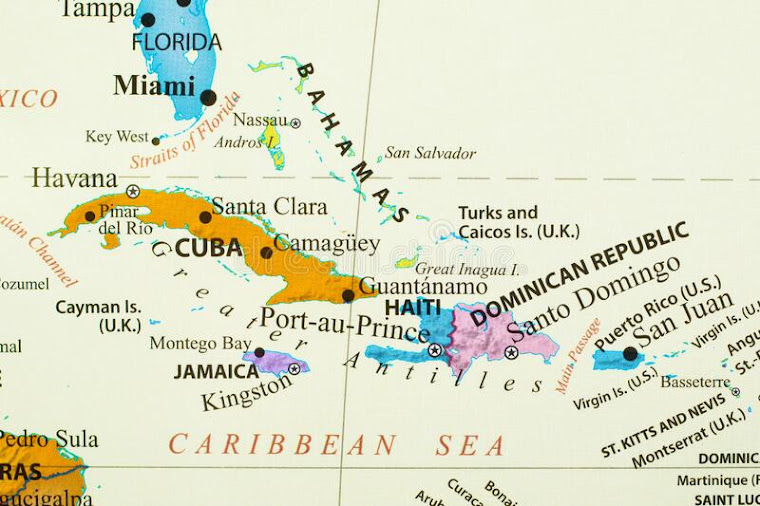
Forty-four percent of tourists interviewed in a new University of the West Indies study said that sex was important in choosing The Bahamas as a destination.


But the study does not indicate whether those persons actually had sex when they came here, although it said that many teenage males see the islands as the perfect place to find girls with whom to lose their virginity.


The findings have researchers drawing a disturbing link between tourism, sex and HIV/AIDS.


Researchers interviewed 500 tourists in The Bahamas and Jamaica and found that 30 percent used their trip to the Bahamas to find new partners.


The report, commissioned by the University of the West Indies HIV/AIDS Response Programme (UWIHARP), also found that 50 percent of visitors did not feel that they were at risk for contracting HIV.


Research was conducted in Montego Bay, Negril, Ocho Rios and Nassau.


Researchers also carried out 60 in-depth interviews with people with HIV/AIDS, health workers, HIV/AIDS activists, human resource managers and policy makers, including those in The Bahamas.


Bernadette Saunders, Bahamas coordinator of Caribbean HIV/AIDS regional training, said Tuesday the researchers were here last month and are expected to return in the coming weeks to conduct follow-up research.


“If we are looking at preventing and decreasing the rate of HIV, we have to look at the tourism industry because a lot of behaviour as it pertains to sex occurs in the tourism industry,” Mrs. Saunders said.


She added, “A lot of tourists come here as prostitutes.  Bahamians have sex with tourists.  If we can determine where these people go to have sex we can target our prevention methods there.  Persons who work in the tourism industry tend to have knowledge about where tourists or the general public go to have sex with tourists.  Some people actually come to The Bahamas or other places for this type of diversion.”


Mrs. Saunders said some tourists pay taxi cab drivers and straw vendors for information on underground places in The Bahamas where they can go to “get kinky sex and find a prostitute.”


She added that researchers conducted what is known as convenient sampling from the streets.


“In some studies, it’s reliable and this is the kind of study that you need to do this kind of research.  They obtained this information by carrying on a conversation with persons.”


Mrs. Saunders said she found the numbers disturbing.


“People feel like it can’t happen to them,” she said.  “They still feel that only certain persons get HIV - homosexuals, drug addicts and people who run around.  Everybody is at risk when they are having unprotected sex.”


Principal researcher Dr. Ian Boxill was quoted in the Jamaican press as saying, “I cannot definitively say that high numbers of HIV in the tourist areas is linked to sex tourism, but I can say if you look at all the factors, there must be some impact.”


The Jamaican Gleaner also reported that researchers painted a picture of sex tourism, where hotels promoted staff-visitor liaisons, where casual sex occurred among locals and tourists, of sex tourism without safe sex practices and of a regional network where girls and men from The Bahamas, Jamaica, Cuba, and Haiti frequently sell sex in each country.


Mrs. Saunders said local officials were awaiting the report and will continue their education programme.


She reported earlier this week that new cases of HIV in the Bahamas have dropped from 362 in 2002 to 275 at the end of 2003.

Tuesday, June 22, 2004

Weary Perry Christie, Prime Minister of The Bahamas - Resolves to Change The Rules of The House of Assembly to do away with Unconscionably Long Debating

Weary Bahamian Members of Parliament (MPs) vowed that such grueling and tedious debates would never happen again... De ja vu


Weary Prime Minister Vows To Change House Rules


candiadames@hotmail.com

Nassau, The Bahamas

22/06/2004


On a Saturday morning in June last year, Members of Parliament dragged themselves out of the House of Assembly as the sun rose over the city of Nassau.


They were noticeably weary, many of them red-eyed.  Minutes earlier, others could not even manage to keep their heads from hitting their tables after meeting almost non-stop since the Friday morning before.


It was then that they vowed that such grueling, tedious debates would never happen again.


It did.


The promised new House rules were reportedly drafted in some form, but were never tabled.


As a result, this year was another year of unconscionably long debating.


It was clear that while House members for instance sat through part of the debate that stretched into the wee hours of Friday morning, few of them were alert enough to follow intently what was being said.


As Mount Moriah MP Keod Smith spoke up until the two o’clock hour last Friday morning, some colleagues downstairs prayed aloud that his contribution would come to a quick end.


Many of them, including the prime minister, were noticeably drained after listening to the former prime minister for more than five hours.  Even backbenchers had spoken for two to three hours.


Outside the chamber, many members grumbled, “We cannot allow this to happen again.”


De ja vu?


It was pretty much what they had said last year after another marathon debate.


When Prime Minister Perry Christie presented his budget communication to parliament on May 26, he saw it as a departure from tradition.


“My objective, in seeking greater brevity and conciseness, is to facilitate the widest possible understanding and reception for the main issues in the budget,” Mr. Christie said at the time.


His communication lasted 90 minutes – a real record breaker.  It was termed the shortest communication in a post-Independence Bahamas.


But few members of the House followed his lead.


“It doesn’t happen anywhere else like this,” an exhausted prime minister told the Journal last Friday night.


He admitted that he was wiped out and needed to get some rest.


“We have been promising to put rules in the House where the speeches will be severely curtailed,” Mr. Christie added.  “I tried to set the pace by having a departure from the normal budget communication, by dropping it down to a 90-minute communication and really with the intension to making it shorter, succinct, to the point.


“But members decided that they would want to present every detail of the function and operation of their ministry.  It is not followed sufficiently by the Bahamian public because the attention spans are really not that long.  We don’t get the kind of publicity and public relations from it as members of parliament that we ought to if we had a more contained debate.”


Mr. Christie predicted that long debates are a tradition, which has finally come to an end.


“You would find that we will move with the new rules and speakers will have to conform to a different process of dealing with debates generally and most certainly the budget debate,” he said.


Only time will tell if another year passes without new rules becoming a reality. 

The Bahamas Prime Minister, Perry Christie says He would Like to See a Five-star Development on Cable Beach to Complement the Five-star Paradise Island Development and the Planned Upgrades to the Nassau International Airport

Kerzner International Executives Fear “destructive” Competition in the Idea of Five-star Developments on Cable Beach


Christie Touts Cable Beach


22/06/2004


Prime Minister Perry Christie has admitted that he is not minded to encourage Cable Beach to target mid-market tourists, as is the wish of Kerzner International executives.


Kerzner officials have made it clear in recent weeks that while they are not against competition, Atlantis and Ocean Club, not Cable Beach, should target high-spending visitors.


“As prime minister, I have indicated to the Kerzner family and to its board of directors that my government values their investment to date,” Mr. Christie told the Journal recently.  “They know, the Kerzners, that we have a problem with Cable Beach.  They know that there has to be radical improvement to the product of Cable Beach.”


Kerzner CEO Butch Kerzner has said that improving Cable Beach would be good for the destination, but he has also said that any development for that area should not directly compete with Paradise Island.


Mr. Christie said, however, he and his government would find it difficult to turn down any investment for Cable Beach that would be five-star quality.


“We live in a country where the challenge for the government, if we are to listen to advice, is how do we go about when an investor buys a property and decides with his money that he wants to spend $5 million, how do we tell him to spend 2?  How do we do that?  That is the difficulty that we face,” he said.


Mr. Christie said he would like to see a five-star development on Cable Beach to complement the five-star Paradise Island development and the planned upgrades to the Nassau International Airport, which will also make it a five-star facility.


“That is what I saw, being able to facilitate this significant increase in tourism to New Providence,” the prime minister said.


He said he will deal more intimately with Kerzner’s concerns at it relates to “destructive” competition after he addresses other more pressing issues.


Mr. Christie said he is focused on selling the Radisson Cable Beach Resort and securing $10 million for the Treasury.


“Until such time, therefore, as I am informed that there is an agreement to buy the hotels on Cable Beach, I need not focus on anything other than the sale of the Radisson,” he said.


The prime minister also said that the owner of the Wyndham Nassau Resort and Crystal Palace Casino Phil Ruffin has not agreed to sell his property, so the government is a good distance away from addressing the debate evolving over competition.


“If in the process we are able to cause there to be a wonderful development at Cable Beach, we would cross the bridge that has been put in my way, when we come to that, if we have to,” he told the Journal.


Mr. Kerzner said in a release last week that, “If done correctly, redevelopment will expand the size of the pie rather than us all fighting for the same slice of the pie.  It is the difference between constructive as opposed to destructive competition.  Where overbuilding has taken place in one market segment the result has been failure.”

Monday, June 21, 2004

Bahamian Labour Leaders At Odds Over the International Labour Organization - ILO Convention 87

The pros and cons of the International Labour Organization (ILO) Convention 87


Labour Leaders At Odds Over Freedom Of Association


Nassau, The Bahamas

21/06/2004


Two leaders of the country's trade union umbrella organizations have different views on whether proposed legislation should soon be brought to parliament to enact the much talked about ILO Convention 87.


This would allow workers to join the union of their choice, as opposed to the union of their craft.


Trade Union Congress President Obie Ferguson continues to press the government to pass the necessary laws to give employees the right to choose.


But National Congress of Trade Unions President Pat Bain believes now is not the time to take such a step because he said all parties concerned have not yet been properly educated on the Convention.


Minister of Labour Vincent Peet announced recently that officials at the Attorney General's office are drafting amendments to the relevant pieces of legislation to enact the Convention.


Former Prime Minister Hubert Ingraham sees this as an unwise move.


While making his budget communication last Thursday night, Mr. Ingraham said he was concerned by the inappropriate policy announcements of the Progressive Liberal Party Government.


Although the Convention was ratified under his administration, Mr. Ingraham said, "Now, when we seek to make ourselves even more attractive to good direct foreign investment, is not the time to talk about ILO 87."


He added, "I trust that this is more bark than bite and that the PLP government recognizes that legislating this Convention at this time could have a negative impact upon the investment climate and business environment."


Mr. Ferguson told the Journal Friday that he found these comments "surprising."


"It was the FNM government that put forward the ILO 87 resolution and had it ratified and registered - so I don't understand that, but no progressive country would want to think along those lines," he said.  "It is inextricably connected to the World Trade Organization."


Mr. Ferguson added, "Investors can't turn away because WTO is driven by foreign investment.  It is a multinational trading regime and that is one of their conditions."


He said he believes that freedom of association would force unions to be more efficient.


"If they're not happy with my leadership, the members have a choice, just like with the FNM and PLP," Mr. Ferguson said.  "People must have choices all over the world."


He said the right to choose is fundamental and he doubts that the government would work against that.


Mr. Ferguson also said that he wrote to Minister of Labour Vincent Peet requesting a copy of the draft amendments.  But Minister Peet said Sunday that he was still awaiting the proposed amendments from the AG's office.


Mr. Ferguson added that ILO 87 "would support democracy."


Mr. Bain, said, meanwhile, that the Convention is very confusing and education is key before any laws are passed to legislate it.


He said that is precisely why the NCTU is planning a seminar on July 24 with regional trade union experts to discuss the pros and cons of the Convention.


"While I am right now ambivalent about it, I say let's have the education process going through before we make the legislative changes," Mr. Bain told the Journal Sunday.


He noted the challenges that would be involved in negotiating industrial contracts for members of a particular union who may belong to many different professions.


"It's confusing in that for 30 years or more we were operating on the basis of craft unions," Mr. Ferguson said.  "Let's proceed with caution…Let's ensure there are discussions first."


While he is against legislating the Convention at this time, Mr. Bain disagreed with Mr. Ingraham that it could have a negative impact on the investment climate.


"Unionisation is always being used as a means against foreign investment," said the NCTU president, who added that it is not.

Prime Minister Perry Christie's Consolative News on The Budget Deficit

Prime Minister Christie's comforting words on the deficit: ...new revenue figures seem set to improve the fiscal outlook and GFS deficit for next year


Deficit Forecast Revised


21/06/2004


More than three weeks after his deficit projections in the budget communication sparked criticism in some quarters, Prime Minister Perry Christie has revised those numbers, providing a more positive forecast.

Mr. Christie told the Journal shortly after Members of Parliament passed the 2004/2005 budget late Friday night that new revenue figures seem set to improve the fiscal outlook and GFS deficit for next year.

The budget projects a GFS deficit of $164 million, but the prime minister said it is likely that the figure will be less.

He said the new expectation is that the deficit for 2004/2005 could be closer to 2.5 percent of GDP as opposed to the 2.9 percent he projected in the budget communication on May 26.

At the time, the prime minister said, "If the process of reviewing the national accounts data leads to substantial increases in the GDP data, the actual level of GSF deficit could be considerably lower."

While speaking to the Journal, he said his hopes have been realized.

"We were projecting an outturn for 2003/2004 of $920 million," Mr. Christie said.  "We have now been informed that the revenue of $920 million has already been registered and it is likely that we will record an amount nearer to $950 million.  We believe that this is indicative of the improved techniques and procedures in revenue collections."

The prime minister said it is important for him and his government to see this as an indicator because they have argued in the budget presentation that there will be 3 percent growth in the economy this year.

When added to improved revenue collections, this would allow the government to "attack" the GFS deficit, he said.

"What I think is to be learnt from this is that the efforts of the Ministry of Finance to introduce technology and expertise inclusive of equipment for the enhanced collection of revenue is serving to be to the advantage of the government," the prime minister said.

"We have truly predicated our budget on this basis: We believe that rather than pass additional taxes, which in part was recommended by the [International Monetary Fund], that we are able to, based on historical evidence, take advantage of the capital inflows as a result of the Kerzner development."

He told the Journal that the government has every reason to continue with its optimism.

Only days after he introduced his "no new taxes" budget, Prime Minister Christie faced opposition in and outside of parliament.

Although saying that he was not seeking to put himself at odds with Mr. Christie and his government, Central Bank Governor Julian Francis spoke of the need for Bahamians to pay more taxes to finance government services.

Mr. Francis also warned against continued borrowing to cover the deficit.

When asked to respond to the governor's suggestions, Mr. Christie said, "It shows that if he has done that, and he is able to do it independently of the process of governance of the country, that there is something that we should be doing to harmonize the efforts of those who advise me in the Ministry of Finance and those agencies that are a part of the financial governance of the country, like the Central Bank."

He added, "We ought to make every effort to ensure that we're working together."

Mr. Christie's revision to his deficit forecast came only a day after former Prime Minister Hubert Ingraham told parliament that the new budget does not provide the right tonic for the country's fiscal predicament.

"I assert that now is not the time for reliance to be placed upon unrealistic revenue increases from existing taxation," Mr. Ingraham said.

He also urged the prime minister to "rein your colleagues in."

"They are spending and committing to spending too much," Mr. Ingraham said.  "You have to tell them there are no available government jobs now; they will come when there is strong economic growth and larger investment inflows.  And tell them unless spending is restrained, there won't be any jobs for them."

But a confident prime minister said Friday that, "The growing strength of the economy in 2004 and 2005 will generate significant additional revenues."

The budget debate is scheduled to begin in the Senate today to give Senators enough time to pass the spending plan in time for the new fiscal year, which begins July 1.