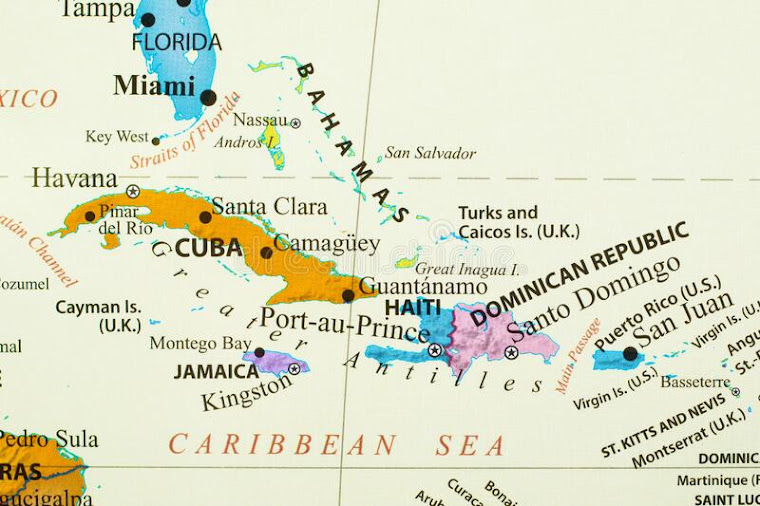
Monday, July 4, 2005

Mixed Reviews In The Bahamas on PetroCaribe initiative

The concerning consensus is that more consultation is needed between the government, the three major oil companies, and retailers in The Bahamas on the PetroCaribe agreement 


PETROCARIBE


Oil Deal Gets Mixed Reviews


By Candia Dames

candiadames@hotmail.com

Nassau, The Bahamas

4th July 2005


Players in the local oil-providing sector have mixed reviews on the recent signing of the PetroCaribe initiative, which promises to cushion Caribbean nations – including The Bahamas – from skyrocketing fuel costs.


But there is consensus on the fact that more consultation is needed between the government, the three major oil companies, and retailers.


Oil companies are seeking clarification on the whole deal, said Troy Simms, country/sales manager at Esso.


"We feel we should be an advisor to the government on this considering the experience we have locally and of course across the globe," Mr. Simms said.


"This is a pretty important change that’s being put on the table.  We really want to make sure that it’s being discussed with a lot of rigor to make sure that the government is fully aware of the risks."


Texaco’s manger, Raymond Samuels was out of town, but another executive at the oil company said that Texaco is also eager for dialogue on the initiative.


The executive said up to now, Trade and Industry Minister Leslie Miller has "not been open with us" about the plan.


Under the plan, signed by regional energy ministers and other leaders in Venezuela last Wednesday night, Petroleos de Venezuela, the state oil company, will pick up 40 percent of the cost if oil is selling at more than $50 a barrel.


Venezuela has also promised that additional concessions would become available should prices reach $100.


Petroleos de Venezuela has also announced that it would also pay for oil shipment costs, and help to construct storage facilities throughout the region.


It’s a plan Minister Miller said last week would result in "tremendous savings" on electricity and cooking gas bills and at the gas pumps.


It would be welcome news, said Gardner Dawkins, president of The Bahamas Petroleum Retail Association.


"I think it will be good news for both the retailer and consumers," he told The Bahama Journal.  "We’re hoping that we’ll be buying fuel at a lower price.  Therefore, passing the savings on to the consumers."


Minister Miller has said those savings would be significant – up to $20 million in savings for BEC annually, and at least $1 in savings on a gallon of gasoline, which is now approaching $4.


Mr. Simms, the Esso manager- said that the company is not sure of the likely impact PetroCaribe would have because it has not yet received details of the agreement.


Petroleos de Venezuela has agreed to ship fuel directly to Caribbean nations like The Bahamas, which have signed the agreement.


Asked whether this would be something Esso would welcome, Mr. Simms said, "There’ve been some concepts discussed and we continue to wait for some details.  One thing that the proposal seems to implicate is that there would be a single source of supply and this appears to be with the Venezuelans."


He said there are risks in having a single source of supply and Esso’s primary concern would be about reliability of supplies.


"If we can’t get the product when we need it, it’s going to have a detrimental impact on the business," Mr. Simms said.


He added that his impressions of how the whole arrangement would work is that the government would become the middleman.


"We need to fully understand how this would be implemented because this is a very complex and sophisticated supply system that’s now in place, that has been successful for so long.  We have a lot of experience…the industry can handle unexpected changes and delays," said Mr. Simms, while stressing that the supply of oil to a small country like The Bahamas is a complex and costly undertaking.


"The folks in our industry have learnt over many, many years how to do this efficiently and be reliable.  We need to be able to deliver petroleum products in a very safe and reliable manner."


Mr. Simms said that it’s much too soon to even speculate on how the PetroCaribe is likely to impact profits of local oil companies.


In his interview with The Bahama Journal last week, Minister Miller also said that the government expects to take another look at the operating margins in the industry.


Mr. Dawkins said this is something that retailers will fight.


"Our margins are what we survive on," he said.  "The price of the gasoline will not change what our margins are."


He added that PetroCaribe would have more of an impact on the wholesalers because they are the ones who will be buying from PetroCaribe or the national energy corporation.


"So therefore we as the retailers will still be at the mercy of the wholesalers who we will be buying products from," Mr. Dawkins added.


He disagreed that PetroCaribe will be risky business.


"The oil companies, of course, are not going to be too happy with it," Mr. Dawkins said.

Friday, July 1, 2005

The Bahamas Signs Petrocaribe Initiative

The primary thrust of the initiative, known as Petrocaribe, is to eliminate the middlemen when it comes to the purchase of fuel and fuel-related products


Oil Deal Sealed


By Candia Dames

candiadames@hotmail.com

Nassau, The Bahamas

1st July 2005


Bahamian consumers are expected to soon experience significant savings on energy costs as a result of a new deal sealed in Venezuela on Wednesday night, which is designed “to build a regional oil alliance and distribute fuel more cheaply in the Caribbean.”


Minutes after arriving from a high-powered energy summit in Puerto La Cruz on Thursday, Minister of Trade and Industry Leslie Miller declared that the agreement was a significant and historic one.


He also explained that the primary thrust of the initiative, known as Petrocaribe, is to eliminate the middlemen when it comes to the purchase of fuel and fuel-related products.


One of the ways Venezuela proposes to keep oil costs down in the region is to use its tanker fleet to transport oil instead of privately owned tankers.


"For The Bahamas, [The Bahamas Electricity Corporation] can realize a savings of no less than $10 million to $15 million per annum in their fuel costs," Minister Miller told The Bahama Journal.


In addition to that, BEC, which last year spent in excess of US$100 million for its fuel costs, can now get the benefit of getting 40 percent of the fuel on credit from Petrocaribe, he said.


"BEC can get rebates on fuel and at tremendous savings," Minister Miller said.


"If BEC were to purchase $20 million worth of fuel per month, BEC would pay approximately 60 percent of that bill.


The balance can be paid over a specified period of time at 1 percent interest rate."


With the middlemen being sliced out of the pie, the Minister also reported that huge savings are on tap at the gas pumps.


His announcement came as motorists continued to face prices approaching the $4 per gallon mark.


"We’re looking at an average savings of no less than $6 per barrel which equates to approximately in our estimation anywhere from 25 cents to 30 cents on a gallon of fuel," he said.  "That’s the initial cost.  Bear in mind that the oil companies here use their brokerage companies, in Barbados and Jamaica and elsewhere, to purchase fuel from PDVSA, which is where we’re going to get our fuel from.


"By eliminating the middlemen, we save another 25 cents to 35 cents on a gallon of fuel.  In addition to that, Petrocaribe is now in a position by having ships to lift the fuel for you.  In other words, Petrocaribe would send one of its ships to The Bahamas full of fuel emanating from any of the terminals owned by PDVSA, which is the national oil company of Venezuela, thereby saving an additional 5 cents to 10 cents on a gallon of fuel."


Altogether, he claimed the average consumer can look for a savings of anywhere from 65 cents to $1 per gallon on the price of fuel in The Bahamas.


The Minister added, "Keep in mind that we still need to cut the margins by the three major oil companies that import fuel into our country from a high of 33 cents down to around 25 cents to 15 cents per gallon, which is more than enough to enable them to make an appreciable profit margin."


But Minister Miller could not say specifically when the savings will begin to materialize.  He told The Bahama Journal that it will happen as soon as the government gives the green light for the establishment of a national energy corporation.


"The prices at the pumps could be decreased significantly, but we must initiate the national energy corporation to enable us to lift fuel from Venezuela," he said.


Heads of state and energy ministers attended the energy summit from The Bahamas and 14 other nations in the region.


They included Dominican Republic, Jamaica, Belize, Antigua and Barbuda, Barbados, Grenada, St. Kitts-Nevis, St. Lucia, St. Vincent and the Grenadines, Suriname, Cuba, Venezuela and Trinidad and Tobago.


The final agreement said, "Petrocaribe emerges as a new political and commercial initiative based on the conservation of non-renewal and depleteable resources, shared solidarity, and social co-responsibility between peoples, tending to assure access to energy at a just and reasonable price, under the sign of regional energy integration, with a broad vision that touches not only on energy, but also on the social, technological, and culture."


Among those attending the meeting were Venezuelan President Hugo Chavez, and Cuban President Fidel Castro.

Thursday, June 30, 2005

National Lottery for The Bahamas Later rather than Sooner

The Introduction of a National Lottery is not on the Front Burner in The Bahamas


Study Completed On Nat’l Lottery


By Candia Dames

candiadames@hotmail.com

Nassau, The Bahamas

30th June 2005


The Gaming Board has completed a report on the feasibility of a national lottery, but its Chairman Kenyatta Gibson indicated on Tuesday that it’s not something that’s likely to become a reality anytime soon.


"We’ve looked at it, with regards to the introduction of a national lottery," he told The Bahama Journal.  "That report for all intense and purposes is completed, and soon as we make it available to Cabinet, we would thereafter come and let the general public know exactly what’s going on with it."


But he said, "That’s not an issue on the table right now in any event, and I think once the time comes for the nation to deal with it, we would deal with it in earnest."


It is no secret though that Mr. Gibson is a strong supporter of a national lottery.


He has in the past pointed out that The Florida Lottery conservatively estimates that US$100 million is spent every year by Bahamians playing the Florida Lottery.


"This is money that we can keep here in The Bahamas," Mr. Gibson has said.


He has also suggested that the taxes from a national lottery could be used to fund universal free tertiary education for every qualified student.


In matters as contentious as this one, the most qualified forum to decide definitively on the issue must be the people, Mr. Gibson said in one of his speeches to the House of Assembly where he touched on the issue.


"On moral issues such as these, national referenda are necessary to discuss, assimilate and decide on various courses of action that must be taken on the gaming issue," he said.  "I believe that governance, real true democratic governance, is about adhering to the will of the people…The Bahamas cannot be standoffish."


Tourism Minister Obie Wilchcombe, who is responsible for gaming, also supports the introduction of a national lottery.


He has already revealed that 60 percent of the adult population of The Bahamas spends anywhere from $1.8 million to $2 million both locally and abroad on games of chance each week, and that there are at least 45 illegal gambling houses in New Providence and 12 in Grand Bahama.


"Our choices are very clear," Minister Wilchcombe has said.  "We must either strengthen the penalties for this illegal activity or we must find the formula to introduce a national lottery."


Mr. Gibson said on Tuesday that he expects that the new report will soon be made public.

Monday, June 20, 2005

Fred Mitchell Blasted on the CARICOM Single Market and Economy - CSME Debate

Mitchell Blasted On CSME


Fred Mitchell

By Candia Dames

candiadames@hotmail.com

Nassau, The Bahamas

June 20, 2005


Chairman of the government-appointed Bahamas Financial Services Consultative Forum Brian Moree believes it was unfortunate that Minister of Foreign Affairs Fred Mitchell deemed it appropriate last week to "impugn and demean" the views and motives of certain persons who opposed his views on the CARICOM Single Market and Economy.


"In doing so the Minister seemed to think that this somehow vindicated his position or strengthened his case on CSME.  I think, with respect, that he was wrong and in doing so he did not enhance his cause or the dignity of his office by resorting to name calling and finger pointing," said Mr. Moree, who also commended the government for "listening to and considering the views of the Bahamian" people on CSME.


During his address one week ago today, Minister Mitchell announced that the government will not be signing the Revised Treaty of Chaguaramas within this present term, and lashed out at various individuals who had opposing views on whether the country should join the regional agreement.


Minister Mitchell said that some detractors of the CSME were false prophets who opposed the independence of The Bahamas back in the early 1970's and are now crying crocodile tears over the issue of CSME and an alleged threat to the country's sovereignty.


He also named several people directly, including Mr. Moree, whom he accused of spreading misinformation on the issue.


But Mr. Moree, in his statement issued over the weekend, said, "The simple fact is that the Minister, as the lead spokesman for the government, failed to convince thousands of Bahamians that signing the Revised Treaty was in the national interest of our country.


"If he is unhappy with that position he should not seek solace in lambasting those who did not share his view.  Rather, I respectfully suggest that it would be more constructive for the Minister to focus on the relevant issues and at least countenance the thought that there might be some merit in views other than his own."


Refuting more of what the Minister said in the House of Assembly last week, Mr. Moree added, "I regret that it is necessary to remind the Minister that those of us who do not agree with his assessment of the CSME are not unintelligent, confused, uninformed or misguided.


"My opposition to the CSME is not, and has never been, politically motivated or in any way related to the Minister in his personal capacity.  I repeatedly made the point in my public statements that the CSME is not a political issue and the national debate should proceed on that basis."


Referring to Mr. Moree, Minister Mitchell in his address said that as the chairman of The Bahamas Financial Services Consultative Forum, caused "quite a stir in the community" when his group released an immigration report suggesting that the immigration laws of The Bahamas should be liberalized to allow for more foreign workers to come and work in the financial services sector.


"Now he comes a few months later and says that we must not sign onto the CSME provisions because they would allow the free movement of people," the Minister said.  "I must be missing something here.  What is the principle at stake here?  If you believe in liberalized immigration what problem in principle then do you have with the CARICOM treaty which believes in liberalized immigration?


"But I have to add quickly, the government is not proposing anything to do with the free movement of people.  That reservation is proposed and already agreed.  It is the existing situation and status quo.  But you know never let the truth interfere with a good story."


Mr. Moree also responded to the Minister's comments in this regard.

 "He characterized that report as suggesting that the immigration laws of The Bahamas should be liberalized to allow foreign workers to come and work in our financial services sector," Mr. Moree noted.


"Remarkably, and with no basis in truth, the Minister then boldly attributed to me the position that The Bahamas 'should not sign onto the CSME provisions because they would allow the free movement of people'.


"As I am the chairman of the forum, the Minister ridiculed this position which he attributed to me on the CSME as contradictory to the contents of the report.  The Minister was clearly inferring that I was advancing irreconcilable positions, apparently in an attempt to discredit my opposing view on the CSME.  This is a most convoluted and distorted thought process."


Mr. Moree pointed out that he did not object to the CSME simply because it would allow the free movement of people.


"While that is certainly a legitimate concern for many Bahamians, even considering the reservation in respect of Articles 45 and 46, there were and continues to be many additional well reasoned, thoughtful and principled objections to The Bahamas signing on the CSME.


"Secondly, there is absolutely no inconsistency between supporting the recommendations in the forum's report and the position adopted by me in opposing the CSME.  Specifically, there is no helpful comparison between the narrow liberalization of our immigration policy as it relates to a single sector in selective and targeted areas of specialization on the one hand and the open sesame which (but for the reservation) is envisaged in the Revised Treaty on the other hand whereby ultimately there would be no restrictions on the nationals of 15 different countries moving freely between the member states in a single economic space."


Mr. Moree added, "The Minister should follow his own admonition and avoid subterfuge and confusion when commenting on the CSME.  My views on the CSME as it relates to The Bahamas are based on my consideration of our national interests.


"Presumably the same can be said of the views of the Minister.  No one involved in the debate should claim to have a monopoly on virtue and certainly the national debate is not advanced by denigrating persons who hold a different view or impugning their motives."


In his budget address last week which focused exclusively on the CSME issue, Minister Mitchell also blasted former Ministers Sir William Allen and Zhivargo Laing; Bahamas Public Services Union President John Pinder; attorney, Fred Smith, who heads the Grand Bahama Human Rights Association; and the Nassau Institute. 

Friday, June 17, 2005

The Bahamas Government’s Commitment to Fiscal Prudence Questioned

Hubert Ingraham on Fiscal Prudence


Ingraham Slams Budget


By Candia Dames

candiadames@hotmail.com

Nassau, The Bahamas

17th June 2005


There appears to be a disconnect between an expanding economy and the growth in government revenue, former prime minister, Hubert Ingraham, declared in the House of Assembly on Thursday as he questioned the government’s commitment to fiscal prudence.


During the budget communication on May 25, Acting Prime Minister Cynthia Pratt noted that the government is aiming to contain the ratio of government debt to GDP to under 38 percent in fiscal year 2005/2006.


Expert advice is that the government should limit the ratio of government debt to GDP to as near as possible to 30 percent "so as to avoid the problems which would arise from a ratio significantly in excess of that level."


The government also projects that in the two fiscal years that will follow 2005/2006; the ratio of government debt to GDP will still remain around the 37 percent level.


At the time, the Acting Prime Minister also noted that the ideal government revenue to GDP is about 20 percent, but she admitted that this is becoming increasingly hard to achieve because of the narrowness of the country’s revenue system, which is heavily dependent on customs duties.


The government also projects a GFS deficit of $172 million, which would be $30 million more than what was projected for 2004/2005.


However, Mrs. Pratt stressed that the economy is on the upswing with growth of 3.5 percent expected in 2005.


The projections were the basis for Mr. Ingraham’s declaration of an apparent disconnect.


In the five years immediately prior to September 2001, government revenue averaged roughly 19 percent of GDP, he said, adding that the actual results of the following three years show government revenue falling by more than 2 percentage points to under 17 percent of GDP.


"It is therefore not a sufficient economic policy to focus exclusively on foreign investment and its impact on economic growth when that economic growth is not simultaneously translating into increased government revenue," Mr. Ingraham reasoned.


"Nothing can more quickly and more effectively arrest that flow of inward investment than a fiscal situation which is not sustainable, where the level of debt continues to rise by an ever increasing proportion of GDP, and where doubts about the commitment of fiscal management may legitimately arise."


He also indicated that after falling continuously since fiscal year 1996/1997, government debt as a percentage of national income has been increasing steadily each year since fiscal year 2001/2002.


"It would have been desirable for this budget to give a signal of a commitment to change in this pattern," Mr. Ingraham said.  "It did not."


He also pointed to the projected outcome of a GFS deficit of 2.8 percent for 2005/2006, the same outcome projected for 2004/2005.


"As a result, government debt as a per centum of GDP is projected to grow by 1/2 of 1 percent in fiscal year 2005/2006, rising from 37 percent to 37 1/2 percent and projected to rise further in 2006/2007," Mr. Ingraham said.


"This [is going to happen] at a time when the economy is projected to grow by a nominal rate of more than 5 percent.  There is no better time to send the signal of fiscal prudence than now.  If it cannot be done now, when can it be done?  Next year with election in the air?"


He said the widening of the recurrent deficit over the last several years has to be a major concern for those who value prudent fiscal management.


"The recurrent balance is a critical element in fiscal management," he reminded.  "For governments, it reflects the long-term sustainability of its fiscal situation.  It is for this reason that my government’s fiscal policy focused so heavily on the recurrent account which led to a substantial lowering of the level of recurrent imbalances and eventually resulted in a surplus on the recurrent account for two fiscal periods running – 1999/2000 and 2000/2001, for the first time in 23 years."

Tuesday, June 14, 2005

CARICOM Single Market and Economy (CSME) Raging Debate in The Bahamas Dies A Sudden Death

CSME Shelved


By Candia Dames

candiadames@hotmail.com

Nassau, The Bahamas

14th June 2005


Seeking to bring an end to the raging national debate on the CARICOM Single Market and Economy (CSME), Minister of Foreign Affairs Fred Mitchell on Monday announced that the government will not be signing the Revised Treaty of Chaguaramas anytime soon.


In fact, Minister Mitchell said that it does not appear that the government will sign the Treaty, which establishes CSME, during this present term in office, which expires in 2007.


"There is a clear disconnect between the government and the wider community on this matter," said the Minister, who used the entire two hours allocated to him to contribute to the budget debate to address the CSME and other foreign affairs matters.


This meant that there was no room to address public service related issues or matters concerning his Fox Hill constituents.


Minister Mitchell said as it relates to the CSME, The Bahamas has reached the point where it must stop and review.


"The Bahamian people or more properly those who have created the din on the radio and in the press now have their wish," he announced.


"But they must know that it is not to me that they will have to answer for this, but to the future of this country."


Minister Mitchell said he was not panicked by the level of debate that led the government to decide to hold off on signing the Revised Treaty.


"The Bahamas has not signed the Revised Treaty of Chaguaramas and cannot now sign in these present circumstances," he said.  "What we are now engaged in is a programme of public education and discussion on the issue.


"This has become a matter on which people are attacking me personally on a policy which is the decision of the government.  I told both the Prime Minister and the Deputy Prime Minister that I believe that my truthfulness has been called into question and my integrity challenged.  No Minister has to seek to ask permission of anyone to seek redress for attacks on his or her personal integrity."


He said what is particularly regrettable is that the forces who opposed the independence of The Bahamas in 1972 now seek to impugn his character by suggesting that he would compromise the sovereignty of The Bahamas.


Minister Mitchell said, "They are false prophets and crying crocodile tears because we know that they did not want The Bahamas to be free in the first place.  There is not a possible chance that this Minister, this individual, would compromise the sovereignty of The Bahamas."


Seeking to clarify what he called misinformation associated with the CSME debate, Minister Mitchell said, "It is clear that this matter of our participation in the Revised Treaty of Chaguaramas will not be decided within this present term.


There is too much misinformation, disinformation and emotion; too much political dishonesty.  There is simply too much politics.  Accordingly, the Minister of Trade kindly agreed for me to speak to The Bahamas Commission on Trade.


"The Trade Commission's co-chair, Raymond Winder, has indicated by letter that subject to certain clarifications, they are ready and willing to work on the issues...The politics will hopefully then be out of the matter, the Commission will be free to review all the issues arising from the current debate, without a deadline, and the Ministry can now continue with other valuable projects in our Foreign Affairs.


It is only left for the government to provide a formal remit.  It is my hope that this effectively brings an end to this matter."


The Minister also said there has been "considerable misinformation and deliberate disinformation" about the matter or reservations to the Treaty.


The government has said repeatedly that if it signs the Revised Treaty, it would seek reservations on the free movement of people; the monetary union; the Caribbean Court of Justice at the appellate level; and the common external tariff.


Addressing the confusion surrounding whether the reservations would have an expiration date, the Minister said, "The reservations that are proposed are without end.


With regard to this treaty; once you sign a treaty with a reservation, the provisions of the treaty against which there are reservations do not apply to The Bahamas, neither can they be questioned in any court.  These are sovereign decisions of a sovereign government."


Minister Mitchell said that the CCJ reservation has been the cause of "considerable confusion."


"The confusion has been engendered by unintelligent ‐ at the very least disingenuous ‐ commentary by attorneys who ought to know better," he said.


Minister Mitchell announced that he will be representing Prime Minister Perry Christie at the next Heads of Government meeting set for St. Lucia early next month.


"The process of public education on this matter is nowhere near complete and so the question of signing anything in July does not arise," the Minister added.


He also spent much of his time lashing out at detractors whom he said have been spreading half-truths.


Minister Mitchell pointed to former Minister of Finance Sir William Allen, and former Minister of Economic Development Zhivargo Laing, saying, "They have been fudging, half truths and shades of deception, confused the public on this issue...This is the political season and no matter what the truth is, the response will be fudging, misinformation and mix up."


While he gave no attention to the public service in his address, Minister Mitchell, under whose portfolio the public service falls, also took a stab at John Pinder, president of The Bahamas Public Services Union.


"He is involved now in a campaign for reelection," the Minister pointed out.  "I can only imagine that anything will be said for headlines.  I have accused him before of always wanting to engage in the politics of rowing.  I did not believe for one moment that he would resort to a deliberate untruth which should be clear to him and clear, as the lawyers say, on the face of the record."


Minister Mitchell said it is "nonsense" for Mr. Pinder to say that the government signed the Revised Treaty on December 21, 2004.


The Minister also slammed Chairman of The Bahamas Financial Services Consultative Forum Brian Moree, who has criticized the government for its handling of the whole debate, and has urged the Christie Administration not to sign the new Treaty.


Mr. Moree has said that it makes no sense to sign such a treaty and opt out of four of its major provisions.


But Minister Mitchell indicated that he's baffled that Mr. Moree is vehemently opposed to the free movement of people under the CSME, when only a few months ago, he, as chairman of the Forum, released a controversial report strongly asking the government to liberalize its immigration laws.


"There are other critics," Minister Mitchell said.  "They have said some pretty appalling things about me personally and about the government.  One group that comes with the unfortunate acronym of BARF seems especially personally motivated...I only say this to the public: one should always look to see why a comment is being made and what interest is being served by that comment."


He said that it is clear that the detractors of his government on the CSME issue have one motto, and that is not to let the truth get in the way of a good story. 

Monday, June 13, 2005

Bankrupt Bahamasair

Bankrupt Bahamasair Due For Overhaul


By Candia Dames

candiadames@hotmail.com

Nassau, Bahamas

13th June 2005


It would make absolutely no sense for a businessman to buy into Bahamasair as it is presently constituted because the airline is bankrupt and would not have survived all these years without government subsidy, according to Bahamasair's Managing Director Paul Major.


Mr. Major, who was the guest on the Love 97 Sunday programme, "Jones and Co", was asked what would be the ideal circumstances that would make sense for anyone to purchase shares in a privatized Bahamasair.


"If it were based on a business plan that would have taken into account a restructured balance sheet where all of the non-productive debt and what you might call dormant payables were purged from the balance sheet [privatization would make sense]," he said.


"If you reviewed our annual report, which is a document in the public domain, there's some $50 million in payables to government entities.  Clearly, no one wants to buy into that."


Mr. Major added, "Bahamasair is bankrupt.  Bahamasair has negative equity of some $84 million."


Given that many airlines in the industry are losing money, the show's host, Wendall Jones, asked why the Government of The Bahamas should privatize Bahamasair.


Mr. Major noted that the government has been propping the airline up by spending anywhere from $10 million to $32 million annually.


"Given the size of our [national] budget and the percentage that that represents of our total GDP, the monies could probably best be spent elsewhere," said Mr. Major, who added that there are other carriers which would be able to step right in and fill the gap for any route in The Bahamas now being serviced by Bahamasair if the airline decides to stop servicing that route.


He said while the government should have some degree of interest in a privatized Bahamasair, it should be a minority interest only so that it would be able to preserve some degree of leverage.


It takes about $89 million a year to run the airline, which is only bringing in about $70 million every year, Mr. Major noted.


Given the annual deficit, Mr. Jones asked, "What would a privatized Bahamasair do to make money that a Bahamasair owned and operated by the Government of The Bahamas is not doing?"


Mr. Major responded, "There's obviously some fleet issues.  We're flying jets to destinations where they're not really designed to fly."


The need to right-size the fleet was pointed to recently by McKinsey and Co., the consultants the government hired at a cost of $1 million to help prepare Bahamasair for privatization.


McKinsey and Co. pointed out that by using smaller aircraft for certain routes, the airline would be able to save a significant amount of money annually.


The consultants noted that Bahamasair's operating unit costs per hour for a DH-8 aircraft (50 seats) is $1,616, but would only be $832 per hour for B1900 aircraft (19 seats).


"For longer flights, the cost advantage of the B1900 is even greater," the consultants noted.


Mr. Major acknowledged while on the show, "The Dash 8's, in fact, are not ideal for most of the Family Island destinations we go to.  The aircraft are too large.


With smaller aircraft that operate more efficiently, right away, you can reduce your expenses to a great extent with marginal erosion in your revenue.  That in itself would get you to break-even or probably even turn the corner."


Like McKinsey and Co., Mr. Major stressed that Bahamasair has a capacity problem.  He indicated that while the airline may be able to fill its planes on one leg of a particular route, it is only able to fill a small percentage of seats on the return leg.


The preliminary report from the consultants noted that the break-even load factor for Bahamasair is 65 percent, but the overall load factor is only 51 percent.


The consultants pointed out that no airline can make money flying excess capacity all of the time.


While on "Jones and Company", Mr. Major also pointed to issues related to productivity, indicating that under private ownership certain things could be done more easily.


"The way our network is designed and the way our work rules for our crew are designed, some regulatory constraints, some union contract constraints prohibit us from being able to perform at the standard of some of the people we compete against," Mr. Major said.


"So, if we are able to fix those things in addition to restructuring the balance sheet to reduce the debt burden and get rid of unproductive payables this company [could] make money."


Mr. Major again pointed out that the onslaught of low-cost carriers continues to be a pressing challenge for Bahamasair.


He noted, however, "You've got to always assume that you're going to have what you might call fierce competition.  If you assume anything less, I think it's foolhardy.  You've got to always assume that somebody is going to come along with an equal or better mouse trap and you've got to be able to compete with it.


"I don't see any of those things as being deterrents to it being a good time to privatize."