Is Your MP Performing
By Kendea Jones:
Eight out of nine constituents polled in the Bain and Grants Town area yesterday said that Progressive Liberal Party (PLP) Member of Parliament Dr. Bernard Nottage, who has represented them for the last three years, has not done anything to better the inner city community.
The Journal, which randomly polls constituencies each week, went out into the community yesterday to ask the residents if their MP was performing.
The Journal traveled through Dumping Ground Corner, which is just a stone’s throw away from Dr. Nottage’s constituency office.
The office was closed.
Lonard Davis, a four-year resident in the constituency said for many years he had hoped that sidewalks would be placed on the road to protect pedestrians.
"If you look at it, you can tell for yourself, people are still walking on the side of the street because there is no sidewalk. I have been gone for almost 30 years and when I came back it was still the same," he said.
When asked if Dr. Nottage’s presence is felt throughout the constituency, Mr. Davis said, "I’ve never really seen him."
Damian Poitier says he has been living in Bain and Grants Town all his life.
He said it seems like every Member of Parliament that has represented the constituency over the years has done a "poor job."
"[Dr. Nottage] is not performing at all because summer camps used to be going on in the area for children but that is not going on anymore and neither is the clean-up campaign. It just goes to show that he doesn’t care too much for the community because you can hardly see his face," he said.
Another resident, Kim Rolle, said on May 2, 2007 she proudly elected Dr. Nottage.
It’s a decision she says she now regrets.
"To be totally honest, I don’t see any performance at all," she said. "They say he probably has a handful of people that he deals with, but I have been here for about 19 years and I have not seen any results since he came in. Before him there was Bradley Roberts and it was the same thing – nothing."
Barbra Gibson said she has a particular gripe with Dr. Nottage.
She said that many of the youths are too idle in the community and that has led to a higher level of crime in the area.
"There is very little evidence as to whether or not the MP for this constituency is performing," Ms. Gibson said. "Who ever is seeking public office should make the decision to assist the people with new, creative ideas."
"You have a group of young men who are willing to work in Bain Town, but there is absolutely nothing there for them to do. The children are just roaming the streets now that there is no summer school. I am looking for an MP who will bring new ideas so that these children could get in some positive activities."
Tubby Johnson had similar sentiments.
He said that he only happens to see Dr. Nottage when there is a murder in the community.
"You only see him showing up so that they can be in front of the cameras. He doesn’t do anything for Bain Town. I want to know where is the $100,000 allowance he was given, because we don’t see it being used on this constituency," Mr. Johnson said.
Meanwhile, Jimmy Fisher claimed he barely knows what his MP looks like.
"I have a question, who is my MP? I don’t see him. I may see him on TV. I didn’t vote for him but at this time I feel that CB Moss [former Progressive Liberal Party (PLP) senator] should be the MP for Bain Town because he does more for the community than Dr. Nottage," he said.
But a 44-year resident, who preferred to be called "Johnson" had an entirely different view.
"Dr. Nottage is doing well in my area. He was here last week and there was a good get-together outside of the church. He seems to always be around and he has meetings on Meadow Street," he said.
While many Bain and Grants Town residents say they are not pleased with Dr. Nottage’s performance, they say they will think harder before they decide who will represent them in the House of Assembly in the next general election.
July 29th, 2010
jonesbahamas
A political blog about Bahamian politics in The Bahamas, Bahamian Politicans - and the entire Bahamas political lot. Bahamian Blogger Dennis Dames keeps you updated on the political news and views throughout the islands of The Bahamas without fear or favor. Bahamian Politicians and the Bahamian Political Arena: Updates one Post at a time on Bahamas Politics and Bahamas Politicans; and their local, regional and international policies and perspectives.
Sunday, August 1, 2010
Friday, July 30, 2010
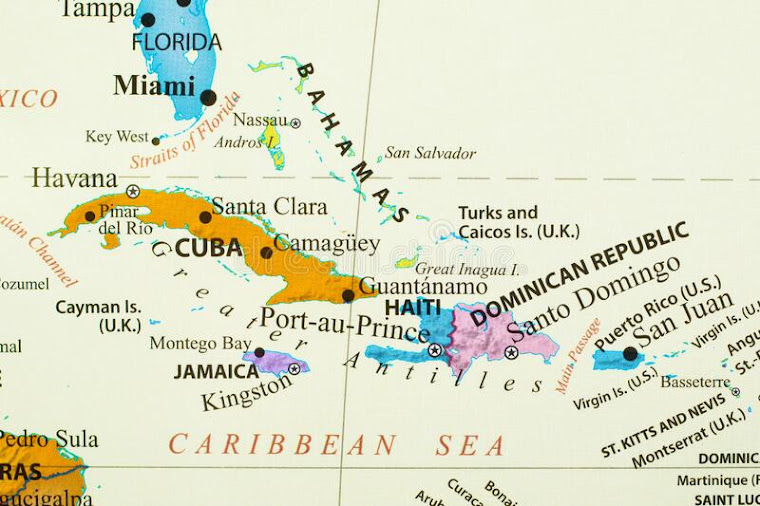
Bahamas’ Haitian population is the largest at-risk group for communicable diseases
Health chiefs target 'at-risk' Haitians
By AVA TURNQUEST
Tribune Staff Reporter
aturnquest@tribunemedia.net:
HEALTH officials are targeting the Bahamas’ Haitian population as the largest at-risk group for communicable diseases.
Public health sectors are now focusing more attention on “bridging the gap” between health personnel and the largest migrant population in the country.
The lack of communication between the Creole-speaking communities and the healthcare system greatly reduces their chances for prevention and early detection of diseases, according to Christine Campbell, managing director of the HIV/AIDS Centre.
She emphasized the need to establish and maintain contact with non-English speaking communities to gain greater understanding of patients and their cultural norms.
Ms Campbell said: “If we can get more persons in the medical field trained in the language, in the very least it will ensure confidentiality and ensure whatever is being said medically is translated in its true form.
“I think it will help bridge a gap culturally and in terms of sensitisation, I think we all know there is a need for that. There still remains a lot of misunderstandings regarding this most at-risk grouping.”
The centre’s first step was taken last week Tuesday when representatives from the AIDS centre met with religious and community leaders of Creole-speaking communities. Also present at the meeting, voluntarily, were members from the Department of Public Service.
Ms Campbell said: “There were over 60 persons in attendance, it was good to see the faces of persons who would interface with this group. They had a lot of questions and this is the first step. This is very important to reduce risk and further spreading but it is also the rekindling of alliances and we hope that this is something that will continue and be sustained and bear fruit in so many different ways for all aspects of healthcare in the future.”
At the meeting, community leaders responded to concerns of health officials towards conducting follow-ups for patients from migrant communities. It was said that the underground lifestyle of some migrants posed considerable challenges for preventative healthcare. Those present suggested possible amendments to medical forms that would provide for contact information of church or community affiliations.
Ms Campbell added: “We want to ensure that not only do these persons receive healthcare that we’re mandated to give, but also as a country we’re doing our humanitarian part – in terms of agreements that we would have signed on to.”
She said that by strengthening ties with community leaders, the centre hoped to attract volunteers for training with an intent to improve outreach efforts.
“They would be able to go out and present factual information to many of their various groups. To have them fully engaged and involved so there is better understanding and communication – sometimes simple misunderstandings can really have a detrimental affect.”
Efforts realised this year include the enrolment of personnel from various public health sectors into entry-level Creole language classes.
Future goals of this initiative include implementing a standard medical handbook which doctors, medical staff and patients would be able to reference, and – specific to the AIDS centre – the establishment of a mobile outreach unit with the aim of increasing outreach throughout the Family Islands.
Ms Campbell said: “We’re expanding as a community, a global village. We’re getting out of our 7 x 21 mentalities and understanding the need to grow and move forward, and that’s the way to a better Bahamas.”
July 30, 2010
By AVA TURNQUEST
Tribune Staff Reporter
aturnquest@tribunemedia.net:
HEALTH officials are targeting the Bahamas’ Haitian population as the largest at-risk group for communicable diseases.
Public health sectors are now focusing more attention on “bridging the gap” between health personnel and the largest migrant population in the country.
The lack of communication between the Creole-speaking communities and the healthcare system greatly reduces their chances for prevention and early detection of diseases, according to Christine Campbell, managing director of the HIV/AIDS Centre.
She emphasized the need to establish and maintain contact with non-English speaking communities to gain greater understanding of patients and their cultural norms.
Ms Campbell said: “If we can get more persons in the medical field trained in the language, in the very least it will ensure confidentiality and ensure whatever is being said medically is translated in its true form.
“I think it will help bridge a gap culturally and in terms of sensitisation, I think we all know there is a need for that. There still remains a lot of misunderstandings regarding this most at-risk grouping.”
The centre’s first step was taken last week Tuesday when representatives from the AIDS centre met with religious and community leaders of Creole-speaking communities. Also present at the meeting, voluntarily, were members from the Department of Public Service.
Ms Campbell said: “There were over 60 persons in attendance, it was good to see the faces of persons who would interface with this group. They had a lot of questions and this is the first step. This is very important to reduce risk and further spreading but it is also the rekindling of alliances and we hope that this is something that will continue and be sustained and bear fruit in so many different ways for all aspects of healthcare in the future.”
At the meeting, community leaders responded to concerns of health officials towards conducting follow-ups for patients from migrant communities. It was said that the underground lifestyle of some migrants posed considerable challenges for preventative healthcare. Those present suggested possible amendments to medical forms that would provide for contact information of church or community affiliations.
Ms Campbell added: “We want to ensure that not only do these persons receive healthcare that we’re mandated to give, but also as a country we’re doing our humanitarian part – in terms of agreements that we would have signed on to.”
She said that by strengthening ties with community leaders, the centre hoped to attract volunteers for training with an intent to improve outreach efforts.
“They would be able to go out and present factual information to many of their various groups. To have them fully engaged and involved so there is better understanding and communication – sometimes simple misunderstandings can really have a detrimental affect.”
Efforts realised this year include the enrolment of personnel from various public health sectors into entry-level Creole language classes.
Future goals of this initiative include implementing a standard medical handbook which doctors, medical staff and patients would be able to reference, and – specific to the AIDS centre – the establishment of a mobile outreach unit with the aim of increasing outreach throughout the Family Islands.
Ms Campbell said: “We’re expanding as a community, a global village. We’re getting out of our 7 x 21 mentalities and understanding the need to grow and move forward, and that’s the way to a better Bahamas.”
July 30, 2010

Concerns over Bahamian participation in the proposed $2.6 billion Baha Mar development
Concerns over Bahamian participation in Baha Mar raised at BCA meeting
By TANEKA THOMPSON
Tribune Staff Reporter
tthompson@tribunemedia.net:
CONSTRUCTION industry stakeholders yesterday questioned how the Bahamas Contractors' Association would ensure that small operators get a fair share of work on the proposed $2.6 billion Baha Mar development and similar projects.
These concerns were raised yesterday at a luncheon held by the BCA at the Wyndham Crystal Palace Resort and Casino in Cable Beach to inform the industry of impending changes the local construction sector must adopt to qualify for work on massive foreign investment projects such as Baha Mar.
Baha Mar's developers will introduce $60 million worth of contracts to begin the first phase of the project, which will only be awarded to Bahamian contractors, in the coming weeks.
BCA President Stephen Wrinkle assured the crowd of construction workers, contractors and tradesmen that his organisation would find ways to help create the "maximum Bahamian participation" in the development.
"The reason we're here today is to try to get the little man onboard with these projects. Let's face it – the big fellas, they fight their battles too but they're going to be here whether Baha Mar goes (forward) or not but the little man needs a lil' leg up right now to get along with this project and that's all we're trying to do," he said in a response to a question from the crowd.
The changes, which will allow the local construction sector to meet the expectations of the international market are separated into three parts: Creating a jobs skills bank for the sector; adopting an internationally recognised system of identifying classifications for division contractors; and launching a construction seminar series to help contractors meet the pre-qualification, tendering and administrative requirements of large scale developers.
Courses will then be held at the Bahamas Technical and Vocational Institute (BTVI) to certify these workers, and allow them to received advanced certification.
The skills bank will be of use to contractors and sub-contractors, allowing them to draw from a pool of qualified workers. It also will establish, for the first time according to Mr Wrinkle, national standards for those in the industry, "So that when a carpenter comes looking for work and he shows the certificate you will have some assurance that they have attained the basic, minimum skills required for each level.”
The crowd was also briefed on the most recent developments in the progress of Baha Mar's proposed transformation of the Cable Beach strip, which got a boost this week after the government of the People's Republic of China formally approved the joint venture.
The first phase requires the removal of government and other buildings adjacent to the Sheraton Nassau Beach and Wyndham Crystal Palace hotels, as well as the rerouting of West Bay Street for one and a half miles to skirt Baha Mar’s build site.
Vice president of construction for the project, Tom Dunlap, said the first phase could take 9-18 months.
The development is expected to create 11,000 jobs for Bahamians and add $1 billion to the local economy in the first year after completion. However the future of the project faces another hurdle – final approval from the Bahamas government.
July 29, 2010
tribune242
By TANEKA THOMPSON
Tribune Staff Reporter
tthompson@tribunemedia.net:
CONSTRUCTION industry stakeholders yesterday questioned how the Bahamas Contractors' Association would ensure that small operators get a fair share of work on the proposed $2.6 billion Baha Mar development and similar projects.
These concerns were raised yesterday at a luncheon held by the BCA at the Wyndham Crystal Palace Resort and Casino in Cable Beach to inform the industry of impending changes the local construction sector must adopt to qualify for work on massive foreign investment projects such as Baha Mar.
Baha Mar's developers will introduce $60 million worth of contracts to begin the first phase of the project, which will only be awarded to Bahamian contractors, in the coming weeks.
BCA President Stephen Wrinkle assured the crowd of construction workers, contractors and tradesmen that his organisation would find ways to help create the "maximum Bahamian participation" in the development.
"The reason we're here today is to try to get the little man onboard with these projects. Let's face it – the big fellas, they fight their battles too but they're going to be here whether Baha Mar goes (forward) or not but the little man needs a lil' leg up right now to get along with this project and that's all we're trying to do," he said in a response to a question from the crowd.
The changes, which will allow the local construction sector to meet the expectations of the international market are separated into three parts: Creating a jobs skills bank for the sector; adopting an internationally recognised system of identifying classifications for division contractors; and launching a construction seminar series to help contractors meet the pre-qualification, tendering and administrative requirements of large scale developers.
Courses will then be held at the Bahamas Technical and Vocational Institute (BTVI) to certify these workers, and allow them to received advanced certification.
The skills bank will be of use to contractors and sub-contractors, allowing them to draw from a pool of qualified workers. It also will establish, for the first time according to Mr Wrinkle, national standards for those in the industry, "So that when a carpenter comes looking for work and he shows the certificate you will have some assurance that they have attained the basic, minimum skills required for each level.”
The crowd was also briefed on the most recent developments in the progress of Baha Mar's proposed transformation of the Cable Beach strip, which got a boost this week after the government of the People's Republic of China formally approved the joint venture.
The first phase requires the removal of government and other buildings adjacent to the Sheraton Nassau Beach and Wyndham Crystal Palace hotels, as well as the rerouting of West Bay Street for one and a half miles to skirt Baha Mar’s build site.
Vice president of construction for the project, Tom Dunlap, said the first phase could take 9-18 months.
The development is expected to create 11,000 jobs for Bahamians and add $1 billion to the local economy in the first year after completion. However the future of the project faces another hurdle – final approval from the Bahamas government.
July 29, 2010
tribune242
Wednesday, July 28, 2010
Bahamian workers must have the right to remove themselves from harm’s way in the workplace and not suffer consequences that threaten their employment
Employers chief: Workers must get rights to escape from 'harm's way'
By NEIL HARTNELL
Tribune Business Editor
BAHAMIAN workers must have the right to remove themselves from “harm’s way” in the workplace and not suffer consequences that threaten their employment, the Bahamas Employers Confederation’s (BECon) president said yesterday, something employees currently enjoy no protection on.
Brian Nutt, speaking to Tribune Business in the wake of the report on the Freeport Container Port tornado incident being released, said he agreed with the recommendations made by its author on reforming Bahamian occupational health and safety laws, including the provision of statutory protection for workers wanting to remove themselves from life-threatening workplace situations.
The report by Jacques Obadia, a former International Labour Organisation (ILO) executive, said the Bahamas needed to amend the Health and Safety at Work Act 2002 - its main workplace safety statute - “in a number of areas” to bring it into line with key ILO conventions on the issue.
A key reform, the report said, was to address “the protection of workers removing themselves from a work situation presenting an imminent danger to their life or health”.
Backing this recommendation, Mr Nutt told Tribune Business: “I guess right now that it would be the employer who would determine whether it’s a life or death situation, and it could be that someone is dealt with unjustly.
“There has to be a right for an individual to get themselves out of harm’s way.”
Mr Nutt confirmed to Tribune Business that the Health and Safety at Work Act had effectively been a toothless piece of legislation during the eight years since it had been passed in 2002, as it had lacked the standards, codes of practice and regulations to give it enforcement teeth.
This was confirmed by the Freeport Container Port report, which hinted that this state of affairs could potentially have left Bahamian workers dangerously exposed.
“The Act has been in force since 2002, but without the regulations and codes of practice, nobody knows what they are supposed to do,” Mr Nutt said. “Other than making people more aware of health and safety, and the fact the Act does require any business with more than 20 employees to form a Health and Safety Committee, there’s nothing else in the Act. The Act provides for these committees, but it’s the regulations and codes of practice that give them an agenda as to what meetings should be like.
“All the Act is is a framework. It’s similar to the National Health Insurance Act passed by the PLP. That’s enacted; that’s a law, but no regulations under it, so there’s nothing happening with it.”
Mr Nutt said that while he had not been on the committee, formed from trade union, government and employer representatives, that had been asked by the second Ingraham administration to draft the Act’s regulations, he knew it had “put a lot of work into it” and passed its draft on to the Government, where it had been “for some time”.
The BECon president added that the regulations’ drafting had also been interrupted by the 2002 change of government, the Health and Safety at Work Act being one of three Bills passed into statute by the first FNM government just prior to that year’s general election.
“The PLP came into power and did not do anything to put in regulations and codes of practice,” Mr Nutt told Tribune Business, adding that the FNM had to pick up the thread once it returned to power in 2007.
The BECon chief questioned whether the “price tag” that would come from enforcing the Health and Safety at Work Act may had caused the Government to hesitate, given the state of the Bahamian economy and fears about imposing additional costs on business, and suggested the administration could have “stripped it down a bit to get something out there”.
Mr Nutt said that when the first Ingraham administration passed the Health and Safety at Work Act, along with the Employment Act and Minimum Wage Act, it had viewed this legislation as bringing the Bahamas into compliance with the ILO’s “core conventions”.
Yet the Freeport Container Port report confirms that the Bahamas is still not in compliance with all these conventions, as it urges this nation to “initiate the formal process leading to the ratification of the main ILO occupational health and safety standards”.
These include the ILO’s Convention 155 of 1981, and its Protocol 2002 relating to the recording and notification of occupational accidents and diseases.
July 27, 2010
tribune242
By NEIL HARTNELL
Tribune Business Editor
BAHAMIAN workers must have the right to remove themselves from “harm’s way” in the workplace and not suffer consequences that threaten their employment, the Bahamas Employers Confederation’s (BECon) president said yesterday, something employees currently enjoy no protection on.
Brian Nutt, speaking to Tribune Business in the wake of the report on the Freeport Container Port tornado incident being released, said he agreed with the recommendations made by its author on reforming Bahamian occupational health and safety laws, including the provision of statutory protection for workers wanting to remove themselves from life-threatening workplace situations.
The report by Jacques Obadia, a former International Labour Organisation (ILO) executive, said the Bahamas needed to amend the Health and Safety at Work Act 2002 - its main workplace safety statute - “in a number of areas” to bring it into line with key ILO conventions on the issue.
A key reform, the report said, was to address “the protection of workers removing themselves from a work situation presenting an imminent danger to their life or health”.
Backing this recommendation, Mr Nutt told Tribune Business: “I guess right now that it would be the employer who would determine whether it’s a life or death situation, and it could be that someone is dealt with unjustly.
“There has to be a right for an individual to get themselves out of harm’s way.”
Mr Nutt confirmed to Tribune Business that the Health and Safety at Work Act had effectively been a toothless piece of legislation during the eight years since it had been passed in 2002, as it had lacked the standards, codes of practice and regulations to give it enforcement teeth.
This was confirmed by the Freeport Container Port report, which hinted that this state of affairs could potentially have left Bahamian workers dangerously exposed.
“The Act has been in force since 2002, but without the regulations and codes of practice, nobody knows what they are supposed to do,” Mr Nutt said. “Other than making people more aware of health and safety, and the fact the Act does require any business with more than 20 employees to form a Health and Safety Committee, there’s nothing else in the Act. The Act provides for these committees, but it’s the regulations and codes of practice that give them an agenda as to what meetings should be like.
“All the Act is is a framework. It’s similar to the National Health Insurance Act passed by the PLP. That’s enacted; that’s a law, but no regulations under it, so there’s nothing happening with it.”
Mr Nutt said that while he had not been on the committee, formed from trade union, government and employer representatives, that had been asked by the second Ingraham administration to draft the Act’s regulations, he knew it had “put a lot of work into it” and passed its draft on to the Government, where it had been “for some time”.
The BECon president added that the regulations’ drafting had also been interrupted by the 2002 change of government, the Health and Safety at Work Act being one of three Bills passed into statute by the first FNM government just prior to that year’s general election.
“The PLP came into power and did not do anything to put in regulations and codes of practice,” Mr Nutt told Tribune Business, adding that the FNM had to pick up the thread once it returned to power in 2007.
The BECon chief questioned whether the “price tag” that would come from enforcing the Health and Safety at Work Act may had caused the Government to hesitate, given the state of the Bahamian economy and fears about imposing additional costs on business, and suggested the administration could have “stripped it down a bit to get something out there”.
Mr Nutt said that when the first Ingraham administration passed the Health and Safety at Work Act, along with the Employment Act and Minimum Wage Act, it had viewed this legislation as bringing the Bahamas into compliance with the ILO’s “core conventions”.
Yet the Freeport Container Port report confirms that the Bahamas is still not in compliance with all these conventions, as it urges this nation to “initiate the formal process leading to the ratification of the main ILO occupational health and safety standards”.
These include the ILO’s Convention 155 of 1981, and its Protocol 2002 relating to the recording and notification of occupational accidents and diseases.
July 27, 2010
tribune242
Tuesday, July 27, 2010
Bahamas Economy Is In A Depression says Veteran Banker Al Jarrett

Economy In Depression
By Kendea Jones:
Veteran banker Al Jarrett said yesterday that the country is really in a depression rather than in a recession because there has been no positive growth in the country for two consecutive years.
What’s worse, according to Mr. Jarrett is that the country’s may not recover next year.
"A recession is a down swing but it comes back in at 12 months. It started in 2008 and 2011 is headed in that direction. The government has yet to give you what the negative growth is in 2010 and this year is just as bad as last year in terms of the deficits and debts," he said while appearing on the Love97/JCN programme "Jones and Company".
Mr. Jarrett said he has been following financial reports from the government closely and that he is convinced that the deficit is higher than has been reported by the government.
"Based on the government’s numbers as I see them we are looking at 4 per cent GDP. I deal with the facts that come out of the government agencies themselves. The problem is the government has been [misrepresenting] the figures. Last year, they showed the wrong debt structure when they did the budget and this year they showed the wrong GDP. Moody’s Credit Rating just corrected the government the other day. When the agency saw that, it put (government) on notice that the national debt is going to be 64 per cent."
To prove his point Mr. Jarrett said most countries use one formula to calculate their GDP.
"If you have a declining GDP that comes from the existing GDP and it is deducted. If the GDP is increasing it is added. The International Monetary Fund (IMF) says the GDP is 5 per cent, the government says its 4.3 per cent Moody’s says its 4.5 per cent, the Central Bank says its 5 and that’s in 2009," he explained.
"Now in 2010, the figures aren’t even out yet and the government is saying it is 0.5 per cent and Moody’s is saying it is 1 per cent. I am saying it is three per cent based upon on what they are saying," Mr. Jarrett said. "They have not produced a number that was correct in three years because they put the wrong numbers in from the beginning."
Government debt at the end of June 2011 is projected to stand at 49.2 per cent of GDP, up from 47.3 per cent a year earlier, according to officials.
When asked by host Wendall Jones if political affiliation to the Progressive Liberal Party (PLP) had anything to do with his findings, Mr. Jarrett quickly dismissed that assertion.
"It’s sad when Bahamians get to the point when they cannot engage you intellectually. I can’t deal with people who make statements like that because I deal with facts. I can’t respond to that. I am one of the freest Bahamians in this country. I never lied to the Bahamian public in television or radio. If I have to lie on the behalf of a political party then that party does not deserve to be in office," he said.
Mr. Jarrett also said it is clear that the government did not present a budget that was in the best interest of Bahamians.
"I think that the government made a mistake or it was too lazy to produce a budget that was all encompassing and affecting the country and its people. They were concerned about the offset budget to impress the IMF that they were doing something about the mounting debts of $1 billion plus dollars and they were told they had to stop borrowing," Mr. Jarrett said.
"Now they have to offset projects. The government has put itself in a position where the international agencies are now looking at them very closely because they came close to the edge with the over-borrowing and record deficits and debts."
The veteran banker said he believes that international agencies dictate the government’s budget.
"They are following the dictates of the international agencies and the IMF because they are saying to the government that ‘if you don’t stop what you are doing we are going to downgrade you,’" Mr. Jarrett said.
"The agencies are also saying that ‘you are going to be downgraded unless you start putting out realistic budgets that makes sense and can be achievable. You are overstating your revenues and you are increasing your expenditure based on false revenues."
Mr. Jarrett said if he were minister of finance, international financial watchdogs would have no need to make these kinds of statements.
"I would not have gone on a borrowing binge unless I had a real stimulus. I would have made sure that if I produced a budget, on the revenue side it would have been more conservative and more realistic to reflect the times we are in," he said.
"Once you have the experience and the knowledge to understand the financial market and microeconomics you would know these things."
State Minister for Finance Zhivargo Laing was quick to shoot down Mr. Jarrett’s assertion by saying the veteran banker is the one who is mistaken.
"That is just utter nonsense," he said when contacted by the Journal. "The problem with what Al Jarrett says is that he is speaking to GDP over a calendar year from January to December but the fiscal year runs from July to June. So what happens is that you have to do an average of the GDP over two halves of a calendar year to capture what the GDP would be over a fiscal period."
"When he suggest that we did not include the contraction of last year and this year, he has no clue that in a fiscal period you have to calculate over the 12 -month period in the fiscal year."
The minister also expressed confidence that the economy will begin to rebound next year.
"What we are forecasting and what the IMF is forecasting is that there will be some improvement next year over this year" Minister Laing said.
The government’s $1.8 billion came into effect on July 1.
The budget allocates some $1.55 billion for recurrent expenditure and more than $265 million for capital expenditure.
The government is however determined to tighten the rein on revenue collection.
Getting its fiscal house in order has also forced the government to roll out tough cuts to public spending and a raft of tax increases.
Immediately after doing so, the Opposition slammed the new fiscal plan as a "tax and pain budget" that would only put more pressure on the backs of Bahamians.
But Minister Laing insists that the government is doing what it can to cut the deficit.
"It is in the interest for the people of the Commonwealth of The Bahamas and generations of Bahamians to be able to have our deficit reduced and borrowing reduced because it helps us to position ourselves in the event that something else should happen in the future," he said. "Al Jarrett’s comments are often laced with his own political agenda."
July 26th, 2010
jonesbahamas
Monday, July 26, 2010
Perry Christie Should be Given a Second Chance to become Bahamas Prime Minister - Says Unscientific Poll Results
Poll Results Say Christie Should Get Second Chance
By IANTHIA SMITH:
It seems Progressive Liberal Party (PLP) Leader Perry Christie is the man most Bahamians want as their prime minister.
On Wednesday the same unscientific poll was taken and callers were asked the very same question about Prime Minister Hubert Ingraham, but 31 out of 44 of them said Mr. Ingraham should "bow out gracefully" at the end of this current term.
However, on Friday, the majority of callers had a completely opposite opinion about Mr. Christie.
"I fully endorse him as prime minister again," one caller said. "I just want to make the point that in this day and time it’s all about the economy and these rough times. Under his administration I had two jobs, now I only have one."
"Yes, I do believe Mr. Christie should have a second term," another caller said.
A third caller to the show said, "This country should give Mr. Christie a second chance because we need a gentleman of calm character so that that can resonate down in our society to our young men and women."
"I think he deserves a second chance," another Christie supporter said. "What we need more than ever now is national healing particularly in view of the headlines steaming today. (We) need someone who is not divisive."
Some other callers to the show who think Mr. Christie deserves a second chance said: "I think he’s a better leader than Hubert Alexander Ingraham. He wouldn’t have put all those taxes on our back like Ingraham did."
"I think Mr. Christie is a caring person, so give him a second chance."
"I think Mr. Christie did a good job when he was in office."
"Definitely he deserves a second chance. He is the best leader at this time."
He should be given a second chance because of his historic record in terms of wealth created for Bahamians; his performance was second to none."
"He’s fair, nice and sincere."
"It’s not even debatable. Mr. Christie should be given a second chance."
But not everyone was of this view.
Some callers said Mr. Christie should not be given a second chance to lead the country as he does not have the backbone to do so.
The callers who were against Mr. Christie’s running again said they do not believe he is the right man to deal with the many challenges facing the country now.
They said taking into consideration crime, unemployment, the economy and the youth, they believe Mr. Christie is not prepared to tackle these issues.
"I don’t think he would be able to lead the PLP in this upcoming election," one female caller said. "He shouldn’t be given a second chance."
"He couldn’t control the people on his cabinet," a male caller added. "So no, he doesn’t deserve a second chance."
"He is too afraid to make a decision," another caller said.
"I don’t think he should get a second chance, he doesn’t deserve it."
"I don’t think so; his constituency is one of the most depressed in the whole Bahamas."
"I don’t think Mr. Christie should be given another term to govern this country."
"I don’t think that he would be the best person at this time."
"Mr. Christie didn’t come through for a lot of Bahamians," a female caller added. "He does not deserve a second chance."
"No, he doesn’t deserve a second chance," another said. "Serious times call for serious leaders at the helm."
July 26th, 2010
jonesbahamas
By IANTHIA SMITH:
It seems Progressive Liberal Party (PLP) Leader Perry Christie is the man most Bahamians want as their prime minister.

On Friday a whopping 60 per cent of callers into Love 97’s talk show "Issues of the Day" said they believe Mr. Christie should be given a second chance to become prime minister.

On Wednesday the same unscientific poll was taken and callers were asked the very same question about Prime Minister Hubert Ingraham, but 31 out of 44 of them said Mr. Ingraham should "bow out gracefully" at the end of this current term.
However, on Friday, the majority of callers had a completely opposite opinion about Mr. Christie.
"I fully endorse him as prime minister again," one caller said. "I just want to make the point that in this day and time it’s all about the economy and these rough times. Under his administration I had two jobs, now I only have one."
"Yes, I do believe Mr. Christie should have a second term," another caller said.
A third caller to the show said, "This country should give Mr. Christie a second chance because we need a gentleman of calm character so that that can resonate down in our society to our young men and women."
"I think he deserves a second chance," another Christie supporter said. "What we need more than ever now is national healing particularly in view of the headlines steaming today. (We) need someone who is not divisive."
Some other callers to the show who think Mr. Christie deserves a second chance said: "I think he’s a better leader than Hubert Alexander Ingraham. He wouldn’t have put all those taxes on our back like Ingraham did."
"I think Mr. Christie is a caring person, so give him a second chance."
"I think Mr. Christie did a good job when he was in office."
"Definitely he deserves a second chance. He is the best leader at this time."
He should be given a second chance because of his historic record in terms of wealth created for Bahamians; his performance was second to none."
"He’s fair, nice and sincere."
"It’s not even debatable. Mr. Christie should be given a second chance."
But not everyone was of this view.
Some callers said Mr. Christie should not be given a second chance to lead the country as he does not have the backbone to do so.
The callers who were against Mr. Christie’s running again said they do not believe he is the right man to deal with the many challenges facing the country now.
They said taking into consideration crime, unemployment, the economy and the youth, they believe Mr. Christie is not prepared to tackle these issues.
"I don’t think he would be able to lead the PLP in this upcoming election," one female caller said. "He shouldn’t be given a second chance."
"He couldn’t control the people on his cabinet," a male caller added. "So no, he doesn’t deserve a second chance."
"He is too afraid to make a decision," another caller said.
"I don’t think he should get a second chance, he doesn’t deserve it."
"I don’t think so; his constituency is one of the most depressed in the whole Bahamas."
"I don’t think Mr. Christie should be given another term to govern this country."
"I don’t think that he would be the best person at this time."
"Mr. Christie didn’t come through for a lot of Bahamians," a female caller added. "He does not deserve a second chance."
"No, he doesn’t deserve a second chance," another said. "Serious times call for serious leaders at the helm."
July 26th, 2010
jonesbahamas
Sunday, July 25, 2010
The Bahamas is not the only nation concerned about gambling
The pros and cons of gambling
tribune242 editorial:
A SEVERE crackdown by Chinese police on football betting during the World Cup match after an online gambling ring -- called the world's largest-- was broken up in Hong Kong in June, shows that the Bahamas is not the only nation concerned about gambling.
According to the Xinhua news agency more than $100 million Hong Kong dollars was confiscated in June and 70 people arrested in betting on the World Cup.
In July as the police crackdown intensified on organised criminal gangs more than 5,000 people were arrested.
Although the East is noted -- at least in the movies -- for its gambling dens, betting on football is illegal in Malaysia, Singapore and Thailand because of its ties to the criminal underworld.
In a Financial Times article Jean-Michel Louboutin, Interpol's executive director of police services is quoted as saying: "As well as having clear connections to organised crime gangs, illegal soccer gambling is linked with corruption, money laundering and prostitution, and our operation will have a significant long-term impact on these serious offences as well."
In its July 10-16 edition, The Economist of London had an interesting feature on gambling and the pros and cons for legalising it.
It pointed out that trying to ban online gambling is doomed to failure because anyone with a computer can participate.
It concludes that although many dislike the idea of governments encouraging its citizens to gamble, a fine line can be drawn between encouragement and regulation. "Regulating something is not the same as encouraging it," the Economist argued.
"Better to treat gambling the same way as smoking: legalise it but make the casinos display the often-dismal odds of success (one in 176 million, if you hope to win America's richest lottery) in the same way the cigarette packets warn you about cancer.
"That would favour games of skill over the mindlessness of slot machines. People always will bet.
"Better that they do so in a legal market -- and know the form."
That was one opinion. We recall, while studying law in London, gambling was being discussed among the legal fraternity at the time.
A strong argument then was that it was best to bring it in from the cold and regulate it so that gambling debts could be settled in the courts rather than by criminals with knives drawn down a dark alley.
Those against gambling offered much the same argument as Archbishop Pinder and other churchmen in an attempt to protect citizens against their own destructive human weaknesses.
While the Catholic Church, said the Archbishop, recognizes that "gambling is not inherently evil there is the tendency of human nature to go to excess and to extremes.
"Thus what may be harmless in the beginning can, without proper restraints become quite harmful later on. The wisdom of the law as it now stands seems to understand this reality."
Many other countries in order to protect their citizens, either ban them from the casinos, or if allowed, charge them a heavy entrance fee.
A foreigner pays no fees. Mainland China, for example, keeps its casinos off island on Macau, where the visitor throws the dice, but access by its own citizens is strictly limited. A successful lottery is the only form of gambling on China's mainland.
Singapore welcomes the visitor to its casinos, but charges its own citizens $72. Many Asian governments remain wary of gambling and either ban its citizens, or make it difficult for them to have a little "flutter."
However, as governments need to raise taxes, the debate continues.
The Economist article is well worth reading, particularly as this is a debate that Bahamians will be entering into after the 2012 election.
It gives a balanced view of both sides of the argument.
July 22, 2010
tribune242 editorial
tribune242 editorial:
A SEVERE crackdown by Chinese police on football betting during the World Cup match after an online gambling ring -- called the world's largest-- was broken up in Hong Kong in June, shows that the Bahamas is not the only nation concerned about gambling.
According to the Xinhua news agency more than $100 million Hong Kong dollars was confiscated in June and 70 people arrested in betting on the World Cup.
In July as the police crackdown intensified on organised criminal gangs more than 5,000 people were arrested.
Although the East is noted -- at least in the movies -- for its gambling dens, betting on football is illegal in Malaysia, Singapore and Thailand because of its ties to the criminal underworld.
In a Financial Times article Jean-Michel Louboutin, Interpol's executive director of police services is quoted as saying: "As well as having clear connections to organised crime gangs, illegal soccer gambling is linked with corruption, money laundering and prostitution, and our operation will have a significant long-term impact on these serious offences as well."
In its July 10-16 edition, The Economist of London had an interesting feature on gambling and the pros and cons for legalising it.
It pointed out that trying to ban online gambling is doomed to failure because anyone with a computer can participate.
It concludes that although many dislike the idea of governments encouraging its citizens to gamble, a fine line can be drawn between encouragement and regulation. "Regulating something is not the same as encouraging it," the Economist argued.
"Better to treat gambling the same way as smoking: legalise it but make the casinos display the often-dismal odds of success (one in 176 million, if you hope to win America's richest lottery) in the same way the cigarette packets warn you about cancer.
"That would favour games of skill over the mindlessness of slot machines. People always will bet.
"Better that they do so in a legal market -- and know the form."
That was one opinion. We recall, while studying law in London, gambling was being discussed among the legal fraternity at the time.
A strong argument then was that it was best to bring it in from the cold and regulate it so that gambling debts could be settled in the courts rather than by criminals with knives drawn down a dark alley.
Those against gambling offered much the same argument as Archbishop Pinder and other churchmen in an attempt to protect citizens against their own destructive human weaknesses.
While the Catholic Church, said the Archbishop, recognizes that "gambling is not inherently evil there is the tendency of human nature to go to excess and to extremes.
"Thus what may be harmless in the beginning can, without proper restraints become quite harmful later on. The wisdom of the law as it now stands seems to understand this reality."
Many other countries in order to protect their citizens, either ban them from the casinos, or if allowed, charge them a heavy entrance fee.
A foreigner pays no fees. Mainland China, for example, keeps its casinos off island on Macau, where the visitor throws the dice, but access by its own citizens is strictly limited. A successful lottery is the only form of gambling on China's mainland.
Singapore welcomes the visitor to its casinos, but charges its own citizens $72. Many Asian governments remain wary of gambling and either ban its citizens, or make it difficult for them to have a little "flutter."
However, as governments need to raise taxes, the debate continues.
The Economist article is well worth reading, particularly as this is a debate that Bahamians will be entering into after the 2012 election.
It gives a balanced view of both sides of the argument.
July 22, 2010
tribune242 editorial
Subscribe to:
Comments (Atom)