Atlantis: Get a move on with gaming reforms
By ALISON LOWE
Business Reporter
alowe@tribunemedia.net
Branding announcements that Jamaica is set to grant three casino licenses this year as "a big problem" for Bahamian tourism, Kerzner International (Bahamas) top executive has expressed great frustration at the Government's delay in implementing reforms to this nation's gaming regulations.
Speaking to Tribune Business about the wait for the Government to move ahead with reforms proposed by the Bahamas Hotel Association and the Casino Association, George Markantonis, the company's managing director and president, told Tribune Business he finds the entire situation "very frustrating" and warned of the implications for Bahamian tourism.
"It's been over a year. It's very frustrating. This isn't, to me, that difficult. You're only talking about two major casinos and, frankly, every day we are losing ground in the gaming world. We just have some regulations that are annoying to the consumer. It's way easier to go and gamble elsewhere," said Mr Markantonis.
He noted that many of the recommendations "were procedural (and) not sensitive", providing all the more reason why their consideration and implementation could have moved ahead more swiftly.
Meanwhile, Vincent Vanderpool-Wallace, minister of tourism and aviation, told Tribune Business he was now in possession of the final recommendations for reform of the Bahamas' gaming laws and regulations, and hoped to present them to the industry next month.
In an e-mailed response to this newspaper, he said: "I had the final review of the recommendations from the Gaming group with me, and hope to present it for consideration next month. I am not sure how long it will take to change regulations to effect whatever is agreed, but we will advance it as quickly as possible."
Mr Markantonis and other industry chiefs say the changes are necessary to keep the Bahamas competitive as a destination for gamblers.
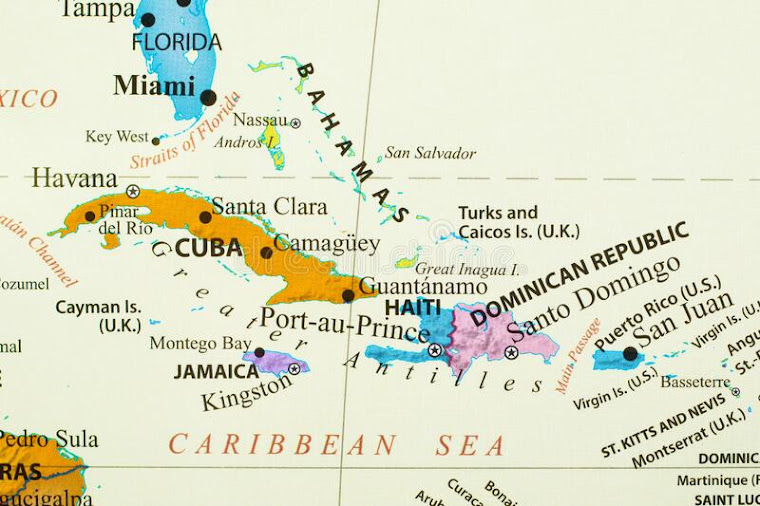
Mr Markantonis' comments come after Jamaica's minister of tourism, Edmund Bartlett, spoke to the world's media at the recent Caribbean Marketplace tourism trade show, which took place in Montego Bay last week, about his government's "casino dream".
He revealed that Jamaica intends to grant three casino licenses this year and is taking applications for others, with the expectation that each casino could bring in $40 million in revenue to the Government annually.
Mr Markantonis said he sees this development as a "big problem" for the Bahamas, and a "bigger issue" than the fact that the Jamaican government has also just opened a state-of-the-art convention centre - the Caribbean's largest - in Montego Bay in the hopes of gaining a greater share of this lucrative tourism market that the Bahamas, and Atlantis especially, has traditionally benefited from.
"I do think that will be a problem for us - I am not going to hide it. If they do approve all these mega-resort casino licenses there, it's just more casinos coming right on our doorstep.
"We have to keep working on the gaming regulations we have here, make sure they are friendly to the casinos we have here and, at the same time, we have to work on our marketing programs like anything else. You can't just roll over; you learn how to compete in a tougher market," said Mr Markantonis.
Casinos in the Bahamas have suffered significant year-over-year declines in revenue in recent times. Atlantis reported an 8 per cent decline in 2010, while Crystal Palace saw an 18.5 per cent drop. While this is in part because of sluggish tourism levels overall, industry stakeholders have consistently pointed to out-dated gaming regulations as a contributing factor in a narrowing of this nation's competitive advantage.
In March 2009, Robert Sands, then Bahamas Hotel Association president, told this newspaper he believed "radical change" would be needed to gaming regulations if the Bahamas is to maintain a competitive edge against other popular destinations.
When Mr Vanderpool-Wallace last spoke to Tribune Business in October 2010 on the subject of the reforms proposed by the hotel and gaming industry to the sector's regulatory framework, he suggested the proposals were "in front of (him) right now" and under active consideration.
The Minister suggested the Government is looking to marry its own recommendations that it believes will be "even more beneficial" to Bahamian casino gaming with those proposed by the private sector, as it moves to "enhance and hold on to the significant competitive advantages" this nation has.
January 24, 2011
tribune242
A political blog about Bahamian politics in The Bahamas, Bahamian Politicans - and the entire Bahamas political lot. Bahamian Blogger Dennis Dames keeps you updated on the political news and views throughout the islands of The Bahamas without fear or favor. Bahamian Politicians and the Bahamian Political Arena: Updates one Post at a time on Bahamas Politics and Bahamas Politicans; and their local, regional and international policies and perspectives.
Monday, January 24, 2011
Sunday, January 23, 2011
The Bahamas' economy ranked 46th in a listing of the world's freest economies
Bahamas: 46th in list of world's freest economies
tribune242
A "poor trade regime" and "intrusive" bureaucracy prevented the Bahamas from ranking higher on this year's Index of Economic Freedom.
The Bahamas' economy ranked 46th in a listing of the world's freest economies according to the Heritage Foundation's 2011 Index of Economic Freedom.
The Bahamas also ranked eighth out of 29 countries in the South and Central America/Caribbean region with its overall score, coming in higher than the regional and world averages, said the website.
The country's overall score - or economic freedom - came in at 68 "due primarily to higher scores in fiscal freedom, government spending, and monetary freedom", according to data collected by the research and educational institution.
However a "poor trade regime remains one of the most cumbersome challenges," said the think tank.
The report added that "an abundance of tariff and non-tariff barriers continues to create a costly trade burden."
"Intrusively bureaucratic approval processes hinder investment freedom and undermine development of a more vibrant private sector," the organisation said.
The Bahamas scored 55 in freedom from corruption due to ongoing software, music and movie piracy, and reports that drug trafficking and money laundering involve police, coast guard, and other government employees.
"Violent crime has escalated sharply. Even though internet gambling is illegal, many online gambling sites are reportedly based in the Bahamas, sometimes using internet cafés as fronts. The Bahamas has neither signed nor ratified the UN Convention Against Corruption," noted the survey.
Business freedom was ranked at 72.5 out of 100, and while the report said that the Bahamas' regulatory environment is advantageous to private-sector development, "the process for obtaining a business licence is not always transparent and straightforward, and officials have considerable discretionary power". Government recently passed a new Business Licence Act - which came into force on January 1 - aimed at streamlining the process for applying for a business licence and removing the red tape involved.
Trade freedom and investment freedom scored the lowest coming in at 42.2 and 30 respectively.
"High tariffs and a stamp tax on most imports, high duties that protect a few agricultural items and consumer goods, occasional import bans, and some import licencing and permits add to the cost of trade," noted the report. "Ten points were deducted from the Bahamas' trade freedom score to account for non-tariff barriers."
Investment freedom got the lowest scoring due to the many areas of business reserved solely for Bahamians and the barriers for international investors.
The Heritage Foundation is a think-tank based in Washington, DC which defines economic freedom as "the fundamental right of every human to control his or her own labor and property".
The Foundation measures ten components of economic freedom - business freedom, trade freedom, fiscal freedom, government spending, monetary freedom, investment freedom, financial freedom, property rights, freedom from corruption, and labour freedom - using a scale from 0 to 100, where 100 represents the maximum freedom.
These scores are then averaged to give an overall economic freedom score for each country.
Hong Kong, Singapore and Australia were the top three countries respectively, while the United States placed ninth with an overall score of 77.8.
January 22, 2011
tribune242
tribune242
A "poor trade regime" and "intrusive" bureaucracy prevented the Bahamas from ranking higher on this year's Index of Economic Freedom.
The Bahamas' economy ranked 46th in a listing of the world's freest economies according to the Heritage Foundation's 2011 Index of Economic Freedom.
The Bahamas also ranked eighth out of 29 countries in the South and Central America/Caribbean region with its overall score, coming in higher than the regional and world averages, said the website.
The country's overall score - or economic freedom - came in at 68 "due primarily to higher scores in fiscal freedom, government spending, and monetary freedom", according to data collected by the research and educational institution.
However a "poor trade regime remains one of the most cumbersome challenges," said the think tank.
The report added that "an abundance of tariff and non-tariff barriers continues to create a costly trade burden."
"Intrusively bureaucratic approval processes hinder investment freedom and undermine development of a more vibrant private sector," the organisation said.
The Bahamas scored 55 in freedom from corruption due to ongoing software, music and movie piracy, and reports that drug trafficking and money laundering involve police, coast guard, and other government employees.
"Violent crime has escalated sharply. Even though internet gambling is illegal, many online gambling sites are reportedly based in the Bahamas, sometimes using internet cafés as fronts. The Bahamas has neither signed nor ratified the UN Convention Against Corruption," noted the survey.
Business freedom was ranked at 72.5 out of 100, and while the report said that the Bahamas' regulatory environment is advantageous to private-sector development, "the process for obtaining a business licence is not always transparent and straightforward, and officials have considerable discretionary power". Government recently passed a new Business Licence Act - which came into force on January 1 - aimed at streamlining the process for applying for a business licence and removing the red tape involved.
Trade freedom and investment freedom scored the lowest coming in at 42.2 and 30 respectively.
"High tariffs and a stamp tax on most imports, high duties that protect a few agricultural items and consumer goods, occasional import bans, and some import licencing and permits add to the cost of trade," noted the report. "Ten points were deducted from the Bahamas' trade freedom score to account for non-tariff barriers."
Investment freedom got the lowest scoring due to the many areas of business reserved solely for Bahamians and the barriers for international investors.
The Heritage Foundation is a think-tank based in Washington, DC which defines economic freedom as "the fundamental right of every human to control his or her own labor and property".
The Foundation measures ten components of economic freedom - business freedom, trade freedom, fiscal freedom, government spending, monetary freedom, investment freedom, financial freedom, property rights, freedom from corruption, and labour freedom - using a scale from 0 to 100, where 100 represents the maximum freedom.
These scores are then averaged to give an overall economic freedom score for each country.
Hong Kong, Singapore and Australia were the top three countries respectively, while the United States placed ninth with an overall score of 77.8.
January 22, 2011
tribune242

Saturday, January 22, 2011
The Progressive Liberal Party (PLP) seeks to resolve candidates dispute in the Kennedy and South Beach constituencies
PLP seeks to resolve candidates dispute
By BRENT DEAN
thenassauguardian
Deputy News Editor
brentldean@nasguard.com
The Progressive Liberal Party (PLP) has decided to appoint two 10-member committees to assist in bringing resolution to candidate disputes in the Kennedy and South Beach constituencies, The Nassau Guardian has learned.
The party made the move at its National General Council (NGC) meeting Thursday night at PLP headquarters, party sources said. Upset PLPs raised the issue that the proper process had not been followed, the sources said, leading to the ratification of candidates for those constituencies.
In December, the PLP announced Bahamas Nurses Union president Cleola Hamilton as its South Beach candidate and attorney Dion Smith as its Kennedy candidate.
However, the Kennedy branch recommended attorney Derek Ryan to the party and South Beach’s branch recommended attorney Myles Laroda. The PLP’s constitution calls for the appointment of committees when there are discrepancies between who the party selects as a candidate and who the branch recommends.
The PLP’s constitution says that when there is a conflict between the recommendation of the branch and the decision of the party’s candidates committee, a joint meeting should be held including the branch and 10 members of the NGC appointed by the party chairman in consultation with the leader.
That meeting would be charged with “amicably” resolving the matter and reporting to the PLP leader.
This had not been done when Hamilton and Smith were announced as candidates.
1/22/2011
thenassauguardian
By BRENT DEAN
thenassauguardian
Deputy News Editor
brentldean@nasguard.com
The Progressive Liberal Party (PLP) has decided to appoint two 10-member committees to assist in bringing resolution to candidate disputes in the Kennedy and South Beach constituencies, The Nassau Guardian has learned.
The party made the move at its National General Council (NGC) meeting Thursday night at PLP headquarters, party sources said. Upset PLPs raised the issue that the proper process had not been followed, the sources said, leading to the ratification of candidates for those constituencies.
In December, the PLP announced Bahamas Nurses Union president Cleola Hamilton as its South Beach candidate and attorney Dion Smith as its Kennedy candidate.
However, the Kennedy branch recommended attorney Derek Ryan to the party and South Beach’s branch recommended attorney Myles Laroda. The PLP’s constitution calls for the appointment of committees when there are discrepancies between who the party selects as a candidate and who the branch recommends.
The PLP’s constitution says that when there is a conflict between the recommendation of the branch and the decision of the party’s candidates committee, a joint meeting should be held including the branch and 10 members of the NGC appointed by the party chairman in consultation with the leader.
That meeting would be charged with “amicably” resolving the matter and reporting to the PLP leader.
This had not been done when Hamilton and Smith were announced as candidates.
1/22/2011
thenassauguardian
Friday, January 21, 2011
The Bahamian public is growing weary of the public relations exercises of the Royal Bahamas Police Force (RBPF)...
Operation PR?
thenassauguardian editorial
Not long after ending a record-breaking year for murders, The Bahamas has started 2011 on the same sorrowful note.
Criminals have continued their merciless assault. And while murders continue to grab headlines, there have already for the year also been numerous reports of shootings, stabbings, armed robberies and other serious crimes.
Added to this has been an obvious rise in the fear of crime among citizens, many of whom will probably never be victims.
This state of crisis has placed untold pressure on Commissioner of Police Ellison Greenslade, whose first year at the helm of the Royal Bahamas Police Force has perhaps been the most challenging of his career.
Greenslade and his team are pressured to act.
So it came as no surprise when this week armed squads of officers hit the streets of New Providence in their first major crackdown for 2011.
While the force should be supported and commended for its efforts to keep our communities safe, we wonder if “Operation Rapid Strike” — as the commissioner dubbed it — is little more than a public relations initiative designed to help ease the anxiety that has gripped so many residents.
It seemed foolhardy for the commissioner to announce the operation before it happened, and may have amounted to a message to criminals to go into hiding along with their deadly weapons until the commissioner announces the end of Rapid Strike.
On Wednesday, reporters were called to a news conference at police headquarters to watch the weapon-toting squads hop into their vehicles and fan out across New Providence.
It was obviously intended to send the message of a strong police force with a police chief totally in control of the situation.
But did it?
Greenslade said he was pleased to announce to the public that the operation was in response to the numerous reports of murders, shootings, stabbings and other serious crimes.
“This operation has as its main objective the mission to seek out persons involved in murders, armed robberies, possession of illegal firearms, stealing of vehicles, stabbings, break-ins and all other criminal activity,” he said, adding that suspects in recent murders were being specially targeted.
Greenslade pledged to restore peace and civility to our communities, and added that citizens should be “elated that we have heard from them in a very real way and that we have pulled out, as we said, all the stops.”
But it seemed that police may have risked giving away the element of surprise, unless of course the commissioner assumed that the criminals are not prone to watching the evening news.
The force must be at war with the criminal element in a way more forceful than at any other time in our post-Independence history.
In war, the enemy needs no notice.
We certainly hope that Rapid Strike was more than just a show for the cameras, and a headline-grabbing initiative.
We await the final outcome of this special operation. On its first night, 14 people were taken into custody for various alleged offenses. The commissioner must now ensure that proper cases are put together against those detained. Our force is good at arresting but not as good at case preparation.
We think in future it might be best for the commissioner to send his armed squads out without the glare of the cameras and report on the results once the operation has ended.
The public is growing weary of the public relations exercises of the police force. A result-oriented approach might be more welcomed.
1/21/2011
thenassauguardian editorial
thenassauguardian editorial
Not long after ending a record-breaking year for murders, The Bahamas has started 2011 on the same sorrowful note.
Criminals have continued their merciless assault. And while murders continue to grab headlines, there have already for the year also been numerous reports of shootings, stabbings, armed robberies and other serious crimes.
Added to this has been an obvious rise in the fear of crime among citizens, many of whom will probably never be victims.
This state of crisis has placed untold pressure on Commissioner of Police Ellison Greenslade, whose first year at the helm of the Royal Bahamas Police Force has perhaps been the most challenging of his career.
Greenslade and his team are pressured to act.
So it came as no surprise when this week armed squads of officers hit the streets of New Providence in their first major crackdown for 2011.
While the force should be supported and commended for its efforts to keep our communities safe, we wonder if “Operation Rapid Strike” — as the commissioner dubbed it — is little more than a public relations initiative designed to help ease the anxiety that has gripped so many residents.
It seemed foolhardy for the commissioner to announce the operation before it happened, and may have amounted to a message to criminals to go into hiding along with their deadly weapons until the commissioner announces the end of Rapid Strike.
On Wednesday, reporters were called to a news conference at police headquarters to watch the weapon-toting squads hop into their vehicles and fan out across New Providence.
It was obviously intended to send the message of a strong police force with a police chief totally in control of the situation.
But did it?
Greenslade said he was pleased to announce to the public that the operation was in response to the numerous reports of murders, shootings, stabbings and other serious crimes.
“This operation has as its main objective the mission to seek out persons involved in murders, armed robberies, possession of illegal firearms, stealing of vehicles, stabbings, break-ins and all other criminal activity,” he said, adding that suspects in recent murders were being specially targeted.
Greenslade pledged to restore peace and civility to our communities, and added that citizens should be “elated that we have heard from them in a very real way and that we have pulled out, as we said, all the stops.”
But it seemed that police may have risked giving away the element of surprise, unless of course the commissioner assumed that the criminals are not prone to watching the evening news.
The force must be at war with the criminal element in a way more forceful than at any other time in our post-Independence history.
In war, the enemy needs no notice.
We certainly hope that Rapid Strike was more than just a show for the cameras, and a headline-grabbing initiative.
We await the final outcome of this special operation. On its first night, 14 people were taken into custody for various alleged offenses. The commissioner must now ensure that proper cases are put together against those detained. Our force is good at arresting but not as good at case preparation.
We think in future it might be best for the commissioner to send his armed squads out without the glare of the cameras and report on the results once the operation has ended.
The public is growing weary of the public relations exercises of the police force. A result-oriented approach might be more welcomed.
1/21/2011
thenassauguardian editorial
Allow Bahamians To Buy 100% of the Bahamas Telecommunications Company Limited (BTC) and Let Competition Reign!
By Dennis Dames
About eleven years ago, my wife, along with hundreds of BaTelCo employees, accepted the company’s severance package; the deal was, according to my understanding, to prepare the entity for privatization.
That was sometime in 1999. This is now 2011, and the people’s government of the day has selected a candidate to purchase a 51% stake in the ailing BTC. The masses should be delighted about the good news; but ruckus has clouded the issue at hand and the nation has become bitterly divided over this simple matter.
Okay, let Bahamians buy the entire BTC (100%) and liberalize the market forthwith. Let competition reign!
No one in this 21st century Bahamas should have a problem with that. After selling BTC to Bahamians and giving other Bahamians a chance to compete with it, I wonder what the noise in the market would be then.
Let’s go that route, and give the consumers an immediate choice as to which telecommunication company that they would prefer doing business with; just like the local radio stations that we choose to patronize.
We have had a fax-line problem at our office lately, and it took five different technicians from BTC, on five separate visits to remedy the problem. What a national disgrace!
This is what the unions are fighting to keep; pure incompetence alive at the public’s expense.
It’s time for The Bahamas government to divorce itself of this ineptitude 100% as far as BTC is concerned. So, sell it to Bahamians with money to burn and liberalize the market simultaneously for other Bahamians to capitalize on BTC’s uselessness.
I can’t wait to see the unions demonstrate against Bahamians and competition. Then we shall see their real motives clearly; and that is to protect their lot of backward comrades.
Bahamas Blog International
About eleven years ago, my wife, along with hundreds of BaTelCo employees, accepted the company’s severance package; the deal was, according to my understanding, to prepare the entity for privatization.
That was sometime in 1999. This is now 2011, and the people’s government of the day has selected a candidate to purchase a 51% stake in the ailing BTC. The masses should be delighted about the good news; but ruckus has clouded the issue at hand and the nation has become bitterly divided over this simple matter.
Okay, let Bahamians buy the entire BTC (100%) and liberalize the market forthwith. Let competition reign!
No one in this 21st century Bahamas should have a problem with that. After selling BTC to Bahamians and giving other Bahamians a chance to compete with it, I wonder what the noise in the market would be then.
Let’s go that route, and give the consumers an immediate choice as to which telecommunication company that they would prefer doing business with; just like the local radio stations that we choose to patronize.
We have had a fax-line problem at our office lately, and it took five different technicians from BTC, on five separate visits to remedy the problem. What a national disgrace!
This is what the unions are fighting to keep; pure incompetence alive at the public’s expense.
It’s time for The Bahamas government to divorce itself of this ineptitude 100% as far as BTC is concerned. So, sell it to Bahamians with money to burn and liberalize the market simultaneously for other Bahamians to capitalize on BTC’s uselessness.
I can’t wait to see the unions demonstrate against Bahamians and competition. Then we shall see their real motives clearly; and that is to protect their lot of backward comrades.
Bahamas Blog International
Thursday, January 20, 2011
The Royal Bahamas Police Force (RBPF) has a credibility problem
Concerning Police Credibility
The Bahama Journal Editorial
There is ample evidence coming in to support a tentative conclusion that, a crime onslaught that has become endemic now threatens to undermine all efforts aimed at building today’s Bahamas on a sounder, more decent and truly honest set of foundations.
The elementary fact of the matter, then, is that our nation’s location and configuration lend support to the thesis that the Bahamas is in truth and in fact a smugglers’ paradise.
And so, in a dreadful kind of way, our country might well be that kind of place where when all else fails, the drugs trade and other smuggling type operations kick in by default, so to speak.
In addition, there is also –as most business owners and operators know so very well – a culture of thievery that is today pervasive; a space where apparently hard-working men and women routinely rip-off their employers.
This culture –so we are told- also pervades some rotten elements in the Police Force, the Customs Service, Immigration, the Prison Service – and other areas of the public service.
And then, there remains all that bounty that accrues to the vast majority of both public and private sector workers who steal time; and who therefore get paid for work they have not done.
This also applies to some of our police officers.
Some of this quite neatly explains how it arises that some of our fellow-Bahamians seem to be doing so very well in what are said to be ‘hard times’.
Indeed, there is a smattering of evidence to suggest that some of these people are benefitting from pain and suffering being endured by their hard-working, decent and also law-abiding brothers and sisters.
Clearly, then, our country is today reeling under hammer blows inflicted by criminals who are currently engaged in an orgy of mayhem – some of which comes packaged in with all that information concerning the rate at which homicide now makes the news.
Notwithstanding some of the bad news coming in, this country of ours owes some of its hard-working police officers – particularly some who now work on the front-lines; those nasty spaces where violence is rampant and where death sometimes approaches in a blazing instance of gun-fire unleashed.
Clearly, some of these fine officers are doing all they can to live up to the challenge inherent in the pledge they made to uphold the law.
We have absolutely no problem with these fine men; and indeed, we wish them well.
Our problem with the Force is today otherwise.
Here we would respectfully suggest that, whether officials in the Ministry of National Security or some in the top brass of the Royal Bahamas Police Force realize it or not, they have on their hands a problem of credibility.
Simply put, there are very many Bahamians who are convinced that, some police officers are corrupt; that some others are grossly inefficient – and that some of the reports they bring in to their senior officers are artful fabrications.
In addition, there are some Bahamians [perhaps a hardy minority of them] who are prepared to suggest that these bad apples [as they are sometimes deemed] are salted throughout the ranks of the force.
We have no reason to believe otherwise.
And for sure, while we have no way of proving any of the allegations made by people who speak to us, we do believe that, there is cause for concern.
That concern is grounded in the fact that, corrupted officers do a mass of damage not only to those of their fellow-officers who are honest, decent and law-abiding – but also to all other right-thinking and behaving residents and citizens living and work in this country.
Here the Police Commissioner might be minded to suggest to each and every police officer under his command should come clean even if as the saying goes, they have to come ‘rough-dry’.
Put simply, zero tolerance for any and all police misbehavior –whether or not that behavior reaches the level of ‘criminal’ wrong-doing - must become the mantra of the police high command, moving forward.
Anything else would be tantamount to failure.
Curiously, we now live in a place and in a time when such slogans and other palaver routinely slides off the lips of this or that highly-placed official; with absolutely no real effect on behavior on the ground.
Here we can recite so very many stories –most of them coming from usually impeccable sources – that speak of instances where police on routine patrol just as routinely shake down Haitian nationals and some equally unlucky others.
Indeed, we are hearing say that some Haitians in our midst are being bilked of some of their money by police officers on the take.
Today that beat continues; and as it does, the credibility of the Force is being further undermined.
January 20, 2011
The Bahama Journal Editorial
The Bahama Journal Editorial
There is ample evidence coming in to support a tentative conclusion that, a crime onslaught that has become endemic now threatens to undermine all efforts aimed at building today’s Bahamas on a sounder, more decent and truly honest set of foundations.
The elementary fact of the matter, then, is that our nation’s location and configuration lend support to the thesis that the Bahamas is in truth and in fact a smugglers’ paradise.
And so, in a dreadful kind of way, our country might well be that kind of place where when all else fails, the drugs trade and other smuggling type operations kick in by default, so to speak.
In addition, there is also –as most business owners and operators know so very well – a culture of thievery that is today pervasive; a space where apparently hard-working men and women routinely rip-off their employers.
This culture –so we are told- also pervades some rotten elements in the Police Force, the Customs Service, Immigration, the Prison Service – and other areas of the public service.
And then, there remains all that bounty that accrues to the vast majority of both public and private sector workers who steal time; and who therefore get paid for work they have not done.
This also applies to some of our police officers.
Some of this quite neatly explains how it arises that some of our fellow-Bahamians seem to be doing so very well in what are said to be ‘hard times’.
Indeed, there is a smattering of evidence to suggest that some of these people are benefitting from pain and suffering being endured by their hard-working, decent and also law-abiding brothers and sisters.
Clearly, then, our country is today reeling under hammer blows inflicted by criminals who are currently engaged in an orgy of mayhem – some of which comes packaged in with all that information concerning the rate at which homicide now makes the news.
Notwithstanding some of the bad news coming in, this country of ours owes some of its hard-working police officers – particularly some who now work on the front-lines; those nasty spaces where violence is rampant and where death sometimes approaches in a blazing instance of gun-fire unleashed.
Clearly, some of these fine officers are doing all they can to live up to the challenge inherent in the pledge they made to uphold the law.
We have absolutely no problem with these fine men; and indeed, we wish them well.
Our problem with the Force is today otherwise.
Here we would respectfully suggest that, whether officials in the Ministry of National Security or some in the top brass of the Royal Bahamas Police Force realize it or not, they have on their hands a problem of credibility.
Simply put, there are very many Bahamians who are convinced that, some police officers are corrupt; that some others are grossly inefficient – and that some of the reports they bring in to their senior officers are artful fabrications.
In addition, there are some Bahamians [perhaps a hardy minority of them] who are prepared to suggest that these bad apples [as they are sometimes deemed] are salted throughout the ranks of the force.
We have no reason to believe otherwise.
And for sure, while we have no way of proving any of the allegations made by people who speak to us, we do believe that, there is cause for concern.
That concern is grounded in the fact that, corrupted officers do a mass of damage not only to those of their fellow-officers who are honest, decent and law-abiding – but also to all other right-thinking and behaving residents and citizens living and work in this country.
Here the Police Commissioner might be minded to suggest to each and every police officer under his command should come clean even if as the saying goes, they have to come ‘rough-dry’.
Put simply, zero tolerance for any and all police misbehavior –whether or not that behavior reaches the level of ‘criminal’ wrong-doing - must become the mantra of the police high command, moving forward.
Anything else would be tantamount to failure.
Curiously, we now live in a place and in a time when such slogans and other palaver routinely slides off the lips of this or that highly-placed official; with absolutely no real effect on behavior on the ground.
Here we can recite so very many stories –most of them coming from usually impeccable sources – that speak of instances where police on routine patrol just as routinely shake down Haitian nationals and some equally unlucky others.
Indeed, we are hearing say that some Haitians in our midst are being bilked of some of their money by police officers on the take.
Today that beat continues; and as it does, the credibility of the Force is being further undermined.
January 20, 2011
The Bahama Journal Editorial
Wednesday, January 19, 2011
Policy makers are urged to produce a coherent national development strategy with opportunities for public input and debate... Urgently
A Clash of Economic Models for the Bahamas
by Larry Smith
bahamapundit
"As I watch these students and their families, all so proud of their accomplishments, I cannot help but feel sorry for them...How will they feel about themselves in this tourist industry, playing the role of servant so clearly constructed as being part of the nature of Bahamian culture." -- Dellareese Higgs, 2008 doctoral dissertation
“It is clearly the case that, as a result of tourism, the Bahamas is chronically dependent.” -- Felix Bethel, College of the Bahamas lecturer
“Tourism is a form of ‘leisure imperialism’ and represents ‘the hedonistic’ face of neocolonialism." - Malcolm Crick, British anthropologist
"While direct travel services generated $1.8 billion in export earnings, the economy spent $1.9 billion on the purchase of merchandise imports. it could be suggested that in the (Stafford Sands) model, the state of foreign reserves is in fact the economy’s ultimate monetary target." -- Gabriella Fraser, researcher at the Central Bank of the Bahamas, 2001
"Because of our addictive reliance on foreign investment our appreciation for Bahamian genius is negligible and in so doing we are oppressing Bahamians....Our economic model perpetuates an economic apartheid." -- Olivia Saunders, College of the Bahamas lecturer
"One can argue that Bahamian national pride is to a degree a product of brochure discourse, of touristic marketing; that much of what Bahamians love about their country is what travellers and the tourist industry claim is worth loving." -- Ian Strachan, College of the Bahamas lecturer
"The world seems to be divided between people who predict rain and people who build arks. We know which one is easier. Let them continue to predict rain in the face of these opportunities. We will work with those who are in the business of building arks." -- Vincent Vanderpool-Wallace, Minister of Tourism
The preceding series of quotes (except for the last one) is fairly representative of the intellectual discourse over tourism, economics and identity that rages from time to time in the academic and cultural world, both here and abroad.
Interestingly, this normally esoteric debate was thrown into sharp relief last week when Tourism Minister Vincent Vanderpool-Wallace and College of the Bahamas lecturer Olivia Saunders delivered diametrically opposing views at the Bahamas Business Outlook conference on Cable Beach. The theme of the conference was economic diversification.
This discussion began with a description of our current economic model. What is often described as the "Stafford Sands model" for ease of reference, is really just an updated version of the oppressive 19th century colonial system, critics say. It is a typical dependency model, which was fashioned long before Sands was born. And it needs to be overthrown.
Olivia Saunders said the creation of the Development Board in 1914 formalised earlier promotional efforts by paying foreigners to bring tourists into the colony and to develop hotels. In the 1930s, promoters like Harold Christie started selling Bahamian land to wealthy foreigners for second homes and other investments. The influx of foreign capital was driven by the absence of taxes on earnings. And all this set the country largely on the course it travels today.
Although Sands was not the originator of this model, he did take advantage of the global economic recovery after the Second World War to dramatically expand tourism and financial services. Rapid economic growth in the 1950s and 60s was partly due to unprecedented promotional spending to position The Bahamas as a year-round tourist destination.
Saunders summed it up like this: "The Bahamian economic model is designed for the country to relinquish responsibility for its resources and the commanding heights of its economy. It is one where the role of the residents is to provide labour and to be consumers while the owners of the economy, foreign nationals and a small minority of locals, amass great wealth.
This was a model that ensured underdevelopment of our human resources, she said. "We maintain a tax and incentive regime that not only favours the foreign investor but oppresses Bahamians...An economy so designed does not have much need for a local intelligentsia...It is disastrous for us to continue using the present economic model of dependence and economic apartheid."
Saunders offered a vague three-point plan to address these issues. First, leverage the abilities of Bahamians who have the aptitude and expertise to own and operate anything that is vital to nation-building. Second, ensure that Bahamian capital and resources benefit Bahamians rather than foreigners. And third, accept that our current economic model is dysfunctional and incapable of producing the results we need.
"Human beings are more than workers and consumers, and policy makers should not measure how well the nation is doing by how many jobs arise from this or that project or how many cars are purchased," she said to standing ovations from some in the audience. "My advocacy is for a new economy so fashioned that it portrays and liberates Bahamian brilliance; an economy that is congruent with healthy and sustainable communities, and an economy that extends wealth to Bahamian citizens."
Vincent Vanderpool-Wallace offered a different approach. While acknowledging that tourism was facing "stiff headwinds" due to a longer than expected recession, "what is often forgotten is that the most diversified economies on earth are not only going through the same troubles we are, these highly diversified economies are in fact the source of our troubles. And several American states and European countries are now in deeper trouble than The Bahamas has ever seen in recent times."
According to the minister, "any initiatives to grow our economy in the short and long term must be grounded in activities that arise from making existing and accepted strengths stronger, because we know that any effort that requires massive training and retraining of our population, while noble, is for the medium and longer term and is less certain. So yes, I believe in diversification, but not necessarily diversification in the way that consumes so much debate."
He went on to cite statistics that may surprise some readers. For example, if Nassau and Paradise Island were a separate country, it would rank fifth in the number of stopover visitors, second in the number of total visitors and first in the number of cruise passengers in the entire Caribbean. Yet these two connected islands are less than 2 per cent of the total Bahamian land mass.
"Today, this 2 per cent 'country' would be the third wealthiest independent nation in the hemisphere," he said. "If fully developing only 2 per cent of our islands yields these results, imagine what could happen if we began to utilize more of our natural assets. If we want to diversify, why not diversify like Toyota did in extending their brands of cars? Why not diversify within one’s areas of strength and comparative advantage?"
As we all know, the Bahamas is right next door to the United States, which constitutes 25 per cent of the global economy - a proportion that is likely to remain relatively stable for the foreseeable future despite the growth of emerging economies like Brazil, Russia, India and China. Collectively, these nations account for less than 12 per cent of global GDP today.
Vanderpool-Wallace pointed out that despite our proximity to the world's largest economy, "it is much less expensive and takes less time to travel from most places in the US to most competing destinations in the Caribbean than it does to travel to any of our Family Islands. Reducing the cost and time for travel to our islands will most assuredly lead to explosive growth and can turn our economy from the wind in our face to the wind at our backs."
This will also make domestic travel for Bahamians much more appealing compared to the current cost advantages of a trip to south Florida, he said. "The power of low-cost, high-quality air and sea transportation is no longer a debate in our industry. Our Companion Fly Free programme has been the most successful promotion in history, selling nearly 300,000 room nights, and the growth of our cruise business by more than 18 per cent last year is adequate testimony to the value of low-cost access to a Bahamas vacation."
While Nassau and Paradise Island teeter on overdevelopment, Vanderpool-Wallace noted that we have failed to provide adequate inter-island transportation, and argued that "Infrastructure development in an archipelago depends as much on connections between islands as it does on infrastructure on islands."
He advanced a "mission to the moon" vision in which Bahamians living on nearby islands like Eleuthera or Andros would commute to work in Nassau as we begin to develop the other 98 per cent of the Bahamas more completely. "Such commutes are done every day around the world. Why not The Bahamas? Our overall mission must be to go back to the islands through the expansion of inter-island transportation and communications services."
He envisioned a future where containers arriving at the new port on Arawak Cay can roll off vessels and roll onto trucks for transportation to other islands to deliver goods to the resident population, returning to Nassau with farm produce. And passengers would be able to take their personal vehicles with them to travel through the archipelago. This will accelerate the use of first and second homes in the islands and "make that globally desired idea of living and loving the island life immensely more accessible and attractive."
Efforts are already underway, he said, to establish an electronic booking system for all of the air and sea transportation within The Bahamas so that residents and visitors can book and pay for their transportation from anywhere on the planet to anywhere in The Bahamas. Currently, visitors have to go to airports and seaports to make those arrangements in most cases.
"Imagine all of the land, sea and air transportation throughout The Bahamas owned and operated by Bahamians. Imagine the size of aircraft and volume of seats coming into Lynden Pindling International Airport if substantial numbers of those passengers are also connecting to other islands of The Bahamas."
He said the government's online initiatives and a robust telecommunications sector were essential ingredients of this “Back to the Islands” vision. And all that is required for Bahamians to be successful in tourism are “bed & breakfast” facilities that can be viewed and booked online from anywhere in the world along with the necessary air and sea transportation.
"When those difficulties are overcome, we can enable hundreds to enter the tourism business immediately all over the country. And incentives could be offered to Bahamians now living overseas or on New Providence to move to the Family Islands. The largest incentive thus far is the government’s declaration that it will tackle the problem of generation and commonage land," he said. "That will be the greatest distribution of wealth in our history."
While broader diversification of the economy is a wonderful mantra, Vanderpool-Wallace said the exploitation of our existing tourism assets will be more beneficial over the short term. "Tourism cannot grow without other sectors contributing to that growth and growing themselves. It needs agricultural, legal, accounting, medical, engineering and software services. The more useful mantra is that one must compete in one's area of comparative and competitive advantage. We have not come close to making maximum use of tourism."
Quoting motivational trainer Steven Covey's comment that “the main thing is to keep the main thing the main thing", Vanderpool-Wallace said our main thing was "100,000 square miles of the most salubrious waters in the world. If we continue to guard and protect that resource, it does not diminish in size or value over the course of time, unlike the natural resources of many other nations. We have more islands and more beaches than the rest of the Caribbean combined.
"We are now at the beginning of the biggest educational, transportation and electronic infrastructure development in our history," he said. "This is the beginning of the wave to move us all forward, upward and onward together. For the sake of our children and grandchildren, now is the time to give focused attention to the development of our islands."
The contrast between Vanderpool-Wallace's common sense vision of empowerment and the bitter, near Marxist, approach of academics like Saunders could not be more marked. We would urge policy makers to extrapolate this vision, and incorporate other sectors, to urgently produce a coherent national development strategy with opportunities for public input and debate.
bahamapundit
by Larry Smith
bahamapundit
"As I watch these students and their families, all so proud of their accomplishments, I cannot help but feel sorry for them...How will they feel about themselves in this tourist industry, playing the role of servant so clearly constructed as being part of the nature of Bahamian culture." -- Dellareese Higgs, 2008 doctoral dissertation
“It is clearly the case that, as a result of tourism, the Bahamas is chronically dependent.” -- Felix Bethel, College of the Bahamas lecturer
“Tourism is a form of ‘leisure imperialism’ and represents ‘the hedonistic’ face of neocolonialism." - Malcolm Crick, British anthropologist
"While direct travel services generated $1.8 billion in export earnings, the economy spent $1.9 billion on the purchase of merchandise imports. it could be suggested that in the (Stafford Sands) model, the state of foreign reserves is in fact the economy’s ultimate monetary target." -- Gabriella Fraser, researcher at the Central Bank of the Bahamas, 2001
"Because of our addictive reliance on foreign investment our appreciation for Bahamian genius is negligible and in so doing we are oppressing Bahamians....Our economic model perpetuates an economic apartheid." -- Olivia Saunders, College of the Bahamas lecturer
"One can argue that Bahamian national pride is to a degree a product of brochure discourse, of touristic marketing; that much of what Bahamians love about their country is what travellers and the tourist industry claim is worth loving." -- Ian Strachan, College of the Bahamas lecturer
"The world seems to be divided between people who predict rain and people who build arks. We know which one is easier. Let them continue to predict rain in the face of these opportunities. We will work with those who are in the business of building arks." -- Vincent Vanderpool-Wallace, Minister of Tourism
The preceding series of quotes (except for the last one) is fairly representative of the intellectual discourse over tourism, economics and identity that rages from time to time in the academic and cultural world, both here and abroad.
Interestingly, this normally esoteric debate was thrown into sharp relief last week when Tourism Minister Vincent Vanderpool-Wallace and College of the Bahamas lecturer Olivia Saunders delivered diametrically opposing views at the Bahamas Business Outlook conference on Cable Beach. The theme of the conference was economic diversification.
This discussion began with a description of our current economic model. What is often described as the "Stafford Sands model" for ease of reference, is really just an updated version of the oppressive 19th century colonial system, critics say. It is a typical dependency model, which was fashioned long before Sands was born. And it needs to be overthrown.
Olivia Saunders said the creation of the Development Board in 1914 formalised earlier promotional efforts by paying foreigners to bring tourists into the colony and to develop hotels. In the 1930s, promoters like Harold Christie started selling Bahamian land to wealthy foreigners for second homes and other investments. The influx of foreign capital was driven by the absence of taxes on earnings. And all this set the country largely on the course it travels today.
Although Sands was not the originator of this model, he did take advantage of the global economic recovery after the Second World War to dramatically expand tourism and financial services. Rapid economic growth in the 1950s and 60s was partly due to unprecedented promotional spending to position The Bahamas as a year-round tourist destination.
Saunders summed it up like this: "The Bahamian economic model is designed for the country to relinquish responsibility for its resources and the commanding heights of its economy. It is one where the role of the residents is to provide labour and to be consumers while the owners of the economy, foreign nationals and a small minority of locals, amass great wealth.
This was a model that ensured underdevelopment of our human resources, she said. "We maintain a tax and incentive regime that not only favours the foreign investor but oppresses Bahamians...An economy so designed does not have much need for a local intelligentsia...It is disastrous for us to continue using the present economic model of dependence and economic apartheid."
Saunders offered a vague three-point plan to address these issues. First, leverage the abilities of Bahamians who have the aptitude and expertise to own and operate anything that is vital to nation-building. Second, ensure that Bahamian capital and resources benefit Bahamians rather than foreigners. And third, accept that our current economic model is dysfunctional and incapable of producing the results we need.
"Human beings are more than workers and consumers, and policy makers should not measure how well the nation is doing by how many jobs arise from this or that project or how many cars are purchased," she said to standing ovations from some in the audience. "My advocacy is for a new economy so fashioned that it portrays and liberates Bahamian brilliance; an economy that is congruent with healthy and sustainable communities, and an economy that extends wealth to Bahamian citizens."
Vincent Vanderpool-Wallace offered a different approach. While acknowledging that tourism was facing "stiff headwinds" due to a longer than expected recession, "what is often forgotten is that the most diversified economies on earth are not only going through the same troubles we are, these highly diversified economies are in fact the source of our troubles. And several American states and European countries are now in deeper trouble than The Bahamas has ever seen in recent times."
According to the minister, "any initiatives to grow our economy in the short and long term must be grounded in activities that arise from making existing and accepted strengths stronger, because we know that any effort that requires massive training and retraining of our population, while noble, is for the medium and longer term and is less certain. So yes, I believe in diversification, but not necessarily diversification in the way that consumes so much debate."
He went on to cite statistics that may surprise some readers. For example, if Nassau and Paradise Island were a separate country, it would rank fifth in the number of stopover visitors, second in the number of total visitors and first in the number of cruise passengers in the entire Caribbean. Yet these two connected islands are less than 2 per cent of the total Bahamian land mass.
"Today, this 2 per cent 'country' would be the third wealthiest independent nation in the hemisphere," he said. "If fully developing only 2 per cent of our islands yields these results, imagine what could happen if we began to utilize more of our natural assets. If we want to diversify, why not diversify like Toyota did in extending their brands of cars? Why not diversify within one’s areas of strength and comparative advantage?"
As we all know, the Bahamas is right next door to the United States, which constitutes 25 per cent of the global economy - a proportion that is likely to remain relatively stable for the foreseeable future despite the growth of emerging economies like Brazil, Russia, India and China. Collectively, these nations account for less than 12 per cent of global GDP today.
Vanderpool-Wallace pointed out that despite our proximity to the world's largest economy, "it is much less expensive and takes less time to travel from most places in the US to most competing destinations in the Caribbean than it does to travel to any of our Family Islands. Reducing the cost and time for travel to our islands will most assuredly lead to explosive growth and can turn our economy from the wind in our face to the wind at our backs."
This will also make domestic travel for Bahamians much more appealing compared to the current cost advantages of a trip to south Florida, he said. "The power of low-cost, high-quality air and sea transportation is no longer a debate in our industry. Our Companion Fly Free programme has been the most successful promotion in history, selling nearly 300,000 room nights, and the growth of our cruise business by more than 18 per cent last year is adequate testimony to the value of low-cost access to a Bahamas vacation."
While Nassau and Paradise Island teeter on overdevelopment, Vanderpool-Wallace noted that we have failed to provide adequate inter-island transportation, and argued that "Infrastructure development in an archipelago depends as much on connections between islands as it does on infrastructure on islands."
He advanced a "mission to the moon" vision in which Bahamians living on nearby islands like Eleuthera or Andros would commute to work in Nassau as we begin to develop the other 98 per cent of the Bahamas more completely. "Such commutes are done every day around the world. Why not The Bahamas? Our overall mission must be to go back to the islands through the expansion of inter-island transportation and communications services."
He envisioned a future where containers arriving at the new port on Arawak Cay can roll off vessels and roll onto trucks for transportation to other islands to deliver goods to the resident population, returning to Nassau with farm produce. And passengers would be able to take their personal vehicles with them to travel through the archipelago. This will accelerate the use of first and second homes in the islands and "make that globally desired idea of living and loving the island life immensely more accessible and attractive."
Efforts are already underway, he said, to establish an electronic booking system for all of the air and sea transportation within The Bahamas so that residents and visitors can book and pay for their transportation from anywhere on the planet to anywhere in The Bahamas. Currently, visitors have to go to airports and seaports to make those arrangements in most cases.
"Imagine all of the land, sea and air transportation throughout The Bahamas owned and operated by Bahamians. Imagine the size of aircraft and volume of seats coming into Lynden Pindling International Airport if substantial numbers of those passengers are also connecting to other islands of The Bahamas."
He said the government's online initiatives and a robust telecommunications sector were essential ingredients of this “Back to the Islands” vision. And all that is required for Bahamians to be successful in tourism are “bed & breakfast” facilities that can be viewed and booked online from anywhere in the world along with the necessary air and sea transportation.
"When those difficulties are overcome, we can enable hundreds to enter the tourism business immediately all over the country. And incentives could be offered to Bahamians now living overseas or on New Providence to move to the Family Islands. The largest incentive thus far is the government’s declaration that it will tackle the problem of generation and commonage land," he said. "That will be the greatest distribution of wealth in our history."
While broader diversification of the economy is a wonderful mantra, Vanderpool-Wallace said the exploitation of our existing tourism assets will be more beneficial over the short term. "Tourism cannot grow without other sectors contributing to that growth and growing themselves. It needs agricultural, legal, accounting, medical, engineering and software services. The more useful mantra is that one must compete in one's area of comparative and competitive advantage. We have not come close to making maximum use of tourism."
Quoting motivational trainer Steven Covey's comment that “the main thing is to keep the main thing the main thing", Vanderpool-Wallace said our main thing was "100,000 square miles of the most salubrious waters in the world. If we continue to guard and protect that resource, it does not diminish in size or value over the course of time, unlike the natural resources of many other nations. We have more islands and more beaches than the rest of the Caribbean combined.
"We are now at the beginning of the biggest educational, transportation and electronic infrastructure development in our history," he said. "This is the beginning of the wave to move us all forward, upward and onward together. For the sake of our children and grandchildren, now is the time to give focused attention to the development of our islands."
The contrast between Vanderpool-Wallace's common sense vision of empowerment and the bitter, near Marxist, approach of academics like Saunders could not be more marked. We would urge policy makers to extrapolate this vision, and incorporate other sectors, to urgently produce a coherent national development strategy with opportunities for public input and debate.
bahamapundit
Subscribe to:
Comments (Atom)