'Greatest single threat' to Bahamas seafood resources
By LARRY SMITH
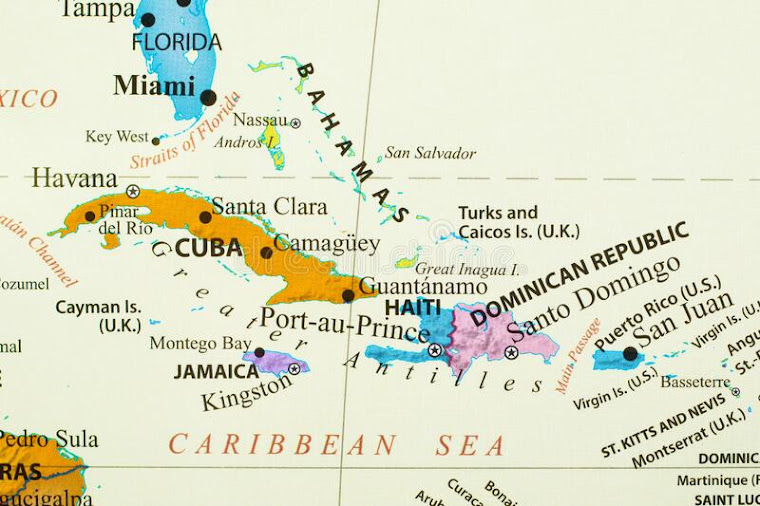
A RECENT report by a leading University of Miami marine scientist has confirmed that poaching by commercial fishermen from the Dominican Republic is the greatest single threat to Bahamian seafood resources.
The report on illegal, unreported and unregulated (IUU) fishing was produced for the Bahamas Lobster Fisheries Improvement Project. This initiative is sponsored by local seafood processors in a bid to win endorsement for Bahamian crawfish exports under the European Union's new Catch Certification programme.
Without this endorsement, which is aimed at reducing the over-exploitation of global fishery resources, Bahamian lobsters will be banned from the EU. And this lucrative market takes about 40 per cent of the 12.5 million lobsters we legally export every year (based on a four-year average), a catch valued at more than $87 million.
EU certification requires that lobsters are received only from licensed vessels using legal methods - meaning that only crawfish of legal size and condition are harvested. All fishery products must be properly documented upon landing, with guarantees that exports are not derived from IUU fishing.
Ironically, this is one of the main difficulties in dealing with illegal fishing in Bahamian waters. The Dominican Republic has a population of 9.6 million (compared to only 353,000 Bahamians), and it receives more than four million air/hotel visitors annually. So that country does not need to export seafood products and is immune to pressures from EU regulations.
Along the northern Dominican Republic coast are three major ports and several huge resort centres, one of which - Punta Cana - has more hotel rooms than the entire Bahamas. The size of the Dominican tourism industry presents an almost unlimited demand for luxury seafood. And Punta Cana hotels have lobster on the menu for US$16, about half the price of a typical lobster tail dinner in Nassau.
As well, American statistics show that 89,000 pounds of lobster tails were legally imported from the Dominican Republic in the past year, but according to international conservation organizations, there are no commercially viable stocks of spiny lobsters in Dominican Republic waters. In these circumstances, it is obvious where the lobsters for Dominican resorts and exporters are coming from.
From the Dominican Republic's northern coast, it takes less than three days to reach the Great Bahama Bank in a fishing vessel making 10-12 knots. These vessels are typically 65 feet long, and each is attended by a number of smaller skiffs. Fishermen operate from the skiffs using hookahs and spears, at depths well below 60 feet. And divers fish to depths of over 200 feet, reaching deep reef resources not legally fished by Bahamians, according to the IUU report.
"The potential for large illegal lobster landings in the Dominican Republic is huge. The implications in terms of lost jobs, lost revenue to the government, and lost fisheries resources is in the tens of millions of dollars," the IUU report warned. "This is a serious threat to national security and economic growth."
The report was produced by Dr Kathleen Sullivan Sealey, of the University of Miami's highly respected Rosenstiel School of Marine Science. She has decades of experience working in marine conservation in the Bahamas and was formerly Dean of the College of the Bahamas science division.
Crawfish are the most important marine resource we have, so we need to take care of it. In addition to export earnings, this fishery provides jobs, economic diversity and is an important tourist attraction. Aside from recreational fishing by visitors, lobster meals are one of the highlights of visiting The Bahamas, and interviews confirm that diners would like to enjoy a guilt-free meal. Bahamians also eat lobster, and expect this seafood to remain affordable for the general population.
But in order to protect this resource, we need accurate information, and little or none has been available on the scale or intensity of illegal fishing or for legal, non-commercial fishing in the Bahamas. This undermines fishery management efforts and places the resource at greater risk of over-exploitation. The IUU report is an attempt to address this deficiency by looking at consumption by restaurants, recreational fishers and commercial fishers, including poachers.
Illegal fishing is the harvesting of lobster by any means in violation of the existing laws and regulations, including poaching, taking undersized lobsters, taking lobsters out of season or using destructive methods such as bleach. Unreported fishing includes lobsters that are caught, sold and consumed locally by Bahamians and visitors, or legally exported under the sportfishing regulations.
Sullivan Sealey surveyed restaurants and resorts; interviewed yachters, tourists, Defence Force officers and local fishermen; examined data from seafood processors, and looked at the lobster market in the Dominican Republic. The main conclusions from this research are that restaurants may account for 570,000 illegal lobsters a year - about 5 per cent of the current export quantity; while the unreported catch could be some 1.5 million lobsters -- about 12 per cent of known export landings.
By far the biggest drain on the resource is illegal fishing by foreign vessels, mostly from the Dominican Republic. US law prohibits the import of fishery products that have been illegally taken, possessed, transported or sold. This includes the shipment of lobster from The Bahamas without export permits, or taken by foreign nationals in excess of the sportfishing limits (currently six lobsters per person). The Cuban fishing industry is state controlled, and since the 1980 sinking of HMBS Flamingo by the Cuban Air Force, there have been few reports of poaching by Cuban vessels.
Nevertheless, "Foreign fishing vessels operate across the southern Bahamas, venturing further north and across the Great Bahamas Banks during the summer when the lobster fishery is closed to Bahamians," Sullivan Sealey said. "There are no accessible records of sightings of foreign fishing vessels, but anecdotal information puts the number at about six per month. Reports of illegal immigrants from Honduras and the Dominican Republic working on Bahamian fishing vessels have also been verified."
Her report says it could be concluded from the interviews with Defence Force officers that the interdiction of poachers is not a priority for the patrol vessels. "The RBDF is itself a significant fishing entity, with both shipboard and island-based personnel engaging in recreational fishing as a way to supplement incomes."
Sullivan Sealey estimated the number of lobsters taken out of Bahamian waters by poachers based on 30 vessels making six trips a year, with a catch of 10,000 pounds per trip. "This conservative estimate of illegal landings is a staggering 35 per cent (or 4.3 million) of the known export of 12.5 million lobsters from the Bahamas."
However, she pointed out that as many as 65 fishing vessels could be operating from northern Dominican Republic ports, and lobsters are not their only target. Conch, grouper and other finfish are also taken, as all are highly marketable in the Dominican Republic. And each vessel could land over 70,000 pounds of catch per trip.
"The key to reducing the illegal fishing loss is to prevent illegal fishers from entering Bahamian waters," the report said. "The process of seizures and prosecutions, along with the cost associated with holding the vessels, crew and catch is largely ineffective. There are charges of corruption, and clearly a strong motivation with the amount of money involved in the sale of lobsters."
Diplomatic efforts to address the problem are likely to be more effective, the report said. along with identifying the vessels involved and pursuing their financiers. National Security Minister Tommy Turnquest told me that the government was already pursuing this option and a spokesperson for the Ministry of Foreign Affairs said a Bahamian ambassador to the Dominican Republic would soon be appointed to take matters further.
"The government is also providing increased resources to the RBDF to better equip them to deal with this problem," Turnquest said. "This includes the decentralization of the Defence Force with boats stationed to respond quickly. A base is being developed at Gun Point, Ragged Island, which is close to the Great Bahama Bank, our main fishing grounds."
According to Dr Patricia Rodgers of the Ministry of Foreign Affairs, one of the problems is that poachers have been receiving fairly light penalties and are then released. "It is my understanding that the relevant Ministries are now seeking to ensure that persons or entities who poach in our waters are charged to the full extent of the law and the resultant sentences are also to be published."
Director of Marine Resources Michael Braynen told me his department was "extremely concerned about IUU fishing in terms of its impact on fishermen, on government revenues, and even more significantly on our fishery resources themselves." He said British fisheries consultant Paul Medley has been working on a stock assessment for the seafood processors, which won't be released until after a series of peer reviews by other scientists later this year.
Meanwhile, Sullivan Sealey reports that anecdotal evidence of migrating lobsters, the abundance of lobsters in nearshore habitats, and the success rate of lobster condos in fisheries landings, all suggest that crawfish numbers are declining. Although Medley's preliminary appraisal indicates that the fishery is still in fairly good shape, a staggering number of lobsters are being removed from Bahamian waters each year -- more than 18 million, according to Sullivan Sealey's estimates.
She also pointed to the historical damage to lobster habitat throughout the Bahamas. Even on islands with relatively small human populations, she has documented damage at more than 60 per cent of coastal survey sites she has worked on due to the use of bleach and explosives, and through destruction of coastal wetlands and mangrove creeks that provide juvenile lobster habitat.
Braynen also acknowledged that poaching appears to be increasing year on year, although it is difficult to say by how much.
The only indicator he could offer was that the standard of the Dominican boats being apprehended in Bahamian waters is much improved lately, a sign that greater investments are being justified by the illicit returns.
"The greatest number of lobsters caught and removed from the ecosystem is likely through illegal foreign fishing in Bahamian waters," Sullivan Sealey concluded. And she confirmed the existence of a large domestic market for lobster in the Dominican Republic, with a fishing fleet capable of accessing Bahamian waters.
"Clearly, the most effort should be put into the documentation and monitoring of illegal fisheries landings in the Dominican Republic," she told me. "It is important for the Bahamas to make formal complaints to the Dominican Republic, and ultimately, you have to deal with who is funding this - better boats, more fuel, travelling further - there has to be a lot of money involved."
What do you think?
Send comments to
larry@tribunemedia.net
Or visit www.bahamapundit.com
January 26, 2011
tribune242
A political blog about Bahamian politics in The Bahamas, Bahamian Politicans - and the entire Bahamas political lot. Bahamian Blogger Dennis Dames keeps you updated on the political news and views throughout the islands of The Bahamas without fear or favor. Bahamian Politicians and the Bahamian Political Arena: Updates one Post at a time on Bahamas Politics and Bahamas Politicans; and their local, regional and international policies and perspectives.
Wednesday, January 26, 2011
Tuesday, January 25, 2011
The culture of the Attorney General’s office needs to change
Standing with the commissioner
thenassauguardian editorial
The Bahamas has a crime problem. No reasonable person would question this statement.
There have been three homicide records in four years. This month the killings have continued at the same record pace as in 2010. The Bahamas has one of the highest murder rates in the region.
Whenever there is a crime problem, Bahamians look to the commissioner of police. He is expected to bring things under control and stop the bad guys. This view is overly simplistic.
On the response side, there are four divisions of the state that are critical regarding the crime fight. Police, the Office of the Attorney General, the court and prison must all function well if a society is to have a functional response to crime. No one of these divisions can fix a crime problem alone.
Others must step forward as public faces in this fight along with the commissioner. Here we will address one of the other three agencies: the AG’s office.
Prosecutors are as important as police in ensuring that criminals are dealt with. Police arrest those responsible for committing violent crimes. Police then marshal evidence and prosecutors lead cases in the Supreme Court.
If the prosecutors are incompetent, then there is little consequence to committing violent crime. As we have said before, the AG’s office is too detached.
The police commissioner speaks regularly. He is also criticized regularly. Police release crime statistics regularly. The police commissioner is mandated to release a policing plan annually. The director of public prosecutions and the AG’s office, however, are not held to the same standard.
Where is the DPP’s prosecution plan for 2011? Has the office prepared one? Shouldn’t Vinette Graham-Allen have to present such a plan to the public and defend it in front of the media just as Police Commissioner Ellison Greenslade has to?
Why do the AG’s office and its Department of Public Prosecutions not regularly release data about its work? They must keep records. Does the office think it is above scrutiny? Or is it that the performance of the office is so poor that it does not want the public to know the depths of the failure?
Recently, the AG’s office released its annual report for 2010. This is a good thing. Annual reporting is a part of the accountability process. The AG’s office now has a website. This is also a good development. However, the annual report had no data included in it regarding the work of the Department of Public Prosecutions.
If the level of violent crime is to be reduced in The Bahamas, citizens and the political ruling class must demand more from our prosecutors. The office must be subjected to greater public scrutiny. It should be mandated by law that the AG’s office and police release quarterly statistics. It should be mandated by law that an annual plan is released by the chief prosecutor just as such a standard is mandated of the police commissioner. And the politicians should mandate that the chief prosecutors hold regular news conference to inform the public of the work of the department.
If the prime minister can subject himself to questions from the media, then surely the DPP can do the same.
This commentary is not a criticism of Graham-Allen. The culture of the AG’s office needs to change. Greenslade subjects himself to scrutiny and take the blows that result. In the process the democracy is strengthened. The DPP must be made to do the same.
1/24/2011
thenassauguardian editorial
thenassauguardian editorial
The Bahamas has a crime problem. No reasonable person would question this statement.
There have been three homicide records in four years. This month the killings have continued at the same record pace as in 2010. The Bahamas has one of the highest murder rates in the region.
Whenever there is a crime problem, Bahamians look to the commissioner of police. He is expected to bring things under control and stop the bad guys. This view is overly simplistic.
On the response side, there are four divisions of the state that are critical regarding the crime fight. Police, the Office of the Attorney General, the court and prison must all function well if a society is to have a functional response to crime. No one of these divisions can fix a crime problem alone.
Others must step forward as public faces in this fight along with the commissioner. Here we will address one of the other three agencies: the AG’s office.
Prosecutors are as important as police in ensuring that criminals are dealt with. Police arrest those responsible for committing violent crimes. Police then marshal evidence and prosecutors lead cases in the Supreme Court.
If the prosecutors are incompetent, then there is little consequence to committing violent crime. As we have said before, the AG’s office is too detached.
The police commissioner speaks regularly. He is also criticized regularly. Police release crime statistics regularly. The police commissioner is mandated to release a policing plan annually. The director of public prosecutions and the AG’s office, however, are not held to the same standard.
Where is the DPP’s prosecution plan for 2011? Has the office prepared one? Shouldn’t Vinette Graham-Allen have to present such a plan to the public and defend it in front of the media just as Police Commissioner Ellison Greenslade has to?
Why do the AG’s office and its Department of Public Prosecutions not regularly release data about its work? They must keep records. Does the office think it is above scrutiny? Or is it that the performance of the office is so poor that it does not want the public to know the depths of the failure?
Recently, the AG’s office released its annual report for 2010. This is a good thing. Annual reporting is a part of the accountability process. The AG’s office now has a website. This is also a good development. However, the annual report had no data included in it regarding the work of the Department of Public Prosecutions.
If the level of violent crime is to be reduced in The Bahamas, citizens and the political ruling class must demand more from our prosecutors. The office must be subjected to greater public scrutiny. It should be mandated by law that the AG’s office and police release quarterly statistics. It should be mandated by law that an annual plan is released by the chief prosecutor just as such a standard is mandated of the police commissioner. And the politicians should mandate that the chief prosecutors hold regular news conference to inform the public of the work of the department.
If the prime minister can subject himself to questions from the media, then surely the DPP can do the same.
This commentary is not a criticism of Graham-Allen. The culture of the AG’s office needs to change. Greenslade subjects himself to scrutiny and take the blows that result. In the process the democracy is strengthened. The DPP must be made to do the same.
1/24/2011
thenassauguardian editorial

Monday, January 24, 2011
Great frustration expressed at the Bahamian Government's delay in implementing reforms to The Bahamas' gaming regulations
Atlantis: Get a move on with gaming reforms
By ALISON LOWE
Business Reporter
alowe@tribunemedia.net
Branding announcements that Jamaica is set to grant three casino licenses this year as "a big problem" for Bahamian tourism, Kerzner International (Bahamas) top executive has expressed great frustration at the Government's delay in implementing reforms to this nation's gaming regulations.
Speaking to Tribune Business about the wait for the Government to move ahead with reforms proposed by the Bahamas Hotel Association and the Casino Association, George Markantonis, the company's managing director and president, told Tribune Business he finds the entire situation "very frustrating" and warned of the implications for Bahamian tourism.
"It's been over a year. It's very frustrating. This isn't, to me, that difficult. You're only talking about two major casinos and, frankly, every day we are losing ground in the gaming world. We just have some regulations that are annoying to the consumer. It's way easier to go and gamble elsewhere," said Mr Markantonis.
He noted that many of the recommendations "were procedural (and) not sensitive", providing all the more reason why their consideration and implementation could have moved ahead more swiftly.
Meanwhile, Vincent Vanderpool-Wallace, minister of tourism and aviation, told Tribune Business he was now in possession of the final recommendations for reform of the Bahamas' gaming laws and regulations, and hoped to present them to the industry next month.
In an e-mailed response to this newspaper, he said: "I had the final review of the recommendations from the Gaming group with me, and hope to present it for consideration next month. I am not sure how long it will take to change regulations to effect whatever is agreed, but we will advance it as quickly as possible."
Mr Markantonis and other industry chiefs say the changes are necessary to keep the Bahamas competitive as a destination for gamblers.
Mr Markantonis' comments come after Jamaica's minister of tourism, Edmund Bartlett, spoke to the world's media at the recent Caribbean Marketplace tourism trade show, which took place in Montego Bay last week, about his government's "casino dream".
He revealed that Jamaica intends to grant three casino licenses this year and is taking applications for others, with the expectation that each casino could bring in $40 million in revenue to the Government annually.
Mr Markantonis said he sees this development as a "big problem" for the Bahamas, and a "bigger issue" than the fact that the Jamaican government has also just opened a state-of-the-art convention centre - the Caribbean's largest - in Montego Bay in the hopes of gaining a greater share of this lucrative tourism market that the Bahamas, and Atlantis especially, has traditionally benefited from.
"I do think that will be a problem for us - I am not going to hide it. If they do approve all these mega-resort casino licenses there, it's just more casinos coming right on our doorstep.
"We have to keep working on the gaming regulations we have here, make sure they are friendly to the casinos we have here and, at the same time, we have to work on our marketing programs like anything else. You can't just roll over; you learn how to compete in a tougher market," said Mr Markantonis.
Casinos in the Bahamas have suffered significant year-over-year declines in revenue in recent times. Atlantis reported an 8 per cent decline in 2010, while Crystal Palace saw an 18.5 per cent drop. While this is in part because of sluggish tourism levels overall, industry stakeholders have consistently pointed to out-dated gaming regulations as a contributing factor in a narrowing of this nation's competitive advantage.
In March 2009, Robert Sands, then Bahamas Hotel Association president, told this newspaper he believed "radical change" would be needed to gaming regulations if the Bahamas is to maintain a competitive edge against other popular destinations.
When Mr Vanderpool-Wallace last spoke to Tribune Business in October 2010 on the subject of the reforms proposed by the hotel and gaming industry to the sector's regulatory framework, he suggested the proposals were "in front of (him) right now" and under active consideration.
The Minister suggested the Government is looking to marry its own recommendations that it believes will be "even more beneficial" to Bahamian casino gaming with those proposed by the private sector, as it moves to "enhance and hold on to the significant competitive advantages" this nation has.
January 24, 2011
tribune242
By ALISON LOWE
Business Reporter
alowe@tribunemedia.net
Branding announcements that Jamaica is set to grant three casino licenses this year as "a big problem" for Bahamian tourism, Kerzner International (Bahamas) top executive has expressed great frustration at the Government's delay in implementing reforms to this nation's gaming regulations.
Speaking to Tribune Business about the wait for the Government to move ahead with reforms proposed by the Bahamas Hotel Association and the Casino Association, George Markantonis, the company's managing director and president, told Tribune Business he finds the entire situation "very frustrating" and warned of the implications for Bahamian tourism.
"It's been over a year. It's very frustrating. This isn't, to me, that difficult. You're only talking about two major casinos and, frankly, every day we are losing ground in the gaming world. We just have some regulations that are annoying to the consumer. It's way easier to go and gamble elsewhere," said Mr Markantonis.
He noted that many of the recommendations "were procedural (and) not sensitive", providing all the more reason why their consideration and implementation could have moved ahead more swiftly.
Meanwhile, Vincent Vanderpool-Wallace, minister of tourism and aviation, told Tribune Business he was now in possession of the final recommendations for reform of the Bahamas' gaming laws and regulations, and hoped to present them to the industry next month.
In an e-mailed response to this newspaper, he said: "I had the final review of the recommendations from the Gaming group with me, and hope to present it for consideration next month. I am not sure how long it will take to change regulations to effect whatever is agreed, but we will advance it as quickly as possible."
Mr Markantonis and other industry chiefs say the changes are necessary to keep the Bahamas competitive as a destination for gamblers.
Mr Markantonis' comments come after Jamaica's minister of tourism, Edmund Bartlett, spoke to the world's media at the recent Caribbean Marketplace tourism trade show, which took place in Montego Bay last week, about his government's "casino dream".
He revealed that Jamaica intends to grant three casino licenses this year and is taking applications for others, with the expectation that each casino could bring in $40 million in revenue to the Government annually.
Mr Markantonis said he sees this development as a "big problem" for the Bahamas, and a "bigger issue" than the fact that the Jamaican government has also just opened a state-of-the-art convention centre - the Caribbean's largest - in Montego Bay in the hopes of gaining a greater share of this lucrative tourism market that the Bahamas, and Atlantis especially, has traditionally benefited from.
"I do think that will be a problem for us - I am not going to hide it. If they do approve all these mega-resort casino licenses there, it's just more casinos coming right on our doorstep.
"We have to keep working on the gaming regulations we have here, make sure they are friendly to the casinos we have here and, at the same time, we have to work on our marketing programs like anything else. You can't just roll over; you learn how to compete in a tougher market," said Mr Markantonis.
Casinos in the Bahamas have suffered significant year-over-year declines in revenue in recent times. Atlantis reported an 8 per cent decline in 2010, while Crystal Palace saw an 18.5 per cent drop. While this is in part because of sluggish tourism levels overall, industry stakeholders have consistently pointed to out-dated gaming regulations as a contributing factor in a narrowing of this nation's competitive advantage.
In March 2009, Robert Sands, then Bahamas Hotel Association president, told this newspaper he believed "radical change" would be needed to gaming regulations if the Bahamas is to maintain a competitive edge against other popular destinations.
When Mr Vanderpool-Wallace last spoke to Tribune Business in October 2010 on the subject of the reforms proposed by the hotel and gaming industry to the sector's regulatory framework, he suggested the proposals were "in front of (him) right now" and under active consideration.
The Minister suggested the Government is looking to marry its own recommendations that it believes will be "even more beneficial" to Bahamian casino gaming with those proposed by the private sector, as it moves to "enhance and hold on to the significant competitive advantages" this nation has.
January 24, 2011
tribune242
Sunday, January 23, 2011
The Bahamas' economy ranked 46th in a listing of the world's freest economies
Bahamas: 46th in list of world's freest economies
tribune242
A "poor trade regime" and "intrusive" bureaucracy prevented the Bahamas from ranking higher on this year's Index of Economic Freedom.
The Bahamas' economy ranked 46th in a listing of the world's freest economies according to the Heritage Foundation's 2011 Index of Economic Freedom.
The Bahamas also ranked eighth out of 29 countries in the South and Central America/Caribbean region with its overall score, coming in higher than the regional and world averages, said the website.
The country's overall score - or economic freedom - came in at 68 "due primarily to higher scores in fiscal freedom, government spending, and monetary freedom", according to data collected by the research and educational institution.
However a "poor trade regime remains one of the most cumbersome challenges," said the think tank.
The report added that "an abundance of tariff and non-tariff barriers continues to create a costly trade burden."
"Intrusively bureaucratic approval processes hinder investment freedom and undermine development of a more vibrant private sector," the organisation said.
The Bahamas scored 55 in freedom from corruption due to ongoing software, music and movie piracy, and reports that drug trafficking and money laundering involve police, coast guard, and other government employees.
"Violent crime has escalated sharply. Even though internet gambling is illegal, many online gambling sites are reportedly based in the Bahamas, sometimes using internet cafés as fronts. The Bahamas has neither signed nor ratified the UN Convention Against Corruption," noted the survey.
Business freedom was ranked at 72.5 out of 100, and while the report said that the Bahamas' regulatory environment is advantageous to private-sector development, "the process for obtaining a business licence is not always transparent and straightforward, and officials have considerable discretionary power". Government recently passed a new Business Licence Act - which came into force on January 1 - aimed at streamlining the process for applying for a business licence and removing the red tape involved.
Trade freedom and investment freedom scored the lowest coming in at 42.2 and 30 respectively.
"High tariffs and a stamp tax on most imports, high duties that protect a few agricultural items and consumer goods, occasional import bans, and some import licencing and permits add to the cost of trade," noted the report. "Ten points were deducted from the Bahamas' trade freedom score to account for non-tariff barriers."
Investment freedom got the lowest scoring due to the many areas of business reserved solely for Bahamians and the barriers for international investors.
The Heritage Foundation is a think-tank based in Washington, DC which defines economic freedom as "the fundamental right of every human to control his or her own labor and property".
The Foundation measures ten components of economic freedom - business freedom, trade freedom, fiscal freedom, government spending, monetary freedom, investment freedom, financial freedom, property rights, freedom from corruption, and labour freedom - using a scale from 0 to 100, where 100 represents the maximum freedom.
These scores are then averaged to give an overall economic freedom score for each country.
Hong Kong, Singapore and Australia were the top three countries respectively, while the United States placed ninth with an overall score of 77.8.
January 22, 2011
tribune242
tribune242
A "poor trade regime" and "intrusive" bureaucracy prevented the Bahamas from ranking higher on this year's Index of Economic Freedom.
The Bahamas' economy ranked 46th in a listing of the world's freest economies according to the Heritage Foundation's 2011 Index of Economic Freedom.
The Bahamas also ranked eighth out of 29 countries in the South and Central America/Caribbean region with its overall score, coming in higher than the regional and world averages, said the website.
The country's overall score - or economic freedom - came in at 68 "due primarily to higher scores in fiscal freedom, government spending, and monetary freedom", according to data collected by the research and educational institution.
However a "poor trade regime remains one of the most cumbersome challenges," said the think tank.
The report added that "an abundance of tariff and non-tariff barriers continues to create a costly trade burden."
"Intrusively bureaucratic approval processes hinder investment freedom and undermine development of a more vibrant private sector," the organisation said.
The Bahamas scored 55 in freedom from corruption due to ongoing software, music and movie piracy, and reports that drug trafficking and money laundering involve police, coast guard, and other government employees.
"Violent crime has escalated sharply. Even though internet gambling is illegal, many online gambling sites are reportedly based in the Bahamas, sometimes using internet cafés as fronts. The Bahamas has neither signed nor ratified the UN Convention Against Corruption," noted the survey.
Business freedom was ranked at 72.5 out of 100, and while the report said that the Bahamas' regulatory environment is advantageous to private-sector development, "the process for obtaining a business licence is not always transparent and straightforward, and officials have considerable discretionary power". Government recently passed a new Business Licence Act - which came into force on January 1 - aimed at streamlining the process for applying for a business licence and removing the red tape involved.
Trade freedom and investment freedom scored the lowest coming in at 42.2 and 30 respectively.
"High tariffs and a stamp tax on most imports, high duties that protect a few agricultural items and consumer goods, occasional import bans, and some import licencing and permits add to the cost of trade," noted the report. "Ten points were deducted from the Bahamas' trade freedom score to account for non-tariff barriers."
Investment freedom got the lowest scoring due to the many areas of business reserved solely for Bahamians and the barriers for international investors.
The Heritage Foundation is a think-tank based in Washington, DC which defines economic freedom as "the fundamental right of every human to control his or her own labor and property".
The Foundation measures ten components of economic freedom - business freedom, trade freedom, fiscal freedom, government spending, monetary freedom, investment freedom, financial freedom, property rights, freedom from corruption, and labour freedom - using a scale from 0 to 100, where 100 represents the maximum freedom.
These scores are then averaged to give an overall economic freedom score for each country.
Hong Kong, Singapore and Australia were the top three countries respectively, while the United States placed ninth with an overall score of 77.8.
January 22, 2011
tribune242
Saturday, January 22, 2011
The Progressive Liberal Party (PLP) seeks to resolve candidates dispute in the Kennedy and South Beach constituencies
PLP seeks to resolve candidates dispute
By BRENT DEAN
thenassauguardian
Deputy News Editor
brentldean@nasguard.com
The Progressive Liberal Party (PLP) has decided to appoint two 10-member committees to assist in bringing resolution to candidate disputes in the Kennedy and South Beach constituencies, The Nassau Guardian has learned.
The party made the move at its National General Council (NGC) meeting Thursday night at PLP headquarters, party sources said. Upset PLPs raised the issue that the proper process had not been followed, the sources said, leading to the ratification of candidates for those constituencies.
In December, the PLP announced Bahamas Nurses Union president Cleola Hamilton as its South Beach candidate and attorney Dion Smith as its Kennedy candidate.
However, the Kennedy branch recommended attorney Derek Ryan to the party and South Beach’s branch recommended attorney Myles Laroda. The PLP’s constitution calls for the appointment of committees when there are discrepancies between who the party selects as a candidate and who the branch recommends.
The PLP’s constitution says that when there is a conflict between the recommendation of the branch and the decision of the party’s candidates committee, a joint meeting should be held including the branch and 10 members of the NGC appointed by the party chairman in consultation with the leader.
That meeting would be charged with “amicably” resolving the matter and reporting to the PLP leader.
This had not been done when Hamilton and Smith were announced as candidates.
1/22/2011
thenassauguardian
By BRENT DEAN
thenassauguardian
Deputy News Editor
brentldean@nasguard.com
The Progressive Liberal Party (PLP) has decided to appoint two 10-member committees to assist in bringing resolution to candidate disputes in the Kennedy and South Beach constituencies, The Nassau Guardian has learned.
The party made the move at its National General Council (NGC) meeting Thursday night at PLP headquarters, party sources said. Upset PLPs raised the issue that the proper process had not been followed, the sources said, leading to the ratification of candidates for those constituencies.
In December, the PLP announced Bahamas Nurses Union president Cleola Hamilton as its South Beach candidate and attorney Dion Smith as its Kennedy candidate.
However, the Kennedy branch recommended attorney Derek Ryan to the party and South Beach’s branch recommended attorney Myles Laroda. The PLP’s constitution calls for the appointment of committees when there are discrepancies between who the party selects as a candidate and who the branch recommends.
The PLP’s constitution says that when there is a conflict between the recommendation of the branch and the decision of the party’s candidates committee, a joint meeting should be held including the branch and 10 members of the NGC appointed by the party chairman in consultation with the leader.
That meeting would be charged with “amicably” resolving the matter and reporting to the PLP leader.
This had not been done when Hamilton and Smith were announced as candidates.
1/22/2011
thenassauguardian
Friday, January 21, 2011
The Bahamian public is growing weary of the public relations exercises of the Royal Bahamas Police Force (RBPF)...
Operation PR?
thenassauguardian editorial
Not long after ending a record-breaking year for murders, The Bahamas has started 2011 on the same sorrowful note.
Criminals have continued their merciless assault. And while murders continue to grab headlines, there have already for the year also been numerous reports of shootings, stabbings, armed robberies and other serious crimes.
Added to this has been an obvious rise in the fear of crime among citizens, many of whom will probably never be victims.
This state of crisis has placed untold pressure on Commissioner of Police Ellison Greenslade, whose first year at the helm of the Royal Bahamas Police Force has perhaps been the most challenging of his career.
Greenslade and his team are pressured to act.
So it came as no surprise when this week armed squads of officers hit the streets of New Providence in their first major crackdown for 2011.
While the force should be supported and commended for its efforts to keep our communities safe, we wonder if “Operation Rapid Strike” — as the commissioner dubbed it — is little more than a public relations initiative designed to help ease the anxiety that has gripped so many residents.
It seemed foolhardy for the commissioner to announce the operation before it happened, and may have amounted to a message to criminals to go into hiding along with their deadly weapons until the commissioner announces the end of Rapid Strike.
On Wednesday, reporters were called to a news conference at police headquarters to watch the weapon-toting squads hop into their vehicles and fan out across New Providence.
It was obviously intended to send the message of a strong police force with a police chief totally in control of the situation.
But did it?
Greenslade said he was pleased to announce to the public that the operation was in response to the numerous reports of murders, shootings, stabbings and other serious crimes.
“This operation has as its main objective the mission to seek out persons involved in murders, armed robberies, possession of illegal firearms, stealing of vehicles, stabbings, break-ins and all other criminal activity,” he said, adding that suspects in recent murders were being specially targeted.
Greenslade pledged to restore peace and civility to our communities, and added that citizens should be “elated that we have heard from them in a very real way and that we have pulled out, as we said, all the stops.”
But it seemed that police may have risked giving away the element of surprise, unless of course the commissioner assumed that the criminals are not prone to watching the evening news.
The force must be at war with the criminal element in a way more forceful than at any other time in our post-Independence history.
In war, the enemy needs no notice.
We certainly hope that Rapid Strike was more than just a show for the cameras, and a headline-grabbing initiative.
We await the final outcome of this special operation. On its first night, 14 people were taken into custody for various alleged offenses. The commissioner must now ensure that proper cases are put together against those detained. Our force is good at arresting but not as good at case preparation.
We think in future it might be best for the commissioner to send his armed squads out without the glare of the cameras and report on the results once the operation has ended.
The public is growing weary of the public relations exercises of the police force. A result-oriented approach might be more welcomed.
1/21/2011
thenassauguardian editorial
thenassauguardian editorial
Not long after ending a record-breaking year for murders, The Bahamas has started 2011 on the same sorrowful note.
Criminals have continued their merciless assault. And while murders continue to grab headlines, there have already for the year also been numerous reports of shootings, stabbings, armed robberies and other serious crimes.
Added to this has been an obvious rise in the fear of crime among citizens, many of whom will probably never be victims.
This state of crisis has placed untold pressure on Commissioner of Police Ellison Greenslade, whose first year at the helm of the Royal Bahamas Police Force has perhaps been the most challenging of his career.
Greenslade and his team are pressured to act.
So it came as no surprise when this week armed squads of officers hit the streets of New Providence in their first major crackdown for 2011.
While the force should be supported and commended for its efforts to keep our communities safe, we wonder if “Operation Rapid Strike” — as the commissioner dubbed it — is little more than a public relations initiative designed to help ease the anxiety that has gripped so many residents.
It seemed foolhardy for the commissioner to announce the operation before it happened, and may have amounted to a message to criminals to go into hiding along with their deadly weapons until the commissioner announces the end of Rapid Strike.
On Wednesday, reporters were called to a news conference at police headquarters to watch the weapon-toting squads hop into their vehicles and fan out across New Providence.
It was obviously intended to send the message of a strong police force with a police chief totally in control of the situation.
But did it?
Greenslade said he was pleased to announce to the public that the operation was in response to the numerous reports of murders, shootings, stabbings and other serious crimes.
“This operation has as its main objective the mission to seek out persons involved in murders, armed robberies, possession of illegal firearms, stealing of vehicles, stabbings, break-ins and all other criminal activity,” he said, adding that suspects in recent murders were being specially targeted.
Greenslade pledged to restore peace and civility to our communities, and added that citizens should be “elated that we have heard from them in a very real way and that we have pulled out, as we said, all the stops.”
But it seemed that police may have risked giving away the element of surprise, unless of course the commissioner assumed that the criminals are not prone to watching the evening news.
The force must be at war with the criminal element in a way more forceful than at any other time in our post-Independence history.
In war, the enemy needs no notice.
We certainly hope that Rapid Strike was more than just a show for the cameras, and a headline-grabbing initiative.
We await the final outcome of this special operation. On its first night, 14 people were taken into custody for various alleged offenses. The commissioner must now ensure that proper cases are put together against those detained. Our force is good at arresting but not as good at case preparation.
We think in future it might be best for the commissioner to send his armed squads out without the glare of the cameras and report on the results once the operation has ended.
The public is growing weary of the public relations exercises of the police force. A result-oriented approach might be more welcomed.
1/21/2011
thenassauguardian editorial
Allow Bahamians To Buy 100% of the Bahamas Telecommunications Company Limited (BTC) and Let Competition Reign!
By Dennis Dames
About eleven years ago, my wife, along with hundreds of BaTelCo employees, accepted the company’s severance package; the deal was, according to my understanding, to prepare the entity for privatization.
That was sometime in 1999. This is now 2011, and the people’s government of the day has selected a candidate to purchase a 51% stake in the ailing BTC. The masses should be delighted about the good news; but ruckus has clouded the issue at hand and the nation has become bitterly divided over this simple matter.
Okay, let Bahamians buy the entire BTC (100%) and liberalize the market forthwith. Let competition reign!
No one in this 21st century Bahamas should have a problem with that. After selling BTC to Bahamians and giving other Bahamians a chance to compete with it, I wonder what the noise in the market would be then.
Let’s go that route, and give the consumers an immediate choice as to which telecommunication company that they would prefer doing business with; just like the local radio stations that we choose to patronize.
We have had a fax-line problem at our office lately, and it took five different technicians from BTC, on five separate visits to remedy the problem. What a national disgrace!
This is what the unions are fighting to keep; pure incompetence alive at the public’s expense.
It’s time for The Bahamas government to divorce itself of this ineptitude 100% as far as BTC is concerned. So, sell it to Bahamians with money to burn and liberalize the market simultaneously for other Bahamians to capitalize on BTC’s uselessness.
I can’t wait to see the unions demonstrate against Bahamians and competition. Then we shall see their real motives clearly; and that is to protect their lot of backward comrades.
Bahamas Blog International
About eleven years ago, my wife, along with hundreds of BaTelCo employees, accepted the company’s severance package; the deal was, according to my understanding, to prepare the entity for privatization.
That was sometime in 1999. This is now 2011, and the people’s government of the day has selected a candidate to purchase a 51% stake in the ailing BTC. The masses should be delighted about the good news; but ruckus has clouded the issue at hand and the nation has become bitterly divided over this simple matter.
Okay, let Bahamians buy the entire BTC (100%) and liberalize the market forthwith. Let competition reign!
No one in this 21st century Bahamas should have a problem with that. After selling BTC to Bahamians and giving other Bahamians a chance to compete with it, I wonder what the noise in the market would be then.
Let’s go that route, and give the consumers an immediate choice as to which telecommunication company that they would prefer doing business with; just like the local radio stations that we choose to patronize.
We have had a fax-line problem at our office lately, and it took five different technicians from BTC, on five separate visits to remedy the problem. What a national disgrace!
This is what the unions are fighting to keep; pure incompetence alive at the public’s expense.
It’s time for The Bahamas government to divorce itself of this ineptitude 100% as far as BTC is concerned. So, sell it to Bahamians with money to burn and liberalize the market simultaneously for other Bahamians to capitalize on BTC’s uselessness.
I can’t wait to see the unions demonstrate against Bahamians and competition. Then we shall see their real motives clearly; and that is to protect their lot of backward comrades.
Bahamas Blog International
Subscribe to:
Comments (Atom)