US: Local terror ties suspected
Muslim leaders claim they are being 'harassed' by embassy officials
BY JUAN McCARTNEY
NG Senior Reporter
thenassauguardian
juan@nasguard.com
A United States Embassy assessment of possible terrorist activity in this country claimed that in 2006 there was information to indicate that there might have been terrorist “support and financial cells in The Bahamas,” and “financing links” within the country, according to a classified communication exclusively obtained by The Nassau Guardian through WikiLeaks.
That cable also claimed that some members of the local Muslim population were being investigated by the Federal Bureau of Investigation (FBI) and another agency.
The cable detailed the result of a Security Environment Profile Questionnaire (SEPQ) completed by an official at the embassy and classified “secret” in February 2006.
The SEPQ labeled some local Muslims as sympathetic toward foreign terrorist groups and claimed that they posed a possible threat to U.S. and Bahamian security.
“There is an Islamic community building a mosque in Nassau from which some threat information was obtained,” the cable revealed.
“The leader and other members of the mosque are currently under investigation by the FBI and (another agency).”
The cable went on to state that the embassy was “unable to make a full assessment” at the time “but there does not appear to be imminent hostile intent.”
When The Nassau Guardian asked leaders of the local Muslim community if their organization had any ties to terrorist groups, they categorically denied any such links.
The leaders added that they were “deeply offended” by the content of the cables.
“They have no basis for that statement. Where is the evidence of this?”” asked Amir Faisal Hepburn, one of the administrators of the mosque on Carmichael Road where many Muslims worship.
“Those who have done nothing fear nothing. We are a properly registered religious organization in the Bahamas. The Bahamian people on the whole, their character is not (disposed) to terrorism.”
One of the elders said that the Muslim community has met repeatedly with the officials from the U.S. Embassy who have had questions about the nature of activities at the mosque.
In addition, the elder claimed, Muslim leaders have also repeatedly met with police and other law enforcement officials to quell any fears about the Islamic community in the country.
The construction of the mosque was also the focus of some attention by the U.S. government and even a representative of the government of Israel.
According to a 2005 cable, visiting Israeli Ambassador David Dadonn — who was stationed in Mexico City — told the U.S. Ambassador to The Bahamas John Rood that he had “expressed concern about (the building of a large mosque on New Providence) to Bahamian officials but that they indicated that they could do nothing about its construction.”
The cable went on to speculate that the mosque was being constructed with funds from the government of Saudi Arabia.
“Dadonn promised to forward any additional information about the mosque, its programs, or its funding that became available to him,” the cable said.
Hepburn said the financing of the mosque has nothing to do with the United States or Israel.
“Organizations all around the world receive gifts and contributions from all sources and we are no exception to it,” he said. “So we say categorically that it has nothing to do with terrorism and it has nothing to do with that biased statement by an Israeli. The Bahamas is far away from Israel. What can he (Dadonn) look into? He should be more concerned about what is happening in Israel.”
However, Hepburn admitted that the mosque’s construction was funded in part by Saudi citizens.
“There is a difference between funding by the Saudi government and funding by Muslims in Saudi Arabia. We are not funded by the Saudi government, that’s not so. Now the citizens might be a part of the government, but that’s a different thing.”
Amir Hepburn alleged officials at the U.S. Embassy have consistently harassed and profiled Muslims in The Bahamas since the September 11, 2001 attacks on U.S. soil.
“Recently, we have Muslims who were called to the (U.S.) embassy to say that something was wrong with their visa and the American cancelled it. When they asked them why the visa was being cancelled, they said, ‘They don’t have to give an answer.’”
One of the elders added that the Americans “will never say any Muslim is a good guy.”
The threat assessment also commented on the “level, intent, and scope of hostile intelligence services…relative to potential anti-American terrorist acts” in the country.
“Cuba and China have a presence in country,” noted the embassy. “Two known Cuban intelligence officers are working at the Cuban Embassy. Post is not aware of any Chinese Intelligence Officers in the Bahamas but approaches have been made to U.S. officials that have previously been reported.”
The Bahamas’ ability to deal with a terrorist threat
Even though the U.S. Embassy did not believe there was any imminent hostile threat from the Muslim community in The Bahamas, it was still required to assess local law enforcement capabilities.
The questionnaire revealed that it was the embassy’s view that the Royal Bahamas Police Force was a “professional police organization” that was “reasonably well trained” and did not suffer from “serious, widespread” corruption.
But the SEPQ noted that, “They suffer from a lack of material and personnel resources, which causes difficulty in responding to U.S. (government) inquiries in a timely manner.”
The fact that the RBPF frequently receives training from numerous U.S. agencies was also highlighted.
Still, the SEPQ stated that the RBPF was only “somewhat” capable of deterring terrorist actions.
“The RBPF has the only intelligence gathering apparatus in The Bahamas. It is rudimentary, but continues to develop with U.S. (government) assistance,” the cable revealed.
“They are frequently slow to take action or initiate investigations. They lack modern equipment with which to identify, catalog, or monitor terrorists or terrorist activity in the Bahamas.”
The SEPQ remarked that local intelligence services had been cooperative with U.S. requests “but with frequently slow response times.”
The embassy also assessed overall security at major airports in the country at the time as “average/poor”.
Customs, immigration and border control security forces in the country were assessed as “average.”
The embassy also gave its assessment on the availability of weapons and explosives in country or from nearby countries for hostile terrorist elements.
“Smuggling in the Bahamas is easy and occurs frequently,” the assessment said.
“Historically, the Bahamas has been the point of entry for illegal migrants, drugs, and contraband into the southeast United States. Weapons are easily obtained, either locally or from other countries.”
Jun 06, 2011
thenassauguardian
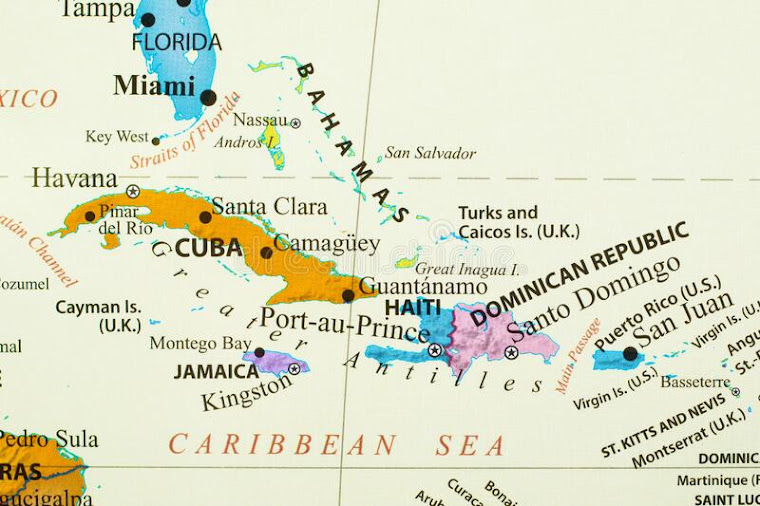
A political blog about Bahamian politics in The Bahamas, Bahamian Politicans - and the entire Bahamas political lot. Bahamian Blogger Dennis Dames keeps you updated on the political news and views throughout the islands of The Bahamas without fear or favor. Bahamian Politicians and the Bahamian Political Arena: Updates one Post at a time on Bahamas Politics and Bahamas Politicans; and their local, regional and international policies and perspectives.
Tuesday, June 7, 2011
Monday, June 6, 2011
WikiLeaks on Bishop Neil C. Ellis...and Bishop Neil C. Ellis on WikiLeaks
CANDIA DAMES
NG News Editor
thenassauguardian
candia@nasguard.com

The American also wrote that at a meeting with Ellis at his Mount Tabor Baptist Church, he also remarked that Hubert Ingraham, at the time - former prime minister, was definitely “not a man of God” even if he does attend church.
When we sat down with Ellis a few days ago at Mount Tabor to discuss the cables that mentioned his name, Ellis denied most of the claims documented by U.S. diplomats.
But it is the claim regarding his purported comment on Christie and Ingraham’s spirituality that he seemed most taken aback by.
“I don’t qualify to determine who is a man of God and who is not a man of God,” he told The Nassau Guardian.
“…For me to say I think Christie is a pretender would be very hypocritical of me because I’ve always said publicly and I would say again, I believe Perry Christie is one of the greatest humanitarians I’ve ever met.”
A read of at least two cables shows that while Ellis was growing his church, American diplomats were placing the spotlight on him and his relationship with Christie in a major way.
“Quite a bit of it surprises me,” said Ellis, when asked about what his general impression was of what the Americans attributed to him.
According to the cables, obtained by The Nassau Guardian through WikiLeaks, despite not being a member of the government, Ellis wielded considerable influence in the Christie administration, as did businessman Franklyn Wilson.
One of the cables, which was classified by then Deputy Chief of Mission Robert Witajewksi, said, “Ellis openly uses his pulpit in one of Nassau's largest and fastest growing churches to advance the PLP's political agenda, and by allying himself so closely with Christie, has surpassed many of his more established (and perhaps more respectable) religious brethren in influence.”
The name at the end of that particular cable is Richard Blankenship, who at the time was United States ambassador to The Bahamas.
Ellis told The Guardian he was not well liked by Blankenship because he had made a statement about the involvement of diplomats in the local affairs of a country.
He said it arouses curiosity that the Americans want to know everything that is happening on every level in the Bahamas.
‘A CONTROVERSIAL FIGURE’
The Americans documented two meetings they say they had with Ellis at his church in Pinewood Gardens.
Ellis told The Nassau Guardian he recalled at least one of those meetings, but he remembered it being very informal with no detailed discussion about Christie or Ingraham.
According to one of the cables, on December 2, 2003, a U.S. diplomat paid a courtesy call on Ellis, described as “hard to pin down” and “charismatic”.
“During the nearly two-hour meeting, Ellis described the enterprise his parish has become,” the cable said.
“He also outlined his role as the local Dixville Notch, New Hampshire, of Bahamian politics — the one visit that all aspiring politicians must make in order to confirm their legitimacy.”
Ellis totally dismissed this claim when he spoke with The Nassau Guardian.
“Why would any sensible, logically thinking person make a statement like that?” he asked.
The cable added: “Ellis has come far, from a humble background, mentored and supported by prominent businessman Frankie Wilson, with whom he maintains a close personal and business relationship.”
The American diplomat wrote in 2003 that conventional wisdom holds that Ingraham had sealed his fate by displaying arrogance toward the religious leadership while he was prime minister.
“The electorate of the Bahamas is devout, and the church leaders refused to remain silent after the former PM had expressed views antithetical to religious conservatives, such as welcoming to port a cruise liner catering to gay clientele and advocating for constitutional reform targeted toward improving women’s rights,” the diplomat also wrote.
According to the diplomat who wrote the cable on the heels of the December 2, 2002 meeting, Ellis described “a strange ritual” whereby Christie had sought a meeting with him over a several week period as he was gearing up for the 2002 election campaign.
The cable said: “Ellis kept rebuffing [Christie’s] request, offering him only a 10 minute slot.
“Finally, however, Ellis offered [Christie] the opportunity to travel with him on a religious speaking tour in the U.S., promising that if [Christie] attended three of his sermons, he would be available to counsel [Christie] throughout the tour.
“Thus, the two men spent many intense hours together, during which time Ellis looked into [Christie’s] soul and concluded that [Christie] has religious inclinations, but is ‘not yet there’.”
But Ellis said this could not be further from the truth.
“I can’t look into a person’s soul,” he told The Nassau Guardian. “I’m not the savior of the world. Jesus is.”
The cable said though Christie was not one of Ellis’ regular parishioners, since the 2002 election, he had attended from time to time, as did all but three cabinet ministers.
An embassy official said in another cable after reportedly meeting with Ellis in late May 2002 that the bishop had expressed his desire for closer relations with the embassy, bemoaned his treatment in the press and offered a fascinating, intimate account of how he came to publicly endorse Christie in the last election.
The official said that as Wilson did in a separate meeting, Ellis unconvincingly denied having or wanting any real influence. Both men were described as “powerbrokers” as it regards the PLP — a claim Ellis laughed at as he denied it to the Guardian.
The embassy official described Ellis as one of the Bahamas’ most controversial figures.
The cable said: “He publicly endorsed Perry Christie during the 2002 campaign and reportedly told his congregation from the pulpit during a religious service that they must support Christie if they wished to remain members of his church.”
The diplomat also wrote that Ellis also held a huge religious revival featuring a renowned U.S. evangelist that was a magnet for criticism about the reported “greediness” of its fundraising appeal.
“Establishment religious figures now sometimes preface fund-raising remarks by noting that the funds ‘will not be used to build a vacation house in Bimini’ to distinguish themselves from the self-proclaimed bishop,” the cable said.
“The press hounds him constantly about his flamboyant personal lifestyle and open political preferences.
“Ellis was another protégé of (the late former prime minister) Sir Lynden Pindling, who identified him as a promising young man growing up on the small island of Bimini and brought him to Nassau to complete his education.”
The diplomat wrote that Ellis is affiliated with the Full Gospel Baptist Church headquartered in New Orleans, and is its “bishop” for international churches, theoretically having all Full Gospel Baptist churches in The Bahamas under his leadership.
“Prime Minister Christie has openly referred to Ellis as his spiritual adviser, and many Bahamians assume that his influence runs deep within the administration,” the cable said.
ENDORSING CHRISTIE
In the cable that came out of the May 2002 meeting with Bishop Ellis, the diplomat goes into amazing details about what was allegedly observed.
For instance, the cable said the embassy official was met by the first of Ellis’ personal assistants upon arrival, and was passed on to the second, who entertained him while Ellis finished a meeting with his seven associate pastors.
According to the cable, Ellis then received the official in his “nicely appointed, bordering on lavish, but not quite passing over into poor taste, office.”
“He was dressed in a loud magenta clerical shirt with gold and diamond cufflinks, a thick gold chain, several large gold rings and a gold Rolex watch,” the embassy official wrote.
“Ellis is a thin, energetic man of middling height, in his early 40s. He is married and has three adopted daughters.” (Ellis said he does not have three adopted daughters).
Ellis also strongly denied the American diplomat’s characterization of him.
In fact, he said he never owned a Rolex watch or diamond cufflinks in his life.
“Anybody who knows me knows that I am not given to much jewelry,” added Ellis, now 50.
When The Guardian visited him, he was wearing his gold bishop’s cross around his neck, his wedding band and a wristwatch (definitely not a Rolex).
In fact, Ellis said he shops for $10 watches at Bijoux Terner in the Atlanta airport and has one watch that is a little more expensive that was a gift from someone in the ministry.
Ellis said he wears his bishop’s ring only at special services — a fact later confirmed separately by his associate pastors and assistant who had not been privy to his earlier discussion with The Guardian.
They all said they have never seen the bishop with any Rolex watches and that he barely wears jewelry.
The cable alleges that Ellis described “the remarkable story about how he came to endorse Perry Christie in the 2002 elections.”
The diplomat wrote: “According to Ellis, he barely knew Christie before the run up to the 2002 election.
“After that time, he says Christie began seeking an appointment with him, saying he needed to speak with him for several hours.
“Ellis says that he kept putting Christie off, both because he didn’t have that time to spare and because he had a bad initial impression of him.”
According to the cable, Ellis said this bad opinion dated from the PLP leadership battle between Christie and Dr. Bernard Nottage.
“Nottage was a friend and former congregation member of Ellis and harbored a lot of ill will toward Christie because of his loss,” the diplomat wrote.
“Christie was persistent in his pursuit of Ellis, whose church membership has definite PLP leanings.”
The cable added: “Finally, according to Ellis, he agreed to take Christie along with him on an evangelical trip to the U.S., promising that if Christie attended all the services he preached at, Ellis would give him the time in between to listen to his appeal.
“Ellis said that when given the opportunity, Christie and Ellis spoke for 13 hours straight, about both secular and spiritual matters and that Ellis progressively became more convinced that Christie had been ‘sent by God’ to lead the Bahamas.
“The meeting ended, according to Ellis, in a scene reminiscent of the Biblical story of Samuel’s anointing of Saul, with Christie coming around the table they were seated at, going to his knees and requesting a blessing from Bishop Ellis.
“At the time, Ellis reported, the spirit came upon him and told him that he had to endorse Christie.”
The cable also said: “Ellis, on the one hand, denied having or wanting any political influence with Christie, but on the other hand went to great lengths to explain how close their relationship is and how often Christie calls on him for spiritual guidance.
“For example, Ellis recounted that Christie had presented him with the names of his Cabinet nominees before they were announced and asked him to pray over them and give his opinion.”
But Ellis told The Guardian that the official’s characterization of these events is “totally false”.
“First of all, I can’t say I had a bad impression of Mr. Christie before I met him,” Ellis said.
“But it is true I didn’t know him that well (prior to 2002). All I knew of him was his public life.
“As it relates to Mr. Christie seeking my anointing, that is totally false. I don’t remember him ever saying that to me and I don’t remember saying that to anybody.”
Ellis said it is true that Christie traveled with him more than once.
“The first trip he attended with me, he said he just wanted to talk with me and spend a little time with me,” the bishop said.
“My office let him know what my schedule was and when they told him of a particular trip that was going on he asked if he could go and I had no objections because people go on trips with me from time to time.
“I did say to him since he was a politician that I would prefer him not to travel alone with me, so he brought two of his other colleagues with him.”
Ellis said the trip was to Atlanta. He also recalled another occasion where Christie traveled with him to Baltimore, Maryland.
“I don’t see that as an unusual situation,” he said of the trips.
Ellis also suggested it was laughable to write that he spoke to Christie for 13 hours straight.
“Just think about that,” he said.
“I do know that in the 2002 election, I was very up front with my support for Mr. Christie. I don’t believe that if you have a conviction you have to be secretive about it.
“…I felt at that time this was the man to lead our country and I was proven to be right at the time.
“To say he was sent by God to lead the country, I don’t know if any of us could be that bold.”
Ellis also said he had no recollection of Christie ever getting on his knees to be anointed by him.
“If the person (the embassy official) wasn’t even clear about what I was wearing, they were putting things on me that were not on my person, then I don’t how much more attention to pay to anything that was said,” he said.
MULTIPLE ATTACKS
According to the May 2002 cable, Ellis claimed that ever since Mount Tabor started to grow and he began to be seen as a successful pastor, he has come under attack by some people, including other pastors, who are jealous of his success.
As a result, Ellis claims he has been unfairly vilified in the press, particularly the scandal-mongering tabloid The Punch, the diplomat wrote.
“Ellis says that during one stretch The Punch printed negative articles about him in 95 consecutive editions.
“…In addition, Ellis has received heavy criticism for the large salary he draws (reportedly a tax-free $180,000 a year), and his penchant for luxurious living.
“Recently, attention has focused on the impressive house he is building for himself in one of Nassau’s more exclusive neighborhoods, reportedly costing $1 million.
“Ellis claimed that the stories were exaggerated, but made no excuses for his lifestyle, implying it was only fitting for the pastor of such a large and thriving church.”
Again rejecting how he was characterized by the diplomat, Ellis told The Nassau Guardian, “I understand the role I am in…I’m always up for public scrutiny.
“I try to take it gracefully. I’ve never responded to any attacks in the media…When you’re in the public’s eye and when you’re in public life you have to be open to public scrutiny.”
The diplomat wrote in 2002, “As a consequence of his ongoing bad press, Ellis has vowed not to respond to any of the allegations against him.
“Doing so, he said, just legitimizes those allegations and gives them more life. Many in his congregation, he says, have disagreed with this policy and urge him to publicly lash out at his critics, which he admits is tempting, but he continues to maintain his silence, preferring to let the criticism pass.”
Ellis told the Guardian he has not collected a salary from Mount Tabor in 17 years.
“I give my services to Mount Tabor free of charge,” he said.
He said he earns money from speaking engagements, books and other products he offers.
“If Mount Tabor was paying me $180,000 I wouldn’t be going home,” he said with a laugh.
He stressed also that he never told his congregation to vote PLP or leave the church.
Ellis insists that the recording to this effect is a compilation of several sermons he delivered that were doctored by critics and sent to the media.
He said Christie never asked him to be his spiritual adviser and he never regarded himself as such.
Asked by The Nassau Guardian if he would be prepared to endorse Christie in the next general election, Ellis said it was not something he wished to discuss publicly as yet.
“Mr. Christie and I shared a wonderful relationship leading up to the (2002) election and thereafter,” he added.
“I don’t claim to have been any closer to him than any others.”
Ellis stressed that he has respect for all of the country’s leaders and noted that he was a part of a group of pastors who met with Ingraham last year to discuss important matters.
Jun 06, 2011
thenassauguardian
NG News Editor
thenassauguardian
candia@nasguard.com
A U.S. Embassy official claimed in a cable penned in 2003 that Bishop Neil C. Ellis — who is repeatedly described in diplomatic documents as Perry Christie’s spiritual adviser — remarked that the then prime minister was not a “true man of God” although he was trying to be religious.

The American also wrote that at a meeting with Ellis at his Mount Tabor Baptist Church, he also remarked that Hubert Ingraham, at the time - former prime minister, was definitely “not a man of God” even if he does attend church.
When we sat down with Ellis a few days ago at Mount Tabor to discuss the cables that mentioned his name, Ellis denied most of the claims documented by U.S. diplomats.
But it is the claim regarding his purported comment on Christie and Ingraham’s spirituality that he seemed most taken aback by.
“I don’t qualify to determine who is a man of God and who is not a man of God,” he told The Nassau Guardian.
“…For me to say I think Christie is a pretender would be very hypocritical of me because I’ve always said publicly and I would say again, I believe Perry Christie is one of the greatest humanitarians I’ve ever met.”
A read of at least two cables shows that while Ellis was growing his church, American diplomats were placing the spotlight on him and his relationship with Christie in a major way.
“Quite a bit of it surprises me,” said Ellis, when asked about what his general impression was of what the Americans attributed to him.
According to the cables, obtained by The Nassau Guardian through WikiLeaks, despite not being a member of the government, Ellis wielded considerable influence in the Christie administration, as did businessman Franklyn Wilson.
One of the cables, which was classified by then Deputy Chief of Mission Robert Witajewksi, said, “Ellis openly uses his pulpit in one of Nassau's largest and fastest growing churches to advance the PLP's political agenda, and by allying himself so closely with Christie, has surpassed many of his more established (and perhaps more respectable) religious brethren in influence.”
The name at the end of that particular cable is Richard Blankenship, who at the time was United States ambassador to The Bahamas.
Ellis told The Guardian he was not well liked by Blankenship because he had made a statement about the involvement of diplomats in the local affairs of a country.
He said it arouses curiosity that the Americans want to know everything that is happening on every level in the Bahamas.
‘A CONTROVERSIAL FIGURE’
The Americans documented two meetings they say they had with Ellis at his church in Pinewood Gardens.
Ellis told The Nassau Guardian he recalled at least one of those meetings, but he remembered it being very informal with no detailed discussion about Christie or Ingraham.
According to one of the cables, on December 2, 2003, a U.S. diplomat paid a courtesy call on Ellis, described as “hard to pin down” and “charismatic”.
“During the nearly two-hour meeting, Ellis described the enterprise his parish has become,” the cable said.
“He also outlined his role as the local Dixville Notch, New Hampshire, of Bahamian politics — the one visit that all aspiring politicians must make in order to confirm their legitimacy.”
Ellis totally dismissed this claim when he spoke with The Nassau Guardian.
“Why would any sensible, logically thinking person make a statement like that?” he asked.
The cable added: “Ellis has come far, from a humble background, mentored and supported by prominent businessman Frankie Wilson, with whom he maintains a close personal and business relationship.”
The American diplomat wrote in 2003 that conventional wisdom holds that Ingraham had sealed his fate by displaying arrogance toward the religious leadership while he was prime minister.
“The electorate of the Bahamas is devout, and the church leaders refused to remain silent after the former PM had expressed views antithetical to religious conservatives, such as welcoming to port a cruise liner catering to gay clientele and advocating for constitutional reform targeted toward improving women’s rights,” the diplomat also wrote.
According to the diplomat who wrote the cable on the heels of the December 2, 2002 meeting, Ellis described “a strange ritual” whereby Christie had sought a meeting with him over a several week period as he was gearing up for the 2002 election campaign.
The cable said: “Ellis kept rebuffing [Christie’s] request, offering him only a 10 minute slot.
“Finally, however, Ellis offered [Christie] the opportunity to travel with him on a religious speaking tour in the U.S., promising that if [Christie] attended three of his sermons, he would be available to counsel [Christie] throughout the tour.
“Thus, the two men spent many intense hours together, during which time Ellis looked into [Christie’s] soul and concluded that [Christie] has religious inclinations, but is ‘not yet there’.”
But Ellis said this could not be further from the truth.
“I can’t look into a person’s soul,” he told The Nassau Guardian. “I’m not the savior of the world. Jesus is.”
The cable said though Christie was not one of Ellis’ regular parishioners, since the 2002 election, he had attended from time to time, as did all but three cabinet ministers.
An embassy official said in another cable after reportedly meeting with Ellis in late May 2002 that the bishop had expressed his desire for closer relations with the embassy, bemoaned his treatment in the press and offered a fascinating, intimate account of how he came to publicly endorse Christie in the last election.
The official said that as Wilson did in a separate meeting, Ellis unconvincingly denied having or wanting any real influence. Both men were described as “powerbrokers” as it regards the PLP — a claim Ellis laughed at as he denied it to the Guardian.
The embassy official described Ellis as one of the Bahamas’ most controversial figures.
The cable said: “He publicly endorsed Perry Christie during the 2002 campaign and reportedly told his congregation from the pulpit during a religious service that they must support Christie if they wished to remain members of his church.”
The diplomat also wrote that Ellis also held a huge religious revival featuring a renowned U.S. evangelist that was a magnet for criticism about the reported “greediness” of its fundraising appeal.
“Establishment religious figures now sometimes preface fund-raising remarks by noting that the funds ‘will not be used to build a vacation house in Bimini’ to distinguish themselves from the self-proclaimed bishop,” the cable said.
“The press hounds him constantly about his flamboyant personal lifestyle and open political preferences.
“Ellis was another protégé of (the late former prime minister) Sir Lynden Pindling, who identified him as a promising young man growing up on the small island of Bimini and brought him to Nassau to complete his education.”
The diplomat wrote that Ellis is affiliated with the Full Gospel Baptist Church headquartered in New Orleans, and is its “bishop” for international churches, theoretically having all Full Gospel Baptist churches in The Bahamas under his leadership.
“Prime Minister Christie has openly referred to Ellis as his spiritual adviser, and many Bahamians assume that his influence runs deep within the administration,” the cable said.
ENDORSING CHRISTIE
In the cable that came out of the May 2002 meeting with Bishop Ellis, the diplomat goes into amazing details about what was allegedly observed.
For instance, the cable said the embassy official was met by the first of Ellis’ personal assistants upon arrival, and was passed on to the second, who entertained him while Ellis finished a meeting with his seven associate pastors.
According to the cable, Ellis then received the official in his “nicely appointed, bordering on lavish, but not quite passing over into poor taste, office.”
“He was dressed in a loud magenta clerical shirt with gold and diamond cufflinks, a thick gold chain, several large gold rings and a gold Rolex watch,” the embassy official wrote.
“Ellis is a thin, energetic man of middling height, in his early 40s. He is married and has three adopted daughters.” (Ellis said he does not have three adopted daughters).
Ellis also strongly denied the American diplomat’s characterization of him.
In fact, he said he never owned a Rolex watch or diamond cufflinks in his life.
“Anybody who knows me knows that I am not given to much jewelry,” added Ellis, now 50.
When The Guardian visited him, he was wearing his gold bishop’s cross around his neck, his wedding band and a wristwatch (definitely not a Rolex).
In fact, Ellis said he shops for $10 watches at Bijoux Terner in the Atlanta airport and has one watch that is a little more expensive that was a gift from someone in the ministry.
Ellis said he wears his bishop’s ring only at special services — a fact later confirmed separately by his associate pastors and assistant who had not been privy to his earlier discussion with The Guardian.
They all said they have never seen the bishop with any Rolex watches and that he barely wears jewelry.
The cable alleges that Ellis described “the remarkable story about how he came to endorse Perry Christie in the 2002 elections.”
The diplomat wrote: “According to Ellis, he barely knew Christie before the run up to the 2002 election.
“After that time, he says Christie began seeking an appointment with him, saying he needed to speak with him for several hours.
“Ellis says that he kept putting Christie off, both because he didn’t have that time to spare and because he had a bad initial impression of him.”
According to the cable, Ellis said this bad opinion dated from the PLP leadership battle between Christie and Dr. Bernard Nottage.
“Nottage was a friend and former congregation member of Ellis and harbored a lot of ill will toward Christie because of his loss,” the diplomat wrote.
“Christie was persistent in his pursuit of Ellis, whose church membership has definite PLP leanings.”
The cable added: “Finally, according to Ellis, he agreed to take Christie along with him on an evangelical trip to the U.S., promising that if Christie attended all the services he preached at, Ellis would give him the time in between to listen to his appeal.
“Ellis said that when given the opportunity, Christie and Ellis spoke for 13 hours straight, about both secular and spiritual matters and that Ellis progressively became more convinced that Christie had been ‘sent by God’ to lead the Bahamas.
“The meeting ended, according to Ellis, in a scene reminiscent of the Biblical story of Samuel’s anointing of Saul, with Christie coming around the table they were seated at, going to his knees and requesting a blessing from Bishop Ellis.
“At the time, Ellis reported, the spirit came upon him and told him that he had to endorse Christie.”
The cable also said: “Ellis, on the one hand, denied having or wanting any political influence with Christie, but on the other hand went to great lengths to explain how close their relationship is and how often Christie calls on him for spiritual guidance.
“For example, Ellis recounted that Christie had presented him with the names of his Cabinet nominees before they were announced and asked him to pray over them and give his opinion.”
But Ellis told The Guardian that the official’s characterization of these events is “totally false”.
“First of all, I can’t say I had a bad impression of Mr. Christie before I met him,” Ellis said.
“But it is true I didn’t know him that well (prior to 2002). All I knew of him was his public life.
“As it relates to Mr. Christie seeking my anointing, that is totally false. I don’t remember him ever saying that to me and I don’t remember saying that to anybody.”
Ellis said it is true that Christie traveled with him more than once.
“The first trip he attended with me, he said he just wanted to talk with me and spend a little time with me,” the bishop said.
“My office let him know what my schedule was and when they told him of a particular trip that was going on he asked if he could go and I had no objections because people go on trips with me from time to time.
“I did say to him since he was a politician that I would prefer him not to travel alone with me, so he brought two of his other colleagues with him.”
Ellis said the trip was to Atlanta. He also recalled another occasion where Christie traveled with him to Baltimore, Maryland.
“I don’t see that as an unusual situation,” he said of the trips.
Ellis also suggested it was laughable to write that he spoke to Christie for 13 hours straight.
“Just think about that,” he said.
“I do know that in the 2002 election, I was very up front with my support for Mr. Christie. I don’t believe that if you have a conviction you have to be secretive about it.
“…I felt at that time this was the man to lead our country and I was proven to be right at the time.
“To say he was sent by God to lead the country, I don’t know if any of us could be that bold.”
Ellis also said he had no recollection of Christie ever getting on his knees to be anointed by him.
“If the person (the embassy official) wasn’t even clear about what I was wearing, they were putting things on me that were not on my person, then I don’t how much more attention to pay to anything that was said,” he said.
MULTIPLE ATTACKS
According to the May 2002 cable, Ellis claimed that ever since Mount Tabor started to grow and he began to be seen as a successful pastor, he has come under attack by some people, including other pastors, who are jealous of his success.
As a result, Ellis claims he has been unfairly vilified in the press, particularly the scandal-mongering tabloid The Punch, the diplomat wrote.
“Ellis says that during one stretch The Punch printed negative articles about him in 95 consecutive editions.
“…In addition, Ellis has received heavy criticism for the large salary he draws (reportedly a tax-free $180,000 a year), and his penchant for luxurious living.
“Recently, attention has focused on the impressive house he is building for himself in one of Nassau’s more exclusive neighborhoods, reportedly costing $1 million.
“Ellis claimed that the stories were exaggerated, but made no excuses for his lifestyle, implying it was only fitting for the pastor of such a large and thriving church.”
Again rejecting how he was characterized by the diplomat, Ellis told The Nassau Guardian, “I understand the role I am in…I’m always up for public scrutiny.
“I try to take it gracefully. I’ve never responded to any attacks in the media…When you’re in the public’s eye and when you’re in public life you have to be open to public scrutiny.”
The diplomat wrote in 2002, “As a consequence of his ongoing bad press, Ellis has vowed not to respond to any of the allegations against him.
“Doing so, he said, just legitimizes those allegations and gives them more life. Many in his congregation, he says, have disagreed with this policy and urge him to publicly lash out at his critics, which he admits is tempting, but he continues to maintain his silence, preferring to let the criticism pass.”
Ellis told the Guardian he has not collected a salary from Mount Tabor in 17 years.
“I give my services to Mount Tabor free of charge,” he said.
He said he earns money from speaking engagements, books and other products he offers.
“If Mount Tabor was paying me $180,000 I wouldn’t be going home,” he said with a laugh.
He stressed also that he never told his congregation to vote PLP or leave the church.
Ellis insists that the recording to this effect is a compilation of several sermons he delivered that were doctored by critics and sent to the media.
He said Christie never asked him to be his spiritual adviser and he never regarded himself as such.
Asked by The Nassau Guardian if he would be prepared to endorse Christie in the next general election, Ellis said it was not something he wished to discuss publicly as yet.
“Mr. Christie and I shared a wonderful relationship leading up to the (2002) election and thereafter,” he added.
“I don’t claim to have been any closer to him than any others.”
Ellis stressed that he has respect for all of the country’s leaders and noted that he was a part of a group of pastors who met with Ingraham last year to discuss important matters.
Jun 06, 2011
thenassauguardian

It is now time for Bahamian politicians to take note... Remember one is judged by the "friends" one keeps... Distance yourselves from known criminals in the run up to the 2012 general election
Don't make the criminal your bedfellow
tribune242 editorial

LAST WEEK -
Prime Minister Hubert Ingraham gave politicians on all sides of the political divide sound advice: Distance yourselves from known criminals in the run up to the 2012 general election, he said.
Every five years, the sewers of humanity disgorge disreputables seen only at election time. Suddenly from being Nobodies, they assume airs of Somebodies. Strangely, like bees to honey, they are always seen crawling around election headquarters and rubbing elbows cosily with politicians. They seem to have an inbuilt radar as to which party has the most funds to disperse -- and there they are ready for any task, be it underhand or legitimate -- as long as the upended palms are suitably greased.
Mr Ingraham has said that although he knows that both political parties want to win the next election, keeping company with lawbreakers to gain votes is a practice that should be stopped.
Opposition Leader Perry Christie had his own embarrassing moments during his election campaign when a known drug dealer at Eleuthera boasted that it was he who had paid for all the PLP election paraphernalia for the rally that particular night, and organised the motorcade leading up to the rally. In the background we heard mutterings from supporters that this man of dubious repute was the only man who had Mr Christie's ear and knew of his plans while at the island. Apparently, if reports were to be believed, even the noses of Mr Christie's generals were out of joint.
Also over time -- ever since the drug years of the seventies/eighties -- drug dealers have aligned themselves with the PLP and come away with the erroneous belief -- at least it was erroneous by the time Mr Christie headed the party -- that the PLP was their party under whose umbrella they could expect protection. Tribune reporters often heard during the 2002 election campaign, especially at Eleuthera, that the drug dealers had their fast boats ready to get back into the trade as soon as the PLP won the election. Mr Christie later made it clear that it certainly was not going to happen under his watch.
The FNM also had a nasty scrape during the seventies in the Barry Major murder case -- known as the Perpall Tract murder -- November 17, 1970. The late Sir Lynden Pindling read a statement to the House, mysteriously given 11 years after the murder by someone close to the event who suddenly had total recall of what he remembered being told at the time of the murder. He alleged that Major had tried to "blackmail the chief" -- the late Sir Cecil Wallace-Whitfield -- and Mr Whitfield had given "the boys" the go ahead to "fix him up." Major was shot, and the election mayhem that was started by the PLP with their "goon squads" at election time in the late sixties, continuing into the seventies was all blamed on the FNM. According to the informant, after the murder, Wendell "Red" Burrows, who two years later was hanged for the crime, was given $15,000 to $20,000 to disappear in the US until things quieted down on the home front. In the meantime "the organisation continued and we kept up with our criminal acts of burning and the like," said the questionable informant, who at the time claimed he was FNM.
One day about that time one of "the boys" came to The Tribune trying to get us to publish what Sir Lynden eventually had to do himself from the floor of the House. They admitted that Sir Lynden had sent the information. Sir Lynden obviously wanted clean hands. He wanted The Tribune, as part of its investigative reporting, to publish what eventually he had to read himself in the House. We refused and quickly showed the criminals the door. We felt that if Sir Lynden wanted a smear campaign it was his to handle.
The Tribune never believed a word of what was said in that statement as we saw the plot building behind the scenes from the day of the murder. This was a case of politicians getting too close to criminals and being destroyed by that contact.
Supt. John Crawley, a respected police officer, had investigated the murder of Barry Major. The day after the murder he told us that it was a simple case of a drug deal gone wrong. To the end he maintained that it was not political and that no politicians were involved. However, during the election of that year Major hung around Sir Cecil's election headquarters. His death was turned into a political fiasco, and Sir Cecil was smeared by association. It was a convenient turn of events at the time because the heat was on the PLP for all the criminal mayhem created by their "goons" a few years earlier. The murder of Barry Major was a convenient way of turning the tables on the FNM.
One only has to look at the precarious position the Jamaican government is now in with the politicians and the gangsters being perceived as a team for so long that eventually the day came when "the President"- Christopher "Dudus" Coke, now in a US federal prison on drug charges -- almost became more powerful than the Jamaican government and its prime minister. When all the evidence is out in this case the reputation of Bruce Golding's government will probably be in tatters. Former Jamaican prime minister Edward Seaga, when asked after his government was defeated at the polls, what he most regretted during his administration admitted that leading the funeral procession of strong man Jim Brown was his biggest mistake. Jim Brown, father of "Dudus," headed the Shower Posse gangsters and was don of Tivoli Gardens. Dudus inherited his father's fiefdom and developed the criminal enterprise to such heights that in the end the US was demanding his extradition as the "world's most dangerous drug dealer."
It is now time for Bahamian politicians to take note. Remember one is judged by the "friends" one keeps.
June 06, 2011
tribune242 editorial
Sunday, June 5, 2011
2007 WikiLeaks cable Bahamas: Hubert Ingraham the opposition leader pledged that, if elected, he would make improvements in the Bahamian judiciary to speed up trials and get more criminals off the streets...

Ingraham: Many judges incompetent
BY CANDIA DAMES
NG News Editor
thenassauguardian
candia@nasguard.com
During a final courtesy call with then U.S. Ambassador to The Bahamas John Rood days before the 2007 general election, Free National Movement (FNM) leader Hubert Ingraham remarked that many of the judges in The Bahamas were “simply not competent, having been appointed for political reasons,” a U.S. diplomat claimed in one of the cables in the batch of diplomatic documents obtained exclusively by The Nassau Guardian through WikiLeaks.
“Ingraham acknowledged that the Bahamian courts were dysfunctional, and needed changes in leadership,” the embassy official wrote.
According to the cable, Ingraham said he did not have a problem with extraditing major drug dealers, but believed that small time drug dealers should be prosecuted locally.
Ingraham reportedly told the ambassador that cases move too slowly and many criminals are out on bail committing new offenses. “He also noted that Bahamian prosecutors are often wary of taking high profile cases to jury due to possible tampering, and that in non-jury trials the maximum sentence for a drug offense is five years.”
The cable revealed that Ingraham and the ambassador sparred over the case of five baggage handlers arrested in December 2006 in Florida on suspicion of drug trafficking.
“Ingraham made it clear he believes the Nassau Flight Services baggage handlers were set up,” the cable said.
“The ambassador stated that the training (the baggage handlers were going on) was routine, as others went and came back, adding that if individuals who commit crimes against U.S. law come to the U.S., they will be arrested.”
The cable said Ingraham stated that his sources at the airport indicated otherwise.
He further indicated that if he was prime minister, the arrests occurring in this manner would have caused a serious bilateral issue, according to the cable.
Ingraham was quoted as saying, “If they committed the crimes here, they should be tried here”.
The cable said he did not dispute the right of the United States to arrest them once they had entered U.S. territory.
In the end, the ambassador and Ingraham agreed to disagree on the manner of the arrests.
According to the cable, Deputy Chief of Mission Dr. Brent Hardt noted that other baggage handlers who did not travel to Florida in December had been picked up by the police but had not been charged.
He asked Ingraham how he would respond as prime minister if individuals engaged in such acts were unable to be prosecuted.
It is then that Ingraham allegedly made the comment about the dysfunctional court system.
“The opposition leader pledged that, if elected, he would make improvements in the Bahamian judiciary to speed up trials and get more criminals off the streets, the cable said.
The state of the judiciary was just one of several issues Ingraham discussed with the Americans, according to that cable.
Discussing aviation, Ingraham reportedly promised to work closely with the Federal Aviation Administration on aviation issues if elected, and stated, according to the cable, that he “knew where his bread was buttered.”
The cable said the ambassador raised the issue of airport security and safety problems with Ingraham, stating that he remained concerned by both security vulnerabilities and overall airport management.
He told Ingraham that he would support the imposition of a 90-day review period for the airport if no progress is made on addressing long-standing security concerns, though he acknowledged that the government did now appear to be giving the issue serious attention, the 2007 cable said.
Ingraham reportedly asked the ambassador to elaborate on the problems.
The cable said: “Not needing any further prodding, the ambassador outlined several problems, including: The aesthetic appearance of the facilities, the slow pace in processing passengers, radar problems, and endemic security concerns.
“Ingraham stated that Minister of Transport and Aviation (Glenys) Hanna-Martin was ‘out of her depth’ and that there is no direction being given to civil aviation.”
The cable said charges that his government had purchased a radar system that did not work (the ASR-9) concerned Ingraham.
He reportedly noted that his government had purchased the system upon a U.S. recommendation, and added that if he wins the election, he would make changes at the airport, to include getting the new radar system repaired and on line.
The cable said Ingraham also stated that he supports FAA running the Flight Information Region, observing that he had learned through hard experience that it would be too risky to defy the U.S. on such a sensitive safety issue.
The Christie administration had pledged to gain full control of The Bahamas’ airspace and had promised that such an effort would result in tens of millions of dollars in additional revenue for the government. However, this was never achieved.
INGRAHAM ON POLITICS
The cable said that turning to the political scene, Ingraham observed that he would support Progressive Liberal Party (PLP) leader Perry Christie (then prime minister) for many jobs, but prime minister was not one of them.
As he did when he sat down with a U.S. diplomat in 2003, Ingraham in 2007 described Christie as “fatally disorganized and incapable of running a government.”
The cable noted that the day before the meeting with the ambassador, the press widely quoted an exchange between Christie and Ingraham in which Ingraham referred to Christie as “impotent."
“Ingraham wryly noted that he was referring only to matters of governance,” the cable said.
“He said that in his view, the PLP believes it has ‘the right to govern’ and that the FNM victories in 1992 and 1997 were accidents.
“He expressed the view that some of the investment projects such as Bimini Bay were too large, and that the environmental bureaucracy was unworkable.”
Despite prodding, neither Ingraham nor Desmond Bannister, then chairman of the FNM, would reveal the FNM's budget for the upcoming election, the cable said.
It noted that parties are free to take money from any source, and Ingraham said that most of the money comes from businesses.
Persons outside the country can also contribute to parties, and he said that normally only outsiders with interests in The Bahamas do so, according to the cable.
“Ingraham also said that he had enough money for the campaign, but not all that he could use. Typically, money tends to flow in at the last minute when it is too late to deploy effectively, he pointed out,” the cable said.
Observing that the PLP was running many more radio advertisements than the FNM this early in the campaign, he reportedly suggested that this reflected their anxiety about the election.
Much of the money used for campaign paraphernalia is actually spent in the United States to buy T-shirts and hats, he noted, according to the cable.
RACES TO WATCH
The cable said the FNM leader said he expected a short campaign of 24 days, with elections called soon after Easter.
Ingraham provided the ambassador with a "scorecard" of key races to watch to determine the outcome of the 2007 election, the cable added.
“In Fox Hill, he predicted that if the PLP wins that seat, they are going to probably win the election, but he also felt that Foreign Minister Fred Mitchell would be defeated by his candidate,” the cable said.
“He also noted his surprise that Tourism Minister (Obie) Wilchcombe may be in trouble in his own constituency.
“On the other hand, if Housing Minister Neville Wisdom is reelected, that would be a sign the PLP was on its way to victory.”
The diplomat wrote in that 2007 cable that the FNM expects to win the Exuma seat being contested by former Bahamian Ambassador to the U.S. Joshua Sears.
According to the cable, Ingraham noted that the polls in 2002 were more accurate than often acknowledged, adding that the lesson from that campaign was that undecided voters usually broke against the government.
“Polls are now being taken on the larger islands, but Ingraham refused to divulge the results,” the cable said.
“Ingraham said the PLP strategy was to increase the negative perceptions of him and make him a central election issue.”
The American diplomat wrote that Ingraham is a very polarizing figure and PLP ads are clearly targeting him personally.
“(Ingraham) alluded that many people are personally benefiting from the PLP government and do not want the gravy train to end with an FNM victory,” the cable said.
“Ingraham dismissed the PLP's use of the race card, linking his party to the former colonial UBP party, stating that he had credibility on the issue and noted that Christie's own grandfather was white.”
In the comment section of the cable, the American noted that Ingraham is “always engaging and never at a loss for words.”
“Ingraham seemed very comfortable on the issues and did not shy away from disagreeing with the ambassador, as in the case of the airport arrests,” the cable said.
“While he pledged cooperation on aviation issues and promised to make the judicial system work better, he also made clear he would not hesitate to disagree with the U.S. if he felt Bahamian interests were not being well served.”
The diplomat added: “Ingraham conveyed the self-assurance of a leader who has been in charge before and believes he soon will be again.
“From the United States’ perspective, an Ingraham-led government would likely abandon the PLP's sympathetic posture toward Cuba and might be less interested in engaging China.
“Ingraham would also give us an interlocutor willing and able to make decisions and follow through on them.
“His ten years as prime minister have given him a good understanding of the United States and how to work with us, and he certainly looks forward to maintaining our traditionally close relations.”
Jun 02, 2011
thenassauguardian
Saturday, June 4, 2011
Craig Butler’s struggle to attain a nomination should be a cautionary tale for young people going into Bahamian politics... The past can be held against you
Butler's candor is refreshing
thenassauguardian editorial
 Craig Butler yesterday left the Progressive Liberal Party (PLP). He was the party’s treasurer. Butler is the grandson of the first Bahamian Governor General, Sir Milo Butler. He is also the brother of Free National Movement (FNM) Cabinet Minister and Montagu Member of Parliament Loretta Butler-Turner.
Butler, an attorney, was denied the PLP nomination to run as a candidate in the February 2010 Elizabeth by-election and he was again denied the PLP nomination to run as the party’s candidate in the Kennedy constituency at the next general election. Attorney Dion Smith received the nomination.
Butler knows the party will not give him a nomination as a candidate. It thinks he would be a liability as a candidate.
Butler has publicly acknowledged that he had a drug problem in the past. On the Star 106.5 FM talk show Jeffery yesterday with host Jeffery Lloyd, after his resignation, Butler said his drug use began in the 1990s when he went away to university.
His drug use ended late in 2001 or early 2002, Butler added. In 2008, he was charged with causing harm to his wife Terrel, who is also an attorney. The matter was later dropped.
Regarding the drug use, it was refreshing to hear a public figure come forward and disclose that he is not perfect.
None of us are.
Many Bahamians, doctors, lawyers, teachers, politicians and others have struggled with substance abuse. It is a triumph when an addict overcomes and resumes living a balanced life. If a person has truly overcome, such past indiscretions should not bar that person from serving the community.
In fact, such a story of failure and triumph could be inspirational to many, especially young people who have had similar struggles.
That being said, all should be aware that political parties worldwide shy away from candidates with public histories of drug abuse. The fear is that the past struggles could be perceived as signs of deficiency and inadequacy.
For young people going into politics, Butler’s struggle to attain a nomination should be a cautionary tale. The past can be held against you.
The PLP, though, must be careful that it does not come out of this looking hypocritical. In the 1984 Commission of Inquiry report, many senior PLPs were accused of drug related corruption. Many PLPs during the party’s last term in office, from 2002 to 2007, also had scandals. Many ran, nonetheless, in the 2007 general election. Some will run again in the next general election.
It’s strange to deny Butler and to allow some of the others in the PLP to run again and again, or to be appointed to senior government posts, when they too had mishaps in the past.
Jun 02, 2011
thenassauguardian editorial
thenassauguardian editorial

Butler, an attorney, was denied the PLP nomination to run as a candidate in the February 2010 Elizabeth by-election and he was again denied the PLP nomination to run as the party’s candidate in the Kennedy constituency at the next general election. Attorney Dion Smith received the nomination.
Butler knows the party will not give him a nomination as a candidate. It thinks he would be a liability as a candidate.
Butler has publicly acknowledged that he had a drug problem in the past. On the Star 106.5 FM talk show Jeffery yesterday with host Jeffery Lloyd, after his resignation, Butler said his drug use began in the 1990s when he went away to university.
His drug use ended late in 2001 or early 2002, Butler added. In 2008, he was charged with causing harm to his wife Terrel, who is also an attorney. The matter was later dropped.
Regarding the drug use, it was refreshing to hear a public figure come forward and disclose that he is not perfect.
None of us are.
Many Bahamians, doctors, lawyers, teachers, politicians and others have struggled with substance abuse. It is a triumph when an addict overcomes and resumes living a balanced life. If a person has truly overcome, such past indiscretions should not bar that person from serving the community.
In fact, such a story of failure and triumph could be inspirational to many, especially young people who have had similar struggles.
That being said, all should be aware that political parties worldwide shy away from candidates with public histories of drug abuse. The fear is that the past struggles could be perceived as signs of deficiency and inadequacy.
For young people going into politics, Butler’s struggle to attain a nomination should be a cautionary tale. The past can be held against you.
The PLP, though, must be careful that it does not come out of this looking hypocritical. In the 1984 Commission of Inquiry report, many senior PLPs were accused of drug related corruption. Many PLPs during the party’s last term in office, from 2002 to 2007, also had scandals. Many ran, nonetheless, in the 2007 general election. Some will run again in the next general election.
It’s strange to deny Butler and to allow some of the others in the PLP to run again and again, or to be appointed to senior government posts, when they too had mishaps in the past.
Jun 02, 2011
thenassauguardian editorial
Friday, June 3, 2011
Petulant, petty and vindictive Fred Mitchell in the House of Assembly on the Wikileaks publication of confidential US embassy cables on Bahamian political affairs
Fred Mitchell and journalistic ethics
tribune242 editorial
IN THE House of Assembly on Tuesday Fox Hill MP Fred Mitchell held forth as though he were an authority on journalistic ethics.
At one time in his life he fancied himself as a journalist. Those of us properly trained in the profession considered him a scribbler of propaganda. We never took him seriously.
Obviously upset by the Wikileaks publication of confidential US embassy cables on Bahamian political affairs -- especially those pertaining to himself -- Mr Mitchell decided to take out his venom against the reporter who gave an accurate, objective report that quoted -- but did not interpret -- the content of those cables.
In a 2005 cable former US Ambassador John Rood saw "two Fred Mitchell's" - the polite and polished public Mitchell and the more private, but more revealing Mitchell. We have often seen a third side -- petulant, petty and vindictive -- and this is the side that Fred Mitchell exposed in the House on Tuesday.
Upset by the reports, he turned his venom on the Guardian reporter.
"I always envied my colleague, the Member for North Andros, that former lady friend of his who shall remain nameless who works at the Guardian and wrote that whole section about me," he told the House. "'That gal look good!"
"My only point is that journalism, the kind that The Nassau Guardian, The Tribune and The Bahamas Journal are to practice carried with it certain ethical standards and it is unethical to write a story about one subject of which you had a close personal relationship as if you are a disinterested party. It can be seen as malicious. But neither she nor her employers seem to get the point," he said.
What rubbish is the man talking?
Here he is complaining about an article that the reporter wrote about him. Is he referring to that article and the subject of that article when he complains that it was unethical of the reporter to write on a subject of which she had a close personal relationship as if she were a disinterested party? Knowing Fred Mitchell we are satisfied that she had no personal relationship with him. So who is the subject to whom he refers and how is that "subject" relevant to the article of which he complains?
The fact that this reporter can write on a subject in which Mr Mitchell claims she has a personal interest as though she were disinterested shows that she is a good objective reporter, who does not let personal relationships cloud her judgment. This is more than can be said about the writing of Mr Mitchell on his Bahamas uncensored website about which Ambassador Rood had reason to complain to then prime minister Christie. Mr Rood was concerned about what he perceived as Mr Mitchell's anti-American viewpoints.
According to Mr Mitchell there is public "fascination and revulsion" at the disclosures. Revulsion that public officials "would be so open and callous" with information they share with "American diplomats." He condemned these Bahamians for "spilling their guts" to junior diplomats. He seems to forget that the assessment on himself of which he complains was made by the Ambassador himself -- no junior diplomat.
But, talking about "gut spilling," according to the diplomatic cables, we have Mr Mitchell expressing his frustrations with the level of efficiency of the Christie cabinet.
In commenting on the practices of restrictions on cabinet debates in Commonwealth countries, Mr Mitchell "intimated, the Christie cabinet of the Bahamas operates much less efficiently since any minister can intervene and express a view on any issue before the government."
At a meeting with Ambassador Rood in March 2007, Mr Mitchell "expressed his frustration at the indecision in his own government stemming from the pending elections.
"Mitchell cited the delay in signing the airport management contract and the delay in moving ahead with discussions on the Flight Information Region as two examples," the cable said.
"He noted that if the elections had been called in November and held in December, the government would either be out of power already or be finished with the elections and able to govern effectively."
Now who is gut spilling? Here Mr Mitchell is caught "spilling his guts" on the very issue that today has many Bahamians concerned -- the indecision of the Christie administration.
This obviously is going to be an issue in this election. In May, 2007 Bahamians cut this indecision short by dismissing the Christie government at the polls. It would be surprising if -- despite what Mr Mitchell now says -- they would vote in 2012 for a repeat performance.
June 02, 2011
tribune242 editorial
tribune242 editorial
IN THE House of Assembly on Tuesday Fox Hill MP Fred Mitchell held forth as though he were an authority on journalistic ethics.
At one time in his life he fancied himself as a journalist. Those of us properly trained in the profession considered him a scribbler of propaganda. We never took him seriously.
Obviously upset by the Wikileaks publication of confidential US embassy cables on Bahamian political affairs -- especially those pertaining to himself -- Mr Mitchell decided to take out his venom against the reporter who gave an accurate, objective report that quoted -- but did not interpret -- the content of those cables.
In a 2005 cable former US Ambassador John Rood saw "two Fred Mitchell's" - the polite and polished public Mitchell and the more private, but more revealing Mitchell. We have often seen a third side -- petulant, petty and vindictive -- and this is the side that Fred Mitchell exposed in the House on Tuesday.
Upset by the reports, he turned his venom on the Guardian reporter.
"I always envied my colleague, the Member for North Andros, that former lady friend of his who shall remain nameless who works at the Guardian and wrote that whole section about me," he told the House. "'That gal look good!"
"My only point is that journalism, the kind that The Nassau Guardian, The Tribune and The Bahamas Journal are to practice carried with it certain ethical standards and it is unethical to write a story about one subject of which you had a close personal relationship as if you are a disinterested party. It can be seen as malicious. But neither she nor her employers seem to get the point," he said.
What rubbish is the man talking?
Here he is complaining about an article that the reporter wrote about him. Is he referring to that article and the subject of that article when he complains that it was unethical of the reporter to write on a subject of which she had a close personal relationship as if she were a disinterested party? Knowing Fred Mitchell we are satisfied that she had no personal relationship with him. So who is the subject to whom he refers and how is that "subject" relevant to the article of which he complains?
The fact that this reporter can write on a subject in which Mr Mitchell claims she has a personal interest as though she were disinterested shows that she is a good objective reporter, who does not let personal relationships cloud her judgment. This is more than can be said about the writing of Mr Mitchell on his Bahamas uncensored website about which Ambassador Rood had reason to complain to then prime minister Christie. Mr Rood was concerned about what he perceived as Mr Mitchell's anti-American viewpoints.
According to Mr Mitchell there is public "fascination and revulsion" at the disclosures. Revulsion that public officials "would be so open and callous" with information they share with "American diplomats." He condemned these Bahamians for "spilling their guts" to junior diplomats. He seems to forget that the assessment on himself of which he complains was made by the Ambassador himself -- no junior diplomat.
But, talking about "gut spilling," according to the diplomatic cables, we have Mr Mitchell expressing his frustrations with the level of efficiency of the Christie cabinet.
In commenting on the practices of restrictions on cabinet debates in Commonwealth countries, Mr Mitchell "intimated, the Christie cabinet of the Bahamas operates much less efficiently since any minister can intervene and express a view on any issue before the government."
At a meeting with Ambassador Rood in March 2007, Mr Mitchell "expressed his frustration at the indecision in his own government stemming from the pending elections.
"Mitchell cited the delay in signing the airport management contract and the delay in moving ahead with discussions on the Flight Information Region as two examples," the cable said.
"He noted that if the elections had been called in November and held in December, the government would either be out of power already or be finished with the elections and able to govern effectively."
Now who is gut spilling? Here Mr Mitchell is caught "spilling his guts" on the very issue that today has many Bahamians concerned -- the indecision of the Christie administration.
This obviously is going to be an issue in this election. In May, 2007 Bahamians cut this indecision short by dismissing the Christie government at the polls. It would be surprising if -- despite what Mr Mitchell now says -- they would vote in 2012 for a repeat performance.
June 02, 2011
tribune242 editorial
Thursday, June 2, 2011
Craig Butler - treasurer of the Progressive Liberal Party (PLP), resigned from his post and the opposition party
PLP treasurer resigns
BRENT DEAN
NG Deputy News Editor
thenassauguardian
brentldean@nasguard.com
Craig Butler, treasurer of the Progressive Liberal Party (PLP), resigned yesterday from his post and the opposition party and vowed to run as a candidate in the Kennedy constituency at the next general election.
“It should come as no surprise to political observers that I've grown disillusioned with this once great political organization, the PLP, to which my grandfather (Sir Milo Butler) dedicated and fought so diligently to secure our Bahamas,” said Butler at Rawson Square near the bust of his grandfather.
“I too joined the ranks feeling compelled to walk in his great footsteps and wanting to give of myself unselfishly as he so freely did. After a period of prayer, deep reflection and contemplation I have reached the end of my journey and today I sever all ties with the PLP.”
Butler, an attorney, was denied the PLP nomination to run as a candidate in the Elizabeth by-election in February 2010. He was again denied the PLP nomination to run as the party’s candidate in Kennedy at the next general election. Attorney Dion Smith received the nomination.
On the Star 106.5 FM radio talk show ‘Jeffrey’ with host Jeffrey Lloyd, Butler confirmed his candidacy for Kennedy in some form. This could be as an independent candidate or aligned with a political organization.
Butler has said that PLP leader Perry Christie has told him he will not get a nomination from the party.
Butler has also publicly acknowledged that he had a drug problem in the past, one he has overcome. In 2008, he was charged with causing harm to his wife Terrel, who is also an attorney. The matter was later dropped.
Butler, however, has argued that he deserves a ‘second chance’ similar to that given to others in the PLP who have made errors in the past.
“The measure of my character is filled with lifelong lessons and though my journey has been one with tremendous setbacks, it is precisely these lessons that have made me who I am today. I possess an indomitable spirit that has afforded me the opportunity to understand and appreciate the struggles of the down trodden and the marginalized,” said Butler.
He described the current PLP as, “not the organization for which Milo Butler so proudly and diligently fought for.”
Butler’s grandfather Sir Milo was the first Bahamian governor general. Craig Butler is also the brother of Free National Movement (FNM) Cabinet Minister and Montagu Member of Parliament Loretta Butler-Turner.
“As an offspring of Sir Milo Butler I found it impossible to sit idly by and allow others to dictate what my future should be,” he said.
“I wish to no longer be a spectator but an active participant in helping to formulate policies and solutions for our nation’s challenges, its growth and development, a Bahamas that would allow future generations to fulfill their dreams and aspirations.”
Butler became the PLP’s treasurer at the party’s convention in October 2009. In September 2009, the PLP treasurer before Butler, Sidney Cambridge, also resigned after he was charged by the government of the United States with money laundering.
Jun 02, 2011
thenassauguardian
BRENT DEAN
NG Deputy News Editor
thenassauguardian
brentldean@nasguard.com
Craig Butler, treasurer of the Progressive Liberal Party (PLP), resigned yesterday from his post and the opposition party and vowed to run as a candidate in the Kennedy constituency at the next general election.
“It should come as no surprise to political observers that I've grown disillusioned with this once great political organization, the PLP, to which my grandfather (Sir Milo Butler) dedicated and fought so diligently to secure our Bahamas,” said Butler at Rawson Square near the bust of his grandfather.
“I too joined the ranks feeling compelled to walk in his great footsteps and wanting to give of myself unselfishly as he so freely did. After a period of prayer, deep reflection and contemplation I have reached the end of my journey and today I sever all ties with the PLP.”
Butler, an attorney, was denied the PLP nomination to run as a candidate in the Elizabeth by-election in February 2010. He was again denied the PLP nomination to run as the party’s candidate in Kennedy at the next general election. Attorney Dion Smith received the nomination.
On the Star 106.5 FM radio talk show ‘Jeffrey’ with host Jeffrey Lloyd, Butler confirmed his candidacy for Kennedy in some form. This could be as an independent candidate or aligned with a political organization.
Butler has said that PLP leader Perry Christie has told him he will not get a nomination from the party.
Butler has also publicly acknowledged that he had a drug problem in the past, one he has overcome. In 2008, he was charged with causing harm to his wife Terrel, who is also an attorney. The matter was later dropped.
Butler, however, has argued that he deserves a ‘second chance’ similar to that given to others in the PLP who have made errors in the past.
“The measure of my character is filled with lifelong lessons and though my journey has been one with tremendous setbacks, it is precisely these lessons that have made me who I am today. I possess an indomitable spirit that has afforded me the opportunity to understand and appreciate the struggles of the down trodden and the marginalized,” said Butler.
He described the current PLP as, “not the organization for which Milo Butler so proudly and diligently fought for.”
Butler’s grandfather Sir Milo was the first Bahamian governor general. Craig Butler is also the brother of Free National Movement (FNM) Cabinet Minister and Montagu Member of Parliament Loretta Butler-Turner.
“As an offspring of Sir Milo Butler I found it impossible to sit idly by and allow others to dictate what my future should be,” he said.
“I wish to no longer be a spectator but an active participant in helping to formulate policies and solutions for our nation’s challenges, its growth and development, a Bahamas that would allow future generations to fulfill their dreams and aspirations.”
Butler became the PLP’s treasurer at the party’s convention in October 2009. In September 2009, the PLP treasurer before Butler, Sidney Cambridge, also resigned after he was charged by the government of the United States with money laundering.
Jun 02, 2011
thenassauguardian
Subscribe to:
Posts (Atom)