Branville McCartney and the question of experience
Front Porch
BY SIMON
DNA Leader Branville McCartney has ensnared himself in a classic conundrum that severely limits the viability of certain politicians: The more he speaks, the more the general public learns about his poorly conceived ideas, the quicker the loss of potential support. Sarah Palin is a typical example of this phenomenon.
Mrs. Palin still excites her base. But among other voters including independents there is a ceiling she has proven incapable of breaking, mostly because the majority of voters find her persona, politics and policy prescriptions unappealing. They cannot envision her as president of the United States.
The razzmatazz and hoopla surrounding various DNA launches, publicity exercises and media curiosity is diminishing, with an increasing number of potential voters jolted by many of Mr. McCartney’s statements and calling into question his credibility, substance and critical thinking abilities. It is highly unlikely that most Bahamians view him as a potential prime minister.
As long as she is not formally running for president, Mrs. Palin can continue to just tweet her way into the hearts of her more ardent supporters and carefully select her media appearances. Mr. McCartney does not have this luxury. While some in the media have given a number of his bizarre statements a pass, this is beginning to change. He is now coming under greater reportorial and editorial scrutiny.
XENOPHOBIC
Mr. McCartney has pandered to xenophobic hysteria, claimed that God has chosen him, made curious statements about marijuana smoking by voters during a by-election, proposed a constitutional change barring children born to illegal immigrants from access to applying for citizenship, and made wild charges with no evidence about political donations by a foreign government, among other public relations fireworks.
Asked if he would disclose his donors as a part of his promise of campaign financing, Mr. McCartney turned the hypocrite in record speed. Given an opportunity to act boldly rather than just offer glib talk, the DNA leader refused to become the brand of change in which he wants us to believe. The man who said he was different did not demonstrate the courage of his purported convictions.
The question voters have of any new party is: Is it a credible alternative? This speaks to the question of experience which is measured not only by time in politics and government, though time served is of considerable importance in every field from journalism and business to teaching and medicine.
Poor analogies are typically a sign of faulty reasoning and poor thinking. About two weeks ago the Bamboo Town MP suggested to Jeffrey Lloyd, host of “Jeffrey” on Star 105.6 FM, that the Bahamian people are the board of directors of the country, responsible for hiring and firing the nation’s chief executive.
The analogy is revealing of Mr. McCartney’s mindset. It is a brittle analogy. A country is essentially not like a corporation. While various qualities associated with business should be practised by government, the major purpose and various goals of the two are significantly different.
Leaving this aside, the Bahamian people are more like shareholders with the Cabinet being the board of directors. Ours is a parliamentary democracy with collective responsibility. Mr. McCartney seems to be running for president evincing in his public rhetoric a misunderstanding or purposeful ignorance of our system.
MISPERCEPTIONS
It would be a good civic deed were Mr. McCartney to help educate voters rather than pandering to general misperceptions. The constitution does not place executive authority in the hands of a single chief executive. The authority is placed into the collective hands of a cabinet.
Article 72 of the Bahamas Constitution provides that the Cabinet “shall have the general direction and control of the government of The Bahamas and shall be collectively responsible to Parliament”.
When the former minister recently thumped his chest on various immigration matters he claims he attempted to advance when he was in the Cabinet, he might have noted that the position taken by any minister on a particular matter before Cabinet is not to be revealed publicly. Further, ministers don’t make policy on an individual basis. That is the prerogative of the Cabinet.
For someone who boasts that he would have more total cabinet experience than Sir Lynden Pindling and Hubert Ingraham combined were he ever to assume the prime ministership, Mr. McCartney’s pronouncements on how our system works suggests a combination of studied and self-serving ignorance or just plain ignorance.
Like some, he is fixated on the personalities of Messrs Ingraham and Christie, who in all likelihood are entering their last electoral contest as leaders of their respective parties; which undercuts a significant part of the rationale for the DNA.
By no stretch of the imagination does Branville McCartney even remotely possess the leadership qualities of a Lynden Pindling or a Hubert Ingraham. Both men would run wide circles around him even if they had no cabinet experience and he had a lifetime in cabinet. They were battle-tested over many years with significant party and parliamentary experience before becoming prime minister.
Even so, had Sir Lynden been older and more mature before becoming premier he may not have succumbed to some of the temptations of power which brought harm to the country as well as to his legacy.
In our system, a potential prime minister is elected along with men and women who can form a government and are of such a calibre that voters view them as a credible government. In 1967 Sir Lynden had a deep bench with the likes of the great Sir Milo Butler, Arthur Hanna, Cecil Wallace Whitfield, Arthur Foulkes, Carlton Francis and Jeffrey Thompson among others.
Moreover, the PLP had been in existence since 1953 with thinkers and strategists immersed in the study of government and policy, and widely travelled in the interest of learning about party politics and parliamentary democracy. They were a part of a movement for majority rule which had matured through many years of struggle with experience forged in fire and a deep sense of history.
EXPERIENCED
In 1992, Hubert Ingraham led an FNM with two decades of experience as a party, seasoned politicians and mature and wise men and women as well as relative newcomers ready to form a government.
Sarah Palin repeatedly boasted she had more executive experience than Barack Obama. That assertion, similar to Mr. McCartney’s experience claim, requires no further comment. After his election, President Obama chose an impressive cabinet team with wide government and other experience.
In comparison to Messrs. Pindling, Ingraham and Obama, what will Mr. McCartney’s team look like and literally bring to the Cabinet table? For someone who is boasting of having had a few years in cabinet as a selling point, that his DNA has been in existence for less than a year contradicts his own logic.
Most of the DNA’s candidates are undoubtedly well-meaning people who love their country. With about half of its candidates nominated, voters have some idea of potential cabinet members and therefore legitimate questions about those who would serve in a McCartney-led cabinet.
Just as most voters appear not to see the DNA leader as prime minister, the view of his team as the Cabinet of The Bahamas is not credible to most voters.
Mr. McCartney noted during the “Jeffrey” interview that there are a good number of individuals in the PLP and FNM who may serve as prime minister. That claim cannot be seriously made of any of his announced candidates.
Recall Mr. McCartney’s corporate analogy about Bahamians hiring a chief executive to run the country? Any company that hires an untested CEO or a cadre of lower level to junior executives or an inexperienced board of directors would lose market credibility and stock value, not to mention incite a shareholder revolt.
Yet, Mr. McCartney proposes that the management and direction of the highly valued Bahamas Incorporated be turned over to a group of amateurs with no deep bench, no longstanding organizational experience as a political party nor a leader with the type of experience and ability that counts, including superior judgement and intellectual depth as well as credibility and maturity.
The vast majority of Bahamian voters, whether they are metaphorically viewed as members of a board of directors or as shareholders, are unlikely to approve such an initial public offering.
frontporchguardian@gmail.com
bahamapundit.com
Aug 09, 2011
thenassauguardian
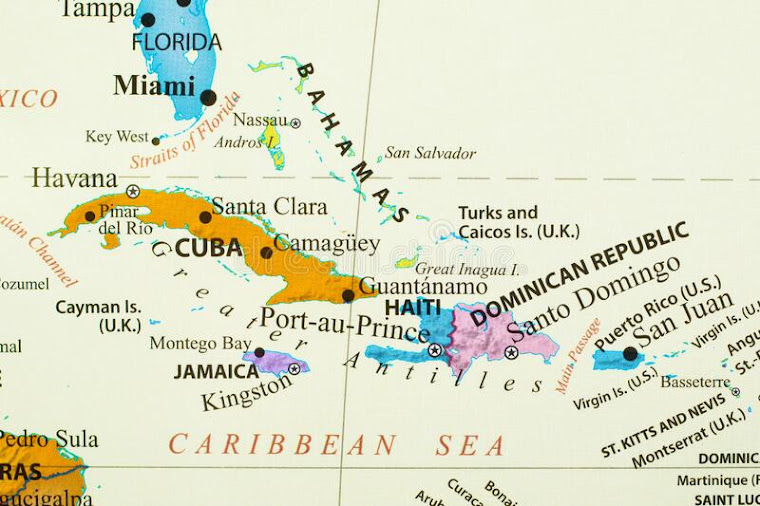
A political blog about Bahamian politics in The Bahamas, Bahamian Politicans - and the entire Bahamas political lot. Bahamian Blogger Dennis Dames keeps you updated on the political news and views throughout the islands of The Bahamas without fear or favor. Bahamian Politicians and the Bahamian Political Arena: Updates one Post at a time on Bahamas Politics and Bahamas Politicans; and their local, regional and international policies and perspectives.
Tuesday, August 9, 2011
Monday, August 8, 2011
Perry Christie says: A STRONG "voters' block" made up of naturalised citizens is one reason successive governments have not taken a strong stance against the illegal immigration dilemma
Governments 'fear Haitians who can now vote'
By TANEKA THOMPSON
Deputy Chief Reporter
tthompson@tribunemedia.net
A STRONG "voters' block" made up of naturalised citizens is one reason successive governments have not taken a strong stance against the illegal immigration dilemma, said Opposition Leader Perry Christie yesterday.
The Progressive Liberal Party chief said when his party assumed office in 2002, it found an immigration policy in place that mandated that any immigrant who came to the Bahamas before 1985 would be afforded status but after 1985 government would be able to use its discretion on whether or not to regularise them. He said the PLP left this policy in place despite calls from the Haitian government to adjust this policy.
However, this policy has influenced subsequent immigration policy, he said.
"We have to recognise the pitfall of this in the execution of the policy. Once governments become frightened of the numbers of Haitians who have become Bahamians and who can vote. Therefore they have become an important voting block, so somewhere along the line the purity of the commitment to protect the Bahamas and its territorial waters is sort of merged to the fear of doing things that might cause you to lose an election.
". . .We allowed ourselves to be influenced too much by their presence as opposed to using our own commitment to convince and satisfy them that they are Bahamians, accepted as Bahamians, and that the programmes that we are offering them to close down illegal immigrants coming into our country are programmes as much in their favour as in any other Bahamian's favour.
"A will has to be developed," he said. "With developing it, there has to be an understanding on our part that the Haitian-Bahamian is in fact a Bahamian.
"And we must not be insecure in speaking to them as Bahamians and getting them to be a part of what we're doing because we're protecting the country for them.
"We are all in the same boat."
Mr Christie added that Bahamians have to realise that the country has been a melting pot of different nationalities for decades who must all be included in a national discussion on immigration policies.
He added that government must expend the same financial resources to the Royal Bahamas Defence Force, to allow it to properly man the country's borders, which was spent on the ongoing public infrastructure programmes.
"We have to do better, we have to do more and most certainly if God gives me the opportunity to form the next government of the Bahamas that is the kind of resolve that we will bring to governance and the kind of, I think, stiff application of policies that will take place," he added.
Mr Christie also took shots at Prime Minister Hubert Ingraham and National Security Minister Tommy Turnquest who, he said, disparaged him in the lead up to the 2002 election for not having a handle on the crime problem at the time.
"Now they rue the day they said that," said Mr Christie, noting the 87 murders recorded for the year and record breaking murder statistics which have happened under the Free National Movement's watch.
August 08, 2011
tribune242
By TANEKA THOMPSON
Deputy Chief Reporter
tthompson@tribunemedia.net
A STRONG "voters' block" made up of naturalised citizens is one reason successive governments have not taken a strong stance against the illegal immigration dilemma, said Opposition Leader Perry Christie yesterday.
The Progressive Liberal Party chief said when his party assumed office in 2002, it found an immigration policy in place that mandated that any immigrant who came to the Bahamas before 1985 would be afforded status but after 1985 government would be able to use its discretion on whether or not to regularise them. He said the PLP left this policy in place despite calls from the Haitian government to adjust this policy.
However, this policy has influenced subsequent immigration policy, he said.
"We have to recognise the pitfall of this in the execution of the policy. Once governments become frightened of the numbers of Haitians who have become Bahamians and who can vote. Therefore they have become an important voting block, so somewhere along the line the purity of the commitment to protect the Bahamas and its territorial waters is sort of merged to the fear of doing things that might cause you to lose an election.
". . .We allowed ourselves to be influenced too much by their presence as opposed to using our own commitment to convince and satisfy them that they are Bahamians, accepted as Bahamians, and that the programmes that we are offering them to close down illegal immigrants coming into our country are programmes as much in their favour as in any other Bahamian's favour.
"A will has to be developed," he said. "With developing it, there has to be an understanding on our part that the Haitian-Bahamian is in fact a Bahamian.
"And we must not be insecure in speaking to them as Bahamians and getting them to be a part of what we're doing because we're protecting the country for them.
"We are all in the same boat."
Mr Christie added that Bahamians have to realise that the country has been a melting pot of different nationalities for decades who must all be included in a national discussion on immigration policies.
He added that government must expend the same financial resources to the Royal Bahamas Defence Force, to allow it to properly man the country's borders, which was spent on the ongoing public infrastructure programmes.
"We have to do better, we have to do more and most certainly if God gives me the opportunity to form the next government of the Bahamas that is the kind of resolve that we will bring to governance and the kind of, I think, stiff application of policies that will take place," he added.
Mr Christie also took shots at Prime Minister Hubert Ingraham and National Security Minister Tommy Turnquest who, he said, disparaged him in the lead up to the 2002 election for not having a handle on the crime problem at the time.
"Now they rue the day they said that," said Mr Christie, noting the 87 murders recorded for the year and record breaking murder statistics which have happened under the Free National Movement's watch.
August 08, 2011
tribune242

Sunday, August 7, 2011
The murder rate for a country the size of The Bahamas has reached a crisis point... It is unacceptable
Are we doing enough to fight crime?
thenassauguardian editorial
Last Saturday’s triple homicide off Carmichael Road has shocked many Bahamians and residents of New Providence already reeling from a rising murder count that is certain to far outpace last year’s record of 94.
In what marked the 83rd, 84th and 85th murders for the year, two women, one of whom was pregnant, and a man were gunned down in an apartment on Montgomery Avenue early Saturday morning.
Police are investigating the possibility that the murders are connected to a double homicide that took place several weeks ago, not far from the site of the triple murder.
Police believe that many of the recent murders are connected and that generally speaking random killings are rare. This is the line that has often been used by senior officials trying to calm the fears of New Providence residents.
The murder rate for a country the size of The Bahamas has reached a crisis point. It is unacceptable.
By the end of July last year the murder count was at 54. This year that number had jumped by 31 by the end of July. Last month a recorded-breaking 20 murders were recorded.
Our average so far for the year is 12 murders per month. On that pace we could surpass the 94 mark before this month is up. It could also mean that we could record more than 140 murders this year.
We know that this point is not lost on police and government officials who have invested efforts and resources in the crime fight. And who obviously want to see crime brought under control.
The Gun Court has been an important step in the right direction and has so far been productive in helping to deal with our significant case backlog. There has also been a significant investment to increase resources for our police officers. And steps have been taken to improve the physical infrastructure of the judiciary.
But have those efforts and resources been enough? Obviously not.
More needs to be done to bring down crime in the country.
We acknowledge that the onus is not just on the government or police to come up with solutions, the community must also do its part.
However, the commissioner of police and minister of national security have been given as a part of their mandate the management and prevention of crime to the highest extent possible.
It is a difficult task, but we must do better than we are doing now.
The crime phenomenon is not unique to The Bahamas, the Caribbean or anywhere else.
We need to look at how other developed countries are approaching their fight against the scourge of crime and violence.
Jamaica, which has had one of the highest murder rates in the world, has seen a significant drop in its murder count this year after a gang crackdown, according to officials.
Based on what is often said by our local police and government officials, it would seem that a similar approach could prove successful here.
It may also be time to look at how existing youth, community and rehabilitation programs can be improved.
Perhaps it is time to consider — as some cities in the U.S. have done — the appointment of a crime prevention coordinator who works closely with the commissioner of police and Ministry of National Security to help implement crime prevention programs, among other things.
We do not have the answers, nor do we pretend to have them.
But we must do something more, and quickly.
Aug 05, 2011
thenassauguardian editorial
thenassauguardian editorial
Last Saturday’s triple homicide off Carmichael Road has shocked many Bahamians and residents of New Providence already reeling from a rising murder count that is certain to far outpace last year’s record of 94.
In what marked the 83rd, 84th and 85th murders for the year, two women, one of whom was pregnant, and a man were gunned down in an apartment on Montgomery Avenue early Saturday morning.
Police are investigating the possibility that the murders are connected to a double homicide that took place several weeks ago, not far from the site of the triple murder.
Police believe that many of the recent murders are connected and that generally speaking random killings are rare. This is the line that has often been used by senior officials trying to calm the fears of New Providence residents.
The murder rate for a country the size of The Bahamas has reached a crisis point. It is unacceptable.
By the end of July last year the murder count was at 54. This year that number had jumped by 31 by the end of July. Last month a recorded-breaking 20 murders were recorded.
Our average so far for the year is 12 murders per month. On that pace we could surpass the 94 mark before this month is up. It could also mean that we could record more than 140 murders this year.
We know that this point is not lost on police and government officials who have invested efforts and resources in the crime fight. And who obviously want to see crime brought under control.
The Gun Court has been an important step in the right direction and has so far been productive in helping to deal with our significant case backlog. There has also been a significant investment to increase resources for our police officers. And steps have been taken to improve the physical infrastructure of the judiciary.
But have those efforts and resources been enough? Obviously not.
More needs to be done to bring down crime in the country.
We acknowledge that the onus is not just on the government or police to come up with solutions, the community must also do its part.
However, the commissioner of police and minister of national security have been given as a part of their mandate the management and prevention of crime to the highest extent possible.
It is a difficult task, but we must do better than we are doing now.
The crime phenomenon is not unique to The Bahamas, the Caribbean or anywhere else.
We need to look at how other developed countries are approaching their fight against the scourge of crime and violence.
Jamaica, which has had one of the highest murder rates in the world, has seen a significant drop in its murder count this year after a gang crackdown, according to officials.
Based on what is often said by our local police and government officials, it would seem that a similar approach could prove successful here.
It may also be time to look at how existing youth, community and rehabilitation programs can be improved.
Perhaps it is time to consider — as some cities in the U.S. have done — the appointment of a crime prevention coordinator who works closely with the commissioner of police and Ministry of National Security to help implement crime prevention programs, among other things.
We do not have the answers, nor do we pretend to have them.
But we must do something more, and quickly.
Aug 05, 2011
thenassauguardian editorial
Saturday, August 6, 2011
Suggestions for lowering crime in The Bahamas
Limiting the number of children a woman can have 'could fight crime'
tribune242
LIMITING the number of children a woman can have to two could be one way of fighting the growing crime problem, a panel hosted by the New Covenant Baptist Church suggested.
The proposal is one of more than a dozen that the group presented to those attending a community meeting at the East West Highway church last night. The meeting was held to get public input on ways to curb the escalating murder rate.
Bishop Simeon Hall, who did not come up with the suggestion, said such a policy could be instrumental in limiting the number of unwanted children in the country - who often end up as statistics or in penal institutions.
"The person who proffered that idea is suggesting that at the core of our social problems is the indiscriminate way Bahamian women have children - now obviously women can't have children by themselves so the blanket statement (should be) the indiscriminate way we have children," said Bishop Hall, pastor of New Covenant Baptist Church.
"Since the majority of our children are born to unwed parents, we need to look at the unwed parents who have the children and just lean on the rest of society to care for the children.
"What we are saying is in the long term, a child who is born to parents who didn't want them and is left to rear himself, he is likely to become a statistic so there is some merit to that (idea)," he told The Tribune.
The panel's other suggestions for lowering crime include:
* carry out capital punishment;
* give life sentences without the possibility of parole to more classes of convict;
* institute a national curfew for minors;
* bring foreign officers into the Royal Bahamas Police Force;
* remove the Privy Council as the highest court of appeal;
* charge parents in connection with the minor criminal offences committed by their children;
* radically restructure the country's educational system.
August 05, 2011
tribune242
tribune242
LIMITING the number of children a woman can have to two could be one way of fighting the growing crime problem, a panel hosted by the New Covenant Baptist Church suggested.
The proposal is one of more than a dozen that the group presented to those attending a community meeting at the East West Highway church last night. The meeting was held to get public input on ways to curb the escalating murder rate.
Bishop Simeon Hall, who did not come up with the suggestion, said such a policy could be instrumental in limiting the number of unwanted children in the country - who often end up as statistics or in penal institutions.
"The person who proffered that idea is suggesting that at the core of our social problems is the indiscriminate way Bahamian women have children - now obviously women can't have children by themselves so the blanket statement (should be) the indiscriminate way we have children," said Bishop Hall, pastor of New Covenant Baptist Church.
"Since the majority of our children are born to unwed parents, we need to look at the unwed parents who have the children and just lean on the rest of society to care for the children.
"What we are saying is in the long term, a child who is born to parents who didn't want them and is left to rear himself, he is likely to become a statistic so there is some merit to that (idea)," he told The Tribune.
The panel's other suggestions for lowering crime include:
* carry out capital punishment;
* give life sentences without the possibility of parole to more classes of convict;
* institute a national curfew for minors;
* bring foreign officers into the Royal Bahamas Police Force;
* remove the Privy Council as the highest court of appeal;
* charge parents in connection with the minor criminal offences committed by their children;
* radically restructure the country's educational system.
August 05, 2011
tribune242
Friday, August 5, 2011
Poor education results persist in Bahamian schools... Most students continue to average D’s and E’s
Poor education results continue
Students average D in English and E in math in BGCSEs
KRYSTEL ROLLE
Guardian Staff Reporter
krystel@nasguard.com
Student performance declined in more than half of the 27 Bahamas General Certificate of Secondary Education (BGCSE) exam categories, with students continuing to average D’s and E’s, respectively in English language and mathematics, according to statistics released by the Ministry of Education.
According to Education Minister Desmond Bannister, who addressed the media at a news conference at the Ministry of Education, 34.3 percent of the 5,373 students who took the English language examination received a grade of C or above, while only 24.6 percent of the 5,200 students who took the maths BGCSE exam received a C grade or above.
That means that 65 percent of the candidates who sat the English language exam received a D grade or below and 75 percent of students taking the maths exam received a D grade or below.
Those two subjects were highlighted as areas of challenge by Education Director Lionel Sands. The ministry yesterday only released selected portions of the 2011 BGCSE and Bahamas Junior Certificate (BJC) exam results. Last year at this time it released the entire results reports for both exams.
“The subjects that we are most concerned with are the maths and English language,” Sands said. “These have perennially been problem subjects for us and we have been working very hard to ensure that the problems that we are confronted with, that we deal with them in terms of our instructional programs every year.”
In the government school system, teachers could teach up to 105 students for maths and 120 for English, Sands said.
The Department of Education does not have a sufficient compliment of teachers to teach the subjects of maths, physics, chemistry and several other technical areas. Sands said the ministry relies on bringing in teachers from abroad.
Other subjects where there was a decline in performance include: art and design, biology, economics, French, geography, keyboarding, music, office procedures and religious studies. The average exam grades were not provided for those subjects.
There were improvements recorded in 11 of the BGCSE subjects tested including: literature, book-keeping and accounts, carpentry and joinery, clothing construction, combined science, chemistry, physics and Spanish.
Results in graphical communications remained unchanged from 2010.
Bannister also provided information on the subjects of physics, Spanish and biology.
He said 62 percent of the candidates received a C or above in physics; 65 percent in Spanish; and 39.5 in biology.
In total, 937 candidates received at least a C grade or above in five or more subjects, which is a new record, according to Bannister. In 2010, there were 921 candidates who achieved that mark; and in 2009 there were 834 candidates who received the higher grades.
Bannister added that 1,554 candidates received five or more BGCSEs with a D grade or above, which is a slight decrease as compared to 2010. That year, 1,582 students received a D or above.
Bannister insisted that D is an average grade.
“We commend our students’ achievement and wish them continued success in their academic pursuits,” Bannister said.
According to Bannister, 7,327 candidates registered to sit the BGCSE exams, a slight increase compared to the 6,960 candidates registered in 2010.
Regarding the BJCs, approximately 9,015 candidates registered to sit the exams.
Bannister said the average for five of the 10 BJC subjects improved when compared to 2010. These subjects included: general science, health science, social studies, and technical drawing. The fifth subject was not named.
Results declined in English language, maths and religious studies, according to Bannister.
Aug 04, 2011
thenassauguardian
Students average D in English and E in math in BGCSEs
KRYSTEL ROLLE
Guardian Staff Reporter
krystel@nasguard.com
Student performance declined in more than half of the 27 Bahamas General Certificate of Secondary Education (BGCSE) exam categories, with students continuing to average D’s and E’s, respectively in English language and mathematics, according to statistics released by the Ministry of Education.
According to Education Minister Desmond Bannister, who addressed the media at a news conference at the Ministry of Education, 34.3 percent of the 5,373 students who took the English language examination received a grade of C or above, while only 24.6 percent of the 5,200 students who took the maths BGCSE exam received a C grade or above.
That means that 65 percent of the candidates who sat the English language exam received a D grade or below and 75 percent of students taking the maths exam received a D grade or below.
Those two subjects were highlighted as areas of challenge by Education Director Lionel Sands. The ministry yesterday only released selected portions of the 2011 BGCSE and Bahamas Junior Certificate (BJC) exam results. Last year at this time it released the entire results reports for both exams.
“The subjects that we are most concerned with are the maths and English language,” Sands said. “These have perennially been problem subjects for us and we have been working very hard to ensure that the problems that we are confronted with, that we deal with them in terms of our instructional programs every year.”
In the government school system, teachers could teach up to 105 students for maths and 120 for English, Sands said.
The Department of Education does not have a sufficient compliment of teachers to teach the subjects of maths, physics, chemistry and several other technical areas. Sands said the ministry relies on bringing in teachers from abroad.
Other subjects where there was a decline in performance include: art and design, biology, economics, French, geography, keyboarding, music, office procedures and religious studies. The average exam grades were not provided for those subjects.
There were improvements recorded in 11 of the BGCSE subjects tested including: literature, book-keeping and accounts, carpentry and joinery, clothing construction, combined science, chemistry, physics and Spanish.
Results in graphical communications remained unchanged from 2010.
Bannister also provided information on the subjects of physics, Spanish and biology.
He said 62 percent of the candidates received a C or above in physics; 65 percent in Spanish; and 39.5 in biology.
In total, 937 candidates received at least a C grade or above in five or more subjects, which is a new record, according to Bannister. In 2010, there were 921 candidates who achieved that mark; and in 2009 there were 834 candidates who received the higher grades.
Bannister added that 1,554 candidates received five or more BGCSEs with a D grade or above, which is a slight decrease as compared to 2010. That year, 1,582 students received a D or above.
Bannister insisted that D is an average grade.
“We commend our students’ achievement and wish them continued success in their academic pursuits,” Bannister said.
According to Bannister, 7,327 candidates registered to sit the BGCSE exams, a slight increase compared to the 6,960 candidates registered in 2010.
Regarding the BJCs, approximately 9,015 candidates registered to sit the exams.
Bannister said the average for five of the 10 BJC subjects improved when compared to 2010. These subjects included: general science, health science, social studies, and technical drawing. The fifth subject was not named.
Results declined in English language, maths and religious studies, according to Bannister.
Aug 04, 2011
thenassauguardian
Thursday, August 4, 2011
Spanish Wells: ...local fishermen urged Prime Minister Hubert Ingraham to get tough on poachers from the Dominican Republic before they are forced to take matters into their own hands
Fishermen urge PM to get tough on poachers
tribune242
DURING a town meeting in Spanish Wells, local fishermen urged Prime Minister Hubert Ingraham to get tough on poachers from the Dominican Republic before they are forced to take matters into their own hands.
With the Commodore of the Defence Force Roderick Bowe, Deputy Prime Minister Brent Symonette, and the Minister of Agriculture and Marine Resources in tow, Mr Ingraham told the fishermen he knows how important the fishing industry is to the Bahamas and to the fishermen of Spanish Wells.
Mr Ingraham noted that the Bahamas is spread over 100,000 square miles and law enforcement would like to be "everywhere" at the same time, but this is an impossibility. However, he did add that since coming to office, his government has strengthened the Defence Force with two new airfcraft, additional watercrafts, personnel, and will soon be completing a base in Ragged Island.
When the floor was opened to the fishermen, many recounted their own personal accounts of running into Dominican poachers while on the high seas.
Many put forward the motion that the government either increased the fines issued by the courts to these unscrupulous poachers, or confiscate the vessels and sink them.
Another issue raised was the prevalence of Dominican fishermen on Bahamian vessels - an issue Mr Ingraham said was "very troubling" for the government.
"It's complicated, because we are unable to tell Bahamian women who to marry. We are unable to do that. Secondly, Bahamian owned boats come along and say I need an engineer. We know that they are fooling us; we know that.
"The Deputy PM is here, he is the Minister of Immigration. I have asked them for a list of all the permits for all foreigners on all boats in the Bahamas which he has now sent me, and I will send them something back very soon on that issue. We expect to reduce substantially the number of foreigners who have any kind of permits on these boats - but that ain't ga stop them from getting these 'quickie marriages' now.
"But for the actual work permits, to work on these boats or the compressors they use to get all these conchs will be reduced substantially," he said.
Mr Ingraham also added that a number of "big" fishing companies that have these vessels which employ these Dominican fishermen will soon start "squealing" not long from now.
While the Prime Minister admitted that there is very little he could do to stop persons from stealing crawfish out of other fishermen's traps, he did foreshadow that the government will be looking at doing something about the "large quantity of crawfish" that is produced on the same day that the crawfish season is opened.
Mr Ingraham commended the fishermen of Spanish Wells for being law abiding, admitting he knew of persons who were out catching crawfish a week before the season was even slated to open.
"We mean you well - no matter what anyone else will tell you, we mean you well," Mr Ingraham said.
"We do have your interests at heart. We would like to do the best that is possible to make it safe for you to ensure that you are able to reap that which is in our waters and to reduce the number of times that others, who have no right to do so, are able to do so in the Bahamas.
"I want to thank you very much for coming, I don't want to make you any promise, other than what I have said. You have to make your own judgment as to what happens in the future as to whether you think you have an affect on us in the government or not. All I assure you is, I heard you, I am not deaf, I have big ears, I understand," he said.
August 04, 2011
tribune242
tribune242
DURING a town meeting in Spanish Wells, local fishermen urged Prime Minister Hubert Ingraham to get tough on poachers from the Dominican Republic before they are forced to take matters into their own hands.
With the Commodore of the Defence Force Roderick Bowe, Deputy Prime Minister Brent Symonette, and the Minister of Agriculture and Marine Resources in tow, Mr Ingraham told the fishermen he knows how important the fishing industry is to the Bahamas and to the fishermen of Spanish Wells.
Mr Ingraham noted that the Bahamas is spread over 100,000 square miles and law enforcement would like to be "everywhere" at the same time, but this is an impossibility. However, he did add that since coming to office, his government has strengthened the Defence Force with two new airfcraft, additional watercrafts, personnel, and will soon be completing a base in Ragged Island.
When the floor was opened to the fishermen, many recounted their own personal accounts of running into Dominican poachers while on the high seas.
Many put forward the motion that the government either increased the fines issued by the courts to these unscrupulous poachers, or confiscate the vessels and sink them.
Another issue raised was the prevalence of Dominican fishermen on Bahamian vessels - an issue Mr Ingraham said was "very troubling" for the government.
"It's complicated, because we are unable to tell Bahamian women who to marry. We are unable to do that. Secondly, Bahamian owned boats come along and say I need an engineer. We know that they are fooling us; we know that.
"The Deputy PM is here, he is the Minister of Immigration. I have asked them for a list of all the permits for all foreigners on all boats in the Bahamas which he has now sent me, and I will send them something back very soon on that issue. We expect to reduce substantially the number of foreigners who have any kind of permits on these boats - but that ain't ga stop them from getting these 'quickie marriages' now.
"But for the actual work permits, to work on these boats or the compressors they use to get all these conchs will be reduced substantially," he said.
Mr Ingraham also added that a number of "big" fishing companies that have these vessels which employ these Dominican fishermen will soon start "squealing" not long from now.
While the Prime Minister admitted that there is very little he could do to stop persons from stealing crawfish out of other fishermen's traps, he did foreshadow that the government will be looking at doing something about the "large quantity of crawfish" that is produced on the same day that the crawfish season is opened.
Mr Ingraham commended the fishermen of Spanish Wells for being law abiding, admitting he knew of persons who were out catching crawfish a week before the season was even slated to open.
"We mean you well - no matter what anyone else will tell you, we mean you well," Mr Ingraham said.
"We do have your interests at heart. We would like to do the best that is possible to make it safe for you to ensure that you are able to reap that which is in our waters and to reduce the number of times that others, who have no right to do so, are able to do so in the Bahamas.
"I want to thank you very much for coming, I don't want to make you any promise, other than what I have said. You have to make your own judgment as to what happens in the future as to whether you think you have an affect on us in the government or not. All I assure you is, I heard you, I am not deaf, I have big ears, I understand," he said.
August 04, 2011
tribune242
Wednesday, August 3, 2011
Our governing party appears to be overwhelmed by the crime problem and the opposition seems to have no solutions to it
The third party and a crime plan
thenassauguardian editorial
More murders have happened in the first seven months of this year than during any other such period in the history of the modern Bahamas. Most of us, however, were still shocked by the news of the triple homicide that took place in southwestern New Providence Saturday morning. Two women and a man were murdered in what police suspect was a retaliation killing for previous killings.
The Bahamas is averaging around 12 homicides per month. On this pace, by the end of 2011 the murder count would be 145 in a country of only 350,000. This would be the fourth homicide record in The Bahamas in five years and the homicide rate in the country would be 41 per 100,000 population. This rate is eight times above the desired international rate of five per 100,000 population.
The governing party has a problem on the crime front. Homicide records have been set in all but one of the years of its five-year term. It has announced many new initiatives and brought on new personnel. Yet, the killings keep happening more frequently. It is hard to imagine what success could be reasonably claimed during the general election campaign by the Free National Movement (FNM) on the issue of crime.
The opposition also has a problem. It is stuck in the past. Whenever Progressive Liberal Party (PLP) Leader Perry Christie talks about crime he keeps mentioning the police-led urban renewal program his administration championed. That urban renewal program would not have stopped the triple homicide on Saturday morning. And Bahamians know Christie’s repeated references to urban renewal only make him appear out of touch with the realities of the modern Bahamas when it comes to crime.
So with a governing party whose crime fighting measures, thus far, have been unable to reduce the homicide rate in our country, and an opposition that is stuck in the past, there is room for the third party to present a crime message Bahamians will at least listen to.
The Democratic National Alliance (DNA) should realize that crime is issue number one for Bahamians. Many feel as if the two main parties collectively are at a loss as to what to do to bring order to our streets and order to our criminal justice system. In an effort to appease a frustrated public, police charge people often with killings and robberies, but few of these people spend long terms in prison for the offenses they commit.
If Branville McCartney and his party continue to speak intelligently and constantly about the crime issue, with spokespeople such as attorney Wayne Munroe, more and more people will perceive the party as a group that is at least in touch with the main concern of the people.
Some in our country argue that bad people are killing bad people. Some senior politicians have said this. Many of the killings this year have been as a result of feuds between criminals. Our streets, however, are not war zones and no group should be so unafraid of the state that it openly conducts its business of murder while police officers simply collect the bodies. Our politicians and police should also not think that it is less important if killings result from criminal feuds. If those criminals today are not afraid of killing each other openly without being punished, one day soon they will feel so empowered that they will attack the public officials charged with capturing, prosecuting or sentencing them.
Order must be restored and our law enforcement officers must be able to intervene in these conflicts when they begin so that the first murder or attempted murder is the last.
Bahamians do not accept that we should just sit passively by and watch our country become increasingly violent. Our governing party seems overwhelmed by the crime problem and the opposition seems to have no solutions. The Bahamas needs a crime plan and a group capable and interested enough to carry it out. The new guys have an opportunity here. They should seize the moment.
Aug 02, 2011
thenassauguardian editorial
thenassauguardian editorial
More murders have happened in the first seven months of this year than during any other such period in the history of the modern Bahamas. Most of us, however, were still shocked by the news of the triple homicide that took place in southwestern New Providence Saturday morning. Two women and a man were murdered in what police suspect was a retaliation killing for previous killings.
The Bahamas is averaging around 12 homicides per month. On this pace, by the end of 2011 the murder count would be 145 in a country of only 350,000. This would be the fourth homicide record in The Bahamas in five years and the homicide rate in the country would be 41 per 100,000 population. This rate is eight times above the desired international rate of five per 100,000 population.
The governing party has a problem on the crime front. Homicide records have been set in all but one of the years of its five-year term. It has announced many new initiatives and brought on new personnel. Yet, the killings keep happening more frequently. It is hard to imagine what success could be reasonably claimed during the general election campaign by the Free National Movement (FNM) on the issue of crime.
The opposition also has a problem. It is stuck in the past. Whenever Progressive Liberal Party (PLP) Leader Perry Christie talks about crime he keeps mentioning the police-led urban renewal program his administration championed. That urban renewal program would not have stopped the triple homicide on Saturday morning. And Bahamians know Christie’s repeated references to urban renewal only make him appear out of touch with the realities of the modern Bahamas when it comes to crime.
So with a governing party whose crime fighting measures, thus far, have been unable to reduce the homicide rate in our country, and an opposition that is stuck in the past, there is room for the third party to present a crime message Bahamians will at least listen to.
The Democratic National Alliance (DNA) should realize that crime is issue number one for Bahamians. Many feel as if the two main parties collectively are at a loss as to what to do to bring order to our streets and order to our criminal justice system. In an effort to appease a frustrated public, police charge people often with killings and robberies, but few of these people spend long terms in prison for the offenses they commit.
If Branville McCartney and his party continue to speak intelligently and constantly about the crime issue, with spokespeople such as attorney Wayne Munroe, more and more people will perceive the party as a group that is at least in touch with the main concern of the people.
Some in our country argue that bad people are killing bad people. Some senior politicians have said this. Many of the killings this year have been as a result of feuds between criminals. Our streets, however, are not war zones and no group should be so unafraid of the state that it openly conducts its business of murder while police officers simply collect the bodies. Our politicians and police should also not think that it is less important if killings result from criminal feuds. If those criminals today are not afraid of killing each other openly without being punished, one day soon they will feel so empowered that they will attack the public officials charged with capturing, prosecuting or sentencing them.
Order must be restored and our law enforcement officers must be able to intervene in these conflicts when they begin so that the first murder or attempted murder is the last.
Bahamians do not accept that we should just sit passively by and watch our country become increasingly violent. Our governing party seems overwhelmed by the crime problem and the opposition seems to have no solutions. The Bahamas needs a crime plan and a group capable and interested enough to carry it out. The new guys have an opportunity here. They should seize the moment.
Aug 02, 2011
thenassauguardian editorial
Subscribe to:
Posts (Atom)