Wednesday, March 14, 2012

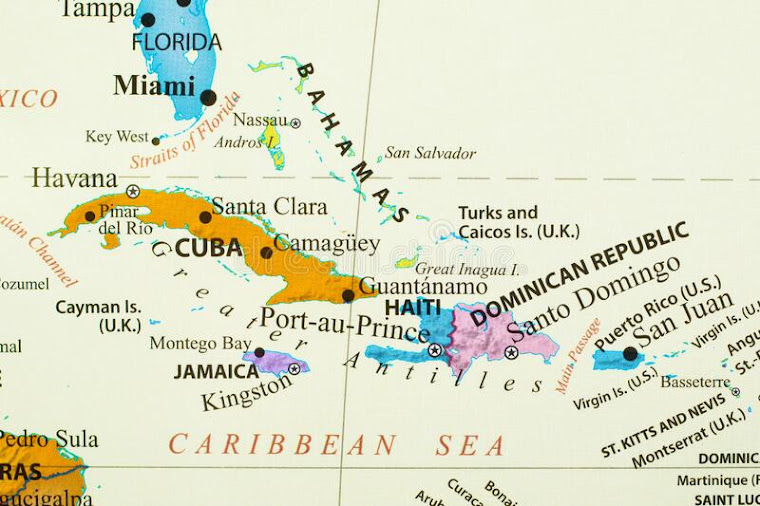
The “greatest land giveaway” of our time: ...the PLP’s 2006 joint venture deal with Boston-based developers the I-Group to sell off nearly 10,000 acres – 9,999 to be exact – including prime beachfront and waterfront Crown land in Mayaguana for the fire sale price of about $650 an acre

‘The great land giveaway’


An inside look at the Mayaguana land deal


Taneka Thompson
Guardian Senior Reporter
taneka@nasguard.com


The problems that plagued the Progressive Liberal Party (PLP) during its last five-year term in office are well known. The infamous Anna Nicole Smith saga, the notorious Cabinet “fight”, the Korean boat debacle and the general view that former Prime Minister Perry Christie had little control over his own ministers.

But perhaps what is perceived as one of the biggest – but lesser known – perceived blunders is what some have termed the “greatest land giveaway” of our time.

It was the PLP’s 2006 joint venture deal with Boston-based developers the I-Group to sell off nearly 10,000 acres – 9,999 to be exact – including prime beachfront and waterfront Crown land in Mayaguana for the fire sale price of about $650 an acre.

The deal in its original form would have boxed in the 350 natives of Mayaguana to the interior of the island, much like Native Americans relegated to a reservation, Hotel Corporation Chairman Michael Scott told The Guardian.

The investors also received a multitude of concessions, over and beyond those normally granted to these types of development projects, and the clause that allowed it to exit the agreement (force majeure clause) was excessive in its options, according to Scott.

It was heralded by those in the Christie administration as the new model for the Family Islands. The PLP argued that the agreement that handed over 9,999 acres of Crown land was a joint venture, and in no way represented a land “giveaway”.

The development was supposed to create 1,700 jobs during the first five years and contribute $116 million to the country’s GDP.

But by 2008, the I-Group, which had already received a portion of land under the original agreement (2,000-plus acres), had invoked the force majeure clause included in the deal, citing the global economic slowdown for failing to meet a number of milestones that would allow it to secure the remainder of the property.

Those milestones included the completion of the Mayaguana airport and associated facilities, the development of a subdivision and estate lots and utility projects, among others.

It also did not help that the relationship between the government – now the Free National Movement – and the I-Group had started to deteriorate. It is claimed that the I-Group openly supported the PLP in its failed re-election bid, and was less than welcoming to Prime Minister Hubert Ingraham when he paid a visit to the island to take a look at the project.

A new agreement

While Ingraham was prepared to honor the deal in its original form, Scott said, some in the administration – including Tourism Minister Vincent Vanderpool-Wallace – insisted that too much was at stake to simply let the development proceed under the original terms.

Last month, the government signed off on an amended Heads of Agreement with the I-Group, which was willing to rework the original deal and has said it is happy with the new agreement. It returned nearly 6,000 acres, including significant wetlands, to the Bahamian people and severed the joint venture between the two parties.

The new agreement also brings concessions and exit options more in line with other Heads of Agreements for similar projects.

Scott was an instrumental part of the team that reworked the Heads of Agreement with the I-Group, over more than two years. It involved determining how much the investors had already “put into the ground”, through a survey conducted by Baker Tilly Gomez. During a recent sit-down with The Guardian, he charted the genesis and later revamping of the controversial deal, a deal he described as an “insult” to the Bahamian people.

“First of all, $600 an acre is a disgrace. Secondly, you’d have essentially prevented the natural population expansion of Mayaguana because you would have had people herding together in the less desirable interiors of the island. Mayaguanans would have become the minority in their own island,” he said.

Under a clause in the original Heads of Agreement, the developers were also going to get the exclusive right to grant licenses to any licensees brought into the development – a situation similar to the operating conditions of the now troubled Grand Bahama Port Authority.

“This is not hyperbole, but with the amount of land originally conceived to the project, with the concessions given, with the licensing authority afforded, you were essentially creating another Freeport. You’ve seen the enormous problems over the last couple of years with the (Grand Bahama) Port Authority. That’s been a disaster. We were in the process of creating another one,” Scott said.

Scott believes the former government also erred when it agreed to the multitude of concessions awarded to the I-Group.

“They were allowed to bring in, for 20 years from the date of the agreement, the importation free from all Customs duties of all materials, supplies and things of every kind of description and without limiting all equipment, building material supplies, replacement parts, spare parts, plant, vehicles, vessels, petroleum products. Then they would have had all the other exemptions from business license fees, stamp duty and real property tax for 20 years,” he said.

Scott explained that the original deal was ostensibly a joint venture between the government and MID – the holding company.

“In that holding company, the Hotel Corporation provided a chairman and two directors, [I-Group] provided two directors, but the real decision making entity was the operations company called Mayaguana Management Company. So they called the shots. They were funding it and managing decisions relating to the time frame and milestones of the development were being made by them, not us,” Scott said.

“This was a land giveaway dressed up as a joint venture. The ultimate power and control were given to the developers. The Bahamian people were passive investors through making available (nearly) 10,000 acres of land.”

‘Anchor projects’

Scott said that the revised Heads of Agreement reflects the FNM’s model for Family Island development, a plan which focuses on small boutique hotels that are a stark contrast to the massive, sprawling ‘anchor’ projects that the last PLP administration pushed.

"It's a much smaller scaled development," Tourism Minister Vincent Vanderpool-Wallace said last month. "They are starting with 2,912 acres. The original proposal was a joint venture with the government for 9,999 acres. We are taking a lot of the land back and the land we are taking back is prime waterfront land, prime land in the interior and that allows some of the settlements to expand in the future and so it has become a great win-win for all."

“When they slowed the project down, we thought that was an opportunity to appeal to them to try and scale it back in terms of scope. They agreed and have signed a reinstated and amended Heads of Agreement which gets back 5,825 acres."

The first phase of the Mayaguana development will involve the construction of an airstrip, an airport terminal, a marina and construction of a 25-room boutique hotel for an investment of between $24-$32 million.

The second phase entails the construction of a $50-$75 million high end luxury resort in Mayaguana.

The original development was expected to be $1.8 billion. It is unclear what the exact value of the new agreement will be.

Mar 12, 2012

thenassauguardian

...the New Providence Road Improvement Project could have been completed "six or seven years ago" if it weren't for the incompetence of the former Perry Christie led Progressive Liberal Party (PLP) administration

Christie government was slow to act


Perry Christie

tribune242 editorial


SPEAKING at the opening of Golden Gates constituency office, Prime Minister Ingraham said that the New Providence Road Improvement Project could h 3ave been completed "six or seven years ago" if it weren't for the incompetence of the former PLP administration.

For one thing, he said, the road works could have been continued in 2002 and completed for $56 million, instead of the now estimated $206 million.

"At that time," he said, "the price of oil, cement and plastic was lower, the price of oil was about $20 a barrel. Today, it's over $100 a barrel."

What happened to the road improvement project was unfortunate. If there had not been a change of government in 2002, the road project -- although it met with a major disaster midstream-- could possibly have been completed on time.

In 1994, the Ingraham government engaged a Canadian firm to prepare a transportation development plan for New Providence. This plan formed the basis of the IDB-funded New Providence Infrastructure Improvement Project.

Four companies were prequalified and submitted bids on June 9, 2000. Two of the bids did not comply with the requirements of the bidding document. The other two provided enough "information to enable an assessment of the adequacy of their proposals".

Government agreed to do business with Associated Asphalt, the lower of the two remaining bidders. It awarded Associated Asphalt (AA), a UK company, a $52.2 million lump sum contract to undertake the project. The contract contained no price escalation clause. At the time, the price of oil averaged US$20 and US$21 a barrel -- today it is more than $100 per barrel and rising.

AA was required to provide two bonds - an advance payment bond of $7.6 million and a performance bond of $7.8 million. The project was estimated to cost $66 million and was to be funded by a loan from IDB for $46.2 million with Government providing counterpart funding of $19.8 million. Work started on April 2, 2001 with a completion date of February 10, 2003.

Fifteen months into the contract, AA's parent company went into receivership. All work stopped. By then, the Charles Saunders Highway, the Milo Butler Highway and the Gladstone Road Realignment, valued at $11.4 million, had been completed. Excluding the advance payment of $7.6 million, the contractor was paid $8.3 million and was entitled to be paid for $2 million in unpaid certified invoices.

What would normally have happened was that the next lowest acceptable bidder-- a Netherlands company whose bid was about $8 million higher than AA-- should have stepped in to complete the job. However, the bondholder believed that the lowest bidder, a Canadian company, should be engaged instead. The Ingraham Government and IDB did not agree.

In the meantime, the PLP became the government. In November 2002 they cancelled AA's contract and demanded that the bondholder pay the sums owed under the performance bond and advance payment bond. The bond holder refused. The matter went to court. The Attorney General had to advise the PLP government that it could not sue on the performance guarantee bond because the final date on which a valid demand could have been made -- February 9, 2004 - had passed. The PLP government's failure to act in a timely manner had cost the country $7.8 million.

On July 15, 2005, the PLP government was again in the Supreme court demanding that the advance payment bond be paid. Again, the bondholder refused. This time, the bondsman claimed that then Works Minister Bradley Roberts in a meeting on October 2, 2002, attended by several company representatives and Kendal "Funkey" Demeritte, described in court documents as a "political assistant", had claimed that the FNM's award of the contract to AA was tainted. Mr Roberts suggested "political interference and corruption". The defence filed by the bondholder was that as Mr Roberts had said corruption in the transaction was under investigation -- although he had refused to disclose the details of the investigation--it had no intention of paying on an illegal contract. Again a loss to Bahamian tax payers.

However, when the Ingraham government was returned in 2007, the bondholder, agreed to discontinue relying on Mr Robert's unfounded allegations. It paid $5.25 million in settlement of both bonds.

In the meantime, time had been lost. Had the Netherlands firm been allowed to complete AA's contract, said Prime Minister Ingraham, the project would have been completed by mid-2005 "with substantial cost savings and the benefits to the economy and the benefits of the project would have been realised much sooner".

The country is now in the predicament it is in -- with escalating costs for roadworks -- because, as usual, the Christie government was slow to act.

March 13, 2012

tribune242 editorial

Tuesday, March 13, 2012

The Bahamas has had four murder records in five years... ...Our politicians need not add hostility through public discourse in a nation that already has a violence problem

The tone of political rhetoric


thenassauguardian editorial


Crime and Violence Bahamas

Over the last few weeks some very aggressive rhetoric has been exchanged between the Progressive Liberal Party (PLP) and the Free National Movement (FNM).  During elections, debates should be fierce, but they should also be decent.

Former PLP Cabinet Minister Leslie Miller has called for a ‘truce’ between the PLP and FNM during the remainder of the election season.  Miller has made public jokes about State Minister for Social Development Loretta Butler-Turner’s weight and accusations directed at National Security Minister Tommy Turnquest that Turnquest said have offended his wife and family.

Turnquest has uttered homosexual innuendo about PLPs and also used words like rape and prostitution.  The FNM’s candidate for North Andros and the Berry Islands Desmond Bannister said the PLP had a bunch of geriatrics at its recent North Andros event.  Among those sitting up front were former Governor General A. D. Hanna, Dame Marguerite Pindling and retired Archbishop Drexel Gomez.

Politics is not for the weak and timid.  To enter the political arena one needs to be able to withstand attacks of all types.  Some of these attacks pertain to ideas, some to past conduct, some to the conduct of friends and relatives, some to relationships.

It is fair and reasonable for political adversaries to scrutinize the records of opponents.  In fact, such scrutiny by opponents and the media is essential to the functioning of our democracy.  The party that wins the general election will exercise executive control of the government.  The electorate should be presented with relevant information by the media and other parties so it can make the best possible decision.

A line should be drawn, though, at personal attacks that have nothing to do with governance, politics or policy.  Calling someone fat, for example, should not be part of the process.  Similarly, suggesting that people are gay, to disparage them, should not be how we campaign.  It is not illegal to be gay or fat in The Bahamas.

Furthermore, candidates definitely should not accuse opponents of crimes of violence they have no proof of.  Such an act should be condemned by all sides and should not be repeated from any political platform.

The nastier the personal attacks get, the more hostile the relationship gets between Bahamians on the various sides of the political divide.  If the rhetoric between the sides gets violent in nature, it is possible for supporters to take those verbal sentiments and to transform them into deeds and actions.

For the most part, there has been little violence in Bahamian politics.  This is something to be proud of.  It indicates that as a people we are able to disagree aggressively without needing to inflict physical harm on each other.

We should all work to keep our politics this way – aggressive but not unduly hostile.  In doing so we keep our country stable.  The Bahamas has had four murder records in five years.  Our politicians need not add hostility through public discourse in a nation that already has a violence problem.

Mar 12, 2012

thenassauguardian editorial

Sunday, March 11, 2012

Prime Minister Hubert Ingraham: ..."I can't comprehend why a married woman is discriminated against ...and a single woman is not when it comes to the passing of their nationality... ...and for as long as I am in public life, I will ensure The Bahamas is full of equality between the sexes."

PM: 'It is our duty to ensure equality'


By SANCHESKA BROWN
Tribune Staff Reporter
sbrown@tribunemedia.net


PRIME Minister Hubert Ingraham said it is the government's honour and duty to ensure all women in the Bahamas have the same opportunities as men.

Speaking at his luncheon with the nine FNM females candidates to mark International Women's Day (IWD), Mr Ingraham said while the Bahamas has come a long way in terms of women's rights, there is still a long way to go.

"I have always believed that women should be equal to men in all aspects.

"In fact, quite frankly when we are born in this world we have roughly an equal number of males and females and there ought to be no discrimination against women in any form whatsoever.

"In government and in politics I have sought to advance the cause. We still have a couple challenges to overcome but we have made tremendous progress over the years," he said.

"I want to say to my female candidates that we fully expect to advance the cause of women further in the Bahamas and eventually there will be no difference in law or the constitution between a male or a female.

"I can't comprehend why my son should have an advantage over my daughter. That is totally unacceptable.

"I can't comprehend why a married woman is discriminated against and a single woman is not when it comes to the passing of their nationality and for as long as I am in public life, I will ensure the Bahamas is full of equality between the sexes."

Minister of State for Social Services, Loretta Butler Turner, echoed the Prime Minister's remarks.

"In terms of the furtherance of women and their rights, we still have inequalities and things we have to achieve. We have great inequalities even when it comes to pay and when it comes to males and females and so I think that all those matters need to be addressed," she said.

"As a married woman, if I had had my child outside this country to a foreign man I couldn't pass citizenship on to my child and that is a huge disadvantage for Bahamian women. So we are basically second-class citizens in our own country when you look at the rights of men."

International Women's Day, originally called International Working Women's Day, is marked on March 8 every year.

March 09, 2012

tribune242

Saturday, March 10, 2012

There is nothing wrong with religious figures speaking at political events... ...They are citizens too ...and thus have the right to voice their concerns about the direction of their country

Reasonableness, family and politics


thenassauguardian


Retired Archbishop Drexel Gomez’s appearance at a Progressive Liberal Party (PLP) rally on Friday in North Andros has caused some controversy.  He is the former head of the Anglican Church in the West Indies.

Bishop Gomez appeared at the rally and spoke in support of his brother Dr. Perry Gomez, the PLP’s candidate for North Andros and the Berry Islands.  Dr. Gomez has led the fight in The Bahamas against HIV/AIDS as long-time director of the National AIDS Programme.

Prime Minister Hubert Ingraham raised the question about the appropriateness of Bishop Gomez addressing the political event while he addressed Free National Movement (FNM) supporters in Long Island on Monday night.

“And I saw the former archbishop of The Bahamas, Bishop Gomez, who was down there in his bishop's collar.  I do call upon Perry Christie to apologize for that.  He knows better,” said Ingraham.

“Many of you Anglicans who celebrate Lent time do not do such things.  In fact, I saw Father Sebastian Campbell in the newspaper complaining about us holding meetings during Lent.  Well what [do] you think about a bishop on the political podium during Lent?”

Bishop Gomez on Tuesday dismissed Ingraham’s call for Christie to apologize for allowing him to address the rally.

“I was there simply because I was invited by my brother, who was having the formal opening of his headquarters in Nicholl’s Town,” Bishop Gomez told The Nassau Guardian after being contacted for a comment.

He pointed out that he stayed clear of political statements when he addressed PLP supporters.

“I felt I was the most appropriate person to make the presentation, as the older member of the family and the person who has been in the public domain,” Bishop Gomez said.

“I chose my comments very carefully.  I only spoke about my brother and our family.  I made no reference whatsoever to political issues or to political parties.  My intention was simply to introduce him to the people at the formal opening of his headquarters.”

Bishop Gomez said he exercised two rights when he spoke at the political event.  The first being his constitutional right to speak in the public domain on public issues and the second being his religious right to comment on matters of justice and truth.

Now as we proceed through the election cycle, there will be many questions raised about many things in the effort to advance political causes.  While it is good for us to have robust debates, we must be reasonable.

There is nothing wrong with religious figures speaking at political events.  They are citizens too and have the right to voice their concerns about the direction of the country.  We think, however, that it would be irresponsible for religious figures to go as far as ‘anointing’ a political party or candidate as ‘God’s choice’, consequently suggesting that opponents stand against divine will.

Reverend Frederick McAlpine is a FNM senator and in the past he regularly spoke at FNM rallies.  He is a charismatic speaker and is good at firing up the crowd.  There is nothing wrong with him doing this, just as there is nothing wrong with Bishop Gomez speaking in support of his younger brother.

Similarly, there is nothing wrong with Delores Ingraham, wife of the prime minister, attending political events and standing on stage with her husband.  She is a public servant and is principal of C.C. Sweeting High School.  There is a prohibition against public servants being involved in frontline politics, but commonsense must be used in evaluating that standard.

We hope that as the political crossfire continues the combatants don’t reach for any old thing to bludgeon their opponents with.  Reasonableness should guide the process.

Mar 08, 2012

thenassauguardian

Friday, March 9, 2012

...four years after the ‘Great Recession’ commenced, the Bahamian economy continues to struggle... ...the government is challenged with reduced revenues, soaring energy and food prices, high unemployment, rising crime levels and social ills... ...with unemployment at its highest in years and individuals on reduced pay... it seems fair to state that the mortgage sector and housing market in The Bahamas are in a crisis...

Confronting the Bahamian debt crisis pt. 1


By Arinthia S. Komolafe


In the aftermath of the worst recession since the Great Depression, the government is challenged with reduced revenues, soaring energy and food prices, high unemployment, rising crime levels and social ills.  In response to these challenges and in order to stay afloat, the government has resorted to borrowing.  The reality is that imprudent borrowing practices prior to and during the economic downtown have exacerbated the economic soundness of our government.

The story of the sub-prime mortgage crisis and the lessons learned are well documented.  However, four years after the ‘Great Recession’ commenced, the Bahamian economy continues to struggle.  It was reported that the Bahamian banking system was resilient to the crisis and to some extent the economic downturn because of our credit policies as administered by the Central Bank of The Bahamas (CBB).  However, was this assertion truth or fallacy?  One wonders if based upon the facts and looking back in hindsight whether the current mortgage and ultimately debt crisis was an accident waiting to happen.  Could it be that the economic downturn exposed flaws in our monetary policy and credit risk management framework?

Background

A journey down memory lane and history, will show that the CBB in August 2004 in an attempt to ensure that credit expansion was consistent with economic growth, advised banks to monitor borrowers’ creditworthiness by limiting the debt service ratio (DSR) on loans to a range of 40 percent to 45 percent of ordinary income and require a minimum of 15 percent equity contribution on all personal loans with exceptions to those secured with mortgage indemnity insurance.  A short one month later, the CBB temporarily relaxed those policies by eliminating the 15 percent equity requirement and raised the DSR threshold to 55 percent.  It is noteworthy to state that the reason given for this change was to aid in relief due to the effects of Hurricane Frances.  It is unclear, however, how many banks took advantage of this flexibility, the immediate impact on the economy and how long these policies actually remained in effect.

However, some four months later, the CBB reduced its discount rate (DR) from 5.75 percent to 5.25 percent and the prime rate (PR) was consequently reduced by 50 basis points to 5.5 percent.  It is imperative that we examine the aforementioned policy decisions made by the CBB in the context of the Bahamian economy which is primarily consumer driven.

In the absence of an established credit bureau, it is difficult to assess the creditworthiness of Bahamian consumers and almost impossible to assess whether a consumer’s DSR truly falls within the 40 percent to 45 percent range.  Taking a conservative hypothetical approach (and I must emphasize that this may be extremely conservative) and assuming that a majority of consumers had a ‘real’ maximum DSR of 55 percent as opposed to the required maximum 45 percent, it follows that an increase of the DSR to 55 percent would increase the ‘real’ DSR to 65 percent, leaving the consumer with an ultimate disposable income rate of only 35 percent.

In addition to the scenario painted above, a decrease in the DR and PR all things being equal, should further encourage borrowing and expand credit.  This brings into question whether the objective of ensuring that credit expansion was consistent with economic growth was achieved.  In 2004, with the CBB’s policy to restrict credit expansion, the amount of mortgages for new construction of single dwelling homes stood at a mere 894.  To highlight the effect the aforementioned policy change had on the mortgage market, in 2005 and 2006 government revenue on stamp tax for mortgages almost doubled in 2005 compared to 2004 and increased significantly in 2006.

Further, residential mortgages for new construction of single dwelling homes stood at 1,428 and 1,137 in 2005 and 2006 respectively.  The total processed value amounted to approximately $300 million for these years.  It is uncertain how many persons painted a true picture of their DSR and the real question is whether the majority of persons who obtained mortgages during this period should have actually qualified for those mortgages. This is bearing in mind that as at December 31, 2011 mortgage delinquencies stood at approximately $650 million.

Mortgage sector and housing market in crisis

Today with unemployment at its highest in years and individuals on reduced pay, it seems fair to state that the mortgage sector and housing market are in a crisis.  It is not surprising that many Bahamians have defaulted on their mortgage obligations with mortgage delinquencies standing at approximately $650 million in arrears for the entire Bahamas.  In order to appreciate the extent of this debacle, a look in the newspapers will reveal a fraction of the number of foreclosed properties advertised for sale.  It has been argued that the reduction of the DR and PR by 75 basis points in June 2011, although welcomed came too late and that the reduction was inadequate.

The government is being called upon to provide mortgage assistance for those who are losing their homes.  Proponents of this relief effort cite the millions of dollars expended on capital infrastructure by the government in justifying this move as the right action required.  They submit that if the government could spend such exorbitant amounts on infrastructure and the purchase of shares, it is only fair that the government would provide relief to struggling homeowners.  Opponents of any form of mortgage relief efforts by the government argue that in a capitalistic society, the government should not interfere with private enterprise.  After all, opponents submit the free market economy is designed to have minimal government intervention and market forces must be left to control the market.

In the final analysis, there is enough blame to go around; starting with the government, the lending institutions and the consumer.  In the years leading up to the financial and economic downturn, the government benefitted from the credit expansion as a result of monetary policy in the form of increased stamp tax revenue, the lending institutions turned over record profits and consumers benefitted from unprecedented access to credit facilities.

It is only fitting, therefore, that the aforementioned benefactors should come together to bring resolution to this crisis.  In order to avoid further deepening of this crisis, the government on its part, should explore establishing a fund to assist eligible homeowners in retaining their homes.  Adjustments to the DR and PR by the CBB should be stalled until a credit bureau and robust consumer protection agency as a matter of urgency have been established.  The lending institutions should take significant steps to refinance mortgages on more favorable terms for consumers and more importantly consumers should exercise increased prudence in the management of their finances.


•Arinthia S. Komolafe is an attorney-at-law.  Comments can be directed at: arinthia.komolafe@komolafelaw.com

Confronting the Bahamian debt crisis pt. 2

Mar 09, 2012

thenassauguardian

Thursday, March 8, 2012

A National Health Insurance (NHI) scheme would only work efficiently if, and only if, there are proper checks and balances in place ...especially to ensure that the pool of money goes in to a segregated fund for health and health alone...

The National Health Insurance debate


CFAL Economic view


We read recently in a local daily that Dr. Perry Gomez, the Progressive Liberal Party (PLP) candidate for North Andros and the Berry Islands said that under a PLP government National Health Insurance (NHI) would be implemented within the first year of coming to office.  While we are in the so-called ‘silly season’ and everyone and their brother are making promises, we would hope that some of the promises would be well reasoned outlining the attended cost and consequences for the wider community; the usual rhetoric is just not acceptable this time around.  We believe that members of the Bahamian electorate are a bit more discerning than most politicians give them credit for.

What is NHI?

The issue of a National Health Insurance was first raised back in August 2002, when then Prime Minister Perry Christie appointed a 15-member Blue Ribbon Commission to review the feasibility of a National Health Insurance Plan.  The committee was also mandated to determine the best way to make affordable healthcare available to all residents.  The appointment of the committee was a step towards the fulfillment of the then government’s promise to ensure that all patients receive the same access to healthcare regardless of their personal wealth or circumstances as outlined in the PLP’s manifesto, ‘Our Plan’.  In 2004, the final report was released.  It was the view of the committee that The Bahamas cannot afford to not have a National Health Insurance (NHI) scheme.  The committee also stated that NHI had to be mandatory and would only work if the government had adequate funding.   We have no difficulty agreeing with those observations but would urge the authorities and the public to take a closer and more objective look at the proposal.

What is National Health Insurance?  National Health Insurance is a form of social health insurance, which uses the principles of fund pooling and risk sharing to provide equity in access to care.  Individuals pay an ‘affordable’ amount on a consistent basis and in return are able to have their healthcare needs provided for, regardless of cost.

It is envisioned that this ‘cradle to the grave’ national healthcare coverage will cover persons who are currently excluded from private insurance plans such as individuals with pre-existing illnesses, newborn babies and those over 65.

The 125-page NHI report outlined the following eight specific recommendations for the Cabinet’s consideration:

1. National Health Insurance should be universal.

2. Legislation should stipulate the health insurance is compulsory for all residents.

3. National Health Insurance should be administered by the National Insurance Board.

4. A comprehensive benefits package should be offered.

5. Contributions should be set at a rate which is affordable for the majority.

6. Public and private providers should be offered the opportunity to join the National Health Insurance system.

7. All provider payment mechanisms should be considered for use with capitation being the preferred option.  (Capitation is a provider payment mechanism in which providers are regularly paid a stipulated amount per person for whom they agree to provide services during a defined period of time.)

8. A percentage of revenues should be set aside for purposes that ensure the stability of National Health Insurance.

The present system in The Bahamas, which employed persons contribute to, is a form of social security.  Our health system includes tax-funded care through government hospitals and clinics, and private care funded by direct user fees or private insurers.  The incentives that exist include pension, invalidity assistance, medical incentives, maternity benefits, some income replacement, temporary and permanent disability benefits, and health coverage for occupational injuries.  Basically, social health insurance currently exists only through the industrial injury component of NIB.

Recently, the present government implemented the National Prescription Drug Plan to assist some Bahamian residents, particularly the elderly and children under the age of 18 years.  It is estimated that the cost of this program is currently running around $5 million; a figure which we expect to only increase in the future.

Healthcare costs are one of the more vexing and challenging issues facing countries today and according to the latest information on the subject, average cost in the last five years increased annually by more than 10 percent.  With rapidly aging populations and the rising costs of modern medical technology, governments everywhere are finding it increasingly difficult to provide the funds required to meet healthcare needs of their respective populations.  Given that position, we would hope that before any decision is made to move forward with universal health coverage, the authorities would prepare a detailed cost analysis to use as a guide.  To do otherwise, we run the risk of committing to something which could surely place The Bahamas on an irreversible path to economic poverty.

Prior to 2008, it was estimated that only 51 percent of Bahamians had private health insurance.  Today, given the challenging global economic environment, the impact on the local economy and increasing levels of unemployment, we estimate that number at around 40 percent based on the increasing payouts by insurance companies.  For some, private insurance has become too expensive; persons in the lower income bracket and those living on the Family Islands are now less likely to have insurance coverage.

There are a number of questions that need answers.  How much will this plan cost?  (Back in 2004 estimates were pegged around $200 million-plus, which we felt were too low at that time).  Who will pay for those who cannot afford to pay?  What will be the impact on the private insurance industry?  What impact will it have on the fiscal deficit?  (This should be of particular relevance to future generations).

Concerns remain

Historically, the Bahamian government has been a principal source of financing environmental and healthcare expenses for citizens of The Bahamas with an annual expenditure of over $267 million in the 2011/2012 budget or nearly 16 percent of total recurrent expenses which computes to almost four percent of the country revised GDP (another story for another day).

It is estimated that the private insurance companies spent nearly $230 million in 2011, which gives us a total healthcare expenditure bill of nearly $435 million or 5.4 percent of the revised GDP.  In the 2004/2005 fiscal budget, the government allocated approximately $187 million for health expenditure.  In 2004/2005 it was estimated that healthcare expenditure stood at approximately $340 million or 7.10 percent of GDP, of which $70 million was spent by the people, $102 million spent through private health insurance, and the rest by the government.  In comparison, in 1985, total public expenditure amounted to approximately $56 million or only 2.70 percent of GDP.

It is our view, based on historical cost data and future projections, that the cost of a national healthcare plan going forward would be in the region of $500 million to $750 million; equivalent to nearly half of our recurrent expenditure and as such, would not leave much room for other important infrastructure projects.

We generally agree with the conclusion of the commission’s report that a social health insurance system for The Bahamas would provide more equity in access to healthcare, more stable funding of public health costs, and fewer ‘free riders’, or people who benefit without contributing.  Setting up such a national healthcare system involves more than just taxing the people but will require legislation and the creation of responsible bodies.

Two critical issues are ensuring compliance and public accountability.  We are also mindful, however, that there are those who have little faith in governments operating such healthcare initiatives due to a propensity for such operations to become instruments of political patronage and the widely shared view that government institutions are relatively poorly managed.  In the last analysis, we believe that the scheme would only work efficiently if, and only if, there are proper checks and balances in place especially to ensure that the pool of money goes in to a segregated fund for health and health alone.

•CFAL is a sister company of The Nassau Guardian under the AF Holdings Ltd. umbrella. CFAL provides investment management, research, brokerage and pension services. For comments, please contact CFAL at: column@cfal.com

Mar 07, 2012

thenassauguardian