Clifton Coalition Debate Issues
Tribune242
MEMBERS of the newly formed Coalition to Protect Clifton Bay took to the airwaves to share their agenda and clarify some of the “thorny issues” surrounding the heritage site.
A political blog about Bahamian politics in The Bahamas, Bahamian Politicans - and the entire Bahamas political lot. Bahamian Blogger Dennis Dames keeps you updated on the political news and views throughout the islands of The Bahamas without fear or favor. Bahamian Politicians and the Bahamian Political Arena: Updates one Post at a time on Bahamas Politics and Bahamas Politicans; and their local, regional and international policies and perspectives.
Perry Christie’s oil slick
Front Porch
BY SIMON
Referring to their twin island-nation’s oil wealth, some Trinidadians and Tobagonians liked to brag, “oil don’t spoil”. It may not spoil in the ground. But the potential to spoil rotten, some politicians, public officials and others is legend.
Speaking ahead of the gambling referendum in January, Bahamas Faith Ministries International President Dr. Myles Munroe sounded this dire warning: “Any government pressured by a small lobby group such as the gaming bosses will inevitably produce corruption. And if this referendum goes through we will never have a pure government again.”
Bahamaislandsinfo.com further reported: “He [Dr. Munroe] also stated that the motivation of the referendum of the governing authority seems to be the surrender to the powers with money. In other words he said that the government cannot rightly govern because they will owe allegiance to the few and not to the citizenry or the people of The Bahamas.”
The pastor’s warning is noteworthy. The nature and role of leadership have been central themes of Dr. Munroe’s ministry. The quality of leadership at various levels of society will be pivotal in the debate on oil exploration.
For its part, the Bahamas Christian Council has gotten off to a poor start. The council’s economic committee chairman Rev. Patrick Paul specified the type of arrangement he thought best to distribute the proceeds of oil wealth, calling a supposed arrangement “categorically unjust, injurious and unfair to the democracy of our nation”.
God bless Paul. But, he seems like a potential groom planning for a joint bank account and mortgage with a woman whom he hasn’t even asked to marry him. The reverend has gotten things in the wrong order.
A prior question is whether there should be drilling in the first place, which is what then Opposition Leader Perry Christie solemnly promised the Bahamian people his government would ask in a referendum. He has spectacularly reneged on his promise.
Calculated flip-flop
Christie’s latest calculated flip-flop clarifies the quality of political leadership the country needs in considering oil exploration. Good governance and good leadership on this issue will require leaders of great prudence and profound judgement.
Christie has exhibited a stunning lack of prudence and extremely poor judgement on the matter of oil exploration. With the disclosure of his work for Bahamas Petroleum Company (BPC), Christie, seemingly caught off guard, listed some of his duties as a consultant for the company.
“If there is an issue they need advice on, whether or not they need someone to speak to the issue of environmental impact [studies], the issue of whether or not in my judgment a matter is worthy for the government to approve, whether or not an application is ready, whether or not they should employ and who go on the board of directors, whatever views they ask of the firm regards it as necessary, they would consult me on it. Those are the services I provide,” he said.
This is more than the work of an attorney. His duties appear political and operational. He would be considered a lobbyist in some jurisdictions. Further, what did he mean by, “whether or not in my judgment a matter is worthy for the government to approve”?
If there are clear guidelines, it is not up to anyone’s judgment, including Christie’s, as to whether a matter “is worthy for the government to approve”. Such murkiness is worrisome in what should be a highly regulated field. Is Christie also following this approach as prime minister?
During last year’s general election campaign, former Prime Minister Hubert Ingraham noted: “When Mr. Christie agreed to become a consultant for the company [BPC] it would have been with the full knowledge and intention of using his position, past and present, and his access to government agencies, whether as government or as former government, to influence a decision by the Bahamian government with respect to any application by that company.”
Stringent guidelines
In quite a number of democracies there are stringent guidelines to limit the revolving door and conflicts of interest of politicians and public officials moving in and out of government, potentially using their public positions to benefit private clients. One key measure includes a waiting period before one can work as a consultant or lobbyist for various clients.
Christie’s revolving door seems like a turbocharged merry-go-round: Between 2002 and 2007, his government issued certain licences to BPC. Out of office he became a consultant to BPC. Now back in office, his government has issued an exploration license to BPC, while delaying his promise to hold a referendum on oil drilling.
Christie’s lack of transparency on certain issues is as murky and as dense as an oil slick. When did he become a consultant to BPC? How much was he paid? How often did they consult with him?
In addition to the prime minister, neither Deputy Prime Minister Philip Davis, whose law firm represented BPC, nor Senator Jerome Gomez have been transparent or forthcoming with their compensation terms and arrangements with BPC.
By his own admission, Christie was a general consultant to a corporation wanting to drill for oil in The Bahamas while he was in Parliament, while he held the position of leader of the opposition, and while he fully expected to again become prime minister.
Further, did Christie express that he expected to be paid handsomely for his advice? And, how handsomely was he paid. The Bahamian people have a need to know?
Essentially, Christie advised his clients on how to go about achieving their ultimate objective – which is to drill for oil in The Bahamas. And it was not just legal advice, it was advice on environmental issues, preparation for government approval, who to employ, who to put on the board of directors, and a catchall “whatever views they ask of the firm”.
In light of all of this, we are expected to believe that the prime minister has an open mind on whether or not there should be oil drilling in The Bahamas?
Christie’s clients were not some ordinary citizens requiring legal counsel who may have had sometime in the future a matter before the government of The Bahamas. These were a corporation whose sole purpose for being in the country is to drill for oil. Even if he did not become prime minister, as leader of the opposition, Christie knew that at some point he would have to address this issue in Parliament.
Christie himself must have recognized the position he was in when he and his government decided not to proceed with the promised referendum but to give the company the right to drill anyway.
Why on such a momentous national issue and stunning flip-flop did he not make the statement himself but left it to his minister for the environment? Christie continues to abuse our trust. And, he is more interested in putting the needs of foreigners first, instead of the Bahamian people.
By his own actions and admission, the prime minister has demonstrated that he and his government cannot be trusted on the momentous question of oil drilling. His revolving door and flip-flopping constitute an oil slick that grows bigger and continues to spread.
• frontporchguardian@gmail.com, www.bahamapundit.com
April 04, 2013
Lyford Cay ‘likely’ to support coalition
JEFFREY TODD
Guardian Business Editor
jeffrey@nasguard.com
The Lyford Cay Property Association is "likely" to become a member of the Coalition to Protect Clifton Bay (CPCB).
As exclusively revealed by Guardian Business in February, the association announced that the government appears "inclined" to grant Peter Nygard a lease of accreted land surrounding his property at Nygard Cay. It now seems that members of the community have taken their opposition to the next level.
"I think it is likely we will become a member. The environmental issues effect Clifton and our community," said Philip Dunkley, head of Lyford Cay Property Association.
"We have looked at everything they have put together. It seems like something we should support."
Support for the coalition is also forming in other property circles.
Franon Wilson, president of the Bahamas Real Estate Association (BREA), said he did not wish to comment specifically on Nygard's case.
However, speaking in general terms, anyone that expands property beyond what was legitimately paid for should be kept in check by both the private and public sector.
"The bottom line is people should go out and inspect. If you go past a certain point and expand beyond your bounders, then that has implications," Wilson told Guardian Business. "There are things you can and can't do. And that is one of the things you can't do."
Back in February, a letter to members of the Lyford Cay Property Association stated that the government “may be inclined to accede to Mr Nygard's application” in the near future.
It went on to note that government indicated it would become more vigilant to prevent any future reclamation of lands.
The issue has been in and out of the courts in recent years.
According to a statement of claim filed in the Supreme Court on April 6, 2011, Tex Turnquest, then director of the Department of Lands and Surveys, informed Nygard that the government expected him to reinstate the coastline of the property to its condition at the time of the 1984 deed, when he first purchased the western tip of Lyford Cay.
Nygard's attorneys have argued, however, that additional land formed as a result of the gradual and imperceptible deposit of materials from the ocean onto land.
The fashion mogul sought a declaration that the lands have become part of the freehold property.
Recent statements by the Lyford Cay Property Association could indicate that the issue is swinging in Nygard's favor.
The coalition, however, appears ready for a fight.
"You can be sure the coalition will be active," Dunkley added.
Fred Smith, a top attorney with Callenders & Co, has joined forces with the coalition for legal support. The alliance could indicate that the coalition is prepared to fight any ruling on the property.
Dunkley pointed out that the Nygard issue is not the only problem for Clifton Bay. The Bahamas Electricity Corporation has long been criticized for poor environmental standards at one of its main power plants in the area.
From the air, a sheen of oil can reportedly be seen on most days along the coast and heading out to sea.
In a recent trip to The Bahamas, Robert F. Kennedy Jr. threw his support behind the coalition as it relates to the pollution coming out of Clifton Pier and its destruction to the reef system.
March 29, 2013
The great oil debate
To drill or not to drill is the question
BY JUAN McCARTNEY
Guardian Senior Reporter
juan@nasguard.com
If Bahamas Petroleum Company’s (BPC) calculations are correct, there is a super-giant oil field lying beneath Bahamian waters.
All that needs to be done to get the nearly nine billion barrels of oil it believes is likely there, is to figure out exactly where it is, and go get it without spilling a single drop in the ocean.
If only life were that simple.
Since the government’s recent announcement that exploratory oil drilling would be allowed prior to a referendum on the issue, controversy has erupted along several fronts.
The referendum issue
Perhaps having had its reputation savaged in the gambling referendum in January, the Progressive Liberal Party (PLP) had no wish to risk another fiasco and so opted to take a different route – see if any significant amount of oil is there, and then see how the Bahamian people feel about taking it out of the ground.
BPC maintains it will spud an exploratory well around this time next year, and the government says it will hold a referendum on the actual extraction of any oil in the latter part of 2015.
Yes, the PLP backtracked on its original promise, but is this not a considered, logical position to take in light of the fact that Russian companies are drilling for oil just miles away from our border with Cuba?
Not really, says Free National Movement Chairman Darron Cash.
In fact, Cash contends, it all seems a bit rushed.
“Given the national and international attention that the government knew this matter would receive, the minister of the environment (Ken Dorsett) should not have announced the government’s policy reversal until the proposed legislative changes and the regulatory framework could be disclosed at the same time. It is not constructive to the process that the debate has begun in earnest but there is an information vacuum,” he said last week.
“There is no information packet available, no statement of Government principles, no answers to frequently asked or anticipated questions, no secretariat and no readily available environmental impact studies.”
Cash, who may or may not be familiar with the Internet, is wrong that no environmental impact assessment has been made public.
It’s been out for a year, and the Bahamas Environment, Science and Technology (BEST) Commission has it on the front page of its website.
It’s over 400 pages long and extraordinarily detailed, but more about that later.
Cash is right however, about the lack of regulations and legislation being in place.
According to a letter BEST wrote to BPC Environmental Scientist Roberta Quant on February 15, 2012, there are no specific standards for gas and oil exploration in The Bahamas.
BEST deferred establishing those standards until widespread national consultation and a required regulatory review takes place.
Last week, Dorsett said new regulations to support oil exploration "are substantially complete" and will soon be presented to Cabinet.
It is expected that they would be tabled and debated in Parliament before ultimately going into effect before BPC begins its exploration.
That would be quite a step beyond where the Christie administration was willing to go with regard to the gambling referendum.
In the run-up to that debacle, Bahamians were simply expected to trust the government and the numbers houses’ good intentions with little detail.
Hopefully, Cabinet won’t make that mistake again.
Show me the money
Possibly years away from seeing any oil, Bahamians last week flooded talk shows and social media with the concern that somehow The Bahamas was getting the short end of the stick with regard to oil royalties.
That depends on how you look at it. According to the proposed production license, the royalties paid to the government increase on a sliding scale.
If up to 75,000 barrels of oil are produced per day (bopd), then the royalty rate would be 12.5 percent.
For oil production over 75,000 up to 150,000 bopd, the royalty rate would be 15 percent.
For oil production over 150,000 bopd up to 250,000 bopd, the royalty rate would be 17.5 percent.
For oil production over 250,000 bopd up to 350,000 bopd, the royalty rate would be 20 percent.
For oil production in excess of 350,000 bopd, the royalty rate would be 25 percent.
The royalty rate on any amount of gas production would be 12.5 percent.
BPC has five licenses that cover an area of nearly four million acres in total.
It is also required to pay the government $0.92 per acre per year for its leases.
However, these payments are deductible from royalty payments.
BPC is also surely ecstatic that there is no corporate income tax in The Bahamas.
It is unclear how value added tax would impact oil drilling and or production.
The company has invested nearly $50 million so far; mostly in seismic research.
It says an exploratory drill would cost another $120 million.
It is unclear what The Bahamas has invested so far, but preliminary indicators suggest that the country has spent nothing on BPC’s venture.
That seems like a pretty good return on investment.
However, when you look at what other countries rake in in pre-tax oil revenues, what is proposed would pretty much make The Bahamas the lowest recipient outside of Ireland.
Environmental concerns
The thing most people seemed to be concerned about is an oil spill.
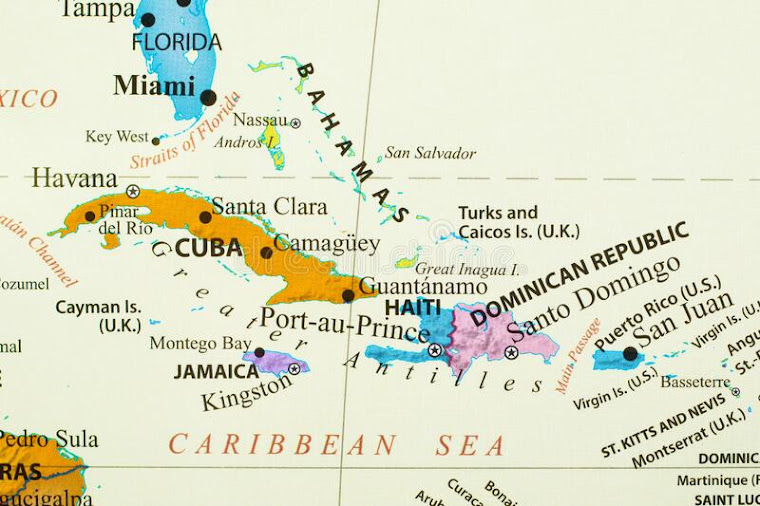
BPC’s research indicates that an oil spill taking place at the location where drilling will most likely take place would have “a major impact on the Cuban coastlines in the vicinity of the release point”.
“Particular wind conditions may allow for transport of small quantities of oil to the west, where it can eventually be advected by the Florida current and potentially affect the Florida or eastern U.S. coasts, or the Western Bahama Islands.
“In case of a seabed spill, it is expected that some oil will surface at a distance from the initial spill due to intense deep dynamics along the Great Bahama Bank. This would favor a wide spread of oil, with possible impact further on the Cuban coast, but also on the Florida or Eastern U.S. coasts, or the Western Bahama Islands.”
BPC’s political ties
Though the PLP tries to downplay it, there is no getting around the fact that Prime Minister Perry Christie, Deputy Prime Minister Philip Brave Davis and Senator Jerome Gomez were all closely linked to BPC prior to the general election.
Davis was its lawyer, Christie a consultant and Gomez the resident director.
All three men have since said they no longer have ties to the company.
But that hasn’t stopped the FNM from asking serious questions.
The Opposition has asked for full disclosure. Davis has expressed annoyance at the line of questioning and pledged to act in the best interest of the Bahamian people.
Gomez addressed the issue last week, though both men stopped short of full disclosure.
Christie said he will address the matter in the House of Assembly today.
Whether there is oil underneath the sea remains to be seen, but what seems clear is that the great oil debate is just getting started.
March 18, 2013