Thursday, May 1, 2014

Niccolo Machiavelli ...the monster dredger and reef destroyer ...should not be allowed to tear up the seabed off the coast of north Bimini

‘Reef Destroyer’ arrives in Bimini


By Diane Phillips & Associates

Machevelli dredgers off Bimini harbour


Environmentalists say pristine dive sites set to be destroyed in defiance of senior judge’s warning

Niccolo Machiavelli Bimini, The Bahamas
Niccolo Machiavelli ...the monster dredger and reef destroyer

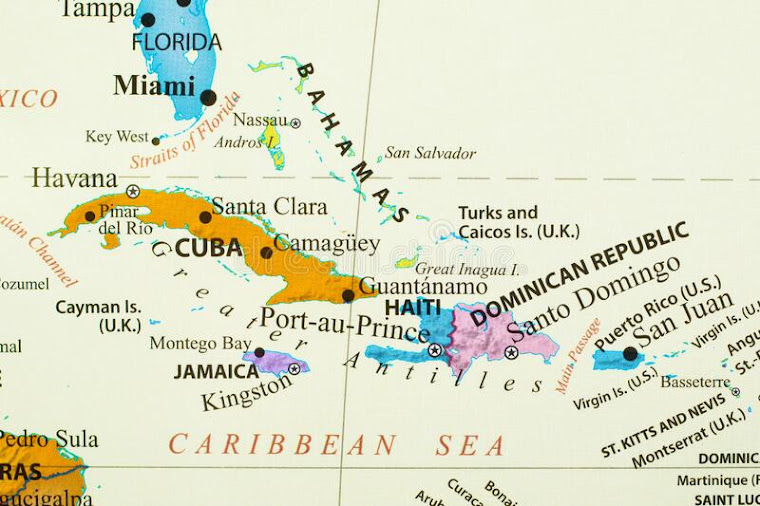
A mammoth seafloor dredger, dubbed ‘The Reef Destroyer’ by local environmentalists, has arrived in Bimini as developers forge ahead with construction of a controversial ferry terminal despite a top judge’s stern warning.

The 450-foot, 1,200 ton Niccolo Machiavelli is a specialized cutter-suction dredger designed to break up hard material which standard dredgers cannot remove. It is among the most powerful machines of its kind, and is set to be unleashed on one of the most pristine and significant marine ecosystems in the world, environmentalists say.

“That monster dredger cannot be allowed to tear up the seabed off the coast of North Bimini,” said Fred Smith, QC, attorney and one of the directors of fast-growing environmental movement Save The Bays. “There are 14 world-class dive sites and some of the most sensitive and important reef systems on earth there - many of them directly in the developers’ intended path of destruction.

“Resorts World Bimini is being allowed to move full speed ahead by a government that has failed in its mandate to act in the interest of Bahamians – and this despite a strong warning from one of the country’s top judges.”

Last month, Court of Appeal Justice Abdulai Conteh told lawyers for the government and Resorts World Bimini that construction should not be allowed to progress while the project is being challenged in the courts.

"In a democracy, no self-respecting government would do anything to jeopardize proceedings before the court. When there is a contested issue, one should not change the facts on the ground until a decision is made,” the judge said. “It’s more than a precept, and it is applicable in the Bahamas - it's about the rule of law.”

Justice Conteh's comments came as part of the ongoing appeal by Save The Bays and the Bimini Blue Coalition against a Supreme Court’s ruling that unless Smith’s clients pay a collective $650,000 ‘security for costs’ to the government and Resorts World Bimini, their judicial review action would be dismissed.

“Clearly, this administration has no self-respect,” Smith said yesterday. “The justice spoke to the grave implications if work continues, but the government has obviously given carte blanche to the developers, and they are racing ahead to get the work done before justice can run its course.

Environmentalists in Bimini say work on the ferry terminal is continuing despite Court of Appeal Justice Abdulai Conteh’s statement that the facts on the ground should not change until justice has run its course. Opponents of the development have circulated photos of newspapers dated after the judge’s remarks, with work underway in the background.

“This is always the way in the Wild West development show that this country has become. By the time a court can decide if a project is being undertaken according to the law, it is already a fait accompli, the environment has already been irreparably damaged, and local communities have already been overwhelmed or displaced.”

Smith noted that following Justice Conteh’s remarks, the attorney for Resorts World Bimini promised the Court of Appeal his clients would do nothing without the appropriate permits.

“The responsibility for this falls squarely in the lap of the government,” Smith said. “If work is continuing it is because they are allowing it to continue. They continually bow to the will of wealthy developers and the Bahamian people are always the losers in the end.”

On April 25, Smith wrote to the Attorney General’s Office urging the government not to do anything to jeopardize the Bimini judicial review proceedings.

“We would be grateful if you could urgently revert with confirmation that your respective clients will maintain the status quo (by which we mean, not carry out or allow the carrying out of any further changes to the development site including construction or pre-construction operations” the letter said.

In a letter to Resorts World Bimini, sent on the same day, Smith asked the company to confirm whether the government had granted any permits, licenses or approvals in respect to the development.

Smith said there has been no response to either letter to date.

Meanwhile, a recent presentation by marine biologist Dr. Kristine Stump demonstrated that under successive developers, the Bimini project has already had serious negative effects on the marine environment.

The results of her study showed declines in several important fish species that occurred after mangrove deforestation.

“We found acute and chronic effects on not only the sharks, but also the entire marine community following the development within the lagoon,” Stump told the dozens of scientists and conservationists attending an international conference in Nassau.

The waters around Bimini, Bahamas are home to a plethora rare and important marine species, including the endangered small-toothed sawfish.

The Niccolo Machiavelli is a cutter-suction dredger equipped with a rotating cutter head for breaking through hard materials such as compacted sediment and stone. The material is then sucked out by dredge pumps. The vessel can dredge to a depth of 35 meters and exerts a cutting power of 7,000 kW.

It is named for the 15th century Italian thinker whose notoriously cynical political theories gave rise to the expression “The ends justify the means.”


BahamaNews Ma Bey

April 30, 2014


Tuesday, April 29, 2014

Tax reform in The Bahamas ...particularly the introduction of a brand new system of taxation ...cannot succeed without the advancement of a focused and widespread education campaign

DNA Press Release - VAT Education BEFORE Taxation!


Branville McCartney, Democratic National Alliance (DNA) Leader
Value Added Tax (VAT) experts hired to advise the Christie administration on the implementation of the proposed tax regime have, this week, confirmed the long standing position of many local business owners as well as the Democratic National Alliance (DNA). That position? That tax reforms in the Bahamas – particularly the introduction of a brand new system of taxation – cannot succeed without the advancement of a focused and widespread education campaign.

According to comments attributed to both John Shewan and Don Brash which ran in the local dailies this week, the government of New Zealand, which has arguably had the greatest success in VAT implementation, attributes the success of that initiative in part to their commitment to an 18 month educational program.

Unfortunately for Bahamians, we have received no such commitment from this administration. For months, the government, while on one hand promising to launch such an educational campaign, has on the other hand, allowed the uncertainty associated with VAT to negatively impact plans for expansion within the private sector. Even now, just 63 days from the originally proposed implementation date, this administration has yet to table the accompanying legislation. They have instead chosen to bully local business owners into compliance with a system that very few people currently understand.

The Democratic National Alliance finds it particularly interesting that some of the recommendations from the government’s highly paid consultants are in fact similar, if not identical to the suggestions offered by members of the local business community. Outside of the obvious recommendation for a properly planned and executed education campaign, the tax experts – according to media reports – also suggested that the government finalize its tax design before beginning its VAT campaign in earnest.  So far, unfinished versions of the government’s tax plan which includes a list of exemptions which may or may not be part of the final plan have been leaked through the media and allowed to further muddy the waters on this matter.

The DNA asserts that this administration could have easily saved itself thousands of dollars in consultancy fees by simply listening to the collective voice of the men and women responsible for driving the local economy.

Also of note was the position that a Freedom of Information Act is imperative to the successful implementation of a VAT system. The DNA has long called for the passage of this key piece of legislation as a means of facilitating the free flow of information to the public as well as keeping our elected officials accountable.

The DNA firmly believes that like in New Zealand, the passage of such legislation in the Bahamas will work to establish a renewed trust and faith in this government’s plans for fiscal reforms. While the Democratic National Alliance believes in, and is committed to tax reforms, we simply cannot endorse the government’s handling of this effort thus far.

We hope now, that after hearing the recommendations from an outside source, the Christie administration finally takes the necessary steps to ensuring that any fiscal reforms enacted are implemented with a view to stabilizing the economy and improving the government’s relationship with the private sector.


Branville McCartney
DNA Leader on Facebook

April 29, 2014

Sunday, April 27, 2014

Value Added Tax (VAT) exemptions result in a higher rate

New Zealand Vat Success Due To ‘Education, Almost No Exemptions’


By RASHAD ROLLE
Tribune Staff Reporter
rrolle@tribunemedia.net


NEW Zealand Value Added Tax (VAT) experts emphasised yesterday that a strong education campaign and “virtually no exemptions” are responsible for their country’s successful implementation of VAT.

John Shewan, an Adjunct Professor of Accounting at the Victoria University of Wellington and one of the experts expected to give the Bahamas government a report on implementing VAT next month, said: “The reason our education campaign was so successful was because their was a commitment to an 18-month educational programme, six months of which was prior to the implementation date, but the most important things happened 12 months after the implementation because there were a series of detailed explanation programmes targeted at all kinds of groups.”

He added that ideally, the Bahamas government, which is still seeking reports from the private sector before finalising its VAT plan, should actively promote VAT only when the tax’s design has been finalised.

He said it took six months of intense education programmes before VAT was implemented in New Zealand following the finalisation of its makeup and legislation.

Don Brash, the former governor of the Reserve Bank of New Zealand, added that the compliance cost of VAT is low in New Zealand because “everything was taxed at the same rate and virtually no exemptions were given.”

VAT exemptions are sometimes made for certain items and services in order to alleviate the burden that the “regressive” tax may have has on the poor.

However, the New Zealand tax consultants said the government should seek other ways of helping the poor.

To help the poor of New Zealand, he said the country’s government makes direct payments to low income families through tax credits.

The question of who deserves those credits, however, is controversial, he said.

“If you have a large number of exemptions your rate has to be higher. With a smaller number of exemptions the rate will be lower. We found that the one rate, no exemptions framework worked extremely well,” said Mr Brash.

The two experts said that ultimately New Zealand’s government recorded a revenue intake that far exceeded its expectations following their tax reform.

April 25, 2014

Wednesday, April 23, 2014

The regressive nature of value added tax (VAT) ...and its corresponding effects on the purchasing power of the populace ...in particular the middle and lower classes in a society

The Fiscal Reform Series: A model VAT implementation

In the midst of the continuing debate on fiscal reform in The Bahamas, we must keep our eyes on the prize (and the price) and not forget the ultimate goal of embarking on this important venture.

The fundamental purpose of the fiscal reform exercise is to reduce the government’s recurrent deficit, curb and control expenditure, improve the efficiency and effectiveness of tax administration and restore our debt-to-GDP ratio to a more healthy position while ensuring that the country experiences economic growth and development.

It must be reiterated that if it decides to, The Bahamas will not be the first jurisdiction on the globe to implement Value Added Tax (VAT) and will probably not be the last to do so. There has been considerable discourse on the experiences of other nations that have implemented VAT, with Barbados being referenced from time to time, although the opinions on its level of success have been diverse.

It is noteworthy that Singapore and New Zealand have been touted as success stories in the introduction of VAT. This week, we conclude this series with a look at what model VAT implementation would entail and whether it is possible in the Bahamian context.

Fiscal reform and the tax component

In the case of The Bahamas, there has been a consistent call for the better administration of existing taxes and improvement of compliance with the same. Additionally, stakeholders including the private sector have called for better management of government expenditure with specific recommendations for target reduction in public spending.

The importance of economic growth in the overall equation has also been highlighted during public discourse. The vital message from opponents and commentators on VAT has been the need to focus more on a comprehensive fiscal reform program than on tax reforms aimed at increasing government revenue.

There is no doubt and we all agree at this point that reforms are mandatory and urgent action is required. The interesting point in this debate is that the aforementioned points are all elements of the government’s fiscal consolidation plan. This suggests that both sides appear to be on the same page in relation to the approaches to be taken to address the country’s fiscal imbalance.

However, the bones of contention seem to be the order in which the plan is implemented, the ability of the government to execute the plan and the selection of new taxes and measures to enhance government revenue.

The ideal VAT implementation

The general consensus among consumption tax experts is that this form of taxation works best when it has the broadest base possible and a single or common rate for all supplies. Ideally, the need for tax reform will not only be echoed in words by relevant stakeholders but also supported by their actions.

While skepticism over government initiatives aimed at raising revenue is to be expected, there will be general buy-in among the entire populace based on the financial circumstances of the country. For its part the government would also have done a decent job in explaining the reasons for the necessary reforms and the consultation as well as the education processes would be comprehensive including all stakeholders while providing ample time for feedback and rollout of the tax.

The reality however is that this is often not as easy as it seems due to the normal reaction of the private sector and the entire public to the imposition of taxes in general and the implementation of new taxes in particular. When considered in addition to the politicization of tax reforms and the fear of political backlash by the government of the day, this issue becomes even more complicated.

The Singapore experience and The Bahamas’ reality

The experiences of several countries that have implemented VAT or a similar consumption tax show that it is an efficient and effective form of taxation from the government perspective. The often referenced inbuilt compliance/self-policing feature of VAT, stability as a source of revenue and lesser susceptibility to economic cycles continue to be the main reasons for its success rate.

Like The Bahamas, discussions on tax reform in general and the goods and services tax (GST), which is identical to VAT, had been taking place prior to the implementation of the GST on April 1, 1994.

Singapore had issued a White Paper in February 1993 although their government had a draft bill by 1991. The introduction of GST in Singapore was accompanied by a reduction in other taxes including corporate and personal income taxes, among others.

The adjustment of taxes and tax rates as well as grants continued in the years after GST was introduced. It is important at this juncture to state that Singapore enjoyed fiscal surpluses as a percentage of GDP in the year prior to, and the year following the introduction of GST.

Under Singapore’s GST system, only exports are zero-rated while certain financial services as well as the sale and lease of residential properties are exempt. In essence, Singapore was able to maintain a very broad base for the GST.

The introductory registration threshold under Singapore’s GST was SGD 1,000,000 (approximately USD 800,000) and the standard rate was 3% with a commitment not to increase the same within the first five years. It should be noted that Singapore projected that its revenue would be negatively impacted during the transitional period with a return to revenue neutrality subsequently.

In comparison to The Bahamas, Singapore was enjoying economic growth and budget surpluses and was therefore in a much better financial condition when the GST was introduced. Hence, The Bahamas, stuck between a rock and a hard place, cannot afford a transitional period of revenue negativity for the government.

Additionally, the high registration threshold and low GST rate were possible due to the existence of a myriad of other taxes which were reduced to accommodate the new tax in Singapore. Unfortunately, our precarious financial condition and the composition of our economy do not allow for a similar approach. Finally, unlike The Bahamas, one single political party – the People’s Action Party has dominated Singapore’s politics since independence in 1965 gaining significant standing over this period.

The impact on standard and cost of living

Any discussion on VAT will likely include reference to its regressive nature and the corresponding effect on the purchasing power of the populace, in particular the middle and lower classes in a society.

While the government has indicated that certain items (including bread-basket items and other essential services) will be exempted either in their entirety or subject to an established threshold, the concerns remain among consumers. Representatives of the government, by their own admission, recognize that their efforts to boost the level of public awareness and the education of individual consumers have not been stellar.

It remains very important that any revisions to initial proposals be circulated well in advance of the implementation date and a more effective education program be launched and properly executed.

In December 2013, the Financial Secretary indicated that the government will expand social safety net programs by $30 million in the first year that VAT is introduced to provide transitional relief to those that would be unfairly impacted by the new tax. The expansion, according to the government, would last for the first three to five years following the implementation of VAT.

While the adequacy of the increased allocation to welfare programs is subject to scrutiny, this compensatory measure, which is aimed at mitigating the impact of VAT on the poor, differs from the approach taken by countries such as New Zealand, Australia and Canada due to the existence of other forms of taxation.

In the case of New Zealand, targeted family support income tax credits and welfare benefits via the Guaranteed Minimum Family Income (GMFI) were pivotal in presenting the case for the implementation of consumption tax due to the reduced impact on families with low incomes.

Upsides of VAT?

The obvious expected boost in government revenue, projected reduction in our national debt and recurrent deficit as well as maintenance of our sovereign rating as a result of the introduction of VAT have been reiterated by various commentators. While these benefits are necessities, are there any other additional or potential advantages that could accrue to The Bahamas and Bahamians as a result of VAT?

Will the effective nature of VAT be considered as a part of a bigger reform of existing taxes with a view to replacing the less efficient multiple taxes in existence? Will the introduction of VAT increase the overall tax compliance rate for The Bahamas?

Will the equitable aspect of VAT lead to a redistribution of resources within the Bahamian economy in the long term? What impact will VAT have on the ease of doing business in The Bahamas in the long run? With the successful implementation of the government’s fiscal consolidation plan, can we expect a reduction of other taxes and duties in the long run?

The government will do well to address these questions as part of the education process. Singapore’s GST system was modeled after that of New Zealand in relation to the broad base and single rate. Hence, the proposed discussion between stakeholders in The Bahamas and New Zealand should be instructive and enlightening.

• Arinthia S. Komolafe is an attorney-at-law. Comments on this article can be directed to a.s.komolafe510@gmail.com

April 22, 2014

thenassauguardian

Monday, April 21, 2014

The Democratic National Alliance (DNA) is doubtful that this Perry Christie led Progressive Liberal Party (PLP) administration ...is capable ...or interested in keeping any of its promises to the Bahamian electorate

DNA says: PLP Late Again!


Branville McCartney - Democratic National Alliance (DNA) Leader
DNA Leader - Branville McCartney
The PLP’s approach to governance since taking office in 2012 has left much to be desired. In what has seemingly become their modus operandi, this government has proven time and time again that it is unfit to oversee the affairs of the nation. Despite numerous public assurances that they would aggressively tackle the country’s many pressing issues, this PLP administration has proven itself dysfunctional, unfocused and incompetent; failing to meet their own legislative deadlines on issues relative to tax reform, a Freedom of Information Act, gaming, crime and countless other policy initiatives such as job creation, all while reneging on the countless promises made while in opposition.

Most recently, the Minister responsible for referendums Bernard Nottage admitted the government’s failure to set a definitive date for the proposed constitutional referendum. Shortly after taking office, the Prime Minister offered grand pronouncements of the government’s plans in this regard in which he set a November 2013 date.

The Constitutional Commission headed by renowned local Attorney Sean McWeeny did an excellent job in securing public feedback and reviewing the various aspects of the constitution which deserved attention; eventually compiling an impressive and comprehensive report which was presented to the government well in advance of its initial target date. Their work is certainly to be commended. True to form however, Mr. Christie showed no follow through and was forced to push the date to June of 2014.

How disappointing! Rather than use the additional planning time wisely however, this administration has again squandered the better part of this year focusing on trivial and insignificant matters and will by all indications, be forced to postpone the vote for a second time. While these revelations are certainly disappointing, they are far from surprising, particularly considering the ineffective nature of this administration.

Would the additional time not been ideal to launch the promised education campaign on the issue? Where is the so called commitment which the Prime Minister pledged to removing all vestiges of discrimination against women from the country’s constitution? This apparent lack of focus and political will is only further evidence of the careless and flippant disregard the PLP and members of this administration have shown and continue to show for the contributions of Bahamian women in this country.

Further, the Bahamian public ought to be reminded that the former PLP Administration commissioned a constitutional Commission to review the Constitution headed by the late Paul Adderley. Recommendations were made and true to form NOTHING HAPPENED!

Even more disappointing, is the fact that this is not the first time that a Christie led government has floundered on the planning and execution of a referendum. One need only think back to the disastrous January 28, 2013 referendum on Gaming which was also delayed as a result of the government’s failure to plan appropriately. First, this administration failed to properly educate the voting public on the impact of a legalized web shop industry, while refusing to consider addressing existing laws which discriminate against Bahamians in their own country. Then, rather than respecting the wishes of the Bahamians who voted, this administration has shown a deep disrespect for the democratic process and has chosen to proceed with the legalization and regulation of the industry anyway.

The Democratic National Alliance is doubtful that this administration is capable or interested in keeping any of its promises to the electorate. It appears that the Prime Minister and his band of merry men have stopped caring about their duties for the betterment and advancement of the country. The government must get serious about its responsibilities and abandon this LATE AGAIN and less than mediocre style of governance. The Bahamian people must demand and expect good governance from the party they elected.

Branville McCartney
DNA Leader
Facebook

April 21, 2014

Friday, April 18, 2014

The Question Of Medical Marijuana Use in The Bahamas

The Question Of Recognising Marijuana For Medical Use


Tribune242 Editorial:


THE use of marijuana for medicinal purposes, says National Security Minister Dr Bernard Nottage, is a knotty issue that will soon have to be debated. Government is now feeling the pressure as the police discover more and more fields of marijuana growing in remote areas, not only on New Providence, but in the Family Islands, particularly Grand Bahama.
 
For example, only last week police discovered — and destroyed — a marijuana field hidden off the beaten track in east Grand Bahama. There they uncovered 75,000 marijuana plants worth about $7.5m. In March, another field was found with 167,000 plants. This field was worth $17m.
 
Jamaica has already announced that it intends to decriminalise marijuana by the end of the year, while other Caribbean islands have it under consideration. California, for example, as have other states in the US, have taken the plunge. However, the use, sale and possession of marijuana in the US is still illegal under federal law, although some states have created exemptions. Two states, for example, Colorado and Washington, have legalised cannabis for recreational use after a referendum won the day.
 
It has been suggested that the Bahamas recognise the medical benefits and also decriminalise this aspect of the “weed”. But how will this be policed without opening it up to the general public? There are those, judging by the comments of several Bahamians on Tribune242 who want the Bahamas to commercially enter the field of marijuana production and start reaping millions. This would be a tragic error. Bahamians who lived through the “drug years” know that the social and criminal problems that this small nation faces today took root in the seventies and eighties. Those were the years that drugs destroyed our society, our youth and undermined our whole value system.
 
It is true – as most countries argue— that too much is being expended on trying to crush the trade, which despite the effort, seems to find new routes to escape the law. Legalise it, they say, save the cost spent on trying to crush it, and rather use what is saved on enforcement to educate our youth as to its dangers.
 
The Foundation for a drug free world (drug free world.org) has this to say about the dangers of marijuana use.
 
“The immediate effects of taking marijuana include rapid heart beat, disorientation, lack of physical coordination, often followed by depression or sleepiness. Some users suffer panic attacks or anxiety,” says the report.
 
“But the problem does not end there. According to scientific studies, the active ingredient in cannabis, THC, remains in the body for weeks or longer.
 
“Marijuana smoke contains 50 per cent to 70 per cent more cancer-causing substances than tobacco smoke. One major research study reported that a single cannabis joint could cause as much damage to the lungs as up to five regular cigarettes smoked one after another. Long-time joint smokers often suffer from bronchitis, an inflammation of the respiratory tract.
 
“The drug,” says the report, “can affect more than your physical health. Studies in Australia in 2008 linked years of heavy marijuana use to brain abnormalities. This is backed up by earlier research on the long-term effects of marijuana, which indicate changes in the brain similar to those caused by long-term abuse of other major drugs. And a number of studies have shown a connection between continued marijuana use and psychosis.
 
“Marijuana,” the report continues, “changes the structure of sperm cells, deforming them. Thus even small amounts of marijuana can cause temporary sterility in men. Marijuana use can upset a woman’s menstrual cycle.
 
“Studies show that the mental functions of people who have smoked a lot of marijuana tend to be diminished. The THC in cannabis disrupts nerve cells in the brain affecting memory.
 
“Cannabis is one of the few drugs which causes abnormal cell division which leads to severe hereditary defects. A pregnant woman who regularly smokes marijuana or hashish may give birth prematurely to an undersized, underweight baby. Over the last 10 years, many children of marijuana users have been born with reduced initiative and lessened abilities to concentrate and pursue life goals. Studies also suggest that prenatal (before birth) use of the drug may result in birth defects, mental abnormalities and increased risk of leukemia 1 in children”.
 
All this is true. However, it has also been found that marijuana is the only cure for certain ailments.
 
For example, Dr Sanjay Gupta, a US nuerosurgeon and CNN medical commentator, who did an article on why he would “vote no to pot”, decided to take time off to study the subject more closely. Much to his surprise what he found caused him to change his mind — at least in the case of medical marijuana. He found that there are certain very serious ailments that only marijuana can cure. In these cases he learned that marijuana was a “plant that can work wonders.” He has apologised to his TV viewers for his earlier position on marijuana, coming to the conclusion that no one who needed the weed for medical purposes should be denied it.
 
It was also found that casual marijuana smoking — with the emphasis on “casual” — was not harmful to the lungs.
 
However, the popular television doctor, still has some reservations.
 
“I do want to mention a concern that I think about as a father,” he told his TV audience. “Young, developing brains are likely more susceptible to harm from marijuana than adult brains. Some recent studies suggest that regular use in teenage years leads to a permanent decrease in IQ. Other research hints at a possible heightened risk of developing psychosis.
 
“Much in the same way I wouldn’t let my own children drink alcohol, I wouldn’t permit marijuana until they are adults. If they are adamant about trying marijuana, I will urge them to wait until they’re in their mid-20s when their brains are fully developed.”
 
The pros and cons of this subject are difficult. The Bahamas with its own tragic experience for so many years will have to go slowly and think deeply before taking the plunge on this one.
 
April 16, 2014
 

Thursday, April 17, 2014

Paralyzed by fear in The Islands of The Bahamas Paradise

The Bahamas - Still Paralyzed by Fear


DNA Press Release:


Over the past two weeks, newspaper headlines have recounted horrific stories of violence, murder and mayhem which have gripped communities here in New Providence and on Grand Bahama Island; cementing crime and the fear of crime as one of the country’s most pressing national issues. What these disturbing newspaper articles also reveal though, is that this current administration is clueless about how to make our paradise safer.

Many Bahamians will recall the many promises made on the campaign trail. Television commercials which boasted that the Progressive Liberal Party (PLP) had the answer to the country’s rising crime concerns. In fact, many Bahamians will also recall the placement of massive billboards across New Providence which detailed what, at the time, were staggering and disturbing statistics on murder, attempted murder, armed robbery and other serious crimes. Those billboards placed in plain view of residents and visitors alike as an indicator of what the PLP, then in opposition, called the failures of the FNM government.

In their Charter for Governance, the PLP outlined a series of plans which they assured Bahamians would restore law and order to our societal landscape. Since taking office however, it has become painstakingly obvious that those campaign promises to stifle criminal activity across the country, were merely that – promises. Since May 2012 plans like Project Safe Bahamas, and Urban Renewal 2.0 which had been touted as key elements of this administration’s crime fighting efforts, have had lackluster results at best.

This government, which campaigned and won the election by convincing Bahamians that they were prepared to govern on day one, has failed at every turn in bringing any real solutions to the country’s crime problem. In fact, the country’s murder rate is said to be 36% higher today, than it was during this same period one year ago. The criminal element has become even more emboldened by the government’s inaction, targeting Bahamians of every socio-economic status, including the Deputy Prime Minister.

Instead of enacting a result oriented plan of action which should include the reintroduction of capital punishment, the proper management of police resources, combined with significant physical and legislative upgrades to the judiciary, the Ministers responsible for the country’s National Security often appear defensive and combative when questioned about their obvious failures in this regard.

The government’s apparent inability to make the necessary changes to its legislative agenda on crime, has also fueled undue speculation and criticisms of the commitment of the executive arm of the Royal Bahamas Police Force to fighting crime in the Bahamas.

The Democratic National Alliance (DNA) commends Police Commissioner Ellison Greenslade and the entire Police Force for continuing to do what is undoubtedly a very difficult job, under very extreme circumstances.

Unfortunately, the efforts of our police force continue to be thwarted by government interference. As proven by the Prime Minister’s handling of the mortgage affairs of his friend and tax evader Ishmael Lightbourne, the PLP continues to use its political influence to interfere in the administration of justice on the part of their political cronies, family members and friends.

The time has come for the government to untie the hands of the Police and allow them to carry out their duties to protect and serve without political interference! Until such time, we in the Bahamas will continue to live in paradise but be paralyzed by fear.

April 16, 2014


Branville McCartney
DNA Leader
Facebook Page