Tuesday, August 26, 2014

The gender equality issue is a civil rights matter ...as was slavery, as was the right to vote in The Bahamas ...for both men and women

Among the arguments being advanced against gender equality in The Bahamas - is that the constitutional framers must have had good reason to agree to the provisions they agreed to at the independence conference in London in 1972


Gender Equality Bahamas

An argument before its time


Gender equality is a civil rights issue


By CANDIA DAMES
Managing Editor
candia@nasguard.com


A package of controversial constitutional amendment bills appears set to get the approval of members of Parliament today, but the reform effort continues to face serious opposition among Bahamians.

Among the arguments now being advanced against gender equality is that the constitutional framers must have had good reason to agree to the provisions they agreed to at the independence conference in London in 1972.

There are some who believe that “tinkering with” or “messing with” the constitution would be tantamount to altering the Holy Bible.

This, however, is among the weaker arguments being made ahead of the November 6 referendum.

Our framers were men. They were not infallible.

If we follow the logic that is being put forth now, then we would all still be slaves. The U.S. constitutional framers encoded in their document that a person of African descent was three-fifths of a human being. Are we to place those words above challenge?

The gender equality issue is a civil rights matter, as was slavery, as was the right to vote in The Bahamas for both men and women.

Anticipating that the constitution would be changed one day, our own framers put provisions in on how to change different articles. That move established that the constitution is a living document. Indeed, no constitution in any country is cast in steel.

The most important articles, those dealing with citizenship and provisions for the protection of fundamental rights, require a three-quarters vote in the House of Assembly and the Senate and a majority vote in a referendum.

On November 6, Bahamians are set to vote in what will be the second constitutional referendum since the current constitution came into effect on July 10, 1973.

Former Governor General Sir Arthur Foulkes is one of six signatories to the constitution who are still with us today.

Sir Arthur told National Review that not all the framers of the constitution thought discrimination against women was the best course, but it ended up being the agreed position at the end of the 1972 talks with the British.

“Some of us argued for full equality for women even though I see some attempts are being made to rewrite history in that regard, but some of us argued at the conference and even before the conference that women be given the same rights as men,” said Sir Arthur, who was a part of the opposition delegation that attended the independence conference.

“That argument was before its time, I guess. The practice at the time in matters of citizenship and marriage, was the woman followed the man. The British government took that position.”

Today, that remains a strongly held view among many people.

While saying he is not opposed to women having the same rights as men, A. Loftus Roker, who was a member of the government delegation in 1972, does not appear too comfortable with the idea of constitutional change, although he is not staunchly opposed to it.

“Men themselves should be feeling bad when they find that their children have to take the citizenship of his wife and not his citizenship and that he now wants to take the citizenship of his wife. That sounds funny to me. Maybe we know better,” Roker said.

The first constitutional amendment bill seeks to give a child born outside The Bahamas to a Bahamian-born mother and non-Bahamian father the same automatic right to Bahamian citizenship that the constitution already gives to a child born outside The Bahamas to a Bahamian-born father and a non-Bahamian mother.

The second bill seeks to enable a Bahamian woman who marries a foreign man to pass on her Bahamian citizenship to him. However, the bill will still outlaw marriages of convenience. As it stands now, a Bahamian man is able to pass on his citizenship to his foreign wife.

The third bill seeks to reverse the law that prohibits an unwed Bahamian man from passing his citizenship to his child if he or she is born to a foreign woman. It would require proof of paternity.

The final bill seeks to make it unconstitutional for any law or any person acting in the performance of any public office to discriminate based on sex.

Support

Sir Arthur supports the measures.

“I support any legislation, the object of which is to give Bahamian women full equality with men. That has been my position all my life and that is still my position today,” he said.

“If there are any legal defects in the bills then it is not beyond the ingenuity of all those involved, including our very competent Constitutional Commission, to deal with them, but I certainly hope that we will not miss this opportunity to make this right in our constitution.”

He added that success at the polls on November 6, “would finally remove the last vestiges of discrimination against women and that refers to the provisions for citizenship, primarily”.

“That was the outstanding area in which women are discriminated against in our constitution and I would be very, very happy to see the end of that,” he said.

George Smith, who at 30 was the youngest member of the bi-partisan delegation at the conference, said he has no doubt that if the late former Prime Minister Sir Lynden Pindling were alive today he would support the current reform effort.

In his recent series of articles entitled “Constitutional referendum: Correcting an historical error”, former Attorney General Alfred Sears noted that Sir Lynden, at a colloquium on political reform of the constitution at The College of The Bahamas in June 1998, presented a paper entitled “Refining the Revolution”.

Sears recalled Sir Lynden, with the perspective of 25 years of the independent Commonwealth of The Bahamas during most of which he was prime minister, implicitly challenged us to correct this historical error of discriminating against Bahamian women and their children when he posed the following question: “While defining the rights of Bahamian citizens for the 21st century, don’t you think favorable consideration will have to be given to the question as to whether children born outside The Bahamas to Bahamian mothers and foreign fathers should become Bahamian citizens on the same terms as children born outside The Bahamas to foreign mothers and Bahamian fathers?”

Smith told National Review that in 1972, there were many unknowns.

“So we took what was an acceptable thing at the time to pass the citizenship by virtue of the male,” he said.

“All of the people who went to the constitutional talks, with probably one or two exceptions, knew that in time we would have to look at the constitution and give to women that which the constitution was giving to men.

“We knew that, as other countries have advanced, we would advance to that point, and in other areas too, like the state. The state will become a republic eventually. We weren’t exactly unfamiliar with what was happening in other countries of the world.”

Smith added, “That is why I am very comfortable, once they guarantee the retroactive nature of these changes, I am comfortable with what is happening. I don’t think that men who had the knowledge that the founding fathers had and the wisdom that they had could possibly in 2014 have a difficulty with what is happening.”

But Roker told National Review constitutional change should be “a last resort”.

“I’m not saying you should never touch the constitution, but the constitution is supposed to be a sacred document and you only amend that if you have no other choice,” he said.

“I am satisfied that we have something called the Bahamas Nationality Act and I am saying somehow we should look at that and see if we can do what we say we want to do by amending the constitution.

“…If you amend the Bahamas Nationality Act and it turns out you did something wrong with that, it’s easy to fix. You just amend it again. The constitution though cannot be amended like that… Within days after it was presented to the Parliament, somebody came to introduce amendments (to the package of bills) and this thing was going on for so long you would have thought they would have at least had it halfway right.”

The reform process has been subjected to tweaking along the way. It fueled serious contention in the House of Assembly during the recent debate on the bills.

It appears now though that the bills will easily pass through Parliament.

While that will be an important hurdle behind the government and those groups pushing a “yes” vote in the referendum, bringing the public onboard will be a challenge that could prove insurmountable.

In the weeks since the bills were tabled in Parliament, we have heard repeatedly, “I believe in gender equality but…”

The arguments have been endless.

There are suggestions that the bills are “elitist” bills; there are those who still submit that bill number four would lead to same-sex marriages; others fear that allowing a Bahamian woman to pass on citizenship to her foreign husband, and an unwed Bahamian man to pass on citizenship to his child by a foreign woman, would change The Bahamas as we know it today, in ways we would not welcome.

There are also those who argue that the government cannot be trusted to abide by the results of the referendum, despite the fact it is binding; there are still ill feelings associated with the PLP’s campaign against a similar referendum in 2002, and there is a pervasive anti-government sentiment that could end up sinking the referendum.

The public debate thus far has been punctuated with misinformation, fear-mongering and illogical assertions.

These will all be hard to overcome.

August 25, 2014

thenassauguardian

Friday, August 22, 2014

The Democratic National Alliance (DNA) on Value Added Tax (VAT) in The Bahamas


The PLP Unleashes the VAT BOMB!


With Value Added Tax (VAT) now just 4 months away, the legislative arm of the government has only now completed debate on the laws which will govern tax reform in the Bahamas.  In just 132 days, scores of businesses will be forced to confront the impact of the new taxes on their profit margins, which has raised concerns about further job losses and a deferment of new hires in an already struggling national economy.

True to form however, this Christie led administration has waited until the 11th hour to table, debate and pass the legislation making any real preparation on the part of the local business community, nearly impossible.  Even as Wednesday evening’s debate wrapped, scores of Bahamians in various sectors of society remain unclear about how this new tax will truly affect their lives.

Most noteworthy however, was Mr. Christie’s absence from the actual vote.  Billed as the cornerstone of the Prime Minister’s plans for fiscal reform in the Bahamas, VAT will have long lasting and far reaching implications for the citizenry of this country; however the PM’s failure to be present when the bill was passed displays a lack of focus and calls into question his commitment to providing economic stability.

Over the past few days, the Democratic National Alliance (DNA) has watched ministers of government attempt to defend the need for VAT by blaming the former administration for the country’s financial woes. While the Free National Movement (FNM) indeed played a key role in the mismanagement of the nation’s wealth, it is not a pattern of behavior limited only to that party. Successive governments – including the first Christie led government – have spent recklessly, borrowed without restraint and sold for little gain, invaluable natural resources. Now however, hardworking Bahamian families and businesses have left holding the bag. We, the people are now being forced to bear the burden of additional taxes in an environment where government officials, their friends, families and lovers are exempt.

The DNA questions whether or not these very members of parliament who have defended this new tax system even consulted with residents within their constituencies. Did they acquire feedback? Did they genuinely listen to and seek to address the myriad of concerns being expressed?

Parliamentarians are representatives OF THE PEOPLE; chosen BY THE PEOPLE, to represent the INTERESTS OF THE PEOPLE. Elected officials are not simply put in power to push the agenda of any one political organization. Instead, they are mandated to outline the views of their constituents and ensure that the interests of those constituents are being served in way that pushes the country forward. If it is the intent of this administration to spark real progress, then Members of Parliament and Cabinet Ministers alike must listen to the voice of the electorate and make decisions which benefit the overwhelming majority.

After years of failing to adequately collect the taxes already on the books is this government really serious about reform or is this an easy way out solution? As has been recommended by countless local business leaders, the government must prove itself capable of recouping the millions already owed BEFORE they implement a new regime.

Before VAT, there must be a comprehensive and detailed education process, one which targets Bahamians at all educational, social, and economic levels to ensure that all Bahamians are fully aware of the impact of the new tax system.

Before VAT, the government MUST enact a Freedom of Information Act to ensure accountability at every level.

The country needs real leadership and good governance. The time for blind following and unwarranted political allegiances is OVER.

Wednesday, August 20, 2014

The issue of Marriages of convenience in The Bahamas

Immigration director: Marriages of convenience serious concern


By ROYSTON JONES JR.
Guardian Staff Reporter
royston@nasguard.com


Director of Immigration William Pratt yesterday raised a red flag over marriages of convenience in The Bahamas.

While Pratt could not provide statistics, he said the department constantly receives letters from Bahamians who report that they feel they have been taken advantage of by their foreign spouses, who only married them for status.

He said, in some cases, people are paid up to $5,000 to marry a foreigner in order for them to obtain a spousal permit.

He noted that the motivation behind the move is that a spousal permit costs $250 for five years whereas a work permit can range from $1,000 to $12,500 per year.

“We heard through the grapevine that there are a lot of marriages where Bahamians are being paid up to $5,000 to marry certain nationalities,” Pratt said.

“Bahamian citizens, who are concerned about their country, they call and give this information to us.

“And when we become aware of it, we continue our investigation.

“If we have good evidence that this is so, they will not be recommended for any status.

“This has always been a concern.

“The problem is we know The Bahamas is close in proximity to the United States.

“Most of these people coming from down south, their final destination really is the U.S.

“They would do anything in order to be able to get visas and get to the U.S.

“But we are not going to allow our department to be used in this fashion.”

Marriages of convenience have been a source of concern for several members of Parliament and Bahamians in general as the government seeks to amend the constitution to enable a Bahamian woman who marries a foreign man to secure the same access to Bahamian citizenship that a Bahamian man is able to pass on to his foreign wife.

The concerns stemmed from the belief that there would be an automatic right to citizenship after marriage.

However, The Nassau Guardian understands that the government intends to change constitutional amendment bill number two to indicate that the foreign spouse upon marrying a Bahamian citizen would have to apply for citizenship in addition to meeting certain criteria.

Pratt said the Office of the Attorney General is reviewing legislation to amend the Immigration Act to stipulate a $5,000 fine and/or up to one year imprisonment for a marriage of convenience.

“With this teeth in the amendment, at least we are hoping that Bahamians and whomever is involved in it would get the message that they will be prosecuted to the fullest extent of the law,” he said.

“...Once we find out, we do not give those people any status. They would be dealt with as an illegal immigrant.”

Asked what nationalities are often found to be in marriages of convenience, Pratt said, “You would be surprised that it happens among some nationalities that you would never expect.”

However, he did not provide specifics.

During her contribution to debate on the constitutional amendment bills last week, Parliamentary Secretary in the Ministry of Foreign Affairs Cleola Hamilton said the government does not have the proper mechanisms in place to detect marriages of convenience.

The South Beach MP expressed concern that the amendment to the constitution could be open for abuse.

Yesterday, Pratt warned Bahamians against selling their country short.

“Your country is more precious than that,” he said.

“When this act is amended we will prosecute foreigners and Bahamians once we have evidence that they have entered in a bogus marriage to the fullest extent of the law.”

August 20, 2014

thenassauguardian

Monday, August 18, 2014

From NO in the 2002 Referendum ...to YES in the 2014 Referendum to eliminate gender inequality in The Bahamas Constitution

By Dennis Dames:

Gender Inequality Bahamas


I have, like thousands of other Bahamians, voted YES to the elimination of gender inequality in our constitution – in the 2002 referendum.  I am not motivated to participate in referendum 2014 about the same question, as I feel that this is the “2002 NO voters” referendum.

It’s time that they reconcile their conscience and do the thing that they should have done over a decade ago; Vote YES!

The “2002 referendum NO voters” have enough support no doubt, to bring about a YES victory in 2014.  Go for it - “2002 referendum NO voters”!

Friday, August 15, 2014

Solar energy solutions in The Bahamas

Demand For Solar Solutions 'Never Been Greater'


BY NATARIO McKENZIE
Tribune Business Reporter
nmckenzie@tribunemedia.net


The demand for solar energy solutions in The Bahamas “has never been greater” in light of “stability” concerns over the Bahamas Electricity Corporation’s (BEC) grid a renewable energy solutions provider said yesterday, telling Tribune Business that this nation was effectively “underpowered”.

Phil Holdom, president of Alternative Power Supply, told Tribune Business yesterday that the government’s restructure of BEC would do nothing in the short term for the state of the corporation’s power grid. The Government had stated initially that its BEC reform plan, which is the first step in liberalising the Bahamian energy sector, involved splitting the Corporation into two - between its generation/transmission and distribution assets.

“This country is underpowered and we are about to put on one of the largest resort developments in the Caribbean. The demand for solar has never been greater especially in light of the recent outages. People not only want to reduce their bills they want to have backup power. We think there is a tremendous amount of interest because their is great concern for the electricity grid on this island. We could do even more business but there is uncertainty between with regards to renewable energy,” said Mr Holdom.

Mr Holdom reiterated his disappointment at the government’s decision not to allow commercial entities to install grid-tied systems. The benefit of tying into the grid is that the consumer can offload extra power produced into the national grid rather than needing batteries to store it, which can be the most expensive component of a renewable system.”BEC is telling us we can’t do certain systems and yet the government themselves is putting in those systems. What message does that send?” questioned Mr Smith, referring to to the Bahamas Agricultural & Industrial Corporation’s (BAIC) new headquarters.

“The rest of the world has been doing grid-tied systems for 30-40 years.

What they have effectively down is eliminated the most cost effective solar system that a person can install. For some reason the government can install it on their government buildings so how do you explain that? Its a system with no batteries so it’s the least costly about half the cost of a system that utilises batteries. It’s also modular so your an install whatever your budget allows,” said Mr Holdom.

The government has indicated it is targeting 30 percent of power in The Bahamas being produced from renewable energy by 2030 – from a mix of residential, commercial and utility-scale providers. The government intends to create either a net billing or net metering system with a grid tie-in, via a legislative update, to incentivise renewable energy. The government has indicated that it will not allow commercial entities to tie their renewable systems into the grid in the “short term”.

August 14, 2014

Tuesday, August 12, 2014

What are the Bahamian people saying about value-added tax (VAT)

VAT – Permanent failure for the government?


The subject of value-added tax (VAT) has stirred up quite a bit of discussion on social media and in the public sphere. In fact, the emails which I received were quite enlightening, informative and thoughtful. There were many more questions raised as a result and in this vein I propose to relate some of them today for consideration.

Has the Ministry of Finance been presented with alternatives to VAT? If so, did it do a proper evaluation of them? Will implementing VAT ensure that we improve efficiency and eliminate the potential for fraud with regard to government revenue collection? Why has the government operated with deficit spending for 18 of the past 21 years with the exceptions being 2000, 2001 and 2008? I should add that during the time I served in Parliament (2002 to 2007) this trend continued so I do accept responsibility for not speaking out and challenging my colleagues at the time on it.

To this end, we were either ill-informed or ill-prepared to understand the basic principles of running a government and derelict in our duties because we did not understand that successive governments could not go on spending binges without reaching a day of reckoning which is where we are today.

Why would the current Governor of the Central Bank of Barbados Dr. Delisle Worrell, call VAT an anti-tourism tax and the VAT system in Barbados a mess?

Are there lessons to be learned from Barbados? Merton Moore, who headed the VAT Implementation Unit in Barbados, calls it the “Rolls-Royce of taxes; treat it with intelligence, integrity, care and respect and it is likely to reciprocate”.

Will the government be bringing the VAT experts from Barbados, which is most similar in economy, culture and population to enlighten the public on VAT?

What spending cuts have been put forward as we prepare to implement VAT?

Clearly, all and sundry are aware that the government needs additional revenue. In fact, the government needs enough revenue to eliminate the deficit spending. This figure is close to half a billion dollars.

What mechanisms are in place to collect the outstanding hundreds of millions of dollars owed to the government now by taxpayers? Does anyone truly believe VAT will solve the economic issues that the country faces? Or will implementing VAT buy time with the international agencies to appear as if we are doing something to address our growing debt and deficit spending?

VAT fraud is a major concern for European countries that are well-developed and have a history of compliance. The Bahamas has a large underground economy, thousands of illegal immigrants who live outside of the law and a history of not paying taxes, and up to $400 million in uncollected taxes. How are we going to collect VAT? Further, there is the argument that every other country that has implemented VAT has used it as a slush fund to enable more spending and borrowing. What makes the Bahamas any different given our track record for running up debt?

Successive administrations have taken the easy way out and chosen to stick their heads in the sand and hope that things get better without adhering to the best financial principles for good governance. Political expedience was more likely a driving factor in the decision making and not fiscal prudence and responsibility as our current state of affairs makes the case for this argument.

The government has been lackadaisical and complacent in collecting existing taxes. Moreover, existing elected officials are setting a bad precedent by being blatantly delinquent on their own existing taxes and financial responsibilities to government agencies and corporations. This does not bode well for setting an example in a democracy nor does it help to champion an argument in support of VAT that is palatable to a majority of Bahamians. Implementing VAT without remedying the precursor is a recipe for lawlessness in the future.

Moreover, if the government is serious about tax reform, it would implement the policies of existing tax collection methods as an immediate priority.

In exploring expenditure reduction, has there been serious consideration given to public service mutuals as currently used in the United Kingdom? Also, would energy sector reform potentially raise a large revenue stream on a recurring basis for the government? How can we afford to give public servants increases in salaries when the government is operating at a deficit? In many countries around the world, governments have reduced salaries of public servants to reduce the recurrent expenditure in an effort to close the gap.

We have an indebtedness issue in the Bahamas. Eighty percent of persons with checking accounts in The Bahamas have a balance of under $1,000. Doesn’t this factor into an unsuccessful VAT system reality? Are members of Parliament visiting their constituencies to listen to what the Bahamian people are saying about VAT? If they were, there would probably be a different legislative agenda. Will it be that the $30 to $40 million coming as proceeds of VAT are used through Social Services where a debit card will be issued to persons in need, the pre-qualifier for issuance conducted through Social Services and in a way that is susceptible to politics? If such is forecasted then we know what outcomes to expect. VAT will take at least 7.5 percent out of the economy. Is there a corresponding increase in gross domestic product (GDP) of say 10 percent to compensate? I know that’s a big dream given the facts.

The harsh reality for The Bahamas of our current state of affairs is that our national debt has climbed from $1.1 billion in 1993 to approximately $5.2 billion at June 30, 2014. In the past seven years our national debt has more than doubled from $2.5 billion in 2007 to $5.2 billion in 2014. We accept that this cannot continue.

Further, from 2007 to 2014, the GDP of The Bahamas grew by only $1 billion. This means that in the last seven years we had stagnant growth along with excessive spending. Is VAT going to fix this problem? I put it to the ordinary person that VAT alone will not be enough. Moreover, we can find an alternative revenue stream to VAT, along with radical expense reduction and a real commitment to changing our reckless fiscal ways.

The Bahamian people want to see the government succeed but recognize that this means the government needs to operate with either balanced budgets or surpluses. If the current administration is not prepared to find and implement the solutions, which in my view do not have to include VAT, then it will be at their peril and further plunge this country into an abyss of failure the likes of which can be seen in many countries in the region.

• John Carey served as a member of Parliament 2002 to 2007 and can be reached at johngfcarey@hotmail.com.

August 08, 2014

thenassauguardian

Monday, August 11, 2014

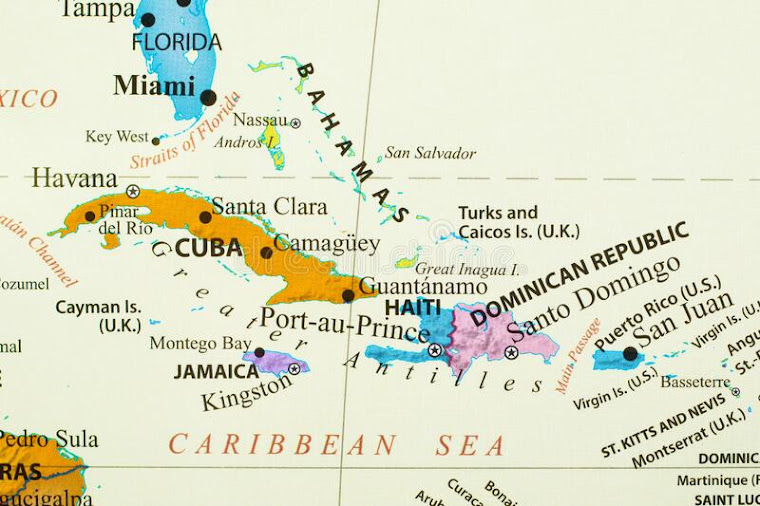
Andros Island is the “sleeping giant” of The Bahamas

The Islands of the Bahamas - Andros


By Philip C. Galanis


Andros Island, The Bahamas

“…Love, peace and unity, all over Andros land, Oh my Andros, she big, she big, she big…”
– Androsian musician, Elon Moxey


Bahamians love summer. School is out, the kids are home, beaches are crowded, and our culturally casual pace of life slows to a more sedate saunter, often as much for the heat that exceeds 90 degrees as for the humidity that sometimes exceeds 90 percent. The perennial, though futile, effort to stay cool, especially at night when BEC (the Bahamas Electricity Corporation) fails us, is aided by evening showers that both refresh and reset the temperature to a more bearable level.

Summer also marks the travel period, with many Bahamians travelling to the United States and Canada, although more recently more Bahamians have opted to travel to the Family Islands. Therefore, over the next few weeks, we will devote this column to a series on domestic tourism as we Consider this… what is the lure for Bahamians to explore our Family Islands? This week, we will explore the island of Andros, the largest of the major 26 inhabited Bahamian islands that is often referred to as “the Big Yard”.

Geography

Andros Island has an area greater than all the other 700 Bahamian islands combined. It is the sixth largest Caribbean Island after Cuba, Hispaniola, Jamaica, Puerto Rico and Trinidad. Andros is approximately 2,300 square miles in area – roughly 104 miles long and 40 miles wide at its widest point - with a population of approximately 7,400 inhabitants based on the 2010 census. While it is considered a single island, Andros consists of hundreds of small islets and cays connected by mangrove estuaries and tidal swamplands as well as three major islands: North Andros, Mangrove Cay, and South Andros.

History

Approximately 40,000 Lucayans, a subgroup of the TaĆ­no people, were here when the Europeans first landed. The Spanish valued the Lucayans’ free-diving skills in fishing for conch, therefore they enslaved the natives and transported them to Cubagua to work as pearl divers. The Lucayans suffered high mortality due to infectious diseases carried by the Spanish, diseases for which the Lucayans had no immunity.

After the Lucayans became extinct, there were no known permanent settlements in The Bahamas — including Andros island — for approximately 130 years. However, during the late 1600s and early 1700s, pirates and buccaneers frequented Andros island. Morgan's Bluff and Morgan's Cave on North Andros are named after the famous privateer-pirate, Henry Morgan.

Loyalists fleeing the United States during and after the American Revolution settled on various Bahama Islands including Andros, bringing their slaves with them and, by 1788, Andros reported 22 white heads of families, with a total of 132 slaves who cultivated the land.

After the United States acquired Florida in 1821, Seminoles and black American slaves escaped and sailed to the west coast of Andros where they established the settlement of Red Bays. Hundreds more of these “Black Seminoles” joined them in 1823, with more arriving in later years. While sometimes called "Black Indians", the descendants of Black Seminoles identified as Bahamians, while acknowledging their connections to the American South.

In the 19th and early 20th centuries, Greek spongers immigrated to Andros for the rich sponge fishing on the Great Bahama Bank off Andros' west coast. For many years, Andros sponging was The Bahamas' largest industry until the industry was wiped out by the Red Tide algae in the 1930s.

From the 1950s through the 1970s, the Owens Lumber company, a US-owned company, deforested much of the indigenous pineyards that grew on North Andros. As a result of poor planning for sustainable harvests, the island today has overcrowded forests of mainly young trees.

Economy

Tourism is Andros island's largest industry, and the largest private employer. Andros is marketed as the least-explored island in the chain. From Nicholls Town in the north to Little Creek in the south are 35–40 hotels, resorts, guest houses and lodges with a total of approximately 400 rooms.

Small Hope Bay Lodge, near Fresh Creek, the first dive-dedicated resort in the world, was founded by Dick Birch, a Canadian immigrant. It continues to operate, owned and managed by Dick Birch's children.

Andros is known as the bonefish capital of the world because it is surrounded by hundreds of square miles of fishable flats. Other varieties of fishing are available on Andros and there is an abundance of snapper and grouper.

Tourists are primarily scuba divers, attracted to the barrier reef, the third largest in the world, the Tongue of the Ocean, and Andros’ world-famous blue holes. Also vacationing in Andros are bone-fishing anglers, and those looking for relaxation at a destination that, while off the beaten path, has easy air connections.

Infrastructure

The infrastructure in Andros is like many of the islands of The Bahamas. The public utilities are generally of average quality and in urgent need of upgrading. The roads, especially the main highway that connects North Andros to the south with its many cavernous pot-holes, are poorly maintained and extremely difficult to navigate.

Andros has four airports with paved runways: San Andros Airport at Nicholls Town, Andros Town International Airport located at Fresh Creek, the Clarence A. Bain Airport at Mangrove Cay and Congo Town Airport in South Andros.

Andros is connected to Nassau by Sea-Link ferry, which runs daily, and is also accessible by mailboat from Nassau and for inter-island travel with stops at numerous Andros settlements. There is no public transport on Andros Island, but a private shuttle bus service on North Andros connects Nicholls Town with Behring Point. Taxi and rental car service are available at all four airports.

Recent developments

The Bahamas Agriculture and Marine Science Institute (BAMSI) is the most recent development on North Andros.

BAMSI is expected to establish and operate a state-of-the-art comprehensive commercial teaching farm, which will include crop and livestock enterprises, production of fresh fruits, condiments, fish, meat and value-added processed items, primarily for the domestic Bahamian market.

The Institute intends to demonstrate that the production of farm and fish products is financially and commercially self-sustainable, and once BAMSI is fully operational, it should significantly reduce the nation’s billion-dollar food import bill.

Future prospects

Given Andros’ proximity to Nassau (only 30 miles away), its gargantuan land mass, its abundant fresh water supply, its multifaceted natural resources and inviting landscape, although there is an urgent need to upgrade the airports, docks and roads, the island’s future prospects are enormously positive.

However, unless the prohibitive cost of travelling to Andros, as well as the other Family Islands, is creatively and comprehensively addressed, the average Bahamian will consider vacationing in the United States before his own country because the airfares are the same and, in some instances, less expensive.

Additionally, the cost of accommodations and transportation once on the island are very high, given the amenities offered. When a family travels to a Family Island now, since the family members who used to live there and offer housing are for the most part no longer there, they must consider lodging cost as well as the cost of other activities. A vacationing Bahamian family needs to be able to find things to do, tours to take and other ways to spend their time.

We have seen the wonderful Androsian events like Crab Fest, homecomings and regattas which draw large crowds. The same wonderfully creative Family Islanders responsible for those activities should also turn their attention to more regular events aimed at tourists, domestic and foreign.

We should approach the challenge of Family Island tourism fully cognizant that the Family Islands are in direct competition for the vacationing dollar with North America, where not only do many Bahamian travelers feel that they can get more bang for their buck, but where there is a plethora of activities for young and old alike.

Conclusion

Undoubtedly Andros is the “sleeping giant” of The Bahamas. Once it is seriously encouraged to stir from its slumber, through public/private partnerships, Andros will become a more significant contributor to the nation’s GDP, growth and development.

Philip C. Galanis is the managing partner of HLB Galanis and Co., Chartered Accountants, Forensic & Litigation Support Services. He served 15 years in parliament. Please send your comments to pgalanis@gmail.com.

August 11, 2014

thenassauguardian