Monday, October 14, 2013

8 Myths and Atrocities About Christopher Columbus and Columbus Day


On the second Monday of October each year, Native Americans cringe at the thought of honoring a man who committed atrocities against Indigenous Peoples.
 
Columbus Day was conceived by the Knights of Columbus, a Catholic Fraternal organization, in the 1930s because they wanted a Catholic hero. After President Franklin D. Roosevelt signed the day into law as a federal holiday in 1937, the rest has been history.
 
In an attempt to further thwart the celebration of this “holiday,” we at ICTMN have outlined eight misnomers and bloody, greedy, sexually perverse and horrendous atrocities committed by Columbus and his men.
 
On the Way—Columbus Stole a Sailor’s Reward
 
After obtaining funding for his explorations to reach Asia from the seizure and sale of properties from Spanish Jews and Muslims by order of King Ferdinand and Queen Isabella, Columbus headed out to explore a new world with money and ships.
 
Brimming with the excitement of discovering new land, Columbus offered a reward of 10,000 maravedis or about $540 (a sailor’s yearly salary) for the first person to discover such land. Though another sailor saw the land in October 1492, Columbus retracted the reward he had previously offered because he claimed he had seen a dim light in the west.

Columbus Never Landed on American Soil—Not in 1492, Not Ever
 
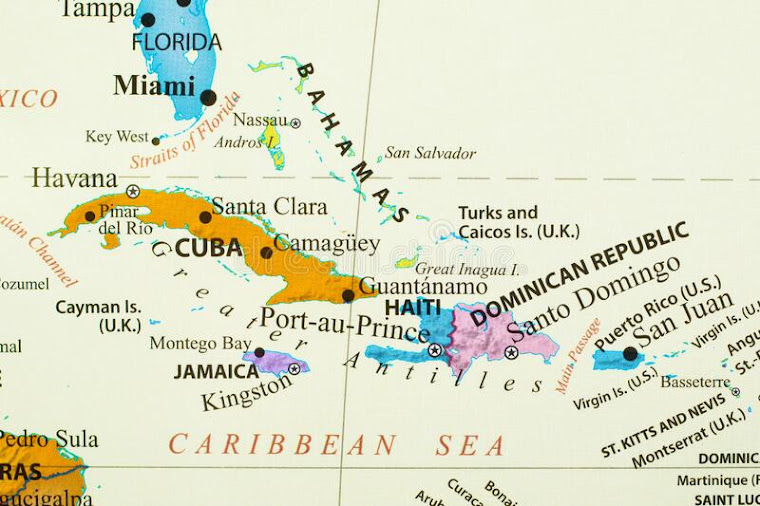
We’re not talking about the Leif Ericson Viking explorer story. We mean Columbus didn’t land on the higher 48—ever. Columbus quite literally landed in what is now known as the Bahamas and later Hispaniola, present-day Haiti and the Dominican Republic.

Upon arrival, Columbus and his expedition of weapon laden Spaniards met the Arawaks, Tainos and Lucayans—all friendly, according to Columbus’ writings. Soon after arriving, Columbus wrecked the Santa Maria and the Arawaks worked for hours to save the crew and cargo.
 
Impressed with the friendliness of the native people, Columbus seized control of the land in the name of Spain. He also helped himself to some locals. In his journal he wrote:
 
“As soon as I arrived in the Indies, on the first Island which I found, I took some of the natives by force in order that they might learn and might give me information of whatever there is in these parts.”
 
The four voyages of Columbus are shown here.
 
Columbus Painted a Horrible Picture of Peaceful Natives
 
When Columbus first saw the Native Arawaks that came to greet him and his crew he spoke with a peaceful and admiring tone.
 
“They … brought us parrots and balls of cotton and spears and many other things… They willingly traded everything they owned… They were well-built, with good bodies and handsome features…. They do not bear arms, and do not know them, for I showed them a sword, they took it by the edge and cut themselves out of ignorance. They have no iron. Their spears are made of cane… . They would make fine servants…. With fifty men we could subjugate them all and make them do whatever we want.”
 
After several months in the Caribbean, on January 13, 1493 two Natives were murdered during trading. Columbus, who had otherwise described the Natives as gentle people wrote “(they are) evil and I believe they are from the island of Caribe, and that they eat men.” He also described them as “savage cannibals, with dog-like noses that drink the blood of their victims.”
 
The cannibal story is taught as fact in some of today’s schools.

This painting of Christopher Columbus was done in 1519 by Sebastiano del Piombo.
 
Columbus’ Men Were Rapists and Murderers
 
On Columbus’s first trip to the Caribbean, he later returned to Spain and left behind 39 men who went ahead and helped themselves to Native women. Upon his return the men were all dead.
 
With 1,200 more soldiers at his disposal, rape and pillaging became rampant as well as tolerated by Columbus.
 
This is supported by a reported close friend of Columbus, Michele de Cuneo who wrote the first disturbing account of a relation between himself and a Native female gift given to him by Columbus.
 
“While I was in the boat I captured a very beautiful Carib woman, whom the said Lord Admiral gave to me, and with whom, having taken her into my cabin, she being naked according to their custom, I conceived desire to take pleasure. I wanted to put my desire into execution but she did not want it and treated me with her finger nails in such a manner that I wished I had never begun. But seeing that (to tell you the end of it all), I took a rope and thrashed her well, for which she raised such unheard of screams that you would not have believed your ears. Finally we came to an agreement in such manner that I can tell you that she seemed to have been brought up in a school of harlots.”
 
Several accounts of cruelty and murder include Spaniards testing the sharpness of blades on Native people by cutting them in half, beheading them in contests and throwing Natives into vats of boiling soap. There are also accounts of suckling infants being lifted from their mother’s breasts by Spaniards, only to be dashed headfirst into large rocks.
 
Bartolome De Las Casas, a former slave owner who became Bishop of Chiapas, described these exploits. “Such inhumanities and barbarisms were committed in my sight as no age can parallel,” he wrote. “My eyes have seen these acts so foreign to human nature that now I tremble as I write.”
 
Columbus Enslaved the Native People for Gold
 
Because Columbus reported a plethora of Natives for slaves, rivers of gold and fertile pastures to Queen Isabella and King Ferdinand, Columbus was given 17 ships and more than 1,200 men on his next expedition. However, Columbus had to deliver. In the next few years, Columbus was desperate to fulfill those promises—hundreds of Native slaves died on their way back to Spain and gold was not as bountiful as expected.

Christopher Columbus presents Native Americans to Queen Isabella.
 
Columbus forced the Natives to work in gold mines until exhaustion. Those who opposed were beheaded or had their ears cut off.
 
In the provinces of Cicao all persons over 14 had to supply at least a thimble of gold dust every three months and were given copper necklaces as proof of their compliance. Those who did not fulfill their obligation had their hands cut off, which were tied around their necks while they bled to death—some 10,000 died handless.
 
In two years’ time, approximately 250,000 Indians on Haiti were dead. Many deaths included mass suicides or intentional poisonings or mothers killing their babies to avoid persecution.
 
According to Columbus, in a few years before his death, “Gold is the most precious of all commodities; gold constitutes treasure, and he who possesses it has all he needs in the world, as also the means of rescuing souls from purgatory, and restoring them to the enjoyment of paradise.”
 
Columbus Provided Native Sex Slaves to His Men
 
In addition to putting the Natives to work as slaves in his gold mines, Columbus also sold sex slaves to his men—some as young as 9. Columbus and his men also raided villages for sex and sport.
 
In the year 1500, Columbus wrote: “A hundred castellanoes are as easily obtained for a woman as for a farm, and it is very general and there are plenty of dealers who go about looking for girls; those from nine to ten are now in demand.”
 
Columbus’ Men Used Native People as Dog Food
 
In the early years of Columbus’ conquests there were butcher shops throughout the Caribbean where Indian bodies were sold as dog food. There was also a practice known as themontería infernal, the infernal chase, or manhunt, in which Indians were hunted by war-dogs.
 
These dogs—who also wore armor and had been fed human flesh, were a fierce match for the Indians. Live babies were also fed to these war dogs as sport, sometimes in front of horrified parents.
 
Columbus Returned to Spain in Shackles—But Was Pardoned
 
After a multitude of complaints against Columbus about his mismanagement of the island of Hispaniola, a royal commissioner arrested Columbus in 1500 and brought him back to Spain in chains.
 
Though he was stripped of his governor title, he was pardoned by King Ferdinand, who then subsidized a fourth voyage.
 
 
October 14, 2013 


Saturday, October 12, 2013

The Bahamas with 13 other CARICOM member states are suing Britain, Holland and France ...for slavery compensation payments ...Members have emphasised that genocide, slavery and colonialism ...had negatively impacted the Caribbean’s developmental path


Slavery Compensation


Bahamas Suing Uk Over Slavery


By RASHAD ROLLE
Tribune Staff Reporter


THE Bahamas is one of a group of countries in the region suing Britain, Holland and France for slavery compensation payments.


The country is aligning itself with 13 other CARICOM member states demanding what could be hundreds of billions of dollars in reparations for slavery.
 
During a CARICOM (Caribbean Community) conference on ‘Regional Reparations’ in St Vincent and the Grenadines, a decision was made to pursue legal action against the former colonial powers.
 
CARICOM has hired the British law firm Leigh Day, which recently won compensation for hundreds of Kenyans tortured by the British colonial government during the Mau Mau rebellion of the 1950s.
 
CARICOM has not specified how much money it is seeking but Britain paid slave owners £20 million when it abolished slavery in 1834, which would be the equivalent of £200 billion today, or $318 billion.
 
Fred Mitchell, Foreign Affairs Minister, said yesterday: “We haven’t defined a position beyond the general position taken at the last CARICOM meeting. We weren’t represented there.  However, whatever was the decision that came out of the last meeting, that would represent our position.”
 
Speakers at the conference in St Vincent and the Grenadines emphasised that genocide, slavery and colonialism had negatively impacted the Caribbean’s developmental path.
 
A communiqué released at the end of the conference said the goal of CARICOM’s Reparations Commission was to “establish the moral, ethical and legal case for the payment of reparations by the governments of all former colonial powers and the relevant institutions in those countries, to the nations and people of the Caribbean community for the crimes against humanity and native genocide, the Transatlantic slave trade and a racialised system of chattel slavery.”
 
 Dr Ralph Gonsalves, St Vincent and the Grenadines’ Prime Minister, told a recent meeting in New York, where he was present for the 68th Session of the United Nations General Assembly Debate: “When I take over the chairmanship of CARICOM in January I hope to get letters to Europe.
 
“We’re going for reparations because of state-sponsored genocide and state-sponsored slavery”, he added.
 
October 11, 2013


Thursday, October 10, 2013

From Her Majesty’s Prisons (HMP) to The Bahamas Department of Correctional Services?

Prison To Be Renamed–Overcrowding Addressed


Prisons in The Bahamas

By Kendea Smith
The Bahama Journal

There are more than 1,500 Bahamians imprisoned at Her Majesty’s Prisons (HMP) – twice as many as the Fox Hill compound is designed to hold at capacity, according to National Security Minister Dr. Bernard Nottage.

That’s one of the reasons why the government is seeking parliamentary approval on the Correctional Services Bill 2013.

Dr. Nottage, who moved the bill in the House of Assembly Wednesday, also revealed that there are 800 inmates in Maximum Security.

Of that number, 92 people are awaiting trial for murder; 200 inmates are under the age of 17 – 44 of whom are 16-years-old.

There are several facets of the bill.

The first part, Dr. Nottage says, deals with renaming HMP the Bahamas Department of Correctional Services.

The bill, if passed, would also facilitate a new title for the head of the prisons.

He or she would now be called the commissioner of correctional services.

“Ultimately, we are changing the prison to a correctional facility. We are changing the objectives from the emphasis on incarceration to placing an emphasis on rehabilitation and training so as persons who are admitted in prison will return to society perhaps better equipped to function in society as a lawful citizen than they were when they were admitted,” Dr. Nottage said.

“The commissioner shall have responsibility for the general management of all correctional facilities ensuring the inmates are treated in a humane manner; ensuring that discipline and security are enforced; encouraging reformation training and the rehabilitation of inmates; proper deportment among staff members; providing annual reports; administering periodic drug testing to be performed on inmates; psychiatric testing when necessary and so forth.”

“This will be a very important task and this person will be critical to the proper change in strategy and philosophy of the prison,” Dr. Nottage added.

The minister said the bill also addresses issues in the prisons such as drugs, cell phones and weapons circulating around the prison.

“In our prisons we have many issues,” Dr. Nottage said. “We have problems with drugs and cell phones. How they get into the prison only God knows. Prisoners are the most innovative people on this side of Jordan.”

Other issues include “slopping” which means the use of buckets for human waste, which has been going on at the prison for decades.

The minister said the bill also makes provisions for the establishment of a Correctional Services Review Board, which would serve as a watchdog for conditions at the prison.

“This board will have the function of keeping the prison under review constantly and advise the minister of all aspects of correctional facilities to visit and to inspect once every quarter whatever correctional facilities that we have and to be the watchdog for the public or the minister,” Dr. Nottage said.

“This is very important because I am led to believe had we had this review board with these kinds of responsibilities over the years then the prison would not have deteriorated as to what we have today.”
Dr. Nottage said a lot of Bahamians have the view that people who are convicted of crime should “be locked away and we should throw away the key.”

“We have to remember number one that that is inhumane. Number two most of these people are going to return to society and the way we treat them will have a very serious impact on how they or if they are able to integrate into society,” he said.

“There is a very, very important thing that they must understand. There are people who go to work there and they have not committed any crime and they have to exist in those same conditions. The trouble is that we do have priorities in the country and I think many people would consider the prison the least of those priorities but when you have 1,500 Bahamians living in there every day… the campus is so big that there are a lot of good things that could go on there if we could just get it right.”

Other aspects of the bill include employment and earnings of inmates, addressing the release of inmates and offences within the prison.

October 10, 2013

Jones Bahamas

Wednesday, October 9, 2013

Is the British Government responsible for the High level of Cancer in The Bahamas?


Cassius Stuart

 
Official Press Release From The Office of Mr. Cassius Stuart, October 9, 2013.


For many years, Bahamian men and woman have been faced with an unprecedented level of cancer, in particular breast cancer and prostrate cancer. In fact, the Bahamas has a population that has shown the highest mutation rate in the world within the genes that can cause breast and ovarian cancer.”1 In the case of breast cancer, most of the research points to a mutated gene called BRCA1 and BRCA2. The leading medical minds in the field of oncology in the Bahamas and abroad claim that the manifestation of this gene in the local population is as a result of hereditary factors and the gene pool in the Bahamas being close. In other words, relatives intermarrying.

“The BRCA1 and BRCA2 genes were first discovered in 1990 and have since been linked to a genetic predisposition to breast and ovarian cancer in women. Several other studies have linked BRCA genetic mutations to other types of cancer including pancreatic and prostate.”

 In local studies, greater than 90 per cent of the associated BRCA hereditary breast cancer was linked to one specific mutation: IVS13+1G>A, an African founder mutation.2 While I would be the first to admit that I am not a scientist nor do I have any advance medical training, what I do possess is common sense. If intermarrying or being of African descent is the stimulus that activates this mutated gene that leads to cancer, then why is it that only the Bahamas is experiencing this epidemic? Many other counties in the western hemisphere have a large population on African decedents, including Brazil which has the largest population of African decedents outside of Africa.

Further, if the gene pool being close is another cause then why isn’t the Royal family plagued with some form of cancer? They have intermarried for hundreds of years. The argument of an African mutated gene and the local gene pool being to close in the Bahamas is highly arguable and in my humble opinion, doesn’t hold much water. Common sense will tell you that something outside of nature has greatly contributed and is continuing to contribute to this wide spread dilemma.

Based on my research and undeniable evidence, the Bahamian cancer epidemic is in great part attributed to the action of the British government having carried out biological and chemical tests in the Bahamas on Bahamians many years ago. This program was activated and authorized under the leadership of Mr. Winston Churchill, the then British Prime Minister. Under the program, the British Government tested a series of Biological and Chemical weapons on Bahamians in The Bahamas in the 1950’s in a secret operation called Operation Ozone and Operation Negation. Between 1953 and 1964 top secret trials were carried out using a chemical concoction of zinc cadmium* sulphide to simulate how a cloud would disperse biological agents. The unsuspecting population was sprayed covertly with the poisonous compound at least 76 times.3 These tests took place on British as well as Bahamian soil.

*”Cadmium is a poisonous heavy metal. If uncontrolled, it can produce toxic effects on humans. Ingestion of significant amounts of cadmium can lead to poisoning and damage to the liver, kidneys, and respiratory organs. High doses of cadmium over long periods of time cause bone and kidney problems and cancer”.

These operations are more than likely contributing to the root cause of this wide spread cancer we see in the Bahamian population since there is an undisputed link to cadmium and breast cancer. In an article posted on the internet by Anti Oligarch entitled, “How naval intelligence tested lethal ‘plague bombs’ off the British coast”, dated January 4, 2011 the article revealed that “The then Prime Minister, Winston Churchill, felt that Scottish coastal waters were not the best location for biological tests and ordered a new site to be found. Scientists and intelligence officers then settled on a tiny area of the Bahamas which they described as “the best place we could find on the surface of the globe”. This Caribbean experiment was codenamed Operation Ozone and it began in 1954.”

The article goes on to explain that, “During the initial meetings, one of the board members, Lord Stamp, raised concerns about testing plague and “questioned whether the services required an agent which would give rise to an epidemic”. But leading scientist Sir Paul Fildes said that “the employment of P pestis [plague] as an agent would be contrary to our present policy” but it should be tested as “a potential enemy might use it against us”. In other words, secret, live tests were done as if the enemy was using it on the British.3

In another shocking article written by The UK Guardian, Monday 10 September 2001 04.58 EDT entitled.” Britain ordered germ bombs in cold war Anthrax and plague bacteria tested for 'biological retaliation'”, the Article explains that, “In 1994, the Conservative government said in a parliamentary answer that five open-air trials of dangerous bacteria and viruses had been carried out at sea, in the late 1940s and 1950s - three in the Caribbean and two off Stornoway on Lewis.

Dr. Balmer has uncovered the wide range of pathogens used. Among the biological warfare agents trialled was anthrax. There was also brucella and francisella tularensis, which cause severe fever. Pasteurella pestis, the plague bacterium, was released in the first Hebrides trials, despite safety concerns.

A highly infectious and debilitating, if rarely fatal, virus causing Venezuelan equine encephalitis was deliberately released in trials off the Bahamas, 60 miles south of Nassau, in 1954. Planning Operation Ozone, defence officials carefully suggested there would be "no adverse effect on the tourist trade" 4

This dreadful act by the British Government in the 1950’s on an unsuspecting people was a cowardly act of barbarism and savagery. Today there is overwhelming evidence that chemical weapons were used on Bahamians and there may be a direct link between the high levels cancer in our population and the British Biological weapons experiment on Bahamians. Such acts should not go unanswered.  The British Government needs to come clean about their secret tests. In addition the Bahamian people need an official apology and explanation from the British. The Prime Minister and the Ministry of Foreign Affairs must demand that the British Government release all information related to its chemical weapons experiment program in the Bahamas.

Further, the Bahamas government must seek assistance from the Unite Nations for independent scientist to collaborate the link between the British chemical weapons program and the high rate of cancer in The Bahamas.

In the event that there is a direct link between the British chemical weapons program and the high rate of cancer in the Bahamas, The British Government must be held liable and full reparation must be given to all the victims and families in the Bahamas who have had and are suffering with the devastating disease.

Tuesday, October 8, 2013

Bahamian Heroes


Bahamian Heroes

Bahamian National Heroes


by Philip C. Galanis


“I think of a hero as someone who understands the degree of responsibility that comes with his freedom.” – Bob Dylan

Next week, we celebrate Discovery Day in The Bahamas.  This day is also celebrated in several Caribbean countries as well as North, Central and South America.  While that date was initially named Columbus Day, there are some who will challenge whether the person for whom this holiday was named was a real hero, since his “discovery” of the New World led to the extinction of the native Carib and Arawak Indians of the region.  Therefore, this week, we would like to Consider This... is it time for us to bring into force a national honors system for Bahamian heroes?

Hero defined

Various definitions are used to describe a hero.  Invariably they usually refer to a person who is admired for acts of bravery or for the achievement of legendary feats or for possessing noble qualities.  The hero of classical mythology fame normally represents a legendary personality, often of divine descent and endowed with considerable strength and prowess.  In the literary sense, the hero is usually the principal character or central figure of such work.

Developing a Bahamian national honors system

Historically, our national heroes are recognized through Great Britain, principally by the national honors bestowed by the monarch, notably in the Queen’s New Year’s or Birthday Honors.  The British honors system is a means of rewarding individuals for their personal bravery, achievement, or service to the United Kingdom, to former British Colonies that have attained political independence, and to the British Overseas Territories.  The system includes three types of award: honors, decorations and medals.  Honors generally recognize merit in terms of achievement and service; decorations are used to recognize specific deeds; and medals are used to recognize bravery, long and/or valuable service and/or exceptional conduct.

We have become very familiar with such honors, including knighthoods and other auspicious awards such as the designation of Member of the British Empire (MBE), or Order of the British Empire (OBE).  All of these honors, decorations and medals are rooted in British conventions and culture.  This is perhaps the most compelling reason for establishing a Bahamian national honor system where we are not dependent on the British to confer such honors upon us.

In our region, Jamaica is far ahead of most of the other English-speaking Caribbean countries, including The Bahamas.  Jamaica developed a unique system of national honors with the passage of the National Honours and Awards Act by its Parliament in 1969.

The quintessential Jamaican honor, “The Order of National Hero”, is conferred upon Jamaican citizens who have rendered service of the most distinguished nature to Jamaica and entitles the recipient to the pre-nominal style of “The Right Excellent” and to the post-nominal title “National Hero of Jamaica”.  At the other end of the honors system, the “Order of Jamaica” is fifth in the order of precedence, and is awarded to Jamaican citizens of outstanding distinction.  Membership in this order is considered the equivalent of a British knighthood, and entitles its recipients to the pre-nominal style of “The Honorable” and to the post-nominal title “Order of Jamaica” or “O.J.”

Trinidad and Tobago also developed a similar national honors system of awards after its independence from Great Britain in 1962, the same year as Jamaica.  These awards supplanted the British honors, were approved in 1967 and first awarded in 1969.

Accordingly, there is precedence in our region and elsewhere within the British Commonwealth for the development of an indigenous, national honors system.  It really begs the question: Why don’t we have our own, indigenous national honors system in The Bahamas?  Sadly, it is for the very reason why we are habitually late at advancing progressive movements and institutions in our society.  It seems that Bahamians possess an innately, indescribable, illogical and inherent love for things foreign.  And sadly, it bespeaks a lack of confidence in ourselves, characteristic of our slender sense of sound self-worth and a deep-rooted lack of creativity and ingenuity.  The challenge for us is how do we overcome such deficiencies?

Bahamian national heroes, past and present

It is very difficult to present a persuasive argument that there is a shortage of Bahamian heroes.  Within minutes of cursorily considering this matter, we arrived at the following list of a few national heroes.  This list is by no means all-inclusive, but simply demonstrates that we have a very large population of persons who qualify as national heroes in the following descriptive disciplines:

• Freedom fighters: Pompey, Sir Milo Butler and Sir Clifford Darling.

• Politicians: Sir Lynden Pindling, Sir Cecil Wallace-Whitfield, Sir Kendal Isaacs, Sir Stafford Sands, Sir Randol Fawkes, Arthur D. Hanna, Sir Arthur Foulkes, Sir Orville Turnquest, Hubert Ingraham, Perry Christie, Loftus Roker, and George Smith.

• Religious leaders: Archbishop Drexel Gomez and Monsignor Preston Moss.

• Educators: N.G.M. Major, C.V. Bethel, Dr. Keva Bethel, Leviticus ‘Lou’ Adderley and Vincent Ferguson.

• Artists: Amos Ferguson, Brent Malone, Jackson and Stan Burnside, Max Taylor and Patrick Rahming.

• Entertainers: Joseph Spence, Paul Meeres, John Berkley ‘Peanuts’ Taylor and Ronnie Butler.

• Sports icons: Tommy Robinson, Sir Durward Knowles, and the Golden Girls who won gold medals in the Olympics in the 4x100 relay.

• Cultural icons: Eugene Dupuch, Winston Saunders, Sir Sidney Poitier, Bert Williams, Randolph Symonette, James Catalyn, Jeannie Thompson, Junkanoo greats Vincent ‘Gus’ Cooper, Percy ‘Vola’ Francis, again, Jackson Burnside and Paul Knowles.

• Suffragettes: Mary Ingraham, Georgiana Symonette, Mabel Walker, Eugenia Lockhart and Dame Doris Johnson.

A Hall of Heroes

The time has come to recognize our national heroes and to confer upon them locally developed honors to recognize their contributions to national development in various fields of endeavor.  It is also urgent that we establish a “Hall of Heroes” which need not necessarily be situated in a single location or facility.  Our national heroes, once appropriately named to the Hall of Heroes, can be recognized in designated locations which could include the Dundas Centre for Performing Arts, the National Art Gallery, The College of The Bahamas, the Queen Elizabeth Sports Centre, (which should be renamed after a Bahamian sports icon), Lynden Pindling International Airport, Clifton Heritage Park and other locations, such as some of the roundabouts on our various islands.

Conclusion

The urgent need for the development of a Bahamian national honors system cannot be overstated.  Some Bahamians have lobbied for this for many years, with substantially unimpressive progress from the political directorate in a nationally established, systematic and sustained manner.

The bill that was passed during the previous Christie administration that established a national heroes holiday and national honors was ignored by the Ingraham government, notwithstanding the unrelenting pressure from many sectors to recognize our heroes with Bahamian awards.

It is now time for this Christie administration to not only resurrect that act and bring it to life, giving honor to those among us who deserve it, but to do it in the grand and respectful manner that Bahamian honorees deserve, finally joining our Caribbean counterparts in celebrating our own, in our own way, and showing the world how much we value ourselves and the contributions of our countrymen to this 21st century nation.

• Philip C. Galanis is the managing partner of HLB Galanis & Co., Chartered Accountants, Forensic & Litigation Support Services. He served 15 years in Parliament. Please send your comments to pgalanis@gmail.com.

October 07, 2013

Bahamian National Heroes pt. 2

thenassauguardian

Wednesday, October 2, 2013

Simon Potter, Bahamas Petroleum Company (BPC) chief executive ...hopes that there would be enough Bahamian investor interest ...to indicate “a momentum of support” for Bahamas Petroleum Company ...and its oil exploration activities in The Bahamas

Oil Explorer Share Issue In Year-Long Gov't Approval Wait


By NEIL HARTNELL
Tribune Business Editor


The Bahamas Petroleum Company’s (BPC) planned share offering to local investors has been delayed for over a year by the wait for the Government to give its consent for exchange control approval, Tribune Business can reveal.
 
Simon Potter, BPC’s chief executive, declined to comment on the issue when questioned by this newspaper, but sources familiar with the situation said the company’s application to the Central Bank of the Bahamas had been submitted around 12 months ago.
 
While the Central Bank has nominal authority on this issue, the real power lies with the Government, which has to give the ‘nod’ on applications by major investors for exchange control approval.
 
Such approvals are sometimes long in coming, as Cable Bahamas recently found out in seeking approval for its $100 million worth of US deals, and Tribune Business understands that, in similar fashion, BPC’s application has been sitting on the Government’s desk, not moving.
 
Exchange control approval is a vital prerequisite for BPC to launch its long-promised Bahamian Depository Receipt (BDR) share offering.
 
This is because the proceeds raised from the offering to Bahamian investors will have to be converted into UK sterling to purchase BPC shares listed on London’s Alternative Investment Market (AIM). These will then be backed by the BDR derivatives, listed and traded on the Bahamas International Securities Exchange (BISX).
 
Mr Potter, though, did reiterate BPC’s intention to proceed with its share offering as a way to give Bahamians an opportunity to buy into, at the start-up stage, an investment that could ultimately be enormously profitable.
 
Confirming that the oil exploration firm was in discussions with BISX and the regulators over the proposed offering, Mr Potter acknowledged that BPC as an investment was “not for everyone”.
 
Pointing out that an investment in the company carried “technical” as well as the usual ‘financial’ risks, Mr Potter said that because there were no commercial quantities of oil yet confirmed in Bahamian waters, BPC was a high reward/high risk offering.
 
But, while “success isn’t measured by take-up”, Mr Potter expressed hope there would be enough Bahamian investor interest to indicate “a momentum of support” for BPC and its oil exploration activities.
 
“Can I sit here and tell you when it will occur? No, but in terms of our prospectus, it’s in at the Securities Commission,” Mr Potter told Tribune Business, in response to queries over when the BDR issue might come to market.
 
“They’ve [the Commission] got their job to do, and we’re answering their questions. There are some considerations, and we’re listening to suggestions from BISX, the Central Bank and the Securities Commission.
 
“The company has its objectives, and these commissions have their statutes and rules. We’re listening to their suggestions.”
 
Added spice to BPC’s relationship with the regulators has come through Hillary Deveaux’s appointment as the Securities Commission’s acting executive director.
 
Mr Deveaux suggested as recently as late July, just prior to his appointment, that he would be “shocked” if the Securities Commission approved BPC’s share offering, on the grounds that the company’s primary listing was not on a top-tier stock exchange.
 
He explained that the oil explorer’s planned share issue to Bahamian investors did not meet the rules criteria he had left in place for such BDR issues.
 
This required companies, which decided to offer BDR shares to Bahamian institutional and retail investors, to have a primary listing on the world’s top stock markets - such as the New York Stock Exchange (NYSE) or London Stock Exchange (LSE).
 
This was designed to ensure BDR issuers complied with the necessary reporting and governance requirements for public companies, but Mr Deveaux argued that BPC’s primary listing - on AIM - did not meet the previously set criteria.
 
He described AIM, the UK’s junior stock market for incubator and developing companies, as one more focused on growth rather than regulation of its listed companies.
 
As a result, Mr Deveaux said BPC would be better advised to seek a listing on BISX’s ‘main board’.
 
And, failing to do that, he suggested Bahamians should go through the investment currency market and Central Bank exchange control regime, and buy shares on the London market if they wished to invest in AIM.
 
Mr Potter did not comment on BPC’s relationship with the Securities Commission or whether Mr Deveaux’s appointment may impact the BDR issue’s approval.
 
Sources close to BPC had previously described Mr Deveaux’s comments as “rather strange”, pointing out that it had to comply with numerous AIM listing, governance and financial reporting/disclosure requirements.
 
And Michael Anderson, president of RoyalFidelity Merchant Bank & Trust, which is acting as BPC’s financial adviser and placement agent on the BDR issue, said earlier that the rules referred to by Mr Deveaux had “changed quite substantially” since he left the Securities Commission.
 
Given that BPC has yet to prove beyond doubt that commercial quantities of oil exist in Bahamian waters, investors will effectively be speculating on the prospects of a ‘black gold’ discovery coming true.
 
In essence, the BPC BDRs are a venture capital investment, or ‘high risk, high reward’ play. There is a high risk that the company might find nothing, but by participating in equity ownership at the ground level, Bahamian investors would position themselves for potentially tremendous upside and wealth creation.
 
Mr Potter acknowledged this, telling Tribune Business: “An investment in a company like BPC is not for everyone, and the reason I say that is not only because there are the usual financial risks that occur with any investment, but for expansion companies there are technical risks that need to be understood and appreciated.
 
“Therefore, there are investment risks at either end of the spectrum. It can be a spectacular success, but if we don’t turn up any oil, we will have to get our thinking caps on.”
 
The BPC chief executive indicated there were ways to address any regulatory concerns about how the BDR issue would be pitched, agreeing that the offering had to be marketed “sensitively”.
 
“I’d like for there to be a large take-up where clearly there’s a momentum in support of the company and its objectives in exploring for oil in the Bahamas,” Mr Potter added.
 
October 02, 2013


Tuesday, October 1, 2013

Value Added Tax (VAT) exempt companies


Value Added Tax VAT Bahamas


No industry VAT ‘zero rated’ except exporters


Domestic travel will not have VAT added


BY ALISON LOWE
Guardian Business Editor
alison@nasguard.com


Domestic and international transportation, educational, medical and dental services, as well as some financial services, sales and rentals of residential homes and certain bread basket items​,​ will all be VAT exempt, Guardian Business can confirm.

While some of these areas were anticipated as likely to be VAT exempt in the government’s white paper, others were not, including domestic and international travel. This includes both air travel and taxi and bus services, Guardian Business understands.​

International travel would be VAT exempt if purchased through a local supplier of travel services.

This selection of VAT exempt services and goods was revealed by VAT consultants at a recent meeting between the government’s VAT personnel and the Bahamas Society of Engineers.

​It adds to what is already known about the way in which financial services will be treated under the regime, including that most commercial bank services ​would be sold without VAT added, as would health and life insurance, while property and casualty insurance would be sold with VAT added.

​The VAT consultants confirmed that no industry, except exporters, would be categorized as “zero rated” under the VAT regime.

While VAT exempt companies would not have to charge VAT on goods or services sold, they would pay VAT on inputs.  Unlike VAT registrants, that could not claim back credits on those inputs.  Zero rated providers would not have to charge VAT but would also be able to collect VAT back from the government on inputs.

Exporters, as businesses which by definition sell goods outside The Bahamas to

non-Bahamians who are not targeted by our revenue regime would be encouraged to remain competitive by being given the opportunity to reclaim tax on inputs into their production processes despite not collecting VAT from their purchasers.

Yesterday, Randy Butler, president of Sky Bahamas, a domestic and internationally-active Bahamian airline that services destinations both within The Bahamas and in Florida, said that while he would be happy not to have to add a 15 percent VAT charge onto tickets sold to Bahamian travelers, he cannot say for certain if this category will benefit the industry.

Noting that aviation fuel is currently subject to significant taxation, Butler said he could only make an ultimate judgment on how the VAT exempt category would work out for the airline once he knows if there would be upwards or downwards adjustments to taxation charged on fuel and maintenance-related parts.

“I may have to increase the cost of tickets anyway due to increased input costs. (Being VAT exempt) sounds good but I need to see what my vendors and my costs will be.  I may automatically have to pass that on; I dont know how it will pan out,” said Butler.

September 30, 2013

thenassauguardian

Perry Christie and his blah, blah, blah Progressive Liberal Party (PLP) administration

Perry Christie and the PLP’s blah, blah, blah government


By Simon
frontporchguardian@gmail.com


Imagine many years hence an anthropologist at the University of The Bahamas using digital recordings of the ZNS evening news broadcast to conduct research on Perry Christie’s years as prime minister. What might they discover?

As a gift to posterity and to help future researchers save time and effort, we are already able to pass on some insights which will only solidify over time.

Notably, Christie and the ZNS evening broadcast share a singular trait. They are incorrigibly late, again and again and again. It seems that ZNS, despite decades in operation, is daily caught by surprise that the evening news is scheduled to begin at 7 p.m., not 7:02 or 7:05 or 7:07.

ZNS, like the Christie administration, seems incapable of being embarrassed by the poor quality of so much that it does and its sheer and entrenched incompetence.

As an aside, the day that the two leading print journals revealed details of a report on alleged abuse at the detention center, the state evening broadcast news failed to report the story. Were they commanded to do so as an act of censorship by their political minders and bosses?

How free is ZNS today to report stories critical of the PLP? For many, why is 2013 starting to feel like the 1970s and 80s at ZNS?

Meanwhile, forget the numbers’ houses. Perhaps the government might consider a national lottery that has as the winning combination the exact time that the ZNS evening news broadcast begins, with the additional prize of a ZNS news mug for anyone guessing 7 p.m. Supplies of the mug are unlikely to run out.

Perhaps there can be a “Straight Seven Jackpot” payout, the winner having wagered correctly the staggered times the news begins seven nights running, which will be a monumental accomplishment. There can also be payouts for three out of seven nights or five out of seven. The combinations are endless.

How foolish to imagine such a lottery. It was already defeated in a national referendum that proved to be a spectacular failure for Christie and his new and improved Gold Rush PLP that would be ready in the First 100 Days and from day one to build a bridge to the future as the government of hope and help committed to Urban Renewal 2.0 and putting Bahamians first.

Were there an international prize for sloganeering as a substitute for ideas and governance, the PLP would consistently win it, with its endless ability to produce more slogans than common sense and action once in office.

Then there would be the Bahamian television broadcast award for political showboating and theater, jointly awarded to ZNS and the Christie administration.

Story one on the evening news: Perry Christie said today, “Blah, blah, blah.” Second story: Perry Christie said today, “Blah, blah, blah.” And just for a change in the third story: Perry Christie said today, “Blah, blah, blah.”

This is the blah, blah, blah government in two senses. First, it is an uninspiring and visionless government. Secondly, as before, this is a government of plenty talk and little action.

During and after his rambling meanderings, one knows that the prime minister said something. The problem is that one is not exactly sure what he’s actually said.

As opposed to those times, sometimes he literally says nothing, despite promising a fuller accounting. The country is still waiting for Christie to provide more details on his and the PLP’s relationship with Peter Nygard.

Then, there is Christie’s pretzel-like comments. Having repeatedly postponed speaking before the Constitutional Reform Commission, the prime minister sought a clever out, perhaps convincing to him, but unconvincing to most Bahamians. His excuse: He didn’t want to prejudice the commission. Really?

Perhaps ZNS can provide a useful service, namely a canned laugh track as used in situation comedies. It can be played whenever the prime minister offers a comment for which laughter is the best medicine and response.

As reported in the press, the governor general, the leader of the opposition and many notable Bahamians found the time to prepare for and to appear before the commission.

Cue laughter: Christie contradicted himself by stating that his attorney general had already offered the government’s thoughts. Why didn’t he say that when he canceled appearing before the commission for the second time and counting?

Did the attorney general prejudice the commission by speaking on behalf of the Christie administration?

The saying goes, “If you don’t laugh, you’ll weep.” Listening to the prime minister’s tortured rationales for his inaction and bumbling incompetence is likely to produce tears of laughter, sometimes just weeping, and sometimes the wailing and gnashing of teeth.

Mind you, the same prime minister who did not find the time to appear before the commission did find time to deliver a lecture on constitutional reform. He had plenty to say on that occasion.

What he did not say and did not do, was to accept responsibility for making the referenda process in The Bahamas more politically difficult and charged, more of which in a subsequent column.

When he’s not too tired to answer questions, answers to which he solemnly promised long ago, Christie is busy making speeches and excuses as a substitute for governing.

He seems still to believe that talk is action. Like a genie, he must believe that when he speaks, things are supposed to materialize. See for easy reference: National stadium, National Health Insurance and doubling the investment in the national education budget.

The prime minister recently said that he knows that Bahamians are frustrated. The problem is that he may not appreciate that Bahamians are mostly frustrated with his poor leadership of a government that is performing even worse than the do-nothing years of 2007 to 2012.

Ranking PLPs and younger PLPs, including many professionals, are soured on and vex with a feckless administration careening from one crisis to the next, with a prime minister barely in control of his own government.

Christie’s response, “Blah, blah, blah...”, all of which can be seen on the ZNS evening news beginning at only God knows when. Stay tuned and be prepared to laugh and to weep.

September 26, 2013

thenassauguardian

Monday, September 30, 2013

The Economic Consequences of Value Added Tax (VAT) are real ...and every business and retiree needs to know how his life, his company and his bank account will be affected by the Value Added Tax (VAT)

The Consequences Of Vat Are Real


By JOAN THOMPSON
Nassau Institute


Ishmael Lightbourne, consultant to the Ministry of Finance, in an ad hominem attack on the Nassau Institute describes the research report, ‘Consequences of the Value Added Tax for Bahamas’, as being “extreme, ridiculous, exaggerated and inaccurate”, and is being read because it “bashes” the Government.

Mr Lightbourne also accuses the Institute of promoting ideology he describes as “spending cuts to reduce the size of government and slashing the fiscal deficit”. Pity governments of both political parties failed to foresee the consequences of reckless spending and the ever growing public debt. There may now be concerns about the creditworthiness of the country’s debt among the lenders. The increased risk attracts higher interest rates for the lenders, and the likelihood of lower living standards for the borrowers, the Bahamian tax payer.

As for the statement “it is only being read because it ‘bashes’ the Government”, Mr Lightbourne may not know that businesses across the country are reducing hours of employment, cutting margins, trimming expenses and other measures to compensate for currently reduced economic activity and ever-increasing costs.
 
The Economic Consequences of the VAT are real and every business and retiree needs to know how his life, his company and his bank account will be affected by the Value Added Tax (VAT).

Bashing government may be an outlet for genuine fears and frustrations. Who would blame them?
 
September 30, 2013


Sunday, September 29, 2013

...troubled by Bahamas Petroleum Company (BPC) CEO Simon Potter’s recent comments ...that the financial terms his company “tied down with The Bahamas Government are second to none.”

By Kendea Smith
Jones Bahamas


Troubled in Bahamas

Free National Movement (FNM) Deputy Leader Loretta Butler-Turner says she’s “troubled” by Bahamas Petroleum Company (BPC) CEO Simon Potter’s recent comments that the financial terms his company “tied down with the Bahamas Government are second to none.” She is now questioning what those financial terms are and is calling on the government to respond to those claims.

Just last week, Mr. Potter told a room of potential investors in London that the financial terms with respect to any oil extraction are likely to be “music to people’s ears.”

Mrs. Butler-Turner says Bahamians are being “left in the dark” when it comes to oil exploration and BPC’s general activities.

The FNM deputy leader said it’s obvious that the Progressive Liberal Party (PLP) is putting “foreign interests first and the Bahamian people “dead last” in terms of providing information and consultation on potential oil resources owned by The Bahamas.”


“The FNM reminds the Bahamian people that both Prime Minister Perry Christie, who is also the minister of finance, and Deputy Prime Minister Philip Davis both served as consultants for BPC prior to the 2012 general election, during which a referendum on oil exploration was promised,” she said.

“When exactly will that referendum be held so that the PLP can keep that promise as well as the promise of putting Bahamians First? Additionally, when will Mr. Christie and Mr. Davis disclose the handsome financial terms they received as consultants for BPC?”

Mrs. Butler-Turner said she also has questions about discussions BPC had with the government over a referendum for oil drilling.

“What does the BPC CEO mean that ‘underneath the surface’ that any discussion of a referendum has been removed,” the deputy leader questioned.
 
“Oil exploration is a monumental decision for the country. It must be approached with deliberation, accountability and transparency, little of which now appears to be the case. The Bahamian people and the Official Opposition deserve and demand greater transparency and answers from the Christie government relative of the claims made by the CEO of BPC.”

September 26, 2013

The Bahama Journal

Wednesday, September 25, 2013

...the financial terms that currently exist between Bahamas Petroleum Company (BPC) and the Bahamian government are “nonsense”


Oil Exploration in The Bahamas


Govt urged to address oil terms


Senior oil sector source calls financial benefits ‘a give away’

By Alison Lowe
Guardian Business Editor
alison@nasguard.com


The government is being advised to move quickly to update the terms of its agreement with Bahamas Petroleum Company (BPC), which have been dubbed by BPC itself, in addition to by local and international oil industry watchers, as extremely favorable to the company.

Earl Deveaux, former minister of the environment under the Ingraham administration, told Guardian Business that he agrees with BPC Chief Executive Officer Simon Potter’s assessment expressed at a recent London energy conference that the terms on which the government and BPC and its partners would share any oil revenues would appear to be “second to none” in the world for their generosity to the oil company.

Deveaux told Guardian Business that these terms and many other issues should be subject to greater public discussion.

In an address to the London Global Energy Conference on September 16, Potter said that the financial terms surrounding any potential oil discovery in The Bahamas are likely to be “music to people’s ears” given that they revolve around a “simple royalty” payment to the government of 12.5 percent, increasing to 25 percent if oil extraction reaches over 350,000 barrels a day.

Potter noted that the government could seek to change the terms, but highlighted that the Privy Council in London “ultimately remains the final court of appeal” in The Bahamas, suggesting that a legal challenge could be launched were the government to seek to change the terms.

Yesterday, a senior oil industry source in Trinidad and Tobago, which has long benefitted from its own highly-developed oil sector, told Guardian Business that the financial terms that currently exist between BPC and the government are “nonsense”.

“It would amount to a giveaway of the oil sector,” said the source, speaking on condition of anonymity.

He noted that while Potter highlighted a zero income, corporate or capital gains tax environment in The Bahamas from which the oil company would also benefit, in Trinidad and Tobago royalty payments are accompanied by a production levy on gross income from crude oil, a supplemental petroleum tax based on oil prices that range from zero to 35 percent, a petroleum profits tax or corporation tax charged at 50 percent of gross revenues from all sources less deductible expenses and allowances, and an unemployment levy of five percent.

“Trinidad and Tobago has applied a high taxation regime and has been very successful in doing so,” said the source. “They should think about making changes sooner rather than later.”

Deveaux agreed it would benefit the government to address the financial terms in the short term, rather than waiting until BPC has secured its drilling partner, which it is seeking to partner with to undertake the exploratory well, or until after exploration occurs.

“I would agree that the terms of the petroleum leases are very generous and I have no idea what he’s offered to his prospective investors, but if it reflects what the government has provided for in the lease I expect it would be among the most generous in the world.

“I’ve always maintained publicly and privately that if we were to ever go down the road of exploiting oil reserves in The Bahamas, we would have to sit down and renegotiate those things.”

“I think it is infinitely easier now for the government to undertake any contemplated change that it may wish than if it waited until an exploratory well is drilled or a commercial discovery is made.”

Deveaux said that he sees a broad-ranging discussion about many aspects of what it means for The Bahamas to develop an oil industry as necessary and lacking at present.

“There hasn’t been any discussion, and it’s unfortunate,” said Deveaux.

“We have plenty reasons to review the overall regime and legislation.   It was done at the time when certain things were not a part of our reality.   We didn’t have Exxon Valdez, the BP oil spill, deep sea drillings off Mexico or Brazil and we didn’t have prospect of rising sea levels from temperature increases.   We have to factor in today’s realities, and there are compelling reasons to review it.

“I think the financial reasons are important (reasons to review the terms), but I don’t list them as any more important than others.   I would be engaging BPC in discussions about how we would manage this resource for all the reasons I listed and how we would create capacity in The Bahamas.

“There’s the whole review of how natural resource contribution of The Bahamas’ environment is now comprised; We have fishing, recreational tourism, aragonite and pristine waters that have been the host of world wide research in a number of areas. How do you factor that in with a companion oil industry?”

In his address to the Global Energy Conference, Potter described efforts to “bring the (Bahamian) government along” with respect to the development of an oil sector.

This included describing the differences that would exist between any oil extraction that would occur in The Bahamas versus the operation that was undertaken in the Gulf of Mexico prior to the 2011 oil spill, in light of differences in the depth of the drilling, the rock formations in The Bahamas, and the equipment that would be used, among other factors.

The company has completed an environmental impact assessment (EIA) and has an environmental management plan currently being developed.   The government has committed to updating oil sector regulations in short order, although it has not indicated if this would include any changes to the financial terms specified by Potter in his address.

Efforts to reach Minister of the Environment Kenred Dorsett were unsuccessful up to press time.

September 24, 2013

thenassauguardian

Sunday, September 22, 2013

Value-Added Tax (VAT) was approved by the Free National Movement (FNM) and Progressive Liberal Party (PLP) governments... ...The question now is: When will it be implemented?


VAT Tax Bahamas


Pm Accuses Critics Of Vat 'Distortion'


By NATARIO McKENZIE
Tribune Business 
Reporter


PRIME Minister Perry Christie yesterday hit back at critics of the Government’s proposed Value-Added Tax (VAT), accusing them of “distortion” and urging the International Monetary Fund (IMF) to publicly back his administration’s plans.

“All over the region and the world VAT has been implemented.  The IMF has described it as one of the most efficient forms of taxation,” Mr Christie said.

“Both governments, FNM and PLP, committed to VAT, and it was only a question of when it would be implemented.  We came in and indicated that we would implement it.


“We are putting together all of the teams and everything to do with having people educated, and having them participate in discussion on it, so people will become aware of the intention behind it and the effect of it, and how it will be used to better the Bahamas.”
 
His comments came after the Nassau Institute think tank this week released a study entitled ‘The Economic Consequences of the Value-Added Tax for The Bahamas’. The study was produced by David Godsell, a third year PhD student at Queen’s University in Ontario, and a former Canadian Revenue Agency tax auditor.
 
It estimated that VAT’s implementation would result in a net $165 million decline in the Government’s total annual revenues, while the private sector would incur a collective $103 million annually in compliance costs.
 
In addition, the Bahamian economy would see a reduction in per annum GDP of between $322 million and $483 million. The report said studies had shown a tax increase equivalent to 1 per cent of GDP resulted in a GDP decrease of between 2-3 per cent.
 
Hitting back at the report, Mr Christie said: “When I read of the study commissioned by the Nassau Institute, I was not surprised. They have always taken positions that they say are protective of the economy, but in this case we thought the study was predicated on incorrect premises.
 
“One of the things that I know we must put in place is the capacity to answer quickly, through informed persons, who are not politicians, these issues about VAT.
“The call I made today is for the IMF, which comes into The Bahamas, and other countries around the world, to indicate whether you are on course with your economy or are managing your economy in the right way, that they have a vested interest to protect the debate and ensure that factual inaccuracies and political distortions do not violate the integrity of what we are trying to do.”
Mr Christie added: “There are lots of people who, for their own reasons, will distort the truth of VAT and use misinformation to cause people to say: ‘I don’t want it’, and we think that it has a disastrous outcome for a country that is following on really with unanimity in policy, where both governments - past and present - are in agreement with the implementation of a new form of taxation.
 
“For the last five years this has been an issue for us, and now that we have begun the process of implementation we want to ensure that there is honest commentary and that people have an opportunity to hear what it is all about without it being distorted.  People have jumped the gun on it, and you have a lot of distortions on what VAT is and what it is intended to do.”
 
September 20, 2013
 

Thursday, September 19, 2013

Opinions on the grim prediction of the state of the Bahamian economy ...after the value added tax (VAT) is implemented


Value Added Tax Bahamas


VAT Panic Increases


By Kendea Smith
The Bahama Journal


A prominent businessman and a well-known economist have differing opinions on the Nassau Institute’s grim prediction of the state of the economy after the value added tax is implemented next year.


According to the institute’s 48-page paper titled “The economic consequences of value added tax” David Godsell, a third year PHD student of Queen’s University School of Business, who authored the paper, says labourers can expect a decline in real wages which will in turn lead to a decline in the labour supply.

He adds that the government would stand to lose $165 million in revenue and the private sector would suffer $103 million in losses.

“Businesses and employers with VAT-based sales can expect reduced demand for goods and services, which will in turn reduce their demand for labour.  Under extraordinarily conservative estimates biasing towards heightened government revenues, we forecast VAT adoption will lead to a $165 million decline in government revenues,” he said.

“Simultaneously, we estimate VAT adoption will burden the private sector with $103 million in annually recurring compliance costs and an average of $4,300 in compliance start-up costs for each VAT registrant.”

The report concludes by pointing to failed VAT adoptions in countries similar to The Bahamas and by highlighting contemporary efforts to reduce budget deficits through reductions in government spending.

Upon hearing the news, former Chamber of Commerce President Dionisio D’ Aguilar said this report fuels the concerns of the business community that already fears the tax.

“The government has not made the case where the introduction of value added tax is not going to create an inflationary situation.  I can’t see where it is not going to cause prices not to go up.  And everybody is talking about prices going up from anywhere between 10 and 15 per cent in order to accommodate this increase in value added tax especially those in the service industry,” he told the Bahama Journal in an interview.

“For companies that don’t import a lot you are now having to collect 15 additional per cent.  You either add it on to your price or you eat a portion of it because your customer just isn’t willing to pay an additional 15 per cent for the service that you are selling.  So there is no doubt in my mind that it is going to cost an inflation effect because when prices go up and wages don’t budge you are going to have a decrease in economic activity.”

Mr. D’Aguilar pointed out that most businesspeople understand that the government needs to create more revenue because it is spending more than it is taking in.

But he said economists should come together to find other ways to achieve that goal.

“Instead of borrowing the money they want to just get it from tax revenue.  So basically you are taking it out of the economy to pay for what you are already spending.  It is not as if the economy is going to increase because it is already spending that money.  It is running huge deficits,” the businessman said.

“No one is excited about the introduction of new taxes.  Anytime you increase taxes there is a huge pull back. The government has one of two choices – it can either increase what it brings in or reduce what it spends.  Now, if it reduces what it spends one might argue that that too can cause an economy and cause a recession.  The fact of the matter is I agree to a certain degree with what the Nassau Institute has to say.  All of these businesses now have to change the way that they do business.  You have to pay more taxes to the government, you have to track it more and it is very depressing for a businessperson. It doesn’t get me excited to expand my business.”

But State Minister for Finance James Smith disagrees.

He argues that the government has no choice but to introduce a new tax system because the government’s spending habits cannot be sustained.

“No services are now taxed directly and the VAT will now take into account so at the very least you will be taxing both goods and services.  So the government should get more revenue.  No one can predict the outcome of the introduction of a new fiscal regime – involving a new tax. But it is highly probable that the government would receive increased revenues and that is likely to reduce the overall deficit,” he said.

“There are a couple of things that are being overlooked.  The government walked into a huge deficit and huge build up in debt.  If that continues and nothing is done about it the country would be worst off, even the ones that are complaining will complain more if you have to devalue you currency or because of a series of downgrades from international agencies or the inability to even borrow money or that you cannot put in place the necessary things that governments do – like education, health care and law and order.

“You can have a form of chaos if we continue down the road we are going.”

Mr. D’ Aguilar is now urging the government to present the information on VAT as soon as possible to decrease the panic among businesspersons.

“They need to get ahead of this and explain and say look this is what we think is going to happen.  The fact that they are just letting it out drips and drabs of information is annoying.  For example, what is the rate of duty going to be once we introduce VAT?  That is a critical number. Get it out there,” he said.

“We are eight months away from this thing being introduced and it is still very fuzzy on how this is going to work.”

Prime Minister Perry Christie said back in February that, “Intended with the introduction of this new system it is also proposed to affect the eventual reduction in import duties that will accommodate The Bahamas’ accession to the WTO, to reduce excise tax rates to compensate for the VAT, eliminate the business licence tax as currently structured and to replace the hotel occupancy tax.”

The prime minister said the new proposed tax system will also level the playing field for the poorest and wealthiest Bahamians.

VAT is expected to come into effect on July 1, 2014.

September 18, 2013

Jones Bahamas

Wednesday, September 18, 2013

Her Majesty’s Prison (HMP) in Fox Hill is a breeding ground for criminal activity

Inside The Prison Walls


By Rupert Missick JR:


Bahamas Prison


IT’S long been said that the overcrowding at Her Majesty’s Prison has been a breeding ground for criminal activity.

It is a place where persons convicted of relatively petty, non-violent or victimless crimes are housed alongside career criminals.

This, compounded by decades of deplorable living conditions, makes HMP a graduate school for those who become some of the nation’s most hardened offenders, according to lawyer Paul Moss.

He said: “When you have a situation where a person who may have been accused of disorderly conduct ends up inside the prison you are not helping. You have violent crimes, crimes where a person may be injured, where a person may be traumatised or killed. Those are different from other crimes. So when a person misses a court date that is different from someone accused of rape, murder or armed robbery.”

Mr Moss said because the Bahamas has the highest rate of incarceration in the Caribbean, serious consideration needs to be given to changing the prison from a punitive institution to a rehabilitative facility.

Her Majesty’s Prison continues to fail to meet international standards, with overcrowding and access to adequate medical care presenting major problems in the men’s maximum-security block.

“I don’t know how we can believe putting people in that condition can help them come out better it’s just not going to happen,” Mr Moss said.

In August last year, authorities reported that the daily population of the prison and the remand centre exceeded 1,600, compared with 1,300 in October 2011.

Minister of National Security Bernard Nottage characterised the extent of overcrowding at the prison as “unacceptable”, attributing the overcrowding to the large number of petty criminals incarcerated and the backlog in processing at the remand centre.

In June, the prison superintendent reported the maximum-security wing of the prison held nearly 900 inmates, which was twice the number of inmates it was built to house when constructed by authorities in 1953.

Authorities reported that as many as six inmates were confined to cells intended for one or two prisoners. Others are housed in poorly ventilated and poorly lit cells that lacked regular running water.

In 2010 authorities installed composting toilets in an attempt to move away from the unsanitary practice of removing human waste by bucket, or “slopping”.

“When one sees the way food is delivered to inmates in huge pots sometimes dragged through the corridors. If there is a chicken, the inmate inside of the cell will give their bowl and the chicken is placed in the bowl with the hands of the inmate serving. Even if he has gloves on it is the most pointless thing because although he has gloves on his hands are touching the bars, touching the crates, touching all manner of things. Those things can be corrected - if there was a will to do it - overnight,” Mr Moss said.

According to a report entitled: “Rehabilitation of Inmates: A National Imperative” by former Superintendent of Prisons Dr Elliston Rahming, for every 270 citizens in the Bahamas, one is incarcerated.

In terms of the size of its prison population, the Bahamas ranks ninth in the world and number one in the Caribbean on a per capita basis. The country has some 435 persons behind bars per 100,000 population.

Mr Moss, who makes frequent visits to HMP, points out that this and the conditions at the prison not only have an affect on the incarcerated but also on the prison officers who work in those conditions.

“It dehumanises them, makes them feel like they are not only punished but being meted out cruel and inhumane punishment and that makes them more angry from what I have seen.”

While the relatively new remand centre has helped to alleviate the overcrowding, Mr Moss said the centre itself is overcrowded.

He said: “I believe it can be corrected if there is an holistic view of the prison system. Persons need to have access to resources that can allow them to redeem themselves and have some recompense. The only way for that to happen is to establish another prison outside of New Providence for sentenced men and permit HMP today to be the one for intake or remand.”

He said that many forget that a person who was once incarcerated will be out on the street again.

“Sometimes you would be lucky and see when a person has been released from the prison and unless they have the opportunity to work on the scheme they would not be given anything.

“Because we have failed to rehabilitate them in a way that would allow them to come back into society it goes back again and the same crimes or worse crimes are committed. Society suffers by being negligent in not permitting wholesale rehabilitation,” Mr Moss said.

September 17, 2013