Urban Renewal Revamp 'An Error'
By RASHAD ROLLE
A political blog about Bahamian politics in The Bahamas, Bahamian Politicans - and the entire Bahamas political lot. Bahamian Blogger Dennis Dames keeps you updated on the political news and views throughout the islands of The Bahamas without fear or favor. Bahamian Politicians and the Bahamian Political Arena: Updates one Post at a time on Bahamas Politics and Bahamas Politicans; and their local, regional and international policies and perspectives.
Consider This...
By PHILIP C. GALANIS
The march to majority rule in The Bahamas can be characterized by two words: sustained struggle.
On Friday, January 10, we will celebrate the first public holiday to commemorate the day that majority rule came to The Bahamas on that date in 1967. It was a life-changing event that catapulted the lives of many thousands to unimaginable heights. Therefore this week and during the month of January, we would like to Consider This… what were some of the milestones along the way on the centuries-long march to majority rule?
Although it is difficult to capture all the important landmarks on the march to majority rule in a single column, and while we acknowledge that there are many unsung heroes of the movement, we want to highlight several important events that should be remembered as creating the framework for the achievement of majority rule as we approach this public holiday.
Early days and accelerated population
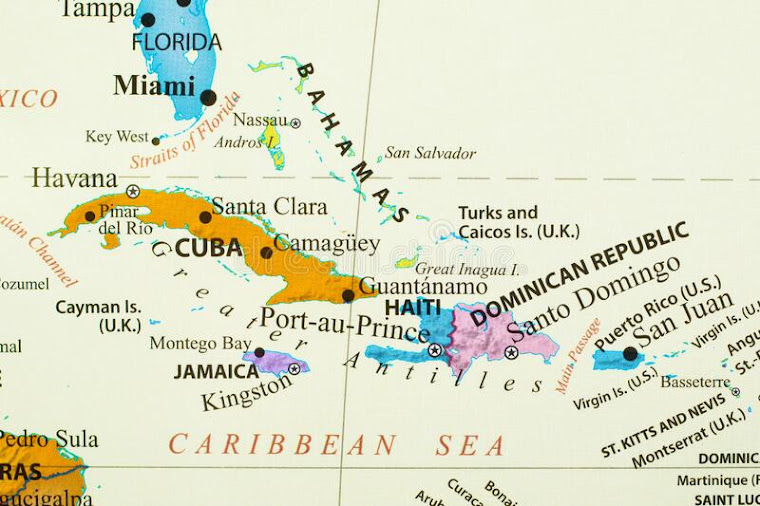
When Christopher Columbus and other European explorers first discovered these islands beginning in 1492, they met Lucayans, Arawak-speaking Amerindians who arrived in The Bahamas between 500 AD and 600 AD, originating in the South American mainland, having first settled in Cuba and Hispaniola.
For the next few centuries after Columbus’ arrival, Europeans, Americans and those who lived in our islands developed significant trading relationships. When the Loyalists, those individuals who remained loyal to the English Crown during the American Revolution and became refugees in search of a home when the Crown lost to the rebels, fled the new United States, upwards of 5,000 people, including Loyalists and their many slaves, settled in the Bahama Islands, bringing their ideals with them. It was with their arrival that the infamous trade in human cargo – the trans-Atlantic slave trade – reached its zenith here. As was the case in North America and the Caribbean, African slaves were brought to market at Vendue House in downtown Nassau and were subjected to the same inhumane abuses that were experienced wherever the trade flourished.
In these islands, slavery came to be recognized as a perversion, and consequently, there were many instances, both recorded and not, that demonstrated the sustained struggle against this perversion and inculcated a determination to achieve equality in Bahamians. This week, we will review a few instances of different kinds of early rebellion against conditions of servitude that marked the struggle and shaped the Bahamian psyche as it continued to yearn for total freedom.
Uprising at Farquharson’s Plantation
Charles Farquharson owned a prosperous plantation on San Salvador, growing a variety of crops including cotton. He is particularly remarkable in Bahamian history as his journal was preserved and, through it, we have perhaps the only look at the everyday life of a Bahamian plantation owner and his slaves. The journal also affords us the bare outlines of an incident on the Farquharson plantation in early 1832 that amounted to an uprising against the brutality of James, a mulatto son of the owner, who was left in charge while Farquharson was in Nassau.
It was when James decided to resort to physical punishment yet again over a minor incident that Farquharson’s chief driver, Alick, took exception to this habitual brutality and struck back, hitting young Farquharson with a heavy cudgel before he was dragged off by the other slaves who immediately gathered around the fray in a threatening manner.
Although no more violence is reported, Charles Farquharson faced great opposition as he tried to reason with his slaves the following morning. Unfortunately, when three of the ringleaders were sent to Nassau for trial the following March, more violence was threatened by the Farquharson slaves. Finally, after time spent at hard labor in the Nassau workhouse, all except Alick were returned to San Salvador. Alick, for his crime of not tolerating abuse, was ordered sold and never saw San Salvador again.
Pompey
A few years before the Farquharson plantation unrest, there was the legendary slave revolt in Exuma led by Pompey. It was early 1830 and, with only three days notice, a group of 77 of Lord Rolle’s slaves were told they were to be sent to Cat Island. No husbands or wives or any children under 14 were to be separated but they were only given one weekend to pick their pea and bean crops, thrash their corn and dispose of their livestock. Moreover, they would have to abandon fields of Indian corn that had just been planted.
With 32-year-old slave Pompey leading them, most of the slaves involved hid in the bush for five weeks until their provisions ran out. It was at that point that 44 of them, representing nine families and three single slaves, stole Lord Rolle’s salt boat and sailed it to Nassau in an effort to personally put their case in front of the governor, Sir James Carmichael Smyth.
Sadly, the slaves were taken into custody and thrown into the workhouse before seeing the governor. The adult slaves were tried immediately as runaways and most of them, including five women – two of whom were nursing babies – were sentenced to be flogged.
Although he had not been kept apprised of the events surrounding this case, when the governor, known for his sympathy towards slaves, found out, he was furious, immediately firing the police magistrate and the two justices of the peace involved in the case. He also ordered Pompey and his group of rebels to be taken back to Exuma.
When they arrived back at Steventon, they were joyously hailed as heroes and subsequently all the other slaves refused to work. This behavior alarmed those in authority over them so they called for military reinforcements from Nassau, telling the governor that an armed slave insurrection was imminent. Fifty soldiers and the chief constable of The Bahamas landed in Exuma during the night of June 20, 1830. The slaves were quiet but not prepared to go to work, saying that they had understood they were to be made free. After a thorough search of the slave houses, the soldiers only found 25 old muskets and very small amounts of powder and shot, putting the idea of an armed insurrection to rest.
However, the soldiers were still worried and decided to march to Rolleville, another slave village, to search there. Pompey knew a short-cut and reached Rolleville before the soldiers, warning the slaves there who hid in the bush. Although only three muskets were found in Rolleville, Pompey was captured and taken back to Steventon where his public punishment of 39 lashes persuaded the slaves to go back to work.
Most of the soldiers returned to Nassau and Lord Rolle’s slaves were reportedly left “quiet and industrious” by the chief constable. But Pompey’s rebellion was really the first time that Bahamian slaves had resisted a transfer and succeeded, establishing that Bahamian slaves could not be moved without their consent, a major achievement in beginning to establish that slaves were people who had civil rights. The protest that arose when the flogging of the women became known throughout abolitionist circles gave great impetus to legislation, including the bill that granted full emancipation that would finally occur four years later.
Next week in part two of this series, we will look at how some 20th century events continued the march to majority rule, preparing even more Bahamians for the struggle that was begun by Alick and Pompey as they bravely stood up for their rights so long ago.
• Philip C. Galanis is the managing partner of HLB Galanis & Co., Chartered Accountants, Forensic & Litigation Support Services. He served 15 years in Parliament. Please send your comments to pgalanis@gmail.com.
January 06, 2014
- The March to Majority Rule, Part 2>>>
SCIESKA ADDERLEY
Guardian Business Reporter
scieska@nasguard.com
Come 2014, a local advocacy group plans to ramp up its campaign against value-added tax (VAT).
Since creating Citizens for a Better Bahamas last month, its founder, Tamara Van Breugel, revealed to Guardian Business that its following is growing, with more than 1,500 contacts on its Facebook page to date. But plans to mobilize the campaign to the streets is set begin in January, beginning with grassroots communities.
She said it is all in an effort to bring awareness to Bahamians everywhere so they can be informed about this issue that will impact the country’s economy.
“It’s been really encouraging because for the most part, we have been focusing on the social media part of our campaign,” she said.
“But we have been getting a lot of positive responses throughout the community so far and I think that a lot of people are concerned about VAT.
“We’re looking to get into grassroots communities, letting young people, and people that aren’t usually in contact with media, access this information so that they can have an awareness of what’s going on.”
In its push for a unified, engaged and informed citizenry, Van Bruegel said VAT would not be the only issue that the group will discuss, although it was the catalyst for starting the group. Citizens for a Better Bahamas has also started a petition that has been directed to parliamentarians, so that constituents can voice their concerns on the matter.
“We believe that’s the missing component in the government’s structure and that’s the key to creating good governance,” she said to Guardian Business.
“We do have a petition that is directed to each of the 38 members of Parliament. That is a part of our on-the-ground campaign, getting people aware of the petition and then to sign it. This is so they can have meaningful dialogue with their elected members.”
Citizens for a Better Bahamas is a non-partisan advocacy group.
The government has proposed to implement a general VAT rate of 15 percent on July 1, 2014 while the hotel sector will be subject to a lower rate of 10 percent.
Officials at the Ministry of Finance estimate that VAT can generate approximately $200 million in revenue in the first year alone, which the government has suggested is key to reducing national debt levels.
Deember 30, 2013
Head of Coalition for Healthcare Reform says ‘only so much’ private sector can bear, as NHI steering committee moves ahead
By ALISON LOWE
Guardian Business Editor
alison@nasguard.com
As a government-appointed steering committee on National Health Insurance (NHI) ramps up its activity surrounding the potential implementation of the healthcare initiative, a former chamber of commerce president has warned that implementing both value-added tax (VAT) and a contributory NHI scheme cannot co-exist.
Winston Rolle, former chamber of commerce president, and a former head of the Coalition for Healthcare Reform, a private sector group formed to highlight concerns surrounding the possible implementation of NHI prior to the end of the last Christie administration in 2007, said there is a limit to how much the private sector can bear in the form of taxation.
“There were seven or eight guiding principles we’d said we need to look at before we can talk about modernizing our health system and I don’t see where that position would’ve changed. It still boils down to one, cost, and two, who’s going to pay for it?
“Obviously with the changes that would’ve taken place in this fiscal year, with the business license fee and now with talk of the implementation of value-added tax (VAT), and another scheduled national insurance increase coming up as well now, you are talking about yet another expense that has to be borne by the citizenry and the business community. There’s just only so much that they can take. I think it may be a case of trying to do too much too fast,” said Rolle.
Arguing that “putting in place a system that can’t meet the objectives would be just as bad as what you have now”, Rolle suggested that the government has to take into consideration “not only VAT but the whole taxation system” and ensure that those who are required to “pay for this cost have the ability to pay”.
His comments come as Guardian Business understands the government’s steering committee on NHI has begun to meet every two weeks as it attempts to move the NHI agenda forward.
In October, Minister of Health Dr. Perry Gomez said that implementing NHI remains a priority for the Christie administration. He suggested that an updated costing of the roll out of the initiative would be completed by the end of the month.
Meanwhile, the government is forging ahead with controversial plans to implement VAT at a rate of 15 percent by July 2014, in an effort to address a spiraling debt situation and respond to calls from the World Trade Organization (WTO) to phase out high import tariffs, a key source of government revenue.
Yesterday, sources close to the government’s steering committee on NHI revealed that the group, which was appointed in July of this year, has begun to meet once every two weeks and has already provided a document outlining the terms of reference for NHI to Gomez.
Gomez himself, described as a “passionate advocate for equity in access to healthcare” by sources close to the committee, is said to be keen to see the initiative move forward, addressing the rising cost and inaccessibility of healthcare to many Bahamians.
While the minister had earlier suggested that the updated costing for NHI – how much the government would need to cover the launch and maintenance of an expanded publicly-funded healthcare program – would be complete by last month, Guardian Business understands that this element of preparation is yet to take place.
Guardian Business understands that among those on the steering committee, who include Edison Sumner, president of the Bahamas Chamber of Commerce and Employers Confederation (BCCEC), and John Pinder, president of the National Congress of Trade Unions of The Bahamas (NCTUB) and the Bahamas Public Service Union (BPSU), there are some reservations about the feasibility of implementing NHI given government’s intentions to move ahead with VAT in particular.
It is believed that among the suggestions emanating from the committee are the possibility for the government to implement NHI in phases, with an appreciation for the fact that such a staged implementation – rather than the immediate launch of a comprehensive national health system – would more closely approximate what has happened in other countries.
Meanwhile, it has been suggested by sources close to the process that based on the current progress with respect to NHI, the full costing of the initiative may not be completed until next April.
Rolle said he has not been personally informed of any specific advancements in the NHI agenda, but suggested that the government must ensure it seeks the input of the private sector as it moves forward.
“The same parties who were involved in 2007 would want to have sight of and have input into anything that comes up,” he said.
December 03, 2013

The drafts of the Value Added Tax (VAT) Bill and Regulations are being released to expand the public discussion and consultation process on the fiscal reform initiative. The drafts summarize the government policy framework for advancing the implementation of the tax.
Following the consultation process and prior to the passage of the legislation the Government reserves the right to revise the policy framework, having regard to the initial phasing of customs tariff and excise tax reductions (and correspondingly the rate of the tax) and the scope of VAT exemptions.
This process is to ensure that the revenue and fiscal consolidation targets are maintained. Revisions to the management structure for the CRA will also be reflected in the draft legislation to be sent to Parliament.
The public is invited to submit comments on the draft to the Ministry of Finance as follows: taxreform@bahamas.gov.bs
The Financial Secretary
Ministry of Finance
Sir Cecil Wallace Whitfield Centre
West Bay Street
P.O. Box N3017
Nassau, The Bahamas
For Futher information please contact:
Contact name: Ministry of Finance
Telephone: (242) 327-1530
Contact name: Value Added Tax Unit
Telephone: (242) 225-7280
By KRYSTEL ROLLE
Guardian Staff Reporter
krystel@nasguard.com
Shadow Minister for Finance Peter Turnquest suggested on Saturday night that the country would be “jumping off the cliff” if it implements value-added tax (VAT).
Pointing to other Caribbean countries that have implemented VAT, Turnquest said the new tax regime would bring increased hardship.
He was speaking at the Free National Movement’s (FNM) rally in the Alley at the FNM Golden Isles constituency office.
“We don't want to be like Barbados,” he said. “We don't want to be like Grenada. We don't want to be like Haiti. We don't want to be like any of those countries.
“They are crying about VAT. St. Lucia is crying about VAT. We don't want to be like that. We are a prosperous nation.
“...We have a lot to protect. So let's be careful; we don't have to follow the crowd. Everyone is jumping off the cliff. That doesn't mean we have to jump off the cliff. We can chart our own territory.”
He said the government ought to focus its efforts on the collection of outstanding taxes, including an estimated $500 million in real property tax.
Turnquest also called on the government to cut subsidies to public corporations. He said the government also has other options to enhance revenue.
The government plans to implement VAT at a rate of 15 percent on July 1, 2014. The government has said the new tax will reduce the gap between revenue and expenditure and offset rising public debt.
At the start of the next fiscal year, government debt is projected to be $4.9 billion. This year, the government estimates that it will have to pay $230 million to service its debt.
VAT is expected to add an additional $200 million in revenue in the first year of implementation, officials estimate.
While acknowledging that his party had planned to give VAT “early consideration if re-elected”, Turnquest said that doesn’t necessarily mean that VAT would have been implemented under an FNM-led government.
“We would have given it widespread consideration,” he said. “I ask the government to step back and consider other options. Present the opposition with facts. We need proper analysis.”
But former Minister of State for Finance Zhivargo Laing previously said the former administration had planned to implement VAT.
Speaking to Rotarians on the implementation of VAT in August, Laing said: “We have an extraordinary opportunity not to do something modest, but to do something audacious.
“But alas, the only crippling thing that can frustrate that is our political consideration that time may run out on us before we get to the next round of votes. I say to you, resist that temptation and encourage your leadership to resist that temptation.”
Despite earlier suggestions, Turnquest acknowledged that the opposition does not have “sufficient” information on VAT to make an official position.
“How can any responsible party declare a position on VAT without knowing the facts,” he said.
“We don’t know enough information. We have no facts, no analysis, no legislation. How can we give the government cover? That’s silly.”
However, both Turnquest and FNM Leader Dr. Hubert Minnis have already indicated that they do not support the implementation of VAT.
Earlier this month, Minnis described VAT as “regressive”.
In a two-page statement, Minnis said VAT would “seriously impair the already weak, uncompetitive and struggling Bahamian economy and harm and diminish the quality of life of every Bahamian”.
During the rally, Minnis called on the government to stop taxing the country.
Turnquest offered similar statements.
“VAT is not the answer,” he said.
November 25, 2013