Research shows 'culture of violence and destruction' taking over country
By NOELLE NICOLLS
Tribune Staff Reporter
nnicolls@tribunemedia.net:
THREE years worth of research into the root causes of crime in the Bahamas show an "ominous and pervasive culture of violence and destruction" taking over the country, according to Dr David Allen, psychiatrist and founder of Bahamian Forum.
Police Commissioner Ellison Greenslade and Bamboo Town Member of Parliament Branville McCartney spoke at the relaunched Bahamian Forum hosted last week. Dr Allen presented findings from his study that included interviews with families of murder victims, students involved in violent disorderly behaviour, chronic drug addicts, public and private psychotherapy groups, confidential interviews with children, and other sample groups.
"We found a powerful sense of anger amongst us Bahamians. Throughout the three-year study participants talked about "outting", which was the word for killing; poisoning, women particularly, and suicide," said Dr Allen.
"A few months ago we had a young girl commit suicide. We have five of her friends right now who want to do the same thing right now. Their argument is, 'Doc, life is in the body. When there are no good things for you, you can't wear Nike, and designer clothes, you can't have the right weight, you might as well die.'" They believe life is purely in the body," he said.
Dr Allen said Bahamians act based on destructive anger patterns, instead of constructive anger patterns that are fostered from by grieving, forgiveness, gratitude, and compassion, among other factors. He said the destructive anger breeds resentment, bitterness, grudgefulness, lack of inhibition and a "hardness of heart."
Commissioner Greenslade said there were several incidents where family members showed little emotion when one of their own was murdered. They had no interest in helping police solve the crime and treated the murder as collateral damage.
"Bahamians are saying I don't feel the murders anymore; it's just what is supposed to happen. They build a wall in their heart. Most disturbing is we found a number of young girls who had no compunction about giving their bodies for money. They pay for their education, but they also pay for their parents' air conditioning, refrigeration and also their cable. The point is they had no feeling about it. They said, 'Doc, that is what you call survival in the Bahamas.' That was very, very disturbing," said Dr Allen.
"Nearly every person who was involved in a serious crime interviewed had some severe abuse, physical or sexual. We have a chronic child abuse problem in our country," he said.
The good news, according to Dr Allen, is found in a study condition by John Hopkins university that showed, if community leaders walked around their communities once per week for a period of two years, it would drastically reduce the occurrence of child abuse.
"Can you imagine if each church adopted the area around each church and walked the area around that church each week. They will see the child neglect; they will see the child abuse; they will see the incubation of crime and we can revolutionise the Bahamas in about three years," said Dr Allen.
Dr Allen said the culture of crime and violence was creating a large network of people suffering from trauma. The symptoms of this trauma, he said, were a "deep desire for revenge," insecurity, "upside down values."
"Young men and women join gangs for affirmation, safety, protection, connection and empowerment. This is a growing phenomenon and a serious one, because the herd instinct psychologically is the most violent aspect of human nature. For God's sake we have to stop this now. Property is not respected. With a gun, what is yours is mine. As they say in the hood, with a gun, even if you lose a dice game, you still win," said Dr Allen.
"In a group of 10 to 15 year olds, they don't expect to live long, as a result (they think) you do what you can, get as much money and then if you get killed or kill somebody that's it. One guy said if I kill somebody the most I'll get is six months, then I'll get on bail. That is 15 year olds talking. There is a modeling process happening. And then, of course, they think violence is cool. It's power to kick somebody, to stab somebody and see that blood ooze out," he said.
Dr Allen said there was also a lingering effect of the 1980s cocaine epidemic in the Bahamas. "Drug trafficking continues creating fear because of executions, empowering drug lords in turf wars." He said even though there did not seem to be an increase in new coke addicts, there is a "growing chronic marijuana epidemic among our children from 10 years up."
The challenge for Bahamians, according to Dr Allen, is "to increase our awareness because if we don't we'll use the same old ways to do the same old things expecting a different result, and that is the definition of insanity. We need to find a new way for looking at things, a new way of thinking, because if we don't we will repeat the same old, the same old, the same old."
July 14, 2010
tribune242
A political blog about Bahamian politics in The Bahamas, Bahamian Politicans - and the entire Bahamas political lot. Bahamian Blogger Dennis Dames keeps you updated on the political news and views throughout the islands of The Bahamas without fear or favor. Bahamian Politicians and the Bahamian Political Arena: Updates one Post at a time on Bahamas Politics and Bahamas Politicans; and their local, regional and international policies and perspectives.
Thursday, July 15, 2010
Wednesday, July 14, 2010
Bahamas government will seek compensation from British Petroleum (BP) for all the pre-assessment, monitoring and any post oil spill clean-up costs
Bahamas govt confirms it will seek compensation from BP
By KARIN HERIG
Tribune Staff Reporter
kherig@tribunemedia.net:
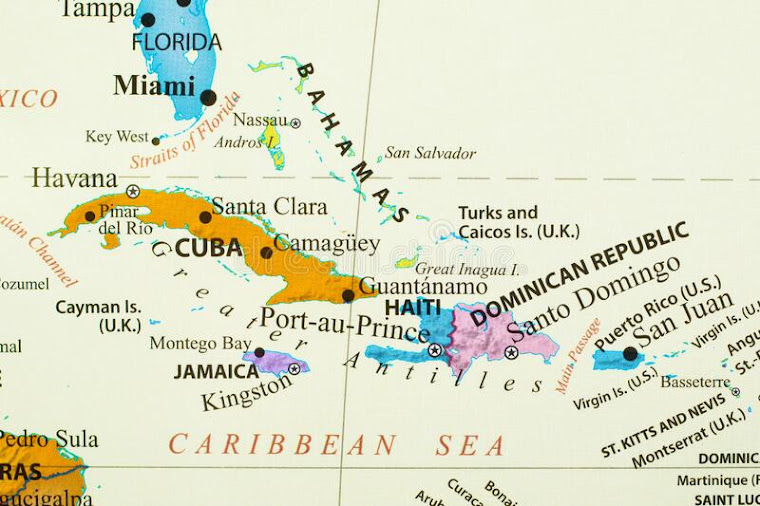
THE Bahamas government has officially confirmed that it will be seeking compensation from British Petroleum (BP) following the disastrous oil spill in the Gulf of Mexico which could affect the Bahamas' shores.
Environment Minister Dr Earl Deveaux told The Tribune that his government will be seeking compensation for "all the pre-assessment, monitoring and any post spill clean-up."
This comes after a report released by the United States' National Oceanic and Atmospheric Administration (NOAA) estimated that Cay Sal Bank and the Bimini Cays are 41 to 60 per cent likely to have shoreline impact from the spill for years to come.
The northwest coast of Grand Bahama, the report said, is 20 per cent likely to be affected, and Andros is less than one per cent likely to be affected.
In an interview earlier this month, Bahamas National Trust (BNT) Eric Carey had said he wants BP to foot the bill in advance.
And while NOAA has concluded that the oil spill most likely will not harm marine life in the Bahamas, Mr Carey said it is still unknown how the dispersants from the spill will affect the country's ecosystem.
The money the government will now be requesting from BP is expected to assist scientific testing and expeditions to monitor the situation.
The next expedition should set sail in about a week and Mr Carey said he hopes BP will cover the costs.
The oil company told the Associated Press on Sunday that the overall cost of dealing with the spill is now at $3.5 billion.
Some $165 million of that sum were paid to settle individual claims. So far, BP has received over 100,000 claims for compensation and made more than 50,000 payments.
It is unknown at this time how much money the Bahamas will be requesting from BP, nor is it clear when or if the oil company will pay out in this instance.
Meanwhile, as BP yesterday removed the containment cap currently in place over the blown-out oil well to replace it with a tighter fitting one, the Obama administration has issued a new offshore drilling ban after a previous moratorium order was overturned.
BP has stated that it believes this second cap will possibly stop the oil from gushing into the Gulf of Mexico.
The company said some oil will still leak out, but the tighter cap will enable them to capture it and funnel it up to the surface where collection ships await.
According to latest estimates, somewhere between 89 million and 179 million gallons of oil have spilled from BP's Deepwater Horizon rig 5,000ft below the ocean surface since an explosion on April 20 killed 11 people.
July 13, 2010
tribune242
By KARIN HERIG
Tribune Staff Reporter
kherig@tribunemedia.net:
THE Bahamas government has officially confirmed that it will be seeking compensation from British Petroleum (BP) following the disastrous oil spill in the Gulf of Mexico which could affect the Bahamas' shores.
Environment Minister Dr Earl Deveaux told The Tribune that his government will be seeking compensation for "all the pre-assessment, monitoring and any post spill clean-up."
This comes after a report released by the United States' National Oceanic and Atmospheric Administration (NOAA) estimated that Cay Sal Bank and the Bimini Cays are 41 to 60 per cent likely to have shoreline impact from the spill for years to come.
The northwest coast of Grand Bahama, the report said, is 20 per cent likely to be affected, and Andros is less than one per cent likely to be affected.
In an interview earlier this month, Bahamas National Trust (BNT) Eric Carey had said he wants BP to foot the bill in advance.
And while NOAA has concluded that the oil spill most likely will not harm marine life in the Bahamas, Mr Carey said it is still unknown how the dispersants from the spill will affect the country's ecosystem.
The money the government will now be requesting from BP is expected to assist scientific testing and expeditions to monitor the situation.
The next expedition should set sail in about a week and Mr Carey said he hopes BP will cover the costs.
The oil company told the Associated Press on Sunday that the overall cost of dealing with the spill is now at $3.5 billion.
Some $165 million of that sum were paid to settle individual claims. So far, BP has received over 100,000 claims for compensation and made more than 50,000 payments.
It is unknown at this time how much money the Bahamas will be requesting from BP, nor is it clear when or if the oil company will pay out in this instance.
Meanwhile, as BP yesterday removed the containment cap currently in place over the blown-out oil well to replace it with a tighter fitting one, the Obama administration has issued a new offshore drilling ban after a previous moratorium order was overturned.
BP has stated that it believes this second cap will possibly stop the oil from gushing into the Gulf of Mexico.
The company said some oil will still leak out, but the tighter cap will enable them to capture it and funnel it up to the surface where collection ships await.
According to latest estimates, somewhere between 89 million and 179 million gallons of oil have spilled from BP's Deepwater Horizon rig 5,000ft below the ocean surface since an explosion on April 20 killed 11 people.
July 13, 2010
tribune242

Tuesday, July 13, 2010
Bahamian National Heroes

National heroes
By RUPERT MISSICK JR
rmissick@tribunemedia.net
and NOELLE NICOLLS
nnicolls@tribunemedia.net
Tribune Staff Reporters:
FORMER Minister of Culture Neville Wisdom tells the story of a primary school teacher who two weeks ago did a class exercise asking students: Who do you identify as a national hero?
Of 16 students, 14 identified President Obama, one identified Dr Martin Luther King and one the late Sir Lynden Pindling.
This story highlights, if nothing else, the poor job earlier generations did in teaching Bahamian history and establishing who is and who should be called a national hero of the Bahamas.
Several years ago a Cultural Commission was appointed to establish just that.
The Commission was to also formulate programmes and strategies for the coordinated promotion, study, research, preservation and enhancement of the Bahamian cultural heritage in music drama, poetry, religious expression, creative writing and their publication, oral story telling, film making, art, sculpture, dress, cuisine, dance and Junkanoo.
They made their first report to government in September 2003.
The Commission's report stated that national heroes are “seminal contributors to the shaping of Bahamian society from slave plantation and colonial fiefdom to an independent nation and an aspiring model society, where all citizens have equal opportunity towards being constructive, creative and self directed human beings.”
A national hero was defined as a person who has gone beyond their personal and historical limitations to give the society a psychic and spiritual rebirth. National hero was distinguished from a hero.
Sacrifice:
A hero was defined as someone whose dedication, hard work and sacrifice has contributed to the society. National heroes are people who were to have accomplishments that have been acknowledged and recognised as a national inspiration by a significant portion of the national body.
Winston Saunders and Charles Carter were appointed co-chairmen of the commission but the committee basically dissolved after Mr Saunders died in November of 2006.
“We had finished most of the work. It was wide ranging and it was a tribute to Mr Saunders because he spent his whole life dedicated to cultural and artistic pursuits. I was just pleased to be a part of it. He was the driving force and unfortunately as fate would have it, when he died it died. I just hope the work hasn't died,” Mr Carter said.
When the 2007 elections took place the present government did not continue the work of the commission.
“The work we did was largely finished and submitted to government. It is probably lodged somewhere in the Ministry of Education or Culture,” Mr Carter said.
Among the recommendations of the committee were:
• A national hero and literature during the month of October;
• A public holiday celebrating national hero's day on the second Monday of October each year, replacing the Discovery Day holiday;
• A Bill for national honours to be introduced;
• Ministry of Education building to be named the Arthur Hanna Complex;
• Ministry of Health building be named after Reverend Dr H W Brown;
• Exuma Street be renamed Amos Ferguson Street;
• Third Terrace Centreville be renamed Rusty Bethel Drive;
• Nassau International Airport be renamed Sir Lynden Pindling International Airport and
• Establish national heroes parks in New Providence and family islands.
All of this seems to be the easier aspects of the commission’s work, however. After this the more problematic and subjective work of establishing who should be called a national hero should have proceeded. And while there may be many Bahamian heroes, the majority will escape the description of national hero.
Contribution:
For example, while 40 or 30 years ago one would never have doubted that Sir Sidney Poitier was a national hero, a new generation is questioning the “real contribution” Sir Sidney has made to the Bahamas.
Although born in Miami in 1927 during his Bahamian parents’ visit to Florida, Sir Sidney – the son of a poor tomato farmer – grew up in Cat Island. Sir Sidney has also served as the Bahamas’ ambassador to Japan and was made an Honorary Knight Commander in the 1970s for his contribution to the arts.
Sir Sidney was the first black actor to win an Academy Award for a lead performance (Lilies of the Field in 1963).
Many of his films tackled racial themes and have been heralded for helping to break down social barriers between whites and blacks during an era of racial segregation.
In February of this year a group of filmmakers protested the College of the Bahamas’ decision to host a conference and film festival dedicated to Sir Sidney.
The most vocal critic of the festival, filmmaker Celi Moss publicly lambasted the college for using its resources to honour the Academy Award winning actor.
“When it comes to the arts in the Bahamas he’s done nothing,” claimed Mr Moss.
Mr Moss’ assertion that the Oscar winner has done nothing for the Bahamas is hyperbolic at best and perhaps a more measured expression of Mr Moss’ opinion would have been that Sir Sidney hasn’t done enough, or rather done what Mr Moss would have seen as enough.
But Sir Sidney had been involved in philanthropic activities in the country, off and on, since he won an Oscar nomination for his portrayal of Homer Smith in “Lilies of the Field.”
The first was when Sir Sidney made a personal appearance on the stage of the Shirley Street Theatre on Saturday February 29, 1964 during the Nassau premiere of the movie.
The screening was a benefit sponsored by the Ways and Means Committee of the British Legion as part of an annual drive for funds to aid needy ex-servicemen in the Bahamas.
In the 70s he kept true to his promise.
The 1974 premiere of “Uptown Saturday Night” held in Nassau was in aid of the Bahamas Association for the Mentally Retarded. The premier of “Buck and the Preacher”, Sir Sidney’s directional debut was held in Nassau to aid the construction of Jordan Prince William High School.
College Professor Dr Ian Strachan hit back at the criticism arguing that the event’s protesters are misguided by a sense of “entitlement.”
“What they are basically saying is that despite the fact that Sidney Poitier helped change the world for all black people, he is not worth honouring or studying because he didn’t do something specific for this community that they think are paramount,” Dr Strachan said.
Still to many this is not enough because “it seems he didn’t help today’s struggling Bahamian artists directly, monetarily, by ‘putting in a word’ or by showing up every summer and teaching a class in method acting,” said Dr Strachan.
There was a point where Sir Sidney felt that he was not appreciated by the Bahamian public.
“Lilies of the Field” was Sir Sidney’s 20th film and he told a crowd of more than 600 who gathered at the theatre, “I was beginning to feel that I was not loved here. I have been asked to do things in Asia and Africa and was wondering when someone was going to ask me to do something for my people here.”
He had left Nassau 21 years before with “a bundle and several dollars given to me by my father to make my mark in the world” and was more than willing to help any organization that was doing “something worthwhile for us Bahamians.”
Sir Sidney eventually made a home for himself in Winton, but left in the 70s after he said that he felt harassed by the constant visits of gawking tourists.
Before leaving he also expressed concern over the number of “corrupt” persons with whom Sir Lynden was surrounding himself, although he thought that Sir Lynden himself was an honest man.
In addition to the lament of Mr Moss, there are more who disagree as to whether or not Sir Sidney should be considered a national hero.
Father Sebastian Campbell, who is Chairman of the National Heroes Committee, and member of the National Cultural Development Commission said that Sir Sidney was simply a person who “came along at the right time and was in the right place,” but did nothing to “advance the country”.
Teacher:
“What has Poitier done to advance Era Anne Hanna who worked for 40 plus years as a teacher in Mason Bay, Acklins? She was a teacher, handy man, janitor, who had to ride horse back to the school. She was never absent for one day and taught some of the leading citizens in this country. At the end of her retirement she got no pension nor no gratuity. These are the people we need to recognize as our heroes and stop letting persons with status and fame to trump up their contributions,” he said.
However, Mr Wisdom said even though Sir Sidney left, and it was necessary for him to practise his skills in the US, he was an integral part of the “quiet revolution” of majority rule and Independence.
Father Campbell is concerned, however, that persons, who, unlike Sir Sidney, are not famous or wealthy will be lost to history and their contribution to national development also will be lost.
“The workers of the Burma Road Riot: They are our heroes. They laid the foundation for trade unionism in the Bahamas.
“These are the people we need to rescue from obscurity and write about their triumphs, tell their story. These are the leaders of trade unionism in the Bahamas and yet they are not being recognized,” he said.
Father Campbell believes that the recent Queen’s honours when Kerzner International CEO Sol Kerzner received a knighthood was an example of where wealth and status trumped what he sees as a “real contribution” to the country.
“Status and money should not be the deciding factor in who should get the highest honours in the country. It is wrong. There are many Bahamians who are way ahead of the Sol Kerzners. They didn't give money, because they didn't have it; they gave themselves,” Father Campbell said.
Another Bahamian hero who will have to be rescued from obscurity is Dr Joseph Robert Love.
Dr Love was born in Nassau, in 1839 and died in Kingston in 1914.
He was a teacher, priest, medical missionary, army doctor, journalist and newspaper editor, politician, and legislator, freemason and an advocate for black pride. He grew up in Grant’s Town, and was a member of St Agnes Anglican Church. He emigrated to the United States in the 1860s and was ordained a priest in 1877.
He was the first black medical graduate of the University of Buffalo in 1879, and went to Haiti in 1881 as a medical missionary.
While in Jamaica he was the editor of the weekly paper the Jamaica Advocate and was a big influence on Marcus Garvey.
However, Father Campbell said that Dr Love is not what he would call a national hero.
“What has he done to advance the modern day Bahamas? A part of this challenge needs to be to get Bahamians to write our stories.
“We have to be careful to say that not everyone is a hero. Just because someone did something outstanding he is a hero?
“We have examples of how to go about this from other countries: There is a lot to learn from Jamaica and Trinidad,” he said.
However, Mr Carter believes that Dr Love is one of the many unsung heroes in the Bahamas.
“He is better known in Jamaica than the Bahamas. He helped Marcus Garvey form his consciousness.
“He is one of the most brilliant Bahamians ever made, and he was a (parishioner at) St Agnes.
“That is the same place I go to church.
Message:
“The worst part about that is no one knows him; we are not taught who he was. If you were a Jamaican you would know who he is. I tell young people when they listen to Bob Marley, a Bahamian person influenced that message. But that is not supported by other things that happen in the community (by the cultural narrative). They say okay fine that is what you say, but we don't celebrate him in the country. That is the great tragedy in the Bahamas,” he said.
Mr Wisdom said that Dr Love is not a national hero simply because he does not fit in the Cultural Commission's definition.
“People who have been obscured from the national consciousness because we have done a poor job at education, may have to be classified as hero and not national hero.
“Dr Love would fall into that category,” he said.
Perhaps Sir Stafford Sands personifies this type of person.
Mr Wisdom said, however, he would oppose Sir Stafford being installed as a national hero.
“Sir Stafford represents a division from the philosophy of one Bahamas. He is perceived by most Bahamians as having been a racist. Sir Stafford went to his death bed in self imposed exile in Spain, and in my opinion the mere fact that he did not reconnect with his home denies him the opportunity. He abandoned the country and went into self imposed exile during a period of transition when the country needed all hands on board as we tried to move this new Bahamas upward, onward and forward together. In my opinion, I don't care how bad things get, as a nationalist I am going to stay here and fight. Once you abandon your country you give up the right to be defined as a national hero.
“I do not know (if he was a racist on his death bed), but I do know he did not reconnect with the country. The view that I hold and many hold is that he simply could not accept the fact that the country would be administered by black Bahamians despite the fact Sir Lynden and Sir Milo demonstrated and were consistent in a one Bahamas position.
“There was never any question raised about Sir Roland Symonette as a national hero. He was a contributor and did not abandoned this country. Founding fathers and national heroes don't give up on a country and expect in years to come to be acknowledged as a national hero,” he said.
However, the explanation of why Sir Stafford left for Europe is not so simple.
Around the 1967 election Sir Stafford was not a well man. A chain smoker, he suffered from a serious bronchial condition.
In April of that year he spent six weeks in Miami for treatment of his problem. That was three months before he announced his resignation from the House.
Up until the day of his resignation from the House, Sir Stafford, who had given up his law practice mainly for health reasons, had every intention of spending his winters in the Bahamas.
Five years after his resignation Sir Stafford died of cancer in the London Clinic in England. The National Heroes Bill and the National Honours Bill were passed by parliament, but were not brought into force. A date for implementation was never published.
What about people who are not obscure and have undeniably helped to make the modern Bahamas what it is, but simply were not liked.
Mr Carter said what disturbs him most about the modern Bahamas is the ignorance of and lack of appreciation for Bahamian culture.
“We have a very strong and viable culture that is not being protected, taught and practised. What course in Bahamian history and culture did you have? Look at our country today; look at how many kids are growing up completely devoid of any knowledge of and appreciation for the country they live in,” he said.
The former MP said that the Bahamas is in danger of losing a heritage that really stands out.
Heritage:
“ It is a beautiful heritage. We have everything to be proud of to make us truly Bahamian,” he said.
However, Mr Wisdom pointed out that all Bahamians have some foreign parentage as you go down the various generations.
“There is no such thing as true, true Bahamians.
“We all came here on ships, so being Bahamian really needs to be defined as a person who acknowledges the Bahamas as his or her home, who demonstrates an undying love for the country and who is prepared to give his or her all for the Bahamas for the entirety of their life.
“That is a real Bahamian,” he said.
July 11, 2010
tribune242
Bahamian Women and their Independence in an Independent Bahamas

Bahamian women and their independence
By RUPERT MISSICK JR
rmissick@tribunemedia.net
and NOELLE NICOLLS
nnicolls@tribunemedia.net
Tribune Staff Reporters:
IN AN Independent Bahamas, women, in terms of numbers, represent the most powerful voting block in the country.
Today, there are on average 17,000 more women registered to vote than men.
But in the years since July 10, 1972, and in the nearly 50 years since November 1962 when Ivy Mackey became the first woman to vote in polling station number one in the district of the City of Nassau, have Bahamian women really become empowered?
The country has had female Presidents of the Court of Appeal and Senate, Members of Parliament, Governor Generals, heads of companies, schools and even a Deputy Prime Minister.
Regardless of these material advancements, however, women still do not have the same power to confer citizenship on their offspring as do Bahamian men and in The Bahamas it is still legal to rape your wife.
The truth is the Bahamian woman’s vote is directed in large part by agendas established by men.
Male heads of churches direct their majority female congregations how to vote, male party chairmen, leaders and deputy leaders still direct the programmes of political parties and the legislative agenda of the country when in government.
Perhaps two out of three of the most significant legislative advancements regarding women’s rights, post Independence, the Marital Rape Bill and the 2002 referendum, which would have continued women on the path toward further equality with their male counterparts were shot down because of a lack of support from women themselves.
The third, the 2002 amendments to the Inheritance Bill, which among other things, granted the right to all children born in or out of wedlock to a parent’s assets was passed after much fuss in January of that year.
The Inheritance Bill, unlike the referendum, was not offered for public vote, but it did have the full political will of the government of the day behind it, unlike the case of the Marital Rape Bill.
Mrs Janet Bostwick, the first woman elected to the House of Assembly, said she was shocked when women voted against the referendum.
“I could not believe it when women voted against the referendum. I was absolutely amazed. I think our women were betrayed by those who politicised this most important issue,” she said.
The PLP opposition said if they were elected to office they would bring the issue of constitutional reform back to the people in 90 days, according to Mrs Bostwick. She said that promise was never fulfilled.
“That was the most serious backward step to the advancement of women in my own memory,” said Mrs Bostwick.
“The issue of women's rights was made a totally partisan political issue, and unfortunately that has worked to the disadvantage of women. To put it very bluntly, the PLP were able to persuade their women not to support the referendum; it would have given the FNM too much power. One of the most painful things for me was listening to arch fundamentalist religious people who preached about the supremacy of men at the town hall meetings, and other events to discuss the referendum,” said Mrs Bostwick.
The referendum if passed would have made it possible for a Bahamian woman married to a foreigner to pass on her Bahamian nationality to her children just as a Bahamian man married to a foreigner gives his nationality to his children.
The failure of the implementation of the citizenship and marital rape laws has led many to wonder how far ahead the women’s movement – started by Mrs Mary Ingraham whose group launched the decade long struggle for women to get the vote— has moved.
One cannot blame those who conclude that the suffragette movement in the Bahamas was highjacked by those who saw women gaining the vote as a path to majority rule and political power rather than having anything to do with the advancement of women.
In essence, there exists no movement to advance women’s rights in the Bahamas today because there was never one to begin with.
“The women’s vote was important to get numbers, to get equality for black people. (Equality for women) was not so much a topic. The women had to vote to get a majority rule government that would do more for blacks. It was about the vote numbers, so the struggle for women did not continue. It was gone and it is still gone,” said Wallis Carey, daughter of Eugenia Lockhart, former secretary of the PLP Women’s Branch.
Mrs Lockhart was one of the architects of the 1950s women’s suffrage movement in the Bahamas.
As a college student Mrs Carey assisted her mother by typing the final 1960 petition that was presented to the Secretary for the Colonies in England.
“Women are figureheads now. We are tokens. We don’t have any power base anywhere. The women in the PLP were not thinking that way so they didn’t take it any further. They were thinking about majority rule with the best party that they saw, which was the PLP. There wasn’t much (desire) to take the movement further,” she said.
Mrs Carey said the platform of the PLP leading into the 1962 election, when women were first allowed to vote was “more jobs, more education for everybody.”
She said women’s rights were not advanced as a separate cause, and the necessity for women to vote was based on the racism that existed and not a view that women were discriminated against based on gender.
The year 1960 proved to be a turning point for the movement. The PLP members in the House rallied behind the movement pledging their support in public and in the House of Assembly.
“Sexual harassment was not a topic. Do we want to have more women leadership? That was not a topic for discussion. And it was a while before (the PLP) looked at including women in the Senate and in the power structure,” said Mrs Carey.
The PLP lost the 1962 election, even with the women’s vote. Parliamentary records showed there were 73,907 registered voters at the time. No records exist as to the gender distribution.
They went on to win in 1967.
Mrs Carey said after the defeat, the feeling was that “there was still a lot of work to do; they have to organize more” and then women were only involved “because of the numbers.”
“There is no source of power for women. The women in the suffrage movement were instrumental, they worked very hard, but they didn’t change the country in terms of the power structure,” said Mrs Carey.
Mrs Bostwick, said that the suffrage movement was for the purpose of securing the right to vote and no other issue with regard to women’s rights were raised primarily because many of the suffragists took pains to disassociate themselves from feminists. Conservatism was the ruling mentality at the time.
“Those women who stood out and tried to move aggressively for equal rights were sometimes called derogatory names. They were associated with the feminist movement and that was not something which was looked at in the main with kindness. Even today, and I say this with great pain, there is still some opposition, from some women, to the idea of true equality,” she said.
On some level, even in the late 1950s, the fight for women’s voting rights found itself divided along political lines.
In the history of the Women’s Suffrage Movement in the Bahamas, two women lead the pack, Mrs Mary Ingraham and Dr Doris Johnson.
While Mrs Ingraham, who was a member of the UBP, and her small group of women, were the first to launch the suffragette movement, Dr Doris Johnson on returning from her studies abroad moved in and took over the group after all the spade work had been done. At the time there were those who would say that Mrs Ingraham’s movement, which had succeeded in getting the women’s vote, was highjacked by Dr Johnson of the PLP. Twenty-five years of the PLP government’s retelling of the story of the movement has overshadow — and almost obliterated — Mrs Ingraham’s efforts and achievements in the minds of subsequent generations.
A good example of this was a 1992 advertisement published by the PLP when reference was again made to Dr Johnson and the women’s vote. Ms Ena Hepburn was quoted in the ad as saying: “I remember when women would not vote. That is why I sat down in Bay Street with the late Dame Dr Doris Johnson on Black Tuesday.”
Black Tuesday was on April 27, 1965 by that time Mrs Ingraham had won her fight for women and Bahamian women went to the polls for the first time in 1962.
Post Independence, Mary Ingraham was put in a position where she had to, or certainly felt she had to, fight to have her contribution to women’s suffrage remembered.
The women’s rights movement in the Bahamas spanned little over a decade, from 1950 to 1962.
According to Mrs Ingraham in a 1975 letter to The Tribune— which was a strong supporter of her movement — the first tangible effort made to get women the right to vote was in 1950 when she and a small group circulated a petition typed by Althea Mortimer.
Only 550 signatures were obtained by the late Dr HW Brown, Wilfred Toote, Gladys Bailey, Mary Ingraham and her five children.
The petition was turned over to and presented by AF Adderley and Dr CR Walker to the House of Assembly and Legislative Council.
According to Mrs Ingraham this petition was left on the shelf to die.
A new petition was circulated and in 1958 it was presented to Parliament by Independent MP Gerald Cash in support of the enfranchisement of women in the Bahamas.
The petition contained more than 2,500 signatures.
According to Mrs Ingraham, although she was a UBP, she thought it best that Mr Cash, the independent House member, was the best choice to advance the petition because she did not wish to impose her political beliefs, “not even on my children.”
The vote, which permitted women the vote was taken in February of 1961. While the House passed the bill, the majority UBP beat down the opposition PLP’s attempts to have the bill become effective immediately.
The bill was originally designed to become effective on January 1, 1963, two months after the election which would be held on November of 1962.
Instead the parties compromised to have the bill go into effect on June 30, 1962.
Surprise:
In a move that apparently caught the PLP by surprise the UBP agreed on an amendment that would make it possible for women to sit in the House of Assembly.
Women would not have a seat in the House until 20 years later when Mrs Bostwick was elected as the first female member of the Assembly.
In a November 1975 broadcast during Women’s Week, radio ZNS credited Dr Doris Johnson with getting the vote for Bahamian women.
In November of 1975 Mrs Ingraham wrote a letter published in The Tribune where in essence she pointed out that Dr Johnson only joined the movement in 1958 when she returned from university and the dynamic speech about women’s rights delivered to House members in 1959 was Dr Johnson’s most significant contribution to the effort.
“This is the only part Dr Johnson played in the vote for women,” Mrs Ingraham said.
Perhaps it could be said that Mrs Ingraham’s statement came more out of hurt and anger than fact, but she did feel that her contribution was being diminished because of her political ideology.
In the end Mrs Carey said that the illusion that women are equal to men in Bahamian society is propped up because of “materialism.”
“That is a poor replacement for real autonomy and power. We don’t own anything. We don’t even talk of owning anything. There is a lot to be done and it is not enough to just observe an international day for women,” she said.
Mrs Carey said she thinks the architects of women’s suffrage would have supported the marital rape bill and the right for women to pass on their citizenship.
“The women’s movement has died. I never even hear about it anymore. People talk like all of our issues are the same. There is no movement. We don’t even identify the issues any more that women have.
“We have given up everything to materialism, and we have accepted the worst part of materialism. That was the big thing for the PLP; they said they would make people have more. Have more what? We see materialism through the party we choose. We look at which government is going to give us more material things,” said Mrs Carey.
However, Mrs Bostwick said that there have been many advancements since the 1950s that have helped level the playing field for women, which people take for granted.
“You are talking about a society where women in the public service had to resign if they became pregnant, married or not married. You are talking about a society where even if you were allowed to stay on the job, it did not pay you when you were pregnant. You are talking about a society that did not permit you to divorce for anything but adultery, a society where if a wife committed adultery she was excluded from any share in the matrimonial property. There were so many things which happened to change the status of women in society that I feel there has been great, great advancement,” said Mrs Bostwick.
However, Mrs Bostwick admitted that there is a need to go further.
“Look at the thing with just the inheritance laws. They were so discriminatory against women. You started with a woman if she died without a will her husband to the exclusion of her children and everybody else took all of her personalities (money in the bank, shares, jewellery, furniture, car, clothes). He had a life interest in all of her real property, so that even if she had acquired the house herself and it was in her sole name, he had the right on her death, even if he was estranged, to move in, with his possible mistress, and even put out her children. You had a situation where women could not inherit from their father, mother or parents if there was one lawful son. They could not get anything. All of these things were hurtful laws,” she said.
These laws Mrs Bostwick mentions changed because of the agitation of women, in general and a lot of help from Mrs Bostwick specifically.
Mrs Bostwick was in the attorney general’s office from 1957 to 1974; it was a part of her work, so she was very aware of the laws and painfully aware of the plight of mothers.
“On Friday’s you had a court that dealt with maintenance matters. There was a tamarind tree in the square by the library and there were lines of women waiting under the tree to get the pittance of the maximum of $8.40 per child per week. That was the maximum by law. That remained until I was in Parliament,” she said.
Politics:
If women were to remove politics out of, well their own politics, they might be able to achieve more for themselves. Mrs Bostwick said that if women banded together, they would be able to get everything they needed for themselves.
“The thing is women must themselves want equality. They must truly want it. They will not truly want it unless they are personally feeling the pinch. You will find that you have the most talk about inequality when you are talking about not receiving equal pay for equal work. And it hurts me when I hear some leading professional women, who went against the referendum, now getting on the bandwagon and saying that we must move in the direction of equal pay.
“Philosophical equality is not something the grassroots will be concerned about. It is difficult for people to relate to that and rally around a cause to create change. There needs to be a process of education. You have to start teaching from the school level that we are equal and that discrimination is wrong,” she said.
Mrs Bostwick said that there are not many laws that need to be changed.
“The constitution must outlaw discrimination and it has to be so framed that women and men have equal rights with respect to discrimination on the grounds of sex. The Penal Code needs to be changed. Beyond that most of the changes are social and cultural,” she said.
July 11, 2010
tribune242
Bahamas Independence: Rethinking the progress after 37 years

Rethinking the progress after 37 years
By NOELLE NICOLLS
Tribune Staff Report
nnicolls@tribunemedia.net:
WHEN the entire country stood at attention for the very first playing of the Bahamas national anthem and saluted the Bahamas flag for the first time in 1973, did these newly minted Bahamian citizens imagine the Bahamas as it would be in 2010? Thirty-seven years after independence, how would they answer the question: Have the gains achieved since independence translated into true progress?
Eighty-one-year-old Euterpie Thompson of Grants Town said for the first time ever she wished she could pick up her house and move somewhere else. She said she gets “no pleasure going out on the street.”
This year is the worst in her memory. She does not see how political representatives spend money in the community, and all she can see is “the rich get richer and the poor get poorer.”
Ninety-seven-year-old veteran straw vendor Doris Grant-Strachan said the Bahamas is worse today than it was during the time of independence.
“I don’t think the country has gotten better. Too much stealing, killing. To me it is worse; since independence things have gotten worse. Children are going astray from small,” said Mrs Grant-Strachan.
People often dismiss the elderly in their recollection of the “good old days” as little more than nostalgic meandering, but given the level of crime and violence, the socio-economic inequality, the materialism, and the modern value systems that characterise the Bahamas today, perhaps there is credence to their claims.
When Sir Lynden Pindling spoke to the House of Assembly in March 1972, to present the green paper on independence, he said: “Only through independence will the country be able to fulfil its development ideals, completing the transition from traditional society to social and economic modernity.”
Former Bahamian Ambassador and agro-consultant Godfrey Eneas said in his recollection of the independence movement there was a fundamental concern about the social injustices and the economic inequities in Bahamian society at the time. He believes the founding fathers were concerned about “trying to level the socio-economic field.”
As to the level of progress towards achieving that vision, Mr Eneas said the country has experienced a lot of transformation, some good, some not so good.
“We are a society which responds to events. We are not in a position to dictate the course of anything. We are extremely vulnerable to the vagaries of industrialised societies, principally the United States. Because of our dependency on these societies; dependency on tourism as an economic engine; dependency on food, (computer) technology; on even how we think about ourselves, all of these factors have impacted the Bahamian since independence, hence the need for a new sense of self,” said Mr Eneas, who is also the author of, “The New Caribbean: A Region in Transition”, and “Agriculture In the Bahamas (1492-1992).”
Classist:
“Rather than a society which denotes ones standing based on race, we have now become more of a classist society. But yet we still have social mobility: one can be born anywhere and aspire or achieve a position of importance,” said Mr Eneas.
Mrs Grant-Strachan said some black people fueled the class divisions by seeking to disassociate themselves from the “poor black people.”
“The black people were trying to be like the white people, some of them. They would fight against their own people. They were mean to their own colour, so they could get more wealthy. They didn’t treat them nice at all,” said Mrs Grant-Strachan.
“I believe they looked up to the white people, because most black people was working for the whites. They would rather be with the white man, because you are black and poor. When these black people got a raise, when you had nothing and happen to get something, I am telling you, some of them were mean. If they had places on rent, or so much money in the bank that time they were big shot, you can’t talk to them, although you black and they black,” she said.
Mr Eneas said he did not subscribe to that belief, and thought it was only applicable to “some people who did not have any training, who were not socialised properly.”
“We have become a very materialistic society. I think that has impacted our view of one another. We see people in terms of what they own; whether they have a big house, big car and that is what people aspire to be instead of looking at the content of one’s character. So in terms of values we have digressed. Economically we have gotten better,” he said.
The country is better off in terms of women’s rights and economic growth, but “a lot of people have displaced values because of material gains,” said Loretta Butler-Turner, granddaughter of founding father Sir Milo Butler, and Minister of State for Social Development in the Free National Movement government.
“You have to weigh it. Whatever we do must be balanced. Bahamians have been people historically who have always measured things materially, from the days of pirates. We have always been geographically positioned where we have always had access to false buoyancy in our economy. So many times when we (compare) our GDP to our Caribbean nations we say we are better off, because we have more money, but when you look intellectually, we are seen to be not so intellectually inclined in the Caribbean,” said Mrs Butler-Turner.
On July 10, 1973, Mrs Butler-Turner said she was a 12-year-old girl. She transitioned from adolescence to adulthood in the two post-independence decades, and has “very vivid recollections” of the era, including the drug trafficking that defined that period. This was also a period of population growth and urbanisation. Mrs Butler-Turner worked closely in her family’s funeral business, and recalls the Bahamas going through “some very difficult years.”
Mrs Butler-Turner said she can identify with the sentiment that “we are not better off”, because as the country transitioned into economic modernity it brought about materialism and social degradation. Even still, she believes it is possible for people to “have very principled values and live a very good life without being compromised by materialism.”
“I still maintain we have made progress on many levels, but ... we need our value systems reinstated. It is the value systems that are out of whack that makes us such a materialistic country. Pre-independence we had much stronger moral values. Post independence we have lost some of those values to economic and material gains. That is my summation. People have to decide which one they prefer. Personally, I probably prefer pre-independence. I think we were more human in spirit,” she said.
The materialism that spread post-independence, may have been fed by the “sense of entitlement” people associated with independence. Some people say there was an expectation that independence would herald in a Robert Mugabe like transfer of wealth that would create socio-economic equality between whites and blacks.
A white Bahamian recalled mowing his lawn one day leading up to the independence celebration. He said a black man stopped in front of his wall and was staring at him. When he inquired about what was going on, the onlooker said “I was just looking at houses I wanted after the election.” The home owner said, “If you want this house you better come mow the lawn.”
Housekeeper:
Another white Bahamian recalled that her housekeeper ordinarily came to work dressed very conservatively. The day after the 1967 general election, she came to work wearing “bright red capri pants expecting to take over the house.”
Mrs Butler-Turner said “a sense of entitlement” could have been brought on unwittingly by the black government of the day, who sought to bring about socio-economic equality. She feels it may have been misleading for some to think that independence meant “we are going to be able to take everything over.”
“There was a feeling that everything that was controlled by the minority would come under the control of the masses with independence, not understanding it still boils down to whether we are prepared to work for what we have,” said Mrs Butler-Turner.
“My recollection was that we were unequal to our rulers before independence. After independence, we were not just going to become equal but entitled. It made a lot of people, who even may not have been prepared intellectually, feel like they had a sense of entitlement.
“Bahamians everywhere felt the floodgates were going to be open without truly understanding it was going to take a lot of hard work to achieve their dreams,” she said.
The question of how we measure progress is important to consider, according to Mrs Butler-Turner. She said the ancient scriptures offer a perspective on success, when they state: “What does it prophet a man if he inherits the world and loses his soul.”
The average Bahamian in their 50s or 60s who grew up in Grants Town, Bain Town, Farm Road, or Englerston had a very different experience growing up in those areas than Bahamians today. That is not the romantic memories of old people, past the age of promise. That is the living memory of many people in the working class, the black middle and upper class community, the political class and the elderly.
“People may have lacked certain material things but there was pride.
“It was reflected in the level of civility, the work ethic, the value system, the way people kept their houses, cleaned their yards,” said Mr Eneas.
Ms Thompson of Grants Town suggests that people today live beyond their means. She said mothers are too young and are having too many children. Ms Thompson had five children and her mother had twelve. Asked to explain why it was okay then and not now, she said: “Not all the time you have the means to take care of children.”
She said her mother with 12 children had “less in a way, money wise,” but “there was no scarcity.” She said they could find fruits all the time: tamarind, cane, mango, bananas, sapodilla. She said her mother owned land in the Family Islands and worked the fields, planting pigeon peas, corn and beans.
She said things are also “more backwards” for women in certain ways, specifically as it relates to reproductive rights.
She said women have to “spend money and do so much” to simply give birth. Four of her five children were born at home. Today, health regulations require women to give birth in the hospital or a registered birthing centre.
“Once you have trained nurses, nothing wrong with giving birth at home,” said Ms Thompson. Home births also have cultural significance in traditional African communities.
In the past 37 years, the influence of urbanisation has had a negative impact on the Bahamas, bringing with it social problems “in terms of the violence and the abuse, and the drug and alcohol addictions,” according to Mr Eneas. He said 85 per cent of the population live between Grand Bahama and New Providence. To this day, he said, “we still haven’t addressed (the urban crisis); there are still people who live in squalor.”
“We have a society where both parents are working; where the large majority are single mothers, and so the way children are brought up today is very different from the way my parents were brought up or your father was brought up. That has impacted us tremendously,” he said.
What are the lessons to be learned from the cries of the elderly, who have the perspective that comes with age. What can the past teach us about our present predicament, and where we are headed.
In an effort to create an independent Bahamas, did we chart a course for true progress or did we just change the face of the same colonial system?
The reality is, some in the modern Bahamas would say black people are free, women are liberated and we have money in our pockets, so who cares.
The question is, do you?
July 11, 2010
tribune242
Monday, July 12, 2010
Bahamas Independence: What was really intended with Bahamian Independence?
What was really intended with Independence?
By NOELLE NICOLLS
Tribune Staff Reporter
nnicolls@tribunemedia.net:
THE year before independence was successfully negotiated for the Bahamas, the government published a road map for independence in the form of a White Paper.
Prime Minister Sir Lynden Pindling presented the White Paper to the House of Assembly on October 18, 1972. It indicated what would stay the same after independence, what would change, and the vision for the future of the Bahamas.
What was the meaning of independence from the perspective of the founding fathers? By his own admission, Sir Lynden did not envisage that the Independence Constitution would be dramatically different from the 1969 Constitution, either in form or content.
So what really was the promise of independence? Perhaps the answer lies in an examination of the issues and implications of Independence as they were conceived in 1972.
“Independence is necessary and desirable now for reasons which affect both national development and international relations. Above all, independence will enable the Bahamian people to find their true identity and to establish that freedom towards which all men aspire and to which all are entitled.”
What was set to stay the same following Independence
Monarchy to be retained. Her Majesty Queen Elizabeth II will be invited to be Head of State, Queen of our Independent Bahamas.
Conditions for the Prorogation and Dissolution of Parliament will stand.
Bi-cameral form of legislature to be retained. In the main, qualifications for appointment or election to remain unchanged.
Composition of the Executive to be retained.
The Supreme Court and The Court of Appeal for the Bahamas to continue as is.
Appeals to the Judicial Committee of the Privy Council to continue.
Royal Bahamas Police Force to retain responsibility for enforcing the Constitution, law enforcement, and the protection of person and property.
The three Service Commissions – Public Service, Police Service and Judicial and Legal Service – to continue.
Membership on Commonwealth Caribbean Secretariat and Caribbean Development Bank to continue.
Automatic succession of treaties, conventions and agreements (dealing with postal activity, telecommunications, road traffic, broadcasting, health service, customs, commerce, visa requirements, racial discrimination, navigation, etc.) on the condition that within a reasonable time and after critical examination of every detail of every treaty or agreement concerned, the government would confirm its succession to some treaties an discontinue others.
Government to retain ownership of Bahamas Telecommunications Corporation, the Bahamas Electricity Corporation and ZNS.
Oil exploration by major oil companies.
Industrial Encouragement Act.
Maintain tax-haven status.
Continue to encourage hotel development and industrial diversification.
What was set to change following Independence
Governor-General to represent the Queen and exercise her executive authority, acting on the advice of the Cabinet or a minister empowered by the Cabinet.
One general election every five years or less except in times of national emergency.
Constituencies Commission to replace Boundaries Commission.
New constitutional clause to make provision for amending the Constitution only through democratic process.
The United Kingdom government will cease to have any responsibility foreign relations, defense and internal security, except by any treaty arrangement that might be made with the Bahamas government to become effective upon or after Independence.
Re-negotiate foreign military base and related agreements (specifically, those between the governments of the UK and the USA, covering installations on several Bahamian islands of missile tracking stations, United States Navy and Coast Guard stations and the Atlantic Underwater Test and Evaluation Center on Andros).
Wider distribution of police throughout the Family Islands and revitalization of Police Volunteer Reserve Strengthen Marine Division.
Eliminate Common Entrance examinations and institute a single ladder system. Introduce a system of senior high schools.
Open central schools up to junior secondary level in the Family Islands.
National Insurance Act to make provisions for cash benefits to specified beneficiary groups.
Central Bank to evolve from Monetary Authority.
Reorganize and reconstitute Post Office Savings Bank as National Savings Bank.
Institute a Development Bank of the Bahamas.
Institute a Bahamas Development Corporation to be responsible for the acquisition, improvement and disposal of land and for the redevelopment of areas cited as physical, economic or social liabilities.
Crown land or government land will no longer be available to non-Bahamians except on the basis of equity participation at the land’s full economic value.
Make public land available to Bahamians to enable them to make an effective start in business.
New sub-division legislation and real estate agents legislation will be introduced to protect the Bahamians and buyers of Bahamian land.
Government to seek equity participation in utility corporations operating in Family Islands.
Establish a national flag carrier that will be substantially owned and controlled by Bahamians.
Encourage more international carriers to install regular services from Europe to the Bahamas.
Stop indiscriminate proliferation of local charter, freight or passenger carriers.
Air Transport Licensing Authority to review all licenses and permits held by airlines not operating in services in the Bahamas. Licenses or permits may be suspended or terminated for airlines inactive for a year.
In the past, certain private institutions have taken the viewpoint that they can dictate their own terms; even that they are doing us a favour simply by setting up an interest within our shores. Such attitudes amount to gross irresponsibility and cannot be justified.
What was envisioned for the future in an independent Bahamas
Improve the facilities for administration of justice in the scattered Family Islands, whereby the courts are taken to the people rather bringing the people to the courts.
Arrangements to be made to ensure safe custody and proper treatment of dangerous criminals.
Seek membership of the ILO, FAO, WHO, UNESCO, IBRD, IMF, GATT (the former name of the World Bank), WTO, Commonwealth Secretariat and other Commonwealth Organizations.
Strive for closer relationship with the Commonwealth Caribbean countries.
Aim of the government to remain at peace with all nations and in co-operation with them, to promote the welfare of mankind all over the world.
It is not practical to suggest that an independent Bahamas would play or attempt to play a major role in the political affairs of the world … (but) our small nation can and will hold a respected place among the nations of the world
Priority matters relating to the law of the sea: The extent of territorial waters; the extent of national jurisdiction over the seabed; and the defense implications of the former matters. Determination of designated national waters, high seas areas, continental shelf. The Bahamas government will strive to have archipelagic principle applied in determining its territorial sea.
Improve efficiency of Royal Bahamas Police Force.
Provide equal opportunity for all Bahamians in a system of education designed to promote progress and unity.
The proposed College of the Bahamas.
A national system of education that will bring about improvements in standards of learning, and provide a more equitable assessment of students’ abilities, achievements and potential.
Primary teacher training facilities to be extended, secondary teacher training facilities to be developed.
The need for expatriate teachers will remain for some years ahead, but the ultimate objective is that of self-sufficiency with qualified Bahamian teachers.
Provision of vocational training in such subjects as hotel management, transport management, banking, business administration, and others.
Improve and extend hospital and medical facilities along the most modern and best tested lines.
Implementation of ILO 1970 recommendations
Introduction of national health insurance scheme.
Community Development Centers will be progressively and systematically established in densely populated areas to cater for pre-natal and post-natal needs, child day-care needs and the recreational needs of young people.
Economic independence:
Properly developed fisheries industry will generate a turnover of some B$10 million per annum.
Co-operative societies to provide credit and marketing facilities to fishermen and farmers.
For many years past, agricultural developments in the Bahamas have been minimal. The government is determined that this shall change. Of the three and a half million acres of land in the Bahamas, nearly half a million acres are now believed to have a high agricultural potential. The national food bill in 1970 was approximately $57 million of which $47.5 million was imported. At least a further B$8 million worth of food, at present imported, can and must be produced internally.
The expert opinion of the UK Land Resources Division states there is no reason why we cannot become self-supporting in poultry, eggs, milk, mutton and pork, citrus and garden products.
Improve means of marketing foodstuffs. New marketing system to account for quality control, grades and standards, price stabilization, storage and handling facilities and a reliable two-way flow of marketing information.
Improve circumstances of small farmers.
Implement programme to encourage consumers to buy Bahamian.
Negotiate loans and financial assistance for new transport facilities, the development and/or redevelopment of urban areas, new and improved amenities for the Family Islands, housing projects, schools, hospitals, roads and sanitation.
Provide monetary support to ensure the preservation of both man-made and natural attractions in the tourism sector and implement major extension to tourist facilities throughout the islands.
Vigorously pursue industrial diversification.
Provide land for small hotels to be owned and operated by local families, especially in the Family islands.
Provide land for enterprising Bahamians seriously interested in farming, commercial and industrial enterprises.
Aragonite mining to represent a source of income for many years ahead. The estimated world demand is 2,000 million tons. The Bahamas probably possesses reserves of this mineral of the order of 50,000 million tons.
Emergence of the Bahamas as a maritime nation.
Encourage food processing and canning, garment manufacture, household furnishings production, light engineering and metal and plastics fabrication.
Public/private partnership in oil industry development to put the country in the forefront of leading international centres for the deepwater terminalling and transshipment of oil, for oil refining and for the manufacture of petrochemicals.
Nationalisation shall not be an instrument of the government’s economic policy.
Investors should make a proper contribution to the economic and social development of the Bahamas.
Commercial organisations should indicate a sincere intent to train Bahamians. The use of foreign personnel should be limited.
Foreign investors should seek partnership with Bahamians.
July 11, 2010
tribune242
By NOELLE NICOLLS
Tribune Staff Reporter
nnicolls@tribunemedia.net:
THE year before independence was successfully negotiated for the Bahamas, the government published a road map for independence in the form of a White Paper.
Prime Minister Sir Lynden Pindling presented the White Paper to the House of Assembly on October 18, 1972. It indicated what would stay the same after independence, what would change, and the vision for the future of the Bahamas.
What was the meaning of independence from the perspective of the founding fathers? By his own admission, Sir Lynden did not envisage that the Independence Constitution would be dramatically different from the 1969 Constitution, either in form or content.
So what really was the promise of independence? Perhaps the answer lies in an examination of the issues and implications of Independence as they were conceived in 1972.
“Independence is necessary and desirable now for reasons which affect both national development and international relations. Above all, independence will enable the Bahamian people to find their true identity and to establish that freedom towards which all men aspire and to which all are entitled.”
What was set to stay the same following Independence
Monarchy to be retained. Her Majesty Queen Elizabeth II will be invited to be Head of State, Queen of our Independent Bahamas.
Conditions for the Prorogation and Dissolution of Parliament will stand.
Bi-cameral form of legislature to be retained. In the main, qualifications for appointment or election to remain unchanged.
Composition of the Executive to be retained.
The Supreme Court and The Court of Appeal for the Bahamas to continue as is.
Appeals to the Judicial Committee of the Privy Council to continue.
Royal Bahamas Police Force to retain responsibility for enforcing the Constitution, law enforcement, and the protection of person and property.
The three Service Commissions – Public Service, Police Service and Judicial and Legal Service – to continue.
Membership on Commonwealth Caribbean Secretariat and Caribbean Development Bank to continue.
Automatic succession of treaties, conventions and agreements (dealing with postal activity, telecommunications, road traffic, broadcasting, health service, customs, commerce, visa requirements, racial discrimination, navigation, etc.) on the condition that within a reasonable time and after critical examination of every detail of every treaty or agreement concerned, the government would confirm its succession to some treaties an discontinue others.
Government to retain ownership of Bahamas Telecommunications Corporation, the Bahamas Electricity Corporation and ZNS.
Oil exploration by major oil companies.
Industrial Encouragement Act.
Maintain tax-haven status.
Continue to encourage hotel development and industrial diversification.
What was set to change following Independence
Governor-General to represent the Queen and exercise her executive authority, acting on the advice of the Cabinet or a minister empowered by the Cabinet.
One general election every five years or less except in times of national emergency.
Constituencies Commission to replace Boundaries Commission.
New constitutional clause to make provision for amending the Constitution only through democratic process.
The United Kingdom government will cease to have any responsibility foreign relations, defense and internal security, except by any treaty arrangement that might be made with the Bahamas government to become effective upon or after Independence.
Re-negotiate foreign military base and related agreements (specifically, those between the governments of the UK and the USA, covering installations on several Bahamian islands of missile tracking stations, United States Navy and Coast Guard stations and the Atlantic Underwater Test and Evaluation Center on Andros).
Wider distribution of police throughout the Family Islands and revitalization of Police Volunteer Reserve Strengthen Marine Division.
Eliminate Common Entrance examinations and institute a single ladder system. Introduce a system of senior high schools.
Open central schools up to junior secondary level in the Family Islands.
National Insurance Act to make provisions for cash benefits to specified beneficiary groups.
Central Bank to evolve from Monetary Authority.
Reorganize and reconstitute Post Office Savings Bank as National Savings Bank.
Institute a Development Bank of the Bahamas.
Institute a Bahamas Development Corporation to be responsible for the acquisition, improvement and disposal of land and for the redevelopment of areas cited as physical, economic or social liabilities.
Crown land or government land will no longer be available to non-Bahamians except on the basis of equity participation at the land’s full economic value.
Make public land available to Bahamians to enable them to make an effective start in business.
New sub-division legislation and real estate agents legislation will be introduced to protect the Bahamians and buyers of Bahamian land.
Government to seek equity participation in utility corporations operating in Family Islands.
Establish a national flag carrier that will be substantially owned and controlled by Bahamians.
Encourage more international carriers to install regular services from Europe to the Bahamas.
Stop indiscriminate proliferation of local charter, freight or passenger carriers.
Air Transport Licensing Authority to review all licenses and permits held by airlines not operating in services in the Bahamas. Licenses or permits may be suspended or terminated for airlines inactive for a year.
In the past, certain private institutions have taken the viewpoint that they can dictate their own terms; even that they are doing us a favour simply by setting up an interest within our shores. Such attitudes amount to gross irresponsibility and cannot be justified.
What was envisioned for the future in an independent Bahamas
Improve the facilities for administration of justice in the scattered Family Islands, whereby the courts are taken to the people rather bringing the people to the courts.
Arrangements to be made to ensure safe custody and proper treatment of dangerous criminals.
Seek membership of the ILO, FAO, WHO, UNESCO, IBRD, IMF, GATT (the former name of the World Bank), WTO, Commonwealth Secretariat and other Commonwealth Organizations.
Strive for closer relationship with the Commonwealth Caribbean countries.
Aim of the government to remain at peace with all nations and in co-operation with them, to promote the welfare of mankind all over the world.
It is not practical to suggest that an independent Bahamas would play or attempt to play a major role in the political affairs of the world … (but) our small nation can and will hold a respected place among the nations of the world
Priority matters relating to the law of the sea: The extent of territorial waters; the extent of national jurisdiction over the seabed; and the defense implications of the former matters. Determination of designated national waters, high seas areas, continental shelf. The Bahamas government will strive to have archipelagic principle applied in determining its territorial sea.
Improve efficiency of Royal Bahamas Police Force.
Provide equal opportunity for all Bahamians in a system of education designed to promote progress and unity.
The proposed College of the Bahamas.
A national system of education that will bring about improvements in standards of learning, and provide a more equitable assessment of students’ abilities, achievements and potential.
Primary teacher training facilities to be extended, secondary teacher training facilities to be developed.
The need for expatriate teachers will remain for some years ahead, but the ultimate objective is that of self-sufficiency with qualified Bahamian teachers.
Provision of vocational training in such subjects as hotel management, transport management, banking, business administration, and others.
Improve and extend hospital and medical facilities along the most modern and best tested lines.
Implementation of ILO 1970 recommendations
Introduction of national health insurance scheme.
Community Development Centers will be progressively and systematically established in densely populated areas to cater for pre-natal and post-natal needs, child day-care needs and the recreational needs of young people.
Economic independence:
Properly developed fisheries industry will generate a turnover of some B$10 million per annum.
Co-operative societies to provide credit and marketing facilities to fishermen and farmers.
For many years past, agricultural developments in the Bahamas have been minimal. The government is determined that this shall change. Of the three and a half million acres of land in the Bahamas, nearly half a million acres are now believed to have a high agricultural potential. The national food bill in 1970 was approximately $57 million of which $47.5 million was imported. At least a further B$8 million worth of food, at present imported, can and must be produced internally.
The expert opinion of the UK Land Resources Division states there is no reason why we cannot become self-supporting in poultry, eggs, milk, mutton and pork, citrus and garden products.
Improve means of marketing foodstuffs. New marketing system to account for quality control, grades and standards, price stabilization, storage and handling facilities and a reliable two-way flow of marketing information.
Improve circumstances of small farmers.
Implement programme to encourage consumers to buy Bahamian.
Negotiate loans and financial assistance for new transport facilities, the development and/or redevelopment of urban areas, new and improved amenities for the Family Islands, housing projects, schools, hospitals, roads and sanitation.
Provide monetary support to ensure the preservation of both man-made and natural attractions in the tourism sector and implement major extension to tourist facilities throughout the islands.
Vigorously pursue industrial diversification.
Provide land for small hotels to be owned and operated by local families, especially in the Family islands.
Provide land for enterprising Bahamians seriously interested in farming, commercial and industrial enterprises.
Aragonite mining to represent a source of income for many years ahead. The estimated world demand is 2,000 million tons. The Bahamas probably possesses reserves of this mineral of the order of 50,000 million tons.
Emergence of the Bahamas as a maritime nation.
Encourage food processing and canning, garment manufacture, household furnishings production, light engineering and metal and plastics fabrication.
Public/private partnership in oil industry development to put the country in the forefront of leading international centres for the deepwater terminalling and transshipment of oil, for oil refining and for the manufacture of petrochemicals.
Nationalisation shall not be an instrument of the government’s economic policy.
Investors should make a proper contribution to the economic and social development of the Bahamas.
Commercial organisations should indicate a sincere intent to train Bahamians. The use of foreign personnel should be limited.
Foreign investors should seek partnership with Bahamians.
July 11, 2010
tribune242
Sunday, July 11, 2010
3,000 high school graduates estimated to have entered the workforce this month without the basic literacy and numeracy skills
3,000 graduates 'lack literacy & math skills'
By MEGAN REYNOLDS
Tribune Staff Reporter
mreynolds@tribunemedia.net:
AROUND 3,000 high school graduates estimated to have entered the workforce this month may be doing so without the basic literacy and numeracy skills required for further education.
Estimates based on the Ministry of Education's 2008 statistics predict around 40 per cent of 5,000 graduates from public and private schools will continue their studies at the College of the Bahamas (COB), Bahamas Vocational and Technical Institute (BTVI) or at colleges and universities abroad.
Around 20 per cent of government school leavers are thought to continue with their education after high school, while the remaining 80 per cent either choose not to enroll in tertiary education or lack the basic literacy and numeracy skills required, Ministry of Education Permanent Secretary Elma Garraway said.
Education department statistics show 41.6 per cent of around 5,000 graduates went on to tertiary education in 2008, and it is estimated this year's figures will be similar.
Mrs Garraway said many government school graduates who may want to continue their studies at COB, or develop practical job skills at BTVI, are often held back by a low level of literacy and mathematics.
"Those students who would normally go to BTVI because they are skilled can't go if they do not have that level of numeracy and literacy required, because all of the institutions require a certain level of reading and comprehension," said Mrs Garraway.
"If people are not reading it impacts their ability to solve a problem because it determines how wide your array of knowledge is to help them understand a problem.
"And it places a restriction on the numbers that go to BTVI and participate in the certification courses."
Schools are now working hard to improve students' basic literacy and numeracy skills before they graduate so they can have the option of going on to further education, Mrs Garraway said.
The computer programme "Autoskills" has been launched throughout government schools for students to practice English and mathematics in their own time.
And CV Bethel has launched another computer programme named "Novanet" to help students with language and math skills.
But high school students could also do with a little encouragement from parents, the said Mrs Garraway.
"Even by just reading the newspaper with your child, and expanding their knowledge will help," she said.
"If you start when they are young they will go on to read and gather knowledge so they will not be leaving school in this position.
"It's such a pity when this should be known from primary school level, and with the parenting and directive intervention they should have no problem in developing that.
"Too many parents abandon the children once they reach seventh, eighth or ninth grade, and we need to keep the parents engaged with students."
Parents who do not have the time to spend reading with their children or helping them develop essential job skills should take advantage of after-school programmes and summer vacation programmes orchestrated by the Ministry of Education, urban renewal associations or churches, youth and community groups, Mrs Garraway said.
Those who have graduated without the literacy and numeracy skills they need - can enroll in specialist catchment programmes at BTVI.
July 10, 2010
tribune242
By MEGAN REYNOLDS
Tribune Staff Reporter
mreynolds@tribunemedia.net:
AROUND 3,000 high school graduates estimated to have entered the workforce this month may be doing so without the basic literacy and numeracy skills required for further education.
Estimates based on the Ministry of Education's 2008 statistics predict around 40 per cent of 5,000 graduates from public and private schools will continue their studies at the College of the Bahamas (COB), Bahamas Vocational and Technical Institute (BTVI) or at colleges and universities abroad.
Around 20 per cent of government school leavers are thought to continue with their education after high school, while the remaining 80 per cent either choose not to enroll in tertiary education or lack the basic literacy and numeracy skills required, Ministry of Education Permanent Secretary Elma Garraway said.
Education department statistics show 41.6 per cent of around 5,000 graduates went on to tertiary education in 2008, and it is estimated this year's figures will be similar.
Mrs Garraway said many government school graduates who may want to continue their studies at COB, or develop practical job skills at BTVI, are often held back by a low level of literacy and mathematics.
"Those students who would normally go to BTVI because they are skilled can't go if they do not have that level of numeracy and literacy required, because all of the institutions require a certain level of reading and comprehension," said Mrs Garraway.
"If people are not reading it impacts their ability to solve a problem because it determines how wide your array of knowledge is to help them understand a problem.
"And it places a restriction on the numbers that go to BTVI and participate in the certification courses."
Schools are now working hard to improve students' basic literacy and numeracy skills before they graduate so they can have the option of going on to further education, Mrs Garraway said.
The computer programme "Autoskills" has been launched throughout government schools for students to practice English and mathematics in their own time.
And CV Bethel has launched another computer programme named "Novanet" to help students with language and math skills.
But high school students could also do with a little encouragement from parents, the said Mrs Garraway.
"Even by just reading the newspaper with your child, and expanding their knowledge will help," she said.
"If you start when they are young they will go on to read and gather knowledge so they will not be leaving school in this position.
"It's such a pity when this should be known from primary school level, and with the parenting and directive intervention they should have no problem in developing that.
"Too many parents abandon the children once they reach seventh, eighth or ninth grade, and we need to keep the parents engaged with students."
Parents who do not have the time to spend reading with their children or helping them develop essential job skills should take advantage of after-school programmes and summer vacation programmes orchestrated by the Ministry of Education, urban renewal associations or churches, youth and community groups, Mrs Garraway said.
Those who have graduated without the literacy and numeracy skills they need - can enroll in specialist catchment programmes at BTVI.
July 10, 2010
tribune242
Subscribe to:
Posts (Atom)