The Bahama Journal Editorial
With this nostrum as opening gambit, we take note of the fact that, for what now seems a fairly long season, the Bahamas seemed to conclusively demonstrate that development in a small island developing country could be successfully driven by foreign direct investment.
And for sure, Bahamians could and did exult in their good fortune by assuring themselves that, these salutary changes had come about due to their own initiatives.
Indeed, there was every indication that, the Bahamas had somehow or the other managed to escape its long history of boom and bust at the economic level.
And so it arose that, they decided to praise the late Sir Stafford L. Sands for being the financial genius behind the so-called miracle of year-round tourism to the Bahamas.
We now know that this was an illusion.
As the same record would attest and confirm: while Sir Stafford was –in truth and in fact – a major player in the development of the tourism industry, other forces – most of them external to the Bahamas- played crucially important roles in this transformative process.
Highest on the list of external forces would be the on-set of the Cuban Revolution and Cuba’s isolation from trade with the United States of America.
It was this external factor that has driven the Bahamian economy over the course of the past fifty years or so.
With this development came that transformation of the Bahamas which allowed the bulk of its people a first opportunity to turn its collective back on a development model predicated on seasonal tourism, niche banking, fishing, farming and other allied occupations.
This development brought with it ancillary political changes – some of which promised Majority Rule and some economic empowerment for those who were heretofore socially excluded and economically marginalized.
While some successes have been scored; there is every indication that some of these now run the real risk of being lost as a consequence of the hard times that now prevail.
In addition, there is every indication that things are set to be difficult for at least the next decade or so.
This situation stands in direct contrast to those days when money was in abundance and when practically everybody who was anybody could make a fairly decent living.
Things are now trending downwards; and so, as things go and grow from bad to worse – Bahamians on either side of the political divide have taken to blaming each other for this nation’s bevy of distresses.
While this ‘game’ might provide entertainment galore for those who are tuned in; we daresay that, this does the nation itself no real good.
For our part, then, we would sincerely suggest that, having grown accustomed to one version of the so-called good life [that is to say, a life driven by easy money] very many Bahamians are today panicking; this coming packaged in with the prospect that hard times might be here to stay.
While we are optimistic as regards our prospects for the long-term; we are today pessimistic for the short-term; this due to the fact that, the Bahamian people are yet to determine what they want and would have as regards real leadership.
In the interim, things threaten to disintegrate into a state akin to chaos.
And of course, this can lead to its own sad denouement in even more social distress.
Here take note that on occasion, we have bemoaned the fact that, the Bahamian people are being routinely failed by their leaders.
Evidence for this failure can be seen in practically every major institution; whether reference is to those who would lead in the field of faith and belief; education; government; the home or at the work place.
In addition, there is no gainsaying the fact that, there are very many Bahamians who are today mired in distress; with some of them teetering on the edge of despair.
And yet there is more bad news; this time around the reference we make has to do with what seems a Bahamian penchant towards dependency and lack of confidence in their own innate ability.
This neatly explains how it arises in case after case that Bahamians are loath to respect their own when they are put in positions of authority and power – thus the pre-eminence they give to foreigners and to most things foreign.
For a season, this way of things surely worked its magic.
But since nothing lasts forever, these balmy days are now receding. As they become history, a new order beckons; this being one where Bahamians will be obliged to work harder, produce more so as to become more self-reliant.
In this regard, we envisage the coming of that day when, the Bahamian people will have a national economy that walks – so to speak- on two legs; with one being foreign and the other Bahamian.
December 29, 2010
The Bahama Journal Editorial
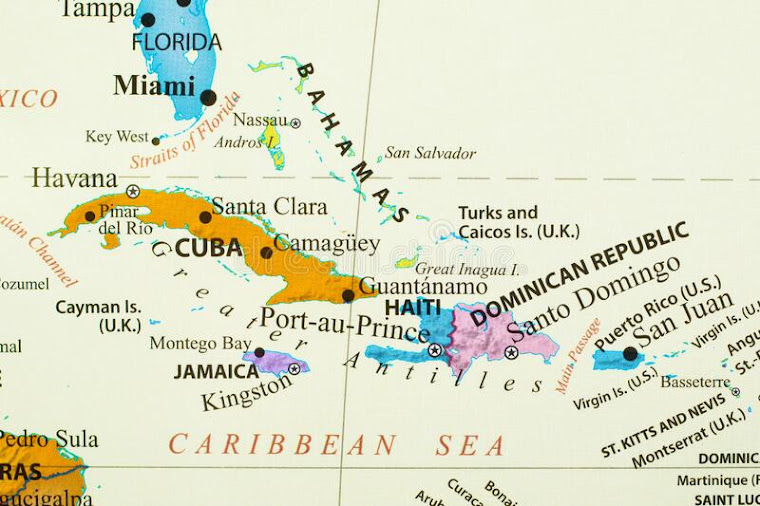
A political blog about Bahamian politics in The Bahamas, Bahamian Politicans - and the entire Bahamas political lot. Bahamian Blogger Dennis Dames keeps you updated on the political news and views throughout the islands of The Bahamas without fear or favor. Bahamian Politicians and the Bahamian Political Arena: Updates one Post at a time on Bahamas Politics and Bahamas Politicans; and their local, regional and international policies and perspectives.
Wednesday, December 29, 2010
Tuesday, December 28, 2010
...the National Congress of Trade Unions (NCTU) plans a major national strike that could possibly have devastating effects on the Bahamian economy

The new year could begin with a national strike
thenassauguardian editorial
Is it possible that while Prime Minister Hubert Ingraham was busy preparing notes for his annual Christmas Address to the nation, members of the National Congress of Trade Unions (NCTU) were busy planning a major national strike that could possibly have devastating effects on the Bahamian economy.
It seems possible.
In fact, on Christmas Eve, executives of the NCTU held a press conference where they not only dismissed the prime minister’s warning about their union’s actions, but they also took the time to point out that a national strike could occur soon.
It’s not the kind of action the prime minister wants, or need at this time.
With the light of hope of an economic recovery on the horizon, the prime minister is looking ahead with optimism for the Bahamian people.
Needless to say, that in spite of all the setbacks which the country and the government have experienced during 2010, for the most part Prime Minister Ingraham and his government appear to be finishing off the year strong.
Of course, the plight of a high crime rate and a record breaking murder rate for 2010 will haunt the prime minister’s 2010 performance. However, some feel that the prime minister has navigated the storms of adversity well.
As 2011 approaches, talks of a national strike by the major unions in the country is not what the prime minister had in mind when he reflected on what lies ahead for his government in the new year.
However, it is something that has to be factored in, because apparently, the NCTU and the BCPOU have no plans of backing down any time soon. As the prime minister is adamant about selling BTC to Cable and Wireless, the unions are just as persistent in their stand to fight against it.
There is a chance that the new year could begin on the rough path for the government of The Bahamas. The stand by both sides could lead a major battle in 2011.
The year 2011 is unofficially the year for campaigning, as both the Free National Movement and the Progressive Liberal Party shift into full gear and prepare for a general election in 2012.
The prime minister would prefer to spend the start and the entire year of 2011 doing the things that needs to be done to ensure his party’s re-election. Having a fight with the country’s major unions is not a part of that agenda.
With just a few days left before 2010 ends and 2011 begins, will the prime minister, the NCTU and BCPOU find some solution to the BTC dilemma and avoid a national strike at the beginning of the year?
As the clock ticks away on the closing of an old year, as far as the NCTU is concerned, it signals only the beginning of what can be expected in 2011 if an amicable solution is not reached.
As far as end of the year and New Year’s resolutions go, one can only wonder what tops the list of resolutions for Prime Minister Ingraham for 2011.
12/28/2010
thenassauguardian editorial

Sunday, December 26, 2010
...the Christie government made a secret deal to sell 49 per cent of BTC on credit to an unknown foreign entity called Bluewater Ventures

The secret deal to steal BTC
By LARRY SMITH
JUST before the 2007 general election, the Christie government made a secret deal to sell 49 per cent of BTC on credit to an unknown foreign entity called Bluewater Ventures. The electorate wasn't aware a deal had been struck and didn't know the terms, although official talks had been ongoing for two years.
Bluewater described itself as "a private equity firm specializing in turnarounds and investments in the media and telecommunications sectors." It was set up in 2003 by John Gregg, an American who worked for a couple of European cable companies. Based in the Channel Islands, an offshore financial centre, its actual shareholders have never been identified.
Soon after the election, ex-finance minister James Smith urged the new FNM government to close the Bluewater deal, arguing that there would never be a better one. According to a confidential Bluewater document relating to the sale, BTC's own business plan for 2007-2009 valued the company at $333 million, meaning that a 49 per cent stake should have been worth about $163 million.
But as has since been revealed, the net cash to government from the secret PLP deal would have been only $150 million. Bluewater would have paid another $40 million (interest-free) years after the sale, but this money would have come from BTC's own revenues. The deferred payments were a significant and hidden discount on the price to this unknown foreign entity.
It is common knowledge that BTC's value as a mobile monopoly has been heavily eroded by poor management and new technologies. For example, it took just a few years for voice over internet services like Vonage to turn BTCs long-distance calling into a losing business.
Other providers now control most of the local VoIP market - despite the face-saving introduction in 2006 of BTC's competing Vibe service. And experts have long predicted that WiFi phones connected to a computer with Internet access will disrupt BTC's still-lucrative mobile business over time.
According to the confidential 2007 Bluewater document, other factors that affect BTC's value include exorbitant rates that would be impossible to maintain in a competitive market; the high risk of hurricanes crippling the network; and capital spending that is far greater than earnings.
"A true valuation analysis of BTC must assume that rates, and hence (earnings) will have to be lowered in the near term," the document said. "And just two years ago BTC saw its cash flow for the year virtually wiped out and submitted insurance claims close to $50 million. It is our understanding that insurers refused to honour many of these claims.
"BTC's capital expenditures have historically been higher than comparable companies. In fact the BTC business plan for 2007-2009 puts capex at a rate significantly higher than (earnings). From an investor's perspective, the need for such high spending to maintain the network is a red flag."
Several years ago, former BTC president Leon Williams boasted that the corporation had spent $353 million on capital development over a five-year period, and Bluewater reported that BTC's business plan called for another half-billion-dollar spend over the ensuing three years, compared to $429 million in projected earnings.
In spelling out the rationale for the proposed acquisition, the 2007 Bluewater document painted a dismal picture of BTC, calling the corporation's business plan inconsistent, contradictory, lacking in detail and offering nothing for its three main stakeholders - consumers, the government and employees.
Bluewater pointed out that BTC doesn't even consider improving its lousy service or cutting its outrageously high prices, and fails to justify in any way the introduction of costly new products and services. In fact, BTC's plans assumed no dividends at all for the government - just a never-emptying cookie jar for management, union leaders and staff.
Why would Bluewater pay for a minority stake in such a poorly-run state operation? Well, principally because the PLP deal would have extended BTC's profitable cellular monopoly for up to six years - while letting it offer equally profitable extra services like video. In other words, BTC would have continued as a government-owned monopoly for a very long time. And the Bluewater sale was a smoke-screen trying to hide that fact.
The deal was that a 49 per cent stake in BTC would be priced at $260 million, but Bluewater would pay only $220 million up front while keeping all of BTC's cash in the bank (about $70 million at the time). At the end of the five-year cellular monopoly, Bluewater would have paid a further $35 million, and a final $5 million in the sixth year after the sale. This was what Prime Minister Hubert Ingraham referred to shortly after taking office as "selling BTC on credit."
Even a horse's ass can see there is absolutely no comparison between a secretive instalment plan concocted with an unknown buyer with no financial or operating history, and the $210 million (plus taxes) up front purchase price agreed with Cable & Wireless - a long-established telecoms firm with revenues of over $1 billion and a long-standing operating record in several countries. So the astonishing propaganda emanating from PLP leaders on this issue should be taken with a large bicarbonate of soda. Their strategy is simply to repeat enough rubbish frequently enough so that the rubbish starts to seem believable. That, unfortunately, is the standard of political discourse in this country.
There is no other difference between the PLP and the FNM record on this issue. Both parties while in government have said they wanted to sell BTC to a foreign entity as a matter of policy to help pay down the national debt, and to modernise the Bahamian telecoms sector. The only difference has been the architecture of the deal.
You be the judge.
What do you think?
Send comments to: larry@tribunemedia.net
Or visit www.bahamapundit.com
December 22, 2010
Friday, December 24, 2010
All Hands on Deck
The Bahama Journal Editorial
Certain high-ranking International Monetary Fund officials are today convinced that, “Although the outlook [for the Bahamas] is fraught with uncertainties and risks, the mission is confident that the resolute adherence to fiscal consolidation and an enabling investment climate will foster a stable macroeconomic environment and support sustained economic growth.”
We concur.
But even as we express our overall agreement with the IMF’s analysis; we are constrained to note that, we should – as a matter of both principle and policy – do all we can as to further empower our people; and to see to it that, growth and development is powered from both the inside and outside.
Such an addition of an endogenous dimension of development to the current policy mix would go a long way to helping Bahamians help each other.
Such a double-barreled approach to national development would – of necessity- push leadership in the direction of seeing to it that our most precious resources- here namely our youth are put to the most productive use possible.
Here our churches, unions, businesses, other civil society agencies – and the government are called to pull together in the interest not only of their membership; but in the interest of all to put the Bahamas on a path to sustainability.
And so, whether the reference made is to tourism, banking or the industrial sector, each and every one of these clearly has a stake in a vibrant, healthy, development-oriented Bahamas.
But just as clearly, we must break with business as usual.
Were we to do so, we would wake to find that, while things are tough; and for sure, while moving forward, things might get even tougher; we are ever optimistic.
We are buoyant not only because we know that, this period of austerity is one where those who stick it out will reap their fair share of rewards; but also because it is precisely in times like these –that is to say, days of creative destruction – when you either sink or swim.
For our part, then, while these are days of tremendous struggle, we are convinced that, the worst is over; and that, in the fullness of time – better days will come.
But even as we note that these so-called better days are ahead; we know it for a fact that, we must –like others in the mix- do our level-best to help make some of these things happen.
And for sure, we are also absolutely convinced that, the time is nigh for all of this nation’s right-thinking Bahamian sons and daughters to cease from their time-tested habit of sweating the small stuff; that is to say, their socially pernicious habit of making too much of the already too-little that divides them.
Happily, while this habit does persist – and might yet continue – we are happy to report that, this country that is ours continues to get kudos for the conservative manner given by all who govern to the economic affairs of this land that is ours.
Some of these kudos routinely come from world agencies such as the International Monetary Fund. In this regard, we now note some of what the IMF has had to say about the management of things in this period when austerity is the word that apparently matters most.
The team met with senior government officials and representatives of the private sector. At the end of the visit, Mr. Gene Leon, head of the IMF mission to the Bahamas, issued the following statement: “The global crisis of 2008-09 had a profound impact on the Bahamian economy. Tourist arrivals declined by 10 percent and foreign direct investment fell by over 30 percent, leading to a sharp contraction in domestic activity and a large rise in unemployment.
“However, lower import prices helped narrow the external current account deficit to about 12.5 percent of GDP; this together with external borrowing and the one-off allocation of Special Drawing Rights helped raise gross international reserves to about 2.5 months of imports, boosting support for the exchange rate peg…”
There was even more. Here we are led to believe that, “… Gross international reserves are projected to increase despite the higher oil prices owing to strong private capital inflows, including from Foreign Direct Investment…”
While this is not to be ranked at the optimal level, we do have some modest reason to be happy that ventures like Baha Mar are on stream.
And as Gene Leon aptly notes, “…Going forward, the authorities have indicated a commitment to maintain prudent macroeconomic policies, including fiscal measures to reduce the rising debt-to-GDP ratio and a monetary policy geared to supporting price stability and the US dollar peg… They also plan to continue with reforms to improve tax administration, increase fiscal responsibility, and transparency.”
Evidently, then, even if things were to turn out as suggested by the IMF; there would still be work [at the endogenous level] that could and should be done by Bahamians.
December 23, 2010
The Bahama Journal Editorial
Certain high-ranking International Monetary Fund officials are today convinced that, “Although the outlook [for the Bahamas] is fraught with uncertainties and risks, the mission is confident that the resolute adherence to fiscal consolidation and an enabling investment climate will foster a stable macroeconomic environment and support sustained economic growth.”
We concur.
But even as we express our overall agreement with the IMF’s analysis; we are constrained to note that, we should – as a matter of both principle and policy – do all we can as to further empower our people; and to see to it that, growth and development is powered from both the inside and outside.
Such an addition of an endogenous dimension of development to the current policy mix would go a long way to helping Bahamians help each other.
Such a double-barreled approach to national development would – of necessity- push leadership in the direction of seeing to it that our most precious resources- here namely our youth are put to the most productive use possible.
Here our churches, unions, businesses, other civil society agencies – and the government are called to pull together in the interest not only of their membership; but in the interest of all to put the Bahamas on a path to sustainability.
And so, whether the reference made is to tourism, banking or the industrial sector, each and every one of these clearly has a stake in a vibrant, healthy, development-oriented Bahamas.
But just as clearly, we must break with business as usual.
Were we to do so, we would wake to find that, while things are tough; and for sure, while moving forward, things might get even tougher; we are ever optimistic.
We are buoyant not only because we know that, this period of austerity is one where those who stick it out will reap their fair share of rewards; but also because it is precisely in times like these –that is to say, days of creative destruction – when you either sink or swim.
For our part, then, while these are days of tremendous struggle, we are convinced that, the worst is over; and that, in the fullness of time – better days will come.
But even as we note that these so-called better days are ahead; we know it for a fact that, we must –like others in the mix- do our level-best to help make some of these things happen.
And for sure, we are also absolutely convinced that, the time is nigh for all of this nation’s right-thinking Bahamian sons and daughters to cease from their time-tested habit of sweating the small stuff; that is to say, their socially pernicious habit of making too much of the already too-little that divides them.
Happily, while this habit does persist – and might yet continue – we are happy to report that, this country that is ours continues to get kudos for the conservative manner given by all who govern to the economic affairs of this land that is ours.
Some of these kudos routinely come from world agencies such as the International Monetary Fund. In this regard, we now note some of what the IMF has had to say about the management of things in this period when austerity is the word that apparently matters most.
The team met with senior government officials and representatives of the private sector. At the end of the visit, Mr. Gene Leon, head of the IMF mission to the Bahamas, issued the following statement: “The global crisis of 2008-09 had a profound impact on the Bahamian economy. Tourist arrivals declined by 10 percent and foreign direct investment fell by over 30 percent, leading to a sharp contraction in domestic activity and a large rise in unemployment.
“However, lower import prices helped narrow the external current account deficit to about 12.5 percent of GDP; this together with external borrowing and the one-off allocation of Special Drawing Rights helped raise gross international reserves to about 2.5 months of imports, boosting support for the exchange rate peg…”
There was even more. Here we are led to believe that, “… Gross international reserves are projected to increase despite the higher oil prices owing to strong private capital inflows, including from Foreign Direct Investment…”
While this is not to be ranked at the optimal level, we do have some modest reason to be happy that ventures like Baha Mar are on stream.
And as Gene Leon aptly notes, “…Going forward, the authorities have indicated a commitment to maintain prudent macroeconomic policies, including fiscal measures to reduce the rising debt-to-GDP ratio and a monetary policy geared to supporting price stability and the US dollar peg… They also plan to continue with reforms to improve tax administration, increase fiscal responsibility, and transparency.”
Evidently, then, even if things were to turn out as suggested by the IMF; there would still be work [at the endogenous level] that could and should be done by Bahamians.
December 23, 2010
The Bahama Journal Editorial
Thursday, December 23, 2010
Shane Gibson: a “puppet of the privileged”
Gibson named in secret U.S. files
By BRENT DEAN
Deputy News Editor
thenassauguardian
brentldean@nasguard.com
Former immigration minister described as ‘puppet of the privileged’
Former Progressive Liberal Party (PLP) Immigration Minister Shane Gibson was described as a “puppet of the privileged” by the United States Embassy in The Bahamas in a diplomatic cable leaked by Wikileaks regarding the Anna Nicole Smith scandal.
“The Anna Nicole scandal has recast Gibson as puppet of the privileged rather than defender of the common people of The Bahamas,” said the cable called ‘Hurricane Anna Nicole Wreaks Havoc in The Bahamas’.
The document was dated November 15, 2006 and it was classified by then Deputy Chief of Mission at the U.S. Embassy in Nassau Dr. Brent Hardt. The British newspaper The Guardian published two cables on the scandal yesterday.
The embassy’s characterization of Gibson as a “puppet of the privileged” results from his decision to fast track the permanent residency permit of Smith, who resided in The Bahamas before her death on February 8, 2007 in Florida.
Gibson resigned a few weeks later after pictures were published in The Tribune of him and Smith in an intimate embrace on Smith’s bed at the Eastern Road home she resided in.
The publishing of those pictures is believed to have contributed to the PLP’s loss at the May 2, 2007 general election. Referring to the PLP, the embassy said the party was “wounded” by the incident.
“Several months into her Bahamian residency, American B-list celebrity and regular entertainment television fixture Anna Nicole Smith has changed the face of Bahamian politics. Not since Category 4 Hurricane Betsy made landfall in 1965 has one woman done as much damage in Nassau,” said the cable.
The embassy noted that Gibson’s political career had been wrecked as a result of the scandal.
“The sordid details of Anna Nicole's private life inspire readers to pick up a paper, and when they do they read about a government bending the rules for personal benefit and the privileged elite. The Anna Nicole affair has severely damaged Shane Gibson's political career, tarnishing one of the PLP's brighter stars,” said the cable.
The Free National Movement (FNM) was reportedly gleeful as a result of the scandal engulfing the PLP. The cable said that during a meeting with an unnamed FNM cental committee member, the member reported that polling in Gibson's constituency foretold “a clear FNM victory in coming elections”.
In a second cable from the embassy dated March 6, 2007, called ‘Cabinet Minister Resigned Over Photos with Anna’, the embassy again refers to information it received from an FNM contact. The cable was also listed as classified by Dr. Hardt.
“According to a source in the FNM's leadership, even before the photographs of Gibson in bed with Smith, the FNM would have focused its campaign in part on transparency and corruption in the ruling party,” said the cable.
“The FNM had alleged irregular visa issuances, lack of transparency in financial accounts, and possible corruption in a government housing development. Some observers feel that the PLP's delay in calling elections was intended to diffuse concerns over these allegations, and that the renewed focus on Gibson and Smith ensured further delay before elections are called.”
The embassy was of the view that the scandal would provide the FNM with critical ammunition against the PLP during the campaign.
“The Gibson-Anna Nicole scandal gives the FNM just the focus it hoped for in a campaign already designed to question the PLP's integrity. Whether such a strategy can overcome a relatively strong economy, job growth and an increase in social programs under the PLP is uncertain,” said the cable.
After Gibson’s resignation there were questions about his political future, considering that the scandal was harming the PLP. The embassy noted Gibson was well protected by his affiliation with Mt. Tabor Bishop Neil Ellis. Gibson is a member of Mt Tabor.
“Regardless, it must be frustrating to the PLP that Gibson continued his relationship with Smith against party advice after the scandal first broke in the fall. Regardless of party grumbling about Gibson, his strong constituency support – he won his seat by a landslide in 2002 and he enjoys the patronage of political heavyweight Bishop Neil Ellis – will ensure that Gibson stays in the PLP's plans,” said the cable.
The cables also reveal that the embassy does not think highly of Bahamian journalists.
“While easy to discount the tabloid journalism surrounding these issues, it is encouraging that the local press – too often cautious with government and lacking strong in investigative journalism – has been able to help hold a powerful member of the government accountable...,” said the cable.
12/22/2010
thenassauguardian
By BRENT DEAN
Deputy News Editor
thenassauguardian
brentldean@nasguard.com
Former immigration minister described as ‘puppet of the privileged’
Former Progressive Liberal Party (PLP) Immigration Minister Shane Gibson was described as a “puppet of the privileged” by the United States Embassy in The Bahamas in a diplomatic cable leaked by Wikileaks regarding the Anna Nicole Smith scandal.
“The Anna Nicole scandal has recast Gibson as puppet of the privileged rather than defender of the common people of The Bahamas,” said the cable called ‘Hurricane Anna Nicole Wreaks Havoc in The Bahamas’.
The document was dated November 15, 2006 and it was classified by then Deputy Chief of Mission at the U.S. Embassy in Nassau Dr. Brent Hardt. The British newspaper The Guardian published two cables on the scandal yesterday.
The embassy’s characterization of Gibson as a “puppet of the privileged” results from his decision to fast track the permanent residency permit of Smith, who resided in The Bahamas before her death on February 8, 2007 in Florida.
Gibson resigned a few weeks later after pictures were published in The Tribune of him and Smith in an intimate embrace on Smith’s bed at the Eastern Road home she resided in.
The publishing of those pictures is believed to have contributed to the PLP’s loss at the May 2, 2007 general election. Referring to the PLP, the embassy said the party was “wounded” by the incident.
“Several months into her Bahamian residency, American B-list celebrity and regular entertainment television fixture Anna Nicole Smith has changed the face of Bahamian politics. Not since Category 4 Hurricane Betsy made landfall in 1965 has one woman done as much damage in Nassau,” said the cable.
The embassy noted that Gibson’s political career had been wrecked as a result of the scandal.
“The sordid details of Anna Nicole's private life inspire readers to pick up a paper, and when they do they read about a government bending the rules for personal benefit and the privileged elite. The Anna Nicole affair has severely damaged Shane Gibson's political career, tarnishing one of the PLP's brighter stars,” said the cable.
The Free National Movement (FNM) was reportedly gleeful as a result of the scandal engulfing the PLP. The cable said that during a meeting with an unnamed FNM cental committee member, the member reported that polling in Gibson's constituency foretold “a clear FNM victory in coming elections”.
In a second cable from the embassy dated March 6, 2007, called ‘Cabinet Minister Resigned Over Photos with Anna’, the embassy again refers to information it received from an FNM contact. The cable was also listed as classified by Dr. Hardt.
“According to a source in the FNM's leadership, even before the photographs of Gibson in bed with Smith, the FNM would have focused its campaign in part on transparency and corruption in the ruling party,” said the cable.
“The FNM had alleged irregular visa issuances, lack of transparency in financial accounts, and possible corruption in a government housing development. Some observers feel that the PLP's delay in calling elections was intended to diffuse concerns over these allegations, and that the renewed focus on Gibson and Smith ensured further delay before elections are called.”
The embassy was of the view that the scandal would provide the FNM with critical ammunition against the PLP during the campaign.
“The Gibson-Anna Nicole scandal gives the FNM just the focus it hoped for in a campaign already designed to question the PLP's integrity. Whether such a strategy can overcome a relatively strong economy, job growth and an increase in social programs under the PLP is uncertain,” said the cable.
After Gibson’s resignation there were questions about his political future, considering that the scandal was harming the PLP. The embassy noted Gibson was well protected by his affiliation with Mt. Tabor Bishop Neil Ellis. Gibson is a member of Mt Tabor.
“Regardless, it must be frustrating to the PLP that Gibson continued his relationship with Smith against party advice after the scandal first broke in the fall. Regardless of party grumbling about Gibson, his strong constituency support – he won his seat by a landslide in 2002 and he enjoys the patronage of political heavyweight Bishop Neil Ellis – will ensure that Gibson stays in the PLP's plans,” said the cable.
The cables also reveal that the embassy does not think highly of Bahamian journalists.
“While easy to discount the tabloid journalism surrounding these issues, it is encouraging that the local press – too often cautious with government and lacking strong in investigative journalism – has been able to help hold a powerful member of the government accountable...,” said the cable.
12/22/2010
thenassauguardian
Monday, December 20, 2010
Justice K. Neville Adderley Has Spoken
Justice Adderley Has Spoken
The Bahama Journal Editorial
A number of citizens decided that they would take the Minister of Works to court; they did and today we know that rest of the story – these citizens won.
As one citizen notes of the matter to which we refer: "This case is historic, (it) has proven that the small man can stand up and fight City Hall. There is no reason to be scared.
This citizen is Arnold Heastie, owner of Heastie's Service Station on Baillou Road.
Another citizen, Etheric Bowe, the owner of Advanced Technical Enterprises Ltd, said the ruling gave him faith in the justice system.
In addition, there is also Rupert Roberts, himself another leading citizen who also exulted in the decision to which we shall presently refer.
And for sure, we can also advise that, you should –at least for now- forget that old saw which suggests that, while sticks and stones might break your bones, words can never harm you.
While this might be advice that is good enough for naïve children, the fact remains that, in the very real world that we inhabit, words – particularly those uttered by magistrates, Supreme Court Justices and others such – can and do resonate.
Here we can and will illustrate the point we make by noting some of those poignant words as they were uttered this past weekend by one Supreme Court Justice, K. Neville Adderley.
In a matter that came to his attention, we note some of what this esteemed justice had to says as he expatiated on the bone that had been the nub of contention between the Minister of Works and some of this nation’s leading citizens; concluding [as he did] on this salutary note: "I find that once the Minister (of Works) had embarked on the consultative process by carrying out the road works in the affected area without proper consultation, he thereby did not follow the requirements of the law…”
This broadside was followed by another volley of words that struck their mark. Here Justice Adderley concluded on this note: “…I also find that the road works in substance constitute a public nuisance which has directly contributed to losses, including goodwill, to the businesses of the applicants…"
This is surely some powerful stuff.
And as if this was not enough for the Minister of Works, the learned justice reverted to that question concerning damages.
Here Justice Adderley opined that, "The damages shall relate to their businesses only and to loss cause by the road works. The works on the Baillou Hill Road and Market Street corridors are continuing and there may be time for the minister to mitigate his damages by engaging in proper consultation with the applicants to the extent, if any, is still possible…"
Yet again, we are witness to the power inherent in words when they are words that can and will make a difference as regards the rights of the citizen versus the power of the state.
Such is the stuff of which joyous celebration is both birthed and fashioned; and so it came to be that, Justice Adderley’s ruling was met with jubilation from the Coconut Grove Business League.
But for sure, there is more to this than that it surely does provides a perfect pretext for celebration and jubilation.
Here the truth inherent in the matter at hand has to do with lessons that must be learned. In this regard, then, the current administration, its Official Opposition and [perhaps] most of those men and women who would aspire to leadership in our land must – if for the sake of their own sanity – should take close note of the fact that, there are three branches of government.
They would also be well advised to know and appreciate the importance of the fact that, each branch has its own unique role to play in keeping things on an even keel; and that, when the chips are down, the executive branch of government can and should be over-ruled.
This is precisely what now stands revealed on the morrow of a landmark decision made by Supreme Court Justice K. Neville Adderley, who opined that, the Minister of Works "did not follow the requirements of the law when he effected road works along Baillou Hill Road and Market Street.”
This he said as he ruled in favour of the Coconut Grove Business League yesterday.
We can also note that, Justice K. Neville Adderley also awarded the group unspecified damages for loss of business due to the ongoing road works - damages that will be assessed by the court at a later date if the parties involved cannot come to an agreed amount.
Evidently jubilant, The Coconut Grove Business League –as reported – described Justice Adderley’s ruling as an historic one.
It surely is.
And so, today we give thanks for the fact that, we still live in a land where the Rule of Law yet prevails.
December 20, 2010
The Bahama Journal Editorial
The Bahama Journal Editorial
A number of citizens decided that they would take the Minister of Works to court; they did and today we know that rest of the story – these citizens won.
As one citizen notes of the matter to which we refer: "This case is historic, (it) has proven that the small man can stand up and fight City Hall. There is no reason to be scared.
This citizen is Arnold Heastie, owner of Heastie's Service Station on Baillou Road.
Another citizen, Etheric Bowe, the owner of Advanced Technical Enterprises Ltd, said the ruling gave him faith in the justice system.
In addition, there is also Rupert Roberts, himself another leading citizen who also exulted in the decision to which we shall presently refer.
And for sure, we can also advise that, you should –at least for now- forget that old saw which suggests that, while sticks and stones might break your bones, words can never harm you.
While this might be advice that is good enough for naïve children, the fact remains that, in the very real world that we inhabit, words – particularly those uttered by magistrates, Supreme Court Justices and others such – can and do resonate.
Here we can and will illustrate the point we make by noting some of those poignant words as they were uttered this past weekend by one Supreme Court Justice, K. Neville Adderley.
In a matter that came to his attention, we note some of what this esteemed justice had to says as he expatiated on the bone that had been the nub of contention between the Minister of Works and some of this nation’s leading citizens; concluding [as he did] on this salutary note: "I find that once the Minister (of Works) had embarked on the consultative process by carrying out the road works in the affected area without proper consultation, he thereby did not follow the requirements of the law…”
This broadside was followed by another volley of words that struck their mark. Here Justice Adderley concluded on this note: “…I also find that the road works in substance constitute a public nuisance which has directly contributed to losses, including goodwill, to the businesses of the applicants…"
This is surely some powerful stuff.
And as if this was not enough for the Minister of Works, the learned justice reverted to that question concerning damages.
Here Justice Adderley opined that, "The damages shall relate to their businesses only and to loss cause by the road works. The works on the Baillou Hill Road and Market Street corridors are continuing and there may be time for the minister to mitigate his damages by engaging in proper consultation with the applicants to the extent, if any, is still possible…"
Yet again, we are witness to the power inherent in words when they are words that can and will make a difference as regards the rights of the citizen versus the power of the state.
Such is the stuff of which joyous celebration is both birthed and fashioned; and so it came to be that, Justice Adderley’s ruling was met with jubilation from the Coconut Grove Business League.
But for sure, there is more to this than that it surely does provides a perfect pretext for celebration and jubilation.
Here the truth inherent in the matter at hand has to do with lessons that must be learned. In this regard, then, the current administration, its Official Opposition and [perhaps] most of those men and women who would aspire to leadership in our land must – if for the sake of their own sanity – should take close note of the fact that, there are three branches of government.
They would also be well advised to know and appreciate the importance of the fact that, each branch has its own unique role to play in keeping things on an even keel; and that, when the chips are down, the executive branch of government can and should be over-ruled.
This is precisely what now stands revealed on the morrow of a landmark decision made by Supreme Court Justice K. Neville Adderley, who opined that, the Minister of Works "did not follow the requirements of the law when he effected road works along Baillou Hill Road and Market Street.”
This he said as he ruled in favour of the Coconut Grove Business League yesterday.
We can also note that, Justice K. Neville Adderley also awarded the group unspecified damages for loss of business due to the ongoing road works - damages that will be assessed by the court at a later date if the parties involved cannot come to an agreed amount.
Evidently jubilant, The Coconut Grove Business League –as reported – described Justice Adderley’s ruling as an historic one.
It surely is.
And so, today we give thanks for the fact that, we still live in a land where the Rule of Law yet prevails.
December 20, 2010
The Bahama Journal Editorial
Saturday, December 18, 2010
Bluewater versus Cable & Wireless - and the Privatisation of Bahamas Telecommunications Company Limited (BTC)
When did the unions purchase BTC?
tribune242 editorial
TODAY MANY Bahamians are confused. They would like to know when the unions purchased the public's telecommunications company, which would give them the right to say whether the company can be sold and to whom.
As far as the public is aware those making the noise in the public square are employees of a publicly owned company with a contract of service that can be terminated by either side to that contract. In other words a union's only argument should be about the employment of its members and the terms of that employment, certainly not about the ownership of the company. However, if unionists believe they have an entitlement -- over an above their contract of service -- then they should bring their papers and publicly prove their point. Otherwise, it is the government -- not the unions-- that was elected to represent the Bahamian people. And it is the people, represented by their MPs in parliament, who will have the final say on the sale of BTC.
Bernard Evans, president of the Bahamas Communications and Public Officers Union, who has taken the union's fight to the International Labour Organisation (ILO), has claimed the government was in violation of an ILO convention which calls for the government to engage workers in a "transparent manner to discuss issues of life-changing effect."
How can the union leader support this complaint when he was on the BTC privatisation committee where the matter was discussed and recommendations made to government, and when the Prime Minister himself met with union executives and invited them to meet for discussions with the proposed new owner's chief executive officer? It is understood that at the meeting with the Prime Minister, although the union leaders expressed their displeasure at Cable and Wireless as the new owners, they at least agreed to meet with the company's CEO for a discussion.
David Shaw, CEO of Cable and Wireless, flew in specially for that discussion. The union sent its regrets.
They complain that no one will talk with them, that they do not know what is going on, that what is being done to them is "wicked and intentional" because government never truly wanted them to be "a participant in that discussion." How can there be a discussion if one side to that discussion refuses to come to the table? How can doubts and fears be discussed and removed if a reasonable discussion cannot take place? Bullying tactics will not succeed. The louder they shout in the public square, the more support they lose by a large segment of the population, already dissatisfied with BTC's service.
Mr Evans has accused the government of trying to "muddy" the waters by comparing the PLP's terms of agreement to sell BTC to Bluewater with the terms offered to Cable & Wireless. He claims it is a "non-issue" for the unions and hardly worthy of comment.
Unfortunately, it is not a non-issue and is most worthy of comment, because with the Christie government, it was the union that also agreed to the Bluewater deal. Apparently, the union had no problem with this untried and untested foreigner named Bluewater, nor did it protest the terms of that agreement. Whenever it is referred to by Mr Christie he is careful to make it clear that the union was on board, and until now the union has not protested.
The main dispute is that the PLP offered Bluewater 49 per cent of the company, while the FNM offered Cable and Wireless 51 per cent. Now let's examine the meaning of the two offers in practical terms.
In the Bluewater agreement, management and control of BTC was to be given to Bluewater without it having paid for the majority interest. Bluewater was also given control of the board because it had a greater number of directors on it. It also had complete control of the day-to-day management because it had sole authority to select the company's Chief Executive Officer (CEO). In other words Bluewater with its 49 per cent would have effectively secured majority control of BTC without having paid for it.
On the other hand Cable and Wireless (CWC) paid for its 51 per cent majority. On closing the net cash benefit to the government from the CWC deal will be at least $202 million, whereas the net value of the Bluewater transaction on closing would have been $150 million, and not the $260 million as claimed by the politicians.
Bluewater was granted an exclusivity period of six years for both mobile and fixed line services while CWC's exclusivity period for mobile service is three years, and the fixed line no longer applies as it has already been liberalised.
And so when the facts are examined, not only is government financially better off selling to CWC, but CWC has had to pay for its control of the company, whereas the Bluewater deal -- agreed by the Christie government, and one can assume by the union because of its silence at the time -- received exactly the same control of the company for which it would have paid no extra -- and for which it would have been paying in instalments over a six-year period, instead of cash. The bottom line was that Bluewater with its 49 per cent got complete control of the company without paying any extra, while CWC with its 51 per cent also got complete control of the company, but at a price.
December 17, 2010
tribune242 editorial
tribune242 editorial
TODAY MANY Bahamians are confused. They would like to know when the unions purchased the public's telecommunications company, which would give them the right to say whether the company can be sold and to whom.
As far as the public is aware those making the noise in the public square are employees of a publicly owned company with a contract of service that can be terminated by either side to that contract. In other words a union's only argument should be about the employment of its members and the terms of that employment, certainly not about the ownership of the company. However, if unionists believe they have an entitlement -- over an above their contract of service -- then they should bring their papers and publicly prove their point. Otherwise, it is the government -- not the unions-- that was elected to represent the Bahamian people. And it is the people, represented by their MPs in parliament, who will have the final say on the sale of BTC.
Bernard Evans, president of the Bahamas Communications and Public Officers Union, who has taken the union's fight to the International Labour Organisation (ILO), has claimed the government was in violation of an ILO convention which calls for the government to engage workers in a "transparent manner to discuss issues of life-changing effect."
How can the union leader support this complaint when he was on the BTC privatisation committee where the matter was discussed and recommendations made to government, and when the Prime Minister himself met with union executives and invited them to meet for discussions with the proposed new owner's chief executive officer? It is understood that at the meeting with the Prime Minister, although the union leaders expressed their displeasure at Cable and Wireless as the new owners, they at least agreed to meet with the company's CEO for a discussion.
David Shaw, CEO of Cable and Wireless, flew in specially for that discussion. The union sent its regrets.
They complain that no one will talk with them, that they do not know what is going on, that what is being done to them is "wicked and intentional" because government never truly wanted them to be "a participant in that discussion." How can there be a discussion if one side to that discussion refuses to come to the table? How can doubts and fears be discussed and removed if a reasonable discussion cannot take place? Bullying tactics will not succeed. The louder they shout in the public square, the more support they lose by a large segment of the population, already dissatisfied with BTC's service.
Mr Evans has accused the government of trying to "muddy" the waters by comparing the PLP's terms of agreement to sell BTC to Bluewater with the terms offered to Cable & Wireless. He claims it is a "non-issue" for the unions and hardly worthy of comment.
Unfortunately, it is not a non-issue and is most worthy of comment, because with the Christie government, it was the union that also agreed to the Bluewater deal. Apparently, the union had no problem with this untried and untested foreigner named Bluewater, nor did it protest the terms of that agreement. Whenever it is referred to by Mr Christie he is careful to make it clear that the union was on board, and until now the union has not protested.
The main dispute is that the PLP offered Bluewater 49 per cent of the company, while the FNM offered Cable and Wireless 51 per cent. Now let's examine the meaning of the two offers in practical terms.
In the Bluewater agreement, management and control of BTC was to be given to Bluewater without it having paid for the majority interest. Bluewater was also given control of the board because it had a greater number of directors on it. It also had complete control of the day-to-day management because it had sole authority to select the company's Chief Executive Officer (CEO). In other words Bluewater with its 49 per cent would have effectively secured majority control of BTC without having paid for it.
On the other hand Cable and Wireless (CWC) paid for its 51 per cent majority. On closing the net cash benefit to the government from the CWC deal will be at least $202 million, whereas the net value of the Bluewater transaction on closing would have been $150 million, and not the $260 million as claimed by the politicians.
Bluewater was granted an exclusivity period of six years for both mobile and fixed line services while CWC's exclusivity period for mobile service is three years, and the fixed line no longer applies as it has already been liberalised.
And so when the facts are examined, not only is government financially better off selling to CWC, but CWC has had to pay for its control of the company, whereas the Bluewater deal -- agreed by the Christie government, and one can assume by the union because of its silence at the time -- received exactly the same control of the company for which it would have paid no extra -- and for which it would have been paying in instalments over a six-year period, instead of cash. The bottom line was that Bluewater with its 49 per cent got complete control of the company without paying any extra, while CWC with its 51 per cent also got complete control of the company, but at a price.
December 17, 2010
tribune242 editorial
Subscribe to:
Comments (Atom)