I am pro-choice - but see abortion as a last resort
By ADRIAN GIBSON
ajbahama@hotmail.com
IN the 21st century, Bahamian women should have the right to choose (pro-choice), that is, open access to safe and legal abortions. Abortion, however, must be seen as a last resort that should only be considered conditionally rather than carried out in routine, willy-nilly fashion.
According to Colliers Encyclopedia, abortion is the "expulsion or removal from the uterus of a fetus before it has attained viability, that is, before the born infant with appropriate life support, has become capable of surviving and eventually maintaining an independent life outside the uterus."
Notably, chapter 84 of the Statue Laws of the Bahamas, 2002--the current incarnation of The Penal Code, section 295--states that "whoever intentionally and unlawfully causes abortion or miscarriage shall be liable to imprisonment for 10 years."
Although our government's position on abortion is not explicitly implemented and enforced (obviously many local doctors would be imprisoned), most people know that it is illegal.
It is well-known that scores of Bahamian women with unplanned pregnancies go to desperate measures to perform an abortion on themselves or find a medical practitioner who would surreptitiously conduct an abortion. I am told that due to the contentious and seemingly illicit nature of an abortion, doctors risking their licenses carrying out this procedure could charge anywhere from $200-$500 depending on the stage of a pregnancy. It is also known that Bahamian women frequently travel to the US to have abortions.
Frankly, much of the crime occurring in our society nowadays is at the hands of poorly socialized brutes who were unwanted children likely born to teenage or unfit parents who didn't have access to adoption programmes, contraceptives, legal abortion clinics, etcetera. Indeed, many of these errant individuals come from homes where they were never cultured or taught values, particularly as their parents saw them as unnecessary burdens and mistakes, and have thereby rejected them.
While I consider myself to be pro-choice, because I believe that a woman has a right to individual liberty and reproductive freedom, I am opposed to the notion that abortion should occur every time a women gets pregnant or should serve as an excuse for licentiousness.
However, whilst advocating for women's reproductive rights, I believe that in a developing country such as the Bahamas, citizens should have comprehensive access to sex education, that contraceptives such as the morning after pill should be readily available, and that women should be legally protected from any form of forced abortions.
In Bahamian society, whether legal or not, abortions do and will continue to happen. With this in mind, we must become mindful of the reality that an abortion carried out under medically sound conditions is safer than an abortion done in a dark alley or some shadowy backroom without proper medical oversight. It is widely known that due to obvious restrictions and the stigmatization associated with having an abortion, many Bahamian women have used homemade techniques such as drinking "hot Guinness," beating themselves on the abdomen with a "cold" hanger, drinking bitters and salt water, etc.
While I support a woman's right to choose, it is my belief that abortions should only be considered in instances where a woman is raped and she is in absolute distress; when her life or the life of the fetus is at risk due to health concerns; when contraceptives have proven futile; to terminate teenage/pre-teen pregnancies and to abort unwanted pregnancies in the most extreme of cases. Adoption programmes/facilities and parenting courses should be made available to women who prefer to give birth but may realize that she's unable to raise a child.
Many countries throughout the developed world have legalized abortion. The Bahamas, I feel, should follow suit in its push to enter the stratosphere of the developed countries. In the US, for example, the landmark 1973 case--Roe v. Wade--led to the decriminalization of abortion by that nation's Supreme Court after a woman challenged the Texas laws that classified an abortion as a criminal offence. European countries such as the United Kingdom, France, Germany, Belgium, Portugal, Italy, Spain and Poland have not only recognized abortion by legalizing it, but have also actively promoted sex education.
In late 2006, the Food and Drug Administration (US) approved the over-the-counter use of the "morning after" (Plan B) pill, which permits women (18 or older) to purchase the emergency contraceptive after a night of unprotected sex. At that time, the usually inactive Bahamas Christian Council (BCC) immediately flew into action, arguing that Bahamian women should not have this choice. The BCC vowed to fight any law that proposed to make the Plan B pill available--over the counter--in local pharmacies. Then BCC administrative assistant, Reverend CB Moss, told another daily that the council stood firmly against any kind of abortion.
However, one wonders how the BCC, with their very own moral dilemmas, can argue that women in a democratic nation such as the Bahamas cannot have access to a contraceptive? Why is it that the BCC speedily and opportunely seems to find its voice only when issues such as abortion or homosexuality arise?
Whilst abortion should not be seen as an "easy-out", one should not attempt to morally legislate or readily exude an air of sanctimony in their condemnation of abortion before understanding the circumstances, some of which carry great weight. Indeed, beyond the pontificating done by some churchmen, the church must positively seek to stem the number of Bahamian women who had abortions.
As it relates to a woman's right to choose, in a true democracy, we must advocate tolerance although we may disagree with a person's choice. When it comes to abortion a woman must be free to make choices--of course, all within reason.
February 04, 2011
tribune242
A political blog about Bahamian politics in The Bahamas, Bahamian Politicans - and the entire Bahamas political lot. Bahamian Blogger Dennis Dames keeps you updated on the political news and views throughout the islands of The Bahamas without fear or favor. Bahamian Politicians and the Bahamian Political Arena: Updates one Post at a time on Bahamas Politics and Bahamas Politicans; and their local, regional and international policies and perspectives.
Sunday, February 6, 2011
Saturday, February 5, 2011
No number of raids or repatriations will solve The Bahamas' immigration problem
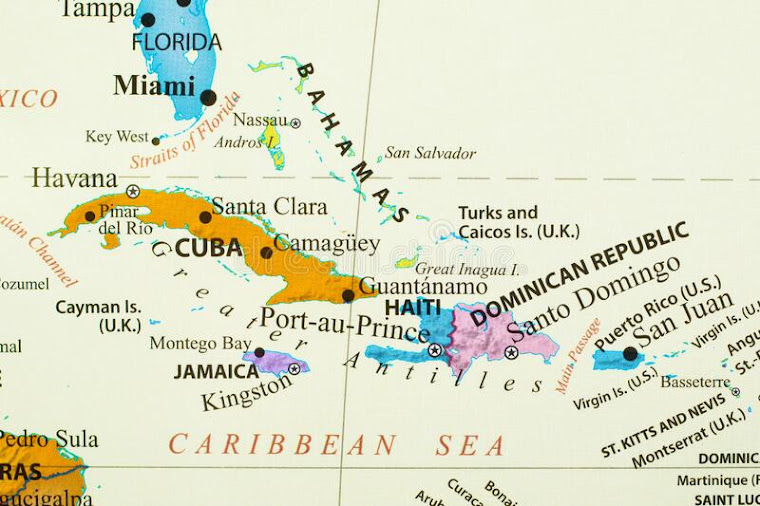
The Bahamas and Haiti: Forty years of missed opportunities
By NOELLE NICOLLS
Tribune Staff Reporter
nnicolls@tribunemedia.net
When the African world needed a sign that its certain fate would not be decided by the interests of slave masters and colonial rulers, it was a group of disparate Africans on the island of Hispaniola, with the backing of their ancestors and the divine spirits, who rose to the occasion.
Empowered by a collective will they planted the seed in the African consciousness that we are more than they say we are; we deserve more than what they want for us.
Two hundred years later, Haiti that gave us hope, faces a seemingly hopeless fate. All we see of its people is that of their apparent worst side.
The eyes of the world take an interest only when the story line is of strife and scandal; when the images fit the narrative of poor, desolate, pagan and black.
In the minds of most Bahamians, the light that is Haiti has faded: obscured by fatigue, resentment, tough love, scarcity, indifference, misinformation and prejudice.
The light has also faded in the minds of many Haitians: obscured by exhaustion, hunger, insecurity, anger, self-hate.
Experience tells us that in our weakest times as human beings, it often takes a light, whether shone by an external source or a spark in our own spirits, to help us overcome.
In an Avatarish way that light speaks to us and says: "I see you." In an African way that light says, harambe, "the community needs you." In the language of psychotherapy, the light says, "tap into the greatness that lies within and live it." And in the language of our queen mothers it says, "I love you."
The call to Africans across the globe is to inform/educate yourself; elevate your consciousness about Haiti so our people and the entire world knows, Haiti is more and Haiti deserves more.
It is more than what the international media depicts. It is more than the actions of its political electorate. It is more than the folly that befalls it. It is more than what our eyes see.
As African people we need to care enough to demand that Haiti fulfil its revolutionary promise of being the beacon of light.
In this season of suffering, Haiti needs not our pity nor our charity, it needs our great expectations, and with our collective consciousness, we will call out its greatness.
Haiti has much work to do, but I wonder if we as African people will start to play our part. Certainly, in the history of our relationship with Haiti, the Bahamas has missed countless opportunities, largely because of our singular focus on immigration.
If we date the start of diplomatic relations to 1971, when the Bahamas signed the first of three bilateral treaties, then we can claim the 40-year prize of missed opportunities in building a meaningful relationship.
With newly acquired rights to self governance, and a dispatch from the UK Foreign Common Law Office giving it limited authority to conduct external affairs, the Bahamas government negotiated its first bilateral agreement in 1971. Haiti was the foreign partner.
Whatever promise this sign may have represented was short lived because the 1971 agreement was "never really actualised," according to Joshua Sears, director general, Ministry of Foreign Affairs.
And it was the only agreement that envisaged a broad range of relationships, including commercial trade and technical cooperation, education exchanges and cultural linkages. The central issue of subsequent agreements - 1985 and 1995 - was immigration.
Although Haitians have been migrating to the Bahamas for centuries, the Haitian immigration "problem" only dates back to the 1950s.
The Department of Immigration was formed as a statutory body from 1939, but for all its efforts over 60 plus years, the solution to the "immigration problem" still evades the government.
This is not withstanding the notoriously draconian efforts of Minister of Immigration Loftus Roker to round up "illegals."
One day, hopefully, Bahamians will wake up and realise, as sure as a man cannot cheat death, no number of raids or repatriations will solve the "immigration problem."
Neither the Department of Immigration, the Defence Force nor the entire might of the state has the power to ease the desire of desperate-minded people seeking a better life.
And we have no friend in the Haitian government, where that is concerned. In a country of 10 million, with a Diaspora probably twice that size, the hundreds of people who migrate to the Bahamas, whether legally or illegally, is not a problem on the minds of most.
For centuries, migration has been the answer to populations seeking a better life, said Leonard Archer, former CARICOM Ambassador. This is the story of Europe, Asia, Africa, everywhere in the world. When people experience scarcity, drought, famine, hardship, persecution in one area they move to another.
"If you interview the Haitian people who are coming, a number of them have been deported two, three, four times. People are desperate. The reality is desperate people will always move and we can't afford to put a wall around the country," said Mr Archer.
"We have been deporting people to Haiti since the 1970s. Has it helped? Has it worked?" he asked.
We are banging our heads on the wall with our hysteria over the so-called illegals. History has shown us, we are inextricably linked to Haiti. Today is no different. Waves of immigration are seen anytime public confidence wanes, during economic crises, at the mere threat of political instability, and at times of natural disaster, of which Haiti is no stranger.
Short of Haiti being restored as the pride of the world, the migration is not going to stop. Not that the Bahamas should ignore its national interests, but all that banging is just giving us a headache.
January 31, 2011
tribune242
By NOELLE NICOLLS
Tribune Staff Reporter
nnicolls@tribunemedia.net
When the African world needed a sign that its certain fate would not be decided by the interests of slave masters and colonial rulers, it was a group of disparate Africans on the island of Hispaniola, with the backing of their ancestors and the divine spirits, who rose to the occasion.
Empowered by a collective will they planted the seed in the African consciousness that we are more than they say we are; we deserve more than what they want for us.
Two hundred years later, Haiti that gave us hope, faces a seemingly hopeless fate. All we see of its people is that of their apparent worst side.
The eyes of the world take an interest only when the story line is of strife and scandal; when the images fit the narrative of poor, desolate, pagan and black.
In the minds of most Bahamians, the light that is Haiti has faded: obscured by fatigue, resentment, tough love, scarcity, indifference, misinformation and prejudice.
The light has also faded in the minds of many Haitians: obscured by exhaustion, hunger, insecurity, anger, self-hate.
Experience tells us that in our weakest times as human beings, it often takes a light, whether shone by an external source or a spark in our own spirits, to help us overcome.
In an Avatarish way that light speaks to us and says: "I see you." In an African way that light says, harambe, "the community needs you." In the language of psychotherapy, the light says, "tap into the greatness that lies within and live it." And in the language of our queen mothers it says, "I love you."
The call to Africans across the globe is to inform/educate yourself; elevate your consciousness about Haiti so our people and the entire world knows, Haiti is more and Haiti deserves more.
It is more than what the international media depicts. It is more than the actions of its political electorate. It is more than the folly that befalls it. It is more than what our eyes see.
As African people we need to care enough to demand that Haiti fulfil its revolutionary promise of being the beacon of light.
In this season of suffering, Haiti needs not our pity nor our charity, it needs our great expectations, and with our collective consciousness, we will call out its greatness.
Haiti has much work to do, but I wonder if we as African people will start to play our part. Certainly, in the history of our relationship with Haiti, the Bahamas has missed countless opportunities, largely because of our singular focus on immigration.
If we date the start of diplomatic relations to 1971, when the Bahamas signed the first of three bilateral treaties, then we can claim the 40-year prize of missed opportunities in building a meaningful relationship.
With newly acquired rights to self governance, and a dispatch from the UK Foreign Common Law Office giving it limited authority to conduct external affairs, the Bahamas government negotiated its first bilateral agreement in 1971. Haiti was the foreign partner.
Whatever promise this sign may have represented was short lived because the 1971 agreement was "never really actualised," according to Joshua Sears, director general, Ministry of Foreign Affairs.
And it was the only agreement that envisaged a broad range of relationships, including commercial trade and technical cooperation, education exchanges and cultural linkages. The central issue of subsequent agreements - 1985 and 1995 - was immigration.
Although Haitians have been migrating to the Bahamas for centuries, the Haitian immigration "problem" only dates back to the 1950s.
The Department of Immigration was formed as a statutory body from 1939, but for all its efforts over 60 plus years, the solution to the "immigration problem" still evades the government.
This is not withstanding the notoriously draconian efforts of Minister of Immigration Loftus Roker to round up "illegals."
One day, hopefully, Bahamians will wake up and realise, as sure as a man cannot cheat death, no number of raids or repatriations will solve the "immigration problem."
Neither the Department of Immigration, the Defence Force nor the entire might of the state has the power to ease the desire of desperate-minded people seeking a better life.
And we have no friend in the Haitian government, where that is concerned. In a country of 10 million, with a Diaspora probably twice that size, the hundreds of people who migrate to the Bahamas, whether legally or illegally, is not a problem on the minds of most.
For centuries, migration has been the answer to populations seeking a better life, said Leonard Archer, former CARICOM Ambassador. This is the story of Europe, Asia, Africa, everywhere in the world. When people experience scarcity, drought, famine, hardship, persecution in one area they move to another.
"If you interview the Haitian people who are coming, a number of them have been deported two, three, four times. People are desperate. The reality is desperate people will always move and we can't afford to put a wall around the country," said Mr Archer.
"We have been deporting people to Haiti since the 1970s. Has it helped? Has it worked?" he asked.
We are banging our heads on the wall with our hysteria over the so-called illegals. History has shown us, we are inextricably linked to Haiti. Today is no different. Waves of immigration are seen anytime public confidence wanes, during economic crises, at the mere threat of political instability, and at times of natural disaster, of which Haiti is no stranger.
Short of Haiti being restored as the pride of the world, the migration is not going to stop. Not that the Bahamas should ignore its national interests, but all that banging is just giving us a headache.
January 31, 2011
tribune242

Friday, February 4, 2011
Majority in poll supports the privatisation of the Bahamas Telecommunications Corporation (BTC)
Majority in poll back BTC privatisation
tribune242
THE majority of the persons polled in a recent exercise by Consumer Voices Bahamas said they are in support of the privatisation of the Bahamas Telecommunications Corporation.
On January 28, CVB representatives standing on the corner of Bay and Parliament Streets polled 236 persons ranging in age from 16 to 75.
According to a press statement from the group, the majority of those polled supported privatisation.
"One hundred and twenty three persons, or 52 per cent, support the sale. Ninety six individuals, or 41 per cent, do not support the sale. Seventeen individuals, or 7 percent, are undecided about the sale.
"There was also a question on the quality of service at BTC. Sixty per cent of all respondents polled are displeased with the current services BTC offers," the statement read.
According to CVB, some of the most of the comments reflected a "desire for cheaper long distance rates, reduced texting rates, less dropped calls, as well as improved customer service and better service for the Family Islands. Many respondents also want more features and a 4G network.
"The CVB surveys will be ongoing and will be conducted in various areas so that we can continue to hear from the consumer," the statement read.
February 04, 2011
tribune242
tribune242
THE majority of the persons polled in a recent exercise by Consumer Voices Bahamas said they are in support of the privatisation of the Bahamas Telecommunications Corporation.
On January 28, CVB representatives standing on the corner of Bay and Parliament Streets polled 236 persons ranging in age from 16 to 75.
According to a press statement from the group, the majority of those polled supported privatisation.
"One hundred and twenty three persons, or 52 per cent, support the sale. Ninety six individuals, or 41 per cent, do not support the sale. Seventeen individuals, or 7 percent, are undecided about the sale.
"There was also a question on the quality of service at BTC. Sixty per cent of all respondents polled are displeased with the current services BTC offers," the statement read.
According to CVB, some of the most of the comments reflected a "desire for cheaper long distance rates, reduced texting rates, less dropped calls, as well as improved customer service and better service for the Family Islands. Many respondents also want more features and a 4G network.
"The CVB surveys will be ongoing and will be conducted in various areas so that we can continue to hear from the consumer," the statement read.
February 04, 2011
tribune242
Thursday, February 3, 2011
Prime Minister Hubert Ingraham has been condemned by one of his own... Branville McCartney
FNM blasts ‘attack on PM’
By KRYSTEL ROLLE
Guardian Staff Reporter
krystel@nasguard.com
PLP says PM Ingraham was condemned by one of his own
Bamboo Town MP Branville McCartney’s assertion that Prime Minister Hubert Ingraham lacks compassion was described yesterday by Free National Movement (FNM)Chairman Carl Bethel as an attack and “political posturing.”
“There is no question that such an attack upon the prime minister is totally without any foundation and must be viewed as merely the manifestation of a personal agenda,” said Bethel in a statement.
Bethel was responding to comments made by McCartney while he was a guest Tuesday on the Star 106.5 FM radio talk show ‘Jeffrey’ with host Jeffrey Lloyd.
At the time McCartney predicted that the FNM would be challenged at the next general election, in part because of Ingraham’s lack of compassion toward the Bahamian people.
“At this stage, I’d certainly want [the FNM] to succeed, but we have our challenges,” said McCartney. “We seem to not be connected to the people, from the leader straight down. [We’re] showing a lack of compassion and not listening to the people,” he said.
When pressed by Lloyd, McCartney added: “The prime minister is the leader of the FNM. The buck stops with the prime minister. Yes, there’s a lack of compassion — probably not intentionally. Perhaps that’s just the way he is. That type of governance was necessary in 1992. In 2011 and 2012, I don’t think it is.”
Bethel said McCartney’s assessment was incorrect.
“Indeed, compassion is a virtue best expressed by actions, not words; and the prime minister throughout his political career has always shown great compassion for others,” he said.
“His policy initiatives, infrastructural improvements, stimulus packages, assistance with electricity bills, social spending, unemployment insurance and educational innovations in these tough times all speak louder than words of the prime minister’s compassion.”
Bethel said many people in the FNM were surprised at McCartney’s comments, as McCartney has always had the right to express concerns about compassion, or the lack thereof, at party council meetings.
“Indeed, Mr. McCartney attended the Central Council meeting of the party last week and had every opportunity to voice his feelings to his colleagues, peers, and those party officers and activists who he hopes to lead someday. He said nothing about compassion even though he spoke about other issues,” he said.
Bethel added that the prime minister’s personal journey from the “bowels of dire poverty” in his childhood to the heights of achievement for the Bahamian people as a “visionary” and “compassionate” leader is well-known.
He is of the view that Ingraham’s love and compassion for the Bahamian people is second to none.
“There may be policy differences which divide politicians, but any attack based upon an alleged lack of compassion is nothing short of political posturing,” said Bethel.
Progressive Liberal Party (PLP) Chairman Bradley Roberts also issued a statement yesterday on McCartney’s remarks on Tuesday.
“The prime minister clearly stands condemned by one of his own,” Roberts said. “Who will be the next to step forward and to be frank and honest with the Bahamian people? McCartney’s projections that the FNM will face great challenges in the coming general election are correct. We indeed need change Bahamas.”
2/3/2011
thenassauguardian
By KRYSTEL ROLLE
Guardian Staff Reporter
krystel@nasguard.com
PLP says PM Ingraham was condemned by one of his own
Bamboo Town MP Branville McCartney’s assertion that Prime Minister Hubert Ingraham lacks compassion was described yesterday by Free National Movement (FNM)Chairman Carl Bethel as an attack and “political posturing.”
“There is no question that such an attack upon the prime minister is totally without any foundation and must be viewed as merely the manifestation of a personal agenda,” said Bethel in a statement.
Bethel was responding to comments made by McCartney while he was a guest Tuesday on the Star 106.5 FM radio talk show ‘Jeffrey’ with host Jeffrey Lloyd.
At the time McCartney predicted that the FNM would be challenged at the next general election, in part because of Ingraham’s lack of compassion toward the Bahamian people.
“At this stage, I’d certainly want [the FNM] to succeed, but we have our challenges,” said McCartney. “We seem to not be connected to the people, from the leader straight down. [We’re] showing a lack of compassion and not listening to the people,” he said.
When pressed by Lloyd, McCartney added: “The prime minister is the leader of the FNM. The buck stops with the prime minister. Yes, there’s a lack of compassion — probably not intentionally. Perhaps that’s just the way he is. That type of governance was necessary in 1992. In 2011 and 2012, I don’t think it is.”
Bethel said McCartney’s assessment was incorrect.
“Indeed, compassion is a virtue best expressed by actions, not words; and the prime minister throughout his political career has always shown great compassion for others,” he said.
“His policy initiatives, infrastructural improvements, stimulus packages, assistance with electricity bills, social spending, unemployment insurance and educational innovations in these tough times all speak louder than words of the prime minister’s compassion.”
Bethel said many people in the FNM were surprised at McCartney’s comments, as McCartney has always had the right to express concerns about compassion, or the lack thereof, at party council meetings.
“Indeed, Mr. McCartney attended the Central Council meeting of the party last week and had every opportunity to voice his feelings to his colleagues, peers, and those party officers and activists who he hopes to lead someday. He said nothing about compassion even though he spoke about other issues,” he said.
Bethel added that the prime minister’s personal journey from the “bowels of dire poverty” in his childhood to the heights of achievement for the Bahamian people as a “visionary” and “compassionate” leader is well-known.
He is of the view that Ingraham’s love and compassion for the Bahamian people is second to none.
“There may be policy differences which divide politicians, but any attack based upon an alleged lack of compassion is nothing short of political posturing,” said Bethel.
Progressive Liberal Party (PLP) Chairman Bradley Roberts also issued a statement yesterday on McCartney’s remarks on Tuesday.
“The prime minister clearly stands condemned by one of his own,” Roberts said. “Who will be the next to step forward and to be frank and honest with the Bahamian people? McCartney’s projections that the FNM will face great challenges in the coming general election are correct. We indeed need change Bahamas.”
2/3/2011
thenassauguardian
Branville McCartney says he supports the FNM and its leadership... but its leader - Prime Minister Hubert Ingraham - lacks compassion in relation to the suffering, misfortune, and future of the Bahamian people
MP McCartney: PM LACKS COMPASSION
By KRYSTEL ROLLE
Guardian Staff Reporter
krystel@nasguard.com
Predicts FNM will face challenges in next election
Bamboo Town MP Branville McCartney predicted yesterday that the Free National Movement (FNM) will be challenged during the upcoming general election in part because of its leader’s lack of compassion toward the Bahamian people.
“At this stage, I’d certainly want [the FNM] to succeed, but we have our challenges,” said McCartney, while a guest on the Star 106.5 radio talk show ‘Jeffrey’ with host Jeff Lloyd.
“We seem to not be connected to the people, from the leader straight down. [We’re] showing a lack of compassion and not listening to the people.
“Although, yes we’re the ones who were put here to make decisions, the people are the ones who put us here. We need to listen. We don’t have all of the answers but the way we go about things, it’s not good. We have a number of new voters and even old supporters are concerned. I hope we get our act together.”
When asked if he was referring to a particular personality within the party, McCartney said Ingraham has to take responsibility for the challenges the party faces going into the next election.
“The prime minister is the leader of the FNM. The buck stops with the prime minister. Yes, there’s a lack of compassion — probably not intentionally. Perhaps that’s just the way he is. That type of governance was necessary in 1992. In 2011 and 2012, I don’t think it is.”
McCartney — who resigned from the Ingraham Cabinet nearly a year ago — said voters want to see a different approach to governance.
Among other things, he said Bahamians want to see the government’s plans for the future of the country and opportunities that would be provided to them.
“They want to know that this place called the Commonwealth of The Bahamas is for Bahamians,” he said.
McCartney has made it known that he wants to be a future leader of the FNM. Since stepping down as Minister of State for Immigration in February 2010, he has been careful, though, not to publicly criticize Prime Minister Hubert Ingraham in any strong terms.
He said yesterday that if he were leader, he would do things a little differently from Ingraham.
“The difference I think is you need to listen. I don’t profess to have all the answers. I will give persons the respect that they deserve,” he said.
McCartney was expected to challenge Ingraham for the leadership had the FNM held a convention last year.
Asked yesterday if he had conversations with Prime Minister Ingraham about his future with the party, McCartney said he has not spoken to Ingraham since he resigned from the Cabinet.
He said it is still unclear whether he will be chosen by the party to contest the Bamboo Town seat in the general election.
“I would like a nomination, but if I don’t get it I’m going to move on. The party makes that decision, not me. That’s out of my hands,” he said.
McCartney added that whether or not he is chosen to run on the FNM’s ticket for Bamboo Town, he will offer as a candidate in the election.
“[I would run] independent or otherwise; we will see what happens,” he said when pressed on the matter.
McCartney added however that he supports the FNM and its leadership.
2/2/2011
thenassauguardian
By KRYSTEL ROLLE
Guardian Staff Reporter
krystel@nasguard.com
Predicts FNM will face challenges in next election
Bamboo Town MP Branville McCartney predicted yesterday that the Free National Movement (FNM) will be challenged during the upcoming general election in part because of its leader’s lack of compassion toward the Bahamian people.
“At this stage, I’d certainly want [the FNM] to succeed, but we have our challenges,” said McCartney, while a guest on the Star 106.5 radio talk show ‘Jeffrey’ with host Jeff Lloyd.
“We seem to not be connected to the people, from the leader straight down. [We’re] showing a lack of compassion and not listening to the people.
“Although, yes we’re the ones who were put here to make decisions, the people are the ones who put us here. We need to listen. We don’t have all of the answers but the way we go about things, it’s not good. We have a number of new voters and even old supporters are concerned. I hope we get our act together.”
When asked if he was referring to a particular personality within the party, McCartney said Ingraham has to take responsibility for the challenges the party faces going into the next election.
“The prime minister is the leader of the FNM. The buck stops with the prime minister. Yes, there’s a lack of compassion — probably not intentionally. Perhaps that’s just the way he is. That type of governance was necessary in 1992. In 2011 and 2012, I don’t think it is.”
McCartney — who resigned from the Ingraham Cabinet nearly a year ago — said voters want to see a different approach to governance.
Among other things, he said Bahamians want to see the government’s plans for the future of the country and opportunities that would be provided to them.
“They want to know that this place called the Commonwealth of The Bahamas is for Bahamians,” he said.
McCartney has made it known that he wants to be a future leader of the FNM. Since stepping down as Minister of State for Immigration in February 2010, he has been careful, though, not to publicly criticize Prime Minister Hubert Ingraham in any strong terms.
He said yesterday that if he were leader, he would do things a little differently from Ingraham.
“The difference I think is you need to listen. I don’t profess to have all the answers. I will give persons the respect that they deserve,” he said.
McCartney was expected to challenge Ingraham for the leadership had the FNM held a convention last year.
Asked yesterday if he had conversations with Prime Minister Ingraham about his future with the party, McCartney said he has not spoken to Ingraham since he resigned from the Cabinet.
He said it is still unclear whether he will be chosen by the party to contest the Bamboo Town seat in the general election.
“I would like a nomination, but if I don’t get it I’m going to move on. The party makes that decision, not me. That’s out of my hands,” he said.
McCartney added that whether or not he is chosen to run on the FNM’s ticket for Bamboo Town, he will offer as a candidate in the election.
“[I would run] independent or otherwise; we will see what happens,” he said when pressed on the matter.
McCartney added however that he supports the FNM and its leadership.
2/2/2011
thenassauguardian
Wednesday, February 2, 2011
The Vanguard Party has been revived...

Journalist and businesman revives the Vanguard Party
tribune242
THE socialist Vanguard Party has been revived under the interim leadership of journalist and businessman, Charles Fawkes.
Mr Fawkes, who will serve as the party's first secretary, is also the president of the National Consumer Association and organiser for the Commonwealth Group of Unions.
Founded in 1971 and originally known as the Vanguard Nationalist and Socialist Party, the party suspended political activities in 1995.
According to Mr Fawkes while the party's old slogan - "Dare to Struggle - Dare to Win" - will be preserved, the words "socialist and "nationalist" will be dropped.
"Henceforth, the grouping will simply be known as the Vanguard Party (VP). However, the party will remain as a party of the left, exclusively committed to the workers of The Bahamas, the wider Caribbean and the world and will participate in the ongoing debate and struggles from that perspective," said the party in a statement.
Over the next six months, it said, VP will reorganise its Central Committee, other party organs and its supporters.
In addition, the party's newspaper, "The Vanguard" will begin publication once again.
"In the coming months, the organisation's philosophy will be further explicated and disseminated to the public as the second edition of the party's book, The Struggle for Freedom in The Bahamas" will be published. Other officers of the party will also be named and elected from the reorganised general membership and supporters in the immediate future," the statement said.
It went on to emphasise that in the "new type" of party that "New Vanguard" hopes to become, the First Secretary will serve as leader.
"Additionally, it should be noted that to be a party of the people, it is not enough to say that the party represents the masses. The party must be an actual weapon of the masses, articulating their needs and demands and struggling untiringly for their interest.
"In a class divided society, no party can speak for all the classes. Those who serve the interests of the rich who profit from the present economic system must of necessity work against the interests of the poor and oppressed masses. And the neo-colonial PLP and FNM can no more serve the working-class majority in Bahamian society than could the old UBP.
"Only the Vanguard is a workers' party today, and the political awakening of the Bahamian working class will be measured by the strength and militancy of their support for the Vanguard."
When first organised in the early 1970s, the Vanguard Party grew out of the youth arm of the Progressive Liberal Party, and drew inspiration from the Black Panther Party in the United States.
Despite running candidates in elections in 1977 and 1979, the first Vanguard Party was unable to win a seat in parliament, never garnering more than 173 votes.
From 1979 to 1985, the party was led by academic and political theorist John T McCartney, now the department head and associate professor of government and law at Lafayette College in Easton, Pennsylvania.
February 02, 2011
tribune242
Tuesday, February 1, 2011
Perry Christie’s remarks should scare Cable and Wireless Communications (CWC)
The danger of doing deals with governments
thenassauguardian editorial
Perry Christie’s remarks on Friday regarding the Bahamas Telecommunications Company (BTC) deal were strong. He told supporters at a conclave at the Hilton Outten Conference Center that if elected, the next Progressive Liberal Party (PLP) government would redo the deal the Free National Movement (FNM) administration is negotiating with Cable and Wireless Communications (CWC).
“If the FNM administration proceeds against the advice of the PLP and sells to Cable and Wireless, we put Cable and Wireless on notice of our central position that the sale to Cable and Wireless is not in the national interest. And when we return to government, we will re-examine all of the provisions of the deal and we will aggressively renegotiate the terms of the agreement that we deem repugnant to the national interest,” said Christie.
This statement should scare CWC.
The last definitive barometer of public opinion in The Bahamas was the Elizabeth by-election in February 2010. The PLP won it by three votes. This would suggest that at that time—considering that Elizabeth is a swing seat—the electorate was still closely divided between the two major political parties.
The PLP feels justified threatening the CWC deal. After winning the May 2007 general election, the FNM administration cancelled contracts negotiated by the PLP when it was in government, including the straw market deal.
Governments have the responsibility to act in the best interest of the people they represent. If a new administration thinks a deal on the table is against the public interest, it should seek to change it or cancel it.
However, the government also has the legal responsibility to pay businesses what is owed due to breach of contract.
No national business can compete with the state when it comes to the power game.
The state has a department of lawyers, almost unlimited money through the Public Treasury and taxation and the capacity to make your life difficult, if not miserable.
In developing countries, these problems are magnified. Politicians in these countries often have less regard for the traditions and conventions of democracy, and more power is concentrated in their hands.
CWC is in a tough position. It is in the final stage of negotiating the acquisition of a major asset. At the same time, the opposition and alternative government has put it on notice that if it is elected, the deal it is about to sign with the current administration would not be honored.
This adds more uncertainty to the $210 million investment CWC is about to make.
If the PLP comes to office and breaks the deal, CWC could sue. Bahamian courts consistently demonstrate they are independent. The Supreme Court recently ruled against the government in the Blue Hill Road and Market Street road reversal dispute.
But such a battle would be long and expensive. It could also take the focus of CWC away from getting to know its new business and customers.
CWC is in a peculiar position. The unions representing the company’s soon-to-be workers dislike it. And now the opposition is threatening CWC with new terms.
CWC is an old organization with significant experience in the region. We wonder if its board is getting concerned about The Bahamas situation.
2/1/2011
thenassauguardian editorial
thenassauguardian editorial
Perry Christie’s remarks on Friday regarding the Bahamas Telecommunications Company (BTC) deal were strong. He told supporters at a conclave at the Hilton Outten Conference Center that if elected, the next Progressive Liberal Party (PLP) government would redo the deal the Free National Movement (FNM) administration is negotiating with Cable and Wireless Communications (CWC).
“If the FNM administration proceeds against the advice of the PLP and sells to Cable and Wireless, we put Cable and Wireless on notice of our central position that the sale to Cable and Wireless is not in the national interest. And when we return to government, we will re-examine all of the provisions of the deal and we will aggressively renegotiate the terms of the agreement that we deem repugnant to the national interest,” said Christie.
This statement should scare CWC.
The last definitive barometer of public opinion in The Bahamas was the Elizabeth by-election in February 2010. The PLP won it by three votes. This would suggest that at that time—considering that Elizabeth is a swing seat—the electorate was still closely divided between the two major political parties.
The PLP feels justified threatening the CWC deal. After winning the May 2007 general election, the FNM administration cancelled contracts negotiated by the PLP when it was in government, including the straw market deal.
Governments have the responsibility to act in the best interest of the people they represent. If a new administration thinks a deal on the table is against the public interest, it should seek to change it or cancel it.
However, the government also has the legal responsibility to pay businesses what is owed due to breach of contract.
No national business can compete with the state when it comes to the power game.
The state has a department of lawyers, almost unlimited money through the Public Treasury and taxation and the capacity to make your life difficult, if not miserable.
In developing countries, these problems are magnified. Politicians in these countries often have less regard for the traditions and conventions of democracy, and more power is concentrated in their hands.
CWC is in a tough position. It is in the final stage of negotiating the acquisition of a major asset. At the same time, the opposition and alternative government has put it on notice that if it is elected, the deal it is about to sign with the current administration would not be honored.
This adds more uncertainty to the $210 million investment CWC is about to make.
If the PLP comes to office and breaks the deal, CWC could sue. Bahamian courts consistently demonstrate they are independent. The Supreme Court recently ruled against the government in the Blue Hill Road and Market Street road reversal dispute.
But such a battle would be long and expensive. It could also take the focus of CWC away from getting to know its new business and customers.
CWC is in a peculiar position. The unions representing the company’s soon-to-be workers dislike it. And now the opposition is threatening CWC with new terms.
CWC is an old organization with significant experience in the region. We wonder if its board is getting concerned about The Bahamas situation.
2/1/2011
thenassauguardian editorial
Subscribe to:
Comments (Atom)