What we resist will persist: The quiet Haitian revolution
By NOELLE NICOLLS
Tribune Staff Reporter
nnicolls@tribunemedia.net
PEOPLE say I am Haitian. They call me a Haitian sympathiser. They even question my patriotism. Their biggest mistake is they think I care either way. I have no insecurities about my identity or my affinity to Haiti.
I recall once upon a time people used to say black is beastly. Thankfully today is another day. In my time, black is beautiful and being Haitian is no shame. So call me what you may, call me what you might, my conviction will not change. Somehow through the thicket of our discontent as a nation, we need a new paradigm to govern our relationship with Haiti and Haitians.
I know most Bahamians can relate to a time as a child when all reason was replaced with rage, and the end result was a temper tantrum. Imagine that one occasion when a moment of stillness emerged after the tears subsided. In that moment, your mother, who did not budge through it all, may have spoken these words: "Finished? Can we go now?" And as if enlightened by divine favour, you began to see with new eyes. Often I wish a moment of calm like that would sweep the collective consciousness of Bahamians, so we would stop the childish hysterics and really start to solve our problems.
Let us imagine for a second that this is that moment and I am the mother. And let us assume for argument's sake that we have new eyes. This is what I would have you contemplate next.
With all the money, time and passion thrown at dealing with the "Haitian problem", have we got anywhere? Last week I contemplated that there is a better way: It requires less money, less resources and fewer headaches, but it is infinitely more difficult, but only because it requires a mental shift.
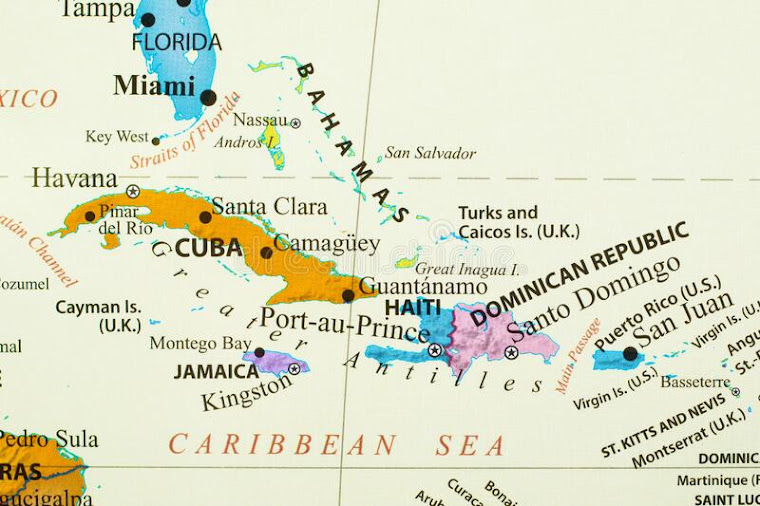
Last week I examined the Bahamas' unexplored and underdeveloped economic interest in Haiti. I reasoned that the Bahamians had concerns about a scarcity of resources, the security of our people and the sovereignty of our nation. To advance the conversation let us explore the concern about our national sovereignty.
A Tribune242 reader in response to "Time to stop prostituting Haitians", wanted to know if I was advocating the government "halt deportation, because the only thing that would do is send a green light to Haitians that the Bahamas wants them to come". The reader said Miami is a case study of what would be the result.
There are a few things that need to be said. Haitians have never needed a "green light" to come to the Bahamas. We market ourselves around the world with the message that "it's better in the Bahamas." Haitians have reasons to believe that is true. There is a greater probability of dying in Haiti before age 40 than there is in the Bahamas, according to the United Nations Human Development Report of 2005. In Haiti, 65 per cent of the population lives below the income poverty line, unlike the Bahamas with only 9 per cent.
No, I am not saying halt deportation. The Department of Immigration has a role to play, but based on the nature of the beast, it is a limited one. The past decades of raids, deportation and immigration policies have shown us how futile our single-minded strategy has been. Haitians risk the peril of death and the certainty of being marginalized for the chance of opportunity in the Bahamas. How do you really compete against that?
The Department of Immigration has a role to play, but it does not have the power to stop Haitian immigrants from leaving Haiti's shores; to prevent some of them from entering; or to stop Bahamians from exercising their will to hire Haitians, whether legally or illegally.
I am saying: Raids in the order of Thursday night's Fox Hill raid serve no useful purpose. One eyewitness told me of the raid and said they took people out of their homes and beat them for no reason. One person was left red from all the blood that covered his clothes and body. It was like they just took their pent up frustration out on a few random Haitians.
Let us be reminded, as another Tribune242 reader said: "They are not just 'Haitians' or 'foreigners', but each has a face, a name and an identity (like YOU and ME), a story to tell (like YOU and ME) and struggles, pain and heartaches to overcome (like YOU and ME). Where is our compassion for others?"
I am also saying: It is because we force Haitian immigrants into the margins of our society that we create a whole host of counter-productive and self-defeating problems: Squatter communities and marginalised youth, to name a few.
The reader feared a Miami-like situation emerging in the Bahamas, where "the language and culture of the city has been completely taken over by Cubans so much so that you are looked at funny if you can't speak Spanish." Theoretically I suppose this is a risk Bahamians may need to take, but aren't risks a part of life?
There is a universal lesson to learn from the South Florida immigrant population, comprised mainly of people of Latin American descent. South Florida is a handy card to draw to stoke fears, but its example cannot stand scrutiny. When we look at the pattern of integration in South Florida, or lack thereof, there is evidence that it does not fit the American norm or the Bahamian model.
What happened in South Florida was a convergence of several factors: extremely large immigration numbers, not even comparable to the cumulative numbers seen in the Bahamas; a highly concentrated area; the marginalization of a cultural group; and a great white flight, which is probably the most significant of all factors.
"The number of Cubans that came to South Florida, nearly a quarter million of them, were concentrated in the same area. The English speaking Americans rather than trying to assimilate them fled north and left the Cuban Americans to fill a void that was created by their moving," said Mr Leonard Archer, former Ambassador to CARICOM.
"You had really a transplanted society of people who spoke the same language, with the same culture, living in a concentrated area. As a consequence there was less impetus to change and become a part of the mainstream. They created a society in South Florida that is not the normal pattern," he said.
Clearly, Bahamians are not going anywhere, so Haitian nationals are faced with the choice of integration, marginalisation or deportation.
Over the years, South Florida immigrants coalesced around their Latin American cultural identity because of their experience of being marginalised. The act of uniting was a form of resistance and survival. To win social rights, and in some cases basic human rights, the immigrants of common culture formed an organic constituency.
Over time, they acquired political power. So now, there is a large community of Americans of Latin American descent with no insecurities about their origins or their rights. Emboldened by its ability to acquire power in defiance of the system, and left to thrive in a cultural vacuum, there was no longer any need for the community to suppress its cultural identity or assimilate.
And today, South Florida has been enriched by the presence of Latin American immigrants, despite the annoyances of language dynamics. Bahamians who deny this might just be telling a bold face lie: After all, Bahamians practically live in South Florida and other areas in the immigrant nation we call the United States.
There are over 70,000 undocumented Bahamians living in the US, according to the US Immigration and Naturalization Service. Between 1989 and 2004, more than 5,000 Bahamians gained citizenship and there were 12,000 legal residents.
The lesson in all of this is: When a group's identity is the source of its oppression that group will likely bind together on the basis of that identity. The risk of our current policies, beliefs and practices is that the more we marginalise Haitian nationals, the more they can draw strength from that identity.
Marginalisation has not worked for us. One of the results has been squatter communities, like the former Mackey Yard. Bahamians allow Haitian communities to exist, but only on the peripheries. We have no problem when Haitians keep to themselves and stay out of sight. We tolerate them in our communities and hire them at will when they play the role we have designated for them. But we scorn the idea of bringing legitimacy to our sordid affair.
Another result of marginalization is the resentment it breeds and the segregation it creates. Do not be fooled: there is an entire generation of Haitian adolescents with legitimate claims to their Bahamian identity, who are smart, unassuming and legal. It is only a matter of time before they exert their power as entitled Bahamians.
It is not a violent revolution Bahamians should be looking for. The face of the revolution will be in Bahamian children with Haitian ancestry, who excel in education, who settle into the business class, the political class and acquire quiet power in an indistinguishable way.
There is already an entrenched class of fully integrated Haitian-Bahamians, who do not have to prove their Bahamian credentials. These are established and respected Bahamians who keep their Haitian heritage under wraps. But there will come a time when they will no longer have to do such a thing. Our governor general, Sir Arthur Foulkes is proof of that. What will Bahamians do when all of their neighbours take off their masks and say: "Surprise! There is Haitian blood in me too!" Bahamians might refuse to talk about integrating Haitian immigrants, but in doing so we might just be cutting off our nose to spite our face.
So what of integration? It is already happening under our very noses and there is nothing we can do to turn the clock back. Bahamians would curse the day we start having members of parliament self identify as Haitian-Bahamian, or a Haitian caucus in the House of Assembly. For now, Bahamians can breathe a sigh of relief, because we are far from that, but we need not go there if we make the right choice. After all, Ron Pinder and Keod Smith, who some say have claim to Haitian ancestry, would be more inclined to sue for libel than acknowledge any possible association. The model of American society, with all of its segregated cultural and racial groups is not necessarily something we want to emulate anyway.
But if we maintain the strategy of refusing to integrate Haitian immigrants and Bahamians with Haitian ancestry into the Bahamian society and drop the general stigma attached to being Haitian, sorry to say, we will more than likely arrive at that cursed day. The odds are not in our favour; we have the law of nature working against us: what you resist will persist.
The survival of the Bahamas and the inheritance of our children does not depend, as some believe, on us "getting them out of here." Our national sovereignty is not at risk, but you can hardly reason away the belief in some that Haitians if we let them, will take over the country. Our survival depends on us growing up; on us allowing compassion, wisdom and reason to be our compass.
Let us refresh our memory with a look at some of the "evidence-based information" in the 2005 International Organisation for Migration (IOM) study, prepared by the College of the Bahamas. The in-depth study in 2005 found what some of us already knew: "Perceptions have replaced evidence-based rational debate" due to a lack of information on the Haitian community.
Estimates on the size of the Haitian population reported in the media over the years range anywhere between 15,000 and 80,000. The IOM study notes that counting illegal immigrants is notoriously difficult, so it uses corroborating data and statistical models to arrive at a population range for the Haitian community of 30-60,000.
In 2003 the US Homeland Security Department estimated there were 60,000 illegal immigrants in Bahamas. The 2000 census recorded 21,000 Haitian residents of which 28.3 per cent came from the 5-19 age group. Between 1974 and 2004, over 23,000 Haitians registered with the National Insurance Board, and in 2005 the Haitian Embassy reported 25,000 documented migrants with about three children per family.
The IOM study provides a useful analysis of population figures.
"During the period 1963 to 2000, the size of the resident Haitian community has increased from 4,170 to 21,426, which represents approximately a decennial increase of approximately 39 per cent from one census to the next," states the IMO report. There were five census counts in that time period.
If we apply a 39 per cent increase to the IOM's top estimate from its 2005 analysis, we can project a Haitian population of about 83,000 in 2010 and 116,000 in 2020. Population estimates for the Bahamas in those years are: 350,000 in 2010 and 414,000 in 2010. Based on liberal estimates then, the Haitian population in 20 years would represent 28 per cent of the total Bahamian population.
All of the figures are cumulative, so they represent the size of the Haitian community based on migration trends over the decades, not net inflows and outflows on an annual basis. In none of the available statistics is there a clear distinction made between illegal Haitian immigrants, Haitians with work permits, Haitians with permanent residence or citizenship or flow-through migrants.
There are so many gaps in available data that few reliable conclusions can be drawn. One conclusion I think it is fair to make is that hundreds of thousands of Haitians are not arriving at one time. According to Mr Archer, the Bahamas would need to be overwhelmed by those types of numbers at one time for a "takeover" to be possible, if that was the desired objective.
"The business of them coming in at a couple hundred a year, there is no possibility of a takeover. I challenge anyone to tell me any society where a take over has occurred in this fashion," said Mr Archer.
Theoretically, similar fears could be stoked over the West Indian population in England, but for the most part, "no one complains of the West Indians in England trying to take over the English society," said Mr Archer.
"The fears are unfounded. The Haitian people who are coming here are not coming to attempt to take over. They are coming to survive because they want something better for themselves. They want to become a part of the society, and their children tend to be as Bahamian as any other Bahamian child," he said.
Culturally speaking, Mr Archer asked: "Where is the influence?"
When you look at Bahamian cultural expressions - dance, music, food, religion, and politics - there have been no drastic changes from the influence of Haitian nationals. The same cannot be said about the American cultural influences. And, of course, we still maintain many of our inherited British cultural traits and some from our African heritage.
It is undeniable how American pop culture has transformed Bahamian society over the past 60 years; much of the influence has produced unfortunate results. On the other hand, one could maybe only point to some Haitian influence in cuisine and music, and that influence is certainly something for Bahamians to appreciate.
Mr Archer suggests: If Haitians in their numbers, can come into the Bahamas of near 400,000 people and "radically change that culture from within that says something about the culture." Perhaps this is what Bahamians fear. We are notoriously insecure about our budding cultural identity.
In all of this I know it is an uphill battle to chisel away the stone from the hearts and minds of Bahamians. As misinformed as we sometimes are, our resistance is not born from a lack of information. Our resistance is born of emotive reasons, like fear, prejudice, politics and hype.
Because of this, I believe it will take the concerted effort of our leaders and the might of our education system to reach our people. We have a long road ahead of us, as there is preliminary work to do in both institutions to fertilise the soil.
Sadly, but not surprisingly, this discussion will not sway the majority.
But for now, those with eyes to see, the beauty and the potential, and those with courage to say, we are proud of our Haitian connection, we must press on. With each step we are creating the new paradigm.
February 07, 2011
tribune242 Insight
A political blog about Bahamian politics in The Bahamas, Bahamian Politicans - and the entire Bahamas political lot. Bahamian Blogger Dennis Dames keeps you updated on the political news and views throughout the islands of The Bahamas without fear or favor. Bahamian Politicians and the Bahamian Political Arena: Updates one Post at a time on Bahamas Politics and Bahamas Politicans; and their local, regional and international policies and perspectives.
Monday, February 7, 2011
Branville McCartney support in the Free National Movement (FNM) has collapsed
What was Branville McCartney thinking?
thenassauguardian national review
The headline for this piece is the question that just about everyone has been asking since McCartney made the now famous statement — that Prime Minister Hubert Ingraham has no compassion.
McCartney, a sitting FNM MP who has made no secret of his leadership aspirations, made the startling statement last week Tuesday during an appearance on Star 106.5 FM’s talk show, “Jeffrey”, hosted by Jeff Lloyd.
This is exactly what McCartney told Lloyd: “At this stage, I’d certainly want [the FNM] to succeed, but we have our challenges. We seem to not be connected to the people, from the leader straight down. [We’re] showing a lack of compassion and not listening to the people.
“Although, yes we’re the ones who were put here to make decisions, the people are the ones who put us here. We need to listen. We don’t have all of the answers but the way we go about things, it’s not good. We have a number of new voters and even old supporters are concerned. I hope we get our act together.”
When asked if he was referring to a particular personality within the party, McCartney said Ingraham has to take responsibility for the challenges the party faces going into the next election.
“The prime minister is the leader of the FNM. The buck stops with the prime minister. Yes, there’s a lack of compassion — probably not intentionally. Perhaps that’s just the way he is. That type of governance was necessary in 1992. In 2011 and 2012, I don’t think it is.”
For anyone who doubted the statement or its context reported exclusively by The Nassau Guardian on Wednesday, McCartney repeated his feelings about the Prime Minister and the state of the Free National Movement during an interview with NB12 TV news later that night.
The statement drew a strong response from the public, much like his decision to resign from Ingraham’s Cabinet after serving just under two years as a junior minister in the ministries of tourism and immigration. McCartney thought he was being “underutilized”.
Now a new round of questions surrounding McCartney’s political strategy and his political future hang heavily over the relative newcomer to politics.
Is this the final chapter in McCartney’s political career? Maybe not, but the young politician does not appear to be making any friends in the FNM.
“His (McCartney’s) support in the party has collapsed,” said a well-placed source within the FNM who spoke on condition of anonymity because he is not authorized to speak on behalf of the party. “Any residual support he had has collapsed.
“You can’t keep going around lacerating the Prime Minister and the FNM for all the wrong things they are doing, but then say, ‘I support the party’. “It doesn’t make sense.”
PARTY VS. PUBLIC SUPPORT
Those outside the FNM seem similarly confused.
“If Branville is listening to people out there who may be clamoring for him to be the leader of the FNM, the question is are they people who can vote for him at convention. If not, he ought to recognize that it’s not meaningful support,” said Raynard Rigby, a former chairman of the Progressive Liberal Party.
“If he has support within the FNM he ought to figure out and think through how his open criticism of the leader will factor into the minds of his supporters. You can be popular in the eyes of the public, but party support is what matters if you are interested in a leadership position, and you saw that in the deputy leadership race in the PLP. Obie Wilchcombe was seen as more popular but Brave (Davis) beat him convincingly because he had the support of the party.”
George Smith, a veteran politician who served in the Sir Lynden Pindling administration, suggests that McCartney has failed to do just that — think things through, at least when it came to last week’s statement.
“The statement probably reflects what he is thinking, but he obviously did not weigh it carefully. In politics when you say something that makes you appear bold and courageous you may have to pay a price,” said Smith.
Only time will tell what that price will be, but there are already the obvious suggestions that McCartney may not receive the FNM nomination to run in Bamboo Town as a result of the “no compassion” remark.
“Make no mistake, FNMs have their own problems with Hubert Ingraham, but the party does not like these attacks which are seen as extremely disloyal to the party,” said the FNM source. “He is providing attack lines to the opposition. That’s a serious thing.”
McCartney has said that if he does not get the nomination he would run as an independent or “otherwise”. That “otherwise” is unlikely to be the PLP, given the boost an independent McCartney in Bamboo Town would give to the chances of the opposition winning that seat.
POLITICAL EXPERIENCE
Independents, generally, fare very poorly in general elections in The Bahamas, unless they receive the support of a political party that may decide not to run anyone in that seat.
While there have been success stories, such as Perry Christie and Hubert Ingraham (Tennyson Wells and Pierre Dupuch to a lesser extent), those men had years and years of experience in office and serving in Cabinet before turning independent, and had been battle-tested.
McCartney has neither the wealth of experience nor the political battle wounds to carry him through the trials of the “political wilderness”, and cast him as a maverick independent.
But what McCartney does appear to have is a certain appeal to a segment of the public that is hungry for a new face to lead the country. “Sick of Ingraham and Scared of Christie” is becoming a mantra among many young professional Bahamians who are openly declaring their intentions of sitting out the next general election.
McCartney is a successful lawyer and a seemingly dedicated and conscientious MP. He has a certain talent for public relations and is good at using technology and social media to connect with young voters. And whatever his critics may say, he is not afraid to publically criticize the government or his party, which in some quarters has been interpreted as ambitious and courageous.
McCartney has also taken a tough stance on two hot button issues in the country — illegal immigration and crime — and while everyone has not always agreed with his approach, his decision to publically state his positions has been generally well-received by the public.
Whether McCartney decides to bide his time in the FNM — although that seems unlikely in light of his recent statements — or become an independent, the road ahead will not be easy.
“When you are in Cabinet you have a level of public persona associated with the position. In the back bench you have to continually redefine who you are politically to maintain a public presence,” said Rigby.
This is a point obviously not lost on McCartney, who since resigning from Cabinet has made a number of headlines, more recently for showing up at a BTC unions anti-privatization rally, and telling reporters that he was undecided on an issue that his party obviously supports.
But if McCartney is to succeed in one of the mainstream political parties, he will have to work on how his actions and statements are being interpreted by those who make the decisions in those parties — the more experienced politicians who in this political climate call the shots.
AMBITION OR ARROGANCE
What some have interpreted as ambition and courage, others have interpreted as arrogance and inexperience.
“If he had said what he said in a way that people could better interpret he would have shown good political acumen, but by being so (publicly) honest he clearly has positioned himself in a way that the party has to deal with him,” said Smith, who emphasized that personally he is very fond of McCartney.
“Longevity is not on his side. He has not been around long enough. He’s a newcomer.
“He must have tremendous talent and personality which permits him to be effective, courteous, respectful and show that he has learned the game well enough and get people to say of him the many things he says of himself.”
A former politician who spent decades in frontline politics said of McCartney:
“He was in Cabinet for less than two years and then said he wanted to be leader or a substantive minister. It’s admirable to have ambition to go to the top but there’s a road, a protocol. Dion (Foulkes) and Tommy (Turnquest) came up through the party.
“I thought he was trying to do a good job in immigration, he made some errors but at least he was doing something. If he is able to control this particular situation he may survive but he has to get a handle on his public posturing.”
Among his colleagues, McCartney reportedly has little support.
“None of his Cabinet colleagues take him seriously. I don’t think he is seen as a contender. By resigning from Cabinet he removed himself as a contender for leadership,” said the FNM source.
McCartney was appointed to the Cabinet in his first term in office, took many by surprise when he decided to resign last year February.
According to his resignation letter: “The factors that motivated this run the full gamut of issues and emotions, some more compelling than others. In the forefront are my feelings of stagnation and the inability to fully utilize my political potential at this time.”
He went on to say: “It is also my belief that our current political system is headed in the wrong direction…I have already proven myself on many levels and have much to be proud of, but it would be wrong of me to assume that I have proven myself to you without demonstrating the strength and diversity of knowledge you deserve.”
An interview following that resignation only added to the confusion.
McCartney said that as a member of the Cabinet he was required to tow the party line, and thought he could do more outside of the Ingraham Cabinet, “speak out on what is right and not based on party lines”.
He said at the time: “There is no doubt that the prime minister, Hubert Alexander Ingraham, is the best man for the job at this time. He is no doubt the best leader that we have had in our party and he remains that way today… I respect him, I support him. He has my full, full support.”
McCartney said at the time that he had no intention of challenging Ingraham for the leadership of the party. But that line changed later that year when McCartney made it known that if the FNM held its convention that year he would offer himself for leader. The FNM decided not to hold the convention, citing financial and other reasons.
WASTED OPPORTUNITY
Some thought that the opportunity to serve in the Cabinet was a great training ground for anyone with leadership aspirations, even if you disliked the style or some of the decisions of the prime minister.
“He had a chance to make his mark but he left. It takes years to make change but he didn’t give himself a chance,” said the FNM source, who pointed out that Ingraham obviously saw potential in McCartney or else he would not have been appointed to the Cabinet in his first term in office.
Another criticism that has been leveled against McCartney is that he is not a team player, and had to be reminded that “Branville does not have a policy, the government has a policy”.
Some of his actions as junior minister in immigration were controversial and interpreted as grandstanding. Not only did it raise eyebrows in the country but warranted review by the prime minister.
“If he had remained in the cabinet, continued to perform and perform well, show that he was more politically savvy he would have had a good shot in serving in the leadership of the FNM,” said Rigby.
“His future may look dim today but that could change down the road. He must demonstrate that he is a man of conviction, at times it may be necessary to publicly criticize the party and leader but you have to be prepared to be an agent of change.”
2/7/2011
thenassauguardian national review
thenassauguardian national review
The headline for this piece is the question that just about everyone has been asking since McCartney made the now famous statement — that Prime Minister Hubert Ingraham has no compassion.
McCartney, a sitting FNM MP who has made no secret of his leadership aspirations, made the startling statement last week Tuesday during an appearance on Star 106.5 FM’s talk show, “Jeffrey”, hosted by Jeff Lloyd.
This is exactly what McCartney told Lloyd: “At this stage, I’d certainly want [the FNM] to succeed, but we have our challenges. We seem to not be connected to the people, from the leader straight down. [We’re] showing a lack of compassion and not listening to the people.
“Although, yes we’re the ones who were put here to make decisions, the people are the ones who put us here. We need to listen. We don’t have all of the answers but the way we go about things, it’s not good. We have a number of new voters and even old supporters are concerned. I hope we get our act together.”
When asked if he was referring to a particular personality within the party, McCartney said Ingraham has to take responsibility for the challenges the party faces going into the next election.
“The prime minister is the leader of the FNM. The buck stops with the prime minister. Yes, there’s a lack of compassion — probably not intentionally. Perhaps that’s just the way he is. That type of governance was necessary in 1992. In 2011 and 2012, I don’t think it is.”
For anyone who doubted the statement or its context reported exclusively by The Nassau Guardian on Wednesday, McCartney repeated his feelings about the Prime Minister and the state of the Free National Movement during an interview with NB12 TV news later that night.
The statement drew a strong response from the public, much like his decision to resign from Ingraham’s Cabinet after serving just under two years as a junior minister in the ministries of tourism and immigration. McCartney thought he was being “underutilized”.
Now a new round of questions surrounding McCartney’s political strategy and his political future hang heavily over the relative newcomer to politics.
Is this the final chapter in McCartney’s political career? Maybe not, but the young politician does not appear to be making any friends in the FNM.
“His (McCartney’s) support in the party has collapsed,” said a well-placed source within the FNM who spoke on condition of anonymity because he is not authorized to speak on behalf of the party. “Any residual support he had has collapsed.
“You can’t keep going around lacerating the Prime Minister and the FNM for all the wrong things they are doing, but then say, ‘I support the party’. “It doesn’t make sense.”
PARTY VS. PUBLIC SUPPORT
Those outside the FNM seem similarly confused.
“If Branville is listening to people out there who may be clamoring for him to be the leader of the FNM, the question is are they people who can vote for him at convention. If not, he ought to recognize that it’s not meaningful support,” said Raynard Rigby, a former chairman of the Progressive Liberal Party.
“If he has support within the FNM he ought to figure out and think through how his open criticism of the leader will factor into the minds of his supporters. You can be popular in the eyes of the public, but party support is what matters if you are interested in a leadership position, and you saw that in the deputy leadership race in the PLP. Obie Wilchcombe was seen as more popular but Brave (Davis) beat him convincingly because he had the support of the party.”
George Smith, a veteran politician who served in the Sir Lynden Pindling administration, suggests that McCartney has failed to do just that — think things through, at least when it came to last week’s statement.
“The statement probably reflects what he is thinking, but he obviously did not weigh it carefully. In politics when you say something that makes you appear bold and courageous you may have to pay a price,” said Smith.
Only time will tell what that price will be, but there are already the obvious suggestions that McCartney may not receive the FNM nomination to run in Bamboo Town as a result of the “no compassion” remark.
“Make no mistake, FNMs have their own problems with Hubert Ingraham, but the party does not like these attacks which are seen as extremely disloyal to the party,” said the FNM source. “He is providing attack lines to the opposition. That’s a serious thing.”
McCartney has said that if he does not get the nomination he would run as an independent or “otherwise”. That “otherwise” is unlikely to be the PLP, given the boost an independent McCartney in Bamboo Town would give to the chances of the opposition winning that seat.
POLITICAL EXPERIENCE
Independents, generally, fare very poorly in general elections in The Bahamas, unless they receive the support of a political party that may decide not to run anyone in that seat.
While there have been success stories, such as Perry Christie and Hubert Ingraham (Tennyson Wells and Pierre Dupuch to a lesser extent), those men had years and years of experience in office and serving in Cabinet before turning independent, and had been battle-tested.
McCartney has neither the wealth of experience nor the political battle wounds to carry him through the trials of the “political wilderness”, and cast him as a maverick independent.
But what McCartney does appear to have is a certain appeal to a segment of the public that is hungry for a new face to lead the country. “Sick of Ingraham and Scared of Christie” is becoming a mantra among many young professional Bahamians who are openly declaring their intentions of sitting out the next general election.
McCartney is a successful lawyer and a seemingly dedicated and conscientious MP. He has a certain talent for public relations and is good at using technology and social media to connect with young voters. And whatever his critics may say, he is not afraid to publically criticize the government or his party, which in some quarters has been interpreted as ambitious and courageous.
McCartney has also taken a tough stance on two hot button issues in the country — illegal immigration and crime — and while everyone has not always agreed with his approach, his decision to publically state his positions has been generally well-received by the public.
Whether McCartney decides to bide his time in the FNM — although that seems unlikely in light of his recent statements — or become an independent, the road ahead will not be easy.
“When you are in Cabinet you have a level of public persona associated with the position. In the back bench you have to continually redefine who you are politically to maintain a public presence,” said Rigby.
This is a point obviously not lost on McCartney, who since resigning from Cabinet has made a number of headlines, more recently for showing up at a BTC unions anti-privatization rally, and telling reporters that he was undecided on an issue that his party obviously supports.
But if McCartney is to succeed in one of the mainstream political parties, he will have to work on how his actions and statements are being interpreted by those who make the decisions in those parties — the more experienced politicians who in this political climate call the shots.
AMBITION OR ARROGANCE
What some have interpreted as ambition and courage, others have interpreted as arrogance and inexperience.
“If he had said what he said in a way that people could better interpret he would have shown good political acumen, but by being so (publicly) honest he clearly has positioned himself in a way that the party has to deal with him,” said Smith, who emphasized that personally he is very fond of McCartney.
“Longevity is not on his side. He has not been around long enough. He’s a newcomer.
“He must have tremendous talent and personality which permits him to be effective, courteous, respectful and show that he has learned the game well enough and get people to say of him the many things he says of himself.”
A former politician who spent decades in frontline politics said of McCartney:
“He was in Cabinet for less than two years and then said he wanted to be leader or a substantive minister. It’s admirable to have ambition to go to the top but there’s a road, a protocol. Dion (Foulkes) and Tommy (Turnquest) came up through the party.
“I thought he was trying to do a good job in immigration, he made some errors but at least he was doing something. If he is able to control this particular situation he may survive but he has to get a handle on his public posturing.”
Among his colleagues, McCartney reportedly has little support.
“None of his Cabinet colleagues take him seriously. I don’t think he is seen as a contender. By resigning from Cabinet he removed himself as a contender for leadership,” said the FNM source.
McCartney was appointed to the Cabinet in his first term in office, took many by surprise when he decided to resign last year February.
According to his resignation letter: “The factors that motivated this run the full gamut of issues and emotions, some more compelling than others. In the forefront are my feelings of stagnation and the inability to fully utilize my political potential at this time.”
He went on to say: “It is also my belief that our current political system is headed in the wrong direction…I have already proven myself on many levels and have much to be proud of, but it would be wrong of me to assume that I have proven myself to you without demonstrating the strength and diversity of knowledge you deserve.”
An interview following that resignation only added to the confusion.
McCartney said that as a member of the Cabinet he was required to tow the party line, and thought he could do more outside of the Ingraham Cabinet, “speak out on what is right and not based on party lines”.
He said at the time: “There is no doubt that the prime minister, Hubert Alexander Ingraham, is the best man for the job at this time. He is no doubt the best leader that we have had in our party and he remains that way today… I respect him, I support him. He has my full, full support.”
McCartney said at the time that he had no intention of challenging Ingraham for the leadership of the party. But that line changed later that year when McCartney made it known that if the FNM held its convention that year he would offer himself for leader. The FNM decided not to hold the convention, citing financial and other reasons.
WASTED OPPORTUNITY
Some thought that the opportunity to serve in the Cabinet was a great training ground for anyone with leadership aspirations, even if you disliked the style or some of the decisions of the prime minister.
“He had a chance to make his mark but he left. It takes years to make change but he didn’t give himself a chance,” said the FNM source, who pointed out that Ingraham obviously saw potential in McCartney or else he would not have been appointed to the Cabinet in his first term in office.
Another criticism that has been leveled against McCartney is that he is not a team player, and had to be reminded that “Branville does not have a policy, the government has a policy”.
Some of his actions as junior minister in immigration were controversial and interpreted as grandstanding. Not only did it raise eyebrows in the country but warranted review by the prime minister.
“If he had remained in the cabinet, continued to perform and perform well, show that he was more politically savvy he would have had a good shot in serving in the leadership of the FNM,” said Rigby.
“His future may look dim today but that could change down the road. He must demonstrate that he is a man of conviction, at times it may be necessary to publicly criticize the party and leader but you have to be prepared to be an agent of change.”
2/7/2011
thenassauguardian national review

Sunday, February 6, 2011
Abortion should be legalized in The Bahamas... Bahamian women should have the right to choose
I am pro-choice - but see abortion as a last resort
By ADRIAN GIBSON
ajbahama@hotmail.com
IN the 21st century, Bahamian women should have the right to choose (pro-choice), that is, open access to safe and legal abortions. Abortion, however, must be seen as a last resort that should only be considered conditionally rather than carried out in routine, willy-nilly fashion.
According to Colliers Encyclopedia, abortion is the "expulsion or removal from the uterus of a fetus before it has attained viability, that is, before the born infant with appropriate life support, has become capable of surviving and eventually maintaining an independent life outside the uterus."
Notably, chapter 84 of the Statue Laws of the Bahamas, 2002--the current incarnation of The Penal Code, section 295--states that "whoever intentionally and unlawfully causes abortion or miscarriage shall be liable to imprisonment for 10 years."
Although our government's position on abortion is not explicitly implemented and enforced (obviously many local doctors would be imprisoned), most people know that it is illegal.
It is well-known that scores of Bahamian women with unplanned pregnancies go to desperate measures to perform an abortion on themselves or find a medical practitioner who would surreptitiously conduct an abortion. I am told that due to the contentious and seemingly illicit nature of an abortion, doctors risking their licenses carrying out this procedure could charge anywhere from $200-$500 depending on the stage of a pregnancy. It is also known that Bahamian women frequently travel to the US to have abortions.
Frankly, much of the crime occurring in our society nowadays is at the hands of poorly socialized brutes who were unwanted children likely born to teenage or unfit parents who didn't have access to adoption programmes, contraceptives, legal abortion clinics, etcetera. Indeed, many of these errant individuals come from homes where they were never cultured or taught values, particularly as their parents saw them as unnecessary burdens and mistakes, and have thereby rejected them.
While I consider myself to be pro-choice, because I believe that a woman has a right to individual liberty and reproductive freedom, I am opposed to the notion that abortion should occur every time a women gets pregnant or should serve as an excuse for licentiousness.
However, whilst advocating for women's reproductive rights, I believe that in a developing country such as the Bahamas, citizens should have comprehensive access to sex education, that contraceptives such as the morning after pill should be readily available, and that women should be legally protected from any form of forced abortions.
In Bahamian society, whether legal or not, abortions do and will continue to happen. With this in mind, we must become mindful of the reality that an abortion carried out under medically sound conditions is safer than an abortion done in a dark alley or some shadowy backroom without proper medical oversight. It is widely known that due to obvious restrictions and the stigmatization associated with having an abortion, many Bahamian women have used homemade techniques such as drinking "hot Guinness," beating themselves on the abdomen with a "cold" hanger, drinking bitters and salt water, etc.
While I support a woman's right to choose, it is my belief that abortions should only be considered in instances where a woman is raped and she is in absolute distress; when her life or the life of the fetus is at risk due to health concerns; when contraceptives have proven futile; to terminate teenage/pre-teen pregnancies and to abort unwanted pregnancies in the most extreme of cases. Adoption programmes/facilities and parenting courses should be made available to women who prefer to give birth but may realize that she's unable to raise a child.
Many countries throughout the developed world have legalized abortion. The Bahamas, I feel, should follow suit in its push to enter the stratosphere of the developed countries. In the US, for example, the landmark 1973 case--Roe v. Wade--led to the decriminalization of abortion by that nation's Supreme Court after a woman challenged the Texas laws that classified an abortion as a criminal offence. European countries such as the United Kingdom, France, Germany, Belgium, Portugal, Italy, Spain and Poland have not only recognized abortion by legalizing it, but have also actively promoted sex education.
In late 2006, the Food and Drug Administration (US) approved the over-the-counter use of the "morning after" (Plan B) pill, which permits women (18 or older) to purchase the emergency contraceptive after a night of unprotected sex. At that time, the usually inactive Bahamas Christian Council (BCC) immediately flew into action, arguing that Bahamian women should not have this choice. The BCC vowed to fight any law that proposed to make the Plan B pill available--over the counter--in local pharmacies. Then BCC administrative assistant, Reverend CB Moss, told another daily that the council stood firmly against any kind of abortion.
However, one wonders how the BCC, with their very own moral dilemmas, can argue that women in a democratic nation such as the Bahamas cannot have access to a contraceptive? Why is it that the BCC speedily and opportunely seems to find its voice only when issues such as abortion or homosexuality arise?
Whilst abortion should not be seen as an "easy-out", one should not attempt to morally legislate or readily exude an air of sanctimony in their condemnation of abortion before understanding the circumstances, some of which carry great weight. Indeed, beyond the pontificating done by some churchmen, the church must positively seek to stem the number of Bahamian women who had abortions.
As it relates to a woman's right to choose, in a true democracy, we must advocate tolerance although we may disagree with a person's choice. When it comes to abortion a woman must be free to make choices--of course, all within reason.
February 04, 2011
tribune242
By ADRIAN GIBSON
ajbahama@hotmail.com
IN the 21st century, Bahamian women should have the right to choose (pro-choice), that is, open access to safe and legal abortions. Abortion, however, must be seen as a last resort that should only be considered conditionally rather than carried out in routine, willy-nilly fashion.
According to Colliers Encyclopedia, abortion is the "expulsion or removal from the uterus of a fetus before it has attained viability, that is, before the born infant with appropriate life support, has become capable of surviving and eventually maintaining an independent life outside the uterus."
Notably, chapter 84 of the Statue Laws of the Bahamas, 2002--the current incarnation of The Penal Code, section 295--states that "whoever intentionally and unlawfully causes abortion or miscarriage shall be liable to imprisonment for 10 years."
Although our government's position on abortion is not explicitly implemented and enforced (obviously many local doctors would be imprisoned), most people know that it is illegal.
It is well-known that scores of Bahamian women with unplanned pregnancies go to desperate measures to perform an abortion on themselves or find a medical practitioner who would surreptitiously conduct an abortion. I am told that due to the contentious and seemingly illicit nature of an abortion, doctors risking their licenses carrying out this procedure could charge anywhere from $200-$500 depending on the stage of a pregnancy. It is also known that Bahamian women frequently travel to the US to have abortions.
Frankly, much of the crime occurring in our society nowadays is at the hands of poorly socialized brutes who were unwanted children likely born to teenage or unfit parents who didn't have access to adoption programmes, contraceptives, legal abortion clinics, etcetera. Indeed, many of these errant individuals come from homes where they were never cultured or taught values, particularly as their parents saw them as unnecessary burdens and mistakes, and have thereby rejected them.
While I consider myself to be pro-choice, because I believe that a woman has a right to individual liberty and reproductive freedom, I am opposed to the notion that abortion should occur every time a women gets pregnant or should serve as an excuse for licentiousness.
However, whilst advocating for women's reproductive rights, I believe that in a developing country such as the Bahamas, citizens should have comprehensive access to sex education, that contraceptives such as the morning after pill should be readily available, and that women should be legally protected from any form of forced abortions.
In Bahamian society, whether legal or not, abortions do and will continue to happen. With this in mind, we must become mindful of the reality that an abortion carried out under medically sound conditions is safer than an abortion done in a dark alley or some shadowy backroom without proper medical oversight. It is widely known that due to obvious restrictions and the stigmatization associated with having an abortion, many Bahamian women have used homemade techniques such as drinking "hot Guinness," beating themselves on the abdomen with a "cold" hanger, drinking bitters and salt water, etc.
While I support a woman's right to choose, it is my belief that abortions should only be considered in instances where a woman is raped and she is in absolute distress; when her life or the life of the fetus is at risk due to health concerns; when contraceptives have proven futile; to terminate teenage/pre-teen pregnancies and to abort unwanted pregnancies in the most extreme of cases. Adoption programmes/facilities and parenting courses should be made available to women who prefer to give birth but may realize that she's unable to raise a child.
Many countries throughout the developed world have legalized abortion. The Bahamas, I feel, should follow suit in its push to enter the stratosphere of the developed countries. In the US, for example, the landmark 1973 case--Roe v. Wade--led to the decriminalization of abortion by that nation's Supreme Court after a woman challenged the Texas laws that classified an abortion as a criminal offence. European countries such as the United Kingdom, France, Germany, Belgium, Portugal, Italy, Spain and Poland have not only recognized abortion by legalizing it, but have also actively promoted sex education.
In late 2006, the Food and Drug Administration (US) approved the over-the-counter use of the "morning after" (Plan B) pill, which permits women (18 or older) to purchase the emergency contraceptive after a night of unprotected sex. At that time, the usually inactive Bahamas Christian Council (BCC) immediately flew into action, arguing that Bahamian women should not have this choice. The BCC vowed to fight any law that proposed to make the Plan B pill available--over the counter--in local pharmacies. Then BCC administrative assistant, Reverend CB Moss, told another daily that the council stood firmly against any kind of abortion.
However, one wonders how the BCC, with their very own moral dilemmas, can argue that women in a democratic nation such as the Bahamas cannot have access to a contraceptive? Why is it that the BCC speedily and opportunely seems to find its voice only when issues such as abortion or homosexuality arise?
Whilst abortion should not be seen as an "easy-out", one should not attempt to morally legislate or readily exude an air of sanctimony in their condemnation of abortion before understanding the circumstances, some of which carry great weight. Indeed, beyond the pontificating done by some churchmen, the church must positively seek to stem the number of Bahamian women who had abortions.
As it relates to a woman's right to choose, in a true democracy, we must advocate tolerance although we may disagree with a person's choice. When it comes to abortion a woman must be free to make choices--of course, all within reason.
February 04, 2011
tribune242
Saturday, February 5, 2011
No number of raids or repatriations will solve The Bahamas' immigration problem
The Bahamas and Haiti: Forty years of missed opportunities
By NOELLE NICOLLS
Tribune Staff Reporter
nnicolls@tribunemedia.net
When the African world needed a sign that its certain fate would not be decided by the interests of slave masters and colonial rulers, it was a group of disparate Africans on the island of Hispaniola, with the backing of their ancestors and the divine spirits, who rose to the occasion.
Empowered by a collective will they planted the seed in the African consciousness that we are more than they say we are; we deserve more than what they want for us.
Two hundred years later, Haiti that gave us hope, faces a seemingly hopeless fate. All we see of its people is that of their apparent worst side.
The eyes of the world take an interest only when the story line is of strife and scandal; when the images fit the narrative of poor, desolate, pagan and black.
In the minds of most Bahamians, the light that is Haiti has faded: obscured by fatigue, resentment, tough love, scarcity, indifference, misinformation and prejudice.
The light has also faded in the minds of many Haitians: obscured by exhaustion, hunger, insecurity, anger, self-hate.
Experience tells us that in our weakest times as human beings, it often takes a light, whether shone by an external source or a spark in our own spirits, to help us overcome.
In an Avatarish way that light speaks to us and says: "I see you." In an African way that light says, harambe, "the community needs you." In the language of psychotherapy, the light says, "tap into the greatness that lies within and live it." And in the language of our queen mothers it says, "I love you."
The call to Africans across the globe is to inform/educate yourself; elevate your consciousness about Haiti so our people and the entire world knows, Haiti is more and Haiti deserves more.
It is more than what the international media depicts. It is more than the actions of its political electorate. It is more than the folly that befalls it. It is more than what our eyes see.
As African people we need to care enough to demand that Haiti fulfil its revolutionary promise of being the beacon of light.
In this season of suffering, Haiti needs not our pity nor our charity, it needs our great expectations, and with our collective consciousness, we will call out its greatness.
Haiti has much work to do, but I wonder if we as African people will start to play our part. Certainly, in the history of our relationship with Haiti, the Bahamas has missed countless opportunities, largely because of our singular focus on immigration.
If we date the start of diplomatic relations to 1971, when the Bahamas signed the first of three bilateral treaties, then we can claim the 40-year prize of missed opportunities in building a meaningful relationship.
With newly acquired rights to self governance, and a dispatch from the UK Foreign Common Law Office giving it limited authority to conduct external affairs, the Bahamas government negotiated its first bilateral agreement in 1971. Haiti was the foreign partner.
Whatever promise this sign may have represented was short lived because the 1971 agreement was "never really actualised," according to Joshua Sears, director general, Ministry of Foreign Affairs.
And it was the only agreement that envisaged a broad range of relationships, including commercial trade and technical cooperation, education exchanges and cultural linkages. The central issue of subsequent agreements - 1985 and 1995 - was immigration.
Although Haitians have been migrating to the Bahamas for centuries, the Haitian immigration "problem" only dates back to the 1950s.
The Department of Immigration was formed as a statutory body from 1939, but for all its efforts over 60 plus years, the solution to the "immigration problem" still evades the government.
This is not withstanding the notoriously draconian efforts of Minister of Immigration Loftus Roker to round up "illegals."
One day, hopefully, Bahamians will wake up and realise, as sure as a man cannot cheat death, no number of raids or repatriations will solve the "immigration problem."
Neither the Department of Immigration, the Defence Force nor the entire might of the state has the power to ease the desire of desperate-minded people seeking a better life.
And we have no friend in the Haitian government, where that is concerned. In a country of 10 million, with a Diaspora probably twice that size, the hundreds of people who migrate to the Bahamas, whether legally or illegally, is not a problem on the minds of most.
For centuries, migration has been the answer to populations seeking a better life, said Leonard Archer, former CARICOM Ambassador. This is the story of Europe, Asia, Africa, everywhere in the world. When people experience scarcity, drought, famine, hardship, persecution in one area they move to another.
"If you interview the Haitian people who are coming, a number of them have been deported two, three, four times. People are desperate. The reality is desperate people will always move and we can't afford to put a wall around the country," said Mr Archer.
"We have been deporting people to Haiti since the 1970s. Has it helped? Has it worked?" he asked.
We are banging our heads on the wall with our hysteria over the so-called illegals. History has shown us, we are inextricably linked to Haiti. Today is no different. Waves of immigration are seen anytime public confidence wanes, during economic crises, at the mere threat of political instability, and at times of natural disaster, of which Haiti is no stranger.
Short of Haiti being restored as the pride of the world, the migration is not going to stop. Not that the Bahamas should ignore its national interests, but all that banging is just giving us a headache.
January 31, 2011
tribune242
By NOELLE NICOLLS
Tribune Staff Reporter
nnicolls@tribunemedia.net
When the African world needed a sign that its certain fate would not be decided by the interests of slave masters and colonial rulers, it was a group of disparate Africans on the island of Hispaniola, with the backing of their ancestors and the divine spirits, who rose to the occasion.
Empowered by a collective will they planted the seed in the African consciousness that we are more than they say we are; we deserve more than what they want for us.
Two hundred years later, Haiti that gave us hope, faces a seemingly hopeless fate. All we see of its people is that of their apparent worst side.
The eyes of the world take an interest only when the story line is of strife and scandal; when the images fit the narrative of poor, desolate, pagan and black.
In the minds of most Bahamians, the light that is Haiti has faded: obscured by fatigue, resentment, tough love, scarcity, indifference, misinformation and prejudice.
The light has also faded in the minds of many Haitians: obscured by exhaustion, hunger, insecurity, anger, self-hate.
Experience tells us that in our weakest times as human beings, it often takes a light, whether shone by an external source or a spark in our own spirits, to help us overcome.
In an Avatarish way that light speaks to us and says: "I see you." In an African way that light says, harambe, "the community needs you." In the language of psychotherapy, the light says, "tap into the greatness that lies within and live it." And in the language of our queen mothers it says, "I love you."
The call to Africans across the globe is to inform/educate yourself; elevate your consciousness about Haiti so our people and the entire world knows, Haiti is more and Haiti deserves more.
It is more than what the international media depicts. It is more than the actions of its political electorate. It is more than the folly that befalls it. It is more than what our eyes see.
As African people we need to care enough to demand that Haiti fulfil its revolutionary promise of being the beacon of light.
In this season of suffering, Haiti needs not our pity nor our charity, it needs our great expectations, and with our collective consciousness, we will call out its greatness.
Haiti has much work to do, but I wonder if we as African people will start to play our part. Certainly, in the history of our relationship with Haiti, the Bahamas has missed countless opportunities, largely because of our singular focus on immigration.
If we date the start of diplomatic relations to 1971, when the Bahamas signed the first of three bilateral treaties, then we can claim the 40-year prize of missed opportunities in building a meaningful relationship.
With newly acquired rights to self governance, and a dispatch from the UK Foreign Common Law Office giving it limited authority to conduct external affairs, the Bahamas government negotiated its first bilateral agreement in 1971. Haiti was the foreign partner.
Whatever promise this sign may have represented was short lived because the 1971 agreement was "never really actualised," according to Joshua Sears, director general, Ministry of Foreign Affairs.
And it was the only agreement that envisaged a broad range of relationships, including commercial trade and technical cooperation, education exchanges and cultural linkages. The central issue of subsequent agreements - 1985 and 1995 - was immigration.
Although Haitians have been migrating to the Bahamas for centuries, the Haitian immigration "problem" only dates back to the 1950s.
The Department of Immigration was formed as a statutory body from 1939, but for all its efforts over 60 plus years, the solution to the "immigration problem" still evades the government.
This is not withstanding the notoriously draconian efforts of Minister of Immigration Loftus Roker to round up "illegals."
One day, hopefully, Bahamians will wake up and realise, as sure as a man cannot cheat death, no number of raids or repatriations will solve the "immigration problem."
Neither the Department of Immigration, the Defence Force nor the entire might of the state has the power to ease the desire of desperate-minded people seeking a better life.
And we have no friend in the Haitian government, where that is concerned. In a country of 10 million, with a Diaspora probably twice that size, the hundreds of people who migrate to the Bahamas, whether legally or illegally, is not a problem on the minds of most.
For centuries, migration has been the answer to populations seeking a better life, said Leonard Archer, former CARICOM Ambassador. This is the story of Europe, Asia, Africa, everywhere in the world. When people experience scarcity, drought, famine, hardship, persecution in one area they move to another.
"If you interview the Haitian people who are coming, a number of them have been deported two, three, four times. People are desperate. The reality is desperate people will always move and we can't afford to put a wall around the country," said Mr Archer.
"We have been deporting people to Haiti since the 1970s. Has it helped? Has it worked?" he asked.
We are banging our heads on the wall with our hysteria over the so-called illegals. History has shown us, we are inextricably linked to Haiti. Today is no different. Waves of immigration are seen anytime public confidence wanes, during economic crises, at the mere threat of political instability, and at times of natural disaster, of which Haiti is no stranger.
Short of Haiti being restored as the pride of the world, the migration is not going to stop. Not that the Bahamas should ignore its national interests, but all that banging is just giving us a headache.
January 31, 2011
tribune242
Friday, February 4, 2011
Majority in poll supports the privatisation of the Bahamas Telecommunications Corporation (BTC)
Majority in poll back BTC privatisation
tribune242
THE majority of the persons polled in a recent exercise by Consumer Voices Bahamas said they are in support of the privatisation of the Bahamas Telecommunications Corporation.
On January 28, CVB representatives standing on the corner of Bay and Parliament Streets polled 236 persons ranging in age from 16 to 75.
According to a press statement from the group, the majority of those polled supported privatisation.
"One hundred and twenty three persons, or 52 per cent, support the sale. Ninety six individuals, or 41 per cent, do not support the sale. Seventeen individuals, or 7 percent, are undecided about the sale.
"There was also a question on the quality of service at BTC. Sixty per cent of all respondents polled are displeased with the current services BTC offers," the statement read.
According to CVB, some of the most of the comments reflected a "desire for cheaper long distance rates, reduced texting rates, less dropped calls, as well as improved customer service and better service for the Family Islands. Many respondents also want more features and a 4G network.
"The CVB surveys will be ongoing and will be conducted in various areas so that we can continue to hear from the consumer," the statement read.
February 04, 2011
tribune242
tribune242
THE majority of the persons polled in a recent exercise by Consumer Voices Bahamas said they are in support of the privatisation of the Bahamas Telecommunications Corporation.
On January 28, CVB representatives standing on the corner of Bay and Parliament Streets polled 236 persons ranging in age from 16 to 75.
According to a press statement from the group, the majority of those polled supported privatisation.
"One hundred and twenty three persons, or 52 per cent, support the sale. Ninety six individuals, or 41 per cent, do not support the sale. Seventeen individuals, or 7 percent, are undecided about the sale.
"There was also a question on the quality of service at BTC. Sixty per cent of all respondents polled are displeased with the current services BTC offers," the statement read.
According to CVB, some of the most of the comments reflected a "desire for cheaper long distance rates, reduced texting rates, less dropped calls, as well as improved customer service and better service for the Family Islands. Many respondents also want more features and a 4G network.
"The CVB surveys will be ongoing and will be conducted in various areas so that we can continue to hear from the consumer," the statement read.
February 04, 2011
tribune242
Thursday, February 3, 2011
Prime Minister Hubert Ingraham has been condemned by one of his own... Branville McCartney
FNM blasts ‘attack on PM’
By KRYSTEL ROLLE
Guardian Staff Reporter
krystel@nasguard.com
PLP says PM Ingraham was condemned by one of his own
Bamboo Town MP Branville McCartney’s assertion that Prime Minister Hubert Ingraham lacks compassion was described yesterday by Free National Movement (FNM)Chairman Carl Bethel as an attack and “political posturing.”
“There is no question that such an attack upon the prime minister is totally without any foundation and must be viewed as merely the manifestation of a personal agenda,” said Bethel in a statement.
Bethel was responding to comments made by McCartney while he was a guest Tuesday on the Star 106.5 FM radio talk show ‘Jeffrey’ with host Jeffrey Lloyd.
At the time McCartney predicted that the FNM would be challenged at the next general election, in part because of Ingraham’s lack of compassion toward the Bahamian people.
“At this stage, I’d certainly want [the FNM] to succeed, but we have our challenges,” said McCartney. “We seem to not be connected to the people, from the leader straight down. [We’re] showing a lack of compassion and not listening to the people,” he said.
When pressed by Lloyd, McCartney added: “The prime minister is the leader of the FNM. The buck stops with the prime minister. Yes, there’s a lack of compassion — probably not intentionally. Perhaps that’s just the way he is. That type of governance was necessary in 1992. In 2011 and 2012, I don’t think it is.”
Bethel said McCartney’s assessment was incorrect.
“Indeed, compassion is a virtue best expressed by actions, not words; and the prime minister throughout his political career has always shown great compassion for others,” he said.
“His policy initiatives, infrastructural improvements, stimulus packages, assistance with electricity bills, social spending, unemployment insurance and educational innovations in these tough times all speak louder than words of the prime minister’s compassion.”
Bethel said many people in the FNM were surprised at McCartney’s comments, as McCartney has always had the right to express concerns about compassion, or the lack thereof, at party council meetings.
“Indeed, Mr. McCartney attended the Central Council meeting of the party last week and had every opportunity to voice his feelings to his colleagues, peers, and those party officers and activists who he hopes to lead someday. He said nothing about compassion even though he spoke about other issues,” he said.
Bethel added that the prime minister’s personal journey from the “bowels of dire poverty” in his childhood to the heights of achievement for the Bahamian people as a “visionary” and “compassionate” leader is well-known.
He is of the view that Ingraham’s love and compassion for the Bahamian people is second to none.
“There may be policy differences which divide politicians, but any attack based upon an alleged lack of compassion is nothing short of political posturing,” said Bethel.
Progressive Liberal Party (PLP) Chairman Bradley Roberts also issued a statement yesterday on McCartney’s remarks on Tuesday.
“The prime minister clearly stands condemned by one of his own,” Roberts said. “Who will be the next to step forward and to be frank and honest with the Bahamian people? McCartney’s projections that the FNM will face great challenges in the coming general election are correct. We indeed need change Bahamas.”
2/3/2011
thenassauguardian
By KRYSTEL ROLLE
Guardian Staff Reporter
krystel@nasguard.com
PLP says PM Ingraham was condemned by one of his own
Bamboo Town MP Branville McCartney’s assertion that Prime Minister Hubert Ingraham lacks compassion was described yesterday by Free National Movement (FNM)Chairman Carl Bethel as an attack and “political posturing.”
“There is no question that such an attack upon the prime minister is totally without any foundation and must be viewed as merely the manifestation of a personal agenda,” said Bethel in a statement.
Bethel was responding to comments made by McCartney while he was a guest Tuesday on the Star 106.5 FM radio talk show ‘Jeffrey’ with host Jeffrey Lloyd.
At the time McCartney predicted that the FNM would be challenged at the next general election, in part because of Ingraham’s lack of compassion toward the Bahamian people.
“At this stage, I’d certainly want [the FNM] to succeed, but we have our challenges,” said McCartney. “We seem to not be connected to the people, from the leader straight down. [We’re] showing a lack of compassion and not listening to the people,” he said.
When pressed by Lloyd, McCartney added: “The prime minister is the leader of the FNM. The buck stops with the prime minister. Yes, there’s a lack of compassion — probably not intentionally. Perhaps that’s just the way he is. That type of governance was necessary in 1992. In 2011 and 2012, I don’t think it is.”
Bethel said McCartney’s assessment was incorrect.
“Indeed, compassion is a virtue best expressed by actions, not words; and the prime minister throughout his political career has always shown great compassion for others,” he said.
“His policy initiatives, infrastructural improvements, stimulus packages, assistance with electricity bills, social spending, unemployment insurance and educational innovations in these tough times all speak louder than words of the prime minister’s compassion.”
Bethel said many people in the FNM were surprised at McCartney’s comments, as McCartney has always had the right to express concerns about compassion, or the lack thereof, at party council meetings.
“Indeed, Mr. McCartney attended the Central Council meeting of the party last week and had every opportunity to voice his feelings to his colleagues, peers, and those party officers and activists who he hopes to lead someday. He said nothing about compassion even though he spoke about other issues,” he said.
Bethel added that the prime minister’s personal journey from the “bowels of dire poverty” in his childhood to the heights of achievement for the Bahamian people as a “visionary” and “compassionate” leader is well-known.
He is of the view that Ingraham’s love and compassion for the Bahamian people is second to none.
“There may be policy differences which divide politicians, but any attack based upon an alleged lack of compassion is nothing short of political posturing,” said Bethel.
Progressive Liberal Party (PLP) Chairman Bradley Roberts also issued a statement yesterday on McCartney’s remarks on Tuesday.
“The prime minister clearly stands condemned by one of his own,” Roberts said. “Who will be the next to step forward and to be frank and honest with the Bahamian people? McCartney’s projections that the FNM will face great challenges in the coming general election are correct. We indeed need change Bahamas.”
2/3/2011
thenassauguardian
Branville McCartney says he supports the FNM and its leadership... but its leader - Prime Minister Hubert Ingraham - lacks compassion in relation to the suffering, misfortune, and future of the Bahamian people
MP McCartney: PM LACKS COMPASSION
By KRYSTEL ROLLE
Guardian Staff Reporter
krystel@nasguard.com
Predicts FNM will face challenges in next election
Bamboo Town MP Branville McCartney predicted yesterday that the Free National Movement (FNM) will be challenged during the upcoming general election in part because of its leader’s lack of compassion toward the Bahamian people.
“At this stage, I’d certainly want [the FNM] to succeed, but we have our challenges,” said McCartney, while a guest on the Star 106.5 radio talk show ‘Jeffrey’ with host Jeff Lloyd.
“We seem to not be connected to the people, from the leader straight down. [We’re] showing a lack of compassion and not listening to the people.
“Although, yes we’re the ones who were put here to make decisions, the people are the ones who put us here. We need to listen. We don’t have all of the answers but the way we go about things, it’s not good. We have a number of new voters and even old supporters are concerned. I hope we get our act together.”
When asked if he was referring to a particular personality within the party, McCartney said Ingraham has to take responsibility for the challenges the party faces going into the next election.
“The prime minister is the leader of the FNM. The buck stops with the prime minister. Yes, there’s a lack of compassion — probably not intentionally. Perhaps that’s just the way he is. That type of governance was necessary in 1992. In 2011 and 2012, I don’t think it is.”
McCartney — who resigned from the Ingraham Cabinet nearly a year ago — said voters want to see a different approach to governance.
Among other things, he said Bahamians want to see the government’s plans for the future of the country and opportunities that would be provided to them.
“They want to know that this place called the Commonwealth of The Bahamas is for Bahamians,” he said.
McCartney has made it known that he wants to be a future leader of the FNM. Since stepping down as Minister of State for Immigration in February 2010, he has been careful, though, not to publicly criticize Prime Minister Hubert Ingraham in any strong terms.
He said yesterday that if he were leader, he would do things a little differently from Ingraham.
“The difference I think is you need to listen. I don’t profess to have all the answers. I will give persons the respect that they deserve,” he said.
McCartney was expected to challenge Ingraham for the leadership had the FNM held a convention last year.
Asked yesterday if he had conversations with Prime Minister Ingraham about his future with the party, McCartney said he has not spoken to Ingraham since he resigned from the Cabinet.
He said it is still unclear whether he will be chosen by the party to contest the Bamboo Town seat in the general election.
“I would like a nomination, but if I don’t get it I’m going to move on. The party makes that decision, not me. That’s out of my hands,” he said.
McCartney added that whether or not he is chosen to run on the FNM’s ticket for Bamboo Town, he will offer as a candidate in the election.
“[I would run] independent or otherwise; we will see what happens,” he said when pressed on the matter.
McCartney added however that he supports the FNM and its leadership.
2/2/2011
thenassauguardian
By KRYSTEL ROLLE
Guardian Staff Reporter
krystel@nasguard.com
Predicts FNM will face challenges in next election
Bamboo Town MP Branville McCartney predicted yesterday that the Free National Movement (FNM) will be challenged during the upcoming general election in part because of its leader’s lack of compassion toward the Bahamian people.
“At this stage, I’d certainly want [the FNM] to succeed, but we have our challenges,” said McCartney, while a guest on the Star 106.5 radio talk show ‘Jeffrey’ with host Jeff Lloyd.
“We seem to not be connected to the people, from the leader straight down. [We’re] showing a lack of compassion and not listening to the people.
“Although, yes we’re the ones who were put here to make decisions, the people are the ones who put us here. We need to listen. We don’t have all of the answers but the way we go about things, it’s not good. We have a number of new voters and even old supporters are concerned. I hope we get our act together.”
When asked if he was referring to a particular personality within the party, McCartney said Ingraham has to take responsibility for the challenges the party faces going into the next election.
“The prime minister is the leader of the FNM. The buck stops with the prime minister. Yes, there’s a lack of compassion — probably not intentionally. Perhaps that’s just the way he is. That type of governance was necessary in 1992. In 2011 and 2012, I don’t think it is.”
McCartney — who resigned from the Ingraham Cabinet nearly a year ago — said voters want to see a different approach to governance.
Among other things, he said Bahamians want to see the government’s plans for the future of the country and opportunities that would be provided to them.
“They want to know that this place called the Commonwealth of The Bahamas is for Bahamians,” he said.
McCartney has made it known that he wants to be a future leader of the FNM. Since stepping down as Minister of State for Immigration in February 2010, he has been careful, though, not to publicly criticize Prime Minister Hubert Ingraham in any strong terms.
He said yesterday that if he were leader, he would do things a little differently from Ingraham.
“The difference I think is you need to listen. I don’t profess to have all the answers. I will give persons the respect that they deserve,” he said.
McCartney was expected to challenge Ingraham for the leadership had the FNM held a convention last year.
Asked yesterday if he had conversations with Prime Minister Ingraham about his future with the party, McCartney said he has not spoken to Ingraham since he resigned from the Cabinet.
He said it is still unclear whether he will be chosen by the party to contest the Bamboo Town seat in the general election.
“I would like a nomination, but if I don’t get it I’m going to move on. The party makes that decision, not me. That’s out of my hands,” he said.
McCartney added that whether or not he is chosen to run on the FNM’s ticket for Bamboo Town, he will offer as a candidate in the election.
“[I would run] independent or otherwise; we will see what happens,” he said when pressed on the matter.
McCartney added however that he supports the FNM and its leadership.
2/2/2011
thenassauguardian
Subscribe to:
Comments (Atom)