Govt should say no to public servants
thenassauguardian editorial
How much of the public purse should public servants be entitled to? Compensation to these workers is already around 55 to 60 percent of the national budget. Now the president of the Bahamas Public Services Union John Pinder wants the government to lift the freeze it placed on public service promotions and increments, arguing that inflation is overwhelming the resources of public servants.
This comes nearly a year after Prime Minister Hubert Ingraham announced the freeze in the 2010/2011 budget in May 2010.
Ingraham said public service promotions would be frozen, except in special cases, and that public service employment would also be frozen except in extenuating circumstances. At the time Ingraham said the government was making these adjustments to avoid job losses in the public service.
Pinder is right that inflation is a growing problem. The price of oil per barrel topped $113 yesterday. The entire country is bearing the burden of the increased cost of goods and services.
The solution to the problem, however, faced by public servants can’t simply be for the government to give them more compensation. Where would this money come from?
As we mentioned yesterday regarding the hundreds of millions of dollars being spent on infrastructure work by the government, this money is borrowed. And it is borrowed at a time when the country’s debt to GDP ratio is rising. According to figures in the 2010/2011 mid-year budget document, that ratio has risen from 41 percent in 2006 to 56 percent in 2010.
Should the government borrow money to pay public servants more or should it tax the rest of the country to pay this particular group? The first move would be silly and the second unfair.
In the short term, Bahamians will have to conserve during this period of higher prices. In the long term, a policy is needed to introduce alternative energy sources that provide energy to the country at a lower cost than via the burning of fossil fuels.
It is wiser for Bahamians to save and spend wisely as opposed to the government borrowing money to pacify its employees.
The unions know that this is election time and at election time governments borrow and spend generously, seeking to gain votes. Therefore, the unions have started making demands on the treasury.
The cost of satisfying everyone in the short term will be risking the financial well being of the country in the long term.
4/28/2011
thenassauguardian editorial
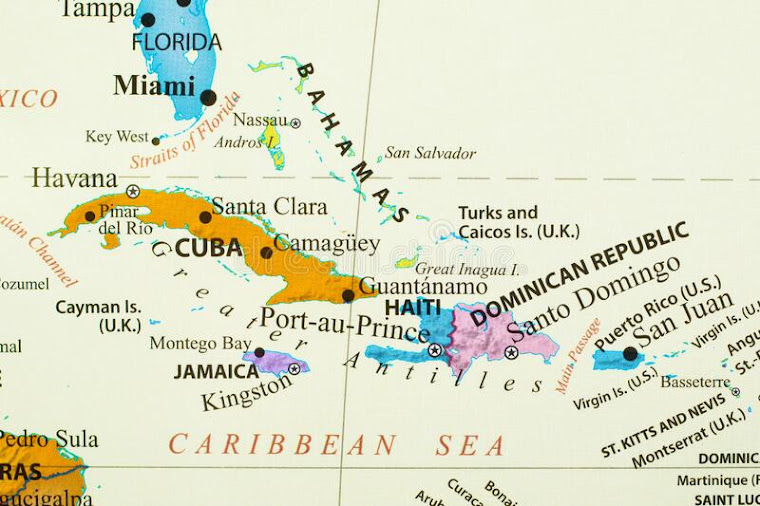
A political blog about Bahamian politics in The Bahamas, Bahamian Politicans - and the entire Bahamas political lot. Bahamian Blogger Dennis Dames keeps you updated on the political news and views throughout the islands of The Bahamas without fear or favor. Bahamian Politicians and the Bahamian Political Arena: Updates one Post at a time on Bahamas Politics and Bahamas Politicans; and their local, regional and international policies and perspectives.
Thursday, April 28, 2011
Wednesday, April 27, 2011
Renward Wells - National Development Party (NDP) leader says that his party is still in the "valley of decisions" as it pertains to joining Branville McCartney's Democratic National Alliance (DNA)

NDP considers joining DNA party
tribune242
AN ANNOUNCEMENT is expected by the end of the week as to whether or not the National Development Party (NDP) will join with the Democratic National Alliance (DNA) or remain as a third party force going into the next general election.
According to NDP leader Renward Wells, his party is still in the "valley of decisions" as it pertains to the DNA, which was formed recently by former FNM Minister and now Independent MP Branville McCartney.
However, as it stands, Mr Wells said his party will not be making any comments as there are still a few "things to be worked out in the next couple of days." In the meantime, he said he would rather leave whatever "big announcement" will inevitably come to its "predetermined time."
Rumours have been circulating for weeks that the NDP had already dissolved itself and joined with Mr McCartney's DNA party, with Mr Wells and a few other prominent members of the NDP taking up key leadership roles.
Among the positions being reported, it is rumoured that Mr Wells had been promised the position of chairman, with his deputy leader, Lynden Nairn, becoming the deputy leader of the DNA. La'Tore Mackey, it is reported, would be promoted to the position of secretary general, while Mr McCartney remains as leader of the party.
Last week, Mr Wells indicated that his party would make a decision during that week as to its political future. This decision reportedly came days after activist and businessman Ethric Bowe resigned from the NDP after he was out-voted 18 to two over the group's plans to continue talks with outside political organisations.
On his Facebook page, Mr Bowe claimed a tyre on his car was slashed after the "contentious" meeting.
Mr Bowe left the party because he thought the NDP was "betraying" its core principles, explained Mr Wells, who added that the former's claims of a slashed tyre are unfounded.
However, all of the third party's attempts to amalgamate may be in vain as Prime Minister Hubert Ingraham has dismissed their importance in the upcoming general election.
During a recent business opening, Mr Ingraham foreshadowed that the election will strictly be between the PLP and the FNM.
"Period, full stop ... that's who people are going to decide (from in) the next election of the Bahamas," Mr Ingraham said.
Attempts to reach Mr McCartney for comment were unsuccessful.
April 27, 2011
tribune242

Mark Holowesko says that he played no role in the Bahamas Telecommunications Company (BTC) / Cable and Wireless Communications (CWC) deal and is in no way connected to Cable and Wireless Communications (CWC)
FNM calls PLP’s claims against Holowesko ‘bogus’
By CANDIA DAMES
Guardian News Editor
candia@nasguard.com
The Free National Movement (FNM) yesterday branded as ‘bogus’ the claims made by the Progressive Liberal Party (PLP) that professional money manager Mark Holowesko is involved in a conflict of interest as a member of the new Bahamas Telecommunications Company (BTC) board.
Holowesko is a government representative on the board of BTC, which was recently privatized. The government sold 51 percent of the shares to Cable and Wireless Communications (CWC).
Franklin Templeton Investment Funds lists Holowesko as a member of its board of directors.
Franklin Templeton holds shares in Cable and Wireless.
The PLP suggested that Holowesko is in a conflict of interest and questioned whose interests he will serve as a board member.
But the FNM said yesterday, “The opposition’s erroneous claim that Mr. Holowesko’s appointment involved a conflict of interest has been refuted in detail by the internationally well-regarded investment manager who noted that none of the funds he manages has shares in Cable and Wireless.
“With its typical lack of due diligence and sloppiness, the opposition even got wrong the actual investment fund on which Mr. Holowesko serves as a director.
“The FNM notes with great curiosity that these bogus claims of a conflict of interest were made by none other than PLP Chairman Bradley Roberts. The Bahamian people will appreciate this irony.”
Holowesko, who also strongly denied any conflict when he spoke to The Nassau Guardian recently, reiterated in a statement yesterday that he does not receive compensation from the Franklin Templeton group for his service as a board member for its European funds.
He explained: “The Franklin Templeton (FT) Investment Funds are Luxembourg based funds that operate under the SICAV (Societe d’ investissement a capital variable) umbrella. There are over 30 of these FT funds under this SICAV umbrella.
“The funds are separate legal entities that employ investment managers to manage the investment activities of each fund. I am a director of these funds, but I am not an employee or a director of any of these management companies.
“The investment managers hired for these funds are a variety of FT companies within the FT group of companies (again, none of which I am employed by, sit on the board, nor do I have any involvement or day-to-day investment activity).
“Some of the managers of these funds are investment companies in the US, some in Europe and some in Asia. Each of these funds holds dozens of securities, selected by the manager without prior knowledge or consultation with the directors.
“At any point in time it is not possible for me to know what investments are held in the various funds, nor is it my role to do so.
“With over 30 funds, and anywhere from 50 to 150 investments each, there are several thousand positions under the umbrella.
“At the end of December (last reporting period), the FT legal department has confirmed that some of these funds (four) held shares in Cable and Wireless. The decision to buy or sell these shares is not under my direction or control, and I do not participate at all with the investment manager in the evaluation of any of the shares.”
Holowesko stressed again that he played no role in the BTC/CWC deal and is in no way connected to CWC.
4/27/2011
thenassauguardian
By CANDIA DAMES
Guardian News Editor
candia@nasguard.com
The Free National Movement (FNM) yesterday branded as ‘bogus’ the claims made by the Progressive Liberal Party (PLP) that professional money manager Mark Holowesko is involved in a conflict of interest as a member of the new Bahamas Telecommunications Company (BTC) board.
Holowesko is a government representative on the board of BTC, which was recently privatized. The government sold 51 percent of the shares to Cable and Wireless Communications (CWC).
Franklin Templeton Investment Funds lists Holowesko as a member of its board of directors.
Franklin Templeton holds shares in Cable and Wireless.
The PLP suggested that Holowesko is in a conflict of interest and questioned whose interests he will serve as a board member.
But the FNM said yesterday, “The opposition’s erroneous claim that Mr. Holowesko’s appointment involved a conflict of interest has been refuted in detail by the internationally well-regarded investment manager who noted that none of the funds he manages has shares in Cable and Wireless.
“With its typical lack of due diligence and sloppiness, the opposition even got wrong the actual investment fund on which Mr. Holowesko serves as a director.
“The FNM notes with great curiosity that these bogus claims of a conflict of interest were made by none other than PLP Chairman Bradley Roberts. The Bahamian people will appreciate this irony.”
Holowesko, who also strongly denied any conflict when he spoke to The Nassau Guardian recently, reiterated in a statement yesterday that he does not receive compensation from the Franklin Templeton group for his service as a board member for its European funds.
He explained: “The Franklin Templeton (FT) Investment Funds are Luxembourg based funds that operate under the SICAV (Societe d’ investissement a capital variable) umbrella. There are over 30 of these FT funds under this SICAV umbrella.
“The funds are separate legal entities that employ investment managers to manage the investment activities of each fund. I am a director of these funds, but I am not an employee or a director of any of these management companies.
“The investment managers hired for these funds are a variety of FT companies within the FT group of companies (again, none of which I am employed by, sit on the board, nor do I have any involvement or day-to-day investment activity).
“Some of the managers of these funds are investment companies in the US, some in Europe and some in Asia. Each of these funds holds dozens of securities, selected by the manager without prior knowledge or consultation with the directors.
“At any point in time it is not possible for me to know what investments are held in the various funds, nor is it my role to do so.
“With over 30 funds, and anywhere from 50 to 150 investments each, there are several thousand positions under the umbrella.
“At the end of December (last reporting period), the FT legal department has confirmed that some of these funds (four) held shares in Cable and Wireless. The decision to buy or sell these shares is not under my direction or control, and I do not participate at all with the investment manager in the evaluation of any of the shares.”
Holowesko stressed again that he played no role in the BTC/CWC deal and is in no way connected to CWC.
4/27/2011
thenassauguardian
Tuesday, April 26, 2011
The People's Deliverance Party (PDP) has elected PLP leadership hopeful Paul Moss as its leader

New political party elects Paul Moss as leader
By ALISON LOWE
Business Reporter
alowe@tribunemedia.net
THE newly-formed People's Deliverance Party (PDP) has elected PLP leadership hopeful Paul Moss as its leader and intends to run a full slate of candidates in the next general election, according to sources within the grouping.
The PDP "already has 23 candidates" lined up to run in constituencies throughout New Providence and the Family Islands and will have a markedly "pro-Bahamian" platform.
"They intend to launch on May 24," said a source close to the party yesterday. In addition to attorney, Mr Moss, Grand Bahamians Troy Garvey, a former NDP member, and Glen Rolle, are said to both have taken executive positions in the PDP.
The PDP will join the Democratic National Alliance, headed by former FNM MP, Branville McCartney and the National Development Party, as yet another outside political force that will vie for political power in the general election, against the mainstream parties, the PLP and the FNM. Outside political party, the Bahamas Democratic Movement, headed by Cassius Stuart, was earlier this month absorbed into the governing FNM party.
"We believe the Bahamian people are ready for it. Everywhere we go people are saying that they need change and want an alternative and we think that will bode well for us. We basically see this as the best time where we have the opportunity to come out and have an affect on the Bahamian people in a real way and we're excited about their chances," said a source within the PDP.
Speaking about the PDP's philosophy, the source said: "We believe we will run The Bahamas for Bahamians. We're not really moved by what we see in terms of these international companies and persons who may dictate to our government. Our party frowns on the decision of the Prime Minister to relax restraints on foreign ownership in restaurants and entertainment. We believe this is how you swallow up a culture.
"This movement is really about getting the Bahamas back on track. We went off track several decades ago, that is to say there was not a deliberate approach to assisting the Bahamas. The approach of this party will be very deliberate. That is what sets us apart."
As for how the party intends to finance its campaign, the source said the PDP has "no doubt" that it can do so. However, they added that they hope their ambitions for public office can also be facilitated by what they perceive to be a desire for change amongst Bahamians akin to that which brought the PLP to power for the first time.
"If one goes back to mid 60s where the PLP was vying to become the government they did not have all the resources either but there was a moment in that period when Bahamians said 'We are not going to be put on or turned on by money, we are going to do right by our children' and we believe this is that moment again.
"The money is fleeting but if you do what is right you will see the benefits for your children. We have sufficient funds but we know the moment is also right for a 1960s-type movement," said the source.
April 26, 2011
tribune242
What role is Mark Holowesko playing in the BTC - Cable and Wireless marriage?
Holowesko denies conflict claim...

Responds to PLP’s claims about BTC board appointment
Professional money manager Mark Holowesko has strongly denied claims made by the Progressive Liberal Party (PLP) that his recent appointment to the board of the newly-privatized Bahamas Telecommunications Company (BTC) represents a conflict.
At the close of the deal with Cable and Wireless Communications (CWC) early this month, Prime Minister Hubert Ingraham announced that Holowesko, a principal of Holowesko Capital Partners, is one of the three members who will represent the government on the board.
In a recent press statement, the PLP attached general information from Franklin Templeton Investment Funds that lists Holowesko as a member of the board of directors.
Franklin Templeton Investments Portfolio Holdings — also included as part of the press release — shows that Franklin Templeton holds shares in Cable and Wireless Communications.
But Holowesko dismissed claims that he has been appointed to the BTC board to serve interests other than the government and the people of The Bahamas.
“I am not intimately involved in Cable and Wireless,” Holowesko told The Nassau Guardian.
“I own no shares in Cable and Wireless personally and I don’t know that I’ve ever bought any shares in Cable and Wireless for myself or the funds that I’m directly responsible for.”
But the PLP highlighted what it called an apparent conflict.
“At the time of the announcement of Mr. Holowesko to the board of BTC, no disclosure was made by the prime minister or Cable and Wireless of the apparent divided loyalty of Mr. Holowesko,” the PLP said.
“Her Majesty’s Loyal Opposition demands to know in whose interest is Mr. Holowesko serving.
“Is Mr. Holowesko representing the interest of the Bahamian people as a government appointee to the board, or is he there as a representative of the company for which he is employed, or is it both?”
But Holowesko said there are several erroneous statements in the PLP’s release.
One of them, he said, is the suggestion that he is paid by Franklin Templeton Investments.
And he said none of the funds he manages holds shares in Cable and Wireless.
Holowesko said he was inquiring with the Franklin Templeton office in the United States about whether any of the funds on whose board he sits holds shares in Cable and Wireless.
“I am a director for a group of funds over in Europe for the Templeton SICAV funds,” he explained.
“Franklin Templeton Investments isn’t the correct legal name for it. Franklin Templeton is a company incorporated in America, which is an investment management company and they have mutual funds in Europe under a Luxembourg umbrella fund called SICAV fund and I am a board member of those funds.
“I’m not a director of Franklin Templeton, the investment management company. I’m a director of some of the funds that they run over in Europe. That’s an important distinction.
“Franklin Templeton funds may or may not own Cable and Wireless shares.”
Further explaining his role with the investment group, Holowesko said, “Franklin Templeton is a company that runs funds all over the world and the funds that I’m a director on, I’m making an educated guess, are about 20 or 30 percent of the mutual funds that they manage, so they’re not the US funds or the Canadian funds. They’re the European funds. Those funds may or may not own Cable and Wireless shares.”
Holowesko explained that as a director on the board of certain funds, he would have no specific knowledge of the day-to-day activities of them.
“I’m not involved in the day-to-day management of those funds. As a director we meet twice a year in London to basically review the operational activities of those funds,” he said.
“The day-to-day investment management of those funds is not under us as directors and I’m not an insider in terms of knowing what they buy and sell and when they buy and sell.
“I do get reports as a director at certain periods in terms of what the funds hold at that point in time, and whether or not those funds own shares in Cable and Wireless today I don’t know and I’ve asked the legal department of Franklin Templeton to let me know and I’ll have that response.”
Holowesko was contacted by The Nassau Guardian to respond to the PLP statement.
The opposition party said, “The nagging questions persist as to what role Holowesko is playing in this BTC, Cable and Wireless marriage.”
“Was Mr. Mark Holowesko involved in the sale of BTC to Cable and Wireless, a company he is intimately involved in as an investor, from the beginning?
“If so, in what capacity? Who was he serving then and who is he serving now?”
But Holowesko said he played no role in bringing Cable and Wireless to the table for the BTC deal. In fact, he said he knows very little about the transaction.
“I have very little knowledge and I have had absolutely zero activity in the sale to Cable and Wireless,” he said.
“As a matter of fact when the prime minister asked me to go on the board, I said ‘one of my main concerns is I don’t know enough about this transaction. If you want me to go on the board you need to have somebody fill me in on this transaction.
“So it is completely and totally erroneous that I have any knowledge or any kind of involvement in this transaction. I have zero involvement in this transaction and I know very little about it.”
Holowesko said he has a meeting with government representatives on Thursday so he can learn more about the specifics of the CWC/BTC transaction and what will be expected of him as a board member.
Holowesko was also asked whether Franklin Templeton Investments is benefiting in any way from the BTC sale.
“I have no idea,” he said.
In its statement, the PLP also said it had been informed that the parent company of Cable and Wireless Communications, Temasek Holdings, is the majority shareholder of Singapore Telecommunications Limited.
“A major shareholder of SingTel is Templeton Global Advisors Limited which falls under the umbrella of Franklin Templeton Investments,” the PLP said.
“Temasek Holdings Limited’s 54 percent ownership of SingTel is under the control of the Government of Singapore.”
Holowesko explained: “Temasek is a company in Singapore which is 100 percent owned by the Singaporean government, which the Singaporean government uses as its vehicle for investing on behalf of the Singaporean people, and nobody owns shares in that company other than the government of Singapore. I have no interaction with that company.
“And how that company is somehow involved in Cable and Wireless I wouldn’t know, and to somehow imply that we have some sort of interest or I have some sort of interest in that company is like saying the average American has some sort of interest in the US Treasury. It’s silly.
“That’s just loony. Total fabrication.”
Company documents with information on Franklin Templeton Investment Funds’ board of directors has a brief reference to “Temasek”, but not the company.
The company address of one of the Franklin Templeton directors — Dr. J. B. Mark Mobius, executive chairman of Templeton’s Emerging Markets Group — is listed as “7 Temasek Boulevard” in Singapore.
Asked how he felt about the claims being made by the PLP, Holowesko, who is the son of Senate President Lyn Holowesko, said, “I’m not a politician. I’m a businessman and a family man. I’ve had family members in politics. I don’t like politics. I abhor politics.
“I find most of it to be a waste of time for these particular reasons that I’m involved in right now. This is time wasting. As far as I’m concerned it’s non-productive and I guess politicians like to do these sorts of things for a variety of reasons. And whatever reasons they have I guess it’s up to them.”
Holowesko said he was asked by the prime minister to be a member of the BTC board and he hopes to make a positive contribution on behalf of the government and the Bahamian people.
“From an investment perspective, I’ve been in the investment business since 1985. So I have a lot of investment experience,” he said.
“…From what I understand — and I’ll get more information [this] week — there’s some very specific things that Cable and Wireless is supposed to do as part of this purchase for The Bahamas and my role on that board is to ensure that they do those things first and foremost.”
The two other government members of the BTC board are Maria Ferere, a partner of FT Consultants Ltd., and Deidre Prescott, who works for the Bahamas Electricity Corporation and previously served as a director on the BTC board.
Four employees of LIME (CWC’s Caribbean arm) are also members of the new board, including LIME CEO David Shaw.
4/26/2011
thenassauguardian
Saturday, April 23, 2011
It would be most appreciated if Honourable Members of the House of Assembly and the public become familiar with the terms of the Investment Policy of The Bahamas
Communication by
Rt. Hon. Hubert A. Ingraham
On National Investment Policy and
Investment Promotional Materials
Rt. Hon. Hubert A. Ingraham
On National Investment Policy and
Investment Promotional Materials
Mr. Speaker,
I am pleased to table for the information of Honourable Members a copy of the new Bahamas Promotional Brochure “The Bahamas: A Paradise for Many Reasons” together with sector information flyers on the tourism and hotel sector, international financial services and Freeport, Grand Bahama.
Members will recall that the brochure was released to the Bahamian media immediately prior to my recent attendance at the IDB Annual Meetings in Calgary, Canada and my subsequent participation in a Bahamas trade and investment mission in Calgary and Toronto.
I advise that the sector information flyers have been translated into the Chinese languages of Mandarin and Cantonese, as well as in Spanish. Translation to Portuguese and French are contemplated in the near future.
Mr. Speaker,
This updated version of the brochure, first published by my government in the 1990s, takes into account developments and changes in the investment and business climate of The Bahamas over the last 15 years or so.
In particular, I draw Honourable Members attention to changes to the National Investment Policy which are incorporated in the brochure. Our National Investment Policy, as Honourable Members are aware, is an evolved policy, some aspects of which date back to the 1960s.
It is neither an FNM nor a PLP policy, and is intended to be a national policy to guide policies of Government, which governments can change when they see fit.
The policies were first articulated and published in a formal way in 1993 as my Government sought to bring increased certainty and transparency to our business and investment environment, thereby enhancing the country’s attractiveness to the foreign direct investment required to foster economic growth.
It would be most appreciated if Honourable Members and the public become familiar with the terms of the Investment Policy of The Bahamas. Much misinformation is communicated from time to time about the investment policies of The Bahamas.
The amendments to the National Investment Policy include:
1. The minimum dollar requirement for direct foreign investment in a commercial undertaking has been increased from $250,000 to $500,000.
2. The minimum required value of a residence acquired by an foreign person for the purpose of seeking accelerated consideration of permanent resident status has been increased from $500,000 to $1.5 million. Honourable Members would recall that this figure had previously been increased from $250,000 to $500,000.
This does not mean that someone cannot obtain permanent residency in The Bahamas if they purchase a residence for a value of less than $1.5 million. What it does mean, if you are purchasing one (a residence) for $1.5 million or more, you will get speedy consideration of that application by the Government agency – i.e., you would be pulled out from the pile and processed speedily. In fact, provided you have all of the required documentation, it is expected that you would be able to have a response of a “yay” or “nay” within 21 days of the completed application being in the hands of the Department of Immigration. We seek to encourage persons who are purchasing or expending that sort of money plus, for a residence in The Bahamas.
There is no requirement in terms of our policy for persons coming to The Bahamas to attend a Directors Meeting of a company incorporated in The Bahamas to obtain a work permit. We want to encourage and facilitate such persons in entry into The Bahamas; we want to facilitate them and accommodate them. And we want to get out of the business of nickel-and-diming them.
While we have a homeowner’s card which permits someone with a residence in The Bahamas to enter as often as they like during the course of the 12 month period in respect of which the card is valid, you need not have a homeowner’s card to be facilitated in coming to The Bahamas.
Canadians and Americans as examples are able to come to The Bahamas if they have a residence in The Bahamas and stay for up to eight months. And so Immigration Officers in places such as Eleuthera, Exuma and Long Island who have been giving such people 30 days instead of the length of time they are required to be in The Bahamas, ought to discontinue doing so. It is not the intention of the government of The Bahamas to force a homeowner to obtain a homeowner’s card – it is something they can access if they choose, but they do not have to access it.
We have many residents – Canadians and Americans – who own homes in the Family Islands and elsewhere, who come down for many months out of the year and who spend money in our economy. And I am tired of getting complaints about how they are being hassled at various places in terms of the length of time they can stay in the country.
3. The restriction prohibiting international investments in restaurants and or entertainment facilities (e.g. theme parks) unless a part of a hotel resort, has been eliminated.
As you will know Mr. Speaker, the amendments made to the Hotel Encouragement Act for restaurants and other tourist related businesses in areas frequented by tourists but not within a hotel, have been in effect now for probably two years.
The revised Investment Policy also makes provision that approved investors in major development projects which investment creates employment and business opportunities for Bahamian citizens and who own or acquire a residence in The Bahamas, may be granted Permanent Residency status with the right to work in their own business.
Examples of this abound, Mr. Speaker: Butch Stewart who owns Sandals, John Issa who owns Breezes or the man who owns Robin Hood food store, are permanent residents with the right to work in their own businesses in The Bahamas. And that is an area that we say was reserved for Bahamians - but he has the right to work.
Permanent Residents continue to be required to register all real property acquisitions with the Investments Board. The fact that you are required to register it causes us to be in a position to know what non-Bahamian citizens own in our economy in terms of real estate, and we regard that as critical and vital national data to have.
As regards the Investment Policy concerning the registration of land acquisition by international persons generally, Members would recall that in 2009, the International Persons Landholding Act was amended to provide that all international persons only need register acquisitions of owner-occupied property of two acres and under - reduced from five acres.
You would recall Mr. Speaker, that back in 1993, we passed a law which remained in effect until 2009 that permitted a foreign person to purchase property in The Bahamas for the purpose of constructing a residence/house of five acres or less.
That served us well for 15 years or more. There were concerns expressed by a number of Bahamians and others, and we therefore reduced the acreage to two instead of five. Now such persons are still required to provide us with information about the source of their funding, their character certificates and the like, because notwithstanding that they are required to register it, we do want to know who is in The Bahamas, who owns property in The Bahamas and if the question arises in the future, the Government wants to be in a position to be able to respond to those questions.
And so while some people find getting a police certificate, getting a letter of reference from the bank and other such information offensive and a nuisance, it is not a requirement that we can see our way clear to remove. The Government does not grant permission for you to do so, but it requires this additional information in order for you to register your acquisition in The Bahamas.
If you are acquiring property of more than two acres, then you need a permit from the Government. You have to apply and the Investment Board reserves the right to say yes or no to any such application.
Mr. Speaker:
Every effort has been made to ensure that the Investment Policy is expressed in as apolitical way as possible taking into account the reality that our investment policies generally reflect the time honoured acceptance that the Bahamian economy is primarily driven by the tourism and financial services sectors, areas overwhelmingly involving international participation and investment.
Further, the policy reflects successive government’s dedication to promoting and incentivizing investment and development in light manufacturing and industry primarily in Grand Bahama, also with international participation.
And, finally, the Policy reflects the Government’s interest in promoting investment in the agricultural and marine resources sectors.
I invite Honourable Members to acquaint themselves with the policy, and with the booklet.
Fifteen years ago when we produced this book it was printed outside The Bahamas. This book was now printed by the Government Printing Department.
Finally Mr. Speaker, the policy is not a policy in concrete, it is a policy that continues to evolve, and the extent to which Members on either side have suggestions about amendments to the policy, they are invited to do so.
The next investment promotional trip of The Bahamas will be sometime this summer in Brazil, which I propose to lead.
18th April, 2011
bahamas.gov.bs
Friday, April 22, 2011
Bahamian politics, politicians, pundits, pollsters, strange bedfellows and the next general election in The Bahamas
Politicians, pundits and pollsters
By Philip C. Galanis
With slightly more than one year, at most, before the general election must be called, the political temperature is already rising. In February this year, Dr. Andre Rollins resigned from the NDP, the political party he helped to create, and joined the PLP. He was quickly nominated to be the latter's standard bearer in the Fort Charlotte constituency.
In March, Branville McCartney, the FNM Member of Parliament for Bamboo Town, resigned from the governing Party and announced that his newly formed Democratic National Alliance (DNA) will contest the next elections with a full slate of candidates.
Not to be outdone or upstaged by Christie's PLP or Bran's DNA, last week Prime Minister Ingraham, with great fanfare and flanked by fellow-ministers and followers, welcomed Cassius Stuart, the Leader of the Bahamas Democratic Party, along with virtually his entire disbanded decade-old organization, into the Free National Movement. And let us not forget that one of the dailies predicted the imminent demise of the National Democratic Party, given the dissatisfaction with several of its leaders and disaffection from its ranks.
Meanwhile some Bahamian political spectators are virtually salivating in exuberant excitement and eager expectation to see which other veteran and wannabe politicians will be co-opted and who will defect from their current positions as this political ballet is choreographed and performed on the political stage. Perhaps as never before will the adage that "politics makes strange bedfellows" be corroborated as a truism in Bahamian politics — for the next few months, in any event.
Therefore this week, we would like to Consider This...what are we to make of the recent developments that have evoked such excitement on the domestic political landscape and what part do the pundits and pollsters play in this ever-growing drama we call Bahamian politics?
Politicians
It has become very clear that some of the recent novices and veterans in the political arena have now realized that they will continue to be marginalized by remaining on the periphery of the real political stage, outside the organizational mainstream of the two behemoths that are the PLP and the FNM. Accordingly, Dr. Andre Rollins and Cassius Stuart — along with almost his entire party — have determined to hitch their political fortunes to the major parties.
A frequently asked question regarding such political vacillations is whether those persons are really interested in improving the things that they have articulated to be wrong with both the country and the major political parties that up to one year ago they vehemently opposed, or are they more interested in their own political elevation and personal aggrandizement? Although Bran McCartney has taken a very different course, some will put the same question to him. Just how true they remain to their principles and fundamental positions will become more apparent in the fullness of time.
Pundits
The term "pundit" normally refers to one who regards himself as an expert in a particular subject and who offers his opinion or commentary to the public on that subject. Punditry has been applied to political analysis, the social sciences and sports. Traditionally, political pundits would include radio and television talk show hosts and their guests who are generally knowledgeable in such matters. Pundits also include newspaper and magazine columnists, most of whom, with the exception of the Scribe and Front Porch by Simon (both pseudonyms), have the courage of their convictions to identify themselves and stand by their positions, whether the public perceives their positions to be right, wrong or indifferent.
Pundits are often not necessarily scientific in their approach to political analysis, relying more on their intuition, a sixth sense, if you will, a historical frame of reference and even on their personal experience to explain the vicissitude of politics.
In a general sense, however, many Bahamians think of themselves as political pundits and equally possessed of the qualities that characterize those who more traditionally fit the definition. Virtually every Bahamian has a political opinion. Because Bahamians are generally well-informed on partisan and national issues, extremely interested in the body politic and politically astute, they are as eager to express their views as they are prepared to criticize or support government and opposition policies and decisions. And that is very healthy for our polity.
Pollsters
Pollsters on the other hand, as compared to pundits, attempt to provide a degree of scientific sophistry to political developments and issues of the day. An effective pollster will have a good understanding of mathematical and statistical methods to analyze and interpret events and to forecast outcomes. In short, pollsters have mastered the art that many politicians so often fail at. They actually ask people what they think about an issue, a policy or a national decision. Then they summarize the answers to the questions that they ask and present their findings based on what people actually think.
Some people are skeptical of pollsters, often objecting to the validity of the answers garnered from the poll, because the "doubting Thomases" question the veracity of persons whom they poll. It has often been suggested that Bahamians will provide the answers that they think the pollster is seeking rather than the truth of how the person polled actually feels.
However, there are techniques for pollsters to filter answers in order to arrive at a consensus position of persons who are polled. Furthermore, although polling in The Bahamas is a relatively new discipline, the politician who prefers to rely exclusively on his intuition or the “expertise” of the pundits do so at their peril. The fact of the matter is that politics has become more scientific in assessing public opinion and sentiment and polling has proven to be a very useful tool to accomplish that task.
Just this past week, the relatively new Bahamian market research firm, Public Domain, headed by Mwale Rahming, released the results of a poll that his firm conducted between February 16 and March 11, 2011. Public Domain indicated that 402 persons were polled, weighted by region, age and gender, in order to ensure that the population represented a good cross-section of the Bahamian adult population. The poll represented a five percent margin of error which is quite acceptable for such an exercise.
To the question: "If the election was held today, which party would you vote for?" the results were reminiscent of the Elizabeth bye-election. The respondents indicated that 28 percent would vote for the PLP and 25 percent for the FNM. What is even more revealing about that poll is that 21 percent indicated that they would vote for a third, unbranded party and 26 percent were undecided. The conclusion of that poll is that 47 percent, nearly one-half of the respondents, did not have an appetite for either the PLP or the FNM. The conclusion can be drawn from this is that there is a very large percentage of disaffected voters who are not happy with the two major parties. This confirms the perceptions of many political pundits.
Secondly, the respondents were asked "How satisfied are you with the current government led by Prime Minister Hubert Ingraham?" The response was that 14 percent were very satisfied, 35 percent were somewhat satisfied for a total of 49 percent who were generally satisfied with the current government. Equally revealing was the conclusion that 21 percent were somewhat dissatisfied and another 25 percent were very dissatisfied for a total dissatisfaction rating of 46 percent. The remaining four percent did not know. This is very interesting when one considers how close today’s figures are to the percentage of voters who actually voted FNM in the last general election, nearly 49.82 percent, as compared to those who didn’t vote FNM but voted PLP, which was 46.98 percent.
Finally, to the question: "If a third political party presented a full slate of andidates with a mix of veteran and new candidates, how likely would you be to vote for this third party?" the responses were astounding. The response was that 32 percent were very likely to do so, 25 percent were somewhat likely to do so, for a total of 57 percent who said that they were likely to vote for a third party. In addition, 11 percent were not very likely to do so, while another 21 percent were not likely at all to vote for a third party, rendering a total of 32 percent who would not likely to vote for a third party. The remaining 11 percent did not know.
These poll results should give both the PLP and the FNM reason to be concerned about voter sentiment at this particular point in time and should also be very encouraging to Branville McCartney who, when this poll was conducted, had not yet announced that he would form a political party and that he would present a full slate of candidates in the upcoming elections.
Conclusion
We have always maintained that the next general election will be a close, fiercely contested and combative conflict. It is clear that politicians must fully understand the political landscape. The pundits will have much to talk and write about as the "silly season" unfolds, sharing their considered opinions and gut feelings with all and sundry. Finally, the pollsters will have an increasingly important role to play as they investigate and measure the actual feelings of voters, unraveling the variables and vicissitudes that will contribute to the success of the victor and failure of the vanquished in the next general election, whenever it is called.
Philip C. Galanis is the managing partner of HLB Galanis & Co., Chartered Accountants, Forensic & Litigation Support Services. He served 15 years in Parliament. Please send your comments to pgalanis@gmail.com.
4/17/2011
thenassauguardian
By Philip C. Galanis
With slightly more than one year, at most, before the general election must be called, the political temperature is already rising. In February this year, Dr. Andre Rollins resigned from the NDP, the political party he helped to create, and joined the PLP. He was quickly nominated to be the latter's standard bearer in the Fort Charlotte constituency.
In March, Branville McCartney, the FNM Member of Parliament for Bamboo Town, resigned from the governing Party and announced that his newly formed Democratic National Alliance (DNA) will contest the next elections with a full slate of candidates.
Not to be outdone or upstaged by Christie's PLP or Bran's DNA, last week Prime Minister Ingraham, with great fanfare and flanked by fellow-ministers and followers, welcomed Cassius Stuart, the Leader of the Bahamas Democratic Party, along with virtually his entire disbanded decade-old organization, into the Free National Movement. And let us not forget that one of the dailies predicted the imminent demise of the National Democratic Party, given the dissatisfaction with several of its leaders and disaffection from its ranks.
Meanwhile some Bahamian political spectators are virtually salivating in exuberant excitement and eager expectation to see which other veteran and wannabe politicians will be co-opted and who will defect from their current positions as this political ballet is choreographed and performed on the political stage. Perhaps as never before will the adage that "politics makes strange bedfellows" be corroborated as a truism in Bahamian politics — for the next few months, in any event.
Therefore this week, we would like to Consider This...what are we to make of the recent developments that have evoked such excitement on the domestic political landscape and what part do the pundits and pollsters play in this ever-growing drama we call Bahamian politics?
Politicians
It has become very clear that some of the recent novices and veterans in the political arena have now realized that they will continue to be marginalized by remaining on the periphery of the real political stage, outside the organizational mainstream of the two behemoths that are the PLP and the FNM. Accordingly, Dr. Andre Rollins and Cassius Stuart — along with almost his entire party — have determined to hitch their political fortunes to the major parties.
A frequently asked question regarding such political vacillations is whether those persons are really interested in improving the things that they have articulated to be wrong with both the country and the major political parties that up to one year ago they vehemently opposed, or are they more interested in their own political elevation and personal aggrandizement? Although Bran McCartney has taken a very different course, some will put the same question to him. Just how true they remain to their principles and fundamental positions will become more apparent in the fullness of time.
Pundits
The term "pundit" normally refers to one who regards himself as an expert in a particular subject and who offers his opinion or commentary to the public on that subject. Punditry has been applied to political analysis, the social sciences and sports. Traditionally, political pundits would include radio and television talk show hosts and their guests who are generally knowledgeable in such matters. Pundits also include newspaper and magazine columnists, most of whom, with the exception of the Scribe and Front Porch by Simon (both pseudonyms), have the courage of their convictions to identify themselves and stand by their positions, whether the public perceives their positions to be right, wrong or indifferent.
Pundits are often not necessarily scientific in their approach to political analysis, relying more on their intuition, a sixth sense, if you will, a historical frame of reference and even on their personal experience to explain the vicissitude of politics.
In a general sense, however, many Bahamians think of themselves as political pundits and equally possessed of the qualities that characterize those who more traditionally fit the definition. Virtually every Bahamian has a political opinion. Because Bahamians are generally well-informed on partisan and national issues, extremely interested in the body politic and politically astute, they are as eager to express their views as they are prepared to criticize or support government and opposition policies and decisions. And that is very healthy for our polity.
Pollsters
Pollsters on the other hand, as compared to pundits, attempt to provide a degree of scientific sophistry to political developments and issues of the day. An effective pollster will have a good understanding of mathematical and statistical methods to analyze and interpret events and to forecast outcomes. In short, pollsters have mastered the art that many politicians so often fail at. They actually ask people what they think about an issue, a policy or a national decision. Then they summarize the answers to the questions that they ask and present their findings based on what people actually think.
Some people are skeptical of pollsters, often objecting to the validity of the answers garnered from the poll, because the "doubting Thomases" question the veracity of persons whom they poll. It has often been suggested that Bahamians will provide the answers that they think the pollster is seeking rather than the truth of how the person polled actually feels.
However, there are techniques for pollsters to filter answers in order to arrive at a consensus position of persons who are polled. Furthermore, although polling in The Bahamas is a relatively new discipline, the politician who prefers to rely exclusively on his intuition or the “expertise” of the pundits do so at their peril. The fact of the matter is that politics has become more scientific in assessing public opinion and sentiment and polling has proven to be a very useful tool to accomplish that task.
Just this past week, the relatively new Bahamian market research firm, Public Domain, headed by Mwale Rahming, released the results of a poll that his firm conducted between February 16 and March 11, 2011. Public Domain indicated that 402 persons were polled, weighted by region, age and gender, in order to ensure that the population represented a good cross-section of the Bahamian adult population. The poll represented a five percent margin of error which is quite acceptable for such an exercise.
To the question: "If the election was held today, which party would you vote for?" the results were reminiscent of the Elizabeth bye-election. The respondents indicated that 28 percent would vote for the PLP and 25 percent for the FNM. What is even more revealing about that poll is that 21 percent indicated that they would vote for a third, unbranded party and 26 percent were undecided. The conclusion of that poll is that 47 percent, nearly one-half of the respondents, did not have an appetite for either the PLP or the FNM. The conclusion can be drawn from this is that there is a very large percentage of disaffected voters who are not happy with the two major parties. This confirms the perceptions of many political pundits.
Secondly, the respondents were asked "How satisfied are you with the current government led by Prime Minister Hubert Ingraham?" The response was that 14 percent were very satisfied, 35 percent were somewhat satisfied for a total of 49 percent who were generally satisfied with the current government. Equally revealing was the conclusion that 21 percent were somewhat dissatisfied and another 25 percent were very dissatisfied for a total dissatisfaction rating of 46 percent. The remaining four percent did not know. This is very interesting when one considers how close today’s figures are to the percentage of voters who actually voted FNM in the last general election, nearly 49.82 percent, as compared to those who didn’t vote FNM but voted PLP, which was 46.98 percent.
Finally, to the question: "If a third political party presented a full slate of andidates with a mix of veteran and new candidates, how likely would you be to vote for this third party?" the responses were astounding. The response was that 32 percent were very likely to do so, 25 percent were somewhat likely to do so, for a total of 57 percent who said that they were likely to vote for a third party. In addition, 11 percent were not very likely to do so, while another 21 percent were not likely at all to vote for a third party, rendering a total of 32 percent who would not likely to vote for a third party. The remaining 11 percent did not know.
These poll results should give both the PLP and the FNM reason to be concerned about voter sentiment at this particular point in time and should also be very encouraging to Branville McCartney who, when this poll was conducted, had not yet announced that he would form a political party and that he would present a full slate of candidates in the upcoming elections.
Conclusion
We have always maintained that the next general election will be a close, fiercely contested and combative conflict. It is clear that politicians must fully understand the political landscape. The pundits will have much to talk and write about as the "silly season" unfolds, sharing their considered opinions and gut feelings with all and sundry. Finally, the pollsters will have an increasingly important role to play as they investigate and measure the actual feelings of voters, unraveling the variables and vicissitudes that will contribute to the success of the victor and failure of the vanquished in the next general election, whenever it is called.
Philip C. Galanis is the managing partner of HLB Galanis & Co., Chartered Accountants, Forensic & Litigation Support Services. He served 15 years in Parliament. Please send your comments to pgalanis@gmail.com.
4/17/2011
thenassauguardian
Subscribe to:
Posts (Atom)