Political retirement with dignity
thenassauguardian editorial
The Bahamas is a new independent democracy. Having just recently celebrated 38 years going it alone, our traditions, though rooted in the British system, are still evolving.
One tradition that has not really developed yet is what to do with our leaders when they retire from frontline politics.
We have only had one prime minister permanently retire thus far. Sir Lynden Pindling bowed out in 1997 after his Progressive Liberal Party (PLP) suffered an overwhelming defeat to Hubert Ingraham and the Free National Movement (FNM). This was the second consecutive time Ingraham beat Sir Lynden in a general election.
Sir Lynden, however, was suffering from terminal cancer during that last campaign in 1997. He died a few years later on August 26, 2000. So in the case of the only prime minister of an independent Bahamas to retire, there was no real retirement, as he was in a battle for his life when he went away, a battle he sadly did not win.
Ingraham and current PLP leader Perry Christie are nearing the end of their respective political careers. It is unlikely that either will run again as leader beyond this general election.
Both entered the House of Assembly in 1977. The former law partners each have won a seat in each election since. Christie also served a term as a senator from 1972 before becoming a member of Parliament.
When one of these men loses the next general election, he should not be discarded. The United States has a beautiful bi-partisan tradition. When the new president is elected and an issue of national importance arises, former presidents are called into service.
Former Democratic president Jimmy Carter has embarked upon many missions, under Democratic and Republican presidents, to free Americans held by hostile regimes.
President George W. Bush called upon his father, former President George H.W. Bush, and former President Bill Clinton after Hurricane Katrina in 2005. Bush Sr. and Clinton raised money for the recovery cause.
After the Haiti earthquake in 2010, President Barack Obama called on Clinton and Bush Jr., the president he succeeded, to lead fundraising efforts.
This tradition in the United States demonstrates great political maturity. It also is smart. Former leaders have great connections, capacity and lots of unused energy once retired.
Here in The Bahamas there are many initiatives a former prime minister could lead. Education reform, gambling reform, the Haitian migration issue, tax reform, reform of the criminal justice system and health care reform are just a few of the areas a former prime minister could focus on, developing a plan for the country to address the issue under study.
For this to happen, however, that former politician would have to learn to be apolitical and able to make a contribution divorced from partisanism. The prime minister who asks the former prime minister to lead a national initiative would also have to be mature enough to set aside whatever hostilities he might have had with that politician when he was still active.
We should not relegate our retired politicians to the rubbish heap. They still have much to contribute after they officially retire. We will soon get to the point when one of our great leaders says goodbye. We hope the winner reaches out to the loser and starts a tradition of mutual respect and continued service.
Jul 27, 2011
thenassauguardian editorial
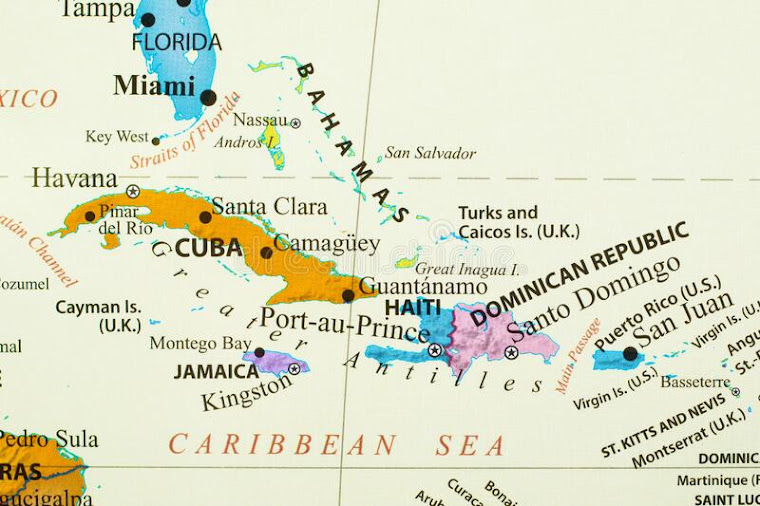
A political blog about Bahamian politics in The Bahamas, Bahamian Politicans - and the entire Bahamas political lot. Bahamian Blogger Dennis Dames keeps you updated on the political news and views throughout the islands of The Bahamas without fear or favor. Bahamian Politicians and the Bahamian Political Arena: Updates one Post at a time on Bahamas Politics and Bahamas Politicans; and their local, regional and international policies and perspectives.
Wednesday, July 27, 2011
Tuesday, July 26, 2011
George Smith says Branville McCartney is "pandering" to xenophobic fears over illegal immigration in an effort to gain the support of the Bahamian voters' base
Former minister claims Branville 'pandering' to fears over illegal immigration
By TANEKA THOMPSON
Deputy Chief Reporter
tribune242
tthompson@tribunemedia.net
BRANVILLE McCartney is "pandering" to xenophobic fears over illegal immigration in an effort to gain the support of the country's voter base, said former Cabinet Minister George Smith.
His comments came after Mr McCartney said that he will fight to change the country's constitution so that children born here to illegal immigrants will not be eligible for Bahamian citizenship.
Mr McCartney, leader of newly formed third party the Democratic National Alliance, said he will advance a referendum on the issue if he is elected as the country's next prime minister, according to a local daily.
Under the constitution, persons who are born in the Bahamas to illegal immigrants have the right to apply for citizenship between their 18th and 19th birthday.
Mr Smith, a former Cabinet minister in the Pindling administration and one of the framers of the country's constitution, dismissed this as political pandering to illegal immigration fears.
"He's trying to pander to the xenophobia of many Bahamians who want to blame some of our social ills on people who by virtue of their circumstances find themselves in the Bahamas illegally. I think that places like (squatter settlement) Mackey Yard probably also compound it but the Bahamas has to (be) mindful that many of our ancestors have left the Bahamas and settled in other places and in some instances they settle illegally.
". . .But for the grace of God we would be like the Haitians," he added.
Mr Smith, former representative for Exuma, cautioned politicians not to fear monger for political traction.
"Political leaders should never pander to ignorance and people who are motivated by fear and this is probably what Mr McCartney - someone who I am fond of - is doing," said Mr Smith, in response to questions from The Tribune.
Instead, he said politicians should convene a non-partisan task force on constitutional reform after the dust settles from the next general election.
Yesterday Immigration and Deputy Prime Minister Brent Symonette said his former Cabinet colleague's latest stance is surprising. He claimed that this policy was never put forth by Mr McCartney while he served as junior immigration minister.
"When I looked at the newspaper I was amused that Mr McCartney would suggest that having been minister of state (of immigration) for a number of years and never recommended that. I'm following his immigration issues with amusement because I know that his views were not put forward (while he was in office).
"He and I had many discussions and he (was able to) put any proposal up to me and I would consider it and put it forward. I don't recall (that policy) coming from him when he was in office," said Mr Symonette.
Mr McCartney resigned from the Free National Movement earlier this year and left the Ingraham Cabinet last year.
Last week he told The Tribune that he quit as a Cabinet minister because his repeated efforts to address the country's immigration problems were "blocked" by "the man himself," Prime Minister Hubert Ingraham.
July 26, 2011
tribune242
By TANEKA THOMPSON
Deputy Chief Reporter
tribune242
tthompson@tribunemedia.net
BRANVILLE McCartney is "pandering" to xenophobic fears over illegal immigration in an effort to gain the support of the country's voter base, said former Cabinet Minister George Smith.
His comments came after Mr McCartney said that he will fight to change the country's constitution so that children born here to illegal immigrants will not be eligible for Bahamian citizenship.
Mr McCartney, leader of newly formed third party the Democratic National Alliance, said he will advance a referendum on the issue if he is elected as the country's next prime minister, according to a local daily.
Under the constitution, persons who are born in the Bahamas to illegal immigrants have the right to apply for citizenship between their 18th and 19th birthday.
Mr Smith, a former Cabinet minister in the Pindling administration and one of the framers of the country's constitution, dismissed this as political pandering to illegal immigration fears.
"He's trying to pander to the xenophobia of many Bahamians who want to blame some of our social ills on people who by virtue of their circumstances find themselves in the Bahamas illegally. I think that places like (squatter settlement) Mackey Yard probably also compound it but the Bahamas has to (be) mindful that many of our ancestors have left the Bahamas and settled in other places and in some instances they settle illegally.
". . .But for the grace of God we would be like the Haitians," he added.
Mr Smith, former representative for Exuma, cautioned politicians not to fear monger for political traction.
"Political leaders should never pander to ignorance and people who are motivated by fear and this is probably what Mr McCartney - someone who I am fond of - is doing," said Mr Smith, in response to questions from The Tribune.
Instead, he said politicians should convene a non-partisan task force on constitutional reform after the dust settles from the next general election.
Yesterday Immigration and Deputy Prime Minister Brent Symonette said his former Cabinet colleague's latest stance is surprising. He claimed that this policy was never put forth by Mr McCartney while he served as junior immigration minister.
"When I looked at the newspaper I was amused that Mr McCartney would suggest that having been minister of state (of immigration) for a number of years and never recommended that. I'm following his immigration issues with amusement because I know that his views were not put forward (while he was in office).
"He and I had many discussions and he (was able to) put any proposal up to me and I would consider it and put it forward. I don't recall (that policy) coming from him when he was in office," said Mr Symonette.
Mr McCartney resigned from the Free National Movement earlier this year and left the Ingraham Cabinet last year.
Last week he told The Tribune that he quit as a Cabinet minister because his repeated efforts to address the country's immigration problems were "blocked" by "the man himself," Prime Minister Hubert Ingraham.
July 26, 2011
tribune242

Bishop Simeon Hall has called on all politicians to resist the temptation of turning the controversial issue of capital punishment into a “political football”
Hall: Capital punishment should not be political football
KRYSTEL ROLLE
Guardian Staff Reporter
thenassauguardian
krystel@nasguard.com
As the national debate on the issue of capital punishment continues, a religious leader has called on all politicians to resist the temptation of turning the controversial issue into a “political football”.
Bishop Simeon Hall’s comments came in a statement yesterday. Hall is the former chairman of the National Advisory Council on Crime (NACC). One of its key recommendations was for the resumption of capital punishment.
Progressive Liberal Party (PLP) Leader Perry Christie declared his party’s support for capital punishment Saturday night and promised to carry out the law if the PLP wins the next general election. Christie was speaking at the PLP’s Eastern Region Constituencies Conclave.
Hall said Bahamians must examine what each party did on the issue while in office rather than the “political rhetoric they espouse” during the pre-election period.
“To be frank, the record shows that both major political parties have been reserved on capital punishment,” said Hall.
No hangings were carried out under the PLP administration led by Christie.
The last time capital punishment was carried out in The Bahamas was on January 6, 2000 when David Mitchell was hanged. Five of the 50 men hanged in The Bahamas since the 1920s were hanged under the FNM between 1997 and 2002; 13 were hanged during the 25-year rule of the late Sir Lynden Pindling; and the remaining 32 were executed between 1929 and 1967.
With nearly 80 murders having been recorded already this year, The Bahamas is likely to set a forth murder record in five years this year. Hall called for cross-party efforts to address the crime problem.
“The progress against the criminal mayhem, which presently confronts us, will only take place when a by-partisan national approach is created and executed by all in power,” Hall said.
During the conclave on Saturday, Christie pledged to take bold action to reduce the crime rate in the country if he is re-elected.
“No effort will be spared to restore the safety of our streets and homes,” he said.
“An urgent priority for the next government is the battle against crime. There is fear on our streets.”
In the run-up to the 2007 general election, the Christie Administration was criticized over the crime issue by the Free National Movement, which was in opposition at the time.
Jul 26, 2011
thenassauguardian
KRYSTEL ROLLE
Guardian Staff Reporter
thenassauguardian
krystel@nasguard.com
As the national debate on the issue of capital punishment continues, a religious leader has called on all politicians to resist the temptation of turning the controversial issue into a “political football”.
Bishop Simeon Hall’s comments came in a statement yesterday. Hall is the former chairman of the National Advisory Council on Crime (NACC). One of its key recommendations was for the resumption of capital punishment.
Progressive Liberal Party (PLP) Leader Perry Christie declared his party’s support for capital punishment Saturday night and promised to carry out the law if the PLP wins the next general election. Christie was speaking at the PLP’s Eastern Region Constituencies Conclave.
Hall said Bahamians must examine what each party did on the issue while in office rather than the “political rhetoric they espouse” during the pre-election period.
“To be frank, the record shows that both major political parties have been reserved on capital punishment,” said Hall.
No hangings were carried out under the PLP administration led by Christie.
The last time capital punishment was carried out in The Bahamas was on January 6, 2000 when David Mitchell was hanged. Five of the 50 men hanged in The Bahamas since the 1920s were hanged under the FNM between 1997 and 2002; 13 were hanged during the 25-year rule of the late Sir Lynden Pindling; and the remaining 32 were executed between 1929 and 1967.
With nearly 80 murders having been recorded already this year, The Bahamas is likely to set a forth murder record in five years this year. Hall called for cross-party efforts to address the crime problem.
“The progress against the criminal mayhem, which presently confronts us, will only take place when a by-partisan national approach is created and executed by all in power,” Hall said.
During the conclave on Saturday, Christie pledged to take bold action to reduce the crime rate in the country if he is re-elected.
“No effort will be spared to restore the safety of our streets and homes,” he said.
“An urgent priority for the next government is the battle against crime. There is fear on our streets.”
In the run-up to the 2007 general election, the Christie Administration was criticized over the crime issue by the Free National Movement, which was in opposition at the time.
Jul 26, 2011
thenassauguardian
Monday, July 25, 2011
Wikileaks Bahamas documents: The Christie administration offered to send Bahamian troops to help quell a violent rebellion in Haiti and discussed the possibility of making Fred Mitchell joint leader of that country

Mitchell 'considered for Haiti leadership role'
tribune242
THE Christie administration offered to send Bahamian troops to help quell a violent rebellion in Haiti and discussed the possibility of making Fred Mitchell joint leader of that country, newly released Wikileaks documents claim.
According to confidential cables sent by US Embassy officials in Nassau at the height of the crisis in early 2004, if diplomacy failed to contain the crisis The Bahamas government felt military assistance would be necessary and was willing to commit "perhaps as many as 100" troops to a multilateral force - whether or not it was led by the United Nations.
The documents also claim then Foreign Affairs minister Fred Mitchell was close to being named one of a threesome of "wise men" to be charged with overseeing that country's affairs.
The three cables, sent by US Embassy officials in 2003 and 2004, detail the Christie administration's response to the rapidly developing crisis as understood by embassy staff.
They claim Mr Mitchell and former prime minister Perry Christie were very concerned about the violence - particularly in terms of what it would mean for Haitian migration to the Bahamas.
One cable quotes former Foreign Affairs permanent secretary Melanie Zonicle as saying that in Mr Mitchell's view, while the preferred mechanism for dealing with Haiti was the UN, "any outside intervention would be preferable to continued and increased chaos."
Another reiterated the importance of illegal immigration to local politics, noting that Mr Christie - despite being an "overprogrammed prime minister" - repeatedly requested and put aside a full hour for an urgent meeting to inform US officials of his position on Haiti.
That position, the cables claim, placed a comparatively low priority on the human rights of the Haitian people.
One of the cables, issued in April 2003 by notoriously combative US Ambassador Richard Blankenship (see story, page 7), said that fear of "mass migration" was the Bahamas government's top priority, but that an immigration agreement with the Aristide government stalled over the Haitian demand that amnesty be granted to the illegals already in the country.
It said: "Such a concession would be suicide for Mitchell in the xenophobic Bahamian political landscape. Pursuit of this agreement and any other means to slow down migration will continue to push any concerns for democracy and human rights into the backseat."
A February 2004 cable quoted Mr Christie as saying that if large numbers of Haitians started arriving in Bahamian territory, the government would not offer asylum, but rather rely on the United States to help with repatriation.
"The Bahamas, he said, simply had no capacity to maintain large numbers of migrants for any period of time. Declaring that he had no concert with 'those liberals' on this issue, he declared that there would never be asylum in The Bahamas for Haitians.
"The total population of the Bahamas was, he said, 'less than that of a small town in the United States. We simply cannot do what Amnesty International and other groups would insist on us'."
The February 2004 cable quotes Mr Christie as mentioning the possibility that Fred Mitchell could play a "new and significant ongoing role in Haiti as the third member in a tripartite committee that, Christie seemed to believe, would effectively serve as a kind of 'Council of Wise Men' in governing the country."
Under this scenario, Mr Mitchell, as the representative of "CARICOM and others" would have governed Haiti along with a new Haitian prime minister and a representative of the opposition.
The former PM is quoted as saying President Aristide had reservations about the plan and for his own part, Mr Christie would prefer the third member to be French or American - although he seemed to think Mr Mitchell was the US's preference. The cables do not clarify if this was the case.
However, they do paint a picture of a prime minister who is a bit naive about US policy towards Haiti.
Despite the hard line on the Haitian regime sustained throughout the crisis - culminating in claims that the United States government abducted President Aristide - Mr Christie appears in the cables as appealing to the US to share his sympathy for the Haitian leader.
The February 2004 cable notes that the former PM "appeared comfortable in his newly-assumed role of international mediator," mentioning that he had spoken with Aristide "at least a dozen times" recently and at least once a week that day.
Mr Christie is said to have stressed that he and Mr Mitchell felt an agreement should be reached that conferred some "dignity" to Aristide, and that he sympathised with the Haitian leader's complaint that he was being asked to take unconstitutional actions.
He added that he does not believe Aristide would be opposed to working with the opposition on the joint appointment of a new prime minister and cabinet, but simply did not want to be "left out of the process."
Mr Christie also seemed confident that Mr Mitchell and US Assistant Secretary Roger Noriega would fly to Haiti later that week and "continue to work all sides of the issue."
Mr Mitchell, on the other hand, is quoted in a 2003 cable as saying the US position on Haiti was "hard-minded" and calling for more dialogue.
Another cable compared Mr Mitchell to Mr Christie, saying that: "While his decision-making style may be protracted and indecisive, Bahamian Prime Minister Perry Christie is also an impressive, dynamic, charismatic and ebullient presence and an indefatigable seeker of consensus. For the purpose of promoting peace in Haiti, his personality complements that of Foreign Minister Mitchell, which is steadier, stealthier, and more methodical."
July 25, 2011
tribune242
John Marquis - the political assassin - returns to Tribune242

The political assassin returns
Consider This...
BY PHILIP C. GALANIS
The past week in Great Britain will long be remembered for the shocking disclosure that the print media in that country sank to an all-time low with the revelations concerning the nefarious and illegal lengths to which the members of the media there would go to get a story. Many of that country's citizens sat in amazement, revulsion and shame, listening to both the hearings of the British Parliamentary Select Committee that investigated the behavior of the English press, as well as to the penetrating questions that the beleaguered Prime Minister, David Cameron, was compelled to answer in Parliament regarding those developments.
Just when some of us felt that this low and criminal type of journalism would never rear its ugly head in our Commonwealth, in walks Mr. John Marquis who, during his tenure as managing editor of The Tribune, oversaw the transformation of that newspaper from a somewhat respected newspaper engaged in the dissemination of news, to one with tabloid status.
Therefore this week, we would like to consider this - does the return of John Marquis as a regular contributing columnist to The Tribune signal the return of a person possessed of journalistic integrity or has he been drafted as a political assassin with one singular objective in mind, namely, doing everything he can to dissuade the Bahamian people from returning the PLP to office when the general election is called next year? Moreover, is he the embodiment of the questionable type of journalistic integrity demonstrated by his fellow Brits and is he bringing that back to infect our young journalists?
The answer to the first question can readily be found in Marquis' own narrative. He began his column last Wednesday with the following words: "Soon after the 2007 general election, when the PLP were unceremoniously dumped into what we all hoped would be the garbage bin of history... the (PLP) couldn't possibly seek the public's support again with Perry Christie at the helm." This is unadulterated dishonesty by Mr. Marquis and at the outset should clearly signal what his motives are. Just who is he referring to when he says "we all hoped (the PLP) would be dumped into the garbage bin of history"? Mr. Marquis' assertions are deliberately dishonest and intentionally incorrect.
Why does he choose to completely ignore the fact that in the general election of 2007, not only did the PLP win 18 of the 41 seats in Parliament but did so with a very large percentage of votes? Has he completely dismissed the fact that of the nearly 137,000 votes cast in that election, 64,637 or 46.98 percent of the voters supported the PLP, compared to 68,547 or 49.82 percent for the FNM? In case he lacks the capacity to do the math, there was a difference of only 3,910 votes or less than three percent between the winners and the losers. So deceitful and dishonest is his characterization of "we all" – arrogantly dismissing nearly half the Bahamian voters - that he lacks any credibility for whatever follows in his inaugural incursion into Bahamian politics after a two-year hiatus.
PLP politics is none of John Marquis' business, but as a political assassin, his obvious objective is to do all that he can to present twisted untruths and nonsensical non-sequiturs about the PLP and why Mr. Christie remains the leader of that party. He laments that because Mr. Christie remains at the helm of the PLP, "doesn't say much for the PLP..." and by his own assertion, Marquis admits that he is "judging from afar -- and I confess four thousand miles of ocean do blur one's perspective.” It seems that his "blurred perspective" and his clouded and fogged up mind cannot fathom the fact that Mr. Christie has legitimately fended off all challenges to his leadership in democratic exercises within the PLP, surviving as the duly elected leader. That is the process by which we govern ourselves. Sorry, Mr. Marquis, if you cannot understand or accept that.
But it gets worse. Mr. Marquis continues his gratuitous and condescending comments about some of the other leaders of the PLP. He denigrates Mr. Philip “Brave” Davis, the properly elected deputy leader, although he concedes that he sees Davis as "the only possible leader-in-waiting, the sole heir apparent to Pindling's tarnished crown." Marquis cannot refrain from writing anything about the PLP without deriding Sir Lynden and his historic political legacy. Then he offers a backhanded compliment to Dr. Bernard Nottage for his "comparative commonsense and rationality." Dr. Nottage is unquestionably and consistently the best prepared, best researched and most methodical debater in Parliament on the PLP's team. It is unmistakable that Marquis really hates the PLP and shows it in every poison and patronizing word that he pens.
But he reserves his most caustic and critical comments for Mr. Fred Mitchell who he describes in a feeble and failed attempt at a classical witticism as "Marley's Ghost of Bahamian politics." He devotes nearly half of his entire column to castigating an individual who is perhaps one of the brightest minds in the PLP and one of the hardest workers and most visible member of Parliament in his constituency. It is clear that Marquis is really afraid of "Dred Fred" and sinks to a new low by deriding Mitchell for his "five disastrous years as minister of foreign affairs." It is Marquis' disdainfully dishonest and derisive depiction of Fred Mitchell that should be relegated to the dust bin. History will probably record that Fred Mitchell was one of the most active, best informed, Caribbean-centric and worldly foreign ministers of modern Bahamian politics.
Mr. Marquis, you are a foreigner and your brand of "journalism" in Bahamian politics will result in your becoming even more persona non grata than you were when you lived among us. Our politics, sir, especially PLP politics, are none of your business. We resent your incursions into our domestic affairs and we regard your methods as highly suspect, just like your compatriots whose underhanded work has been exposed as the unlawful practice that it is.
We got rid of British colonialists of your ilk on July 10, 1973, thirty-eight years ago, and your brand of "journalism" is not welcome here. We suggest that you keep your thoughts about Bahamian politics to yourself. However, if you cannot restrain yourself for whatever reason from trying to play the role of an expert, at least confine yourself to the local arena and cease to represent yourself as the authoritative voice on all things Bahamian for international news media, circling the globe on the worldwide web with your vicious verbiage that no more represents a balanced and fair picture of The Bahamas as does the local newspaper where your column appears.
But Bahamians are onto you now. We have seen what it is you are trying to do and this time we won’t stand for it. We will not swallow the gutter journalism you call truth. This time, one thing is certain: If you persist in such pernicious political polemics, parading as jingoist journalism, your vitriolic and venomous invectives against the PLP will have the unintended consequences of encouraging Bahamians to register to vote and to cast that vote to return the PLP to office in next year's general election.
In so many ways, you remind me and other Bahamians who remember, of another foreigner who sought to influence our domestic politics. Paul Knaur, a far smoother, tactful, rabid racist relic of yesteryear, sought in the late 1950s to coach the United Bahamian Party (UBP) as to what they needed to do to retain political power, despite the inevitable and jubilant march toward Majority Rule. Of course, we know what eventually resulted from his efforts. It was the UBP, unlike the PLP, in your words, that was relegated to the garbage bin of history.
Philip C. Galanis is the managing partner of HLB Galanis & Co., Chartered Accountants, Forensic & Litigation Support Services. He served 15 years in Parliament. Please send your comments to pgalanis@gmail.com.
Jul 25, 2011
thenassauguardian
We live in a sick society, not because of immigrants... because of biggity Bahamians who hate themselves and don't want anyone to know about it... That self-hate is the cancer that is eating us from the inside out
By NOELLE NICOLLS
Tribune Staff Reporter
tribune242
nnicolls@tribunemedia.net
ON THE matter of squatter settlements, the government is being misleadingly vague about how much information it has on the squatter problem when in fact the government has been mining information on squatter settlements in an organized manner for years. The most recent data from a government study that was internally published in January 2011 indicates there are 38 documented squatter settlements in New Providence, for which only 10 are known to be on government land.
In the 26 cases where the land tenure is known, the overwhelming majority - 61 per cent - of these housing communities are located on private land. Between 2004 and 2010 several of these settlements were converted into housing sub-divisions. Pride Estates, Dignity Gardens, Mandarin Close Subdivision and Ross Davis Estates all stand where squatter settlements once existed.
In the case of Pride Estates, reliable sources have told me that Bahamian police officers and defence force officers who were squatting on the land counted themselves amongst the many who got land in the regularized subdivision. I say that because Bahamians love to put a colour, an accent and a status to squatters when very often they are speaking about those who they count amongst their own.
All in all, the total size of squatter settlements in New Providence, measured by structure count, is 940, according to well-placed Tribune sources. There was a net increase in the size of squatter settlements between 2004 and 2010, with the number of structures increasing by 407 and decreasing by 238. Well placed sources say the government knows exactly how many Bahamians and how many legal Haitians inhabit those dwellings. This would seem plausible based on the mere fact that immigration raids into squatter settlements target those who are illegal. This is not to dismiss the fact that residents with status are harassed, sometimes to a severe degree, during these operations.
Bahamian people have sanctioned the growth and development of squatter settlements by virtue of their own administrative negligence, and failure to establish a proper plan for the integration of its immigrant community. As a result, people, Bahamian and non-Bahamian, have established families and livelihoods in squatter settlements. Regardless of how one judges the living standards in these settlements, they are at the end of the day housing communities. And how irresponsible is it for Bahamian people to believe they have the unabated right to destroy these communities at any and all cost or expense. That is a recipe for social upheaval, which is what Bahamians continue to bring on themselves.
History and geography played a large role in the integrated society in which we now live, but we were also participants in the creation of this reality, and now we selfishly do not want to accept who we are. Every Bahamian family, including my own, has a story to tell over the past 38 years of independence and beyond of a Haitian national who they employed, a Guyanese national who they were taught by or a Jamaican national who wiped their backsides as a child. We should not be ashamed of that. How could we? "These people" formed our community; in many instances they became a part of our biological family. And now we want to raise hell because the immigrant community over the years integrated into the society as best as we allowed them to. Now we want to raise hell because people who were born and bred in the Bahamas want to call themselves Bahamian.
The people living in squatter settlements have developed communities as best they could in order to serve a Bahamian labour force that employs them. Now, Bahamians think of Haitians as our slave masters, those who once were good enough to cook our food, wash our clothes and nurse our suckling babies, but are not good enough to live in our houses, eat our food or cohabitate with our children.
The Haitian community has been pushed to the margins by the very people who gave birth to them, literally and figuratively. Many of the so-called upstanding Bahamian men in society, who have sweet-hearting down to a science, have children born of Haitian mothers roaming the streets with no clue of their heritage. These are the children we claim have no right to call themselves Bahamian?
In trying to have a balanced debate about the Haitian community and the problems we so readily ascribe to them I had to ask myself a question: Why is it that in the face of facts, evidence and rational arguments that prove many of the claims levelled against the Haitian community to be false and unfounded that Bahamians are still mulish, inflexible and unyielding in their beliefs?
I found my answer with Dr Amos Wilson, a man who ranks amongst the top black scholars in the modern world. He says it is because the individuals who hold these beliefs have a personal interest in the persistence of those beliefs. In other words, no manner of logic or evidence can dissuade them otherwise, because their beliefs are not based on logic or evidence. They are based on self-reinforcing tall tales. He was speaking about the general beliefs that persistently linger about the African race, but his thoughts are more than relevant in relation to our beliefs of the immigrant community.
Unfortunately, Haitians take the heat, but the Bahamian view of "the other" is all the same, except when it comes to those who arrive in private jets with their pockets fat and their suntan lotion in toe.
Some Bahamians have a strange concept of a pure blooded Bahamian or a real Bahamian that I simply cannot grasp. You would be hard pressed to find a Bahamian of any and every means over the age of 40 who does not have an immediate family connection to another Caribbean island, the United States or the old empire.
So who are the real Bahamians? We have some people around here who are the descendants of other people who came here as "masters", procreated on Bahamian soil, passed on property and wealth gained under an illegal an illegitimate colonial system, and happened to stick around until we negotiated an independence. Are they the real Bahamians? Many of these people, who are the inheritors of ill-gotten wealth: are they the real Bahamians?
Between May 2007 and June 2010, the government approved 10,012 permits to reside, and another 22,839 permits between May 2002 and May 2007. Like it or not, the Bahamas has an enormous immigrant community, living and working legally in the country. In that same eight year time period, the government granted 3,227 citizenships; 2,747 permanent residency applications and 3,792 spousal permits. Bahamians need to wake up. We are a multicultural society and our misdirected hate is unnecessarily stirring social tension.
Our immigration policies are literally tearing families apart. I grew up with a friend whose professional parents lived here on a work permit. We grew up together from primary school all the way to high school. The government eventually naturalized her and her siblings but refused to do so with her parents, who had been contributing members of society for decades. My friend's parents were force to move back to their country of birth after establishing their roots in the Bahamas and growing their seeds in Bahamian soil. Many Bahamians would look at this case as an example of the successful implementation of our immigration policy. I say what a shame.
If I were a Bahamian-born child of Haitian parents, who were legally employed to a Bahamian family in the 1970s, and I came of age to apply for citizenship in the 1990s, and because of some procedure inefficiency, or some misplaced political cowardice, 20 years later I was still without citizenship, I would rightfully be upset and fully deserving of some due process. Why, if the government announced, it was going to take my file out of the filing cabinet and figure out what was the hold up, should Bahamians be outraged at that?
Had my grandfather not been a Progressive Liberal Party supporter in the early 1990s and my Jamaican-born mother not been a beloved teacher of many Bahamian children in the public school system, her application for citizenship might have been counted amongst those now infamous 1,300.
I am so sick of politicians manipulating information to stoke xenophobic fears for their own political advantage, and the nerve that they would do so in the name of their love for the Bahamas. Branville McCartney, who is under advisement by the one and only Loftus Roker, is currently milking all he can from the furor around the Ministry of Housing's activities in Mackey Yard and recent disclosures by Brent Symonette, Minister of Immigration.
After Mr McCartney claimed the government was attempting to "secretly regularize thousands of non-Bahamians on the run up to election," Mr Symonette refuted the claims and suggested that Mr McCartney was perhaps misled by the grapevine's reporting of a new initiative at the Department of Immigration.
That initiative he said was the government's employment of 12 people to investigate the status of some 1,300 applications that have been sitting dormant for years.
These applicants have nothing to do with the former residents of Mackey Yard, or the current subdivision being developed.
And yet, Mr McCartney, I suppose in his attempt to make aged political cheese, released his latest statement on the matter of "the 1,300" to say: "The DNA, along with scores of Bahamians across the length and breadth of the Bahamas, is increasingly troubled by the government of the Bahamas' attempt to secretly regularise thousands of non-Bahamians during an election season, while at the same time admittedly following the fashion of the Christie administration and its old 'land give-away' practices."
To use this government initiative, which will hopefully give hundreds of entitled applicants their due process, to advance the completely invented notion that the government is attempting to "secretly regularize thousands of non-Bahamians on the run up to election" is blatantly disingenuous. It is a political strategy taken out of the crudest of political play books being advanced by the so-called "different" political party.
There are sinister efforts at play, trying to tie the Department of Immigration's efforts to the alleged land sale at Mackey Yard.
No one is truly interested in an explanation, the facts of the matter, or doing their own investigation. The many people who are feigning outrage over the airways are simply satisfied with playing up the possibility in order to feed their own egos, their misplaced senses of superiority and righteousness, and to obtain a political advantage.
They are not interested in social unity; they are not interested in peace; they are not interested in taking responsibility as a society.
We live in a sick society, not because of immigrants, because of biggity Bahamians who hate themselves and don't want anyone to know about it.
That self-hate is the cancer that is eating us from the inside out.
July 25, 2011
tribune242
Tribune Staff Reporter
tribune242
nnicolls@tribunemedia.net
ON THE matter of squatter settlements, the government is being misleadingly vague about how much information it has on the squatter problem when in fact the government has been mining information on squatter settlements in an organized manner for years. The most recent data from a government study that was internally published in January 2011 indicates there are 38 documented squatter settlements in New Providence, for which only 10 are known to be on government land.
In the 26 cases where the land tenure is known, the overwhelming majority - 61 per cent - of these housing communities are located on private land. Between 2004 and 2010 several of these settlements were converted into housing sub-divisions. Pride Estates, Dignity Gardens, Mandarin Close Subdivision and Ross Davis Estates all stand where squatter settlements once existed.
In the case of Pride Estates, reliable sources have told me that Bahamian police officers and defence force officers who were squatting on the land counted themselves amongst the many who got land in the regularized subdivision. I say that because Bahamians love to put a colour, an accent and a status to squatters when very often they are speaking about those who they count amongst their own.
All in all, the total size of squatter settlements in New Providence, measured by structure count, is 940, according to well-placed Tribune sources. There was a net increase in the size of squatter settlements between 2004 and 2010, with the number of structures increasing by 407 and decreasing by 238. Well placed sources say the government knows exactly how many Bahamians and how many legal Haitians inhabit those dwellings. This would seem plausible based on the mere fact that immigration raids into squatter settlements target those who are illegal. This is not to dismiss the fact that residents with status are harassed, sometimes to a severe degree, during these operations.
Bahamian people have sanctioned the growth and development of squatter settlements by virtue of their own administrative negligence, and failure to establish a proper plan for the integration of its immigrant community. As a result, people, Bahamian and non-Bahamian, have established families and livelihoods in squatter settlements. Regardless of how one judges the living standards in these settlements, they are at the end of the day housing communities. And how irresponsible is it for Bahamian people to believe they have the unabated right to destroy these communities at any and all cost or expense. That is a recipe for social upheaval, which is what Bahamians continue to bring on themselves.
History and geography played a large role in the integrated society in which we now live, but we were also participants in the creation of this reality, and now we selfishly do not want to accept who we are. Every Bahamian family, including my own, has a story to tell over the past 38 years of independence and beyond of a Haitian national who they employed, a Guyanese national who they were taught by or a Jamaican national who wiped their backsides as a child. We should not be ashamed of that. How could we? "These people" formed our community; in many instances they became a part of our biological family. And now we want to raise hell because the immigrant community over the years integrated into the society as best as we allowed them to. Now we want to raise hell because people who were born and bred in the Bahamas want to call themselves Bahamian.
The people living in squatter settlements have developed communities as best they could in order to serve a Bahamian labour force that employs them. Now, Bahamians think of Haitians as our slave masters, those who once were good enough to cook our food, wash our clothes and nurse our suckling babies, but are not good enough to live in our houses, eat our food or cohabitate with our children.
The Haitian community has been pushed to the margins by the very people who gave birth to them, literally and figuratively. Many of the so-called upstanding Bahamian men in society, who have sweet-hearting down to a science, have children born of Haitian mothers roaming the streets with no clue of their heritage. These are the children we claim have no right to call themselves Bahamian?
In trying to have a balanced debate about the Haitian community and the problems we so readily ascribe to them I had to ask myself a question: Why is it that in the face of facts, evidence and rational arguments that prove many of the claims levelled against the Haitian community to be false and unfounded that Bahamians are still mulish, inflexible and unyielding in their beliefs?
I found my answer with Dr Amos Wilson, a man who ranks amongst the top black scholars in the modern world. He says it is because the individuals who hold these beliefs have a personal interest in the persistence of those beliefs. In other words, no manner of logic or evidence can dissuade them otherwise, because their beliefs are not based on logic or evidence. They are based on self-reinforcing tall tales. He was speaking about the general beliefs that persistently linger about the African race, but his thoughts are more than relevant in relation to our beliefs of the immigrant community.
Unfortunately, Haitians take the heat, but the Bahamian view of "the other" is all the same, except when it comes to those who arrive in private jets with their pockets fat and their suntan lotion in toe.
Some Bahamians have a strange concept of a pure blooded Bahamian or a real Bahamian that I simply cannot grasp. You would be hard pressed to find a Bahamian of any and every means over the age of 40 who does not have an immediate family connection to another Caribbean island, the United States or the old empire.
So who are the real Bahamians? We have some people around here who are the descendants of other people who came here as "masters", procreated on Bahamian soil, passed on property and wealth gained under an illegal an illegitimate colonial system, and happened to stick around until we negotiated an independence. Are they the real Bahamians? Many of these people, who are the inheritors of ill-gotten wealth: are they the real Bahamians?
Between May 2007 and June 2010, the government approved 10,012 permits to reside, and another 22,839 permits between May 2002 and May 2007. Like it or not, the Bahamas has an enormous immigrant community, living and working legally in the country. In that same eight year time period, the government granted 3,227 citizenships; 2,747 permanent residency applications and 3,792 spousal permits. Bahamians need to wake up. We are a multicultural society and our misdirected hate is unnecessarily stirring social tension.
Our immigration policies are literally tearing families apart. I grew up with a friend whose professional parents lived here on a work permit. We grew up together from primary school all the way to high school. The government eventually naturalized her and her siblings but refused to do so with her parents, who had been contributing members of society for decades. My friend's parents were force to move back to their country of birth after establishing their roots in the Bahamas and growing their seeds in Bahamian soil. Many Bahamians would look at this case as an example of the successful implementation of our immigration policy. I say what a shame.
If I were a Bahamian-born child of Haitian parents, who were legally employed to a Bahamian family in the 1970s, and I came of age to apply for citizenship in the 1990s, and because of some procedure inefficiency, or some misplaced political cowardice, 20 years later I was still without citizenship, I would rightfully be upset and fully deserving of some due process. Why, if the government announced, it was going to take my file out of the filing cabinet and figure out what was the hold up, should Bahamians be outraged at that?
Had my grandfather not been a Progressive Liberal Party supporter in the early 1990s and my Jamaican-born mother not been a beloved teacher of many Bahamian children in the public school system, her application for citizenship might have been counted amongst those now infamous 1,300.
I am so sick of politicians manipulating information to stoke xenophobic fears for their own political advantage, and the nerve that they would do so in the name of their love for the Bahamas. Branville McCartney, who is under advisement by the one and only Loftus Roker, is currently milking all he can from the furor around the Ministry of Housing's activities in Mackey Yard and recent disclosures by Brent Symonette, Minister of Immigration.
After Mr McCartney claimed the government was attempting to "secretly regularize thousands of non-Bahamians on the run up to election," Mr Symonette refuted the claims and suggested that Mr McCartney was perhaps misled by the grapevine's reporting of a new initiative at the Department of Immigration.
That initiative he said was the government's employment of 12 people to investigate the status of some 1,300 applications that have been sitting dormant for years.
These applicants have nothing to do with the former residents of Mackey Yard, or the current subdivision being developed.
And yet, Mr McCartney, I suppose in his attempt to make aged political cheese, released his latest statement on the matter of "the 1,300" to say: "The DNA, along with scores of Bahamians across the length and breadth of the Bahamas, is increasingly troubled by the government of the Bahamas' attempt to secretly regularise thousands of non-Bahamians during an election season, while at the same time admittedly following the fashion of the Christie administration and its old 'land give-away' practices."
To use this government initiative, which will hopefully give hundreds of entitled applicants their due process, to advance the completely invented notion that the government is attempting to "secretly regularize thousands of non-Bahamians on the run up to election" is blatantly disingenuous. It is a political strategy taken out of the crudest of political play books being advanced by the so-called "different" political party.
There are sinister efforts at play, trying to tie the Department of Immigration's efforts to the alleged land sale at Mackey Yard.
No one is truly interested in an explanation, the facts of the matter, or doing their own investigation. The many people who are feigning outrage over the airways are simply satisfied with playing up the possibility in order to feed their own egos, their misplaced senses of superiority and righteousness, and to obtain a political advantage.
They are not interested in social unity; they are not interested in peace; they are not interested in taking responsibility as a society.
We live in a sick society, not because of immigrants, because of biggity Bahamians who hate themselves and don't want anyone to know about it.
That self-hate is the cancer that is eating us from the inside out.
July 25, 2011
tribune242
Sunday, July 24, 2011
The slave mentality in The Bahamas is alive and well... and the time has come for Bahamians to open their eyes... The indoctrination of Africans (Blacks) into mental slavery and European culture continues even today in the Bahamian society
Bahamians have a slave mentality
BY DEHAVILLAND MOSS

Crime is out of control; it’s the master’s fault, aka the government. Illegal immigration is out of control; it is the master’s fault, aka the government. The economy is bad; it’s the master’s fault, aka the government. The master will fix the problem. He knows best.
But what are “you” doing about it? We should know by now that the change starts with us. During the Trans-Atlantic Slave Trade, Africans were illegally sold as slaves. Many of these Africans ended up in the Caribbean and thus were forced into a new way of life.
The indoctrination of Africans (Blacks) into mental slavery and European culture continues even today. The celebration of Guy Fawkes Day, Halloween and that “foreign is better” are just a few examples of the former in The Bahamas. We as Black Bahamians are mentally enslaved and even though we are free physically, we face some of the most dangerous times in our history. One hundred and seventy-seven years after the proclamation was read to free slaves in the British colonies, Bahamians still continue to have a slave mentality.
Slaves in The Bahamas worked on small plantations when compared to other Caribbean islands, and the treatment of Bahamian slaves was much better than their Caribbean counterparts. James Stephen, an abolitionist wrote, “the provisions and stock raised on the plantations did not provide the remuneration received by planters in other colonies, ‘but to slaves the effects were ease, plenty, health and the preservation and increase of their numbers, all in a degree, quite beyond example in any other part of the West Indies”. (Source from The Story of The Bahamas by Paul Albury, chapter 14, p126). In my view, this explains the basis of the way that we act toward our “Master” today.
Bahamian slaves accepted their master as a good person and viewed him favorably. Our Caribbean counterparts were treated more harshly than us and as a result they had a fundamental distrust of their master. Could this explain why they are more aggressive than us and the fact that our attitude is more laissez-faire?
Since 1967, in The Bahamas, the black master (government) replaced the white master (government). There was a changing of the guard, but most Bahamians have not seen the kind of progress that is to be expected. Black Bahamians in particular still do not possess the majority of the land; we still do not own a major hotel and we are still second-class citizens in our own country. We now have Black masters as our gatekeepers but they are continuing the historical trend of our demise, albeit in the same subtle nature. Yet we elect the same people over and over. When will the cerebral revolution come?
Look at the way that our country is run with little or no objection from Bahamians. The government sold BTC and there were only about 1,000 marchers on Bay Street. In fact, Minister of Labour Dion Foulkes literally squawked when asked about the effectiveness of the march for BTC. Lawyers illegally sold land owned by Arawak Homes to unsuspecting Bahamians. Due to the large scale of Bahamians who were defrauded, there should have been major campaigns initiated by Bahamians in protest of this. The government refuses to do all it can to help curb our crime and immigration problems and its policies have failed miserably, specifically over the last two decades. Additionally, government policies have caused the price of land in The Bahamas to soar so high that the average Bahamian can no longer afford to buy land (except for those in Mackey Yard); and yet Bahamians sit back and do nothing. Sadly, we still believe in the old slave adage that “Master (aka the government) knows best”.
Listening to the talk shows daily, concerns by Bahamians appear to be on the rise. They call in and seem to expect more accountability from the government representatives. This is a good thing and this type of activity on a wide scale can certainly help break this slave mentality that we continue to be suffering from. I feel proud as a Bahamian when callers suggest that the issues affecting us should be looked at for what they are worth. Forget party lines. For too long, we have been using our party biases and not looking at issues from a nationalistic point of view. We must realize that when our ancestors were enslaved, the underlying tone would have been to regain freedom for all in the British colonies and this bode well for all involved.
Bahamians by heart are not a fighting people when it comes to challenging “the master”. In fact, the only time I can say with certainty that Bahamians would come together and fight the master is when he “messes with their pay”. From the Burma Road Riot on June 1st, 1942 to the teacher’s general strike in the mid 80s, Bahamians came together in solidarity to protest wage disputes. In fact, before the Burma Road Riot, even the American workers who were earning higher wages were agitating for the Bahamian workers’ wages to be increased. Foreigners were given preferential treatment even back then. Does this sound familiar? In the case of the general teachers’ strike, the government of the day said that the Treasury was broke. Yet, after the teachers’ salary was increased, then Prime Minister Sir Lynden Pindling and his Cabinet increased the salary of all members of Parliament.
If the government had told BTC workers that they would be receiving pay cuts you would have seen a different outcome from the employees. Contract after contract can be given to foreign contractors without a whimper of dissatisfaction from Bahamians. Let me go on record as saying that I was utterly surprised that the present government was able to take overtime pay away from customs and immigration officers with virtually very little opposition from the Bahamas Public Service Union membership.
The recent debacle of the government in the Mackey Yard sub-division speaks again to our slave mentality. Here we are as Bahamians are just sitting back and allowing the government to do what it wants to. Let the “master” handle it is the conclusion of many Bahamians. There are Bahamians though, whose minds have bypassed this slave mentality, but these numbers are infinitesimal.
Just as the slave trade was supported by Africans themselves, who helped capture their own countryman for a few dollars, more we have replication going on in The Bahamas in 2011. Many in the remaining middle class in The Bahamas are utterly quiet as to the state of affairs because they are still getting their hefty salaries. They are still able to live their lives, buy what they want and travel when they want. In their eyes because they are not directly affected by these adverse policies, they choose to turn a blind eye. They are not speaking out and are allowing their “brothers” to be further humiliated and defrauded. In the same vain, thousands of people turned a blind eye to the slave master during the slave trade because they were thinking about self and not country.
The slave mentality in The Bahamas is alive and well and the time has come for Bahamians to open their eyes. We cannot just leave it in the hands of “the master” and hope and pray that the correct decisions will be made, and take for granted that we will always have bread to eat. Bahamians, we need to change our sorry, lethargic and lackadaisical attitude towards the myriad policy decisions that affect us. We will continue to suffer as a people in our own country if we don’t.
As Disraeli, the great English statesman said, “Nurture your mind with great thoughts for you will never go any higher than you think”.
Jul 20, 2011
thenassauguardian
BY DEHAVILLAND MOSS

Crime is out of control; it’s the master’s fault, aka the government. Illegal immigration is out of control; it is the master’s fault, aka the government. The economy is bad; it’s the master’s fault, aka the government. The master will fix the problem. He knows best.
But what are “you” doing about it? We should know by now that the change starts with us. During the Trans-Atlantic Slave Trade, Africans were illegally sold as slaves. Many of these Africans ended up in the Caribbean and thus were forced into a new way of life.
The indoctrination of Africans (Blacks) into mental slavery and European culture continues even today. The celebration of Guy Fawkes Day, Halloween and that “foreign is better” are just a few examples of the former in The Bahamas. We as Black Bahamians are mentally enslaved and even though we are free physically, we face some of the most dangerous times in our history. One hundred and seventy-seven years after the proclamation was read to free slaves in the British colonies, Bahamians still continue to have a slave mentality.
Slaves in The Bahamas worked on small plantations when compared to other Caribbean islands, and the treatment of Bahamian slaves was much better than their Caribbean counterparts. James Stephen, an abolitionist wrote, “the provisions and stock raised on the plantations did not provide the remuneration received by planters in other colonies, ‘but to slaves the effects were ease, plenty, health and the preservation and increase of their numbers, all in a degree, quite beyond example in any other part of the West Indies”. (Source from The Story of The Bahamas by Paul Albury, chapter 14, p126). In my view, this explains the basis of the way that we act toward our “Master” today.
Bahamian slaves accepted their master as a good person and viewed him favorably. Our Caribbean counterparts were treated more harshly than us and as a result they had a fundamental distrust of their master. Could this explain why they are more aggressive than us and the fact that our attitude is more laissez-faire?
Since 1967, in The Bahamas, the black master (government) replaced the white master (government). There was a changing of the guard, but most Bahamians have not seen the kind of progress that is to be expected. Black Bahamians in particular still do not possess the majority of the land; we still do not own a major hotel and we are still second-class citizens in our own country. We now have Black masters as our gatekeepers but they are continuing the historical trend of our demise, albeit in the same subtle nature. Yet we elect the same people over and over. When will the cerebral revolution come?
Look at the way that our country is run with little or no objection from Bahamians. The government sold BTC and there were only about 1,000 marchers on Bay Street. In fact, Minister of Labour Dion Foulkes literally squawked when asked about the effectiveness of the march for BTC. Lawyers illegally sold land owned by Arawak Homes to unsuspecting Bahamians. Due to the large scale of Bahamians who were defrauded, there should have been major campaigns initiated by Bahamians in protest of this. The government refuses to do all it can to help curb our crime and immigration problems and its policies have failed miserably, specifically over the last two decades. Additionally, government policies have caused the price of land in The Bahamas to soar so high that the average Bahamian can no longer afford to buy land (except for those in Mackey Yard); and yet Bahamians sit back and do nothing. Sadly, we still believe in the old slave adage that “Master (aka the government) knows best”.
Listening to the talk shows daily, concerns by Bahamians appear to be on the rise. They call in and seem to expect more accountability from the government representatives. This is a good thing and this type of activity on a wide scale can certainly help break this slave mentality that we continue to be suffering from. I feel proud as a Bahamian when callers suggest that the issues affecting us should be looked at for what they are worth. Forget party lines. For too long, we have been using our party biases and not looking at issues from a nationalistic point of view. We must realize that when our ancestors were enslaved, the underlying tone would have been to regain freedom for all in the British colonies and this bode well for all involved.
Bahamians by heart are not a fighting people when it comes to challenging “the master”. In fact, the only time I can say with certainty that Bahamians would come together and fight the master is when he “messes with their pay”. From the Burma Road Riot on June 1st, 1942 to the teacher’s general strike in the mid 80s, Bahamians came together in solidarity to protest wage disputes. In fact, before the Burma Road Riot, even the American workers who were earning higher wages were agitating for the Bahamian workers’ wages to be increased. Foreigners were given preferential treatment even back then. Does this sound familiar? In the case of the general teachers’ strike, the government of the day said that the Treasury was broke. Yet, after the teachers’ salary was increased, then Prime Minister Sir Lynden Pindling and his Cabinet increased the salary of all members of Parliament.
If the government had told BTC workers that they would be receiving pay cuts you would have seen a different outcome from the employees. Contract after contract can be given to foreign contractors without a whimper of dissatisfaction from Bahamians. Let me go on record as saying that I was utterly surprised that the present government was able to take overtime pay away from customs and immigration officers with virtually very little opposition from the Bahamas Public Service Union membership.
The recent debacle of the government in the Mackey Yard sub-division speaks again to our slave mentality. Here we are as Bahamians are just sitting back and allowing the government to do what it wants to. Let the “master” handle it is the conclusion of many Bahamians. There are Bahamians though, whose minds have bypassed this slave mentality, but these numbers are infinitesimal.
Just as the slave trade was supported by Africans themselves, who helped capture their own countryman for a few dollars, more we have replication going on in The Bahamas in 2011. Many in the remaining middle class in The Bahamas are utterly quiet as to the state of affairs because they are still getting their hefty salaries. They are still able to live their lives, buy what they want and travel when they want. In their eyes because they are not directly affected by these adverse policies, they choose to turn a blind eye. They are not speaking out and are allowing their “brothers” to be further humiliated and defrauded. In the same vain, thousands of people turned a blind eye to the slave master during the slave trade because they were thinking about self and not country.
The slave mentality in The Bahamas is alive and well and the time has come for Bahamians to open their eyes. We cannot just leave it in the hands of “the master” and hope and pray that the correct decisions will be made, and take for granted that we will always have bread to eat. Bahamians, we need to change our sorry, lethargic and lackadaisical attitude towards the myriad policy decisions that affect us. We will continue to suffer as a people in our own country if we don’t.
As Disraeli, the great English statesman said, “Nurture your mind with great thoughts for you will never go any higher than you think”.
Jul 20, 2011
thenassauguardian
Subscribe to:
Posts (Atom)