The purpose of the Smuggling of Migrants Bill 2005 is not to change who is allowed to stay in The Bahamas. Its purpose is to give us sharper tools to go after the criminal smugglers who profit from exploiting desperate people and who add to the number of people in our country, The Bahamas - without a legal right to be here...

Attorney-General and Minister of Legal Affairs L. Ryan Pinder, KC
Smuggling of Migrants Bill, 2025
4 December 2025
As many of you know, several weeks ago, on October 15th, a bill to strengthen our country’s fight against human smuggling was tabled in the House of Assembly.
The proposed legislation has been publicly available online since it was tabled, as is standard for this administration.
With the bill due to be debated in the coming days, discussion regarding the legislation has increased, and we thought it might be helpful, in advance of the debate, to provide Bahamians with information about the changes proposed in the bill, as well as the context and rationales for those changes.
The clear and unequivocal goal of the bill is to reduce human smuggling activity in our country and to thereby reduce the number of migrants in The Bahamas, by criminalizing and increasing penalties for a wide range of activities associated with smuggling.
Migrant smuggling is a heinous crime that exposes vulnerable individuals to deception, abuse, and dangerous conditions. Without a strong legal framework, criminal networks and enterprises operate with impunity, placing lives at risk and undermining our national security. The Bill strengthens our ability to hold smugglers accountable as it introduces stiff penalties for those who would exploit the vulnerable for profit.
Under the new law:
...if you procure false documents for migrants;
...if you assist with their entry into our country;
...if you help them pass through our country;
...if your boat or plane is used to transport them;
....if you hide them;
....if you help them stay here;
...if you facilitate or benefit from human smuggling in any way...
...you will be more likely to face prosecution and more likely to suffer significantly harsher consequences.
Every individual who seeks to profit from human suffering and smuggling - while endangering our country and our people - should know that the odds that engaging in the smuggling business will ruin their lives are about to increase dramatically. New penalties include fines of $300,000 and prison sentences of 15 years.
Until now, prosecutors pursuing smuggling charges have been forced to patch together different provisions from the Penal Code and from Customs and Immigrations laws – the new law closes gaps and loopholes and provides a clearer and more robust set of rules to establish illegality and to increase punishment.
Strengthening and updating the tools we use to better fight criminal networks is something we’ve had to do nearly continually throughout our history.
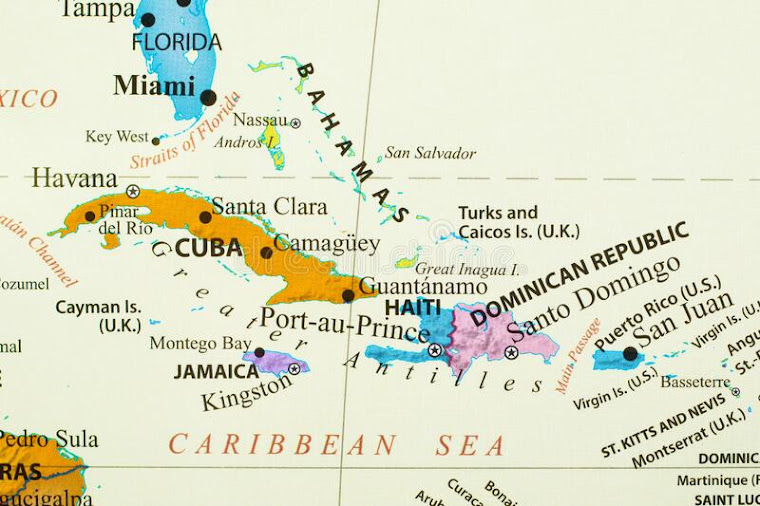
Our country occupies not only the most beautiful stretch of ocean in the world, but one of the most strategic – for at least five hundred years, these hundreds of thousands of square miles of waters have included vital shipping routes, linking peoples and nations and empires. The same geography that makes us a critical corridor for legitimate trade and travel has also made us vulnerable to illicit activity.
With more than 700 islands and cays, and hundreds of thousands of miles of territory – but a small population, with limited resources – surveillance and enforcement have long been a challenge.
But all Bahamians should know that we have made historic progress in recent years, under the Prime Minister’s leadership -- he has prioritized substantial investments in new technology, in surveillance and enforcement assets, in robust recruitment and professional training, and in strengthening critical partnerships.
I note that the Prime Minister has skillfully strengthened our strategic and operational partnerships while still standing up for our sovereignty; at the 2022 Summit of the Americas in Los Angeles, he resisted considerable pressure to sign a declaration that 20 countries in our region did sign, because he insisted our country could not bear the burden of accepting migrants or refugees.
The progress we’re making now is the result of great effort and coordinated collaboration. The Commodore, and the Commissioner, and the men and women they lead, have made the most of their expanded capabilities, and significantly strengthened our borders – we have seen, for example, a dramatic increase in the apprehension of smugglers and migrants before they make landfall. It is notable that our gains have come even as economic, political, and humanitarian crises in Haiti, Cuba, and Venezuela have led, in recent years, to an extraordinary number of their citizens attempting to flee, with many attempting to reach the United States via our waters.
This brings us to another critical reason for the new bill – the new bill improves our capacity to partner with the Trump Administration and the United States, and with other regional partners, including:
• New ways (via Protocol) to share information quickly about smugglers and suspicious boats;
• Clear legal authority for our officers to work with partners at sea, including on foreign-flag boats;
• And - guidance for how our Defence Force and Police can safely stop, check, and even take control of boats when smuggling is suspected – even outside our own waters, in some circumstances.
The passage of this Bill will put us among respected international partners, like the United States and other nations, who recognize the urgency of addressing the crime collectively and responsibly, and will strengthen both our national response and our global partnerships and standing in the world.
Smugglers work across borders, so law enforcement has to as well – the new law makes it easier to team up, share evidence, and run joint patrols with our partners.
As I conclude, I want to address some concerns that have been raised.
I know some Bahamians are asking – what does this mean for our country? Are the rights of migrants changing? These are fair questions, that deserve clear answers.
The bill we tabled did not give migrants any new right to enter The Bahamas, to remain in The Bahamas, or to receive any legal status in The Bahamas. It did not take away any power that we have under the Immigration Act to arrest, detain, charge, or remove people who are here in breach of our laws.
The purpose of the bill is not to change who is allowed to stay. Its purpose is to give us sharper tools to go after the criminal smugglers who profit from exploiting desperate people and who add to the number of people in our country without a legal right to be here.
The bill does make clear that migrants should not be treated as smugglers under this law, just because they are on the same boat. Without more evidence, we would not charge the migrant with smuggling.
But they can still be detained, charged with immigration offences, and deported in accordance with our existing immigration laws. Nothing in the bill removes or weakens those powers.
The bill says that migrants are entitled to humane treatment – entitled to safety, dignity, and nonrefoulement—which means not sending people directly back into serious harm. This has caused some people to ask whether new “rights” are being created.
That is not the case. To reiterate - these provisions do not give anyone a right to be granted status or to remain in The Bahamas.
What they do is say that when we intercept a vessel or process a group of migrants, our officers must ensure:
• that people are not subjected to inhumane or degrading treatment;
• that vulnerable persons—such as children, pregnant women, and people with serious medical needs—are identified and handled with care; and
• that returns and repatriations are carried out in an orderly and safe manner.
This is not about changing who can stay. It is about how our officers conduct themselves while enforcing the law.
We can enforce our laws without abandoning our basic humanity on the high seas or in our detention facilities. That balance is not new; it has been the practice of our Defence Force for years.
The legal guidance we received is that this articulation of how migrants should be treated, which is consistent with obligations that already exist, does not grant any new rights or entitlements. But we understand that the concerns that it does are sincere.
This is not difficult to address. We intend to amend the bill to remove any ambiguity or uncertainty on the point.
We all pray that conditions in other countries improve, and that the flow of migrants slows – but while we pray for the best outcome, we prepare for the worst, and that includes not only expanding our technical and resource capacity but strengthening our laws so we can better prosecute and punish those participating or assisting in any way with the terrible crimes associated with human smuggling.
The bill provides stronger tools for law enforcement, and harsher punishment for criminals – if you want fewer people in our country illegally, you will want to support this bill.
