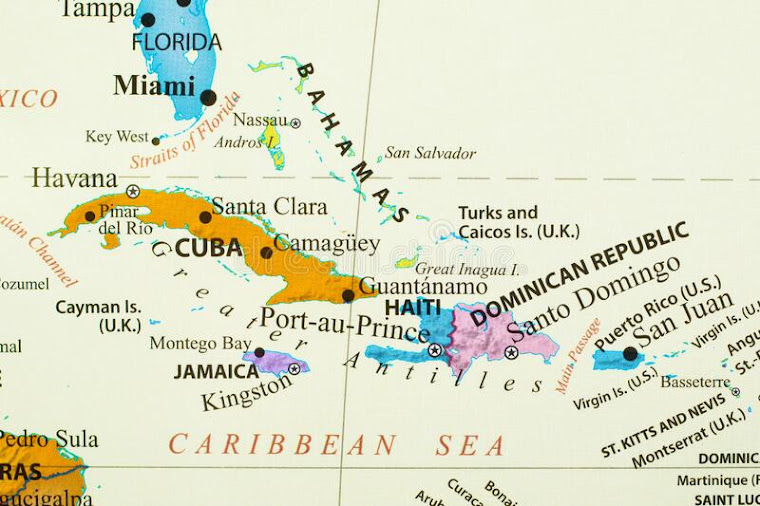
Showing posts with label human smuggling Bahamas. Show all posts

Friday, December 5, 2025

The Bahamas Attorney-General and Minister of Legal Affairs L. Ryan Pinder, KC on the Smuggling of Migrants Bill, 2025


The purpose of the Smuggling of Migrants Bill 2005 is not to change who is allowed to stay in The Bahamas.  Its purpose is to give us sharper tools to go after the criminal smugglers who profit from exploiting desperate people and who add to the number of people in our country, The Bahamas - without a legal right to be here...


Ryan Pinder


Attorney-General and Minister of Legal Affairs L. Ryan Pinder, KC
Smuggling of Migrants Bill, 2025
4 December 2025


As many of you know, several weeks ago, on October 15th, a bill to strengthen our country’s fight against human smuggling was tabled in the House of Assembly.


The proposed legislation has been publicly available online since it was tabled, as is standard for this administration.


With the bill due to be debated in the coming days, discussion regarding the legislation has increased, and we thought it might be helpful, in advance of the debate, to provide Bahamians with information about the changes proposed in the bill, as well as the context and rationales for those changes.


The clear and unequivocal goal of the bill is to reduce human smuggling activity in our country and to thereby reduce the number of migrants in The Bahamas, by criminalizing and increasing penalties for a wide range of activities associated with smuggling.


Migrant smuggling is a heinous crime that exposes vulnerable individuals to deception, abuse, and dangerous conditions.  Without a strong legal framework, criminal networks and enterprises operate with impunity, placing lives at risk and undermining our national security.  The Bill strengthens our ability to hold smugglers accountable as it introduces stiff penalties for those who would exploit the vulnerable for profit.


Under the new law:


...if you procure false documents for migrants;
...if you assist with their entry into our country;
...if you help them pass through our country;
...if your boat or plane is used to transport them;
....if you hide them;
....if you help them stay here;
...if you facilitate or benefit from human smuggling in any way...
...you will be more likely to face prosecution and more likely to suffer significantly harsher consequences.


Every individual who seeks to profit from human suffering and smuggling - while endangering our country and our people - should know that the odds that engaging in the smuggling business will ruin their lives are about to increase dramatically.  New penalties include fines of $300,000 and prison sentences of 15 years.


Until now, prosecutors pursuing smuggling charges have been forced to patch together different provisions from the Penal Code and from Customs and Immigrations laws – the new law closes gaps and loopholes and provides a clearer and more robust set of rules to establish illegality and to increase punishment.


Strengthening and updating the tools we use to better fight criminal networks is something we’ve had to do nearly continually throughout our history.


Our country occupies not only the most beautiful stretch of ocean in the world, but one of the most strategic – for at least five hundred years, these hundreds of thousands of square miles of waters have included vital shipping routes, linking peoples and nations and empires.  The same geography that makes us a critical corridor for legitimate trade and travel has also made us vulnerable to illicit activity.


With more than 700 islands and cays, and hundreds of thousands of miles of territory – but a small population, with limited resources – surveillance and enforcement have long been a challenge.


But all Bahamians should know that we have made historic progress in recent years, under the Prime Minister’s leadership -- he has prioritized substantial investments in new technology, in surveillance and enforcement assets, in robust recruitment and professional training, and in strengthening critical partnerships.


I note that the Prime Minister has skillfully strengthened our strategic and operational partnerships while still standing up for our sovereignty; at the 2022 Summit of the Americas in Los Angeles, he resisted considerable pressure to sign a declaration that 20 countries in our region did sign, because he insisted our country could not bear the burden of accepting migrants or refugees.


The progress we’re making now is the result of great effort and coordinated collaboration.  The Commodore, and the Commissioner, and the men and women they lead, have made the most of their expanded capabilities, and significantly strengthened our borders – we have seen, for example, a dramatic increase in the apprehension of smugglers and migrants before they make landfall.  It is notable that our gains have come even as economic, political, and humanitarian crises in Haiti, Cuba, and Venezuela have led, in recent years, to an extraordinary number of their citizens attempting to flee, with many attempting to reach the United States via our waters.


This brings us to another critical reason for the new bill – the new bill improves our capacity to partner with the Trump Administration and the United States, and with other regional partners, including:


• New ways (via Protocol) to share information quickly about smugglers and suspicious boats;
• Clear legal authority for our officers to work with partners at sea, including on foreign-flag boats;
• And - guidance for how our Defence Force and Police can safely stop, check, and even take control of boats when smuggling is suspected – even outside our own waters, in some circumstances.


The passage of this Bill will put us among respected international partners, like the United States and other nations, who recognize the urgency of addressing the crime collectively and responsibly, and will strengthen both our national response and our global partnerships and standing in the world.


Smugglers work across borders, so law enforcement has to as well – the new law makes it easier to team up, share evidence, and run joint patrols with our partners.


As I conclude, I want to address some concerns that have been raised.


I know some Bahamians are asking – what does this mean for our country?  Are the rights of migrants changing?  These are fair questions, that deserve clear answers.


The bill we tabled did not give migrants any new right to enter The Bahamas, to remain in The Bahamas, or to receive any legal status in The Bahamas.  It did not take away any power that we have under the Immigration Act to arrest, detain, charge, or remove people who are here in breach of our laws.


The purpose of the bill is not to change who is allowed to stay.  Its purpose is to give us sharper tools to go after the criminal smugglers who profit from exploiting desperate people and who add to the number of people in our country without a legal right to be here.


The bill does make clear that migrants should not be treated as smugglers under this law, just because they are on the same boat.  Without more evidence, we would not charge the migrant with smuggling.


But they can still be detained, charged with immigration offences, and deported in accordance with our existing immigration laws.  Nothing in the bill removes or weakens those powers.


The bill says that migrants are entitled to humane treatment – entitled to safety, dignity, and nonrefoulement—which means not sending people directly back into serious harm.  This has caused some people to ask whether new “rights” are being created.


That is not the case.  To reiterate - these provisions do not give anyone a right to be granted status or to remain in The Bahamas.


What they do is say that when we intercept a vessel or process a group of migrants, our officers must ensure:


• that people are not subjected to inhumane or degrading treatment;
• that vulnerable persons—such as children, pregnant women, and people with serious medical needs—are identified and handled with care; and
• that returns and repatriations are carried out in an orderly and safe manner.


This is not about changing who can stay.  It is about how our officers conduct themselves while enforcing the law.


We can enforce our laws without abandoning our basic humanity on the high seas or in our detention facilities.  That balance is not new; it has been the practice of our Defence Force for years.


The legal guidance we received is that this articulation of how migrants should be treated, which is consistent with obligations that already exist, does not grant any new rights or entitlements.  But we understand that the concerns that it does are sincere.


This is not difficult to address.  We intend to amend the bill to remove any ambiguity or uncertainty on the point.


We all pray that conditions in other countries improve, and that the flow of migrants slows – but while we pray for the best outcome, we prepare for the worst, and that includes not only expanding our technical and resource capacity but strengthening our laws so we can better prosecute and punish those participating or assisting in any way with the terrible crimes associated with human smuggling.


The bill provides stronger tools for law enforcement, and harsher punishment for criminals – if you want fewer people in our country illegally, you will want to support this bill.

Wednesday, December 3, 2025

Growing Suspicion and National Doubt over The Bahamas Government Smuggling of Migrants Bill


Nassau, N.P., The Bahamas - Put that Smuggling of Migrants Bill on Hold!


Kevin Harris


HOLD THE BILL!!!


There are some questions emanating from the press release issued by the Government of the Commonwealth of The Bahamas in relation to the intention of the Government to debate and pass the "Smuggling of Migrants Bill".


In its own press statement the Government is quoted as saying, "The clause being circulated by Mr Bain deals with smuggled migrants as victims and witnesses of this crime.  It simply prevents a victim from being charged under this new anti-smuggling law for acts that arise directly from being smuggled, such as illegal entry of possession of a fraudulent document supplied by the smuggler".


There are a number of questions that begs a clear and concise answer considering that someone being smuggled may not to be the same as a person being trafficked.  According to The UN Refugee Agency (UNHCR )"Human smuggling is when people called smugglers (sometimes referred to as "Coyotes"), help persons cross borders irregularly, typically with their consent, in return for money or other material benefit:


The UNHCR further defines Human Trafficking as the exploitation of people for profit such as forced labor or sexual exploitation".


So the Government needs to explain how can smuggled migrants qualify as victims and witnesses - as well as for short term humanitarian care, if by the UNHCR definition these individuals are typlically smuggled with "their"consent and usually by paying the smuggler money or by other material means?


So this begs the question, if the individuals being smuggled do not fall under the category as persons being kidnapped and trafficked to engage in forced labor and or for sexual exploitation, how do these individuals end up in a proposed Smuggling and Migrants bill in the Commonwealrh of The Bahamas as "Victims" and not "Criminals?


How will the Government determine from a boat or plane load of migrants who qualifies as smuggled persons (someone who paid to be brought to The Bahamas illegally) from trafficked persons (someone kidnapped and forced against their will)?


If the purpose of this bill is designed to put teeth into the law to punish smugglers, it cannot at the same time serve to exonrate those being smuggled as victims and witnesses, shielded from arrest and prosecution.  The probability is that both smuggled migrants and smuggler are on the same vessel for the same purpose.


The general understanding with these kinds of smuggling operations is the individuals desiring to be smuggled to a destination illegally, "pay" a smuggler to smuggle them to said destination.  This would mean that smuggled individuals are not victims, as nothing was done to them nor were they forced to make the journey.  Second the smuggled migrant is indeed a witnesses but a witnesses to a crime and a crime that they are more than likely an accessory to.


There appears to be a section in the bill under the heading "Immunity from prosecution of smuggled migrants" - that says in part "A smuggled migrant cannot be liable to criminal prosecution under this Act in respects of


(A) illegal entry into the receiving country


(B) remaining illegally in the receiving country or transit country or

(C) possessing a fraudulent or identity document


It would be important for the Government to confirm if the above is true and what is their true intent when it comes to these smuggled migrants.  There are many more questions.  I was informed that it was the intent of the Government to debate and pass this bill today, Wednesday December 3rd 2025 or by tomorrow Thursday December 4th 2025.


I would strongly recommend Director of Communications Latrae Rahming encourage the Government to put the brakes on debating and passing this bill until there can be wide spread national consultation and input by the Bahamian people including members of the legal fraternity, the Church and Civil Society.  I was just sent a copy of the bill and like many Bahamians, I have not had sufficient time to read it and I suspect neither have many other citizens.


Bills are comprised of serious legal language and the wrong language used in a bill could result in a wrong or devastating outcome.  Bills tabled in the House of Assembly usually become the law of the land and so every bill should include the correct language, which should be very clear.  However from the looks of things so far, this particular bill doesn't appear to be very clear and could open the door to suspicion and national doubtsuspicion and national doubt.  Just my thoughts.


Kevin Harris 

Wednesday December 3rd 2025


Source / Comment

Wednesday, June 5, 2013

...protection of our borders against illegal immigration, poachers, gun and drug running, human smuggling... and Trafficking in Persons

The Democratic National Alliance (DNA) says, We need 21st Century Protection of our Borders


Protect The Bahamas Borders


The Prime Minister’s 2012/2013 budget communication has allocated a tremendous amount of money for the purchase of vessels for the defense force. No doubt the rationale for this is for the protection of our borders against illegal immigration, illegal poachers, gun and drug running and human smuggling and trafficking.

Illegal immigration has been one of the critical issues our country has been facing for many years and if it is not arrested, we will lose our country. Illegal immigration has strained our country’s resources in health care, education, social services and national security. Illegal Immigration has infiltrated our country so much so that we now have many different subcultures.

Illegal poaching has now become a common occurrence. Other nationalities are raping our waters every day. They do it because they realize that our leaders do not have the answers to this concern. They have our leaders figured out because they know that our leaders will come up with the same type of plan they have used in the past in anticipation that it will work this time.

Many of the crimes committed today are because of illegal drugs and the availability of guns on our streets. These guns and drugs infiltrate our beloved country from other countries and have wreck havoc on our once peaceful society.

Human smuggling and trafficking is very much alive resulting in persons penetrating our borders.

The PLP administration has decided that more vessels will help with addressing these vexing problems. But this is very much unrealistic. No matter how many vessels are purchased, the problems above will still exist. You ought to remember that vessels have been purchased in the past and we still have the same problems today. It did not work! Illegal immigration, gun and drug running, illegal poaching and human smuggling and trafficking are still on the rise. So what does this administration do…the same thing that was done before…purchase vessels!

The Commonwealth of the Bahamas is made up of 700 islands and Cays covering 150,000 square miles of sea. This tells me, and I would think the average person, that no matter how many vessels are purchased, it would be virtually impossible to man our waters. However, with the use of technology we would be able to monitor our borders and determine what is on and under the sea. This is what the PLP administration should be investing in. By the touch of a button you are able to determine who is trying to enter our country. You would not have to rely on defense force vessels being at the right place and at the right time in order to detect those entering our borders for illegal purposes… all of this can be monitored by way of technology.

I would encourage this administration to go to the Democratic National Alliance’s website at mydnaparty.org and watch our town meeting on immigration. There we discussed the technology that can be used in order to facilitate 21st century protection of our borders.

In order for us to move this country forward, we cannot afford to do the unsuccessful things we have done in the past and anticipate that it would be successful in the future. Let’s start thinking outside the box!

Branville McCartney
DNA Leader

Tuesday, June 26, 2012

The Bahamas is a major smuggling zone for people and narcotics to the United States from South America and the Caribbean... However, there are usually no prosecutions for human smuggling for some reason

Changing how we respond to human smuggling


thenassauguardian editorial


At least 11 people are dead as a result of a suspected human smuggling operation gone wrong off Abaco a few weeks ago.  Authorities fear 10 other passengers, who remain unaccounted form the vessel ‘Cosy Time’, are dead.

Twenty-eight passengers were reportedly onboard the vessel and seven people survived.  The victims are all thought to be of Haitian descent.

National Security Minister Dr. Bernard Nottage has told the House of Assembly that one of the survivors, a man of Bahamian-Haitian descent, said he boarded the boat because his mother insisted he go to the United States on the vessel.

“The gentleman further stated that he believed each person paid a total of $5,000 a head for the journey,” Dr. Nottage said.

The Bahamas is a major smuggling zone for people and narcotics to the United States from South America and the Caribbean.  However, there are usually no prosecutions for human smuggling for some reason.

Most of the people smuggled here are Haitians and many die trying to escape the poorest country in the hemisphere.

Thus far one person has been charged in connection with the deaths in Abaco.  Several others have been taken in to custody for questioning.  The man who has been charged is innocent until proven guilty in a court.  We make no comment on his guilt or innocence, but we commend the government for this time investigating this matter seriously and seeking to bring before the court those it suspects responsible so that a jury could decide their fates.

One of the ways to slow human smuggling is to aggressively prosecute those involved.  When migrants are killed in human smuggling operations those who organized the operations and those who command the vessels are criminally responsible for those deaths.  Manslaughter charges should be leveled against smugglers who survive these tragic occurrences.

If we do not get tough with this heinous crime it will continue and more desperate people will lose their lives seeking better lives away from their economically challenged homelands.

The witness told police one of the boat’s engines kept cutting off, which slowed it down.

“He reported that the seas were very rough and the vessel began to take on water,” Dr. Nottage said.

“The vessel eventually capsized and everyone began to scramble to save their lives.  He reported that he did his best to save other persons, but the sea was too rough, so he had to save his own life.”

We must not just view this situation as tragic.  The Bahamas should use it as an opportunity to change how we deal with human smugglers.  They prey on the desperation of poor people.

Jun 25, 2012

thenassauguardian editorial