FNM 'SHOULD NOT LEAVE LEADERSHIP DECISION UNTIL THE LAST MINUTE'
By TANEKA THOMPSON
Tribune Staff Reporter
tthompson@tribunemedia.net:
IT does not make "good political sense" for the country not to not know who will lead the Free National Movement into the next general election until the last minute, said Bamboo Town MP Branville McCartney.
His comments came on the heels of a decision by the Free National Movement's national council not to hold a convention until 2011 - months before the next general election. It was speculated that if the party held a convention this year, Mr McCartney would have been nominated to challenge Prime Minister Hubert Ingraham for the party's top spot, a nomination the former Cabinet minister has said he would accept.
Earlier, Mr Ingraham said the party's convention would be held on November 5, 2010, but on Wednesday he announced that he advised the council not to hold the event, citing financial challenges as a main reason.
The final decision was up to the council's vote, said Mr Ingraham, but some political observers see it as a way to block Mr McCartney from a leadership bid.
Yesterday Mr McCartney said he was fine with the council's decision, which indicates the party is satisfied with its current leadership.
"That is the voice of the party, the party has indicated what they wanted," he told The Tribune. "It would be good to know where the party is headed and not to wait for the last minute to determine where the party is headed and how the leadership team will look. That in my view doesn't make good political sense but I guess the party understands, and if the party wishes to go forward with the same leadership slate, that's fine."
Mr Ingraham has said he will announce at the end of the year whether or not he plans to offer himself as leader of the party leading up to the next general election which is slated for 2012.
Mr McCartney added that, despite some reports, he is not actively seeking an opportunity to grab the leadership of the party, but would not shy away from the opportunity if it arose.
"Some people say out there that I am looking for (the FNM's) leadership. I have always said that if I am given the opportunity - I cannot nominate myself - that's for the people of the FNM to do, not me. If I am given the opportunity I would welcome it."
He said the country has had 40 years of the same politics adding it is time for a shift in mindset.
"I do think we need to move on by way of our mindset. Our mindset has not changed for 40 years. We need to take it to another level, start thinking outside the box."
Aside from himself he said there are others within the party who are also fit to lead - such as Education Minister Desmond Bannister, State Finance Minister Zhirvargo Laing, Health Minister Dr Hubert Minnis and former leader of the FNM, National Security Minister Tommy Turnquest.
Mr McCartney, former state immigration minister, resigned from Cabinet earlier this year, but remains a member of the FNM.
October 02, 2010
tribune242
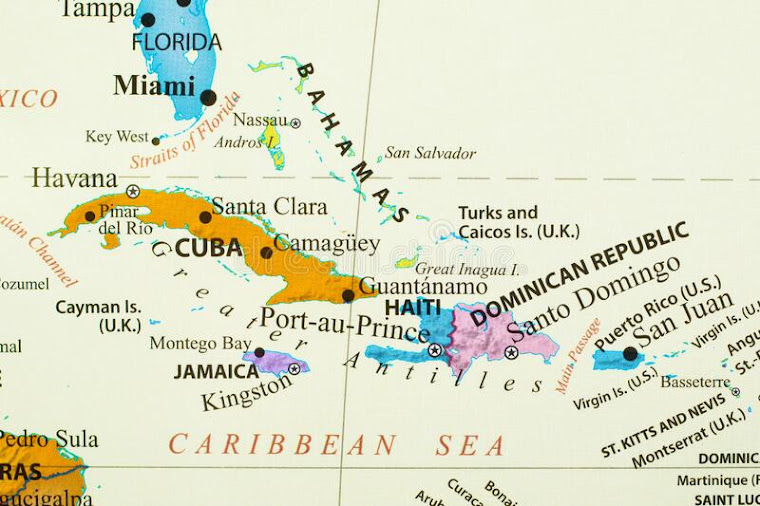
A political blog about Bahamian politics in The Bahamas, Bahamian Politicans - and the entire Bahamas political lot. Bahamian Blogger Dennis Dames keeps you updated on the political news and views throughout the islands of The Bahamas without fear or favor. Bahamian Politicians and the Bahamian Political Arena: Updates one Post at a time on Bahamas Politics and Bahamas Politicans; and their local, regional and international policies and perspectives.
Monday, October 4, 2010
Sunday, October 3, 2010
West End and Bimini Constituents “Not Pleased” with their Member of Parliament - Obie Wilchcombe

Is Your MP Performing: West End, Bimini Constituents “Not Pleased”
By Sasha L. Lightbourne
It seems as if West End and Bimini Member of Parliament, Obie Wilchcombe has a lot of work to do if he plans to offer himself as a candidate for that constituency in the next general election.
The Bahama Journal began its weekly series entitled "Is Your MP Performing" several weeks ago.
When asked whether Mr. Wilchcombe was performing several residents said that their MP was not.
Megan McKenzie, a resident of West End, Grand Bahama told the Journal recently that she "rarely" sees her MP.
"He doesn’t really come to West End," she said.
"He is not usually a part of the things that happen in the community. I don’t think he’s performing. I can’t even tell you the last time that I saw him because it’s been that long. The thing is, he did so well during his election campaign and now he is no where to be found."
Janet Smith, who is also a West End resident, shared similar views.
"I don’t think he’s doing a good job because we don’t see him," she said.
"I haven’t seen him in West End and I moved back here from New Providence 10 years ago. I never expect anything from my MP though. They are all the same – they know you around election time and then they are absent for the next five years."
Another West End resident, who identified himself as ‘Doc’ Grant said Mr. Wilchcombe is not performing.
"Nothing is happening in West End," he said.
"I can’t tell you the last time I’ve seen him, so in my view he isn’t performing."
Mr. Wilchcombe is one of four MPs who has to visit more than one island to reach out to all his constituents.
Residents in Bimini shared similar sentiments.
Many claimed that they have not seen Mr. Wilchcombe in a while.
"I don’t think he is performing at all," Bimini resident, Lopez Bullard said.
"Nothing is getting done on the island. They need to be worried about the dump on the island – that’s a serious problem. We need him to come around more because we supported him a lot during the last election."
Mr. Bullard added that Mr. Wilchcombe is only usually on the island to attend funerals.
"He needs to step to the plate because the young people don’t play and we will switch on you quick," he said.
Ashley Hinzey felt the same way.
"As far as I can see I don’t think he is performing," he said.
"I don’t see him in the community. Everything in Bimini happens because of the private sector because we rarely see Obie. We may see him at a funeral or something but when we have festivals or community functions he is not around."
Mr. Hinzey said Mr. Wilchcombe is his friend but he does not think that he will vote for him in the next election.
"My MP is not around to see what’s going on," another Bimini resident said, who wished to remain anonymous.
"We have a lot of issues on the island especially that deals with the local government. Right now we have a problem with issuing taxi licences – the process for that is not fair."
The resident also said that the Bimini dump is an issue.
"It has not been filled in for the last few years and I think the MP needs to come down and take a look at it," he said.
However, one West End resident, Ruth Woodside, said she felt that Mr. Wilchcombe was "doing his best."
"I like Mr. Wilchcombe and he has been performing in my view," she said.
"We may not see him as much as we would like to but there are things happening in the community. Very little is happening in Grand Bahama because of the economy but there is nothing that Mr. Wilchcombe can do about it; he is doing his best."
September 27th, 2010
jonesbahamas

Saturday, October 2, 2010
Baha Mar project is a political hot potato
Baha Mar project still needs consideration
tribune242 editorial
THE BAHA MAR development is not one of easy solution -- politically it is a hot potato. The only reason it is being considered is that many Bahamians believe that in these economic hard times a big project is needed to get Bahamians back to work -- and Baha Mar happens to be that big project.
Prime Minister Hubert Ingraham does not necessarily agree. One day the Bahamas is going to run out of big projects -- certainly the need for them in New Providence. There are still the Family Islands to develop, but as time moves forward the Bahamas will have to find something other than "big projects" to sustain growth.
Nor does the Prime Minister believe that Baha Mar, even at this time, is the "saviour for the Bahamas."
However, what appears to many Bahamians to be an answer to prayers could present enormous problems in the future. Certainly enormous political problems.
For example, if government agrees to allow the Chinese to employ over the period of the $2.6 billion contract, 8,100 of their countrymen with Bahamians only on the periphery of construction, then future investors can expect the same. Certainly Kerzner International, which has preferred investor status, has every right in future to ask for the same concessions. And don't forget local business people, who should be entitled to employ the best talent for their businesses, will also expect to have more freedom to go abroad if the required talent cannot be found here. This is something that Bahamians should ponder very seriously. At the pace at which this country is developing -- especially with the unlimited vistas being opened by new technology -- there will be no place for D grade students. Of course, this is something for students and their parents to come to grips with now. They have to settle down to reality -- government can no longer protect them. They have not had to make the effort because their mediocrity has been protected by Immigration restrictions for too long.
But there are other worries. As Mr Ingraham pointed out, if Baha Mar is completed as planned will the investors be able to fill the added 3,500 rooms when many hotel rooms already here are empty?
"We will be building the largest single resort development in the country with exclusively foreign labour, foreign labour where there is no transfer of any knowledge to locals," Mr Ingraham said. "At the same time be putting a number of rooms that is larger than any we've got in the country, without any major hotelier being involved to date."
"Well if I have difficulty dealing with less than 1,800 rooms what is it likely to be the case if I put 3,500 rooms there? What makes me feel and what gives me the level of confidence that all of a sudden I've become a magician in terms of the management of a hotel and I'm going to have a very successful operation with high levels of occupancy and good levels of revenue to repay the loan of $2.4 billion?"
Added to which the Chinese now have a hotel in Freeport which they cannot fill.
"And if I am having discussions about the question of repaying a loan of $200 million that is dragging on and on, does that raise any question that I ought to be concerned with? These are all matters that the government has to be concerned with," Mr Ingraham said.
What is now exercising the minds of many Bahamians is what happens to the large resort and the land on which it sits if the land is transferred in fee simple to Baha Mar, which in future might default on the loan to the China Export-Import Bank. Does the bank, and eventually the Beijing government become landlords of 1,000 acres of Cable Beach? This is of great concern to many Bahamians.
Mr Ingraham said he would feel more confident about the development, if like Atlantis, it were brought on stream in stages, opening only 1,000 rooms to start with. Atlantis developed its mega project in three stages. The fourth stage is being held until the Baha Mar resort is resolved. Obviously, the Kerzners -- experts in the resort business --also believe that the Bahamas cannot fill the rooms of two mega resorts operating on one island at the same time.
However, Mr Ingraham believes the Baha Mar project and Atlantis can co-exist without one being detrimental to the other if the phased approach to development is taken.
If one kills off the other by over reaching it is the Bahamas and its people who will suffer. As each resort fights for guests, room rates will fall and so will local employment.
Mr Ingraham and his government -- and the Opposition if it will take its responsibilities seriously -- have a lot to think about as they do their best to protect the future of the country and its people.
October 01, 2010
tribune242 editorial
tribune242 editorial
THE BAHA MAR development is not one of easy solution -- politically it is a hot potato. The only reason it is being considered is that many Bahamians believe that in these economic hard times a big project is needed to get Bahamians back to work -- and Baha Mar happens to be that big project.
Prime Minister Hubert Ingraham does not necessarily agree. One day the Bahamas is going to run out of big projects -- certainly the need for them in New Providence. There are still the Family Islands to develop, but as time moves forward the Bahamas will have to find something other than "big projects" to sustain growth.
Nor does the Prime Minister believe that Baha Mar, even at this time, is the "saviour for the Bahamas."
However, what appears to many Bahamians to be an answer to prayers could present enormous problems in the future. Certainly enormous political problems.
For example, if government agrees to allow the Chinese to employ over the period of the $2.6 billion contract, 8,100 of their countrymen with Bahamians only on the periphery of construction, then future investors can expect the same. Certainly Kerzner International, which has preferred investor status, has every right in future to ask for the same concessions. And don't forget local business people, who should be entitled to employ the best talent for their businesses, will also expect to have more freedom to go abroad if the required talent cannot be found here. This is something that Bahamians should ponder very seriously. At the pace at which this country is developing -- especially with the unlimited vistas being opened by new technology -- there will be no place for D grade students. Of course, this is something for students and their parents to come to grips with now. They have to settle down to reality -- government can no longer protect them. They have not had to make the effort because their mediocrity has been protected by Immigration restrictions for too long.
But there are other worries. As Mr Ingraham pointed out, if Baha Mar is completed as planned will the investors be able to fill the added 3,500 rooms when many hotel rooms already here are empty?
"We will be building the largest single resort development in the country with exclusively foreign labour, foreign labour where there is no transfer of any knowledge to locals," Mr Ingraham said. "At the same time be putting a number of rooms that is larger than any we've got in the country, without any major hotelier being involved to date."
"Well if I have difficulty dealing with less than 1,800 rooms what is it likely to be the case if I put 3,500 rooms there? What makes me feel and what gives me the level of confidence that all of a sudden I've become a magician in terms of the management of a hotel and I'm going to have a very successful operation with high levels of occupancy and good levels of revenue to repay the loan of $2.4 billion?"
Added to which the Chinese now have a hotel in Freeport which they cannot fill.
"And if I am having discussions about the question of repaying a loan of $200 million that is dragging on and on, does that raise any question that I ought to be concerned with? These are all matters that the government has to be concerned with," Mr Ingraham said.
What is now exercising the minds of many Bahamians is what happens to the large resort and the land on which it sits if the land is transferred in fee simple to Baha Mar, which in future might default on the loan to the China Export-Import Bank. Does the bank, and eventually the Beijing government become landlords of 1,000 acres of Cable Beach? This is of great concern to many Bahamians.
Mr Ingraham said he would feel more confident about the development, if like Atlantis, it were brought on stream in stages, opening only 1,000 rooms to start with. Atlantis developed its mega project in three stages. The fourth stage is being held until the Baha Mar resort is resolved. Obviously, the Kerzners -- experts in the resort business --also believe that the Bahamas cannot fill the rooms of two mega resorts operating on one island at the same time.
However, Mr Ingraham believes the Baha Mar project and Atlantis can co-exist without one being detrimental to the other if the phased approach to development is taken.
If one kills off the other by over reaching it is the Bahamas and its people who will suffer. As each resort fights for guests, room rates will fall and so will local employment.
Mr Ingraham and his government -- and the Opposition if it will take its responsibilities seriously -- have a lot to think about as they do their best to protect the future of the country and its people.
October 01, 2010
tribune242 editorial
Friday, October 1, 2010
Environment Minister Earl Deveaux's "free ride" on the Aga Khan's helicopter does not warrant dismissal - says Prime Minister Hubert Ingraham
PM: HELICOPTER RIDE NOT WORTH DISMISSAL
By PAUL G TURNQUEST
Tribune Staff Reporter
pturnquest@tribunemedia.net:
EXPLAINING for the first time his reasons for not accepting the resignation of his Minister of the Environment Earl Deveaux, Prime Minister Hubert Ingraham said yesterday the controversy surrounding his minister's "free ride" on the Aga Khan's helicopter does not raise to the level of calling for his dismissal.
Acknowledging that persons could argue whether or not it was the right decision to make under the circumstances, Mr Ingraham still stressed that Mr Deveaux "did nothing" deserving of resignation.
"What I find very fascinating about this whole question about Earl Deveaux and resignation is the Opposition hasn't raised it in the House (of Assembly at all. At all. But I wonder why," he laughed.
"There was no basis upon which Earl Deveaux ought to resign. He's done nothing deserving of resignation.
"Whether or not he should have taken a flight to Abaco, judgmental, but it doesn't rise to the level of dismissal and Bell Island is a place that doesn't have regular flights.
" I've been there twice, I went there once on the Defence Force boat and once I went there on the Aga Khan's helicopter, and I went there to have lunch with the King of Spain and took my grandchildren to meet with the Aga Khan's grandchildren.
"And then I asked while I was there, 'Listen I can't come this far without stopping in Black Point to hail the residents there'. So we landed there and I went there and shook some hands in Black Point and came back to Nassau. Since that time, just yesterday, somebody told me, an official, he had to go to Cat Island on a developer's aircraft to check something and on the flight with him was the member of Parliament, the deputy leader of the PLP (Philip Davis) on the same private aircraft," Mr Ingraham said.
However Fred Mitchell, the Opposition's MP for Fox Hill, said the Prime Minister's comments only reinforce the notion that it was OK for Earl Deveaux to accept the Aga Khan's ride, because the Prime Minister himself had done the same thing.
September 30, 2010
tribune242
By PAUL G TURNQUEST
Tribune Staff Reporter
pturnquest@tribunemedia.net:
EXPLAINING for the first time his reasons for not accepting the resignation of his Minister of the Environment Earl Deveaux, Prime Minister Hubert Ingraham said yesterday the controversy surrounding his minister's "free ride" on the Aga Khan's helicopter does not raise to the level of calling for his dismissal.
Acknowledging that persons could argue whether or not it was the right decision to make under the circumstances, Mr Ingraham still stressed that Mr Deveaux "did nothing" deserving of resignation.
"What I find very fascinating about this whole question about Earl Deveaux and resignation is the Opposition hasn't raised it in the House (of Assembly at all. At all. But I wonder why," he laughed.
"There was no basis upon which Earl Deveaux ought to resign. He's done nothing deserving of resignation.
"Whether or not he should have taken a flight to Abaco, judgmental, but it doesn't rise to the level of dismissal and Bell Island is a place that doesn't have regular flights.
" I've been there twice, I went there once on the Defence Force boat and once I went there on the Aga Khan's helicopter, and I went there to have lunch with the King of Spain and took my grandchildren to meet with the Aga Khan's grandchildren.
"And then I asked while I was there, 'Listen I can't come this far without stopping in Black Point to hail the residents there'. So we landed there and I went there and shook some hands in Black Point and came back to Nassau. Since that time, just yesterday, somebody told me, an official, he had to go to Cat Island on a developer's aircraft to check something and on the flight with him was the member of Parliament, the deputy leader of the PLP (Philip Davis) on the same private aircraft," Mr Ingraham said.
However Fred Mitchell, the Opposition's MP for Fox Hill, said the Prime Minister's comments only reinforce the notion that it was OK for Earl Deveaux to accept the Aga Khan's ride, because the Prime Minister himself had done the same thing.
September 30, 2010
tribune242
Thursday, September 30, 2010
The governing Free National Movement (FNM) is prepared to pay the political price over the Baha Mar labour resolution says Prime Minister Hubert Ingraham
PM: FNM will pay political price over Baha Mar labour resolution
By PAUL G TURNQUEST
Tribune Staff Reporter
pturnquest@tribunemedia.net:
PRIME Minister Hubert Ingraham said yesterday that he and his party are prepared to take whatever political ramifications will come if they are forced to go it alone on the controversial labour resolution for the Baha Mar project.
When asked yesterday during a nationally-televised press conference at the House of Assembly, Mr Ingraham said he will make the best decision available to him at the time.
"I will not take account of what the political consequences of it is. I will do what I think is the best for the Bahamas and if that means that there is a political price to pay then I will pay it, and my party will pay it," Mr Ingraham affirmed.
For some time now, the Progressive Liberal Party and the government have been at odds on this controversial labour component of the Baha Mar project. With some 8,100 Chinese labourers needed to complete the development, both political parties have voiced their "serious concerns" on the matter. Coupled with the fact that unemployment remains high throughout the country, and an election year is slated for 2012, many politicians are fearful of having to publicly vote either in favour of or against this colossal $2.6 billion project.
In one vein, Baha Mar promises to provide thousands of permanent jobs for Bahamians once the project is completed. However, at the same time, it will require the largest foreign labour input on any one development to complete the core project - again while thousands of Bahamian labourers remain unemployed.
And, even if the project is completed as planned, there still remains concerns over whether or not the newly-added 3,500 rooms could actually be filled.
September 30, 2010
tribune242
By PAUL G TURNQUEST
Tribune Staff Reporter
pturnquest@tribunemedia.net:
PRIME Minister Hubert Ingraham said yesterday that he and his party are prepared to take whatever political ramifications will come if they are forced to go it alone on the controversial labour resolution for the Baha Mar project.
When asked yesterday during a nationally-televised press conference at the House of Assembly, Mr Ingraham said he will make the best decision available to him at the time.
"I will not take account of what the political consequences of it is. I will do what I think is the best for the Bahamas and if that means that there is a political price to pay then I will pay it, and my party will pay it," Mr Ingraham affirmed.
For some time now, the Progressive Liberal Party and the government have been at odds on this controversial labour component of the Baha Mar project. With some 8,100 Chinese labourers needed to complete the development, both political parties have voiced their "serious concerns" on the matter. Coupled with the fact that unemployment remains high throughout the country, and an election year is slated for 2012, many politicians are fearful of having to publicly vote either in favour of or against this colossal $2.6 billion project.
In one vein, Baha Mar promises to provide thousands of permanent jobs for Bahamians once the project is completed. However, at the same time, it will require the largest foreign labour input on any one development to complete the core project - again while thousands of Bahamian labourers remain unemployed.
And, even if the project is completed as planned, there still remains concerns over whether or not the newly-added 3,500 rooms could actually be filled.
September 30, 2010
tribune242
Wednesday, September 29, 2010
Foreign Workers on Bahamian Construction Sites
Foreigners on Bahamian construction sites
tribune242 editorial
THE DEBATE on the number of Chinese to be employed on the construction of the Baha Mar Cable Beach project -- six hotels, about a 100,000-square foot casino, a 200,000 square-foot convention centre, 20-acre beach and pool, 18-hole golf course and a 60,000-square foot retail village with additional residential products -- is going to be interesting, if and when it takes place on the floor of the House.
The number of foreign workers required by the Chinese as part of the deal is unusually large. But it is well known that the Chinese do not approve foreign loans unless their workforce is employed as a major part of the loan project. In the case of Baha Mar -- valued at about $2.5 billion - $1.918,965,693 billion has been negotiated with the China Construction Company as primary contractors. With that financial outlay it is amazing that government was able to negotiate any Bahamian presence. As Mr Ingraham said in presenting his resolution for this project to the House "the foreign labour component intended during the construction for the resort exceeds levels ever experienced in the Bahamas and is beyond anything ever contemplated by my government."
Under the UBP, construction up to a certain value was reserved for Bahamian contractors. Over that value it was agreed that Bahamians did not yet have the expertise or equipment to handle very large jobs and so those were left to foreign contractors, such as McAlpine, Balfour Beatty and others. In the 1950s, said Mr Ingraham, the government permitted 25 per cent of the labour force in construction and/or the operation of tourism development to be foreign.
During the Pindling era, however, the foreign labour component increased and newspaper articles recorded protests, either by foreign workers complaining of working conditions, or Bahamians questioning their presence in the Bahamas. For example, in 1988, 600 angry Indians went on hunger strike on the construction site of the Crystal Palace Hotel, Cable Beach. They accused the foreign contractor, Balfour Beatty, of treating them as slaves. Earlier - in 1981 - the Construction and Civil Engineering Union picketed the construction site of government's $66.5 million Cable Beach Hotel. "They import Filipinos to shovel sand. You tell me no Bahamans can do that?" complained a Bahamian worker. There were 40 Filipinos on that job site.
But the 1990 demonstration to protest the employment of common labourers -- truck drivers for example -- from Brazil on government's $55 million Nassau International Airport expansion was particularly interesting. The ratio of foreigners to Bahamians was 70 per cent on that construction site with government having to pay a large penalty if the number of Bahamians went over the agreed 139 or 30 per cent of the total work force. This prompted the carrying of placards that read: "It's Better in the Bahamas for Brazilians!"
At one point during the contract there were more than 340 Brazilians at the construction site, bringing the Brazilian count to 71 per cent compared to the 139 Bahamians that the company had agreed to use during this period.
The Pindling government had agreed that for every five Bahamians hired by the Brazilian company over the agreed 139 Bahamian workers, the government would have to pay $88,000 or $17,000 for each worker.
In the House on April 30, 1990, then Opposition Leader Hubert Ingraham revealed that the Pindling government had also agreed to pay all of the Brazilian company's Customs and stamp duties, work permit fees for their workers, and building fees on mechanical and electrical permits. In addition government was to pay all public utility fees -- connections and the like -- except for the actual electrical consumption.
The FNM found it preposterous that government would be penalised if more than 139 Bahamians were hired at the airport. "It is incredible that the Government has agreed to pay extra monies for Bahamians to work in their own country," said the FNM.
When the Ingraham government came to power its policy on foreign labour was established on the resort properties of Kerzner International -- the ratio of Bahamians to non-Bahamians on that site was not to exceed 30 per cent foreign to 70 per cent Bahamian.
And now here were the Chinese financially backing the transformation of Cable Beach into a mega tourist resort and asking for 8,150 of their countrymen to be engaged on the "core project". The projection is that some 1,200 Bahamians will be engaged in construction of the non-core projects.
Because of the unusual request for foreign labour -- 71 per cent foreign to 29 per cent Bahamian -- Prime Minister Ingraham has brought the matter to the House to give the Opposition an opportunity to express the opinions of their constituents on the matter. Both sides have to determine - in the words of Mr Ingraham - "whether this invaluable benefit of skills transfer and improved exposure to new technologies can or will occur in a project where contact between Bahamians and foreign experts is likely to be limited." Bahamians also have to decide whether in these lean years this project, with its foreign labour, is what they believe will jump start their economy.
September 28, 2010
tribune242 editorial
tribune242 editorial
THE DEBATE on the number of Chinese to be employed on the construction of the Baha Mar Cable Beach project -- six hotels, about a 100,000-square foot casino, a 200,000 square-foot convention centre, 20-acre beach and pool, 18-hole golf course and a 60,000-square foot retail village with additional residential products -- is going to be interesting, if and when it takes place on the floor of the House.
The number of foreign workers required by the Chinese as part of the deal is unusually large. But it is well known that the Chinese do not approve foreign loans unless their workforce is employed as a major part of the loan project. In the case of Baha Mar -- valued at about $2.5 billion - $1.918,965,693 billion has been negotiated with the China Construction Company as primary contractors. With that financial outlay it is amazing that government was able to negotiate any Bahamian presence. As Mr Ingraham said in presenting his resolution for this project to the House "the foreign labour component intended during the construction for the resort exceeds levels ever experienced in the Bahamas and is beyond anything ever contemplated by my government."
Under the UBP, construction up to a certain value was reserved for Bahamian contractors. Over that value it was agreed that Bahamians did not yet have the expertise or equipment to handle very large jobs and so those were left to foreign contractors, such as McAlpine, Balfour Beatty and others. In the 1950s, said Mr Ingraham, the government permitted 25 per cent of the labour force in construction and/or the operation of tourism development to be foreign.
During the Pindling era, however, the foreign labour component increased and newspaper articles recorded protests, either by foreign workers complaining of working conditions, or Bahamians questioning their presence in the Bahamas. For example, in 1988, 600 angry Indians went on hunger strike on the construction site of the Crystal Palace Hotel, Cable Beach. They accused the foreign contractor, Balfour Beatty, of treating them as slaves. Earlier - in 1981 - the Construction and Civil Engineering Union picketed the construction site of government's $66.5 million Cable Beach Hotel. "They import Filipinos to shovel sand. You tell me no Bahamans can do that?" complained a Bahamian worker. There were 40 Filipinos on that job site.
But the 1990 demonstration to protest the employment of common labourers -- truck drivers for example -- from Brazil on government's $55 million Nassau International Airport expansion was particularly interesting. The ratio of foreigners to Bahamians was 70 per cent on that construction site with government having to pay a large penalty if the number of Bahamians went over the agreed 139 or 30 per cent of the total work force. This prompted the carrying of placards that read: "It's Better in the Bahamas for Brazilians!"
At one point during the contract there were more than 340 Brazilians at the construction site, bringing the Brazilian count to 71 per cent compared to the 139 Bahamians that the company had agreed to use during this period.
The Pindling government had agreed that for every five Bahamians hired by the Brazilian company over the agreed 139 Bahamian workers, the government would have to pay $88,000 or $17,000 for each worker.
In the House on April 30, 1990, then Opposition Leader Hubert Ingraham revealed that the Pindling government had also agreed to pay all of the Brazilian company's Customs and stamp duties, work permit fees for their workers, and building fees on mechanical and electrical permits. In addition government was to pay all public utility fees -- connections and the like -- except for the actual electrical consumption.
The FNM found it preposterous that government would be penalised if more than 139 Bahamians were hired at the airport. "It is incredible that the Government has agreed to pay extra monies for Bahamians to work in their own country," said the FNM.
When the Ingraham government came to power its policy on foreign labour was established on the resort properties of Kerzner International -- the ratio of Bahamians to non-Bahamians on that site was not to exceed 30 per cent foreign to 70 per cent Bahamian.
And now here were the Chinese financially backing the transformation of Cable Beach into a mega tourist resort and asking for 8,150 of their countrymen to be engaged on the "core project". The projection is that some 1,200 Bahamians will be engaged in construction of the non-core projects.
Because of the unusual request for foreign labour -- 71 per cent foreign to 29 per cent Bahamian -- Prime Minister Ingraham has brought the matter to the House to give the Opposition an opportunity to express the opinions of their constituents on the matter. Both sides have to determine - in the words of Mr Ingraham - "whether this invaluable benefit of skills transfer and improved exposure to new technologies can or will occur in a project where contact between Bahamians and foreign experts is likely to be limited." Bahamians also have to decide whether in these lean years this project, with its foreign labour, is what they believe will jump start their economy.
September 28, 2010
tribune242 editorial
Tuesday, September 28, 2010
A 'genuine' shift to rehabilitation, reintegration at Her Majesty's Fox Hill prison

A 'genuine' shift to rehabilitation, reintegration at Fox Hill prison
tribune242 Insight
By NOELLE NICOLLS
Tribune Staff Reporter
nnicolls@tribunemedia.net:
Much has been made about the reform agenda at Her Majesty's Prison and claims by Superintendent Dr Elliston Rahming that his team has successfully taken "a genuine philosophical shift from revenge and punishment to rehabilitation and reintegration."
So it was baffling to me when weeks after Dr Rahming's grand publication of his five-year prison reform report card, the Prison Staffers Association (PSA) went public with their opposition to his reappointment. His contract expires in about five months.
In the process, they aired a long list of complaints about the management of the prison, with Dr Rahming's "leadership" being their chief complaint, according to PSA president Gregory Archer.
What exactly is the "leadership" problem is unclear to me. However, various executives of the PSA are adamant that such a problem exists. They claim Dr Rahming's leadership "has demoralised senior officers, and the rank and file". The PSA treasurer claims Dr Rahming is straight up "ineffective" in prison reform, despite his boasted success.
With such a categorical claim, the PSA has a tall order to prove its accusations, but irrespective of their validity, the fact of such a discrepancy is enough to make you wonder.
I gather there is a perception amongst some in the prison that Dr Rahming is "self-centred," and perhaps consumed with "what he has accomplished." This has to be weighed against the real possibility that there are potential leadership candidates setting the stage to vie for Dr Rahming's post. And the claim by others that public statements by the PSA only represent the views of a small percentage of its members.
"The prison is bigger than one person. No one man can accomplish anything in an organisation without the help of the staff," said an officer.
The public launch of the prison reform progress report, covering the five-year period of Dr Rahming's leadership, would have certainly fuelled the perception held by those officers.
From my first interaction with Dr Rahming, I was struck by his ability to command attention. Many government officials do not have such a talent. As a former journalist himself, strategic communication is a skill he has mastered. With a doctorate title in front of his name, and the backing of two successive and opposing governments, a lack of confidence or self-esteem is probably not something he suffers from. Not to mention his ability to fill a 26-page book with a list of prison accomplishments achieved under his watch.
When the issue of his appointment in 2005 arose, there was a lot of bickering about the salary he would be paid. A union boss at the time said the "special contract" appointment of Dr Rahming could create certain pay anomalies "that (would) have a detrimental affect on the morale of civil servants."
Dr Rahming's response reveals something about how he feels about himself. "No one would question my pay if I were a foreign criminologist earning $100,000 a year with a BA degree from a second rate university, with a government paid condo out west and my kids' school fees paid for in St Andrew's. Not a soul would question it.
"Here I am with 20 years experience in research, education, and administration and a PhD degree from a university that US News and World Report ranks in the top 10 among 700 colleges and universities in the United States, and I am being subjected to public utterings about my salary. Has anyone stopped to think what I'd be earning had I chosen to remain in the United States?"
It doesn't seem farfetched that some people perceive him to be "self-absorbed." But does that make him a poor leader, or manager? Should that undermine his achievements as the leader of the pack? Some may draw that conclusion, but I don't think it necessarily follows.
The PSA itself agrees that Dr Rahming "has brought a lot to the table and implemented beneficial changes"; and they would support him being an adviser to the government. But on the matter of "leadership" they part ways.
If the prison progress report is anything to judge by then prison reform has been immensely successful. The report lists the creation of the following as some of the prison's achievements: Central Intake Facility with standardized inmate classification system; security processing centre complete with baggage and hand-held scanners; state of the art Health Diagnostic Unit, Faith-Based and Character Development Programme; annual jobs fair; proper laundry facilities; Inmate Enterprises, Inmate Activities and Pre-Release Services Unit; Officer Dependents Fund; renovated Female Correctional Centre; renovated Canine Unit, and the list goes on.
The 26-page document lists achievements in infrastructure development, staff enrichment and advancement, inmate services and activities, community outreach services, budget performance and regional leadership.
It is reasonable to assume, even if only by virtue of the progress report that much has happened in five years. If Dr Rahming opts to request a renewal of contract, the government should investigate the value of these accomplishments.
They should test the claim asserted by attorney Paul Moss, founding member of Relief for Inmates and Prison Officers of our Prison (RIPOP) that Dr Rahming's appointment was "the single greatest appointment done by Prime Minister Perry Christie." This view must have been shared to some degree by the Free National Movement, when they reappointed him in 2007.
The PSA is arguing that Dr Rahming had five years to prove his worth, and having seen what he has to offer they want change.
There are family members of inmates who might agree. Minutes after leaving the prison compound, where I covered the ceremonial release of the report card, I ran into family members who had no shortage of "choice words" to describe the prison authorities.
The problem is, I don't think the angst was specific to Dr Rahming. When I inquired about him specifically they claimed to have little knowledge of who he was, or his so-called reform agenda.
They knew only that their children were being "starved of water," forced to live in inhumane conditions, and that the authorities -- in their minds -- had no respect or regard for their cries.
I participated in an extensive tour of the prison with other media personnel after the report launch, and after the tour I did not really feel more qualified to confirm or discredit much of the accusations hurled at the prison.
According to Dr Rahming, the tour originally planned was a virtual tour. However, the projector malfunctioned and the virtual tour was cancelled. The physical tour was facilitated on the insistence of the media, which had always assumed there would have been a real tour.
Dr Rahming was certain to remind us that the physical tour was not originally planned, so there was no time to "fix up" the prison for the media. The cynics out there, of which there are many, would say that was a ruse. I took him at his word, but then I'm not a cynic.
At the time of the tour, the remand facility, known to be filled to capacity, was closed down to visitors because prisoners were being prepared for court. Having only walked past the facility, I can hardly verify any of the claims that are frequently asserted by inmates and family members.
While walking through the cell blocks of Central Intake, on the other hand, certain things were immediately noticeable, fore example inmates were sleeping on beds made of wooden planks in the place of mattresses.
The explanation given by the officers was that the inmates at Central Intake "tear them up." Replacement mattresses were said to be "on order." I could only take the Superintendent at his word.
The cells were very dark inside; they were cooled by large rusted fans inside the hallway, and ventilation from windows lining the exterior walls. This was the standard setup in all of the prisons we visited, including Maximum Security.
I have heard family members complain that there is no ventilation inside the prison and it is "too hot in there." I sympathise with them, even though I did not feel any hotter inside the prison than I do on an average day in my home. Because the fans are stationed on the walls and in the hallways outside the cells, some oscillating, others not, I can say the air probably is not equally distributed to all of the cells, but that is about it.
Was it unreasonably hot inside the cells, where there were two, sometimes three inmates, in a space not much larger than two office cubicles? I cannot say.
There were no repulsive smells or striking odours inside the prison, except maybe the rawness of a locker room that lingers even after it is cleaned.
We walked through several blocks, including death row, and saw a few cells fitted with the controversial composting toilets.
According to the PSA, the real story of the toilets is this: "The ventilation system for them was installed wrong, it gives off a horrible odour throughout the prison. So now we are faced with not only the odour, but the inmates have to deal with bugs and flies being bred in these toilets, and we all know flies breed diseases."
That I did not observe any flies or bugs emanating from the toilets does not negate the claims of the PSA. It makes me speculate that they may have embellished their claims, but it could very well be that the most problematic toilets were not the ones we happened to walk past.
Aside from the feeling of an aged facility, by virtue of the flaking paint on some walls and the rusted fans, the facility was clean.
We viewed the infamous Block F, sort of. Block-F has a reputation inside and outside the prison for housing homosexuals, mentally unstable inmates and violent convicts. Despite the accusations, Dr Rahming has denied such a block exists.
"They call F-Block, the block for fools. It has homosexuals, people who have AIDs and tuberculosis, mentally unstable people, people who can't live around other people, because they always cursing and carrying on," said a recently released inmate.
"All they want is cigarettes. They take their stool buckets and throw it through the doors at the officers or at inmates. The officers have to carry cigarettes with them or else they can't travel through F-Block," he said.
During the prison tour I asked to be taken to Block F. The immediate response from Assistant Superintendent Wilfred Ferguson, chief of Maximum Security, was to suggest I might not want to go there, because I might have something thrown at me.
I would like to believe that ASP Ferguson felt I was a responsible journalist, so he would be inclined to tell the truth, but maybe this was a slip of the tongue, because he was reprimanded by Dr Rahming no sooner than the words came out of his mouth.
Dr Rahming insisted he should not say things like that. There was a debate about what was appropriate to say, and an insistence that I could walk though there, to which ASP Ferguson also agreed.
So did I walk through the infamous Block-F? No. Due to "time constraints," we were only allowed to stand behind the grilled door at the end of the hallway. The hallway looked like any other, there were no shouts and groans of mad people, but my vantage point was limited.
There was nothing alarming to me about the condition of the prison. Unfortunately, this view is only based on cursory glances and sneak peaks.
It certainly looked like a place I would not want to live. It had a still and lifeless feel, even though there were people everywhere. I was sometimes reluctant to stare inside the cells, it invoked dark images, reminiscent of slave blocks at an auction house, where I imagine black men made impotent would be held.
The reality is, unless I was to spend 23 hours a day like the inmates do in their caged boxes, I might never know what prison life is really like. And even then, when I might dare to speak, I would be discredited as a spiteful criminal.
When I spoke to an insider, he said the real story behind prison reform is that "infrastructure development has taken place, but nothing systematic and consistent as it relates to rehabilitation (has occurred)."
He said there is a fight in the prison between those wanting resources to be channeled into custodial care, or security related matters, and those wanting resources for programmes and services, such as rehabilitation. He claims the PSA supports the move towards a focus on rehabilitation and reintegration, but they believe Dr Rahming is not equipping them with the skills to actually manifest real change.
If the country wants true reform, he agrees, officers need to be "rehabilitated" themselves before they can implement programmes and best practices that truly reflect a transition from punishment to corrections. He said the officers currently staffed at the prison "are really under trained as it relates to rehabilitation and corrections." Furthermore, the government would have to hire "at least 50 to 100 more officers," as the prison is "understaffed."
"There will always be a fight between security and programmes," said the insider. That fight is bigger than Dr Rahming and the prison staffers, he said. And resources are finite. "His budget is not sufficient, but he is trying," said the source of Dr Rahming.
This got me thinking about the prison progress report. It states, there has been "a genuine philosophical shift from revenge and punishment to rehabilitation and reintegration."
I hate to nit-pick, but I think Dr Rahming is someone who uses words purposefully. The report said there has been a "philosophical shift."
My source claims that prominent members of the PSA are staffed in areas that deal with rehabilitation, like pre release, case management, and education.
He said of the 98 officers who were sent on training over the past five years, very few were trained in areas related to rehabilitation. In my analysis of the progress report, only 12 per cent of the training opportunities were related to rehabilitation. That represented less than 10 per cent of the 98 officers that were trained. An example of this category is the Cuban tour of prison industries and trade schools.
Most of the training (36 per cent) was geared towards general exposure and networking courses, such as a Women in Corrections Conference, a Study Tour or an Officer Exchange Programme.
Next to that was administrative courses, such as a computer upgrade conference, or a prison health services conference, which constituted 32 per cent. Custodial care courses, such as prison riot control course accounted for 20 per cent of the courses.
So perhaps the report is right, there has only been a "philosophical shift", and the real deal is yet to be seen. But one might say, at least the prison is on the right road, if that's where it genuinely wants to go.
From the standpoint of rhetoric, it would seem that inmate services and activities, ultimately aimed at reducing the rate of recidivism, has been the priority area of the reform agenda. But it is still unclear if this mirrors the way that resources have been managed at the prison.
Aside from rhetoric, the proof is in the pudding. Where did the money go and what were the results? The progress report states that the recidivism rate among admissions has been lowered to 19 per cent, but it fails to mention what figure it was lowered from.
If the vast majority of the prison's budget was spent over the past five years on infrastructure, and the vast majority of the changes were administrative and not programmatic, then one might question whether sufficient resources were allocated to rehabilitation and reintegration efforts.
Clearly the prison is a hard nut to crack, and for any management team it must be a tall order to keep staffers happy, prisoners comfortable, inmates' family members appeased and government officials satisfied.
In my best judgment, I think time will show that Dr Rahming played an instrumental role in prison reform, and that there are accomplishments to brag about over the past five years. At the same time, I highly doubt there has been full disclosure with the public about the realities of prison life.
Prison officials are quick to discount the cries of prisoners, but I give former inmates more credit than they would be prepared to. And even though the looming prison leadership race makes me suspect of the PSA, it would be foolhardy to discount their claims without a critical analysis.
It is evident that prison politics is heating up, and in my opinion the impending release of the draft Department of Corrections Bill will only spice things up further.
September 27, 2010
tribune242 Insight
Subscribe to:
Posts (Atom)