Branville McCartney and the 2012 election
By ADRIAN GIBSON
ajbahama@hotmail.com
IN THE next general election, it appears that newly independent MP Branville McCartney and his purported new party are hoping that Bahamians are tired of playing musical chairs between the two major parties--FNM and PLP--and are more inclined to vote for, and even elect, a third party force. Frankly, our politically expedient culture, coupled with our more traditional Westminster system--where third parties are speedily dispatched to the political gallows and certain political death--dreams of a third party capturing the imagination of the masses are futile this electoral cycle, regardless of the false promises of support made by many fair-weather bandwagon riders in the months before the official campaigns/rallies kickoff.
Without a doubt, Mr McCartney is a self-styled populist whose recent resignation from the FNM--whilst expressing opposition to the BTC deal with Cable and Wireless Communications--has sent shock waves throughout the political sphere and wider Bahamian society. Indeed, whilst there are some who see McCartney's move as standing up for his beliefs and being demonstrative of him showing that he has heart and isn't merely a bootlicker, others see it as a display that is nothing short of full-blown, megalomaniacal grandstanding.
Contrary to the speculation regarding the BTC sale--where a widespread mutiny was rumoured to be in the works within the ranks of the FNM's Parliamentary caucus and was supposedly inclusive of Mr McCartney and three other FNM MPs--no such incident occurred. Whether the alleged MPs chickened out or not remains a mystery, however, there was no crescendo of voices--within the FNM, among the masses and, I'm told, not even among scores of the employees at BTC--absolutely rebuking the sale of the telecoms company.
Quite honestly, it appears that there will be a political bloodletting in Bamboo Town, with both the FNM and the PLP running candidates and plotting an ambush of Mr McCartney at the polls. With lots of finger-jabbing and verbal bricks being thrown, the contest for the Bamboo Town seat has quickly become a highly contentious matter, seemingly leaving McCartney at a political crossroads and facing a stormy, most combative political season that will see the electoral machinery of both major parties descend upon Bamboo Town.
According to some accounts, Mr McCartney's purported new entity--if it comes to fruition--could feature one or two political rejects who were cast off by the major parties due to character flaws and questionable dealings. Mr McCartney must be careful not to surround himself with shifty characters and sycophants and must, if he leads a new party, seek to establish a renewed sense of purpose and a coherent political philosophy that appeals to the national consciousness. So, is Bran McCartney close-up-ready? What are his views on the Bahamas' future?
It remains to be seen whether Bran McCartney's apparent out-performance of many of his former Cabinet colleagues was merely artificial hype and a fluke because he headed a highly emotive ministry--Immigration--or because he genuinely possessed ideas and leadership acumen. That said, in this upcoming election cycle, it appears the third party votes will merely tip the scale in favour of one of the major parties as opposed to the other, and not the third parties themselves. I'm doubtful that any of the current or yet-to-be-announced third parties in a general election have reached the stage where they would've encroached upon the percentage of any given party (FNM/PLP) to make people think that a third party is a force to be reckoned with.
Can Mr McCartney woo independent, non-ideological voters particularly in this age of identity politics? Will Mr McCartney's resignation and the impending showdown in Bamboo Town, coupled with the formation of a new party, expose him as having stepped into a pair of oversized shoes?
As good an MP as he appears to have been, will Mr McCartney find himself hopelessly in the political wilderness after the next election?
And, why didn't Mr McCartney own his political moment and vote no to the BTC sale whilst sitting as an FNM and then allow the FNM to expel him from the party? Why did he resign and walk out of Parliament instead of facing the music-- wouldn't that have had greater historical effect? No doubt, he would have gone down in history and become an even bigger political rock star.
Why didn't McCartney bring some of his Bamboo Town constituents with him to Parliament as a show of support for his vote on the BTC sale and his resignation from the FNM?
Indeed, it is true that some within the FNM are whooping and hollering now that Mr McCartney has divorced the party, particularly as he was a strong threat to their chances of ascending to the FNM leadership in the post-Ingraham era (likely 2017).
Has McCartney's political stock depreciated from self-inflicted wounds or is it just burgeoning?
Did McCartney buy into his own public relations?
Is the FNM's ongoing and much publicized response to Mr McCartney's resignation an indication of a seismic crack in their electoral machinery? Now that McCartney has abandoned the FNM, will he ever be catapulted into a much higher political stratosphere--that is, that of Prime Minister? Will Mr McCartney do a "Bernard Nottage" and abandon the proposed political entity and one day return to the FNM, this time to assume the party's leadership? Is McCartney's rumoured formation of a new party merely a vehicle to demonstrate his leadership abilities in hopes of impressing the internal machinery of the FNM and being invited back as their political saviour in 2017?
As I said in an earlier column, now that Bran McCartney has taken his fate into his own hands, if he remains an independent--a true independent--he's likely to still attract many marginal, non-ideological and independent-minded voters--a class of voters that's rapidly expanding with today's younger, more educated electorate.
Indeed, there remains a jingoistic adoration of the Bamboo Town MP. Moreover, Mr McCartney--regardless of the chair throwing and stirring dramatics at the FNM's recent town hall meeting in the constituency--has a sizeable FNM following and FNMs have, in the past, shown themselves willing to vote independent if they feel that the party didn't do the right thing. In this case, McCartney may not find that support as many FNMs feel like he walked out on them.
Frankly, Mr McCartney would likely suffer a political death if he joins another party--or perhaps forms his own--and thereby returns to the electorate after one term with another "label" attached.
Quite honestly, McCartney should postpone any plans for a third party and instead focus on winning his own seat!
Moreover, this political season Mr McCartney must avoid appearing like a disgruntled FNM and engaging in petty bickering, instead promulgating ideas and promoting national initiatives.
In Bamboo Town, he has demonstrated an ideal work ethic and has a body of work--within the constituency--to bolster his campaign. McCartney, among his constituents, is heralded as a hard worker, a young man who understands the true purpose of Parliamentary representation of his constituents.
Reliable sources have informed me that there are plans afoot to outfox Mr McCartney at the polls, writing him off as a showman, whose "groundless" braggadocio, will douse his electoral prospects and place him on a treadmill to oblivion whilst also serving as a teachable moment to a cadre of political newcomers. One FNM insider advised me to watch the "shifting landscape."
Bran McCartney must now wade through a political minefield and, as one who was once considered the future face of the FNM, his resignation has led to a man--who potentially could've risen to the leadership of the FNM--ushering himself out of the throne room.
Frankly, if Mr McCartney is relegated to the political dustbin following the next general election, he would be another politician crushed by the machinery of the major parties. However, if he wins, he's likely to be a force to be reckoned with, particularly if he articulates ideas and is not blinded by ego.
That said, if the Bahamas continues to be a red (FNM) and gold (PLP) state, young persons promoting change and aspiring for leadership may have to fight from within the internal structure of the major parties, seeking to convince council and executive members of the value of their candidacy and the importance of new ideas in advancing the country--unless, of course, there is a political revolution!
April 09, 2011
tribune242
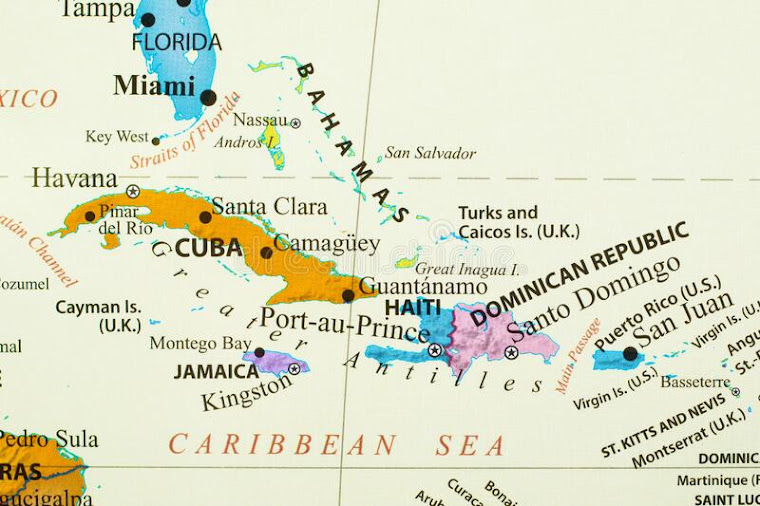
A political blog about Bahamian politics in The Bahamas, Bahamian Politicans - and the entire Bahamas political lot. Bahamian Blogger Dennis Dames keeps you updated on the political news and views throughout the islands of The Bahamas without fear or favor. Bahamian Politicians and the Bahamian Political Arena: Updates one Post at a time on Bahamas Politics and Bahamas Politicans; and their local, regional and international policies and perspectives.
Monday, April 18, 2011
Sunday, April 17, 2011
Who is this man Fred Mitchell?
Would the real Fred Mitchell please stand up?
tribune242 edtorial
 AS SOON as he arrived at the office yesterday morning a Tribune staff member went to this newspaper's "morgue" in search of a certain file. The night before he had heard a comment over channel 14 by Fox Hill MP Fred Mitchell that -- in view of Mr Mitchell's political past-- startled him. He wondered if his memory were playing tricks with him. The files, he was certain, would set him straight.
He said he did not listen to the full show, but just heard a comment by Mr Mitchell on the defection of BDM Cassius Stuart to the FNM.
This week after 13 years of trying to break through on the political scene, the Bahamas Democratic Movement was officially dissolved by its leader Cassius Stuart and merged with the FNM. Under Mr Stuart's leadership, the BDM was a harsh critic of both Prime Minister Ingraham and Opposition Leader Christie.
"It is safe to conclude," Mr Stuart had once said, "that both the PLP and the FNM are major failures." He listed those failures to include education, crime, defence, immigration and the environment. In fact, in his opinion, they had failed at everything.
Over the years Mr Stuart and his party did everything possible to drive a wedge between the two major parties to attract public attention to his third party. Mr Stuart and a colleague went so far as to barge into the House of Assembly while in session and handcuff themselves to the Speaker's mace to protest the "unfair gerrymandering of the constituency boundaries by the FNM administration." The House was suspended. Mr Stuart and his colleague were jailed for two days, then released without being charged.
This week Mr Stuart and six of his members, threw in the towel and joined the FNM, convinced that a third party in the context of Bahamian politics was not viable. He, and his followers, had finally decided to make their public contribution through the ranks of the governing party.
Commenting on their decision, Mr Mitchell had said that as a result of Mr Stuart joining the FNM, he would have a lot of explaining to do with the public, because of his severe criticism over the years of the FNM. All of a sudden, he then ups and joins the FNM. Mr Mitchell wondered why?
In Thursday's edition of The Tribune Mr Mitchell reiterated that Mr Stuart had much explaining to do because only a few weeks ago he was "bashing the government over BIC." The whole affair seemed odd to Mr Mitchell.
We would now like the real Fred Mitchell -- one time PLP member, PDF founder and leader, Senator occupying an FNM seat, PLP Minister, later PLP in opposition -- to please stand up. Are we dealing with the pre-1992 Mitchell, who by then had worn many faces, or the Fred Mitchell, who had rejoined the PLP, became a Minister of that government and is now a PLP in Opposition? Who in fact is Fred Mitchell?
He was called an opportunist as he veered from one party to the next in his search for the right path to become prime minister.
In his previous life he held his traditional ceremony under the fig tree when he burned the Bahamas Constitution and sent its ashes to then Prime Minister Lynden Pindling "as a reminder of how our country is being destroyed." At the time of this act of bravado when he warned that he would "smite every enemy that dares to launch out against" him, he was leader of the People's Democratic Party (PDP). When he launched his "Third Force" in 1989, he wanted then Cooper's Town MP Hubert Ingraham (Independent) -- now Prime Minister -- to become a part of his organisation.
Mr Mitchell's ambition was to inflict a resounding defeat on the PLP. In December, 1990, he declared that Sir Lynden, the so-called "Father of the Nation" was irrelevant to the Bahamas. "It is time," he said, "that the Bahamian people consign him to the scrap heap of history."
Of course, Mr Christie, then the Independent member for Centreville, who was on the verge of rejoining the PLP, did not escape Mr Mitchell's sarcastic tongue. "He ought to be ashamed of himself walking around with his head high, calling himself Mr Centreville," Mr Mitchell commented.
"We find tremendous resentment on the part of young and old because, without so much as by your leave, he ends up back in the PLP," said Mr Mitchell.
The very same place Mr Mitchell himself ended a short time later when the FNM refused to run him as an FNM candidate.
But before they again embraced him into the fold, the PLP had dismissed him as a "political upstart and troublemaker ... a spoilt brat who deserves a serious spanking."
And so, as Mr Mitchell, wonders why Mr Stuart joined the FNM, we would like the real Fred Mitchell to stand up. Who is this man Fred Mitchell?
All we know for certain is that his one burning ambition was to become Prime Minister of the Bahamas. Has that flame gone out, or does that ambition still burn strong? It would be good to have the answers. Maybe Mr Mitchell would now oblige.
April 15, 2011
tribune242 edtorial
tribune242 edtorial

He said he did not listen to the full show, but just heard a comment by Mr Mitchell on the defection of BDM Cassius Stuart to the FNM.
This week after 13 years of trying to break through on the political scene, the Bahamas Democratic Movement was officially dissolved by its leader Cassius Stuart and merged with the FNM. Under Mr Stuart's leadership, the BDM was a harsh critic of both Prime Minister Ingraham and Opposition Leader Christie.
"It is safe to conclude," Mr Stuart had once said, "that both the PLP and the FNM are major failures." He listed those failures to include education, crime, defence, immigration and the environment. In fact, in his opinion, they had failed at everything.
Over the years Mr Stuart and his party did everything possible to drive a wedge between the two major parties to attract public attention to his third party. Mr Stuart and a colleague went so far as to barge into the House of Assembly while in session and handcuff themselves to the Speaker's mace to protest the "unfair gerrymandering of the constituency boundaries by the FNM administration." The House was suspended. Mr Stuart and his colleague were jailed for two days, then released without being charged.
This week Mr Stuart and six of his members, threw in the towel and joined the FNM, convinced that a third party in the context of Bahamian politics was not viable. He, and his followers, had finally decided to make their public contribution through the ranks of the governing party.
Commenting on their decision, Mr Mitchell had said that as a result of Mr Stuart joining the FNM, he would have a lot of explaining to do with the public, because of his severe criticism over the years of the FNM. All of a sudden, he then ups and joins the FNM. Mr Mitchell wondered why?
In Thursday's edition of The Tribune Mr Mitchell reiterated that Mr Stuart had much explaining to do because only a few weeks ago he was "bashing the government over BIC." The whole affair seemed odd to Mr Mitchell.
We would now like the real Fred Mitchell -- one time PLP member, PDF founder and leader, Senator occupying an FNM seat, PLP Minister, later PLP in opposition -- to please stand up. Are we dealing with the pre-1992 Mitchell, who by then had worn many faces, or the Fred Mitchell, who had rejoined the PLP, became a Minister of that government and is now a PLP in Opposition? Who in fact is Fred Mitchell?
He was called an opportunist as he veered from one party to the next in his search for the right path to become prime minister.
In his previous life he held his traditional ceremony under the fig tree when he burned the Bahamas Constitution and sent its ashes to then Prime Minister Lynden Pindling "as a reminder of how our country is being destroyed." At the time of this act of bravado when he warned that he would "smite every enemy that dares to launch out against" him, he was leader of the People's Democratic Party (PDP). When he launched his "Third Force" in 1989, he wanted then Cooper's Town MP Hubert Ingraham (Independent) -- now Prime Minister -- to become a part of his organisation.
Mr Mitchell's ambition was to inflict a resounding defeat on the PLP. In December, 1990, he declared that Sir Lynden, the so-called "Father of the Nation" was irrelevant to the Bahamas. "It is time," he said, "that the Bahamian people consign him to the scrap heap of history."
Of course, Mr Christie, then the Independent member for Centreville, who was on the verge of rejoining the PLP, did not escape Mr Mitchell's sarcastic tongue. "He ought to be ashamed of himself walking around with his head high, calling himself Mr Centreville," Mr Mitchell commented.
"We find tremendous resentment on the part of young and old because, without so much as by your leave, he ends up back in the PLP," said Mr Mitchell.
The very same place Mr Mitchell himself ended a short time later when the FNM refused to run him as an FNM candidate.
But before they again embraced him into the fold, the PLP had dismissed him as a "political upstart and troublemaker ... a spoilt brat who deserves a serious spanking."
And so, as Mr Mitchell, wonders why Mr Stuart joined the FNM, we would like the real Fred Mitchell to stand up. Who is this man Fred Mitchell?
All we know for certain is that his one burning ambition was to become Prime Minister of the Bahamas. Has that flame gone out, or does that ambition still burn strong? It would be good to have the answers. Maybe Mr Mitchell would now oblige.
April 15, 2011
tribune242 edtorial

Saturday, April 16, 2011
Renward Wells - The National Development Party (NDP) leader wants to immediately merge his party with Branville McCartney’s Democratic National Alliance (DNA)

NDP leader wants party to join DNA
By JUAN McCARTNEY
Guardian Senior Reporter
juan@nasguard.com
The National Development Party (NDP) appears to have dissention in the ranks as its leader, Renward Wells, is reportedly trying to have the party immediately merge with Bamboo Town Member of Parliament Branville McCartney’s newly formed Democratic National Alliance (DNA).
In e-mails leaked by at least one NDP member yesterday, Wells urged members of his party, as well as the People’s Deliverance Party, headed by attorney Paul Moss, and Workers Party leader Rodney Moncur, to join the DNA by tomorrow.
NDP members were said to be concerned that McCartney’s leadership would be automatic without members having a say.
Wells claimed that Moss agreed to join the DNA and accept McCartney as leader.
“The solution is for all of us to join the DNA, Bran leads, Paul and I agreed to that already, and the other positions voted on quickly,” said the leaked e-mail. “Obviously the NDP cannot nor do we desire to have our way in everything.”
However, a source close to Moss who did not wish to be identified, said that he never agreed to join the DNA.
NDP member Ethric Bowe discovered Moss’ position and sent a scathing response to Wells yesterday morning.
“Renward, I just spoke with Paul and he again categorically and absolutely denied what you claim in this e-mail,” wrote Bowe.
“…You are creating something far worse than (Prime Minister Hubert) Ingraham could ever create. DNA appears more dangerous than Hubert Ingraham could ever be and based on what you have done to date I would prefer to support Ingraham or (Progressive Liberal Party leader Perry) Christie than DNA.”
Bowe had expressed his desire to join the PLP if the NDP and the DNA could not come to terms.
NDP members were said to be meeting last night. Wells had called for a meeting with the DNA yesterday, but it is unclear if that was the same meeting.
On Tuesday, Wells claimed the NDP was invited to join the Free National Movement. The FNM yesterday denied Wells’ claim and said he initiated the talks.
4/14/2011
thenassauguardian
Friday, April 15, 2011
Cassius Stuart's Bahamas Democratic Movement (BDM) merges with the governing Free National Movement (FNM) Party

BDM dissolves and merges with FNM
By NOELLE NICOLLS
Tribune Staff Reporter
nnicolls@tribunemedia.net
THE Bahamas Democratic Movement has officially been dissolved after a 13-year political run, announced former party president Cassius Stuart. Party representatives joined members of the Free National Movement yesterday to announce the merger of the two organisations.
Prime Minister Hubert Ingraham, FNM leader, presented Mr Stuart with a membership card and welcomed the new members of the party. He said months of deliberation had led to this decision.
Mr Ingraham said he admired how "tenacious and focused" the BDM has been over the years. He said the party had a "consistent message" and was "doggard and determined."
He took delight in the fact that during the Elizabeth by-election, a BDM canvaser approached him in a barber shop on the campaign trail and tried to convince him to support the party.
The BDM was the most prominent third party in recent times. It contested 12 of the 40 parliamentary seats in the 2002 election. Mr Stuart was one of the founders in 1998. He was the BDM's candidate in the Elizabeth by-election last year.
Mr Stuart said the by-election was a "wake up call" that seriously challenged his views on the viability of a third party. He said the party decided it had to be "practical and pragmatic." He said the party has always wanted to make a contribution and decided to stop sitting on the sidelines.
"We have joined the FNM because we believe that this organization is willing to embrace new leadership, new vision and new energy. While we know that this decision may be troubling for some of our supporters, we want to assure you that we believe this decision is in the best interest of our membership and our country," said Mr Stuart.
Mr Stuart said the BDM was no longer interested in "talking about the problems." They wanted to engage in "solving the problems," the members of the party believed the FNM was the best party to accomplish that task.
There were "extensive" discussions with the FNM and PLP, said Mr Stuart; however, he said the FNM were more "timely" and presented "better opportunities" to fulfil the vision of the BDM and to "maximise the potential" of its members.
Some ten executive members of the BDM joined Mr Stuart at the FNM headquarters last night to make the announcement. Mr Stuart said all of the BDM, except one member, supported the party's decision.
"The discussions leading up to this decision have in no way been easy for us. After many months of discussions and deliberations and with much prayer and fasting, we find ourselves here today. We believe that the decision to join the FNM is the right one at the right time," said Mr Stuart.
"My message over the past decade has been adding value to the lives of every Bahamian. Moving forward, the Prime Minister has assured us that the next five years will be just that, building lives. Today as we embark on a new horizon, we are confident that this union will bring brighter days for every Bahamian. As a result, we know that The Bahamas will be a safer, cleaner, and better place to live in," he said.
Mr Stuart said the BDM and the FNM have become one organisation with the same vision, purpose and objective.
Under Mr Stuart's leadership, the BDM was a harsh critic of Prime Minister Ingraham and the FNM and former Prime Minister Perry Christie, leader of the Progressive Liberal Party, during successive terms of government.
The party's position on education states that both the FNM and PLP are "clear failures."
"It is safe to conclude that both the PLP and the FNM are major failures. The same problems that afflicted the FNM in education are the PLP's worst nightmare. The question is when will we get it right? From all indications neither Mr Ingraham nor Mr Christie has the answers. These two men must be judge based on their performance record not their political foolishness and the hand writing is clearly on the wall, they both have failed," states the BDM on the issue of education.
The party has similar critiques of the performance of the FNM and PLP on crime, defence, immigration, and the environment.
In 2001, Stuart and then deputy leader Omar Smith handcuffed themselves to the Mace in the House of Assembly in protest against the "unfair gerrymandering of the constituency boundaries by the FNM administration."
They were jailed for almost two days, although no charges were brought against them, according to the party's historical account of its formation.
Over the past 11 years, Mr Stuart said his efforts were guided by a message that is entrenched in the BDM constitution: "No man, woman or child shall ever be slave or bondsman to anyone or their labour exploited or their lives frustrated by deprivation". He said this message has been "embraced" by the FNM.
In the coming days, Mr Stuart said he would file a formal application to the FNM to be nominated as a candidate in the next general election. He said no promises were made for future candidacy, but assurances were given that the former BDM members would be a part of making sure the Bahamas is a better place.
April 14, 2011
tribune242
Thursday, April 14, 2011
The Public Domain poll reveals that 47 percent of the people contacted were either somewhat dissatisfied of very dissatisfied with the Ingraham adminstration
Poll: Nearly half of electorate uninterested in PLP and FNM

By KRYSTEL ROLLE
Guardian Staff Reporter
krystel@nasguard.com
The latest Public Domain poll has revealed that nearly half of Bahamians surveyed are not satisfied with the current government, nearly half do not want to vote for either of the two main political parties and there is a significant portion of the electorate considering a third party.
According to the poll, 47 percent of the 402 people contacted said they were either somewhat dissatisfied of very dissatisfied with the Ingraham adminstration.
Public Domain, a new Bahamian market research firm, conducted the telephone survey between February 16 and March 11 with Bahamians across the country. Public Domain president M’wale Rahming said yesterday that the sample size has a maximal margin of error of 4.9 percent.
According to the poll, 28 percent of respondents said if an election were called today they would vote for the Progressive Liberal Party (PLP); 25 percent said they would vote for the Free National Movement (FNM); 26 percent were undecided; and 21 percent said they are unhappy with both parties and would consider a third party.
“A winning strategy for the major parties would be to secure a coalition and convince third party-minded and undecided voters to support the party,” Public Domain said in the report released yesterday to the media.
When respondents were asked the likelihood of them voting for a third political party that presented a full slate of candidates, with a mix of veteran and new candidates, 32 percent of those polled said they would very likely vote for such a group. Another 25 percent said they would be somewhat likely; 11 percent said they would be not very likely; 21 percent said not likely at all; and 11 percent of respondents were unsure.
Public Domain, however, said respondents who said they would vote for an unbranded third party should not automatically be considered third party supporters.
“Third party voters should be considered disaffected voters. They are unhappy with both parties. Their identified third party affiliation does not mean they have or will vote for a third party,” said Public Domain.
The polling results were released as at least one third party prepares to roll out its slate of candidates.
Former Free National Movement (FNM) Cabinet minister Branville McCartney has formed the Democratic National Alliance (DNA). The Nassau Guardian understands that the party already has a constitution and it is preparing to register with the Parliamentary Registration Department. A DNA official, who spoke on condition of anonymity, said the party plans to run candidates in all 41 constituencies in the upcoming general election and it is almost done vetting about 20 candidates.
Public opinion on whether a third party would be viable has been split over the past weeks.
Rahming said their sample and data is much more accurate than a street poll, as a wider sample is captured through their automated call center.
According to Public Domain, the data was weighted by region, age and gender in order to represent the Bahamian adult population.
Rahming added that the sample is randomly taken from New Providence, Grand Bahama, Abaco and other islands.
The public opinion poll was conducted from Public Domain’s call center in New Providence, which is equipped with the latest computer assisted telephone interviewing technology, Rahming said.
4/14/2011
thenassauguardian
With the country well on pace to set its fourth homicide record in five years, it would be useful if the political parties would published crime manifestos...
Parties must elevate level of public debate
thenassauguardian editorial
As we make the march towards the next general election the major political parties are engaging in the usual back and forth debates. One side attacks and the other responds with a defense and counterattack.
On Sunday the Free National Movement (FNM) went straight at Progressive Liberal Party (PLP) Leader Perry Christie.
“Mr. Christie is overflowing with theatrical passion, endless talk and promises rarely fulfilled,” said the governing party in its statement.
The FNM went on arguing that Christie is too indecisive to be re-elected prime minister.
The PLP responded and it attacked Prime Minister Hubert Ingraham.
“Mr. Ingraham prefers to employ foreign workers to build roads that Bahamians can build. He employs a foreigner wherever he can. Those are the facts. The private sector has now climbed onboard and Brent Symonette is their ‘boy’. He is not our immigration minister he is the immigration minister of foreign special interests,” said the PLP.
Political banter between the parties can be entertaining at times. When written well, you can get a laugh out of the statements released. But during this election period, with so many serious issues facing the country, the parties should attempt to engage on points of policy rather than mere personal attack.
And the one area they should both focus on is crime.
With the country well on pace to set its fourth homicide record in five years it would be useful if the parties published crime manifestos – separate from the general manifesto to be published – in the run up to the general election.
A solution has to be arrived at regarding the poor state of prosecutions in the country.
Police Sergeant Chaswell Hanna published yet another comprehensive study on the homicide problem in The Bahamas – “Reducing murders in The Bahamas: A strategic plan based on empirical research.” The book is free on the Royal Bahamas Police Force’s website and it should be read by all serious current or future policymakers.
According to data in Hanna’s study, over the five-year period between 2005 and 2009 349 murders were recorded and there were only 10 murder convictions. People are getting away with murder.
The parties need to come up with solutions to this problem. We may need more prosecutors in the Office of the Attorney General (OAG); we may need better prosecutors in the OAG; we may need more investigators at the Central Detective Unit (CDU); we may need to bring back retired distinguished detectives to work as consultants with current detective to help improve the quality of police investigations.
It would help if the parties debated these issues in the public sphere this election season. What is shaping up is the same campaign we saw in 2007. The FNM says Christie is weak and the PLP spends its time responding to FNM attacks.
That campaign was not interesting the last time it happened.
4/13/2011
thenassauguardian editorial
thenassauguardian editorial
As we make the march towards the next general election the major political parties are engaging in the usual back and forth debates. One side attacks and the other responds with a defense and counterattack.
On Sunday the Free National Movement (FNM) went straight at Progressive Liberal Party (PLP) Leader Perry Christie.
“Mr. Christie is overflowing with theatrical passion, endless talk and promises rarely fulfilled,” said the governing party in its statement.
The FNM went on arguing that Christie is too indecisive to be re-elected prime minister.
The PLP responded and it attacked Prime Minister Hubert Ingraham.
“Mr. Ingraham prefers to employ foreign workers to build roads that Bahamians can build. He employs a foreigner wherever he can. Those are the facts. The private sector has now climbed onboard and Brent Symonette is their ‘boy’. He is not our immigration minister he is the immigration minister of foreign special interests,” said the PLP.
Political banter between the parties can be entertaining at times. When written well, you can get a laugh out of the statements released. But during this election period, with so many serious issues facing the country, the parties should attempt to engage on points of policy rather than mere personal attack.
And the one area they should both focus on is crime.
With the country well on pace to set its fourth homicide record in five years it would be useful if the parties published crime manifestos – separate from the general manifesto to be published – in the run up to the general election.
A solution has to be arrived at regarding the poor state of prosecutions in the country.
Police Sergeant Chaswell Hanna published yet another comprehensive study on the homicide problem in The Bahamas – “Reducing murders in The Bahamas: A strategic plan based on empirical research.” The book is free on the Royal Bahamas Police Force’s website and it should be read by all serious current or future policymakers.
According to data in Hanna’s study, over the five-year period between 2005 and 2009 349 murders were recorded and there were only 10 murder convictions. People are getting away with murder.
The parties need to come up with solutions to this problem. We may need more prosecutors in the Office of the Attorney General (OAG); we may need better prosecutors in the OAG; we may need more investigators at the Central Detective Unit (CDU); we may need to bring back retired distinguished detectives to work as consultants with current detective to help improve the quality of police investigations.
It would help if the parties debated these issues in the public sphere this election season. What is shaping up is the same campaign we saw in 2007. The FNM says Christie is weak and the PLP spends its time responding to FNM attacks.
That campaign was not interesting the last time it happened.
4/13/2011
thenassauguardian editorial
Wednesday, April 13, 2011
Bahamians cannot have a crime free society while harbouring the criminal in the bosom of the family
Bahamian society must make a decision on crime
tribune242 editorial
THE hard working police force are today in the unenviable position of being "damned if you do, and damned if you don't."
The public wants the criminal removed from the streets. However, when he is removed, the next word the police have is that he's out on bail, up to more mischief, and the chase starts all over again. The public wants guns removed from society, yet society wants selective justice applied to those who are caught with an unlicensed firearm. On the other hand, the police want tougher sentences. For example, in England possession of an unlicensed firearm could mean five years in prison.
Police know that firearms are brought in on boats, even pleasure craft. "However, when we go to search these boats, we are accused of harassing boaters," said one officer, "so we back off, but we know that there are guns aboard those boats."
In other words society can't have its cake and eat it too. If they want the country cleared of illegal guns, the police will have to be free to search, and the courts should be obliged to prosecute.
For example, the police were criticised for the precautions they took to protect the House, the Prime Minister, MPs and members of the public during the recent Bay Street demonstrations against the sale of BTC to Cable & Wireless. They were condemned for bringing the dogs out "against the people." However, if something had gone wrong they would have been criticised -- and investigated -- for not having taken every possible precaution to anticipate an emergency.
A spokesperson for the various groups said that the objective was to stage a peaceful demonstration, however, some protesters were in a "militant" mood. And it was that mood -- with threats of creating a "small Egypt" -- that made the police prepare for the worst.
Despite the unions' attempts to insist that it was a union demonstration, the unions' presence was obliterated by political activists. However, Fox Hill MP Fred Mitchell made no bones about what the demonstration was all about. The fight to have BTC remain in Bahamian hands is a political one, he said, and all who oppose the sale of the company to Cable and Wireless should band together.
Senator Dion Foulkes, speaking in the Senate, said that several "PLP MPs, ratified candidate and senior party officers were active in that demonstration which became extremely unruly and if it were not for the fine men and women of the Royal Bahamas Police Force, Bahamians could have been hurt, indeed, one person was hurt: Mr Capron, who later publicly thanked the police for coming to his aid."
Mr Foulkes identified "Melanie Griffin, Bernard Nottage, Ryan Pinder, Alfred Gray, Obie Wilchcombe and Barbara Pierre, Secretary General of the PLP and former PLP Chairman Minky Isaacs" as among those at the rally.
"Shane Gibson," he said, "who the night before the demonstration was seen all over the southwest of New Providence on the back of a truck with a blow horn telling people to come to Bay Street.
"I suspect that they have distanced themselves from this demonstration because it was a total and absolute flop," said the senator.
Mr Mitchell also criticised government for "attacking" union leaders at that demonstration, who, he said, are "simply acting in the best interests of their members."
Mr Mitchell conveniently forgets the three-week teachers strike of 1981 -- under the Pindling government -- when teachers were also trying to improve the conditions in the schools and raise the standard of the teaching profession. Not only were the police and the dogs brought out against the teachers, but there were snipers on the various roof tops with a fire engine standing by, possibly to use the water hoses in case of an emergency. Several teachers were arrested. Opposition Leader Norman Solomon told members in the House on January 7, 1981 that the reason they were discussing the teachers' strike in the House that day was because it was facing a "certain amount of insurrection" below in the public square. He blamed it on "14 years of continuous mismanagement of the economy."
"Those were the days," said a teacher who had participated in the strike, "when professionals of similar qualifications in the civil service were making 30 per cent more than their counterparts in the teaching profession."
The former teacher said that when the teachers decided to strike in 1981 they did so for what they believed in, fully realising the consequences of their actions. Their pay was docked for the full three weeks of the strike. They did not complain, because when they decided to strike they knew that it meant loss of pay.
Today the BTC unions withdrew their labour, fully knowing the consequences, but not expecting government to take any action against them. The teacher failed to understand their reasoning or why they should condemn government for enforcing the rules. They withdrew their labour. If they were sincere in their protest, they should have expected not to have been paid.
It is the same with the police. Bahamians want society to be crime free, but they do not want to suffer the consequences of having a family member, who is causing some of the problems, suffer the consequences. It is now up to Bahamians to decide what they really want.
They cannot have a crime free society while harbouring the criminal in the bosom of the family. The Tribune has great respect for those families who take one of their own to the police station to "turn him in." Those are the families who are the Bahamas' solid citizens - it is a pity that there are not more like them. It is only then that the Bahamas will have any hope of reducing its crime rate.
April 12, 2011
tribune242 editorial
tribune242 editorial
THE hard working police force are today in the unenviable position of being "damned if you do, and damned if you don't."
The public wants the criminal removed from the streets. However, when he is removed, the next word the police have is that he's out on bail, up to more mischief, and the chase starts all over again. The public wants guns removed from society, yet society wants selective justice applied to those who are caught with an unlicensed firearm. On the other hand, the police want tougher sentences. For example, in England possession of an unlicensed firearm could mean five years in prison.
Police know that firearms are brought in on boats, even pleasure craft. "However, when we go to search these boats, we are accused of harassing boaters," said one officer, "so we back off, but we know that there are guns aboard those boats."
In other words society can't have its cake and eat it too. If they want the country cleared of illegal guns, the police will have to be free to search, and the courts should be obliged to prosecute.
For example, the police were criticised for the precautions they took to protect the House, the Prime Minister, MPs and members of the public during the recent Bay Street demonstrations against the sale of BTC to Cable & Wireless. They were condemned for bringing the dogs out "against the people." However, if something had gone wrong they would have been criticised -- and investigated -- for not having taken every possible precaution to anticipate an emergency.
A spokesperson for the various groups said that the objective was to stage a peaceful demonstration, however, some protesters were in a "militant" mood. And it was that mood -- with threats of creating a "small Egypt" -- that made the police prepare for the worst.
Despite the unions' attempts to insist that it was a union demonstration, the unions' presence was obliterated by political activists. However, Fox Hill MP Fred Mitchell made no bones about what the demonstration was all about. The fight to have BTC remain in Bahamian hands is a political one, he said, and all who oppose the sale of the company to Cable and Wireless should band together.
Senator Dion Foulkes, speaking in the Senate, said that several "PLP MPs, ratified candidate and senior party officers were active in that demonstration which became extremely unruly and if it were not for the fine men and women of the Royal Bahamas Police Force, Bahamians could have been hurt, indeed, one person was hurt: Mr Capron, who later publicly thanked the police for coming to his aid."
Mr Foulkes identified "Melanie Griffin, Bernard Nottage, Ryan Pinder, Alfred Gray, Obie Wilchcombe and Barbara Pierre, Secretary General of the PLP and former PLP Chairman Minky Isaacs" as among those at the rally.
"Shane Gibson," he said, "who the night before the demonstration was seen all over the southwest of New Providence on the back of a truck with a blow horn telling people to come to Bay Street.
"I suspect that they have distanced themselves from this demonstration because it was a total and absolute flop," said the senator.
Mr Mitchell also criticised government for "attacking" union leaders at that demonstration, who, he said, are "simply acting in the best interests of their members."
Mr Mitchell conveniently forgets the three-week teachers strike of 1981 -- under the Pindling government -- when teachers were also trying to improve the conditions in the schools and raise the standard of the teaching profession. Not only were the police and the dogs brought out against the teachers, but there were snipers on the various roof tops with a fire engine standing by, possibly to use the water hoses in case of an emergency. Several teachers were arrested. Opposition Leader Norman Solomon told members in the House on January 7, 1981 that the reason they were discussing the teachers' strike in the House that day was because it was facing a "certain amount of insurrection" below in the public square. He blamed it on "14 years of continuous mismanagement of the economy."
"Those were the days," said a teacher who had participated in the strike, "when professionals of similar qualifications in the civil service were making 30 per cent more than their counterparts in the teaching profession."
The former teacher said that when the teachers decided to strike in 1981 they did so for what they believed in, fully realising the consequences of their actions. Their pay was docked for the full three weeks of the strike. They did not complain, because when they decided to strike they knew that it meant loss of pay.
Today the BTC unions withdrew their labour, fully knowing the consequences, but not expecting government to take any action against them. The teacher failed to understand their reasoning or why they should condemn government for enforcing the rules. They withdrew their labour. If they were sincere in their protest, they should have expected not to have been paid.
It is the same with the police. Bahamians want society to be crime free, but they do not want to suffer the consequences of having a family member, who is causing some of the problems, suffer the consequences. It is now up to Bahamians to decide what they really want.
They cannot have a crime free society while harbouring the criminal in the bosom of the family. The Tribune has great respect for those families who take one of their own to the police station to "turn him in." Those are the families who are the Bahamas' solid citizens - it is a pity that there are not more like them. It is only then that the Bahamas will have any hope of reducing its crime rate.
April 12, 2011
tribune242 editorial
Subscribe to:
Comments (Atom)