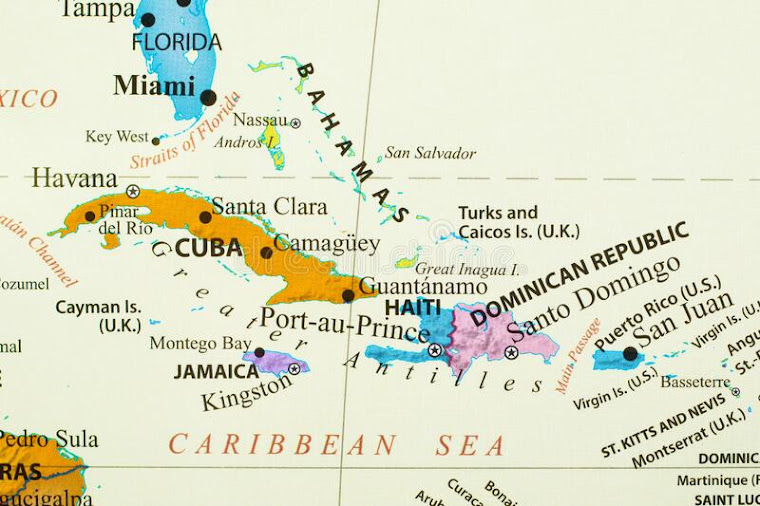
A political blog about Bahamian politics in The Bahamas, Bahamian Politicans - and the entire Bahamas political lot. Bahamian Blogger Dennis Dames keeps you updated on the political news and views throughout the islands of The Bahamas without fear or favor. Bahamian Politicians and the Bahamian Political Arena: Updates one Post at a time on Bahamas Politics and Bahamas Politicans; and their local, regional and international policies and perspectives.
Monday, November 24, 2025
Your voice carries weight, Mr. Rick Fox
Wednesday, July 26, 2023
The Bahamas Lack Political Leadership
Bahamians are losing out in their country, The Bahamas
Former Minister of National Security A. Loftus Roker says that The Bahamas need to get serious about its illegal immigration crisis
‘This country lacks leadership’
Roker worried Bahamians increasingly marginalized
By Candia Dames, Executive Editor of The Nassau Guardian
Former Minister of National Security A. Loftus Roker, who is still widely known for the tough stance he took against illegal immigration when he was minister responsible for immigration, said yesterday he remains concerned that Bahamians are losing out in their country, and lamented what he said is a lack of political leadership.
“When you have no more country, you see where you can go and claim anything,” said Roker, who was asked his views on the controversy surrounding the release of a large group of Chinese nationals found at the British Colonial Hotel without any legal status in The Bahamas earlier this year.
Minister of Immigration Keith Bell has said it was “unnecessary” to transport them to the Carmichael Road Detention Centre, where individuals found to be in The Bahamas illegally are held. According to Bell, the “irregularities” found at the work site “were expeditiously cured by the employer”.
Roker warned, “All I say is one day Bahamians will find we don’t have our own country. That’s what I’m worried about.
“The country lacks leadership. Imagine you had dozens of Chinese without work permits here. How the hell did they get here? … How did we allow them to land? We trying to fool ourselves. We don’t have any leadership. If you had leadership, you’d know what’s going on. But what we are doing is keep postponing our problems. That’s what we’re doing.”
Details surrounding how the Chinese nationals got in The Bahamas and whether they still are currently in country are unknown as Bell nor any other authority has yet to thoroughly explain the matter.
Meanwhile, it is understood that in Progressive Liberal Party circles there is widespread concern over the political impact the controversy ensnaring the immigration minister could have.
Roker wished not to comment directly on a statement made by Director of Immigration Keturah Ferguson in a correspondence to Permanent Secretary in the Ministry of Labour and Immigration Cecilia Strachan that “it also appears that the expatriate has more rights in The Bahamas than Bahamians”, but he said, “One thing for sure, we don’t believe in Bahamians. Anybody else better than us. All I’m saying is we lack leadership.”
Ferguson’s correspondence was sent a day after the Chinese were ordered released not long after the immigration exercise was conducted.
As reported in the media on Monday, Ferguson said in her correspondence that immigration officials received a directive from Bell to have the immigration officers stand down on the operation and that any breach will be remedied the following day.
Even as the firestorm over the immigration matter – including Bell’s swearing in of a family as citizens of The Bahamas during a funeral service last month – builds, Prime Minister Philip Davis has remained silent, with his office saying only that the facts are being gathered in respect of the various immigration issues at hand.
Meanwhile, a purported report to an immigration superior from the immigration officer who oversaw the January 17 exercise at the British Colonial was circulated on social media yesterday.
According to the document, only three of the 65 Chinese nationals found at the hotel were able to produce passports or identification for immigration officials, while all others claimed they had no passports in their possession and were unable to contact the people who may have them.
“On arrival at the hotel, we observed lighting and clothing hung in the windows of some of the rooms. Shortly thereafter, we noticed an Asian male in the window of one of the rooms,” the document states.
“Based on this, we approached the security officer and advised him of our suspicions. The officer attempted to obstruct us from entering the building and checking the status of the individual, therefore, I advised him under extreme caution that I was prepared to arrest him for obstruction and continued the execution of my duties.
“The officer then removed himself from the entrance and I instructed the officers to search the first floor of the building.”
The officer wrote, “In the initial search, the officers reported a total of 10 persons, but, after a more intense search, we were able to gather approximately 65 Chinese nationals.
“All subjects were asked to produce their passports and any other evidence of legal status. Out of the 65 subjects, only three were able to produce passports or identification.
“All of the others claimed they had no passports in their possession and [were] unable to contact the persons who may have them.”
While he did not delve into the details emerging in relation to the various immigration controversies, Roker said yesterday there’s a need for The Bahamas to get serious about its illegal immigration crisis.
Friday, January 27, 2023
Haiti Crisis and Its Impact on The Bahamas
Haiti Crisis and Its Impact on The Bahamas Relationship
Bahamian Diplomats extracted from Haiti
Statement from The Bahamas Ministry of Foreign Affairs
Sunday, November 20, 2022
What about a Domestic Agenda, Mr. Prime Minister?
“Global Warming!"
There needs to be a true plan of action if real change is to take place in our country - The Bahamas. We need new ways of diversifying our economy so the trickledown effect can become a reality. Innovation needs to be the order of the day. A new day must include not just the Bahamian elites, but every Bahamian as a whole
However, Mr. Prime Minister, while a global agenda is great! The burning questions still remain. What about a domestic agenda? What does your manifesto say in regard to the National debt? How does a $4.2 million dollar travelling budget eradicate the mounting debt? Could not this money have been spent on developing a program focused on decreasing unemployment? May I remind you sir that next June over 5,000 students leaving school, with only 20% going to college. What happens to the other 80% that will be looking for work?
“Mother earth is crying. We humans have done enough damage and still can’t open our eyes. We are so arrogant that we convince others that we have to save the earth, but earth’s real cancer is human’s behavior. We have to put our ego and arrogance aside and take some serious and strong steps to protect ourselves and our future, or will have to be ready to die sooner or later.”
Sunday, January 18, 2015
Stem Cell Therapy Industry Launched in The Bahamas
NASSAU, The Bahamas -- Prime Minister, the Right Hon. Perry G. Christie, delivers a speech during a ceremony marking the official launch of the Stem Cell Therapy Industry in The Bahamas. The event was held on Wednesday evening, January 14, at Melia Nassau Beach Resort. In 2013 the government passed the Stem Cell Research and Therapy Act 2013; and in 2014 the Stem Cell Research and Therapy Regulations were officially brought into force.
January 15, 2015
Bahamas.gov.bs
Friday, January 9, 2015
You can now sell Chinese Bonds ("Dim Sum" bonds) from The Bahamas
THE CECIL NEWRY INTERROGATIVE: CHINESE/BAHAMAS CURRECY HUB
By Gilbert Morris
In the last 10 years, I have suggested:
a. That we have no financial centre, we are just a jurisdiction that offers some financial services, which are not coordinated (there is no Bahamas package), nor are they strategic, and we have not developed a legitimate or elegant means of defending even what we have.
b. I have argued for a reform of Bank of The Bahamas with a final phase being the JV with a Chinese Bank, where Bahamian Development Bonds could be offered to the Chinese Market, as a means of developing and extending a commercial paper market in The Bahamas; and so providing Bahamian business people access to credit beyond our plantation banking system. (This was also my advice to BVI and Cayman).
This announcement of The Bahamas being designed as a trading hub for the Chinese Yuan (renminbi) is something which myself and others (notably Mr. Shane Stuart - a Bahamian who has run Hedge Funds in Hong Kong for 20 years), have been suggesting for some time now.
It is NOT true that The Bahamas are amongst a very few nations selected. This is a Chinese
Policy, not a Bahamian one. We did not go to them in 2005, as we should
have (when I spoke with certain persons), to get a jump as the 3rd jurisdiction beyond Hong Kong and Singapore. This policy is part of the Chinese rightful rejection of the Bush administration's attempt to force Chinese currency re-valuation, and now China is embarking on a road to making the Yuan a global reserve currency. This "hub" status has been extended to Qatar; to Sydney, Australia 3 years ago; to Toronto and
Paris, London and Frankfurt are already designated. The Bahamas are the
first in the Caribbean Basin. (But think, given the relationships
between Cuba and China and the coming Cuba demand for manufactured resources, Cuba is likely to be quite competitive in this area).
As such, 'hub' status is not a championship belt for The Bahamas. It puts us in a global race; which when we have had such opportunities we have wilted. You can obtain a hub status with nothing following up it. Now the question is: do we have the mind and the muscle to make something of the opportunity?
This therefore is the very worst time for Bank of The Bahamas to be in such a hellish state; since - depending on how the deal is written - The Bahamas will need a Yuan Clearing House in The Bahamas. Also, now would have been the time for BOB to establish a
presence in China in a JV with a great Chinese Bank, such as China Industrial Bank or Commercial Bank of China or Bank of China. One has to observe the two way benefit independently: China will offer that trade finance can cover trade deals in Yuan deals, end-to-end. All payments and interest can be denominated in Yuan. This can reduce the costs of buy from China by 5-10% (Shane Stuart has a firm that facilities strategic purchases of credible Chinese products; since as a fund manager, he invested in the best Chinese firms).
You can now sell Chinese Bonds ("Dim Sum" bonds) from The Bahamas, and so it can
diversify the financial services offerings (At least until some mediocrity from the CFATF tells us it is criminal and we capitulate before we understand). It means that firms trading in The Bahamas are better
positioned to trade in Yuan with other Yuan hubs. (Honestly, Cayman and
Bermuda, with their national banks are positioned better for this opportunity). So it is clear that China will benefit from this
arrangement. The Bahamas can only benefit IF IT HAS A PLAN, since the
Chinese will offer hub status to any nation in its drive to become a global reserve currency.
Having said all of that: This is the most significant move in 30 years in financial services for The Bahamas...but what is the plan?
Gilbert Morris - Facebook
Thursday, December 18, 2014
CUBA-US RELATIONS: TIME WAITS FOR THE BAHAMAS NO MORE
By Gilbert Morris:
Actually, time never had time for us because we are too wasteful. Now, after all this time, in what state are we to face whatever blows in from this Cuban-American possibility? Whatever comes has already happened. It is the realisation of what it has done and will do to us that will come slowly; because we will be in our habit of denial for decades to come. You should note that the in The Bahamas, there has not been a significant investment from an American investor in 25 years.
The analysis on us is that The Bahamas is where investments go to die. We had our chance 30 years ago. And when our mojo was lost, we responded by saying "Its Better in The Bahamas", even as we erected further impediments to good investment. And as usual, we will not innovate to meet the challenge caused by our venality, self-indulgence and plain stupidity. Instead, our cronyocracy will act to snatch every opportunity to reduce potential broad economic activity to personal 'fee collection'.
They will not respond with strategies to correct decades of slothfulness. Instead they will react to protect their personal hides; sighing that our shrinking economic prospects is from the impacts of "globalisation". They will send itinerant fools to evangelise this nonsense and our people, (swaddled with bad education, holding politicians high with such 'messianic fervour' that a basic job is now a political favour ), will prove unable to be that check in democratic terms, to force their hopes for, or vision of themselves upon those who presume to govern them.
Soon the offices of the state will be used openly to secure personal advantages against any striving Bahamian with ambition. These forebodings are not unique to The Bahamas. This is the road to the death of prosperity and the result of cronyist lackeynomics, poor education and societal malaise that fuels the engine of criminality that ensures the efficient destruction of generations upon generations.
It is the result of decades of bumptious tomfoolery and convoluted excuses masquerading as a concept of life. In one real sense Cuba has already 'eaten our lunch'. A nation under a half century embargo by the largest economic power in human history and yet, they surpassed us in tourism - an industry we pioneered - a decade ago, and, disgracefully - we are sending our students to them for education.
Our country does not appear on a single world leading benchmark. (Oh dear, I made an error. We have amongst the highest homicide rates in the world. I do not wish to diminish our accomplishments). Our Ministers of the cloth cling to every vice as the nation rots; the lights are on in Syria, Iraq and Afghanistan and we cannot keep power in Nassau; a city named after the Prince of the most efficient country in the world; our young people wail concerning the incompetence of their governments, only to find their governments, which do not have time for governing, with all the time in the world to counterattack them for expressing their fears; we have placed our entire birthright in the future value of beachfront property, which is more likely to lose value in the next 20 years; we are capitulating to join a trade organisation - the responsibilities of which will increase red tape and the slow pace of governance processes - when our greatest economic opportunity in 50 years is in services; our government Ministers are trading on their positions in the very face of the public, whilst imposing draconian rules to punish poor Bahamians for failing to meet tax obligations they themselves have not met, despite a stranglehold on the nation's resources through their crony networks. What of vision and the future?
I wrote in 2012 that The Bahamas and Cayman Islands should be to Cuba what Singapore is to China. But of course, we are too busy busting up, shoving down and undermining fellow Bahamians - under two lunacies called PLP and FNM - as we run down our true potential for deals like Baha Mar, or pursing foolishness such as VAT, WTO and rescuing Bank of The Bahamas. As usual, we will have convenient excuses...even where none are possible. And we will twist ourselves as if in the Exuma wild oceans currents, to explain our only resilience: wutlessness as worthfulness.
Gilbert Morris - FaceBook
Thursday, December 11, 2014
The Bahamas supports the movement to end the United States embargo against Cuba
Christie courts Cuba partnership
By K. QUINCY PARKER
Guardian Business Editor
quincy@nasguard.com
The Bahamas affirmed its support for a move to end the United States embargo against Cuba, as the heads of state of the Caribbean Community (CARICOM) and Cuba adopted the Declaration of Havana on Monday at the close of the fifth CARICOM-Cuba Summit.
Prime Minister Perry Christie asserted that CARICOM and Cuba have always been able to overcome challenges and to develop strategies for mutual advantage.
“In fact, our forty-one years of diplomatic relations have been markedly fruitful as a result of functional cooperation in the areas of health, education, sports, culture, agriculture, disaster management, energy and construction,” Christie said, addressing the summit in Havana on Monday.
“We must continue to support each other in international fora, always providing reciprocal support for our initiatives, whether it is in advocacy for the rejection of any blockade against Cuba; support for the reclassification of middle income economies; negotiations for a strong post-2015 agenda that favors small island developing states; support for Cuba’s leading role in the CELAC process; and support for candidacies for election or appointment to multilateral bodies,” he said.
The prime minister said that The Bahamas and Cuba must continue dialogue on facilitating joint ventures in the tourism industry, particularly in concretizing the concept of multi-destination marketing initiatives and packages.
“This would surely make our region more competitive with other regions in the global tourism market,” he said.
Noting that transportation is key to national and economic development and the travel routes of both countries’ national carriers, Christie said Bahamasair and Cubana need to be further expanded to facilitate tourism, travel and international trade.
“The Bahamas, like Cuba, is also interested in seeking out new strategic partnerships for investment in renewable energy; partnerships that will facilitate access to new capital, more efficient technologies and new markets,” he said.
Christie also welcomed ongoing progress towards the finalization of a CARICOM-Cuba trade agreement, and said that at a bilateral level, negotiations for two Bahamas/Cuba Agreements for Cooperation in Animal Health and Plant Health are now well advanced.
Those issues and more were enshrined in the Declaration of Havana adopted on Monday, wherein CARICOM and Cuba committed to strengthen South-South cooperation as an expression of solidarity and the promotion of bilateral and regional programs as well as triangular cooperation for development.
In the declaration, heads of state - citing the cooperation between Cuba and CARICOM in health, the development of human resources, construction and sports - reiterated a commitment to continue promoting social initiatives as well as the implementation of projects to improve air and sea infrastructure and connectivity, and to broaden economic and trade relations through the implementation of the revised trade and economic cooperation agreement between CARICOM and Cuba.
The declaration also hails progress in the negotiations to expand market access and improve economic cooperation under the trade and economic cooperation agreement. Heads of state noted a desire to conclude negotiations by the end of the second quarter of 2015.
December 10, 2014
Wednesday, November 12, 2014
Go to Haiti instead of The Bahamas Ms. Daphne Campbell
Saturday, October 11, 2014
The National Insurance Board (NIB) and the growth and development of the modern Bahamas
In its 40 Years, NIB has Fueled National Growth
By Gena Gibbs:
NASSAU, The Bahamas – In his address of the National Insurance Board’s 40th Anniversary Church Service at Evangelistic Temple on Sunday, Minister of Labour, National Insurance and the Public Service, the Hon. Shane Gibson illustrated the significant role NIB has played in the overall growth and development of The Bahamas.
Acknowledging the significant milestone of 40 years, Minister Gibson said: “We pause to reflect on and access the National Insurance Board as an Institution, as a movement, and as a foundation pillar of our modern Bahamas.”
NIB was created to administer the country’s social security programe, and first opened its doors on October 7, 1974. Minister Gibson outlined its history and development since then, noting that Prime Minister the Rt. Hon. Perry Christie, also present at the service, was the third Minister of National Insurance, and among the first Ministers appointed to National Insurance during the period of 1977 to 1982, just three years after the program was introduced.
Mr. Gibson stated: “In the historical context of The Bahamas, this was the immediate post Independence period when expectations in the social, economic and political context were very high. It was a time when the Government of the Bahamas had to be seen to be delivering on the promises and aspirations that drove the movement to Independence.
“But as history has proven, time and again, political freedom gained from a struggle is not an end in itself, but rather a means to an end. In The Bahamas, we dreamt of and aspired to education for all of our people, access to basic healthcare, non-discrimination in employment opportunities, and social mechanisms that would allow and give us some measure of dignity when things become rough, and a normal means to earn an income uninterrupted.”
Minister Gibson said that to its credit, the Bahamas Government had seen the need for a comprehensive system of social security, and a small group of persons in The Bahamas was charged with developing a social security scheme that would provide some acceptable form of income replacement for workers of the country, and their dependents, from the cradle to the grave.
“And this work was completed with the passage of the National Insurance legislation in 1972. I think the point of then and now would best illustrate the phenomenal growth of the scheme. At the start of the various programs under the National Insurance, short-term benefits were paid at a maximum rate of $54 per week, long-term benefits were paid at a rate of $26 per month, and funeral benefits, one-time payment, was $200,” said Minister Gibson.
“Old age, non-contributory pension, which was paid when insufficient or no contributions had been made, was $26 per month. At the end of its first three years, National Insurance had collected some $58 Million in contributions; had paid out over $6 Million, as Benefits assistance; and had a reserve fund of some $52 Million.
Minister Gibson said that no one at the time could imagine how significant NIB would grow to become over the years.
“Today, in contrast to its humble, but ambitious beginnings, NIB at the end of its last financial year 2013 had accumulated reserves of some $1.6 billion. Its contribution income for the same year was reported at $229 million. While its benefits expenditure for 2013 was some $222 million,” said Minister Gibson.
“It also realized an investment of some $86.3 million during the period. Additionally, maximum monthly long-term benefits and weekly short-term benefits payments have increased on average of 63-fold and seven-fold respectively, since 1972.”
For its achievements, Minister Gibson congratulated the employees of NIB, “in particular those long serving employees who would have made a significant contribution over the years. And even though persons may say they were well rewarded, I can tell you they have made many sacrifices in making sure that you get the quality service that you do get from NIB. And so we thank them and we congratulate them.”
Minister Gibson then introduced Prime Minister Christie as one of the most socially conscious Prime Ministers in the Commonwealth of The Bahamas over the last 40 years, who has been there from the beginning and like NIB, is also celebrating 40 years serving the Bahamian people.
Senior Pastor, Rev. Dr. Vaughan Cash welcomed NIB Board members, executive management, honourees, and staff attending the service to launch National Insurance Week.
October 07, 2014
Bahamas.gov.bs
Tuesday, September 9, 2014
NO to same-sex marriage in The Bahamas!
Poll: 90% opposed to gay marriage
By TRAVIS CARTWRIGHT-CARROLL
Guardian Staff Reporter
travis@nasguard.com
There is no public support for same-sex marriage in The Bahamas, according to the data from a scientific opinion poll conducted earlier this year.
The results, compiled long before debate began over whether one of the four proposed constitutional amendments will open the door for same-sex marriage, show that only a small percentage of people support gay marriage in The Bahamas.
The controversial bill would make it unconstitutional to discriminate against someone based on sex.
The poll was conducted in January by Public Domain, a local market research and opinion polling company.
The results show that 86.5 percent of respondents strongly oppose same-sex marriage; four percent somewhat oppose it; 3.7 percent somewhat support it; 3.1 percent strongly support it and 2.8 percent did not answer.
Researchers polled 575 people, a respectable sample size for the country’s population, according to Public Domain President M’wale Rahming.
“Normally, what we do when we poll is we poll conversations that are being had in barber shops and beauty salons and in restaurants on Saturday mornings, in an effort to figure out where people are on this,” Rahming said yesterday.
“Nobody is interested in this. This is not a conversation that is being had. It is not a national conversation and nothing is being discussed about this.
“This is not an issue in The Bahamas.
“It is a non-starter. There is no movement for this. There is no significant group that is pulling for this. There is no substance behind it, meaning they haven’t captured a segment of the market.”
He added that “no segment of our society is asking for this”.
“Not even gay people in The Bahamas are clamoring for this,” Rahming said.
“So this is not something that we are talking about as a nation, other than on the talk shows and in politics and on the news.”
Victor Rollins, of Vic’s Communications, who recently organized a gay pride event in Freeport, Grand Bahama, recently said that members of the lesbian, gay, bisexual and transgender (LGBT) community are not pushing a gay marriage agenda.
“Frankly, for all the married gay persons who are married and living here, they went and got married and came back and are enjoying their life,” he said.
“Those who want to get married will get married and live happily ever after. It’s no real issue.”
Rahming said he was surprised that people were equating the issue of gender equality to same-sex marriage, stating “there is no link there”.
Although the poll is from January, Rahming said it represents a non-reactionary position.
“I would venture to say, if we were to poll today, the number would be higher simply because we have all this media talk about it,” he said.
September 09, 2014
Wednesday, August 20, 2014
The issue of Marriages of convenience in The Bahamas
The Bahamas - Immigration director: Marriages of convenience serious concern
By ROYSTON JONES JR.
Guardian Staff Reporter
royston@nasguard.com
Director of Immigration William Pratt yesterday raised a red flag over marriages of convenience in The Bahamas.
While Pratt could not provide statistics, he said the department constantly receives letters from Bahamians who report that they feel they have been taken advantage of by their foreign spouses, who only married them for status.
He said, in some cases, people are paid up to $5,000 to marry a foreigner in order for them to obtain a spousal permit.
He noted that the motivation behind the move is that a spousal permit costs $250 for five years whereas a work permit can range from $1,000 to $12,500 per year.
“We heard through the grapevine that there are a lot of marriages where Bahamians are being paid up to $5,000 to marry certain nationalities,” Pratt said.
“Bahamian citizens, who are concerned about their country, they call and give this information to us.
“And when we become aware of it, we continue our investigation.
“If we have good evidence that this is so, they will not be recommended for any status.
“This has always been a concern.
“The problem is we know The Bahamas is close in proximity to the United States.
“Most of these people coming from down south, their final destination really is the U.S.
“They would do anything in order to be able to get visas and get to the U.S.
“But we are not going to allow our department to be used in this fashion.”
Marriages of convenience have been a source of concern for several members of Parliament and Bahamians in general as the government seeks to amend the constitution to enable a Bahamian woman who marries a foreign man to secure the same access to Bahamian citizenship that a Bahamian man is able to pass on to his foreign wife.
The concerns stemmed from the belief that there would be an automatic right to citizenship after marriage.
However, The Nassau Guardian understands that the government intends to change constitutional amendment bill number two to indicate that the foreign spouse upon marrying a Bahamian citizen would have to apply for citizenship in addition to meeting certain criteria.
Pratt said the Office of the Attorney General is reviewing legislation to amend the Immigration Act to stipulate a $5,000 fine and/or up to one year imprisonment for a marriage of convenience.
“With this teeth in the amendment, at least we are hoping that Bahamians and whomever is involved in it would get the message that they will be prosecuted to the fullest extent of the law,” he said.
“...Once we find out, we do not give those people any status. They would be dealt with as an illegal immigrant.”
Asked what nationalities are often found to be in marriages of convenience, Pratt said, “You would be surprised that it happens among some nationalities that you would never expect.”
However, he did not provide specifics.
During her contribution to debate on the constitutional amendment bills last week, Parliamentary Secretary in the Ministry of Foreign Affairs Cleola Hamilton said the government does not have the proper mechanisms in place to detect marriages of convenience.
The South Beach MP expressed concern that the amendment to the constitution could be open for abuse.
Yesterday, Pratt warned Bahamians against selling their country short.
“Your country is more precious than that,” he said.
“When this act is amended we will prosecute foreigners and Bahamians once we have evidence that they have entered in a bogus marriage to the fullest extent of the law.”
August 20, 2014
Wednesday, July 9, 2014
The first confirmed case of Chikungunya virus in The Bahamas
MOH Officials Move To Fight Chikungunya Virus
By Jones Bahamas:
In light of the country’s first reported case of the Chikungunya virus, the Ministry of Health (MOH) has teamed up with the Department of Environmental Health in an attempt to combat the further spread of the disease.
Director at the Department of Public Health Dr. Pearl McMillan told the Bahama Journal Monday that both the MOH and Environmental Health officials have been taking initiatives to stop the virus from progressing throughout the country.
“We are working with our partners in Environmental Health, and they are also promoting that individuals in communities do the necessary vigilance as it relates to preventing the proliferation of the mosquito,” she said. “We do not want to have a situation where we have more cases. Environmental Health has already started doing the spraying and they also do the water treatments. That has been ongoing.
“We work with them regularly; we do not wait until we have a case. Once we have a suspect then we inform them and then they go out and do the necessary activities that will assist in preventing the breeding of mosquitoes.”
The MOH, in a press release issued over the weekend, documented the first confirmed case of Chikungunya in The Bahamas.
“The case occurred in an adult visitor who travelled to The Bahamas from the Dominican Republic on June 29, 2014,” the report read. “His symptoms reportedly began the day before travel to The Bahamas.
“He was seen at the Princess Margaret Hospital on June 30, 2014 and was subsequently tested. A confirmed positive test was received on July 4, 2014.”
The report went on to say that the patient had been treated and was recovering well.
Dr. McMillan confirmed that there has only been one confirmed case to date, meaning that the presence of the disease does not mean that there is an outbreak. She did say that in light of a startling new revelation regarding the disease’s carrier, the Aedes Aegypti mosquito, persons definitely need to take preventative measures.
“This mosquito lives around the house,” she said. “It’s not like other types of mosquitoes that you have to go out into the bushes and into the wild. This mosquito is a house bound mosquito. So we urge individuals and communities to work with us as we seek to prevent having any additional cases. This one case was imported, and we are hoping that we have zero additional cases.
Chikungunya was first reported in the Caribbean on December 6, 2013. To date, 22 countries in the Caribbean have reported confirmed cases.
July 08, 2014
Jones Bahamas
Tuesday, January 21, 2014
What were some of the major milestones that contributed to the centuries-long march to Majority Rule in The Bahamas?
The march to Majority Rule, Part III
Consider This...
By PHILIP C. GALANIS
History cannot give us a program for the future, but it can give us a fuller understanding of ourselves, and of our common humanity, so that we can better face the future. - Robert Penn Warren
As we noted in parts I and II of this series, the march to Majority Rule in The Bahamas can be characterized by two words: sustained struggle.
On January 10, we quietly celebrated the first public holiday to commemorate the day that Majority Rule came to The Bahamas in 1967. It was a life-changing event that catapulted the lives of many thousands to unimaginable heights. Last week we reviewed three important milestones in the march to Majority Rule that helped to create the framework for the attainment of that achievement: the by-election of 1938, the Burma Road Riot of 1942, and the Contract beginning in 1943. This week and in the final week in January, we will continue to Consider This…what were some of the major milestones that contributed to the centuries-long march to Majority Rule?
The 1950s were decisively transformative on the march to Majority Rule. It was a decade that witnessed the formation of the PLP in 1953, the 1956 Resolution on Racial Discrimination in the House of Assembly and the 1958 General Strike.
The formation of the PLP
The Progressive Liberal Party (PLP) was established in 1953, following an attempt by the Citizens’ Committee to actively address some of the rampant discriminatory practices by the white Nassau elite. The Citizens’ Committee, formed in December 1950 initially protested the government’s refusal to let Bahamians view three films: “No Way Out” (starring Bahamian actor Sidney Poitier), “Lost Boundaries” and “Pinky” all of which addressed societal injustices. Many of the members of the Citizens’ Committee, which was led by Maxwell Thompson, Cleveland Eneas, and A. E. Hutchinson and whose members included Jackson Burnside, Randol Fawkes, Gerald Cash, Kendal Isaacs, Marcus Bethel and other prominent personalities, suffered brutal discrimination and many of its members were deprived of the ability to earn a living by the Bay Street oligarchy as a result of their social activism.
In October, 1953 the PLP was formed by Henry Taylor (who would become the third Bahamian governor general in an Independent Bahamas from June 26, 1988 to January 1, 1992), William Cartwright and Cyril Stevenson with a platform that responded to the challenge by Rev. H. H. Brown that: “The Progressive Liberal Party hopes to show that your big man and your little man, your black, brown and white man of all classes, creed and religions in this country can combine and work together in supplying sound and successful political leadership which has been lacking in The Bahamas.”
The PLP made bold progressive promises for a more equitable social structure including equal opportunities for all Bahamians, better education, universal suffrage, stronger immigration policies, lower-cost housing and the development of agriculture and the Out Islands.
In the early days of the PLP, its members were subjected to abject ostracism and victimization by the white elite, including the loss of jobs and bank credit, as well as canceled contracts. In 1955, Lynden Pindling and Milo Butler emerged as the leaders of the party, appealing to the black masses to mobilize in advance of the general elections of 1956. The party also attracted Randol Fawkes, the founder of The Bahamas Federation of Labour in May 1955.
The general election of May 1956 was the first to be fought by an organized political party. The PLP won six seats in the House of Assembly, four in Nassau and two in Andros. That election significantly accelerated the march to Majority Rule. In March 1958 the white oligarchy formed themselves into the second organized political unit, the United Bahamian Party (UBP). The UBP would later disband and its members would join forces with the Free National Movement (FNM) in 1972.
The 1956 Resolution on Racial Discrimination in the House of Assembly
In the wake of rampant racial discrimination that prevented access for black people to hotels, movie theatres, restaurants, and other public places, H. M. Taylor, the chairman of the PLP, whose platform vowed to eliminate racial discrimination in the colony, tabled a number of questions to the leader of the government.
Moved by this and in light of his own disgust with racially motivated practices, in January 1956, Etienne Dupuch, the editor of the Nassau Tribune and a member of the House of Assembly for the eastern district, tabled an Anti-Discrimination Resolution in the House of Assembly. During his passionately eloquent speech on the resolution, the speaker of the House of Assembly ordered Dupuch to take his seat, threatening, if he refused to do so, that he would be removed from the chamber by the police. Dupuch responded: “You may call the whole Police Force, you may call the whole British Army…I will go to [jail] tonight, but I refuse to sit down, and I am ready to resign and go back to the people.” The speaker abruptly suspended the House proceedings.
Although the resolution was supported by H. M. Taylor, Bert Cambridge, Eugene Dupuch, C.R. Walker, Marcus Bethel, and Gerald Cash, it was referred to a select committee, effectively killing it. However, the following day, most of the Nassau hotels informed the public that they would open their doors to all, regardless of their race
The 1958 General Strike
The General Strike began in January 1958 after several months of tension that arose because of the government’s plans to allow hotels and tour buses that were owned by the established white tour operators to provide transport for visitors to and from the airport, at the expense of predominantly black taxi drivers who made a large portion of their living transporting tourists between the new Windsor Field (Nassau International) Airport and downtown hotels. To allow the hotels and tour companies to supplant the taxi drivers would severely curtail the ability of black taxi drivers to earn a decent living.
The government learned that the taxi drivers would vehemently protest this arrangement when they blockaded the new airport on the day it opened. On that day, nearly 200 union taxi drivers stopped all business at the airport for 36 hours, showing their determination to protest the government’s plans. Negotiations on 20 points ensued between the union, represented by Lynden Pindling and Clifford Darling, the union’s president, and the government for the following eight weeks, but broke off after they could not agree on one final point.
On January 11, 1958 the taxi union voted for a general strike and the next day the General Strike commenced with the cessation of work at hotels, which was supported by hotel and construction workers, garbage collectors, bakers, airport porters and employees of the electricity corporation. The strike lasted until January 31 and prompted a visit to the colony by the secretary of state for the colonies who recommended constitutional and political and electoral reforms which were incorporated into the General Election Act of 1959. Following the General Strike, male suffrage was introduced for all males over 21 years of age and the company vote was abolished.
Undoubtedly, the General Strike accentuated the ability of effective reform that could be achieved by the peaceful mobilization of the black majority.
Conclusion
Next week, we will review the decade of the 1960s and discuss how the Women’s Suffrage Movement, the 1962 general elections and Black Tuesday culminated in the eventual attainment of Majority Rule with the general elections of 1967.
• Philip C. Galanis is the managing partner of HLB Galanis & Co., Chartered Accountants, Forensic & Litigation Support Services. He served 15 years in Parliament. Please send your comments to pgalanis@gmail.com.
January 20, 2014
- The march to majority rule, pt. 1
Saturday, November 23, 2013
Tamara Van Breugel on Value Added Tax (VAT) in The Bahamas
Citizens Must Unite To Be Heard In The Vat Debate
MY NAME is Tamara van Breugel and I am a citizen of the Commonwealth of the Bahamas. I am a young working mother, my family owns a small business in the city, and I strongly believe there are responsible alternatives to VAT.
First of all let me say that I am by no means an expert on economic theory or taxation, I am not a representative of any political persuasion, and I have no special interest ties other than a special interest in the growth and prosperity of The Bahamas and of every Bahamian man, woman and child.
The Nassau Institute has kindly granted me a few moments in tonight’s programme to share with you my personal thoughts on VAT, and I am extremely grateful for their kindness.
Over the months since the announcement of the imposition of VAT I like many of you here tonight have been following the news media, scouring the internet and attending various speaking forums to better understand this new tax proposal.
In my research I have learned a few important things:
Our nation, has over many decades and successive administrations become excessively burdened by debt. Our national debt is projected to exceed the $5 billion mark by the end of this fiscal year. This is the equivalent of 61.5 per cent of our gross domestic product and nearing a danger zone of 70 per cent debt to GDP ratio.
Governments have not been effective in collecting existing taxes or in safeguarding public funds from waste and mismanagement.
The 2010 / 2011 auditor general report illustrates some of these collection gaps, identifying:
• 5,980 cargo manifests that had not been presented to Bahamas Customs for clearance
• $95 million in real property taxes went uncollected taking the total sum outstanding to $541.886 million
• $302,866 of unpaid fuel from the Ministry of Works
In the 2014 /2015 fiscal budget subsidies have been allocated as follows:
• $20 million to subsidise Bahamasair
• $20 million in subsidise to Water and Sewerage
• $7 million to the Bahamas Broadcasting Corporation
... Ok, you get the point.
The Bahamas is preparing for ascension to the Wold Trade Organisation by the end of 2014. As a part of this process The Bahamas must commit to dramatically reducing import tariffs. The expectation could be for an average peak tariff of approximately 15 per cent. Down from the current average of 55 per cent.
To avoid the potential ill effects of a credit risk rating downgrade the government has determined that a Value Added Tax mechanism would be the best option to help our nation combat the double-edged sword of a swelling deficit and the need to reduce the revenue from tariffs.
And on top of that the government believes a swift implementation is required to steer us off the path of economic failure. The increased revenue goal with the implementation of Value Added Tax is $200 million.
And so this in a nutshell defines the events that lead to us all being in this room tonight.
Early on when the idea of VAT was being mentioned I did not know much about it but I did recognise that for better or worse, this tax was destined to be the most significant adaptation our modern economy has ever seen. I also started asking myself some basic questions like, what is this tax? How does it work? How will it work for us?
Like most, I waited and waited for the government to provide full details and education on how this tax plan would work. But as the information was slow to come I started to reach out on my own to learn more.
Here is what I have found.
Firstly, VAT is a regressive form of taxation.
Burden
This means that the economic burden will be greater on households with lower incomes. And while our customs duty system was also regressive, the VAT system does not seem to rectify this imbalance. As an offset to the regressive nature of this tax our government has provided for some VAT exemptions including breadbasket items, medical services and educational services. Offering comfort to the most needy in our society through this bare-bones survival kit of exemptions implies to me that VAT planners do anticipate a raising tide of prices that would overwhelm our poorest citizens.
And then from there I start to wonder... when these struggling lower income households become burdened with higher prices on their non-exempt consumption what will they do to get by? Take a second or third job? Forego access to modern amenities like electricity, running water and telecommunications? Lean more heavily on the social services network? Or perhaps fall prey to the lure of white collar and blue collar crime?
Next, VAT will increase our cost of living.
Though the exact amount of this increase seems to become more and more difficult to define as we get closer to implementation, the estimates I have heard range from 3 per cent – 30 per cent and according to a Ministry of Finance official: “On the cost of living there will be some initial impact from the VAT but that initial impact will disappear in a very short time-frame, over six, eight years. That is not long,”
Can we as citizens really afford a cost of living increase now? And could we endure it for six to eight years?
According to statistics released by the Central Bank of The Bahamas, 95 per cent of Bahamian dollar personal savings accounts have a balance of less than $10,000 and the average balance is $704. Additionally a Ministry of Finance official recently disclosed that around 70 per cent of government payroll is dedicated to salary deductions which service consumer loans.
By the looks of it the People of the Bahamas may be just as cash strapped as the government of The Bahamas.
On a personal level, as I sift through my household bills I am always left to wonder will there be enough money to get through the month? And the thought of any increase makes me scratch my head and wonder … where do they think this money is going to come from? Will it come from a decision to cut back on my child’s education? Will it come from a decision to shop only in the breadbasket aisles at the supermarket? Or will I have to start making some even tougher decisions?
Additionally, VAT will increase the cost of doing business.
If you own a business that is just getting by today how will you handle it when your prices increase and your customer volume goes down? Will you make the shift to lower quality products and services? Will you make some tough decisions about which staff to let go? Or will you start preparing your business exit strategy?
The other thing about doing business is that VAT will require businesses to divert a portion of their time and resources from usual business activities to take on the new and uncompensated role of tax collector.
Most VAT registrants will be required to install new systems and acquire the services of a professional accountant to implement and administer the tax. Additionally the filings will be required on a monthly basis and amounts will be payable at the time the invoice is issued and not when payment is received. How will businesses manage this new expense? Do you think they will absorb it into their profits? Or will they build it into the price? And beyond that, might some businesses even try to evade paying these taxes altogether?
These are just some of my findings from my research on VAT. It seems however, that the only sure thing that comes out of each new discovery is even more questions. Regardless of where you live, how much you earn or who you voted for don’t you also have some questions?
I will admit I did learn one other thing through this process. And that is that the people of Turks and Caicos were able to successfully convince their government to stall their VAT plans and implement alternative measures to get a handle on their economy.
Success
From what I can tell a few factors combined to make their effort a success. Firstly they are a UK overseas territory, which obviously does not apply to us. But what I also found out was that when ALL the people came together and spoke in a unified voice they were able to demand that their decision makers move toward alternative revenue generating and debt reducing strategies.
Based on this insight I believe that the VAT debate in The Bahamas has the potential to engage and unite our country like no other issue of our time.
In the Bahamian context, I believe that the road-map towards alternative economic strategies could include:
• Enactment of the Freedom of Information Act so that we can understand how our tax dollars are being managed.
• Full enforcement and collection of outstanding taxes
• Implementation of further reductions in government expenditure
• Develop near-term plans to relinquish under-utilised or unprofitable government assets and corporations
• Legislate strict conditions and limits under which future government debt could be approved
And if following these initiatives, additional tax revenue is still deemed necessary, I believe that a comprehensive economic impact assessment should be conducted to determine the appropriate economic and tax reform strategies our nation should implement.
Fellow citizens, in a time when we are being asked to forego some aspect of our quality of life to sustain our government through this fiscal crisis I believe that it is every citizen’s obligation to ask serious questions about how the financial affairs of their country are being managed and I also believe it is a citizen’s right to receive full and serious answers from its government.
Additionally, I believe it is only through the unity of people power that we can move this conversation with our government forward.
I know that there are many concerned groups forming and strategising on this issue as we speak. These groups will vary in their objectives, their access to professional advice, and financial resources.
However, what if we consider for a moment that the most powerful and important participant in this discourse could be THE PEOPLE?
At the moment, the people are in general disconnected, distracted by the daily grind and without adequate information on legislation that will impact their lives.
Right now the people need several things to be effective – they need to be focused, they need to be educated about VAT in plain language and they need to be given a forum to express their opinions to their decision makers.
To assist in this process of engaging the people on this issue, a group of young Bahamians called Citizens for a Better Bahamas aims to launch a broad based educational campaign on VAT throughout our community streets, through social media and on our webpage: www.citizensforabetterbahamas.org.
Our core campaign objective is to launch a petition both on-line and on the street specific to each constituency and addressed directly to each member of parliament. The petition will request each representative to vote NO to a VAT implementation of July 1 and to consider responsible alternatives.
We understand that this is a tall order on a tight time-line but we believe it is through activities like these that we will be able to help our decision makers know that we are all here, we are all aware and we wish to be heard.
You are here tonight because you are aware and you want to know more. But is your neighbour aware? Or your co-workers? Or your extended family? It will only be through a re-connection of our entire community that we will have our voices heard.
Citizens for a Better Bahamas is poised to become that re-connection point for our nation. But we recognise that on this issue there is a need to move quickly and we recognise that we cannot do it alone. We need YOU, EACH AND EVERY ONE OF YOU, we need your time, we need your talent, and yes we need your financial support.
We each have a vested interest in the outcome of the VAT debate. If we put aside our differences of background and social status and denomination and political affiliation and bind together as Citizens of the Commonwealth of the Bahamas I believe our voice will be heard and acknowledged by our decision makers.
It was Margaret Meade who once told us “Never believe that a few caring people can’t change the world. For, indeed, that’s all who ever have.”
Fellow citizens, if you believe in this simple idea I ask that you join us. Together we are better and together we can build a Better Bahamas.
November 17, 2013
What do you think? Send your comments to pnunez@tribunemedia.net or join the conversation on tribune242