Showing posts with label aviation safety Bahamas. Show all posts

Wednesday, July 15, 2026

Aviation Safety in The Bahamas


Why I continue to speak about aviation safety in The Bahamas


Captain Randy L. Butler Bahamas


WHY I CANNOT “MOVE ON”


Over the past few days, several pilots have called or messaged me asking why I continue to speak about aviation safety.  Some have even suggested that I should simply move on with my life.


I respectfully cannot.


This is my life’s work.


For more than 40 years I have served as a pilot, Civil Aviation Safety Inspector, aircraft accident investigator, airline executive, and aviation safety consultant.  I have stood at accident sites, participated in investigations, and witnessed the devastating impact these tragedies have on families and communities.


As someone born and raised in North Andros, this is deeply personal.  Some of those lost over the years were relatives, lifelong friends, neighbours, or people I had known for decades.


The first Piper Aztec accident claimed six lives.


The second Piper Aztec accident claimed two lives.


The recent Cessna 402 accident has now claimed ten lives, according to the AAIA.


That is 18 lives lost in three major accidents connected with North Andros.  Behind every number is a family whose life has been changed forever.


One of the most heartbreaking experiences is watching families gather at an airport or accident site, desperately trying to determine whether their loved one was on board because there was no confirmed passenger manifest.  No family should ever have to endure that uncertainty.


The official AAIA investigations into the two Aztec accidents identified significant safety issues and made recommendations intended to reduce the likelihood of future tragedies.


That is why I continue to ask:


* What changed?

* How did it change?

* Were the safety recommendations implemented?

* Have those changes measurably strengthened aviation safety and State safety oversight?


These are not questions about the cause of the current accident.  Those answers must come from the independent AAIA investigation.


They are questions about whether we have learned from previous tragedies.


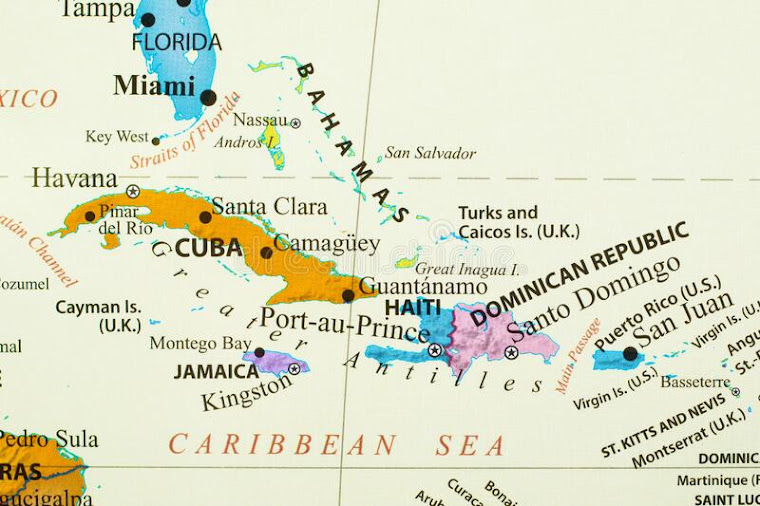
The Bahamas is an archipelago where air transportation is essential.  Every day, Bahamians depend on aircraft to reach medical care, employment, education, government services, banking, and family.  Every passenger has the right to expect that the aircraft they board is operated safely, legally, and under effective regulatory oversight.


If asking these questions contributes to preventing even one future accident, then I believe they are questions worth asking.


We owe that to the 18 lives already lost, to their families, and to every passenger who will board an aircraft tomorrow.


— Capt. Randy L. Butler

Former Civil Aviation Safety Inspector

Former Aircraft Accident Investigator

Former CEO, SkyBahamas Airlines

Principal Consultant, Aviation Safety & Security Consultants Ltd.


Source / Comment

Monday, July 13, 2026

About Flamingo Air in The Bahamas


About Flamingo Air and Aircraft Safety in The Bahamas


Flamingo Air Crash Bahamas


Dr. Andre Rollins - Member of Parliament (MP) for Long Island on the Question of Aviation Safety in The Bahamas

 
Andre Rollins, MP


"We must operate our industry on one fundamental premise: that a Bahamian licensed aircraft is a safe aircraft."

"We join all Bahamians in awaiting what we expect to be an impartial and thorough report by the Air Accident Investigation Authority regarding the fatal plane crash that occurred on Friday, July, 10.

Without engaging in any speculation, what we do know is that in the wake of the crash, the Government suspended Flamingo Air's Air Operator’s Certificat (AOC).   Therefore, concerns about aircraft safety are already presumed to be a part of the question surrounding what led to this aviation accident.  The public has a right to know whether the Government will fully and transparently provide the answer.

We have been asked to grieve, and our country is grieving.  However, a nation honours its dead by protecting its living, and that duty begins today, not whenever an air accident report is published.

That duty also includes standing beside the victims’ families in the days and months ahead.  They should not be left to navigate grief, insurance claims, compensation, funeral expenses, legal requirements and government agencies on their own.

The Government should immediately appoint a single, independent family-assistance team to help each affected family understand what support is available, what documents are required, who is responsible for payment and how claims will be processed.  It should also confirm whether emergency financial assistance, counseling, and legal or administrative support are being provided.  Compassion cannot consist solely of condolences.  It must also mean practical help, clear answers, and a process that does not force grieving families to fight through bureaucracy alone.

Some questions need no investigation, because the answers already sit in files at the Civil Aviation Authority (the “Authority”) and can be answered this week:

1) Who was operating the doomed C6–FLX aircraft?  Was it Flamingo Air or someone to whom the aircraft was leased?

2) If it was leased, was the lease filed with the Authority and whose AOC was Friday's flight flying under?

3) Was the aircraft still on Flamingo Air's approved operations specifications?

4) Was the insurance valid that day, and did it cover paying passengers?

5) Is there a manifest of all the people that were onboard the aircraft for that flight?

6) When did the Authority last inspect this aircraft and operator, and after eight accidents and incidents involving this operator since 2012, what exactly was the Authority watching before Friday?

These are matters of paperwork that do not rely on an investigation of the wreckage.  We must be honest with ourselves.  Because our weather is calm and our flights are short, we have come to believe that flying is without risk.  It is not.  The most dangerous minutes of any flight are takeoff and landing, and a ten-minute hop compresses the two highest risk moments into a very small window of time.

For too long, gear collapses and close calls have been treated as stories to tell instead of warnings to act on.  Luck is not a safety system, and a culture like that does not fix itself or protect those who rely on safe air transportation between our islands.  It is fixed by a regulator focused on safety, industry engagement, and the education and protection of licensees and the traveling public.

Aviation is the lifeline of our islands.  We must restore the pride, diligence and immense level of responsibility required to safely transport our people and our tourists throughout our archipelago. 

We must operate our industry on one fundamental premise: that a Bahamian licensed aircraft is a safe aircraft."