Oil drilling in The Bahamas - the facts behind the scares
By LARRY SMITH:
IN RECENT weeks, the Democratic National Alliance has tried to gain political mileage by stirring up a controversy over oil exploration. But rather than focus on the very real substantive issues in a constructive way, they chose to launch a series of personal attacks and conspiracy charges.
In view of the enormous international pressures and revenues that can be expected, together with the dramatic changes to our way of life that are implicit in future oil production, not to mention the incredible pollution risks, it is worth taking a closer look at this issue - particularly in the context of the accusations of cover-ups and carve-ups.
Our original petroleum act was passed in 1945 to facilitate exploration by Gulf Oil, Standard Oil, Superior Oil and Shell. It was replaced by legislation enacted by the Pindling government in 1971, which came into effect seven years later and remains in force today.
The last exploratory well was drilled here in 1986 by a company called Tenneco, and while no commercial production followed from those early explorations, there were oil shows and most experts are convinced that large quantities of petroleum lie beneath our seabed.
The Christie government awarded a British group (later constituted as the Bahamas Petroleum Company) five new exploration licenses for just under four million acres in 2006. The licenses became effective just before the last general election in April 2007, when they were signed by the governor-general. And for the past several years, BPC has been conducting geophysical research in the Bahamas.
Now BPC says it is preparing to conduct appraisal drilling south of Andros, and the DNA thinks this amounts to a conspiracy involving secret deals. The party has set up a Facebook petition on oil exploration, asking Bahamians to sign "If you think we should control our resources to benefit all Bahamians, so we can demand answers before it's too late".
From the commentary it has made, the DNA is clearly not opposed to drilling, but is simply trying to stir the pot. This is not necessarily a bad thing, but it depends on how it is done. Accuracy and honesty are important when making public statements on complex issues. Publishing false statements and facilitating wild allegations will lead to a rapid loss of credibility.
For example, according to the DNA, "this government negotiated a 12.5 per cent (royalty), one of the worst in any country". In fact, it was the Pindling government - back in 1971 - that set a then industry-standard minimum royalty rate of 12.5 per cent "of the selling value at the well-head of the petroleum won and saved from the licensed or leased area".
And, contrary to what the DNA now alleges, the licenses awarded to the Isle of Man-based Bahamas Petroleum Company in 2007, set a sliding scale of 12.5 to 25 per cent of production value, a fact which BPC clearly shows on its website.
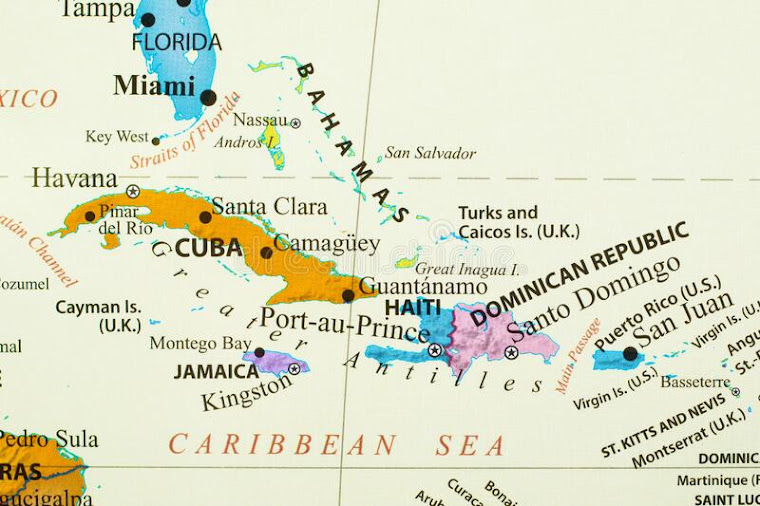
Those licenses were never renewed, because the government imposed a moratorium on oil exploration in 2008, while efforts were made to pin down precise maritime boundaries with Cuba, the US and the UK/Turks & Caicos Islands. The boundary with Cuba - where four of the BPC licenses are located - was finalised last October.
In 2010 - following the catastrophic Gulf of Mexico oil spill - the government decided to step back and review the entire petroleum policy framework before allowing exploration to resume. The Ministry of the Environment also required all license holders and new applicants to produce environmental impact assessments for the areas they wished to explore.
There are currently seven approved licenses for oil exploration in Bahamian waters, and 10 applications for new licenses have been submitted since 2008. Five of the approved licenses are held by BPC. The other two are held by Liberty Oil, but were suspended because of the company's failure to remove a sunken vessel from an Abaco reef.
A US company called NPT Oil has applied for seven licenses covering more than six million acres north of Grand Bahama. NPT's Bahamian data and assets were recently acquired by Pennine Petroleum Corporation, an emerging oil and gas exploration and development company active in Alberta and Saskatchewan.
A Canadian geophysicist named Allan Spector has applied for an onshore license near Seymours on north Long Island. And a partnership between BPC and the Norwegian company Statoil has applied for three licenses covering more than 2.3 million acres near the Cay Sal bank.
DNA Montagu candidate Ben Albury - who has led the party's campaign on this issue - says he is simply demanding transparency and information. But he has also accused Environment Minister Earl Deveaux of gross malfeasance, without any evidence, and has succeeded in making the issue more opaque, rather than clearer, for the average Bahamian.
"My main issue," he told me over the weekend, "is the dodging of the questions by Deveaux. If you listen to his comments, he makes it sound as if there is a moratorium on oil exploration, (but) BPC is telling the media that they intend to drill in the coming months."
Albury cites a Miami Herald article published last October, in which Dr Paul Gucwa, BPC's chief operating officer, refers to plans for an exploratory well by the end of this year. "The Bahamian government has a moratorium on granting new exploration licenses," the Herald reported, "but... that could change following the country's May general elections. BPC has contacted 10 major international oil companies about partnering in its oil exploration operations."
A review of Deveaux's statements on this matter over many months, if not years, shows an entirely consistent position. He has repeatedly stated that the exploration freeze will remain in effect until an updated regulatory system has been put in place. He has also said that the present government is committed to the widest possible public consultation on the issue of oil production.
However, if you listen to the talk shows, some Bahamians are already gearing up to stop work and collect their "black gold" dividend cheques, while others are worried about secret backroom deals in which the well-connected carve up the country's seabed for their personal benefit.
Interestingly, there may be some truth to this. As mentioned earlier, experts have believed for decades that large quantities of oil and gas lie beneath the Bahamian seabed, and now that drilling technologies and market prices have reached the point where exploitation is not only feasible but profitable, we can reasonably project a massive influx of petroleum revenues in the near future.
But that is precisely why the government is seeking to overhaul our regulatory, legislative, environmental and financial regimes, in order to lay the groundwork for the orderly development of this industry (whether you like it or not). As Deveaux told me over the weekend: "Without detailing all the issues inherent in something so materially significant, it is a clear responsibility of the government to prepare the country for oil and its likely consequences."
The DNA appears to be confused because, under existing Bahamian law, licensees are required to drill an exploratory well within a certain timeframe - which in BPC's case is prior to April 2013 - or risk forfeiting their rights. The company says it has completed the required environmental impact assessment for this test well and is already working on a management plan.
Meanwhile, Environment Ministry officials have met with their counterparts in Norway to discuss revisions to the existing act and regulations, and consultants have produced working drafts for the government to review, after which they will go to the attorney-general. Deveaux says the proposed regulatory system will be included in his hand-over notes for the next government.
"Our visit to Norway in December was very useful and the government has agreed in principle to use that country's policies as a guide in developing a Bahamian petroleum industry," Deveaux said.
Norway began offshore petroleum production in 1971 and is now the world's seventh largest oil exporter and second largest gas exporter, with some 600 licenses awarded to a variety of companies. Norwegian officials have advised the Bahamas to have all the essential elements of oil and gas governance in place before any drilling begins. These include environmental, safety, tax, revenue, training and employment policies; contingency plans; and insurance requirements.
Norway's national petroleum policy seeks "to ensure long term management of, and value-creation from, the country's petroleum resources". Oil and gas activities are restricted to offshore waters, and all subsea resources are vested in the state, which is charged with managing them for the benefit of Norwegian society as a whole.
As we said, under the current Bahamian act, an exploration license includes an obligation to drill, and a bond must be posted to that effect as a way of precluding speculators. Exploration licenses are awarded for an initial term of three years, renewable for two successive three-year periods, but the 2008 moratorium meant that BPC's original license was put on hold and never technically renewed.
Similarly, if BPC's exploration is successful, current law says it is "entitled" to a renewable 30-year lease to begin commercial production. The royalty rate for production of oil and gas is based on a sliding scale of 12.5 to 25 per cent (from which the lease fee is deducted), with no other taxes or fees required. Equipment can also be imported duty-free.
On its website, BPC says that its license expires on April 26, and it has applied for renewal. The company notes that if it meets its obligations, "the governor-general shall renew the licences for another three years provided the company commits to drill an exploration well and (starts) the well before the end of the first renewal year, ie, by April 26, 2013".
So there is clearly some tension between the positions of the government and BPC, which claims to have invested $50 million so far to explore. Appraisal drilling is projected to cost several hundred million more, and obviously the company expects to benefit from this investment. But the petroleum act was written 40 years ago, and is silent on many of the complex issues the Bahamas would face as an oil producer.
Meanwhile, the DNA has rightly argued that oil drilling threatens two of the country's biggest industries - tourism and fishing. "(We) demand to know if Mr. Deveaux and the FNM government have ensured the protection of Bahamian interests," Ben Albury says. Well, the short answer is that Deveaux has repeatedly talked of the need to train Bahamians to manage a new regulatory environment.
"We have to come to the public with full information," Deveaux told me. "We want a standard of management similar to that of Norway. We need a petroleum directorate that is fully staffed with a range of expertise, including financial. If oil is produced we will be dealing with billions of dollars, changing the whole culture of the country and the way the government deals with money. It is no small thing."
In Norway, for example, surplus oil revenue is deposited in a $600 billion sovereign wealth fund so that the country's non-renewable resources can benefit future generations. The fund is managed by the central bank, under rules developed by the Ministry of Finance, and is responsible to parliament, with the interest used to cover government pension obligations.
Consultants have also advised the Bahamas to increase royalties and adopt profit sharing with oil companies in order to compensate for the absence of a corporate income tax.
As noted earlier, BPC's licenses were awarded by the Christie administration in 2006, and signed by former Governor-General Arthur Hanna in April, 2007. It is noteworthy that PLP candidate Jerome Gomez is the company's resident manager, former PLP cabinet minister Sean McWeeney is its senior counsel, and PLP deputy leader Brave Davis' law firm is the company's onshore legal advisor.
What is even more noteworthy is that the PLP has so far ignored this important public debate. The FNM's position is that "nothing can happen until the government approves and nothing will happen until there is public consultation". The DNA says it will hold a national referendum on oil exploration and production. The PLP is heavily conflicted in this matter and has said nothing.
Did someone mention carve-up and cover-up?
* What do you think? Send comments to larry@tribunemedia.net or visit www.bahamapundit.com.
March 21, 2012
tribune242